
How Often Paint Exterior House: Maintenance Schedule Guide
You should inspect your exterior yearly, spot-touch trim and caulk every 3–7 years depending on paint and siding, and plan a full repaint every 7–12 years to protect surfaces and curb appeal. Use higher-grade acrylics and UV-resistant topcoats for longer life, and prioritize repairs like re-caulking, replacing rotted trim, and addressing peeling or bubbling paint immediately. Follow a simple maintenance plan with seasonal checks and cleaning, and keep records to save time and money if you want more detailed guidance.
Quick Answer: When to Repaint Your House Exterior
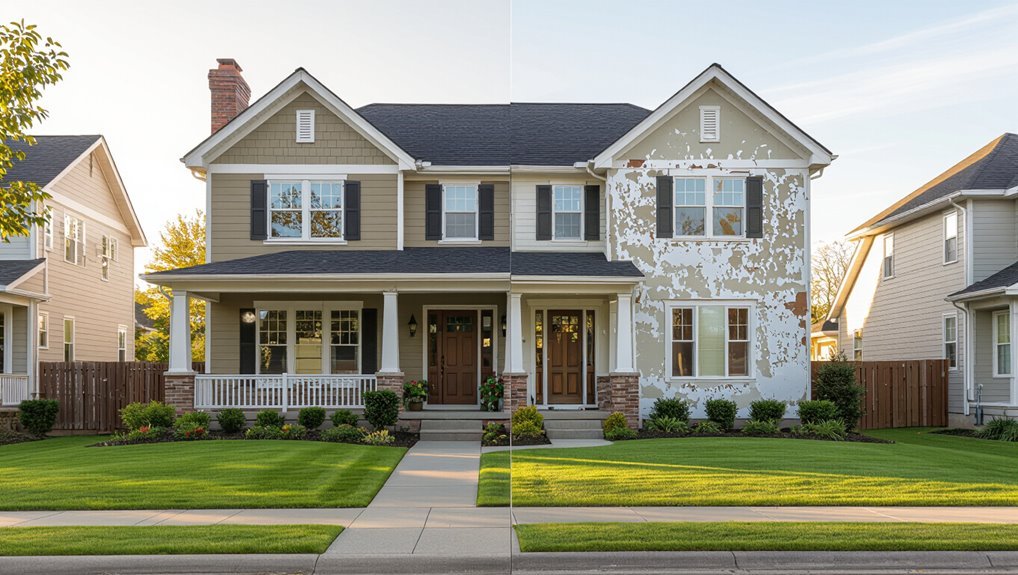
Wondering when to repaint your house exterior? You should act when paint peels, fades, or your curb appeal drops noticeably.
Check siding, trim, and caulking yearly; consider climate, sun exposure, and prep quality.
Inspect siding, trim, and caulking annually; factor in climate, sun exposure, and prep quality for lasting paint.
Pick quality paint with appropriate finish types for surfaces and think color selection carefully to protect and refresh appearance.
Timely repainting prevents bigger repairs.
Year-by-Year Repaint Schedule
A simple year-by-year repaint schedule helps you budget, spot problems early, and plan prep work before paint fails.
Yearly maintenance checks—cleaning, caulking, and touch-ups—keep surfaces sound and extend paint longevity.
At 3–5 years inspect for chalking, at 7–10 years plan larger touch-ups, and at recommended lifecycle intervals schedule full repainting.
Keep records so you’ll act before damage demands costly repairs.
How Paint Type Affects How Often You Repaint
Because different paints bond, weather, and fade at different rates, the type you choose is one of the biggest factors determining how often you’ll need to repaint. Choose high paint durability to extend cycles; latex resists cracking, oil holds color longer. Prioritize color selection for UV resistance and maintenance.
| Paint Type | Durability | Typical Cycle |
|---|---|---|
| Latex | High | 5–7 yrs |
| Oil | Medium | 7–10 yrs |
| Acrylic | Very High | 8–12 yrs |
How Siding Material Changes Repaint Frequency
Paint longevity doesn’t just hinge on the formula you pick; the siding itself plays a big role in how often you’ll need to repaint.
You’ll treat Vinyl Siding, Wood Siding, Fiber Cement, Metal Siding, Stucco Finish, and Brick Exterior differently.
Prioritize Paint Adhesion and thorough Surface Preparation: wood needs more frequent coats and prep, fiber cement and brick last longer, metal and stucco require specific primers.
How Climate and Sun Exposure Shorten Paint Life
Where you live has a big impact on how fast paint breaks down—humidity, temperature swings, and salt air all speed up wear.
Direct sun on walls and trim causes colors to fade and binders to weaken, so south- and west-facing surfaces often need repainting sooner.
Knowing your climate and which sides get the most sun helps you plan a smarter maintenance schedule.
Climate Accelerates Paint Wear
If your house sits under intense sun or in a wet, windy climate, the elements speed up how quickly paint breaks down. You should monitor climate conditions and weather patterns because they lower paint durability.
Consider seasonal effects and surface preparation to counteract moisture levels and temperature extremes.
- UV exposure and humidity impact finish
- Environmental factors accelerate peeling
- Prep prolongs lifespan
Sun Exposure Fades Finish
1 thing that speeds up fading more than almost anything else is direct sunlight: UV rays break down pigments and binders, so you’ll see color dulling and loss of sheen faster on sun‑exposed walls and trim.
You should address UV damage with high sun resistance coatings, routine finish protection, maintenance tips like cleaning and touchups, and fading solutions to preserve color retention and paint durability for exterior longevity.
Signs You Need Spot Repairs or Touch-Ups Now
If you spot peeling or flaking paint, you should tackle it right away before moisture or rot sets in.
Cracked or bubbling surfaces are another clear warning that the finish is failing and needs patching.
Addressing these issues now keeps the rest of your paint job intact and prevents bigger repairs later.
Peeling Or Flaking Paint
Peeling or flaking paint is one of the clearest signs you need spot repairs now, since loose paint lets moisture and rot reach the underlying wood or siding.
You should act quickly: peeling causes include poor prep and moisture; flaking solutions involve scraping, priming, and repainting.
- Scrape and sand loose areas
- Use a quality primer
- Repaint with exterior-grade paint
Cracked Or Bubbling Surface
When paint starts cracking or forming bubbles, it’s a sign you should address the spot before moisture or sun damage gets worse.
You should perform a surface inspection to locate cracked paint and bubbling issues, assess paint adhesion loss from weather effects, and choose repair techniques—clean, sand, prime, and repaint.
Follow maintenance tips to prevent recurrence and fix aesthetic concerns promptly.
When a Full Exterior Repaint Is Necessary
Although spot repairs and touch-ups can stretch a paint job, a full exterior repaint becomes necessary once you see widespread chalking, cracked or bubbled finish, exposed bare wood, or persistent moisture stains that cleaning and patching won’t fix.
You should also consider:
- shifting color selection for curb appeal
- upgrading paint quality for durability
- replacing badly weathered sections instead of spot-fixing
Prep Tasks That Extend Paint Life (Power Wash, Caulk, Prime)
Three simple prep steps—power washing, caulking, and priming—make the paint stick and last far longer than skipping them.
Three simple prep steps—power washing, caulking, priming—help paint adhere better and last much longer
You should use power washing for thorough cleaning methods, improving surface preparation.
Master basic caulking techniques to seal gaps and prevent moisture.
Apply appropriate primer to boost adhesion and resist stains; priming benefits include uniform coverage and longer life.
Follow these maintenance tips.
Colors & Finishes That Hide Wear and Cut Maintenance
Good prep gives paint a fighting chance, but the colors and finishes you pick also determine how long your house looks fresh.
Choose durable colors and low maintenance finishes to mask dirt and fade. Consider:
- Earth tones that hide grime and soften wear
- Semi-gloss where scrubbability matters
- Matte for minor texture hiding without glare
These choices cut touch-ups and extend curb appeal.
Seasonal Exterior Inspection Checklist
Start each season with a quick, systematic walkaround so you can catch small problems before they become costly repairs.
Check paint for cracking, peeling, blistering, and discoloration; inspect trim, caulking, gutters, and soffits; look for mildew, wood rot, and insect damage.
Use seasonal checklists to track fixes and prioritize exterior maintenance tasks so you stay ahead of deterioration.
DIY Repaint Timeline : When to Hire a Pro
If you’re tackling a repaint yourself, set a realistic timeline based on surface prep, weather windows, and your available time—otherwise plan to hire a pro.
Assess skill assessment, DIY tools, quality materials, weather considerations, and time investment before deciding.
Weigh your skills, tools, materials, weather, and time before committing to a DIY repaint.
Consider:
- Project timelines vs. Professional painters’ availability
- Cost comparisons and expected finish quality
- When complexity exceeds your skills
Costs and Budgeting for Exterior Repaint Cycles
You’ll want a clear repaint cost breakdown that lists paint, labor, prep, and extras so you can see where money goes.
Factor in higher-quality paint and proper prep when budgeting, because spending more now often extends the next repaint cycle.
With those numbers in hand, you can plan a realistic long-term maintenance budget that reduces surprises.
Repaint Cost Breakdown
While exterior repaint cycles vary, knowing the main cost drivers helps you budget accurately: paint and primer quality, surface prep (cleaning, scraping, caulking, and repairs), labor hours, and access requirements like scaffolding or lifts.
Consider these cost factors:
- Paint quality, color selection, and material durability affect price.
- Preparation importance raises labor expenses but prevents rework.
- Project timing and weather considerations influence scheduling and total cost.
Budgeting For Longevity
Now that you know what drives repaint costs, plan your budget around longevity to get the most value from each exterior cycle.
Prioritize paint durability tips: invest in quality primers, proper surface prep, and UV-resistant topcoats.
Schedule maintenance, not full repaints, to extend life.
Compare bids, choose cost effective solutions, and track returns so each dollar prolongs protection and curb appeal.
Quick Repairs to Delay a Full Repaint (Caulk, Trim Touch-Ups)
If small cracks, peeling edges, or failing sealant are the only problems, quick repairs like re-caulking joints and touching up trim can buy you years before a full repaint.
You should focus on Caulk application and Trim touch ups as Quick fixes and simple Preventative measures:
- Re-caulk gaps and seams
- Spot-prime and paint trim
- Replace rotted trim sections
How to Build a Long-Term Exterior Paint Maintenance Plan
Those quick fixes will keep your paint working longer, but to protect your investment you should draft a simple maintenance plan that schedules inspections, regular cleaning, and touch-up cycles.
Start with annual inspections, note problem areas, and set seasonal cleaning. Prioritize touch-ups after storms, repaint high-exposure sections every 5–7 years, and keep records.
Use long term planning and practical maintenance tips to extend lifespan.
Frequently Asked Questions
Can Paint Prevent Wood Rot or Structural Damage?
Yes — painting helps prevent wood rot and structural damage when you use proper painting techniques and focus on wood preservation; you’ll seal surfaces, shed moisture, and extend lifespan, though repairs and ventilation also matter for full protection.
How Does Exterior Paint Affect Home Resale Value?
A fresh exterior paint job boosts curb appeal and shifts buyer perception positively, so you’ll often attract more offers and higher sale prices; buyers’ll see well-maintained property, reducing perceived repair risks and speeding up the sale.
Are Eco-Friendly Paints as Durable as Traditional Paints?
Yes — you’ll find eco-friendly paints can be as durable as traditional ones; like a quiet champion, they balance sustainability factors and paint longevity, but performance still depends on brand, formulation, surface prep, and local climate.
How Long Should You Wait Between Paint and Landscaping Work?
You should wait about 24–72 hours before light landscaping and 7–14 days for heavy work, since paint curing varies; plan landscaping timing around manufacturer cure times and weather so you won’t disturb fresh paint or cause damage.
Can Insects or Pests Damage Exterior Paint?
Yes — insects can damage exterior paint; they’re tiny saboteurs chewing and nesting under finishes. You’ll see peeling or stains from insect infestations, so use pest deterrents like treated wood, caulking, and regular inspections.
Conclusion
You’ve got the tools to keep your home looking great, but the story isn’t over yet. Watch for hairline cracks, flaking, and fading—these small hints often precede bigger problems. Stick to the recommended checkups, factor in your climate and siding, and choose paint wisely. If you delay, the next chapter could cost you more time and money than you expect. Stay proactive, and you’ll turn that potential headache into a long-lasting finish.
