
How to Keep a Paint Brush From Drying Out During Painting
Keep your brush soft and ready by blocking air, controlling paint on the bristles, and choosing the right short‑term storage for your paint type. Wrap bristles tightly in plastic wrap, foil, or a resealable bag and seal at the handle; store tip‑first or flat to keep shape. For short pauses keep bristles loaded or use a wet palette; for longer breaks rinse lightly and reshape before sealing. Try these quick fixes and you’ll find more tips and fixes ahead.
Quick Fix: Stop Your Brush Drying Out
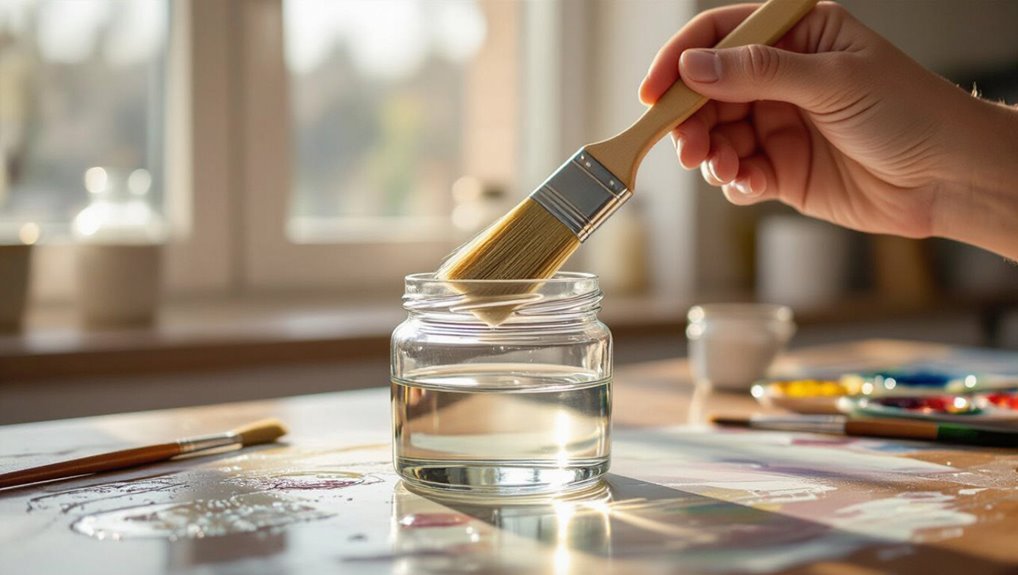
If you need to pause painting for a few minutes, wrap the bristles tightly in plastic wrap or a resealable bag so air can’t reach them; this simple step keeps the paint soft and your brush ready.
For quick brush maintenance, store wrapped brushes upright or laid flat, label wet tools, and change wraps if soaked.
These drying prevention habits save time and extend brush life.
Keep a Brush Wet Between Strokes (Short Pauses)
When you’re pausing between strokes, keep the bristles loaded so paint stays at the tip and ready to use.
If you’re using water-based paints, a wet palette will keep your paint moist and prevent dragging as you resume.
These small habits save time and keep your brush performing consistently.
Keep Bristles Loaded
Because short pauses can cause paint to skin over on the bristles, keep the brush loaded so you can resume smoothly—wipe excess on the can lip, then re-dip into fresh paint just enough to refill the tip and belly without overloading the ferrule.
For proper brush maintenance and bristle care, work in short cycles, monitor paint buildup, and avoid squeezing bristles or leaving heavy paint near the ferrule.
Use Wet Palette
A wet palette keeps your brush loaded and moist during short pauses, letting you pick up paint without re-dipping every few strokes.
Use a proper wet palette to enjoy wet palette benefits like consistent color and easier blending. Its moisture retention prevents skinning and stiff bristles, so you’ll maintain flow between strokes.
Keep the lid closed when not actively using it.
Tip‑First or Ferrule‑First? How to Store Briefly
If you’ll only pause for an hour or two, store brushes tip‑first to keep bristles shaped and off surfaces that can flatten them. You’ll prefer tip first storage for short breaks; choose ferrule first storage when bristles are protected and you need compact placement.
Decide by brush size and paint type.
Consider brush size and paint type when storing—small tips need upright care; larger, loaded brushes may suit ferrule-first.
- Protect bristle shape
- Prevent flattening
- Ease quick access
- Avoid mixing brushes
- Save workspace
Use Plastic Wrap, Foil, and Baggies Correctly
Wrap the bristles tightly in plastic wrap or foil so they stay compact and can’t dry out.
Make sure the handle end is sealed firmly to keep air from creeping in.
Then slip the whole brush into an airtight baggie for short‑term storage.
Wrap Bristles Tightly
1 simple trick keeps paint brushes from crusting between coats: seal the bristles tightly with plastic wrap, foil, or a resealable baggie.
You’ll practice bristle care and simple wrapping techniques: squeeze out excess paint, shape the tip, wrap snugly, remove air, and label wet brushes so you can resume without drying or misshaping.
- squeeze excess
- shape tip
- wrap snugly
- remove air
- label wet brushes
Seal Handles Firmly
Seal the ferrule and handle junction tightly to keep solvents and paint from creeping into the wood or metal, which can loosen the ferrule or ruin the handle over time.
Wrap that junction with plastic wrap or foil snugly, then secure with tape.
For brush maintenance and handle care, check seals periodically and rewrap if dampness appears to prevent swelling, rust, or adhesive failure.
Store In Airtight Baggies
When you’re pausing between coats, tuck the brush into an airtight plastic bag or a sheet of foil to keep air away from the bristles; this prevents the paint film from forming and makes cleanup easier.
You’ll protect bristles, maintain moisture retention, and simplify brush care.
Tips:
- Squeeze air out
- Seal tightly
- Wrap ferrule too
- Label wet brushes
- Use resealable bags
Water Bucket and Solvent Cup Pause Methods
If you need to pause for a short break, dunking your brush in a water bucket (for water-based paints) or a solvent cup (for oil-based) keeps bristles pliable and paint from crusting while you step away.
For water preservation, swish gently, remove excess, and rest handle-up.
For solvent selection, choose the right thinner and change it often to avoid contamination and odor buildup.
How to Use a Solvent Cup Safely
To move from temporary storage to safer handling, set up your solvent cup where you’ll keep it upright and away from heat, sparks, and children or pets.
Use solvent safety: lid secure, small amount, stable base, clear labeling, and ventilation.
Follow proper disposal for used solvent and rags; never pour down drains.
- lid secure
- small amount
- stable base
- clear label
- ventilate
Store Brushes for Hours or Overnight (Long Breaks)
For breaks lasting several hours or overnight, wrap the brush so the bristles stay moist and keep the ferrule from drying out; you can use a brush saver, cling film, or aluminum foil sealed tightly around the bristles and handle.
Store brushes horizontally or hanging to prevent misshaping. This brush storage method promotes moisture retention, avoids hardening, and lets you resume painting without reconditioning bristles.
Best Solvents and Cleaners to Keep Bristles Wet
You’ll want to know which solvents suit the paint you’re using, from water for latex to mineral spirits for oil-based coatings.
Keep a jar handy for quick rinses between strokes to stop bristles from stiffening.
If you prefer gentler options, consider natural cleaners like citrus-based solvents or diluted vinegar for water-based paints.
Solvent Types Overview
Although water works for latex paints, different solvents are needed for oil-based, alkyd, and specialty coatings. Choosing the right one will keep bristles pliable and extend a brush’s life.
You’ll match solvent properties to paint type and follow proper cleaning techniques to prevent buildup. Consider these common options:
- Mineral spirits
- Turpentine
- Paint thinner
- Acetone
- Specialty brush cleaners
Quick Rinse Options
When you need a fast way to keep bristles pliable between coats, a quick rinse with the right solvent or cleaner works best; water suits latex paints, but for oil-based, alkyd, or specialty coatings you’ll want mineral spirits, turpentine, paint thinner, acetone (for certain resins), or a commercial brush cleaner designed to break down binders without damaging the ferrule or bristles.
Use small jars, swish, blot, repeat.
Natural Cleaner Alternatives
If you prefer gentler, more eco-friendly options, several household solvents will keep bristles wet without harsh chemicals: simple water with mild dish soap works for latex, citrus-based cleaners dissolve oil-based residues, and rubbing alcohol or white vinegar can help soften dried binder in a pinch—just test on a small area first to protect natural-hair brushes and ferrules.
- Water + mild dish soap
- Citrus cleaner
- Rubbing alcohol
- White vinegar
- Olive oil soak
Working With Oil‑Based Paints: Pause and Store Tips
Because oil-based paints dry slowly and attract dust, you’ll want a reliable short-term storage method whenever you pause your work.
Wrap the brush in plastic or place it in a sealed jar with solvent to protect bristles. These storage techniques support brush maintenance, drying prevention, bristle care, paint longevity and working efficiency.
Finish with proper cleaning methods after longer stops.
Working With Water‑Based (Latex) Paints: Pause and Store Tips
When you’re working with latex, simple short-term fixes like wrapping the bristles in plastic or a damp cloth will keep the brush usable between quick breaks.
For overnight pauses, store the brush upright in a sealed container with a little water or hang it to keep the bristles from deforming.
If you won’t be painting for more than a day, you’ll need to thoroughly clean and dry the brush to prevent hardening and mildew.
Short-Term Brush Wrap
Although you’re stepping away only briefly, wrapping a latex brush correctly keeps the bristles moist and ready so you can resume painting without fuss.
Use simple brush care and quick cleaning techniques before wrapping: remove excess paint, rinse lightly, shake out drips, then cover tightly.
Suggestions:
- Plastic wrap or bag
- Aluminum foil
- Snap-on brush cap
- Wet paper towel
- Rubber band seal
Overnight Brush Storage
If you’re pausing overnight with latex paint, take a few simple steps so your brush stays soft and ready to use:
Rinse lightly to remove excess, reshape bristles, then wrap the brush in plastic wrap or a sealed bag to lock in moisture.
Store flat or hanging to avoid misshaping.
These brush care storage solutions prevent drying without a full clean.
Cleaning For Longer Pauses
Because longer pauses let water-based paints start to film and harden, you’ll want to do a more thorough clean than the quick rinse you use for overnight storage.
You should follow proper brush maintenance and professional cleaning techniques so bristles stay soft and aligned. Clean, condition, and store brushes correctly before long breaks.
- Flush paint thoroughly
- Use mild soap
- Comb bristles
- Rinse until clear
- Hang to dry
Which Brush Materials Resist Drying Best
1 key factor in preventing a brush from drying out is the material of its bristles, since different fibers hold and release paint differently.
You’ll find synthetic fibers resist stiffening with water-based paints and offer consistent moisture retention, while natural hairs excel with oils.
Match brush types to your paint and pause length so you can cap or wrap brushes effectively between sessions.
How Paint Type Changes Drying and Pause Choices
When you’re choosing a pause strategy, the kind of paint on your brush dictates how quickly it skins over and what steps you should take to protect it.
Water-based paints like acrylics and latex dry fast and need airtight sealing or misting, while oil-based and alkyd paints stay workable longer but still benefit from a solvent-soaked cap or wrap to prevent tackiness.
- Assess paint composition and coating types
- Match pause strategies to drying times
- Consider paint viscosity and application techniques
- Adjust for environmental factors during pauses
- Prioritize brush maintenance to preserve shape and performance
Preventing Paint Seepage When You Wrap a Brush
When you wrap a brush, make sure the ferrule is sealed tight so paint can’t creep down the handle.
Put a layer of plastic wrap or a small plastic bag around the bristles as a barrier against leaks.
Store the brush upright with the bristles pointing up to keep any remaining paint from pooling.
Seal The Ferrule Tight
A tight seal at the ferrule stops paint from creeping up and drying on the handle, so wrap the brush snugly and secure the ferrule area with tape or a rubber band to keep moisture in and air out.
You’ll protect ferrule protection and boost brush maintenance by sealing gaps and avoiding drips.
- Use painter’s tape
- Stretch a rubber band
- Fold wrap tight
- Check for gaps
- Store bristles up
Use Plastic Wrap Barrier
If you want to stop paint seeping into the ferrule and handle, wrap the brush in a layer of plastic wrap before securing it with tape or a rubber band; the wrap creates a smooth, airtight barrier that keeps solvents and moisture from migrating while still letting you check the bristles.
For brush maintenance, press the wrap snugly, cover exposed bristles, and label the paint to avoid confusion.
Store Bristles Upright
You can add another layer of protection by storing the wrapped brush bristles upright so paint can’t seep down into the ferrule.
You’ll protect bristle care and improve paint preservation while pausing between coats.
Keep handles down, avoid leaning, and use a stable container to prevent tipping.
- Upright position
- Stable holder
- Minimal movement
- Short breaks only
- Check seals regularly
Quick On‑Job Refreshes Without Full Cleaning
When you need to pause for a break or move between coats, quick on‑job refreshes keep bristles usable without a full cleaning; dunk the tip in a small container of solvent or water, wipe on a rag, reshape bristles, and seal in plastic.
These brush maintenance tips help during painting interruptions so you can resume smoothly without degrading bristle shape or paint quality.
When to Do a Partial Rinse During Multi‑Day Work
Quick on‑job refreshes keep bristles ready between coats, but for multi‑day jobs you’ll need periodic partial rinses to prevent hardened paint buildup and maintain brush performance.
You’ll use partial rinse benefits as part of multi day techniques: rinse bristles lightly each evening, remove excess paint, reshape, dry vertically, and store sealed to preserve edges and avoid clumping.
- Rinse evenings
- Remove excess
- Reshape bristles
- Dry upright
- Store sealed
How Temperature and Humidity Affect Drying Time
The temperature in your workspace directly changes how fast paint solvents evaporate, so warmer air usually speeds drying while cooler air slows it.
Humidity also matters: high moisture in the air retards drying and can keep bristles tacky, while low humidity helps paint and water evaporate faster.
Adjusting temperature or using a dehumidifier/fan can give you more control over brush drying time.
Temperature’s Impact On Drying
Because temperature and humidity control how paint solvents evaporate, you’ll notice drying times change a lot with the weather and your workspace conditions.
You should monitor temperature effects and humidity influence to slow brush drying: adjust room heat, use fans carefully, avoid direct sun, choose slower-drying paints, and store brushes in damp wraps.
- Increase room temperature
- Reduce airflow
- Avoid sunlight
- Pick slow-dry paint
- Use damp wrap
Humidity’s Role In Paint
Humidity plays a big role alongside temperature in how fast paint and solvents evaporate, so you’ll want to manage both to keep brushes workable.
You’ll notice humidity effects: high humidity slows drying, letting you pause without brush crusting; low humidity speeds drying, increasing waste.
Control humidity to balance work time and paint longevity, using humidifiers, vents, or timed pauses to protect bristles.
Choose Brush Size and Shape to Reduce Drying Problems
When you pick a brush, match its width and shape to the job so paint sits where you want it and dries more slowly—wider brushes hold more finish for longer, while angled or filbert shapes let you control flow into corners without overworking edges.
Consider brush types, bristle materials, brush shapes, size selection, drying factors and paint consistency when choosing.
Consider brush type, bristle, shape, size, drying and paint consistency to choose the right tool for the job.
- Match size to area
- Favor natural or synthetic bristles per paint
- Use angled for edges
- Adjust for paint consistency
- Practice usage techniques and color choices
Avoiding Cross‑Contamination Between Paint Colors
If you want crisp colors and hassle-free touch-ups, stop cross‑contamination at the source by cleaning and organizing tools between color changes: rinse brushes thoroughly, wipe wells and palettes, use separate containers for different shades, and label mixed batches so you don’t accidentally dip into the wrong pot. Keep color separation during paint mixing; change cloths, swap lids, and work from clean zones.
| Tip | Action |
|---|---|
| Brushes | Rinse |
| Palettes | Wipe |
| Containers | Label |
| Zones | Separate |
Cheap DIY Brush Keepers You Can Make Now
You’ve already cut down on color bleed by rinsing and organizing — now protect those freshly cleaned brushes with simple, low-cost keepers you can make in minutes.
Use DIY materials and handy tools for quick hacks that aid brush maintenance and paint preservation. Cost effective solutions offer easy storage and creative covers.
- Plastic bottle sleeves
- Aluminum foil caps
- Silicone bands
- Zip-top bag rigs
- Cardboard cones
Useful Commercial Brush Keepers to Buy
Anyone looking to up their brush care will find a range of purpose-built keepers that save time and extend brush life. You’ll want commercial brush keepers that seal bristles, fit multiple sizes, and are among the best brush options for frequent painters. Compare features quickly:
| Model | Highlight |
|---|---|
| Keeper A | Airtight seal |
| Keeper B | Universal fit |
Fixing Stiff or Misshapen Bristles (Restore Methods)
Buying a good brush keeper helps prevent many problems, but bristles can still get stiff or misshapen from dried paint or improper storage.
You can restore brush shape and bristle flexibility with proper cleaning techniques, gentle conditioning, and targeted restoration methods to improve bristle quality and brush longevity.
- maintenance tips
- storage solutions
- drying prevention
- usage frequency
- brush shape
How to Tell When a Brush Is Beyond Saving
1 clear sign a brush is beyond saving is when the bristles remain permanently splayed, frayed, or fused together even after thorough cleaning and conditioning.
You’ll also note a misshapen ferrule, rust, or a weakened handle.
When determining brush condition, don’t waste time on extreme damage; brush restoration techniques won’t help a brittle, odoriferous, or shedding tool—replace it.
Frequently Asked Questions
Can I Leave a Brush Resting Bristles-Down in a Paint Tray Overnight?
No — you shouldn’t leave a brush bristles-down in a paint tray overnight. For proper brush maintenance, clean or wrap it for overnight storage to avoid damage, bristle splaying, and paint buildup that ruins the brush.
How Long Can Brushes Sit in Solvent Without Damaging Ferrules?
You can leave brushes in solvent for a few hours to a day; centuries-old advice aside, longer soaks can loosen ferrules and glue. You should follow brush care and cleaning techniques, rinsing and drying promptly afterward.
Will Reusable Masking Film Shorten Brush Lifespan Over Time?
Yes — reusable masking film can slightly shorten brush lifespan if it traps solvent or paint against bristles, but if you use proper brush care and paint preservation—cleaning, drying, and storing brushes correctly—you’ll minimize wear over time.
Can I Store Multiple Brushes Together Without Them Sticking?
About 72% of painters say brushes clump if stored together; you can store multiple brushes without sticking by using spacing sleeves, hanging, or separated holders. Focus on brush care and cleaning techniques to prevent hardened bristles and residue.
Do Magnetic or Hanging Holders Affect Brush Shape?
They won’t if you choose wisely: magnetic or hanging holders can help brush storage and brush maintenance, but you should avoid clamping bristles, rotate brushes regularly, and use holders that support ferrules to maintain proper shape and alignment.
Conclusion
Think of your brush as a small boat: when you pause on the paint sea, tuck it into a snug harbor so it doesn’t drift dry. Wrap it like a sleeping sailor, rest it briefly bristle‑first or ferrule‑first depending on the tide, or slip it in a plastic sail to hold the moisture. Tend it often, revive it when it stiffens, and know when the hull’s past saving—then let it go, ready for a fresh craft.
