
How to Paint a Bathroom Wall for a Moisture-Resistant Finish
To paint a bathroom wall for a moisture-resistant finish, start by clearing the room, cleaning surfaces, and repairing any damage or mold spots. Sand and wipe walls, then apply a mildew-blocking primer made for high-humidity areas. Choose a satin or semi-gloss mold-resistant acrylic latex paint and use a brush for edges and a roller for walls, applying even overlapping strokes and two coats as needed. Guarantee good ventilation during drying, and keep going to learn tips for paint selection, prep, and upkeep.
Step-by-Step Bathroom Painting Guide
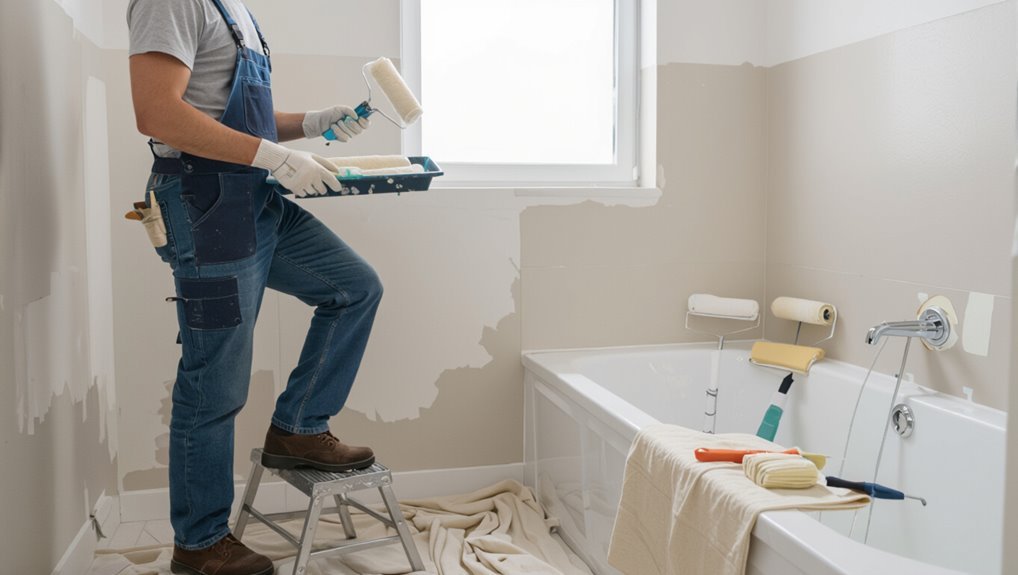
Before you grab the brush, make sure the room’s prepped: clear surfaces, patch holes, clean walls, and tape trim so paint goes only where you want it.
You’ll plan color selection, follow wall preparation and surface cleaning steps, arrange tool organization, choose finish types and eco options, use proper painting techniques for paint application, monitor drying times, and note maintenance tips for a durable, moisture-resistant result.
Why Moisture Resistance Matters for Bathroom Walls
You’ll want moisture-resistant paint because bathrooms are prime spots for mold growth, and keeping spores off your walls protects your health and finishes.
Moisture-resistant formulas also stop peeling and blistering, so your paint job lasts longer.
Choosing the right product upfront saves you time and money on repairs down the line.
Preventing Mold Growth
Because bathrooms stay damp, choosing moisture-resistant paint and preparations keeps mold from taking hold on your walls.
You’ll focus on mold prevention and humidity management so spores can’t thrive. Follow simple steps to keep surfaces dry, clean, and sealed.
- Ventilate well after showers.
- Wipe down walls and fixtures.
- Use mold-inhibiting primer and caulk.
Protecting Paint Durability
Keeping mold out is only part of protecting your bathroom paint—moisture itself will still wear down coatings, cause peeling, blistering, and loss of color over time.
You should choose moisture-resistant formulas, follow proper priming and ventilation, and inspect seals.
Durability testing guides selections, so you’ll improve paint longevity and avoid frequent repainting by addressing humidity, surface prep, and product specs.
Check Humidity, Ventilation, and Wall Condition First
Before you grab paint, check the bathroom’s humidity levels and ventilation to prevent peeling and mold.
Inspect the wall for soft spots, cracks, or mold stains that need repair or treatment first.
Addressing these issues now will make your paint job last.
Check Bathroom Humidity
If your bathroom traps moisture or lacks proper airflow, paint won’t last long—so check humidity, ventilation, and wall condition first.
Use a hygrometer for moisture detection and monitor levels during showers. Aim for consistent humidity control and run vents or fans as needed.
- Measure humidity regularly.
- Record spikes after use.
- Adjust ventilation to stabilize readings.
Inspect Wall Condition
Now that you’ve checked humidity and ventilation, turn your attention to the wall itself: look for peeling paint, mold, mildew, soft or crumbling drywall, and water stains. Do a mold inspection and moisture assessment, noting surface integrity, peeling analysis, damage evaluation, and repair needs to plan wall preparation and guarantee paint adhesion.
| Issue | Severity | Action |
|---|---|---|
| Mold | High | Remediate |
| Soft drywall | Medium | Replace |
| Peeling paint | Low | Sand/prime |
Measure Your Bathroom and Calculate Paint & Primer
Start by taking a quick walk around the room and note each wall’s height and width so you can calculate total square footage for paint and primer.
Measure doors, windows, and trim to subtract from totals.
Consider moisture levels when estimating coats. Estimate paint quantities and primer needs, allowing 10–15% waste.
Account for moisture when planning coats, and estimate paint and primer with a 10–15% waste buffer.
- Record dimensions.
- Subtract openings.
- Add contingency.
Best Paints for Steam, Splashes, and Humidity
When you pick paint for a bathroom, choose mold-resistant formulations designed for high humidity.
Opt for a satin or semi-gloss sheen to handle splashes and make cleaning easier.
Don’t skip a moisture-blocking primer and proper sealer on vulnerable surfaces.
Mold-Resistant Paint Types
Because bathrooms see constant steam, splashes, and high humidity, choosing a paint formulated to resist mold and mildew is essential for durability and indoor air quality.
- Pick mold-resistant latex for easy cleanup and paint durability; look for eco friendly options with low VOCs.
- Use antimicrobial additives where allowed to inhibit growth.
- Consider specialty bathroom primers plus mildew-resistant topcoats for long-term protection.
Sheen Choices For Bathrooms
While higher-sheen paints stand up best to steam, splashes, and frequent cleaning, you don’t always need the glossiest finish—satin and semi-gloss are the usual sweet spot for bathrooms because they balance durability and appearance.
Do a quick sheen comparison: choose satin for low-reflective moisture resistance and semi-gloss where scrubbability matters.
Those ideal finishes keep walls resilient without shouting “high gloss.”
Primer And Sealers
Satin and semi-gloss give your bathroom the right balance of durability and appearance, but they’ll perform much better if you start with the right primer or sealer.
Use moisture barriers to block dampness and enjoy primer benefits like adhesion and stain blocking.
Choose one of these:
- Shellac-based primer
- Acrylic bonding primer
- Waterproofing sealer
Oil-Based vs Water-Based Primers for Bathrooms
Choosing the right primer can make or break a bathroom paint job, so you’ll want to weigh oil-based and water-based options carefully.
You’ll assess oil-based benefits like strong surface adhesion and stain blocking, versus water-based advantages such as quicker drying times, easier cleanup ease, lower odor considerations, and reduced environmental impact.
Plan primer application for ventilation and planned finish.
When to Use Mold- and Mildew-Resistant Primers and Paints
Because bathrooms stay humid and get regular splashes, you should use mold- and mildew-resistant primers and paints in areas that don’t dry quickly—like shower surrounds, tub enclosures, and on walls directly opposite a showerhead.
Use these mold prevention strategies and paint application tips to limit growth and guarantee adhesion.
- Treat problem spots first.
- Apply primer evenly.
- Recoat as manufacturer recommends.
Choosing the Right Paint Sheen for Wet Areas
When you’re picking a sheen for wet areas, think about how much moisture and scrubbing the surface will face: high-gloss and semi-gloss stand up best to steam, splashes, and frequent cleaning, while eggshell and flat finishes hide imperfections but won’t resist water or scuffs as well.
Choose semi-gloss for trim and high-traffic zones, balance paint color with surface texture, and test samples first.
Top Paint Brands and Lines for Bathroom Durability
When you’re picking paint for a bathroom, you’ll want mildew-resistant acrylic latex or specially formulated bathroom enamel for the best durability.
Look at top brand lines like Sherwin-Williams Emerald or Duration, Behr Marquee or Premium Plus, and Benjamin Moore Aura Bath & Spa for proven performance in humid spaces.
Compare coverage, stain resistance, and washability to choose the right line for your needs.
Best Paint Types
Finish-quality paint makes the biggest difference in a bathroom’s longevity and appearance, so choose products made for high moisture, frequent cleaning, and mildew resistance.
- Pick high-quality latex vs acrylic blends for easy cleanup and strong finish durability.
- Use semi-gloss or satin for walls to resist moisture and allow wiping.
- Consider mold-resistant formulations and proper primers to extend life.
Top Brand Lineups
Although brands vary in price and specialty, you’ll get the best bathroom results by choosing paint lines specifically formulated for moisture, durability, and easy cleaning.
Look for top brand lineups offering mildew-resistant eggshells, semi-gloss trims, and luxury finishes. You’ll also find eco-friendly options with low VOCs.
Compare warranties, scrub ratings, and coverage to pick the best fit for your bathroom.
Tools and Supplies for Bathroom Painting
Gathering the right tools and supplies before you start will make painting a bathroom faster and produce better results.
Choose moisture-resistant paint types and plan application methods. Gather quality rollers, brushes, trays, painter’s tape, and mildew-resistant caulk.
Prep supplies include sandpaper and cleaner. Pack a ladder, drop cloths, and a respirator for safety.
- Rollers and brushes
- Prep tools
- Safety gear
Protect Fixtures, Trim, and Floors Before Painting
Before you start rolling, cover fixtures completely with plastic and tape to keep paint off faucets, light switches, and hardware.
Lay down drop cloths or rosin paper and tape them at the edges to protect floors from drips.
Use painter’s tape along trim and around fixtures so you get clean lines and easy cleanup.
Cover Fixtures Completely
Covering fixtures completely keeps paint where it belongs and prevents costly cleanup later—so start by turning off water and removing or masking anything you can’t or won’t take down.
Use proper covering fixtures techniques and prioritize fixture protection to avoid drips and damage.
- Tape and plastic-wrap taps and showerheads tightly.
- Remove outlet covers; tape switches.
- Seal edges with painter’s tape for clean lines.
Protect Floors And Trim
Protecting floors and trim saves you hours of cleanup and keeps paint lines sharp, so lay down drop cloths or protective paper and tape the edges tightly before you paint.
Use low-tack painter’s tape for trim safeguarding and overlap floor protection at baseboards.
Remove or mask vents and hardware, secure loose rugs, and check tape adhesion as you go so moisture-resistant coatings don’t seep underneath.
Remove Old Paint, Loose Plaster, and Peeling Areas
Scrape away loose paint and crumbling plaster with a putty knife or paint scraper so you’re left with a solid surface; any flaky material will keep new paint from adhering properly.
Follow concise wall preparation steps focusing on surface cleaning and paint removal. Use repair techniques only for small defects.
- Scrape and dust.
- Clean with mild detergent.
- Sand feathered edges.
Repair Drywall and Plaster in Wet-Prone Zones
Once you’ve removed loose paint and sanded feathered edges, inspect areas around showers, tubs, and sinks for soft drywall or hairline cracks in the plaster.
These wet-prone zones need repairs that prevent future moisture damage. Remove compromised sections, perform drywall patching with corrosion-resistant screws and tape, apply setting compound, sand smooth, and install proper moisture barriers or cement board before priming and painting for lasting protection.
Treat Stains, Soap Scum, and Mildew Before Painting
Before you paint, identify and remove any stains so they don’t bleed through the new finish.
Scrub away soap scum with a mild degreaser or vinegar solution to guarantee the paint sticks evenly.
Treat mildew with a bleach or hydrogen peroxide solution, rinse thoroughly, and let the wall dry completely before priming.
Identify And Remove Stains
Start by inspecting the walls closely for discoloration, stains, soap scum, or mildew so you know what you’re up against and can choose the right treatment.
- Note stain identification: mark locations, color, and texture so you pick proper stain treatment.
- Test a small area with cleaner or primer to verify removal and adhesion.
- Sand and spot-prime cleaned areas before painting for an even, lasting finish.
Eliminate Soap Scum & Mildew
While you’re prepping the wall, tackle soap scum and mildew now so paint will stick and finish evenly.
Use bleach or vinegar solutions, scrub with a nylon brush, rinse thoroughly, and dry.
Apply a mold-killing primer where needed.
For preventive measures, improve ventilation and fix leaks.
Learn proper cleaning techniques and repeat as needed before painting to guarantee a lasting, moisture-resistant finish.
How to Sand and Feather Edges for a Smooth Finish
Once your patching compound’s set, you’ll sand the area smooth and feather the edges so the repair disappears into the surrounding paint.
Use gentle sanding techniques and a sanding block to avoid gouges. Blend from center outward, wipe dust, then inspect.
- Start with medium grit, finish fine grit.
- Feathering edges: taper gradually.
- Clean and recheck for continuity.
Choosing the Correct Primer and How to Apply It
Before you prime, make sure the wall is clean, sanded, and free of dust or loose paint so the primer can bond properly.
For bathrooms, pick a moisture- and mildew-resistant primer formulated for high-humidity areas.
Apply it evenly with a brush for corners and a roller for flat areas, following the manufacturer’s drying times between coats.
Surface Preparation Steps
Choosing the right primer is the single most important step in prepping bathroom walls, because it guarantees adhesion, blocks stains, and resists moisture; clean, sand, test, and dry surfaces before priming.
Follow these steps:
- surface cleaning, wall sanding, moisture testing, surface drying.
- primer selection, paint mixing, tool organization.
- ventilation assessment and apply primer evenly, avoiding runs.
Choosing Moisture Primer
1 key decision for a long-lasting bathroom paint job is picking a moisture-resistant primer that bonds well to damp-prone surfaces and blocks mold and stains.
For primer selection, choose one labeled for bathrooms or high humidity, with mildew inhibitors and strong adhesion to tile, drywall, or previously painted surfaces.
Check VOC levels and manufacturer compatibility with your topcoat for best moisture resistance.
Proper Primer Application
Once you’ve picked a moisture-resistant primer that’s compatible with your topcoat, apply it evenly so it seals surfaces and prevents peeling or mold growth.
Use proper primer types and simple application techniques to guarantee adhesion. Follow these steps:
- Clean and sand, then wipe dust.
- Cut edges, roll thin even coats.
- Let dry fully between coats, inspect for missed spots.
Paint Application Techniques for Even Bathroom Coverage
Start by working from the top down so drips, lap marks, and uneven sheen don’t ruin your finish; paint the ceiling edge and upper wall bands first, then tackle larger sections with a roller in a consistent overlapping “W” pattern to blend strokes and maintain even coverage. Use brush techniques, roller methods, edge blending, texture application, paint layering, drying times, color effects, finish options.
| Tool | Purpose |
|---|---|
| Brush | Edges |
| Roller | Field |
Rolling vs Brushing vs Spraying: What to Use Where
Three main application methods—rolling, brushing, and spraying—each have clear strengths, and you’ll choose based on surface size, detail, and desired finish.
- Roll for walls: fast, smooth on even surfaces; consider surface texture considerations when picking nap.
- Brush for edges and trim: precise for corners and cuts.
- Spray for speed and uniform finish on large or textured areas; weigh ventilation and masking.
How Many Coats to Apply and Proper Drying Times
After you’ve chosen your application method and finished cutting in, decide how many coats the job needs based on coverage, color change, and the paint’s sheen.
Typically, two coats of moisture-resistant paint give uniform protection; darker or heavily stained walls may need a primer plus two topcoats.
Follow manufacturer drying times between coats, guarantee proper ventilation, and don’t rush recoating to avoid tacky, uneven finish.
Cutting In Around Fixtures and Tight Corners Like a Pro
Before you start, tape and mask around faucets, light switches, and trim so paint won’t get where it shouldn’t.
Use a steady hand and a sharp angled brush to cut clean lines, working from the fixture outward with controlled, short strokes.
Finish by sealing tight corners and seams with a thin bead of paint or caulk to prevent moisture and give a professional look.
Prep Around Fixtures
Getting a crisp edge around faucets, light switches, and tight corners starts with good prep and the right tools — painter’s tape, a quality angled brush, a utility knife, and a steady hand.
You’ll address fixture placement and fixture protection, mask edges, and plan access.
- Remove or mask fixtures.
- Tape seams tightly.
- Score tape for clean pulls.
Cutting Technique Tips
1 simple trick will make cutting in around fixtures and tight corners feel much easier: steady your wrist, not your whole arm.
Use compact brushes and practice cutting techniques slowly, keeping consistent brush angles to control paint flow. Anchor your pinky on the wall for stability, load the brush sparingly, and wipe excess.
Work in short, deliberate strokes for clean, precise edges.
Sealing Tight Corners
Sealing tight corners and cutting in around fixtures is all about control and clean changes—steady your wrist, load the brush or roller sparingly, and work from the clean surface toward the joint so paint doesn’t build up in the corner.
- Use fine angled brushes and edging tools for crisp lines; don’t overload.
- Paint small sections, feathering toward the corner with tight corner techniques.
- Remove excess with a damp cloth before it skins, and inspect for missed spots.
Painting Behind Tubs and in Shower Niches
Work in tight spaces like behind tubs and inside shower niches calls for a bit more planning and the right tools to get an even, durable finish.
You’ll focus on surface preparation for tub surround and shower walls, apply waterproof coatings and steam barriers, practice niche painting and grout sealing, match wall textures, pick color schemes and appropriate paint finishes, and use tools that reach confined areas.
Tips to Avoid Drips and Runs in Small Bathrooms
Because small bathrooms give paint less room to dry and you’re often painting near small fixtures, you’ll need to control how much paint you load on the brush or roller to prevent drips and runs.
Because small bathrooms dry slowly and have many fixtures, load less paint to avoid drips and runs.
- Wring excess from roller and use light passes for drip control.
- Use thin coats and wait between layers.
- Employ precise brush techniques around trim and fixtures to catch stray drips.
Avoiding Common Moisture-Related Paint Failures
If your bathroom stays damp, paint can blister, peel, or grow mildew quickly, so you need to address moisture before and during painting.
You should guarantee ventilation, fix leaks, and let surfaces dry fully.
Choose quality mildew-resistant primers and paints, use proper prep and application, and monitor humidity.
Good moisture management extends paint longevity and prevents costly rework.
When and How to Caulk Trim and Seams in Bathrooms
Caulk is one of the quickest ways to stop water intrusion and give your bathroom a finished look, so you should plan to caulk trim and seams after all painting prep and before final paint touch-ups.
Use proper caulking techniques for neat seam sealing and efficient caulk application; it aids trim maintenance and longevity.
- Smooth beads with a wet finger.
- Tool joints within 5 minutes.
- Remove excess promptly.
Drying and Curing: When Paint Is Safe From Steam
Paint needs time to dry and fully cure before you expose it to bathroom steam, since moisture can mar fresh finishes and cause blistering or mildew.
You should follow drying techniques like increased ventilation and moderate temperature effects to reduce humidity factors and speed surface drying.
Know curing stages and curing times to prevent steam exposure that increases moisture retention; proper curing boosts steam resistance and paint longevity.
Routine Cleaning and Maintenance for Painted Bathroom Walls
Once your finish has fully cured and can withstand bathroom steam, you’ll want a simple cleaning routine to keep walls looking fresh and prevent moisture damage.
- Use gentle cleaning techniques: mild detergent, soft cloths, avoid abrasives.
- Follow a maintenance schedule: weekly wipe, monthly deeper clean, note stains.
- Use product recommendations suited for semi-gloss paint and perform regular wall inspection for peeling or mold, addressing issues promptly.
Ventilation Upgrades That Extend Paint Life
Because bathroom humidity is the main enemy of painted walls, improving ventilation directly prolongs your finish by reducing moisture buildup, preventing peeling and mold growth.
Upgrade or install ventilation systems with adequate CFM and timed switches, add a humidity-sensing fan, and guarantee vents exhaust outdoors.
Promote steady air circulation by keeping doors or windows ajar after showers so paint cures and stays durable longer.
Fix Bubbling, Peeling, or Mold Spots After Painting
If you spot bubbling, peeling, or mold on a bathroom wall, act quickly to stop damage from spreading and to restore a healthy finish.
You’ll address bubbling issues, apply peeling solutions, and follow mold prevention steps before repainting.
Address bubbling, fix peeling, and prevent mold—then repaint for a fresh, healthy bathroom finish.
- Scrape and sand affected areas.
- Treat mold with a mildew remover.
- Prime, patch, and complete paint repair.
Cost Breakdown: Budget vs Premium Bathroom Paint Jobs
When you’re planning a bathroom paint job, your material choices make a big difference in cost and durability.
Budget options will save you up front but may need more touch-ups, while premium paints and finishes cost more now and resist moisture and staining longer.
Consider how long you want the finish to last and whether higher upfront costs fit your plans.
Budget Material Choices
Anyone tackling a bathroom paint job wants to balance upfront costs with long-term durability.
So deciding between budget and premium materials comes down to trade-offs in coverage, moisture resistance, and longevity.
You can choose budget friendly options with smart cost saving tips that still protect surfaces.
- Economical mildew-resistant paints
- Affordable primers and sealants
- Proper prep over pricey products
Premium Finish Costs
1 clear way to see the cost difference is to break a bathroom paint job into components—paint, primer, labor (if you hire it), surface prep, and finishing materials—and compare budget versus premium choices.
You’ll pay more for premium finish benefits like moisture-resistant coatings and professional labor, but they last longer.
Weigh that against budget friendly alternatives such as mid-grade paints and DIY labor to balance cost and durability.
Eco-Friendly and Low-VOC Bathroom Paint Options
Picking the right eco-friendly, low-VOC paint means balancing indoor air quality, durability in humid spaces, and your budget.
Picking eco-friendly, low-VOC paint requires balancing indoor air quality, humid-space durability, and your budget.
You’ll choose products with eco friendly finishes and understand low voc benefits to reduce odors and health risks while resisting mildew.
Consider these options:
- Water-based acrylic satin — durable, low odor.
- Mineral limewash — breathable, natural.
- Zero-VOC enamel — washable, chemical-free.
Painting Bathroom Tile, Wainscoting, and Accent Niches
When you’re ready to update tiles, wainscoting, or a built-in niche, proper prep—cleaning, sanding, and priming—makes the finish last and resist moisture.
You’ll tackle tile painting and wainscoting with appropriate painting tools and moisture barriers, choose color selection for accent walls and niche design, and apply texture techniques for durable surface finishes that resist peeling and mold in humid bathrooms.
When to Call a Pro: Signs Your Bathroom Needs Pros
After you’ve prepped and painted tile, wainscoting, or a niche, it’s smart to know when a project is outside your skill set—especially in bathrooms, where hidden water damage and plumbing complexities can turn a quick paint job into a costly repair.
- Persistent moisture signs like staining, bubbling, or mold.
- Soft or sagging walls, warped trim, or recurring leaks.
- Complex plumbing, ventilation failure, or unclear cause—seek a professional assessment.
Quick Paint-Day Checklist for Bathrooms
Start with a simple checklist you can keep nearby so you don’t forget essential steps: gather drop cloths, painter’s tape, a tray and roller with a shorter nap for semi-smooth surfaces, angled brushes for trim, a small bucket for touch-ups, sandpaper, a damp sponge, and the correct mildew-resistant primer and paint.
Lay out tools, ventilate, patch holes, sand, tape edges, test color palette trends and bathroom motifs, and keep rags handy.
Long-Term Care Plan to Keep Bathroom Walls Looking New
You’ve set up your paint job right, so now keep it looking fresh with a simple maintenance routine: ventilate the room during and after showers, wipe down walls weekly with a mild, pH-neutral cleaner, and promptly spot-clean soap scum or mildew with a diluted bleach solution or a commercial mildew remover.
- Schedule long term maintenance: clean, reseal grout, touch up paint.
- Do regular inspections for peeling, stains, mold.
- Fix ventilation or plumbing issues immediately to prevent damage.
Frequently Asked Questions
Can I Paint Over Wallpaper in a Bathroom Without Removing It First?
You can, but you shouldn’t if the wallpaper’s loose or the seams aren’t sealed; wallpaper removal is usually best. Consider moisture considerations—seal or prime thoroughly and use proper bathroom-grade paint to avoid peeling and mold.
Will Heated Towel Racks Affect Paint Adhesion or Finish?
Yes — heated towel racks can compromise paint finish. Proper paint preparation and surface cleaning prevent peeling; keep heat moderate, avoid direct prolonged contact, use heat-resistant primer and durable semi-gloss or satin for safer, longer-lasting surfaces.
How Do I Match a Paint Color From an Old Swatch Without Fading Issues?
You match that old swatch by doing careful swatch comparison, scanning or photographing it, then using color mixing at the store to adjust hues; you’ll test samples under real light and protect finishes to prevent fading.
Are There Paint Warranties That Cover Moisture-Related Failures?
Yes — you can get warranties that cover moisture-related failures, but you’ll need to register the product, follow application instructions, and use recommended primers; manufacturers often link moisture protection to paint longevity in warranty terms.
Can Radiant Floor Heating Influence Bathroom Paint Curing?
Yes — radiant floor heating can speed curing time and reduce moisture impact by warming the room, but you shouldn’t overheat; you’ll risk solvent flash drying, adhesion issues, or uneven sheen. Moderate, consistent heat works best.
Conclusion
You’ll get the best, longest-lasting finish when you prep, pick the right moisture-resistant paint, and maintain ventilation—simple steps that cut mold risk. Fun fact: bathrooms account for about 12% of household water use, so you’re dealing with a lot of moisture regularly. Follow the guide’s checklist, recoat when recommended, and call a pro if walls show persistent stains or peeling. Do that, and your bathroom walls will stay fresh and protected.
