
What Finish Paint for Trim: Best Sheen Options Explained
Pick the highest sheen that hides flaws while matching traffic and upkeep: satin or semi-gloss works for most trim because they’re durable, cleanable, and don’t scream shine; use high-gloss for heavy-use doors and handrails where detail matters; choose eggshell or flat only in low-contact, decorative spots where imperfections need hiding. Match finish to material and lighting, sand and prep for high-gloss, and follow a simple decision guide below to refine your choice.
Best Trim Sheen : Quick Answer and Decision Framework
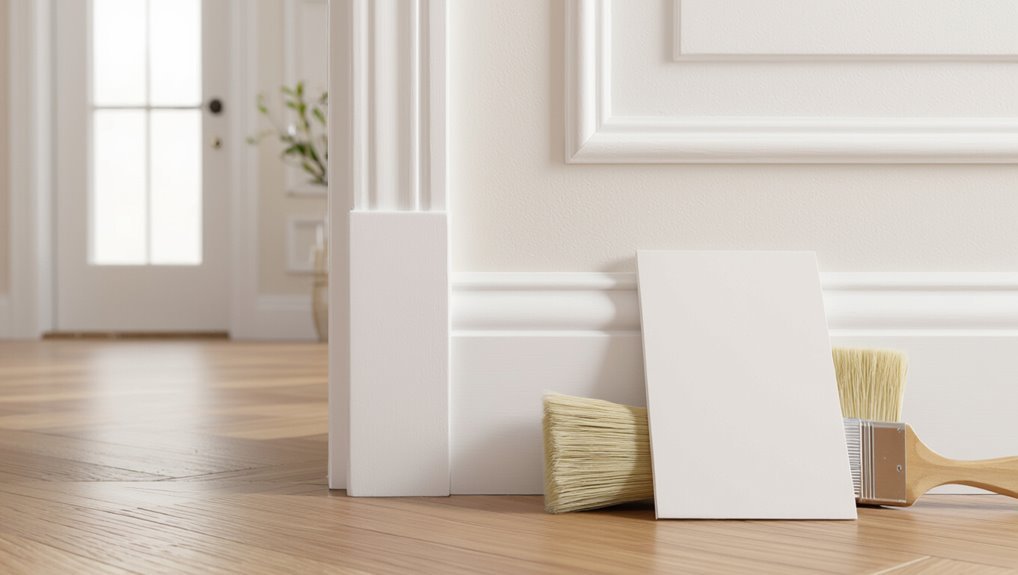
When you choose a trim sheen, pick the highest gloss that hides flaws you can live with and that matches the room’s traffic and light levels.
Eggshell or satin works well for low-traffic rooms, while semi-gloss or gloss is better for doors, window casings, and high-contact areas because they’re more durable and easier to clean.
Balance trim color contrasts, desired sheen longevity, and maintenance to decide.
How Trim Function Affects Sheen (Doors, Baseboards, Crown)
Because trim pieces serve different purposes and see different wear, you should match sheen to function: use higher-gloss paints on doors and hand-contact areas for durability and easy cleaning.
Choose semi-gloss or satin for baseboards that get kicked and scuffed, and opt for a lower gloss—eggshell or satin—on crown molding where you want subtler highlights and fewer reflected flaws.
Consider trim styles and sheen compatibility when deciding.
When to Choose Flat, Eggshell, or Satin for Trim
Choosing between flat, eggshell, or satin for trim comes down to balancing appearance, durability, and how much wear the piece will see:
Pick flat for low-traffic, decorative trim where you want to hide imperfections;
eggshell for moderately used areas that need a bit of wipeability without much shine;
and satin for high-contact trim that benefits from easier cleaning and a subtle sheen.
Consider trim color and sheen durability when deciding.
Why Semi-Gloss Is the Go-To Trim Sheen
Pick semi-gloss if you want trim that stands up to daily use while still looking crisp — it offers a durable, easy-to-clean finish with a subtle shine that highlights molding without shouting for attention.
Choose semi-gloss for trim that’s durable, easy to clean, and subtly highlights molding without being flashy.
You’ll get semi-gloss advantages like scuff resistance and easy wiping.
Consider these trim sheen recommendations:
- Durable, cleanable surface
- Highlights detail subtly
- Works with most room styles
When High-Gloss Trim Is Worth the Extra Shine
If you like semi-gloss for durability but want trim that really pops, high-gloss is worth considering—especially in spaces where reflection and crisp edges matter. You’ll enjoy high gloss benefits like sharper highlights and easier wipe-downs, but weigh maintenance considerations: scuffs show more.
| Benefit | Drawback |
|---|---|
| Shows detail | Shows imperfections |
| Easy cleaning | Needs careful prep |
| Reflective finish | Scuffs visible |
Trim Sheen by Material: Wood, MDF, PVC
Different trim materials take sheen differently, so you’ll want to match finish to substrate: natural wood soaks up and shows grain under satin or semi-gloss.
MDF’s smooth, porous surface benefits from a sealer plus gloss for durability.
PVC needs paints formulated for plastics to avoid peeling while still allowing a glossier sheen for easy cleaning.
- Consider wood characteristics and grain visibility.
- Prioritize mdf durability with proper sealing.
- Factor pvc flexibility and environmental factors.
Trim Sheen by Room: Kitchens, Baths, Kids’ Rooms
Knowing how each material takes sheen helps you choose appropriate finishes for specific rooms.
In kitchens, pick semi-gloss for trim to resist kitchen durability needs and allow easy cleaning.
In baths, use satin or semi-gloss to handle bathroom moisture without looking plasticky.
For kids’ rooms, eggshell or satin balances wipeability and softer appearance while still standing up to scuffs and spills.
How Sheen Reveals or Hides Imperfections
If you want crisp, reflective trim, know that high gloss will magnify every nick and brushstroke.
Semi-gloss gives you a balanced shine that shows some reflection without screaming flaws.
If you’re trying to hide texture or minor imperfections, a matte finish is your best bet.
High Gloss Magnifies Flaws
Because gloss reflects light sharply, it tends to spotlight every bump, brush stroke, and seam, so you’ll see flaws that flatterer sheens hide.
High gloss increases flaw visibility, so surface preparation matters—sanding, filling, and priming reduce glareed defects. You’ll appreciate the durability, but expect spotlighted imperfections.
- Inspect closely before painting
- Sand and fill imperfections
- Use quality primer and technique
Semi-Gloss Balances Reflection
While it’s shinier than eggshell, semi-gloss tames reflections enough that you won’t see every minor flaw—so you get a durable, clean-looking trim without magnified imperfections.
You’ll appreciate semi gloss benefits: easy wiping, stain resistance, and crisp edges.
Use simple maintenance tips—gentle soap, soft cloth, avoid abrasive scrubbers—to keep sheen even and prevent wear that would highlight flaws over time.
Matte Helps Conceal Texture
A matte finish hides surface texture in ways shinier sheens can’t, so you’ll notice fewer bumps, brush marks, and tiny drywall imperfections on trim painted flat.
You can rely on matte textures to mask minor flaws, but remember it shows scuffs more easily and isn’t as washable as glossier options.
- Hides surface imperfections
- Minimizes brush marks
- Soft, low-reflection look
Primer and Trim Paints That Boost Adhesion and Durability
Good adhesion starts with the right primer and trim paint; they’ll lock to the surface, resist moisture, and create a smooth base for topcoats.
You should use adhesion techniques like bonding primers on slick substrates and deglossing before priming.
Choose paints formulated for trim—low-porosity, high-bind formulas—so durability factors like abrasion and stain resistance protect edges and maintain crisp lines over time.
Painted vs Stained Trim: Best Sheen Choices
When you pick between painted and stained trim, consider how sheen affects both appearance and wear.
Painted trim usually benefits from higher sheens (semigloss or satin) for durability and easy cleaning, while stained wood often looks best with lower sheens (matte or low gloss) that preserve grain depth.
You’ll weigh paint durability against natural look; stained finishes favor subtlety.
- Semigloss for busy areas
- Satin for balanced sheen
- Matte for rich wood grain
Touch-Ups and Maintenance : Which Sheens Hide Repairs
Now that you’ve weighed sheen for appearance and durability, think about how easy repairs will blend in over time. You’ll favor mid to low sheen for subtle repair strategies; high gloss shows edges. Use proper paint application, match batches, and practice touch up techniques. Regular maintenance tips prevent big fixes.
| Sheen | Hides Seams | Best Use |
|---|---|---|
| Flat | Good | Low-traffic |
| Satin | Best | Trim |
Color, Lighting, and Sheen: Making Trim Pop
Think about how color contrast choices can make your trim stand out against walls or blend in for a subtler look.
Notice how lighting changes the way a sheen reads—bright light will exaggerate gloss while soft light tames it.
That sheen itself alters perception of color and texture, so pick a finish that matches the room’s light and the statement you want to make.
Color Contrast Choices
Because trim frames your rooms, choose contrast with purpose: lighter trim opens and defines dark walls, while darker trim grounds pale rooms and highlights architectural details.
You’ll use color psychology to set mood and pick contrasting colors that suit scale and style. Consider finish sheen separately.
- Use crisp white for modern clarity
- Try deep hues for drama
- Match wood tones for warmth
Lighting Effects On Sheen
After you’ve picked contrast and color, consider how light will change the way a sheen reads — it can make a high gloss look sharp and modern or reveal every imperfection.
On the other hand, a satin glow softens edges and hides flaws. You’ll want to test sheen variations under different lighting angles, move samples around the room, and choose trim finish that balances reflection with surface forgiveness.
Sheen Impact On Perception
When you combine color and lighting, sheen becomes a powerful tool for shaping how trim reads. Higher sheens amplify contrast and crispness, while lower sheens mute color depth and soften changes.
You’ll use sheen effects to control reflections and highlight profiles, creating perceived visual depth or subtle blending depending on intent.
- Increase sheen for sharp trim edges
- Choose low sheen to soften transitions
- Balance light, color, and finish
How to Paint High-Gloss Trim Without Brushmarks
If you want truly smooth, mirror-like trim, you’ll need the right prep, tools, and technique to eliminate brushmarks before the paint dries.
Sand to 220, clean dust, and use a high-quality angled brush or foam brush for consistent paint application.
Sand with 220 grit, remove dust, and use a quality angled or foam brush for even paint application.
Use thin, even coats, maintain a wet edge, and lightly sand between coats.
Practice brush techniques to minimize strokes and shine.
Cost and Time Trade-Offs: Low-Sheen vs High-Sheen Projects
Smoother, high-gloss trim looks great, but it also demands more prep, better tools, and extra coats than lower-sheen options — and that affects both your budget and schedule.
You’ll weigh time efficiency against durability; a cost analysis helps decide if extra labor and materials pay off.
Consider these factors:
- Prep and sanding intensity
- Number of coats and drying time
- Tool and material costs
Quick Decision Guide : Pick the Right Trim Sheen for Your Project
1 quick checklist helps you pick the right trim sheen by matching room function, visibility, and maintenance needs to the finish’s durability and appearance.
Consider traffic: high-gloss for trim in busy spaces, satin for family rooms, eggshell for low-visibility areas.
Match sheen to use: high‑gloss for busy trim, satin for family rooms, eggshell where visibility’s low.
Balance aesthetics and cleaning.
Watch trim sheen trends for modern looks, and use practical choosing sheens advice to guarantee longevity and curb appeal.
Frequently Asked Questions
Can I Use the Same Trim Sheen for Interior and Exterior Trim?
Yes—you can, but you shouldn’t always. You’ll weigh trim sheen comparison factors: durability, weather resistance, and surface prep. Interior exterior differences mean gloss or semi-gloss works outside; satin or semi-gloss often suits indoor trim.
How Does Humidity Affect Trim Paint Sheen Performance?
You’ll notice humidity effects can make trim paint fail sooner—moisture softens sheen and encourages peeling, so choose higher-sheen, durable formulas; they resist warping and boost sheen durability, but ventilation and proper prep still matter.
Are Eco-Friendly Low-Voc Sheens Less Durable for Trim?
You’ll find eco-friendly low-VOC sheens can be slightly less durable on high-wear trim, but proper prep, primer, and a higher-sheen option improve eco friendly durability, so VOC levels don’t force you to sacrifice longevity.
Can I Apply a Clear Coat Over Painted Trim for Extra Protection?
Absolutely — you can; it’s like armor for your trim, ridiculously protective. You’ll get clear coat benefits: added durability, scuff resistance, and sheen control. Use proper paint application techniques: thin coats, sanding between layers, and clean drying conditions.
Do Dark Trim Colors Show Brushmarks More Than Light Colors?
Yes — darker trim tends to show brushmark visibility more, because higher color contrast highlights surface variations. You’ll want smoother prep, thinner coats, and possibly a glossier sheen to minimize visible brush strokes and uneven texture.
Conclusion
You’ll usually pick semi-gloss for trim because it balances durability and cleanability, but your room’s use and light should guide you. Did you know high-sheen finishes can reflect up to 60% more light than flat paints, making small rooms feel brighter but highlighting flaws? Consider that trade-off, test samples in your space, and choose the sheen that gives you the durability you need without magnifying imperfections you don’t want to see.
