
How to Take Texture Off Walls: Smooth Wall Transformation Steps
You can remove wall texture and get smooth walls by deciding whether to DIY or hire a pro, testing for asbestos/lead on older finishes, then wet-scraping popcorn or dry-scraping lighter textures; repair damage, apply one to three skim coats of joint compound, sand smoothly, prime, and paint with a low-sheen finish. Wear PPE, control dust, and protect floors and trim. Follow these steps and you’ll have pro-level results—keep going to learn timing, tools, and contractor tips.
Decide: DIY or Hire a Pro?
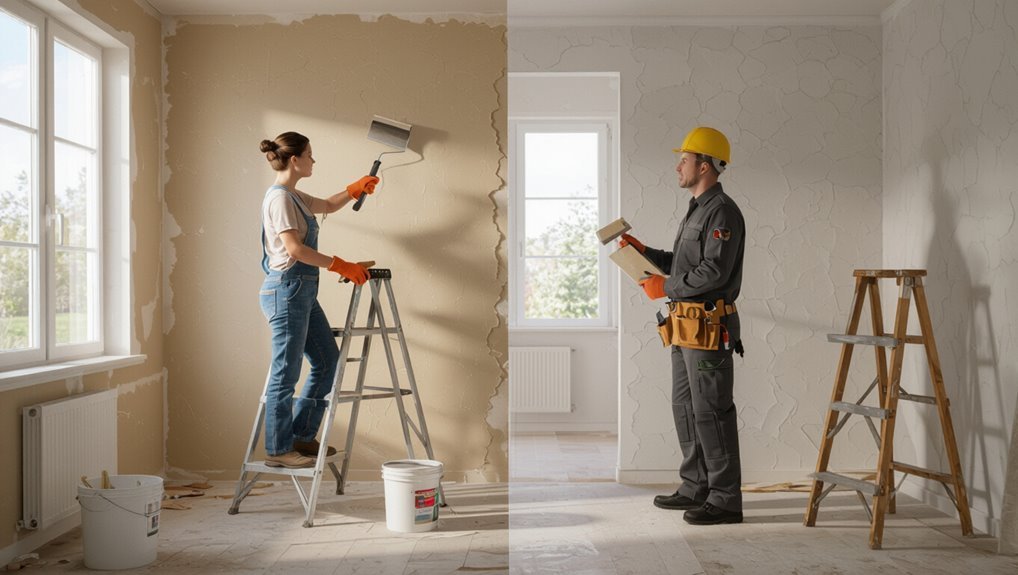
Before you start scraping or renting a sander, decide whether you’ll tackle the job yourself or hire a pro.
You’ll weigh DIY Considerations: time, skill, tools, and mess.
If you’re uncertain about structural issues, large surfaces, or flawless finishes, lean on Professional Expertise.
Hiring saves time and risk; doing it yourself cuts costs but demands careful planning and realistic expectations.
Why Remove Wall Texture and When to Choose Smooth Walls
If you want cleaner, more modern interiors or plan to repaint, removing wall texture can make surfaces look smoother, reflect light better, and simplify refinishing.
You’ll boost wall aesthetics, create a neutral backdrop, and make future updates easier.
Consider keeping texture where it hides flaws or improves acoustics, but choose smooth walls for a contemporary, easy-to-maintain finish that highlights trim and décor.
Is It Popcorn, Orange Peel, or Knockdown? How to Tell
First look at the wall to spot the visual differences: popcorn is bumpy and popcorn-like, orange peel looks like a fine, dimpled skin, and knockdown has flattened, torn peaks.
Run your hand over the surface—popcorn feels coarse, orange peel is smooth with small bumps, and knockdown has irregular raised areas and flat tops.
Check for repeating patterns or spray lines to confirm whether it was sprayed on or troweled.
Visual Texture Differences
When you look at a textured ceiling or wall, you can usually tell which type it’s by the pattern and feel—popcorn is bumpy and granular, orange peel has a subtle dimpled surface, and knockdown shows flattened, mottled patches.
You’ll spot visual texture trends: uniform speckling versus larger torn patterns. That helps you choose appropriate texture removal techniques and plan prep, tools, and time.
Touch And Feel
Beyond what you can see, touching the surface tells you a lot about the texture type. You’ll press gently, compare bumps, and decide if wall materials need sanding before texture removal.
Use DIY tips and painting techniques that respect surface finishes, renovation challenges, and aesthetic preferences during wall preparation.
- coarse popcorn grit underhand
- fine orange peel dimples
- flattened knockdown ridges
- chalky primer dust
- smooth skim coat sheen
Pattern Repeat Clues
How can you tell which texture you’re looking at by its pattern repeats? Use pattern recognition: popcorn shows random, clustered bumps; orange peel has fine, consistent dimples; knockdown displays flattened, irregular patches.
In texture analysis, inspect scale, repeat interval, and edge sharpness. You’ll match those clues to the texture type, then choose removal methods suited to each distinct surface.
Test: Drywall Versus Veneer Plaster – How to Check
Look closely at the surface: drywall usually shows paper seams or uniform texture, while veneer plaster has a smoother, harder finish with subtle trowel marks.
Tap the wall with your knuckles—drywall sounds hollow and slightly dull, whereas veneer plaster produces a firmer, more solid tone.
Use these visual cues and the sound test to decide whether you need drywall repair methods or plaster-specific techniques.
Visual Surface Differences
When you’re deciding whether a wall is drywall or veneer plaster, start by inspecting the seams, texture, and trim details; veneer plaster usually hides joints and has a smoother, harder feel, while drywall shows taped seams and paper edges.
Note visual texture, surface patterns, texture types, wall finishes, aesthetic appeal, renovation trends, design choices, and interior styles.
- finely troweled sheen
- subtle ridges
- visible tape lines
- paint pooling in grooves
- uniform plaster continuity
Tap And Sound Test
Try tapping a few spots across the wall with your knuckles or a screwdriver handle and listen closely; you’ll hear a hollow, dull sound over drywall and a sharper, more solid tone where veneer plaster is bonded to the lath.
Note tap sounds and wall vibrations as you move; mark areas that ring hollow for drywall and those with muted, solid responses indicating plaster for different removal approaches.
How to Check for Asbestos and Lead in Older Textured Finishes
Worried your textured walls might contain asbestos or lead? You should prioritize asbestos testing and lead detection before scraping, especially in historic homes.
Get professional advice to assess samples, follow safety precautions, and guarantee renovation readiness. Don’t DIY sampling unless trained.
- dusty popcorn ceiling
- chalky old paint
- crumbling joint compound
- vintage wallpaper layers
- contractor taking samples
How to Choose PPE to Stay Safe and Reduce Dust
Before you start scraping, pick personal protective gear that blocks dust and particles—think N95 or P100 respirators, safety goggles, and durable gloves.
You’ll also want dust-control apparel like disposable coveralls or washable work clothes with cuffs to keep dust off your skin and out of your home.
We’ll go over how to fit and use each item properly so you stay safe and minimize cleanup.
Personal Protective Gear
When you’re removing wall texture, pick PPE that protects your lungs, eyes, and skin while cutting dust at the source.
Use safety measures and choose protective equipment that fits well and seals properly.
Visualize gear before you start:
- NIOSH-rated respirator with cartridges
- Tight-sealing safety goggles
- Disposable gloves
- Ear protection
- Hard hat or bump cap
Dust Control Apparel
Although you’ll already have basic PPE, choose dust-control apparel that seals out fine particles and stays comfortable during long jobs; pick coveralls with taped seams, a hood, and elastic cuffs, and pair them with disposable boot covers and a fitted respirator skirt to keep dust from migrating into your clothes.
Add dust masks with proper breathing filters, protective goggles, safety gloves, sturdy work boots, dust barriers, and active ventilation systems.
Tools and Materials You’ll Need for a Smooth Wall Transformation
You’ll need a concise kit of tools and materials to strip texture and prep walls properly: safety gear (goggles, respirator, gloves), a reliable scraper or drywall knife, a sanding block or pole sander with 120–220 grit paper, a joint compound and taping knife for skim-coating, primer and paint, drop cloths and masking tape, a bucket and sponge for cleaning, and optional items like a drywall sander with dust collection or a chemical texture remover for stubborn finishes.
Use texture removal techniques and follow wall preparation essentials to get even, paint-ready surfaces.
- Scraper and taping knife
- Pole sander with dust bag
- Joint compound and hawk
- Heavy-duty drop cloths
- Respirator and goggles
How to Plan the Project Room-by-Room and Estimate Time
Start by walking each room to assess wall condition, ceiling height, trim, and any repairs you’ll need.
Use those observations to estimate how many hours peeling, sanding, and skim-coating will take for that space.
Multiply by rooms and add contingency time so your schedule stays realistic.
Assess Room Conditions
Room size, surface condition, and ceiling height all affect how long removing texture will take, so walk each room and note those details before you begin.
Check wall conditions and identify texture types, damage, and obstacles so you can plan supplies and protection.
- cracked drywall patch
- popcorn ceiling detail
- heavy orange peel pattern
- built-in shelving edges
- tight stairwell access
Estimate Time Per Room
Estimate how long each space will take before you touch a tool: factor square footage, texture type, prep needs, and access challenges into a single time estimate so you can schedule realistically.
Then break tasks per room—moving furniture, masking, skim coats, sanding, drying—assign hours for each.
Use time management techniques, build in buffers, and prioritize room preparation order to avoid delays and surprises.
How to Protect Floors, Trim, and Fixtures Before You Start
Before you scrape or sand a textured wall, cover every nearby surface so dust and debris don’t create extra work or damage.
Plan workspace preparation: use drop cloths and floor covering, secure trim protection with tape application, set up dust barriers, and maintain room organization for fixture safety.
- Heavy canvas drop cloths
- Plastic dust barriers taped tight
- Painter’s tape along trim
- Cardboard on high-traffic floor
- Covered fixtures and furniture
How to Remove Outlet Covers, Light Fixtures, and Switch Plates Safely
Once your floors, trim, and fixtures are protected, turn your attention to removing outlet covers, switch plates, and light fixtures so you can work safely and without leaving hardware in the way.
Shut power at the breaker, test with a voltage tester, and remove covers for outlet cover removal and switch plate precautions.
For light fixture safety, unmount fixtures and secure wiring per electrical safety tips.
How to Score and Scrape Loose Texture Before Wetting
Start by scoring the textured surface with a utility knife or razor scraper to break any loose peaks and reveal weak spots.
Then use a wide putty knife or drywall scraper to remove all flaking material so the remaining texture is firmly adhered before you wet the wall.
You should use proper scoring techniques and scraping tools to prep cleanly.
- thin scored lines
- loose chips falling
- flat scraper edge
- dust on drop cloth
- exposed smooth drywall
Wet-Scrape Method for Popcorn and Heavy Textures
After you’ve scored and scraped loose material, you’ll move on to the wet-scrape method for popcorn and heavy textures.
You’ll wet small sections, letting moisture effects soften the texture. Use proper wet scrape techniques, scrape gently to avoid gouging, and repeat as needed.
Focus on careful texture removal and thorough wall preparation so surfaces are ready for sanding, repair, and priming before repainting.
Dry-Scrape Method for Light Textures and Patching
Start by evaluating the texture thickness so you know whether a dry-scrape will be effective or if you’ll need to switch methods.
Use a scraper to remove loose material, then patch any gouges with joint compound.
Once dry, feather the edges smoothly so the repaired area blends with the surrounding wall.
Assess Texture Thickness
A quick dry-scrape will tell you whether a texture is light enough to remove without full wetting: hold a 6–8 inch putty knife at a shallow angle and scrape firmly across a small, inconspicuous area—if the texture flakes off in thin layers and the underlying drywall stays intact, you can proceed with dry-scraping and spot-patching; if it resists or digs into the paper face, you’ll need wetter methods or more extensive repairs.
- flaky popcorn crumbs
- thin, brittle ridges
- patches of bare paper
- loose granular dust
- stubborn, gouged spots
Use texture assessment during wall evaluation to decide next steps.
Patch And Feather
Tap into your dry-scrape assessment and get ready to blend the wall back to smooth: for light, flaky textures you’ll scrape off loose material, apply a thin layer of joint compound to fill depressions, and feather the edges so the repair disappears into the surrounding surface.
You’ll use targeted patch techniques, smooth with a clean trowel, and perfect feather application before sanding and priming.
How to Soften Texture With a Steamer for Stubborn Finishes
If the texture won’t sand or scrape off without gouging the drywall, a handheld steamer can soften the compound so you can remove it more cleanly; you’ll want to work in small sections, keeping the steamer moving to avoid over-wetting the paper face.
You’ll see steamer benefits immediately for texture softening. Use gentle scraping, blotting, patience.
- Steam haze curling edges
- Damp thumb test
- Softened peaks collapsing
- Thin slurry forming
- Clean substrate revealed
Dust Control During Texture Removal Sanding
Before you sand, seal the room and set up dust control so fine drywall powder doesn’t coat everything.
Wear an N95, cover vents, and hang plastic sheeting to isolate the workspace.
Use dust containment strategies like zippered doorways and tacky mats.
Employ vacuum sanding techniques with a HEPA-rated shop vac and dust-sealed sanders to capture particles at the source.
Handling Textured Ceilings Versus Walls
While ceilings and walls both get textured, you’ll face different challenges when removing texture from a ceiling: working overhead is physically harder, gravity pulls slurry and dust toward you, and access is often limited near fixtures and crown molding.
Removing ceiling texture is tougher—overhead work, falling slurry and dust, and tight spots around lights and molding.
You’ll treat ceiling textures more gently, brace ladders, and protect floors while adjusting technique for wall finishes.
- ladder and goggles
- plastic drop cloths
- overhead slurry drip
- recessed lighting tight spots
- feathered skim on walls
Inspect and Mark Drywall Damage After Scraping
Once you finish scraping and skim-coating areas around fixtures and ceilings, take a close look for gouges, paper tears, and thin spots in the drywall surface.
You’ll perform a quick drywall evaluation: mark dents, holes, and weak paper with pencil or tape.
Prioritize damage identification for repairs, noting depth and location so you can plan patching, sanding, and primer coverage efficiently.
How to Remove Texture From Drywall Without Damaging Tape Seams
Carefully remove texture around taped seams to avoid pulling paper or breaking the joint compound beneath; work in small sections with a light touch and the right tools so you can soften and lift the texture without disturbing the tape.
Gently soften and lift texture around taped seams in small sections to protect tape and compound.
Use gentle scoring, dampening, and a flexible scraper; protect seams for drywall preservation and smoother wall preparation with proven smoothing techniques.
- damp sponge softens texture
- thin putty knife
- feathered sanding
- avoid deep gouges
- inspect tape edges
How to Repair Gouges and Holes After Texture Removal
Start by evaluating each gouge and hole so you know what materials and technique you’ll need to fix them properly.
For gouge repair, remove loose debris, apply appropriate filler, and sand flush.
For hole patching, use patches or joint compound depending on size.
Finish with priming and sanding for consistent wall finishing.
Your texture assessment guides product choice and drying times.
How to Feather Joint Compound for a Seamless Skim Coat
Before you apply the skim coat, mix the joint compound to a creamy, spreadable consistency and load your taping knife so you can work quickly and smoothly.
Use smooth, overlapping strokes, feathering techniques at the edges, and wipe excess off the blade to avoid ridges.
- long sweeping knife strokes
- thin outer edges
- gradual pressure release
- smooth drying surface
- clean, sharp knife
How Many Skim Coats You’ll Likely Need for a Perfectly Smooth Finish
Most surfaces need one to three skim coats to achieve a perfectly smooth finish, depending on the wall’s condition and the thickness of each coat you apply.
You’ll assess damage, sanding needs, and drying between coats. Choose skim coat types appropriate for substrate and follow proven application techniques: thin, even layers, feathered edges, and light sanding.
Expect two coats for moderate texture removal.
How to Choose the Right Joint Compound for Skim-Coating
Now that you know how many skim coats you’ll likely need, pick a joint compound that matches the job and your working style.
Consider drying time, sandability, and finish level. Understand common joint compound types and basic application techniques so you choose lightweight, all-purpose, setting-type, quick-dry, or topping compounds for each coat.
- smooth trowel glide
- fine sanding dust
- slow-setting bulk
- fast-finish touch-ups
- creamy spreadability
How to Apply a Thin Coat of Drywall Mud Like a Pro
Gather a hawk, wide taping knife, clean mud pan, and a light-weight all-purpose joint compound so you’ve got the right tools and materials at hand.
Apply thin, even coats with long, overlapping strokes, then feather each edge to blend into the wall without ridges.
Once dry, sand lightly with a fine-grit block and inspect under angled light to catch any high or low spots before repeating if needed.
Tools And Materials
A good skim coat starts with the right tools and materials, so you’ll want a 12–14 inch stainless steel taping knife, a hawk or mud pan, a mixing bucket, lightweight all-purpose joint compound, and a clean, wide drywall brush or sponge for feathering edges.
Use proper tool types and material choices; plan surface preparation, texture removal, dust management, safety measures, wall inspection, contractor selection, finishing techniques.
- steel taping knife
- mud pan with fresh compound
- mixing bucket and drill paddle
- respirator and drop cloths
- inspection light and sanding block
Feathering And Sanding
Start with a thin, even layer of lightweight joint compound and work quickly so the mud stays workable; hold your 12–14 inch taping knife at a shallow angle and drag it in long, continuous strokes to feather the edges into the surrounding wall. Use feathering techniques, wait to fully dry, then employ sanding tips for smoothness.
| Step | Action |
|---|---|
| 1 | Apply thin coat |
| 2 | Feather edges |
| 3 | Let dry |
| 4 | Sand gently |
| 5 | Inspect finish |
How Long to Wait Between Coats and Ideal Drying Conditions?
Because drying time changes with temperature, humidity, and the product you used, you’ll need to check labels and the room conditions before recoating.
Because drying varies by temperature, humidity, and product, always check labels and room conditions before recoating.
You’ll wait typically 1–24 hours depending on primer/compound; maintain humidity control and 50–70°F for best cure.
Use fans and gentle heat; avoid high humidity or cold.
- warm air circulating
- dehumidifier running
- windows cracked slightly
- gentle fan breeze
- stable thermostat setting
How to Sand Skim-Coated Walls Without Creating Swirl Marks
Anyone can damage a smooth skim coat by sanding too aggressively, so work deliberately with light pressure and the right grit to avoid swirl marks.
Use circular and overlapping strokes, keep the pad flat, and change abrasive as needed.
Employ proper sanding techniques, check progress frequently, and finish with a finer grit to blend edges—prioritizing avoiding swirls for a flawless result.
How to Use Pole Sanders and Sanding Blocks Effectively
After you’ve got the skim coat smoothed and free of swirl marks, it’s time to switch to the right tools for larger surfaces: pole sanders and sanding blocks.
Use pole sander techniques for even strokes and pressure; apply sanding block strategies on edges and low spots.
Visualize progress:
- Long, steady vertical passes
- Light, consistent pressure
- Corner touch-ups with block
- Overlap each pass slightly
- Inspect surface often
How to Clean and Prime Walls After Sanding
Wipe the wall down thoroughly to remove all dust and debris left from sanding, because dust will prevent primer from adhering properly; use a microfiber cloth or a damp sponge and work from top to bottom, rinsing your cloth frequently.
After drying, vacuum corners, wipe with a tack cloth, and spot-clean stains.
Follow cleaning techniques, then apply priming essentials evenly to guarantee a smooth, sealed surface.
How to Choose the Best Primer for Stained or Patched Walls
When you’ve patched or got stains on the wall, pick a primer that blocks discoloration and prevents bleed-through.
Make sure it also bonds well to skim coats, joint compound, or patching plaster so your finish coat goes on smoothly.
Choosing a primer with both strong stain-blocking performance and excellent adhesion will save you time and touch-ups later.
Stain-Blocking Performance
If stains or patches are your main concern, pick a primer that specifically advertises stain-blocking or stain-sealing performance, because ordinary primers often let tannins, water marks, smoke, or rust bleed through the new finish.
Choose one offering strong stain resistance and surface durability to seal problem areas.
- yellowing tannin streaks
- brown water rings
- nicotine haze
- rusty drip marks
- patched drywall seams
Adhesion To Patches
Look for a primer that bonds tightly to both old texture and fresh patch compound, because good adhesion prevents peeling, flashing, or visible seams when you topcoat.
You’ll choose a primer formulated for varied patch materials, and follow adhesion techniques like scuff-sanding, cleaning, and thinning per instructions.
Test a small area to confirm grip before finishing the entire wall.
Spot-Primer Versus Full-Wall Priming: When to Do Each
Wondering whether you need to prime the whole wall or just the patched spots? You’ll weigh spot primer benefits against full wall considerations: spot primer saves time on small repairs, full priming evens absorption and prevents flashiness.
Choose based on patch size, age, and finish.
- small patched area
- multiple scattered repairs
- old glossy paint
- high-contrast patches
- prepping for uniform topcoat
How to Pick Paint Sheen That Hides Imperfections
When you’re trying to hide sanding marks and subtle surface flaws after removing texture, pick a lower-sheen paint.
Matte or flat finishes scatter light and make imperfections less visible than eggshell or satin.
That simple choice can save you time on repairs and give a smoother-looking result.
Choose Lower Sheen Paint
Pick a lower-sheen paint to help hide bumps, seams, and minor wall flaws—flat or matte finishes scatter light instead of reflecting it, so imperfections become less noticeable.
You’ll gain low sheen benefits while balancing paint durability; choose products labeled for moderate-traffic rooms and touch-ups.
Visualize results:
- Soft, light-diffusing walls
- Subtle texture smoothing
- Reduced glare
- Fewer visible repairs
- Uniform color depth
Use Matte Or Flat
Switch to a matte or flat finish to mask wall imperfections—these low-sheen paints scatter light instead of reflecting it, so bumps, seams, and small repairs become far less noticeable.
You’ll want matte finishes or flat paints for living areas and ceilings where durability isn’t critical. They hide flaws better than eggshell or satin, but avoid high-traffic spots where scrubbability matters.
How to Paint for a Factory-Smooth Finish
Aim for a glass-like surface by sanding, priming, and painting with tools and techniques that eliminate brush marks, roller stipple, and runs.
You’ll use precise paint techniques to improve finish quality: apply thin coats, use a high-density roller, maintain a wet edge, sand between coats, and spray for seamless coverage.
- thin, even coats
- high-density roller nap
- HVLP spray mist
- light sanding grit
- consistent wet edge
How to Handle Corners, Trim, and Textured-to-Smooth Transitions
When you get to corners, trim, and the edge where textured meets smooth, work deliberately and use the right tools so alterations look intentional rather than patched.
Use corner techniques like feathering with a drywall knife and sanding blocks. Protect trim, remove or mask molding, and create clean trim connections with thin joint compound.
Blend edges, check alignment, and sand for a seamless finish.
How to Deal With Stubborn Texture Problems and Adhesion Failures
If stubborn texture won’t scrape off cleanly or keeps flaking after you thought you’d removed it, don’t assume the whole wall’s ruined — diagnose the failure first and plan targeted fixes.
You’ll address adhesion failures with proper surface preparation, test removal techniques, and choose repair strategies to overcome common project challenges.
Address adhesion issues by prepping surfaces, testing removal methods, and selecting targeted repair strategies.
- peeling patches
- brittle skim
- glued-on texture
- damp-stained areas
- uneven adhesion
How to Correct Waves, Ridges, or Visible Tape Lines
Once you’ve handled flaky texture and adhesion problems, turn your attention to surface irregularities like waves, ridges, and visible tape lines — they’re often the next thing that gives away a botched removal or poor taping.
Use wave correction techniques: mark high/low spots, feather joint compound, sand progressively.
Apply ridge smoothing methods: skim coat narrow ridges, blend tape seams, prime and inspect, repeating thin fills until surface reads flat.
How to Maintain Room Humidity and Temperature During Work
Keep humidity between 40–50% so your joint compound dries evenly and doesn’t crack.
You’ll also want to stabilize the room temperature around 65–75°F to guarantee consistent curing.
Use a humidifier/dehumidifier and a thermostat-controlled heater or AC to maintain those settings while you work.
Control Humidity Levels
Because joint compound and paint dry differently depending on moisture in the air, you’ll want to keep room humidity between about 40–50% and temperature around 60–75°F while you work.
Use humidity control and moisture management to guarantee even drying.
Visualize the process:
- Dehumidifier humming quietly
- Hygrometer on the wall
- Open window for short bursts
- Fans circulating air
- Damp sponge test on patch
Stabilize Room Temperature
After you’ve controlled humidity, focus on stabilizing room temperature so drying stays consistent and compound bonds properly.
You’ll keep heaters or AC running to maintain a steady range (ideally 60–75°F), avoid drafts or open windows, and monitor with a thermometer and hygrometer.
Good temperature control complements humidity management, prevents cracking, and guarantees joint compound cures evenly for smooth, durable walls.
How to Dispose of Removed Texture Material Responsibly
When you’ve stripped texture from a wall, don’t just toss the debris in the nearest bin—handle it responsibly to protect people and the environment.
After stripping wall texture, don’t toss debris—dispose responsibly to protect people and the environment.
You’ll bag contaminants, check recycling options, contact local waste management, and label hazardous loads. Follow drop-off rules, wear PPE, and keep dust contained.
- sealed contractor bags
- labeled boxes
- covered pickup truck
- marked hazard tape
- broom and dustpan
Estimate DIY Cost: Labor, Materials, and Disposal
Before you start, add up material costs (joint compound, primers, sanding supplies) and any rental fees for tools like sanders or drywall knives.
Plan labor time by estimating hours per room—removal, sanding, repairs, and repainting—and multiply by whoever’s doing the work.
Don’t forget disposal costs for debris and any special handling or landfill fees.
Material Costs Breakdown
A realistic DIY cost estimate covers three parts: your time (labor), the supplies and tools you’ll buy or rent (materials), and how you’ll handle waste (disposal).
You’ll weigh material types and cost comparison, factor labor pricing and tool expenses, use material sourcing and rental options, plan for unexpected costs, and apply budget strategies and savings tips in project planning.
- Buckets of joint compound
- Sandpaper piles
- Drop cloths crumpled
- Rented sander humming
- Trash bags filled
Labor Time Estimates
Estimate your labor by breaking the job into clear steps—prep, texture removal, skim-coating, sanding, and cleanup—and assigning realistic time blocks to each so you can total hours and compare DIY vs. pro costs.
Track labor costs via solid time management and project scheduling, apply efficiency tips to boost worker productivity, use task delegation and resource allocation, and plan timeline adjustments for delays to keep estimates accurate.
Disposal And Rental Fees
Once you’ve mapped out labor and materials, factor in disposal and rental fees so your DIY budget stays realistic.
You’ll choose disposal options, estimate rental costs for tools like sanders or dumpsters, and add hauling or tip fees. Plan pickup timing to avoid extra days.
- Dumpster at curb
- Rent a drywall sander
- Plastic waste bags
- Truck hire
- Landfill tipping fee
How to Speed Up the Project Without Sacrificing Quality
Break the work into focused stages and tackle them with the right tools so you finish faster without cutting corners.
Use project efficiency tips like prepping, batching similar tasks, and using efficient sander/grinder setups.
Schedule helpers for cleanup and drying.
Apply quality assurance strategies: inspect each stage, fix defects immediately, and maintain consistent materials and techniques so speed never sacrifices finish durability or appearance.
How to Avoid Common Mistakes That Force Rework
While it’s tempting to rush, taking shortcuts usually means you’ll do the job twice—so plan each step, use the right tools, and verify conditions before you sand or skim-coat.
Rushing leads to redo—plan steps, use proper tools, and confirm conditions before sanding or skim-coating.
You’ll avoid common pitfalls with solid project planning and active mistake prevention: follow instructions, check moisture, prep edges, use proper grit, and let compounds cure fully.
- dusty sanding cloud
- damp blistered paint
- ragged tape lines
- uneven skim texture
- tool slip marks
How to Inspect Finished Walls for Professional-Level Results
Now that the texture’s off, you’ll want to start with a close visual surface inspection to spot any remaining bumps, streaks, or missed spots.
Run your hand lightly over the wall to check tactile smoothness and catch imperfections your eyes might miss.
Finish by examining edges and trim for clean lines and consistent changes before you paint or seal.
Visual Surface Inspection
A careful visual surface inspection is the step that separates amateur fixes from professional results. You’ll do texture analysis and surface evaluation by scanning for shadows, seams, filler spots, paint inconsistencies, and light reflection differences.
Use consistent lighting and varied angles. Imagine defects as tiny topography to address.
- low-angle shadow lines
- hairline cracks
- uneven patch color
- subtle ridges
- light hot spots
Tactile Smoothness Check
Because your eyes can miss tiny imperfections, run your hand lightly over the wall to check for smoothness and detect bumps, ridges, or sanding lines that aren’t visible from across the room.
Use systematic strokes—vertical, horizontal, diagonal—to gather tactile feedback and make a targeted texture assessment.
Note any problem areas, mark them, and plan precise touch-ups before priming and painting.
Edge And Trim Review
After you’ve run your hand over the wall and marked trouble spots, shift focus to the edges and trim where imperfections show up most.
You inspect corners, baseboards, and window casings, checking seam lines, paint wrap, and how edge materials meet trim types. Fix gaps, sand rough spots, and touch up paint for a seamless finish.
- crisp corner seams
- flush baseboards
- tight window casing
- even paint wrap
- smooth trim joints
How to Care for Newly Smoothed Walls Long-Term
Keep up a simple maintenance routine to protect your newly smoothed walls and preserve that clean finish for years.
For long term maintenance, dust regularly with a microfiber cloth and spot-clean scuffs with mild detergent.
Touch up paint when needed, inspect for moisture or cracks, and avoid abrasive cleaners.
Consistent wall care prevents damage and keeps surfaces looking fresh without major repairs.
How Contractors Price Texture Removal and Skim-Coating (What to Expect)
Maintaining your smooth walls helps them last, but sooner or later you may need a professional to remove old texture and skim-coat for a flawless finish.
Expect contractor quotes to reflect pricing factors like labor rates, material costs, and project timelines; check customer reviews and service comparisons, and use negotiation tips to refine bids.
Contractor quotes vary—consider labor, materials, timelines, reviews, and negotiate to get fair bids.
- Dusty worksite
- Taped floors
- Mud pan and hawk
- Feathered seams
- Drying lights
How to Choose the Right Contractor If You Decide Not to DIY
If you’d rather hire someone to remove texture and skim-coat your walls, choosing the right contractor will save time, money, and headaches; focus on credentials, experience with texture removal, and clear communication from the start.
Verify contractor qualifications, insurance coverage, and previous work.
Check client reviews, discuss budget considerations and project timeline, confirm communication skills, and get detailed contract details before starting.
Frequently Asked Questions
Can I Remove Texture in Stages to Live in the Home During Work?
Yes — you can do staged removal to keep living arrangements viable; tackle one room or floor at a time, contain dust with plastic, work nights/weekends, and schedule drying/repairs so you’re comfortable and minimally disrupted.
Will Smoothing Walls Affect My Home’s Resale Value?
Yes — it can. You might boost appeal in many resale market segments, yet buyer preferences vary, so don’t assume universal gains; plan quality workmanship and neutral finishes to maximize interest and avoid turning off niche buyers.
How Long Before I Can Hang Art or Shelves on Newly Smoothed Walls?
You can hang art or shelves after paint fully cures—usually 24–48 hours for latex, longer for oil. For best results, follow hanging tips and guarantee wall preparation (primed, dry, smooth) so anchors hold reliably.
Are There Eco-Friendly Joint Compounds or Low-Voc Options?
Yes — you can choose eco friendly products like gypsum-based premixed compounds and plant-based additives; they reduce fumes, improve indoor air quality, and you’ll enjoy low voc benefits such as safer curing, less odor, and healthier living spaces.
Can Humidity Cause New Skim Coats to Bubble Later?
Like a storm on the horizon, yes — humidity effects can trigger bubbling issues later. If you don’t control moisture and nail wall prep, skim coat durability suffers, so ventilate, dry thoroughly, and use suitable compounds.
Conclusion
Removing wall texture can feel like untangling a knotted rope, but you’ve got this. Whether you DIY or hire a pro, know what texture you’re facing, test for asbestos or lead if the home’s old, and decide if skim-coating or full replacement fits your budget and timeline. Inspect work carefully, care for newly smoothed walls, and choose contractors by references and clear pricing. Smooth walls reward patience with a fresh, modern canvas.
