
How to Paint a Wall With Roller for Best Results
You’ll get smooth, even coverage if you prep, prime, and load your roller correctly: clear and clean the area, patch and sand, then prime bare or repaired spots. Use a tray and grid, load the roller evenly, and roll in a “W” or “M” pattern, keeping a wet edge while cutting in corners with an angled brush. Work in manageable sections, use the right nap for your wall, and follow drying times — keep going for step-by-step tips.
How to Paint a Wall With a Roller: Step-by-Step
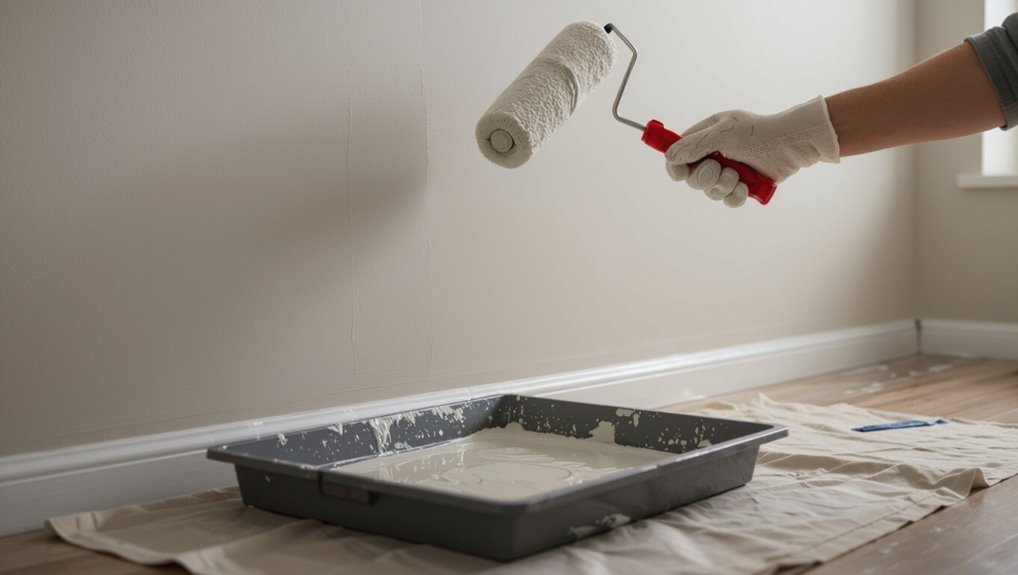
Start by preparing the room: move furniture, lay down drop cloths, remove outlet covers, and tape trim so paint goes only where you want it.
You’ll use wall preparation tips: clean, patch, sand, and prime.
Load the roller evenly, use paint roller techniques like ‘W’ patterns, overlap passes, and maintain a wet edge.
Work methodically for smooth, consistent coverage.
What You’ll Achieve With a Roller-Painted Wall
When you use a roller correctly, you’ll get a smooth, consistent finish that hides brush marks.
You’ll also cover large areas much faster than with a brush, cutting your painting time.
The result is an even, professional-looking wall with minimal effort.
Smooth, Even Finish
Although a brush can touch up corners, a roller gives you the uniform, streak-free surface most people picture when they think of a freshly painted wall. You’ll get consistent texture if you use a quality paint roller and proper application techniques, maintain even pressure, and overlap passes. Quick reference:
| Tip | Benefit |
|---|---|
| Even pressure | No lap marks |
| Overlap | Blends edges |
| Short naps | Smooth texture |
| Steady speed | Uniform sheen |
Faster Coverage Results
A roller can cover a room in a fraction of the time a brush would, so you’ll finish walls faster and with fewer trips to the paint tray.
You’ll achieve broad, consistent coverage quickly, cutting project time and fatigue.
Using efficient techniques and fast drying paints lets you recoat sooner, tidy edges faster, and complete touch-ups in one session for professional-looking results.
Best Rooms and Wall Types for Roller Painting
When you choose where to use a roller, think about high-traffic living areas first since rollers give durable, even coverage that stands up to wear.
For moisture-prone rooms like bathrooms and kitchens, pick a mildew-resistant paint and a dense nap roller to handle humidity.
Smooth walls need a short-nap roller for a fine finish, while textured walls require a thicker nap to reach into crevices.
High-Traffic Living Areas
If you want a durable, even finish in rooms that get the most use, rollers are your best bet for living rooms, hallways, kitchens, and kids’ bedrooms.
You’ll prioritize high traffic durability with washable, scrubbable paints and medium-nap rollers for slight texture.
Choose wall color selection that hides scuffs—mid-tones and warm neutrals—and apply two coats for lasting coverage.
Moisture-Prone Rooms
Because moisture and frequent cleaning demand special care, choose paints and rollers that resist mildew and stand up to humidity.
You’ll pick moisture resistant paints, use ventilation solutions, and focus on humidity control for durability and mold prevention.
Recommended actions:
- Use semi-gloss or satin finish.
- Seal joints and trim.
- Install exhaust fans.
- Recoat with mildew-resistant formulations regularly.
Smooth vs. Textured Walls
Though smooth walls let rollers glide faster and leave a finer finish, textured surfaces hide imperfections and mask uneven strokes.
So you’ll choose your roller and technique based on the wall’s profile and the room’s use. For bedrooms and living areas, lean into smooth wall benefits with short-nap rollers.
For basements or high-traffic rooms, accept textured wall challenges and use thicker naps to fill crevices.
Essential Roller Kit Checklist
Before you roll paint on the wall, gather a compact kit of reliable tools that’ll save time and produce a smooth finish:
- Quality tray, liner, and shield for tidy loading — roller kit essentials.
- Sturdy frame and extension pole for reach and control.
- Variety pack of covers to test paint roller types quickly.
- Angled brush, putty knife, sandpaper, and drop cloth for prep and cleanup.
Choosing Roller Nap for Wall Texture
When you pick a roller nap, match its thickness to your wall’s texture so you get even coverage without excess splatter or missed crevices.
For smooth walls, use a short nap (1/4″–3/8″) for a sleek finish.
For smooth walls, pick a short 1/4″–3/8″ nap for a clean, sleek paint finish.
For lightly textured surfaces, choose 3/8″–1/2″.
Heavier textures need 3/4″ or more.
Test a small area to confirm coverage and avoid streaks.
Roller Materials: Finish, Lint, and Cleanup
Pick the right finish for the job—matte hides imperfections while semi-gloss is easier to clean.
You’ll want to minimize roller lint by choosing quality covers and giving them a quick shake or tape roll before painting.
Afterward, clean rollers promptly and store them properly so they stay usable for the next coat.
Choosing The Right Finish
The finish you want—matte, eggshell, satin, or gloss—will determine the roller cover you should use, since nap length and material affect texture, lint shedding, and how easy cleanup will be.
Consider finish types and color selection when choosing nap and fiber to match sheen and hide.
- Matte: short nap, smooth
- Eggshell: medium nap
- Satin: medium-long nap
- Gloss: short, dense
Minimizing Roller Lint
One simple step you can take to cut down on lint is choosing the right roller fiber and preparing it before you paint. Pick lint free rollers, shake or rinse new covers, and wrap them with tape to remove loose fibers. This helps roller lint prevention and keeps finishes smooth.
| Fiber | Nap | Use |
|---|---|---|
| Microfiber | Short | Smooth walls |
| Polyester | Medium | Semi-rough surfaces |
| Wool blend | Long | Textured surfaces |
Cleaning And Storage
When you’re done painting, clean and store rollers promptly to protect the finish and prevent lint buildup; rinsing until water runs clear and spinning or blotting out excess moisture keeps fibers from matting and shedding later.
Follow roller maintenance tips and paint storage solutions to prolong life:
- Use warm water and mild soap.
- Spin or blot dry.
- Store in airtight bags.
- Label and date for reuse.
Best Paints for Roller Application
Because roller performance depends on paint type and finish, choose formulations that spread smoothly, level well, and resist splatter. You’ll prefer low-VOC latex for easy cleanup, premium acrylic for durability, and specially blended roller paints that reduce splatter. Match roller paint types to your application techniques for even coverage and fewer touch-ups.
| Paint | Best Use | Notes |
|---|---|---|
| Latex | Interiors | Easy cleanup |
| Acrylic | High-traffic | Durable finish |
| Roll-specific | Smooth walls | Less splatter |
How Paint Sheen Affects Look and Durability
When you pick a sheen, you’re choosing how the wall will look—flat hides imperfections while gloss reflects light and shows texture.
Sheen also changes durability: higher sheens resist scuffs and clean up easier, while lower sheens wear faster in high-traffic areas.
Consider the room’s use and desired finish so your roller work stays looking good longer.
Sheen Versus Appearance
Sheen shapes how paint looks and performs: higher sheens (like satin or semi-gloss) reflect more light, highlight surface imperfections, and resist scrubbing, while flatter finishes hide flaws but wear down faster and stain more easily.
- Compare sheen types for your room.
- Note appearance impact on texture.
- Balance durability comparison with look.
- Match aesthetic choices to lighting.
Sheen Versus Durability
If you pick a higher-sheen paint like satin or semi-gloss, you’ll get a finish that stands up to scrubbing and stains better than flat or eggshell.
Though it also makes surface flaws more noticeable; lower sheens hide imperfections but will show wear sooner and are harder to clean.
When choosing, weigh sheen types, sheen choices, sheen effects, durability factors, durability comparison, and durability ratings.
How Much Paint for One Wall (Calculator)
Wondering how much paint you’ll need for a single wall? Calculate paint quantity from wall dimensions (width × height), subtract openings, then divide by coverage per gallon.
Use this quick checklist:
- Measure width and height accurately.
- Subtract doors/windows area.
- Check paint coverage (sq ft per gallon).
- Round up for two coats and touch-ups.
Time Estimate and Project Stages for One Wall
Now that you know how to calculate paint needs, plan the time and stages so the job doesn’t drag out: gather tools and prep the wall (patch holes, sand, and tape) — then prime if needed, apply the first coat, let it dry, add the second coat, and finish with touch-ups and cleanup.
For a single standard wall you can expect 2–4 hours total depending on drying times and complexity.
Use time management and project planning to sequence tasks, allow proper drying, and avoid rushing—this keeps quality high and cleanup quick.
Prep the Room: Furniture, Floors, Ventilation
Start by clearing a workable area: move furniture out or to the center and cover what stays with drop cloths, roll up rugs, and remove wall hangings and outlet covers so you can paint clean edges and avoid drips.
You’ll focus on furniture arrangement, floor protection, air circulation, and lighting considerations:
- Shift pieces for access.
- Lay secure drop cloths.
- Open windows, use fans.
- Set task lighting.
Cleaning and Repairing Walls Before Painting
Before you roll on any paint, inspect the walls for cracks, holes, and water damage so you know what needs fixing.
Clean the surface thoroughly with a degreaser or mild detergent to remove dirt, dust, and grime.
Patch holes and sand imperfections smooth so the roller glides evenly and the finish looks professional.
Inspect For Damage
1 quick sweep of the room to spot chips, cracks, stains, and peeling paint saves you time later—inspect every wall, ceiling edge, and trim line so you can plan cleaning and repairs before you roll.
You’ll assess wall integrity and perform a damage assessment, marking trouble spots and prioritizing fixes.
- Note cracks and holes
- Check for loose trim
- Mark moisture stains
- Prioritize repairs
Clean Surface Thoroughly
Now that you’ve mapped out cracks, loose trim, and stains, it’s time to clean and prep each problem area so paint will adhere and look even.
You should remove dust, grease, and mildew with appropriate cleaning tools—microfiber cloths, mild detergent, and a sponge. Rinse and let dry completely.
Proper surface preparation prevents adhesion issues and gives you a consistent base for painting.
Patch And Sand Imperfections
Patch small dents, holes, and rough spots with a lightweight spackle or patching compound, let it dry, then sand smooth so the surface reads flat to the touch.
- Do a wall inspection and damage assessment to choose patch types and repair materials.
- Follow drying times before sanding.
- Use proper sanding techniques for surface preparation.
- Match texture, consider priming options for flawless flaw correction.
When and How to Prime for Even Coverage
Before you roll on paint, prime any bare drywall, repaired patches, or drastic color changes so the finish goes on evenly and with true color.
Choose primer types for drywall, stain-blocking, or bonding needs. Apply even coats with a brush then roller, feather edges, and follow dry times.
Use proper priming techniques to seal surfaces and guarantee uniform topcoat coverage.
Choosing Tape and Drop Cloths That Protect Surfaces
When you’re ready to roll, pick painter’s tape and drop cloths that match the job—use low-tack blue or green tape for freshly painted or delicate trim, stronger contractor’s tape for rough surfaces, and durable canvas or heavy-duty plastic drop cloths to protect floors and furniture from spills and tracked paint.
- Match tape types to surface
- Seal edges firmly
- Layer drop cloths where needed
- Secure with weights or tape
Loading a Roller Correctly to Prevent Drips
If you want clean, drip-free results, load the roller evenly by dipping it into the tray’s well and rolling it back and forth across the textured ramp until the nap is saturated but not dripping.
Check paint consistency—thin paint soaks more; thicken if needed.
Match roller types to surface texture and pile length.
Wring excess on the ramp to prevent drips while you paint.
Using a Paint Tray and Grid Like a Pro
A good tray and grid setup speeds your work and cuts mess—set the grid in the tray, pour just enough paint into the well, and you’ll be ready to load the roller cleanly and consistently.
Choose paint tray types suited to job size; use roller grid benefits to control load and reduce drips.
Tips:
- Pour shallow
- Secure grid
- Tap off excess
- Replace when worn
Cutting In Edges Before You Roll
Before you start rolling, prep the perimeter by taping trim and laying down drop cloths so paint only hits the wall.
Use a quality angled brush and make smooth, even strokes along the edges to create a clean boundary.
Once the edges are cut in, you can roll the rest without worrying about missed spots.
Prep The Perimeter
Start by taping and cutting in the perimeter so you get clean lines where the wall meets trim, ceiling, and adjoining walls.
For effective perimeter preparation, use quality tape application and a steady angled brush.
Then follow these steps:
- Clean surfaces.
- Apply painter’s tape.
- Cut in with a steady hand.
- Inspect and touch up before rolling.
Use Smooth, Even Strokes
Now that the perimeter’s taped and the cut-in lines look neat, focus on painting the edges with smooth, even strokes to set the tone for rolling.
Use a steady wrist, short overlapping passes, and a light touch to guarantee smooth application.
Work in manageable sections, keep a wet edge, and match your cut-in pace to your roller techniques for consistent coverage.
Best Rolling Pattern for Even Coverage
When you roll, work in overlapping sections so each stroke blends into the last; this “W” or “M” pattern lets you lay down a consistent coat and avoid lap marks.
You’ll use proven roller techniques for even paint application, then smooth and blend quickly.
- Load evenly
- Roll in thirds
- Cross-roll lightly
- Inspect for thin spots
Maintaining a Wet Edge to Avoid Lap Marks
If you keep a wet edge as you paint, you’ll prevent lap marks and get a smooth, uniform finish; that means working quickly enough that new strokes blend into still-wet paint rather than overlapping dried edges.
Use wet edge techniques like working in manageable sections, maintaining a consistent overlap, and rolling toward the wet edge.
These steps focus on avoiding lap marks and uniform coverage.
How Much Pressure to Apply With the Roller
You’ll want to use light, even pressure to let the roller hold and release paint smoothly without splattering.
Use firmer, controlled strokes when you need full coverage or to push paint into textured surfaces.
Adjust pressure as you go so seams blend and the finish stays uniform.
Light Even Pressure
Press the roller gently and evenly so the nap contacts the wall without digging in; think of guiding the paint across the surface rather than forcing it.
You’ll use light, consistent force to spread paint smoothly, focusing on roller pressure techniques and achieving consistency as you work.
- Keep wrist relaxed
- Use steady, overlapping strokes
- Reload before dry edges appear
- Check for even coverage
Firm Coverage Strokes
Increase pressure slightly to push paint into texture and seams, but don’t grind the nap into the wall.
You should press firmer than for light coats, then roll off gently to blend.
Use a consistent roller technique: moderate, controlled strokes across the same area.
That balance improves coverage and avoids streaks while boosting paint durability without damaging the surface or nap.
Working in Sections: Where to Start and Stop
When you tackle a wall, divide it into manageable sections and finish each one before moving on so the paint stays wet along the edges and blends smoothly.
Plan sections based on light and obstacles, considering color selection, wall prep, roller technique, and paint types.
- Top-to-bottom bands
- Around trim and corners
- Between outlets
- Large uninterrupted areas
Blending Seams and Overlaps Seamlessly
After you finish each section, you’ll want to blend the seams so the joins disappear and the finish looks uniform.
Lightly reload the roller and work wet edges into each other using short, overlapping passes for smooth edge blending.
Match paint consistency to avoid visible color mixing.
Feather strokes outward, checking from different angles until connections vanish and the wall reads as one continuous surface.
When to Apply a Second Coat and Drying Times
Check the paint can for suggested drying times, but remember temperature, humidity, and coat thickness will change how long it actually takes to dry.
You’ll usually wait 2–4 hours for a latex coat and up to 24 hours for oil-based paints before recoating, and only recoat when the surface feels dry and not tacky.
For touch-ups, keep a small amount of paint mixed and feather edges into the existing finish to avoid lap marks.
Drying Time Factors
Because paint dries at different rates depending on conditions, you’ll want to know what affects drying time before deciding when to roll on a second coat.
Know humidity effects and temperature considerations: they slow or speed curing. Check manufacturer times and surface porosity. Measure touch-dry vs. hard-dry.
- Humidity levels
- Air temperature
- Ventilation
- Surface absorbency
When To Recoat
Knowing how humidity, temperature, ventilation, and surface absorbency affect drying helps you decide when it’s safe to apply a second coat.
Check manufacturer’s recoat timing and touch the paint; it’s ready when tack-free.
Cool, humid, or poorly ventilated rooms lengthen drying times.
Test a small area before full recoating, and adjust schedule based on actual drying conditions to avoid lap marks or poor adhesion.
Touch-Up Tips
When you’re ready to touch up, wait until the first coat is fully tack-free and the surface feels cool to the touch—this is usually the best indicator that paint has cured enough for a second pass.
Then assess coverage, choose brush vs roller for edges, and consider paint drying conditions.
- Check tack-free state
- Test hidden spot
- Use brush for trim
- Re-roll broad areas
How Temperature and Humidity Change Drying
If you’re painting in cool, damp conditions the finish will take longer to dry, while warm, dry air speeds evaporation and shortens drying time.
You should monitor humidity effects and temperature fluctuations because they directly alter drying times.
Adjust ventilation and schedule coats for stable environmental conditions, and wait longer between layers when air is humid or temperatures vary to guarantee proper cure.
Avoiding Streaks, Bubbles, and Orange Peel
Keep your paint at the right viscosity — too thick and you’ll get ridges, too thin and it can sag or bubble.
Use the correct roller nap and a steady, overlapping “W” or “M” stroke to spread paint evenly and avoid streaks.
Work at a consistent pressure and finish each section with light, unidirectional passes to minimize bubbles and orange peel.
Maintain Proper Paint Viscosity
Get the paint to the right thickness before you roll so you don’t fight streaks, bubbles, or an orange-peel texture as you work.
You’ll improve finish by checking paint consistency and practicing viscosity control. Thin or thicken gradually, test on cardboard, and note drying time.
- Measure
- Mix slowly
- Test patch
- Adjust incrementally
Use Correct Roller Technique
Start by loading the roller evenly and rolling a consistent “W” or “M” pattern to distribute paint without overworking one spot. Use proper roller grip techniques and subtle roller pressure adjustment to avoid streaks, bubbles, and orange peel. Finish with light, overlapping passes and inspect for thin areas; feather edges for seamless blending.
| Tip | Action |
|---|---|
| Grip | Hold relaxed |
| Pressure | Light, consistent |
| Finish | Overlap lightly |
| Inspect | Touch up thin spots |
Fixing Drips, Splatters, and Small Flaws
Even with careful rolling, you’ll sometimes find drips, splatters, or tiny bumps—so checking your wall as the paint dries will save time later.
Use drip control and splatter prevention habits, assess paint consistency and roller technique, then perform flaw repair with texture matching and edge blending.
Quick touch up techniques include:
- Sand small bumps.
- Wipe splatters.
- Re-roll thinly.
- Spot-prime.
Feathering and Touch-Up Techniques After Drying
Once the paint is fully dry, you’ll feather the edges with a lightly loaded roller or brush to blend them seamlessly into the surrounding finish.
Match texture by using the same roller nap and pressure so repaired spots don’t stand out.
For any visible flaws, spot-repair with small amounts of paint and feather outward until the fix disappears.
Blend Edges Seamlessly
After the paint has dried enough to feel tack-free, you’ll feather the edges to erase lap marks and blend new sections into the surrounding finish.
Use subtle strokes and slight pressure to refine blending techniques and unify edge finishes. Work quickly on small areas, then step back.
- Light roller blend
- Soft brush feather
- Touch-up stippling
- Re-roll overlap
Match Texture Consistency
Having blended your edges, check how the surrounding texture compares before you touch up; matching texture will keep repairs from standing out. You’ll use feathering strokes and light stipple to mirror existing texture—good surface preparation guarantees success. Let the paint fully dry, compare, then retouch subtly so texture matching is seamless.
| Step | Action | Tip |
|---|---|---|
| 1 | Inspect | Use daylight |
| 2 | Prep | Sand lightly |
| 3 | Test | Match roller nap |
| 4 | Feather | Work outward |
| 5 | Dry | Wait thoroughly |
Spot-Repair Visible Flaws
When the paint’s fully dry and you spot obvious flaws, step back and pinpoint each blemish before you start touching up; this helps you prioritize repairs and avoid overworking the area.
- Use close-up flaw identification to note texture and color differences.
- Sand lightly to blend edges.
- Apply thin touch-up coats, feathering outward.
- Match roller nap and pressure for final repair techniques and seamless finish.
Cleaning Rollers, Brushes, and Trays Properly
Rinse tools immediately to prevent dried paint buildup: squeeze excess paint from rollers and brushes, then flush them under warm running water (or the appropriate solvent for oil-based paints) until the water runs clear.
Follow roller care cleaning tips: comb bristles, spin rollers to remove water, and wipe trays.
Establish a maintenance routine and quick-dry storage solutions so tools stay usable for your next session.
Storing Paint and Tools Between Coats
Once your rollers and brushes are cleaned or safely wrapped for short breaks, you’ll want to store paint and tools so they stay usable between coats.
Seal cans tightly for paint longevity, label lids, and keep tools accessible. Practice tool organization for easy access and efficient cleanup.
Seal paint cans, label lids, and organize tools for quick access and faster, cleaner touch-ups.
- Proper sealing
- Short-term paint storage
- Wrapped roller method
- Labeled tool stations
Safety: Ventilation, Ladders, and Protective Gear
Because fresh paint fumes can build up quickly, make sure you ventilate the room, secure ladders properly, and wear appropriate protective gear before you start rolling.
Use ventilation methods like open windows and fans, follow ladder safety by checking feet and angle, and choose protective gear—gloves, goggles, mask.
These safety measures reduce exposure and fall risk while you paint.
Using Extension Poles and Ladders Safely
When you’re working on high walls or ceilings, use extension poles for rollers and stable ladders together so you can reach safely and keep steady footing.
Follow safety guidelines: wear protective gear, check surface stability, and organize workspace.
Use proper ladder techniques and secure extension pole connections.
Practice tool handling and fall prevention to stay safe.
- Inspect ladder
- Lock pole
- Clear area
- Maintain balance
Rolling Near Trim and Ceilings: Edging Tips
After you’ve set up ladders and extension poles safely, focus on clean edges along trim and ceilings to give the room a finished look.
Use a quality angled brush to cut in, feathering paint toward the wall. Hold a painter’s tape sparingly for straight lines, remove it while paint is tacky, and use light rolling strokes near ceiling edges.
Practice trimming techniques for steady results.
Painting Textured, Brick, or Plaster Walls With a Roller
Textured, brick, and plaster surfaces demand a different approach than smooth drywall, so start by choosing the right roller and prep: pick a thicker-nap roller (3/4″–1½” depending on texture), remove dust and loose material with a stiff brush or vacuum, and prime any bare or highly porous areas to guarantee even coverage.
For textured, brick, or plaster walls, use a thick-nap roller, clean thoroughly, and prime porous areas.
- Use textured techniques for deep crevices.
- Note brick considerations: tuck pointing spots.
- Prioritize plaster preparation and patching.
- Match roller selection to texture for even paint application.
Save Time and Paint With Efficient Roller Moves
Start by loading your roller evenly and working in manageable sections so you don’t overwork wet edges; this keeps a consistent finish and cuts down on wasted paint.
Use efficient roller techniques: roll in a W or N pattern, then smooth vertically without pressing too hard.
Overlap passes, maintain a wet edge, and reload before the roller drags to maximize paint coverage and save time.
Budget-Friendly Product Swaps That Still Perform
Swap smart, not cheap: you can cut costs without sacrificing finish by choosing value-brand rollers with medium nap instead of premium ones for most walls, buying a multipurpose trim brush rather than separate specialty brushes, and using a quality roller frame you’ll reuse instead of disposable kits.
Smart swaps: choose medium-nap value rollers, a multipurpose trim brush, and a reusable roller frame to save without skimping.
- Choose budget friendly brushes for trim.
- Pick affordable paint with good coverage.
- Reuse a sturdy roller frame.
- Use medium-nap rollers for versatility.
When to Hire a Pro Instead of DIYing
Saving on tools and supplies makes a big difference, but there are times you should call in a pro instead of tackling a wall yourself.
If the job’s large, requires special finishes, involves repairs, or you hit DIY limitations like ceilings or high scaffolding, hire professional painters.
They handle prep, safety, and consistent results faster, letting you avoid delays and costly mistakes.
Common Beginner Mistakes and How to Avoid Them
Painting a wall looks simple, but beginners commonly make a few predictable mistakes—like skipping proper prep, overloading the roller, or failing to maintain a wet edge—that lead to drips, uneven coverage, and extra work.
- Check surfaces and tape edges to avoid beginner pitfalls.
- Use thin, even paint application strokes.
- Don’t overload the roller; dip lightly.
- Work in sections, keeping a wet edge.
Quick Final Checklist to Inspect Your Finished Wall
Before you call the job done, take a short, systematic walkaround to spot any issues you can still fix.
Check for drips, roller marks, thin spots, and missed corners in even light.
Run your hand for texture inconsistencies, note areas needing final touch ups, and mark them.
Do a thorough wall inspection from different angles and distances before packing up.
Routine Maintenance to Keep Walls Looking New
Anyone can keep freshly painted walls looking new with a few simple habits: dust regularly, wipe scuffs promptly, and address stains right away so they don’t set.
Perform regular inspections and use wall cleaning techniques, wall protection tips, protective coatings and moisture barriers to prevent damage.
Consider paint touch ups, wall repair strategies and paint adhesion methods as needed.
- Vacuum dust
- Wipe marks
- Spot touch-ups
- Seal edges
Troubleshooting Guide: Symptoms and Fixes
If you spot bubbling, flaking, streaks, or uneven coverage, don’t panic—most issues have simple causes and fixes you can follow step by step. You’ll diagnose paint roller issues quickly and apply roller application tips to fix them.
| Symptom | Cause | Fix |
|---|---|---|
| Bubbling | Moisture | Dry, sand, recoat |
| Streaks | Low nap | Use correct roller |
| Flaking | Poor adhesion | Prime, reapply |
Further Reading and Recommended Resources
1 resource can make a big difference when you’re learning to roller-paint: curated, practical guidance.
You’ll find focused books, videos, and manufacturer guides that sharpen roller painting techniques and simplify paint color selection so you get reliable, repeatable results.
Start with concise how-tos, then deepen skills with expert tutorials and color tools.
- Manufacturer how-to
- Technique videos
- Color-selection tools
- Advanced workshops
Frequently Asked Questions
Can I Use Leftover Paint From Another Room Without Color Mismatch?
You can, but you’ll likely see differences; use color blending techniques like feathering and gradual mixing, match sheen, and follow paint storage tips to guarantee consistency, testing a small patch and adjusting tint before painting the whole wall.
How Long Should I Wait Before Rehanging Artwork or Mirrors?
Wait at least 24–48 hours before rehanging artwork or mirrors; lighter coats might need 24 hours, deep or glossy finishes need 48+. Use hanging tips, check drying times on the can, and gently press to confirm dryness.
Are There Eco-Friendly Rollers and Paints That Perform Equally Well?
Like a fresh breeze smoothing ripples, yes — eco friendly options can match traditional roller performance. You’ll find low-VOC paints and recycled or natural-fiber rollers that glide evenly, reduce fumes, and still deliver professional-looking coverage.
Will Rolling Affect Indoor Air Quality Long-Term After Drying?
No — once paint’s fully dry, you won’t have ongoing fume emissions from rolling; any short-term odors drop as drying time completes. Choose low-VOC products and ventilate well to minimize initial emissions and long-term effects.
Can I Paint Over Wallpaper With a Roller Instead of Removing It?
You can, but you shouldn’t usually; wallpaper removal often gives better paint adhesion. If wallpaper is intact, clean, and well-adhered, prime with a bonding primer first, then roll paint for an even finish.
Conclusion
Like tending a garden, rolling paint is patience and rhythm—seed the wall with even strokes, nurture seams until color blooms true, and weed out drips before they set. When you step back, the room will wear its new coat like fresh soil after rain: rooted, smooth, and ready for growth. Keep tools clean and touch up as seasons demand, and your walls will keep flourishing long after the last stroke.
