
Is Auto Paint Oil Based? Types and Differences Explained
Most modern auto paints aren’t traditional oil-based; you’ll find solvent- or waterborne systems and durable polyurethane or acrylic blends instead. “Oil-based” refers to binders like alkyds or oil-modified resins, which still appear in some primers and specialty coatings but aren’t common for factory topcoats. Drying can be by solvent evaporation, oxidation, or chemical curing, so techniques and VOCs differ. Keep going and you’ll get clear guidance on types, uses, and picking the right product.
Quick Answer: Is Auto Paint Oil-Based?
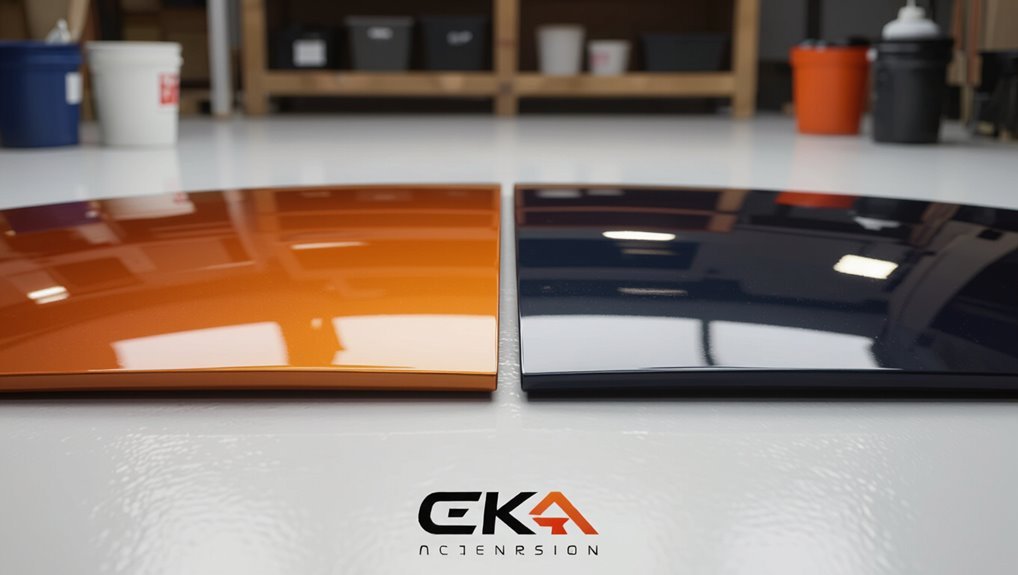
Curious whether auto paint is oil-based? You’ll find many auto paint types—modern cars mostly use solvent- or waterborne systems, not traditional oil paint.
Still, oil paint benefits like durability and smooth finish influence formulations and specialty coatings. You should check product specs: primers or restoratives may use oil-based ingredients, but factory topcoats generally favor polyurethane or acrylic blends.
What “Oil-Based” Means for Auto Paint
When you hear “oil-based” for auto paint, it mainly refers to the binder chemistry—typically long-chain alkyd or oil-modified resins—that holds pigments and affects gloss.
That binder controls how the paint dries and cures, influencing tack time and whether solvents or oxidation drive hardening.
It also plays a big role in durability and the final finish, determining resistance to chips, UV, and yellowing.
Binder Composition Explained
Because the binder determines how paint flows, adheres, and resists the elements, understanding what “oil-based” actually means starts with chemistry: in auto paints the binder is the film-forming component—typically natural oils, alkyds, or synthetic resins—that holds pigment particles together and bonds them to the metal surface.
You’ll evaluate binder types by:
- binder functions, binder adhesion, binder flexibility
- binder properties, binder durability, binder thickness
- binder compatibility, binder formulation, binder performance
Drying And Curing
Although oil-based binders can feel similar to other coatings while wet, their drying and curing follow distinct chemical paths you should know:
| Aspect | Impact | Tip |
|---|---|---|
| drying techniques | solvent evaporation vs oxidation | adjust application timing |
| curing processes | chemical interactions continue | monitor temperature effects |
| environmental factors | humidity influence alters rate | control surface preparation |
These factors directly shape paint performance and finish development.
Durability And Finish
Those drying and curing behaviors feed directly into how oil-based auto paints perform over time, so you’ll see their influence in durability and finish.
You’ll consider:
- durability factors, finish types, and aesthetic preferences.
- surface preparation, color matching, and application techniques.
- environmental considerations, maintenance tips, repair challenges, and performance comparisons.
Alkyd (Oil) Auto Paint: Formulation Basics
Alkyd—or oil-based—auto paints rely on modified vegetable or synthetic oils that react with oxygen to form a durable film. Understanding their core components will help you control drying, gloss, and hardness.
You’ll blend alkyd resins, pigments, siccatives, and solvents to tune alkyd benefits like hardness and depth.
Follow proper application techniques: thin coats, adequate flash time, and gentle sanding between layers for best results.
Solvent-Borne (Conventional) Auto Paint: Formulation
Moving from oil-based alkyd systems, solvent-borne (conventional) auto paints rely on volatile organic solvents to carry resins, pigments, and additives to the surface and then evaporate, leaving a consolidated film.
You manage formulation components, binder types and paint viscosity to control solvent evaporation, curing processes, finish quality and paint adhesion; surface preparation and environmental regulations guide application techniques.
- Balance solvent/binder
- Control viscosity
- Guarantee adhesion
Modern Waterborne Auto Paint: Formulation
Now that you’ve seen solvent systems, you’ll notice modern waterborne paints use acrylic and polyurethane resin dispersions engineered to stay stable in water while giving the hardness and gloss cars need.
You’ll also see manufacturers cut VOCs by using co-solvents, high-solids formulations, and crosslinkers that cure at lower temperatures. This shift keeps performance high while meeting stricter air-quality rules.
Waterborne Resin Systems
When you compare modern waterborne systems to traditional solvent-based paints, you’ll notice they’re built around a few core resin chemistries—acrylics, polyurethane-acrylic hybrids, and acrylic polyols—each engineered to balance film formation, durability, and ease of application in a water-dominant medium.
You’ll assess waterborne advantages, waterborne disadvantages, waterborne application, waterborne drying, waterborne durability, waterborne safety, waterborne environmental, waterborne compatibility.
- Acrylics: fast drying, good compatibility.
- Hybrids: improved durability, balanced application.
- Polyols: crosslinking for chemical resistance.
VOC Reduction Strategies
Because regulators and customers demand lower emissions, formulators are rethinking resin selection, solvent choices, and crosslinking strategies to cut VOCs without sacrificing performance.
You’ll adopt solvent alternatives, eco friendly materials, and industry innovations to guarantee regulatory compliance and emissions control.
VOC reduction brings environmental benefits and reduces health impacts.
Combine paint recycling, sustainable practices, and testing to meet standards and maintain finish quality.
Hybrid Water/Solvent Systems: How They Work
Although they blend water-based and solvent-based components, hybrid systems behave differently than simple mixtures, combining the fast drying and low odor of waterborne formulas with the durability and flow of solventborne paints.
You’ll find hybrid systems in modern paint formulation because they let you balance performance and emissions.
Consider key advantages:
- Faster dry times
- Improved durability
- Lower VOCs
How Binders, Solvents, and Additives Differ
Once you look past marketing claims, you’ll see that binders, solvents, and additives each control a distinct performance axis in paint: binders form the film and determine adhesion and toughness.
Solvents dictate application viscosity and drying behavior, and additives tweak properties like flow, stability, and mildew resistance.
You’ll assess binder types, solvent characteristics, and additive functions within paint formulations, affecting drying processes, curing methods, durability factors, finish qualities, color retention, and environmental concerns.
How Paint Films Form: Oil vs. Solvent vs. Water
When you apply paint, three fundamentally different film-formation pathways take over: oil-based systems cure through chemical crosslinking of the binder, solvent-borne paints set as solvents evaporate leaving binder particles to coalesce and sometimes chemically react, and waterborne formulations rely on water evaporation and polymer coalescence aided by coalescing solvents or heat.
- Oil: crosslinking, strong paint adhesion, coating technology.
- Solvent: paint solvents, paint application, surface preparation.
- Water: environmental regulations, color matching, performance comparison, automotive finishes, durability testing.
Durability: Oil vs. Solvent vs. Waterborne Auto Paint
Having looked at how oil, solvent and waterborne paints form their films, you can now compare how those mechanisms affect long-term performance on a vehicle.
You’ll evaluate durability testing and performance metrics to judge paint longevity under environmental factors.
Consider application techniques, surface compatibility, finish quality, maintenance requirements, repair methods and color matching to guarantee realistic service life and predictable outcomes.
Gloss and Color Retention by Paint Type
When you pick a paint type, think about how long its gloss will hold up under sun, washing, and road wear.
Oil-based and solvent systems often start with richer gloss but can dull faster without proper clearcoating, while modern waterborne formulas can maintain shine longer with UV-stable resins.
Color fade resistance follows a similar pattern—UV inhibitors and pigment quality matter more than base chemistry alone.
Gloss Durability Over Time
Although oil-based paints start with a high-gloss finish that resists wear, their long-term gloss and color retention can vary depending on exposure and maintenance.
You’ll notice differences based on conditions and care. Consider key factors:
- Surface prep and gloss application technique affect gloss retention.
- UV exposure accelerates breakdown.
- Regular cleaning and waxing preserve shine and delay dulling.
Color Fade Resistance
Because different binder chemistries react differently to sunlight and pollutants, you’ll see noticeable differences in how gloss and color hold up across paint types.
You should expect acrylics and urethanes to offer superior color fade resistance, while older oil-based systems yellow and lose pigment faster.
Resistance factors include UV stabilizers, pigment quality, clearcoat thickness, and maintenance—each affects long-term gloss and hue retention.
Drying vs. Curing: What to Expect
Curious how “dry” and “cured” differ for auto paint? You’ll learn drying techniques versus curing processes after paint application, and test finish evaluation.
Mind environmental factors like temperature effects and humidity levels for adhesion properties. Follow safety precautions and check equipment compatibility.
- Drying: surface feel, solvent evaporation.
- Curing: chemical crosslinking, strength.
- Testing: visual and tactile checks.
Scratch, Chip, and Abrasion Resistance
When you evaluate scratch, chip, and abrasion resistance, think about the forces the finish must withstand—impact, friction, and stone strikes—and how film thickness, hardness, and flexibility work together to resist them.
You’ll assess scratch resistance, chip resistance, and abrasion resistance to judge paint durability and surface protection.
Choose application techniques to boost finish longevity, balance automotive resilience, factor environmental factors, and plan repair techniques.
Corrosion Protection and Primer Compatibility
You’ll want to take into account how different paint types affect rust prevention methods and whether a primer will bond properly.
Oil-based paints can seal metal well but may not always adhere to modern acrylic primers without proper surface prep or a compatible intermediate coat.
Check manufacturer recommendations and use a corrosion-inhibiting primer when needed to guarantee long-term protection.
Rust Prevention Methods
Although oil-based auto paints offer good sealing properties, preventing rust starts long before you apply color — it begins with proper surface prep and choosing compatible primers and corrosion treatments.
You should use rust prevention techniques, corrosion inhibitors, protective coatings, and surface treatments. Consider maintenance strategies and environmental considerations.
Apply protective films, undercoating methods, rust resistant materials, and barrier coatings.
- Clean and de-grease
- Seal seams, welds
- Regular inspection and touch-up
Primer Adhesion Compatibility
Because primers form the bonding layer between metal and topcoat, you need to choose systems that chemically and mechanically match the substrate and paint type to confirm corrosion protection. Consider primer types, compatibility factors, surface preparation, paint layers, environmental conditions, application techniques, curing times, and adhesion testing to ascertain bonding strength and performance characteristics.
| Hope | Fear |
|---|---|
| Secure | Rust |
| Trusted | Failure |
VOCs, Regs, and Environmental Impact
When you strip away marketing labels, the biggest environmental concern with oil-based auto paints is their high volatile organic compound (VOC) content, which evaporates during application and contributes to smog and health risks.
You should track VOC regulations, regulatory compliance, paint disposal, and long term effects while weighing environmental sustainability, paint toxicity, health impacts, automotive industry trends, consumer preferences, and eco friendly alternatives.
- Monitor rules
- Favor low-VOC options
- Dispose properly
Health & Safety: Working With Each Chemistry
If you handle different auto paint chemistries, you need to adjust your safety practices for each type—solvent-based systems demand respirators and ventilation.
Waterborne formulas still need skin protection and adequate air exchange, and powder or UV-curable coatings bring their own dust and exposure concerns.
Assess health risks, follow exposure limits, use protective equipment, meet ventilation requirements, prevent chemical interactions, train first aid and emergency protocols, and monitor toxicity levels and long-term effects.
When Shops Still Use Alkyd/Oil Coatings
Even though many shops have moved to waterborne and powder systems, some still rely on alkyd or oil-based coatings for specific repairs and restorations.
So you should recognize their unique handling and safety needs. You’ll weigh historical significance, market trends, cost factors, and environmental considerations while applying alkyd formulations; note oil advantages and proper application techniques for traditional uses.
- Durability
- Cost
- Safety
When Pros Choose Solvent-Borne Systems
Because solvent-borne systems still offer fast film build, strong adhesion, and excellent levelling, pros pick them for jobs that demand durability and speed—like heavy corrosion repairs, fleet coatings, or spot work where waterborne systems might struggle.
You’ll weigh solvent properties, application techniques and adhesion challenges against environmental regulations.
Paint technology and historical trends shape market preferences and inform a clear performance comparison.
When Waterborne Paints Are Preferred
When you prioritize environmental compliance, worker safety, and easier cleanup, waterborne paints often make the smart choice. They deliver lower VOC emissions, reduced odor, and simpler rinsing with water, which cuts solvent handling and disposal costs while meeting stricter regulations and workplace comfort standards.
- Consider waterborne advantages, environmental benefits, drying times.
- Balance application techniques, surface preparation, color accuracy.
- Note cost considerations, compatibility issues, repair methods, industry trends.
When Hybrids Make Sense for Repairs
If you need a fast, practical fix that still meets modern environmental and performance standards, hybrid automotive paints are a solid option for repairs. You’ll appreciate hybrid advantages: repair efficiency, cost effectiveness, and material compatibility. Consider environmental considerations and application techniques to match project suitability and paint longevity.
| Advantage | Use | Tip |
|---|---|---|
| Efficiency | Small panels | Prep well |
| Cost | Partial repair | Mix carefully |
| Compatibility | Mixed substrates | Test first |
Restoring Classics: Should You Use Oil Paint?
When you’re restoring a classic, think about whether oil-based paint’s durability and long-term protection outweigh modern alternatives.
You’ll also want to match the authentic finish look of the era while weighing slower application and drying times against your project timeline.
Ask whether the period-correct appearance and longevity justify the extra curing time and technique required.
Durability And Longevity
Because classic cars were built to last, the paint you choose should match that expectation—oil-based automotive paints offer excellent hardness and resistance to chipping, which helps preserve original panels and trim over decades.
You’ll assess durability testing and longevity factors like environmental resistance, wear resistance, weather exposure, aging effects, protective coatings, surface treatments, performance metrics, and maintenance requirements.
- Inspect results
- Compare metrics
- Plan care
Authentic Finish Look
Beyond durability, the look you’re trying to achieve will often decide whether oil-based paint is the right choice for a classic restoration.
You’ll favor oil for its authentic texture and depth that reproduce period surfaces and enhance vintage appeal.
If matching original sheen, subtle brush marks, or era-accurate layers matters, oil-based finishes give the tactile, visual authenticity many restorers seek.
Application And Drying
If you’re restoring a classic, plan on a slower, more deliberate application and drying process with oil-based paints since they behave very differently from modern acrylics.
You’ll need patience and precise application techniques and monitor drying times carefully.
- Thin coats, slow cure
- Brush/roller control, wet edges
- Longer tack-free, extended recoat intervals
Touch-Ups and Small Repairs: Easiest Paint Types
When you’re fixing chips and scratches, pick paints that blend easily and dry predictably—water-based acrylics and modern urethanes are usually the simplest choices because they flow smoothly, tack up fast, and clean up with water or mild solvents. Use proper surface preparation, repair tools, and paint blending for color matching; follow application methods, drying times, product recommendations, maintenance tips, and environmental considerations.
| Tool | Technique | Tip |
|---|---|---|
| Brush | Layered dots | Feather edges |
| Pen | Precise fills | Match gloss |
| Spray | Light passes | Cure fully |
Full Resprays: Choosing Waterborne vs. Solvent
Small touch-ups are great for chips, but a full respray asks different priorities: durability, environmental rules, and how the paint behaves under heavy sanding and multiple coats.
You’ll weigh respray techniques, environmental considerations, equipment compatibility, and paint consistency.
Consider application methods, paint thickness, finish types, product recommendations, maintenance strategies, and color matching.
- Prep
- Spray
- Cure
Paint Matching and Color Accuracy Across Systems
How do you guarantee a perfect color match when switching between waterborne and solvent systems?
You’ll rely on color matching tools, precise color formulation, and understanding color theory.
Use careful paint blending, controlled paint layering, and matched application techniques to maintain finish consistency and finish durability.
Check system compatibility before repairs and apply repair strategies that prioritize substrate preparation and measured blending for seamless results.
Clearcoats: Compatibility With Different Topcoats
Because clearcoats sit between your color and the environment, you need to know how different topcoat chemistries interact to preserve gloss, adhesion, and UV protection.
Because clearcoats protect your color, understand topcoat chemistry interactions to maintain gloss, adhesion, and UV defense.
You’ll assess clearcoat types for topcoat compatibility, chemical interaction, and protection levels.
Consider:
- Layering systems and surface adhesion.
- Application techniques influencing finish characteristics.
- Cure profiles that affect long-term durability.
Primer Selection by Topcoat Chemistry
Now that you’ve matched clearcoat and topcoat chemistries to protect gloss and adhesion, you need primers that’ll bond to the chosen topcoat and the substrate. Choose primer types for primer compatibility and topcoat adhesion; follow surface preparation, application techniques, drying times, paint layering, and desired finish characteristics.
| Primer Type | Best Use |
|---|---|
| Epoxy | Bare metal |
| Urethane | Repair primer |
| Acrylic | Fast topcoats |
| Self-etch | Aluminum |
| High-build | Smooth fills |
Surface Prep: Oil vs. Solvent vs. Waterborne
Before you paint, you’ll need to clean the surface properly—use the right method for oil, solvent, or waterborne systems to remove grease, wax, and contaminants.
Check solvent compatibility with existing coatings and primers to avoid lifting or softening.
Also account for drying and flash times, since each system evaporates and cures at different rates that affect adhesion and finish.
Surface Cleaning Methods
When prepping a surface for auto paint, you’ll choose between oil-based cleaners, solvent degreasers, and waterborne solutions based on the contaminant type and the paint system you’re using.
You’ll apply surface preparation techniques and pick cleaning agents for best adhesion.
Consider:
- Oil remover for wax/grease
- Solvent degreaser for heavy contaminants
- Waterborne cleaner for light dirt and final wipe
Solvent Compatibility Check
Although different cleaners can remove contaminants, you’ll need to verify compatibility so your chosen solvent won’t harm the existing finish, primer, or surrounding materials.
You’ll assess solvent types with compatibility testing to predict paint interactions, solvent evaporation, and environmental effects.
Match application methods to binding agents during surface preparation, and consider drying times to protect paint durability and prevent adverse reactions.
Drying And Flash Times
Since drying mechanisms differ by binder chemistry, you’ll see notable variations in flash and dry times between oil-based, solvent-based, and waterborne systems.
You should adjust drying techniques and drying equipment to control flash duration and curing processes under varying drying conditions and environmental factors like temperature influence and humidity effects during paint application.
Consider these distinctions by paint types:
- Oil-based: long flash, slow cure.
- Solvent: moderate flash, faster cure.
- Waterborne: short flash, humidity-sensitive.
Application Methods: Spray, Brush, Aerosol
You can apply oil-based auto paint with a spray gun, a brush for small touch-ups, or aerosol cans for convenience, and each method demands different prep, technique, and drying expectations. You’ll consider spray techniques, brush application, aerosol options, paint thickness, surface compatibility, weather conditions, color matching, safety precautions, equipment selection, and application speed.
| Method | Tip |
|---|---|
| Spray | Even coats |
| Brush | Thin layers |
| Aerosol | Shake well |
| Prep | Clean, sand |
Spray Settings: Oil-Based vs. Waterborne Paint
How should you set your spray gun when switching between oil-based and waterborne auto paints? Adjust spray gun settings to match paint viscosity and atomization needs. Follow these steps:
- Thin waterborne more; lower fluid and increase air for finer atomization.
- For oil-based, raise fluid, lower air, and use higher nozzle pressure.
- Test spray on panel, tweak for consistent film and edge control.
Temperature and Humidity Effects on Paint
When temperature and humidity change, your paint’s drying rate, flow, and adhesion shift too—so plan spray times and environmental controls accordingly.
You’ll monitor temperature effects and humidity effects during paint application to optimize drying times and curing processes.
Adjust painting techniques for environmental conditions and weather influences to preserve auto paint film integrity.
Proper control improves paint performance and reduces defects.
Mixing Ratios, Reducers, and Hardeners Explained
Because the right mix determines film strength and finish, you’ll always follow manufacturer-specified ratios for paints, reducers, and hardeners.
Use precise mixing techniques, heed ratio guidelines, and note reducer types and hardener functions to control drying times and application methods.
Watch compatibility issues and safety precautions.
- Measure ratios accurately.
- Match reducer to conditions.
- Use correct hardener per system.
Common Finish Defects and How Chemistry Causes Them
Now that you know how mixing ratios and catalysts work, you’ll want to watch for common finish defects that chemistry causes.
Solvent-induced cratering happens when contaminants or trapped solvents repel wet paint, leaving pinholes and pits that weaken the finish.
Oxidative yellowing occurs when oil-based components react with oxygen and UV, shifting clearcoats and light colors toward yellow over time.
Solvent-Induced Cratering
If you’ve ever seen small, round depressions or “pockmarks” form in a freshly sprayed finish, you’re likely looking at solvent-induced cratering—what happens when incompatible solvents or contaminants disrupt the surface tension of wet paint.
You need to address solvent interactions quickly.
Typical cratering causes and fixes:
- Clean surface contamination.
- Match solvent evaporation rates.
- Avoid over-reducing or mixing incompatible products.
Oxidative Yellowing
While solvent interactions produce visible surface defects like craters, longer-term chemical changes can quietly alter a finish’s color—oxidative yellowing is one of the most common. You’ll notice pale or amber haze as resins oxidize; oxidative yellowing causes include UV, heat, and reactive additives. Use antioxidants, UV barriers, and proper curing as preventative measures.
| Stage | Cause | Fix |
|---|---|---|
| Fresh | UV | Seal |
| Aged | Heat | Replace |
| Cloudy | Resin | Coat |
| Amber | Additive | Neutralize |
Repairability: Which Systems Sand, Blend, and Polish Best
Because repairability determines how easily you can sand, blend, and polish a finish, it’s one of the most important factors when choosing an automotive paint system.
You’ll evaluate repair techniques, paint compatibility, surface preparation, blending methods, polishing strategies, repair materials, color matching, finish restoration, touch up strategies, and equipment requirements.
- Solvents vs. waterborne
- Ease of feathering
- Clearcoat versus single-stage
Long-Term Maintenance and Polishing Tips
Now that you’ve covered how different systems sand, blend, and polish, it’s time to focus on keeping that repaired finish looking its best over the long run. You’ll plan a maintenance schedule, use proper polishing techniques, and choose detailing products and care products for shine restoration. Apply protective coatings for surface protection against environmental factors to maximize paint longevity.
| Tip | Benefit |
|---|---|
| Regular wash | Removes contaminants |
| Sealant every 6 months | Enhances longevity |
| Use soft pads | Avoids marring |
| Clay bar | Deep clean |
Cost Comparison: Materials and Labor
When comparing paint repairs, you’ll weigh material costs against labor hours to find the best value; primers, basecoats, clearcoats, and consumables like sandpaper and masking tape can add up quickly, while skilled blending and color-matching often drive the bulk of the bill.
- Estimate: project scope, paint types, material quality.
- Costs: labor rates, labor expenses, price variability.
- Plan: budgeting tips, cost factors, regional differences, service quality.
Availability and Regional Restrictions on Oil-Based Paint
After you’ve budgeted materials and labor, you should check whether oil-based automotive paints are even allowed or easy to find in your area.
You’ll face availability challenges from regional regulations that limit sales or use.
Consider oil paint alternatives and eco-friendly options, since consumer preferences and market trends push suppliers toward safer products, affecting what you can buy and apply.
How Regulations Pushed the Shift to Waterborne
Because regulators tightened limits on volatile organic compounds (VOCs) and hazardous air pollutants, manufacturers and shops had to switch to waterborne formulations to comply; you’ll see this as the main driver behind the rapid industry shift.
You’ll notice the regulatory impact and environmental concerns shaped choices:
- Reduced VOC emissions
- Compliance costs and reformulation
- Market and policy pressure
Low-VOC and Eco-Friendly Auto Paint Options
Looking for low-VOC and eco-friendly auto paint options? You’ll find waterborne basecoats, high-solids formulations, and bio-based clears as practical eco friendly alternatives.
They reduce harmful emissions, improve shop air quality, and cut cleanup solvents.
Understand low voc benefits like faster compliance with regulations, safer working conditions, and comparable durability—so you can choose greener coatings without compromising finish or performance.
Myths About Oil-Based Auto Paint Debunked
You’re probably hearing blanket statements that all auto paints are oil-based, but that’s not true — many modern formulas use waterborne resins or low-VOC solvents.
Don’t assume oil-based means worse for the environment; manufacturers have reduced emissions and offered eco-friendly options that challenge that myth.
And when it comes to performance and durability, you’ll find oil-based and alternative systems can both deliver excellent results depending on formulation and application.
Not All Oil-Based
Although many people assume “oil-based” auto paint means a single, outdated product, that’s not the case — the term covers several distinct chemistries and finishes.
You should learn varied paint types, application techniques, surface preparation, primer options, color matching, finish quality, drying times, maintenance tips, and safety precautions.
- Traditional alkyds
- Synthetic blends
- Modern oil-modified systems
Environmental Impact Myths
Having covered the different oil-based formulas and their real-world uses, let’s clear up common myths about their environmental impact.
You shouldn’t assume all oil-based paints are wildly toxic; many environmental misconceptions stem from outdated formulations.
You can choose low-VOC oil-modified options or waterborne alkyds as eco-friendly alternatives.
Read labels, dispose responsibly, and prioritize certified products to reduce harm.
Performance And Durability
When you evaluate performance and durability, don’t assume oil-based auto paints automatically outlast modern alternatives; in many cases alkyds and advanced acrylics offer comparable hardness, chip resistance, and UV stability while curing faster and requiring less maintenance.
You should weigh performance metrics, longevity analysis, environmental factors, application techniques, finish quality, maintenance strategies, repair processes, adhesion properties, chemical resistance, and aesthetic considerations:
- Test protocols
- Real-world exposure
- Repair frequency
How to Identify If a Vehicle’s Paint Is Oil-Based
Curious whether your car’s finish is oil-based or not? Start identifying paint with a visual inspection: note gloss comparison and paint consistency.
Check surface feel for tackiness or smoothness. Do simple paint testing like solvent rubs; chemical testing in a lab confirms binders.
Oil based characteristics include warmer tones, harder film, and slower drying—helping you decide next steps.
Best Storage Practices for Oil and Waterborne Paints
Because oil and waterborne paints cure and degrade differently, you should store them under distinct conditions to preserve performance and safety.
Follow these best storage conditions to extend paint shelf life, prevent paint separation, and guarantee safety precautions:
- Temperature control: stable, moderate temps; avoid freeze/heat extremes.
- Humidity levels: low, ventilated spaces to prevent contamination.
- Container sealing and ideal storage locations: airtight cans in cool, labeled areas.
Disposal and Cleanup: Waste Handling by Chemistry
Proper storage helps reduce waste, but sooner or later you’ll need to handle leftover paint and cleaning solvents safely. Follow safety protocols for chemical safety and solvent handling, label hazardous materials, and use approved disposal facilities. Prioritize waste minimization and waste recycling. Comply with environmental regulations for paint disposal and cleanup procedures.
| Item | Action |
|---|---|
| Labeling | Immediate |
| Segregation | Required |
| Transport | Licensed |
| Recycling | Preferred |
| Disposal | Certified |
Auto Body Shop Checklist: Convert to Waterborne Systems
When you convert to waterborne systems, start by listing the shop equipment upgrades you’ll need, from spray guns to proper mixing stations.
Create a staff training plan so technicians know new application techniques and safety procedures.
Finally, update your paint waste management practices to handle waterborne residues and comply with local regulations.
Shop Equipment Upgrade
Upgrade your shop equipment to handle waterborne paints before you start transferring processes—this minimizes downtime and keeps quality consistent.
You should review spray booth filters, air filtration upgrades, paint storage, and safety gear while optimizing shop layout and equipment maintenance for new application techniques and color matching.
- Replace filters
- Add humidity control
- Secure storage systems
Staff Training Plan
Plan a focused training rollout so your team can handle waterborne paints confidently and safely. Define learning objectives, training techniques, hands on training, mentorship programs, and training resources. Use assessment criteria and skill assessment to track staff performance and knowledge retention. Foster team collaboration and schedule periodic reviews.
| Topic | Method | Metric |
|---|---|---|
| Safety | Hands on training | Assessment criteria |
| Technique | Mentorship programs | Skill assessment |
| Retention | Training resources | Knowledge retention |
Paint Waste Management
Because waterborne paints change your waste profile, you’ll need a clear system for collecting, storing, and disposing all paint-related wastes safely and in compliance with regulations.
You’ll adopt paint disposal strategies that meet environmental considerations and train staff on segregation, labeling, and spill response.
- Segregate and store waste
- Use licensed disposal vendors
- Monitor, document, audit compliance
When Pros Still Prefer Solvent or Oil Approaches
While waterborne finishes dominate consumer projects, many pros still reach for solvent- or oil-based paints when they need toughness, leveling, and repairability that water formulas can’t always match.
You’ll weigh oil painting techniques against solvent alternatives, consider application challenges, environmental considerations, regulatory impacts, and market trends, and rely on professional preferences, historical significance, paint technology advancements, and user experiences to choose what performs.
DIY Guide: What Hobbyists Should Choose and Why
If you’re a hobbyist tackling furniture, model kits, or small home projects, choose a finish that matches your skill level, workspace, and tolerance for fumes and cleanup.
Balance paint types with hobbyist preferences: solvent vs water-based, ease of application techniques, color matching, and finish aesthetics.
Follow surface preparation, safety tips, project planning, cost considerations, and maintenance practices.
- Prep
- Apply
- Maintain
Recommended Products by Paint Type and Use Case
Wondering which paints and products will actually make your hobby projects look professional?
You’ll get concise product recommendations for paint applications, plus brand comparisons and user reviews to guide choices.
Expect clear cost analysis, performance ratings, eco friendly options, color choices, and finish types.
Practical application techniques are highlighted so you can pick the right product by use case and desired result.
Decision Flowchart: Choose the Right Auto Paint
Need help picking the right auto paint? Use this decision flowchart to match needs: consider color matching, finish types, paint durability, environmental regulations, and paint storage.
Choose based on skill level, spray equipment, and application methods. Prioritize repair techniques and paint techniques for longevity.
DIY tips guide casual users; professionals focus on specific systems and compliance.
- Assess goals
- Select method
- Prep & store
Further Reading and Technical Resources
When you’re ready to dig deeper, consult manufacturer tech sheets, industry standards (like SAE and ISO), and reputable textbooks or online courses that cover paint chemistry, application techniques, and safety practices.
For Further Reading and Technical Resources, follow Industry Standards, Material Safety data, Environmental Regulations, and study Paint Innovations, Auto Paint Trends, Color Matching, Application Techniques, and Repair Techniques to refine skills and decisions.
Quick Checklist: Choose Paint for Your Project
Before you buy anything, list the vehicle’s substrate, exposure conditions, desired finish (gloss, metallic, matte), and whether you need OEM matching or a custom color so you can pick a compatible system—oil-based, solvent-borne, or waterborne—and the right primer, basecoat, and clearcoat.
List the vehicle’s substrate, exposure, desired finish, and OEM vs custom color to choose a compatible paint system.
Follow this checklist to guide Paint selection and Project considerations:
- Surface preparation, Application techniques
- Color matching, Repair strategies
- Environmental factors, Cost analysis
Frequently Asked Questions
Can Oil-Based Auto Paint Affect Vintage Engine Bay Finishes?
Yes — you’ll risk affecting vintage finishes in the engine bay, since oil-based paints can alter sheen, trap solvents, and resist matching restored surfaces; test small areas first and use compatible products to preserve original appearance.
Do Different Paint Chemistries Change Insurance Repair Estimates?
Yes — paint chemistry can change repair estimates; your insurance policies may dictate approved materials, affecting repair estimates and cost implications, so you’ll face differing labor, material costs, and potential coverage limits based on chemistry choices.
Can Ceramic Coatings Bond Over Oil-Based Primers?
Yes — you can apply ceramic coatings over oil-based primers, but you’ll need to guarantee proper surface prep and test primer compatibility first; ceramic adhesion depends on cleanliness, cure state, and primer compatibility to achieve a durable bond.
How Do Paint Types Affect Resale Value by Region?
You’ll see regional preferences shape resale value: durable, weather-suited paints fetch premiums locally, while trendy finishes sell in affluent markets; economic impact comes from repair costs and local demand, so pick paint that matches buyers’ expectations.
Are There Special Requirements for Storing Mixed Paint Leftovers?
Yes — you’ll treat mixed paint like a saved recipe: seal it airtight, label with date and color, store upright in a cool, dry place away from heat, and follow local hazardous-waste rules for proper paint storage and leftover management.
Conclusion
In short, most modern auto paints aren’t strictly oil-based—you’ll mostly see solvent-borne (alkyd/urethane) and waterborne systems—but alkyds still show up in classic restorations. Notably, the auto industry cut VOCs by about 50% in the past two decades by switching to waterborne and low-VOC formulations, so choosing waterborne not only meets regs but helps air quality. Use the decision flowchart and checklist to pick paint that fits your project, skill level, and regs.
