
Can You Stain Wood Over Paint? What You Need to Know
You can often refinish painted wood to look stained, but it isn’t plug-and-play—you’ll need to check paint type and adhesion, clean and degloss or strip where paint flakes, and choose a gel stain or faux-stain method that sits on the surface. Latex blocks penetration more than oil, so expect heavier prep on latex finishes. Test a small area, build color with thin coats, and seal with a compatible topcoat; keep going to learn full prep and product choices.
Can You Stain Painted Wood? Quick Verdict and Next Steps
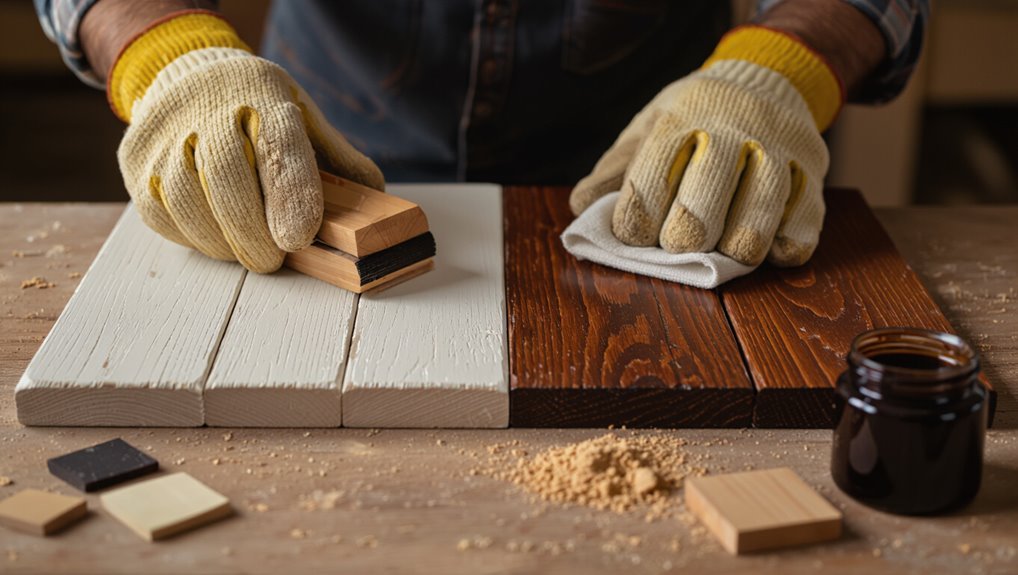
Wondering whether you can stain over painted wood? You can, but success hinges on stain compatibility and paint adhesion.
If the paint’s solvent resistance prevents absorption, the stain won’t penetrate; if adhesion’s poor, sanding or stripping’s needed first.
Test a small area: sand to bare wood where possible, try a gel stain or tinted topcoat, then decide whether full refinishing is required.
Who This Guide Is For and What You’ll Learn
Who’s this guide for, and what’ll you get from it?
You’ll get clear advice if you’re refinishing furniture, remodeling trim, or rescuing painted wood.
You’ll learn practical staining techniques, how to assess paint compatibility, surface prep steps, tools and products to use, and decision points for stripping versus staining.
Follow it to make confident, efficient choices.
Why It Matters Whether You Can Stain Over Paint
Because paint changes how wood accepts stain, knowing whether you can stain over paint determines whether your project will look right and hold up, or require extra work.
You’ll decide if you need to strip, seal, or refinish based on paint adhesion and stain compatibility. Making the right call saves time, prevents peeling, and guarantees the finish performs and matches your design intentions.
Why Paint Prevents Traditional Stain From Penetrating
If you try to stain over painted wood, the stain can’t soak in because the paint acts as a sealed barrier between the wood fibers and the stain’s dye or pigment.
That barrier stops stain penetration, so color won’t bond to the wood. Paint adhesion to the surface prevents absorption and forces stains to sit on top, causing blotchiness, poor durability, and eventual failure unless paint is removed.
Which Paint Types Block Staining the Most (Latex vs. Oil)
You’ll notice latex paint often creates a tighter, more plastic-like barrier that keeps stain from soaking in.
Oil-based paint can block staining too, but its slightly more porous finish sometimes lets a bit more color show through if it’s thin or worn.
Comparing the two helps you decide whether stripping or other prep is worth the effort.
Latex Paint Barrier
When you’re trying to stain over painted wood, latex paint is often the bigger obstacle because its film blocks penetrative stains and resists sanding more than oil-based coatings.
That means you’ll usually need to strip, sand to bare wood, or use a gel stain formulated for painted surfaces to get any meaningful color transfer.
Check stain compatibility carefully, test on scrap, and expect more prep than with oil finishes.
Oil-Based Blocking
Although oil-based paints can look like they should accept stain better because they sand smoothly, they actually create a dense, insoluble film that blocks most penetrating stains and dyes. You’ll need aggressive surface preparation and tests for oil compatibility before attempting dye or gel stains. Table summarizes typical results:
| Paint Type | Penetration | Prep Needed |
|---|---|---|
| Oil-based | Poor | High |
| Latex | Low | Moderate |
How Surface Condition Changes Your Options (Peeling, Chalking, Gloss)
If the painted surface is peeling, chalking, or glossy, it changes what you can do with a stain and how much prep you’ll need; each condition demands a different approach to get adhesion and an even finish.
You’ll strip or sand peeling paint, wash chalking surfaces to remove powder, and scuff glossy finishes to alter surface texture.
Proper prep restores paint adhesion and guarantees stain acceptance.
Is Staining Over Paint Worth Trying? When It Makes Sense
Deciding whether to stain over paint comes down to the condition of the paint, the look you want, and how much prep you’re willing to do.
You’ll consider stain compatibility with the existing finish and test small areas. If paint adhesion is sound, you can scuff, use a bonding primer or gel stain, and achieve a translucent or aged look without full removal.
When You Should Remove Paint Instead of Staining
When the paint is flaking, chalking, or peeling, you should strip it before attempting to stain because any coating left will prevent proper penetration and lead to an uneven, short-lived finish.
Strip flaking or peeling paint before staining — leftover coatings block penetration and cause uneven, short-lived finishes.
Use proper paint removal methods and surface preparation techniques to expose sound wood.
- Heat or chemical stripping for thick layers.
- Sanding for small areas.
- Media blasting for durable, large projects.
Quick Assessment: Is Your Painted Wood Solid Enough to Keep?
How do you know whether painted wood is worth keeping? Inspect for rot, warping, deep gouges, and active moisture; these undermine paint durability and structural integrity.
Tap and listen for solid sound, press for soft spots, check joints and fasteners for movement.
If the substrate’s stable and damage is superficial, a careful wood assessment shows it’s worth saving rather than replacing.
Test Paint Adhesion and Compatibility in 5 Minutes
Start by wiping the surface to make sure dirt and grease won’t stop a new finish from sticking.
Use a piece of strong tape pressed down and pulled up to check adhesion—if paint peels, you’ll need to remove or strip it first.
Finish with a quick solvent spot test (acetone or denatured alcohol) to see if the paint softens or smears, which tells you about compatibility with staining or refinishing.
Surface Cleanliness Check
Before you commit to staining over painted wood, check surface cleanliness and adhesion in about five minutes to avoid wasted effort and poor results.
Use quick cleaning techniques and a focused surface inspection to decide next steps.
- Wipe with degreaser and microfiber.
- Look for chalking, dirt, or loose paint.
- Sand a small spot; assess finish beneath.
Adhesion Tape Test
When paint adhesion is in question, the adhesion tape test gives you a quick, reliable answer in about five minutes: peel a strong adhesive tape over a scored grid, press firmly, then pull sharply.
If paint flakes, adhesion testing failed—strip and prep. If it holds, paint compatibility is likely and you can proceed with staining or sealing, knowing the coating is adequately bonded.
Solvent Compatibility Spot
Curious whether the existing finish will tolerate a penetrating stain or solvent-based stripper?
Take a five-minute solvent compatibility spot to check stain compatibility and solvent types quickly:
- Apply a small dot of mineral spirits; wait 2 minutes, wipe.
- Try acetone similarly; note softening or lifting.
- Test a commercial stripper per directions; inspect adhesion and color change.
Tools and Materials You’ll Need to Test and Prep Painted Wood
You’ll need a few key tools and materials to accurately test and prep painted wood: a putty knife or scraper, various grits of sandpaper (80–220), a chemical or liquid stripper (optional), tack cloths, denatured alcohol or mineral spirits for cleaning, painter’s tape, drop cloths, and safety gear like gloves, goggles, and a respirator.
| Tool | Purpose |
|---|---|
| Scraper | Surface assessment |
| Sandpaper | Prep strategies |
| Solvent | Cleaning processes |
| Tape/cloth | Protection, adhesion methods |
Use testing techniques to check paint types, stain compatibility, tool selection, material checklist, and safety measures.
Full Paint Removal With Chemical Strippers: Pros & Cons
Although it takes extra precautions and time, using a chemical stripper lets you remove paint down to bare wood without aggressive sanding, so you can preserve delicate profiles and get a cleaner surface for stain absorption.
Consider pros and cons:
- Faster removal — great chemical stripper effectiveness.
- Preserves detail; less dust.
- Requires strict safety precautions and disposal; possible odor and cleanup.
Using Liquid Paint Strippers Safely
When you choose a liquid paint stripper, pick a formula suited to your paint type and the substrate to avoid damaging the wood.
Always wear gloves, eye protection, and work in a well-ventilated area, and follow the product’s instructions to the letter.
After stripping, neutralize and collect residue per local regulations so you dispose of hazardous waste responsibly.
Choose The Right Product
Because stripped paint can hide toxic chemicals and stubborn layers, pick a liquid paint stripper that matches your wood type, finish, and environmental constraints.
You’ll want clear product selection based on stain compatibility and residue removal.
Consider:
- Bio-based for indoor use and delicate grain.
- Fast-acting for thick coatings.
- Low-odor for enclosed spaces and easier cleanup.
Follow Safety Precautions
If you’re using a liquid paint stripper, take safety seriously: wear chemical-resistant gloves, eye protection, and a respirator rated for organic vapors, and work in a well-ventilated area to avoid inhaling fumes.
Use proper safety gear, protect nearby surfaces, keep children and pets away, and follow label instructions.
For ventilation tips, open windows, use fans to exhaust air, and avoid enclosed spaces.
Dispose Of Residue Properly
After you’ve stripped paint, don’t let leftover residue sit — it can be hazardous and contaminate soil or water.
You should handle residue disposal responsibly to reduce environmental impact. Follow these steps:
- Contain and neutralize liquids, then seal in labeled containers.
- Take containers to a hazardous-waste facility; don’t pour down drains.
- Clean tools with proper solvent and dispose of rags per local rules.
Mechanical Sanding: When Sanding Alone Works
When paint is thin, well-adhered, and you’re dealing with bare wood or a light stain beneath, mechanical sanding can be all you need to remove the coating and expose a workable surface.
You’ll select sanding techniques based on grit progression and tool choice, monitor paint compatibility to avoid glazing, and stop once edges and adhesion are clean.
Finish with dust removal before staining.
Sanding to Expose Wood Grain Without Damaging Profiles
When you sand painted wood to reveal the grain, use a light touch and progressively finer grits to avoid gouging the surface.
Pay special attention to edges and molded profiles—work by hand or with a soft backing to preserve sharp lines.
Test on an inconspicuous area so you know when the paint is gone but the profile remains intact.
Proper Sanding Techniques
Begin by identifying the painted surfaces you’ll strip back to bare wood. Then plan your sanding so you reveal grain without rounding sharp edges or obliterating carved profiles.
You’ll use proper sanding techniques and surface preparation to get even results.
- Start with 80–120 grit to remove paint.
- Move to 150–180 grit to smooth.
- Clean dust, inspect before staining.
Preserving Edge Profiles
Now that you’ve stripped paint and smoothed surfaces, focus on preserving edge profiles so the piece keeps its character while you expose the grain.
Use gentle hand-sanding, small backing blocks, and folded sandpaper to follow contours.
Mask delicate moulding, test with an inconspicuous area, and switch to fine grit before staining.
These edge profile preservation techniques complement careful wood staining methods for a professional result.
Partial Removal: Strip High-Wear Areas and Thin the Paint
Focus on the spots that matter most: sand or chemically strip high-wear areas and thin remaining paint where it’s built up so the wood’s grain can accept stain.
Focus on high-wear spots: strip or sand them and thin built-up paint so the grain will take stain.
You’ll:
- Target wear areas first to reveal raw wood.
- Use solvents or sandpaper for controlled paint thinning.
- Feather edges so stain blends.
This approach preserves detail while improving stain absorption.
Decide How Much Paint to Leave: Thickness Guidelines for Success
Before you start, check how thick the paint layers are so you know whether to leave a film or remove most of it.
Test adhesion in a small area — if the paint chips or flakes, you’ll need to strip more for the stain to penetrate.
Use those observations to plan targeted, partial removal rather than guessing.
Assess Paint Layer Thickness
A quick visual and tactile check helps you decide how much paint to leave: run your hand over the surface, look for raised edges and peeling, and note whether the finish is smooth or has multiple, thick layers built up.
Use paint thickness and paint evaluation to guide removal.
- Light: sand only
- Moderate: strip to thin layer
- Heavy: remove to bare wood
Determine Adhesion Quality
If the paint still grips the wood when you press or tap it, you can usually leave thinner, well-bonded layers in place; however, loose, flaking, or powdery paint must be removed down to a solid substrate.
Perform adhesion testing with a tape or crosshatch method, note paint compatibility with your chosen stain and sealer, and only proceed when bond strength is reliable.
Plan For Partial Removal
Once you’ve verified which paint is stable, decide how much you’ll remove so the stain can penetrate and bond properly.
You’ll plan partial paint removal as part of wood preparation to balance appearance and adhesion.
- Strip to thin, feathered edges for stain absorption.
- Leave a smooth, uniform film where full removal risks damage.
- Sand lightly to expose grain and guarantee even bonding.
Gel Stains and Dye-Based Products Over Painted Surfaces
While standard liquid stains often fail to penetrate painted surfaces, gel stains and dye-based products give you more predictable results on paint because they’re formulated to sit on or tint the top layer rather than soak in.
You can use gel stain techniques to control coverage, wiping excess to avoid blotches. Expect limited dye absorption; test first, layer thinly, and seal when satisfied.
How Gel Stain Behaves on Paint Versus Bare Wood
When you use gel stain on bare wood it tends to grip and penetrate surface pores, giving richer color and better adhesion than on painted surfaces.
On paint the gel sits more on top, so you’ll notice less penetration, different color intensity, and a greater need for sanding or bonding primer.
That means your surface prep and choice of topcoat will be more important when staining over paint than when working with raw wood.
Gel Stain Adhesion Differences
Anyone who’s worked with gel stain knows it performs very differently on painted surfaces than on bare wood.
You’ll notice adhesion varies; do adhesion testing before committing.
Consider:
- Painted: film-forming, may peel if paint is glossy or poorly bonded.
- Sanded bare wood: mechanical grip, better soak-in and hold.
- Primed or roughened paint: improved bond, but test first for reliability.
Color Penetration Contrast
How deeply does gel stain actually penetrate painted surfaces compared to bare wood?
You’ll find gel stain soaks into bare wood, revealing richer color depth and grain, while painted surfaces resist penetration, yielding a more surface-level tint.
That contrast creates staining challenges: uneven tone, limited absorption, and muted grain.
You’ll need to anticipate flatter results on painted areas versus vibrant hues on bare wood.
Surface Preparation Needs
Because painted surfaces block absorption, you’ll need to approach prep for gel stain differently than for bare wood: scuff, de-gloss, or strip paint where possible, clean thoroughly, and fill imperfections so the stain can sit evenly instead of beading or pooling.
- Sand/de-gloss for adhesion and paint compatibility.
- Prioritize surface cleaning to remove dust/oils.
- Spot-strip or prime areas for uniform gel stain behavior.
Faux-Staining and Glazing Techniques That Mimic Stain
When you can’t strip paint back to bare wood, faux-staining and glazing give you a realistic stained look without sanding, using thin translucent layers that let grain and texture show through.
You can apply faux finishes with brushes, rags, or sponges and use glazing techniques to tint and deepen color.
Test samples first, work in thin coats, and seal when satisfied.
Step-by-Step Faux-Stain Method for Painted Cabinets or Furniture
Before you start, you’ll prep the painted surface by cleaning, scuff-sanding, and wiping away dust so the glaze sticks evenly.
Next, you’ll apply a faux-stain glaze, working in thin layers and wiping or brushing to build the color and grain effect you want.
Finish by sealing with a clear protective topcoat to lock in the look and protect the piece.
Prep Painted Surface
If you’re going to fake a stained look over painted cabinets or furniture, proper prep is the step that makes the finish look realistic and last.
You’ll use specific prep techniques and surface treatments to guarantee adhesion and texture. Follow these steps:
- Clean: degrease and dry thoroughly.
- Scuff: sand or degloss for tooth.
- Repair: fill, sand, and remove dust.
Apply Faux-Stain Glaze
Now that the surface is clean, scuffed, and repaired, it’s time to create the faux-stain glaze that will give painted cabinets or furniture the look of real wood.
Mix a translucent glaze with stain or acrylic tint, test on scrap, brush on in sections, and wipe or comb to mimic grain.
Use faux glaze techniques for creating depth and adjust contrast as you go.
Seal And Protect
Once you’ve achieved the wood look with your faux-stain glaze, it’s time to seal and protect that finish so it lasts—choose a clear topcoat that matches the sheen you want, apply it in thin, even coats, and allow full drying between layers.
Follow these steps for wood protection and paint compatibility:
- Sand lightly between coats.
- Use compatible polyurethane or water-based sealer.
- Check adhesion and cure fully before use.
Preparing Primed or Painted Surfaces for Faux-Stain or Glazing
When you’re preparing primed or painted surfaces for faux-stain or glazing, take time to clean, scuff, and patch so the finish adheres evenly and looks intentional.
Wipe grease and dust, sand lightly to dull glossy paint, fill imperfections, and prime patched spots.
Test faux stain techniques on a scrap area, use tack cloths, and guarantee even surface preparation before glazing for consistent results.
Choosing the Right Stain Color When Working Over Paint
Before you commit, test small sections to see how the stain reacts with the paint and to确认 the final tone.
Pay attention to undertones so the stain complements rather than clashes with the base color.
Also consider the painted surface’s grain visibility and pick a shade that enhances, not hides, the texture.
Test Small Sections First
Curious how the stain will look over your painted surface?
Test small sections first so you can test adhesion and evaluate finish before committing.
Try these quick checks:
- Sand a hidden spot, apply stain, observe absorption.
- Wait for full dry, check adhesion with tape.
- Compare color under different lights, note any unexpected reactions.
Match Undertone And Grain
Since paint can mute or shift wood’s natural tones, pick a stain that complements both the paint’s undertone and the wood grain to avoid muddy or clashing results.
You should test stain samples against the painted surface to verify color matching. Choose stains that enhance grain highlighting without overpowering the paint.
Small trials reveal how undertones interact, so adjust hue and transparency accordingly.
How Paint Color Affects Final Stain Tone and Transparency
How will the existing paint color change the look of a new stain? You’ll notice paint undertones shift stain transparency and hue.
Consider these points for stain compatibility:
- Light base brightens translucent stains, revealing undertones.
- Warm bases push stains toward amber or red.
- Cool or dark bases mute warmth, reducing visible grain.
Test small areas to confirm final tone before finishing.
Sealers and Topcoats That Bond to Paint and Protect Faux-Stain
Before you seal a faux-stain, you’ll want to sand or scuff the painted surface to promote mechanical grip.
Use an adhesion-promoting primer when the paint’s glossy or when you need extra insurance for bonding.
Finish with a durable clear topcoat designed for wear and UV protection to lock in the look.
Sanding And Scuffing
Start by scuffing or sanding the painted surface to create tooth for the sealer—painted finishes are often too smooth for a faux-stain or topcoat to adhere well.
Use proper sanding techniques and gentle scuffing methods.
Then:
- Lightly sand with fine grit.
- Degrease and wipe clean.
- Test sealer adhesion in an inconspicuous spot before finishing.
Adhesion-Promoting Primers
When you want a faux-stain to last over painted surfaces, use an adhesion-promoting primer or sealer that’s formulated to bond to existing paint and create a stable base for the topcoat.
Choose primer types suited to your paint (latex, oil, or specialty) and follow adhesion techniques like cleaning, scuffing, and thin, even coats.
That guarantees better bond and longer-lasting faux-stain.
Durable Clear Topcoats
Although a good primer sets the stage, a durable clear topcoat is what actually locks your faux-stain in place and shields it from wear, moisture, and UV fading.
You’ll choose clear sealers that create durable finishes and protective layers over paint. Consider these options:
- Water-based poly for clarity and quick cure
- Oil-based for toughness
- Spar urethane for exterior UV resistance
Best Clear Finishes After Staining or Faux-Staining Painted Wood
Curious which clear finish will best protect and enhance your stained or faux-stained painted wood?
Choose between polyurethane, water-based polycrylic, and wiping varnish based on sheen and durability.
Match clear finish types to surface use, test adhesion, and follow proper application techniques—thin coats, light sanding between coats, and clean conditions.
Seal edges and allow full cure before heavy use.
How to Fix Common Problems: Blotchy Color, Streaks, or Ghosting
If your stained or faux-stained painted wood shows blotchy color, streaks, or ghosting, you can usually fix it with targeted prep and the right products rather than stripping everything back.
Try these focused steps:
Try these focused steps to fix blotchy finishes: sand, clean, glaze, and lightly blend for even color.
- Sand and clean to expose consistent tooth — key to blotchy color solutions.
- Apply pigmented glaze to even tone.
- Use gentle streak removal techniques with light sanding and blending.
Avoiding Bleed-Through and Tannin Migration on Previously Painted Wood
When you’re refinishing painted wood, preventing bleed‑through and tannin migration starts with blocking what can leach out of the substrate; sealers and proper surface prep stop stains from pushing through paint or new finishes and keep your final color consistent.
You should clean, sand to key the surface, and apply a compatible sealer to control tannin migration and preserve paint adhesion while you refinish.
When to Use a Bonding Primer Between Paint and Stain-Like Finishes
Because paint and stain-like finishes have different adhesion and absorption properties, you should reach for a bonding primer any time the existing paint is glossy, chalky, or of unknown formulation before applying a penetrating stain, gel stain, or semi-transparent finish.
Use a bonding primer when:
- Surface is glossy or slick.
- Paint flakes or chalks.
- Stain compatibility with substrate is uncertain.
Safety Tips: Ventilation, PPE, and Disposal When Stripping or Overcoating Paint
Before you strip or overcoat paint, prioritize safety by making sure the work area has plenty of fresh air.
Before stripping or overcoating paint, ensure the work area is well-ventilated for safety.
You’re wearing appropriate protective gear, and you’ve planned for proper waste handling.
Use ventilation techniques like cross-ventilation and fans.
Follow PPE essentials (respirator, gloves, eye protection), apply stripping safety steps, follow overcoating precautions, and adopt approved disposal methods for solvents, paint chips, and contaminated rags.
Time and Cost Comparison: Remove Paint vs. Faux-Stain vs. Refinish
With safety covered, you’ll next weigh time and money: stripping paint, applying a faux-stain, or fully refinishing each demand different hours, skills, and supplies.
- Strip: high time investment, higher costs for tools/chemicals, lower long-term maintenance—less cost efficiency upfront.
- Faux-stain: low time investment, cheap supplies, moderate look, best short-term cost efficiency.
- Refinish: moderate time investment, moderate cost, best longevity and value.
Project-Specific Advice: Interior Trim, Doors, Cabinets, and Furniture
Wondering how to tackle trim, doors, cabinets, and furniture when you want a stained look over existing paint?
You’ll assess adhesion and paint type, strip or degloss where needed, and pick compatible primers or gel stains.
Check paint adhesion and type, strip or degloss as needed, then use compatible primer or gel stain.
For different trim styles, choose matching wood finishes to mimic grain.
Test on hidden areas, and expect sanding, patience, and occasional repainting for best results.
Tools and Techniques for Tight Spots, Mouldings, and Routed Profiles
You’ve handled flat surfaces and bigger pieces; now focus on the tight spots, mouldings, and routed profiles where paint clings in crevices and grain detail matters.
Use small, precise tools and patience.
- Micro sanding sticks for tight spaces.
- Cotton swabs and mineral spirits for paint removal in intricate designs.
- Small brushes and gel stain for controlled application in grooves and routed profiles.
Maintenance Expectations for Stained-Over-Paint Surfaces
Because the finish over paint won’t bond like bare wood, expect more frequent touch-ups and gentle care to keep it looking good.
You should adopt specific maintenance strategies: clean with mild soap, avoid abrasive pads, and reapply a compatible topcoat annually where wear appears.
For long term care, monitor adhesion, address chips quickly, and store wood items away from direct sunlight and moisture to extend the finish.
When to Call a Pro for Stained-Over-Paint Projects
If the painted surface shows widespread peeling, stubborn adhesion problems, or you’re dealing with a valuable or antique piece, call a pro—these situations need experience and tools to strip, prep, and refinish correctly without causing more damage.
You should seek professional help when:
- Multiple layers or unknown coatings complicate staining options.
- Structural damage or rot exists.
- You want guaranteed finish and warranty.
Project Decision Checklist to Start Your Staining Over Paint Project
Before you start, run through a quick checklist that helps you spot deal-breakers and plan the prep, materials, and timeline for staining over paint.
Confirm paint compatibility, perform adhesion testing, and assess surface preparation needs.
Confirm paint compatibility, do an adhesion test, and evaluate surface prep requirements before staining over paint.
Outline project planning, tool selection, stain application steps, color matching goals, finish options, and faux techniques if desired.
Note safety measures and schedule realistic work phases.
Frequently Asked Questions
Can Painted Trim Be Safely Painted Back to Any Color After Faux-Staining?
Yes — you can repaint painted trim after faux-stain techniques; you’ll strip or sand glaze, prime if needed, then repaint. You should test adhesion and plan color selection carefully so your new finish looks consistent and durable.
Will Staining Over Paint Affect Indoor Air Quality Long-Term?
No, you won’t summon a toxic fog, but you’ll still worry: staining over paint can release VOCs, so you’ll face air quality concerns; proper ventilation and low‑VOCs prevent serious long term effects and keep headaches away.
Can I Use a Wood Conditioner on Paint Before Staining?
No — you can’t use a wood conditioner on paint and expect benefits; wood conditioner benefits apply to bare wood. Instead, follow paint preparation tips: strip or sand to bare wood, then condition before staining for consistent absorption.
Do Pet-Safe Stains and Finishes Work Over Painted Surfaces?
Ye olde truth: you can use pet safe options over painted surfaces sometimes, but they’ll only adhere if paint’s removed or roughened; you’ll need primers or sealers, and always verify labels for compatibility and curing times.
How Do Climatic Changes Affect Stain Adhesion Over Paint?
You’ll find climatic changes can weaken stain durability because moisture, temperature swings, and UV exposure stress paint compatibility and adhesion; you’ll need flexible finishes, proper surface prep, and regular maintenance to prevent peeling and fading.
Conclusion
Yes — but only if you prepare properly. If you try staining directly over painted wood, the stain won’t penetrate and will look fake or peel. You’ll need to strip or sand down to bare wood, or use gel stains and transparent dyes designed for top-coat application; they won’t behave like traditional stains. If you’re worried it’s too hard, start with a small test area or rent a sander — you’ll get predictable results without committing to the whole project.
