
How to Paint a Metal Garage Door That Is Peeling Properly
Start by stripping all loose paint with a scraper and wire brush, then sand edges smooth so new paint will stick. Clean the door thoroughly, treat any rust with a converter, and wipe away dust. Prime bare metal and rust spots with a rust-inhibiting primer, then topcoat using exterior metal paint—brush for seams, roller for panels, or a sprayer for speed. Follow drying times, inspect seals, and touch up chips; continue for tips on longer-lasting finishes.
Quick Step-by-Step: Repaint a Peeling Metal Garage Door
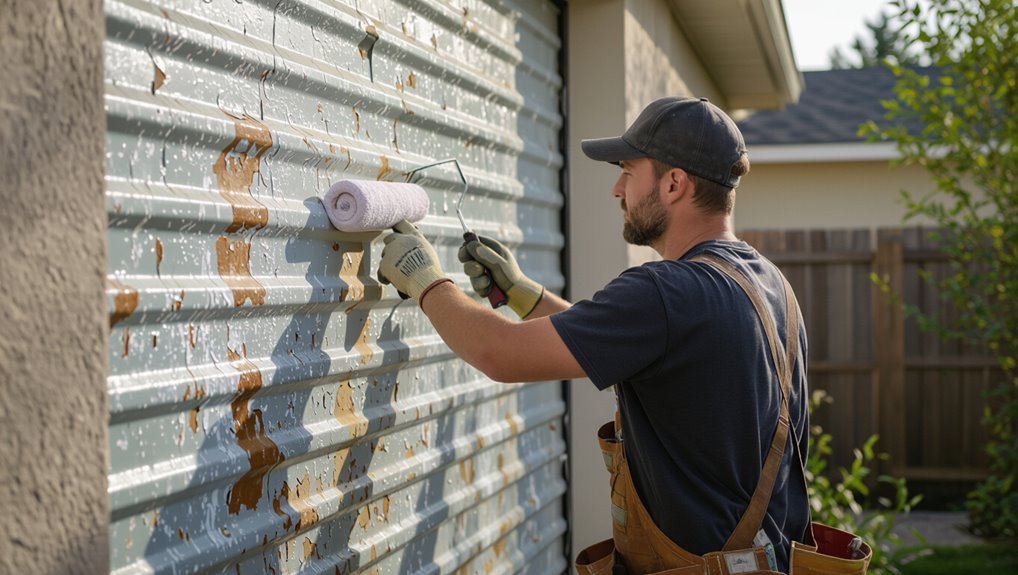
Start by gathering the right tools: a wire brush or scraper, sandpaper, rust converter (if needed), primer formulated for metal, exterior acrylic or oil-based paint, brushes or a roller, drop cloths, and protective gear.
You’ll remove loose paint, sand smooth, treat rust, prime, and apply two thin coats, checking dry times.
Consider color selection and finish types for durability and curb appeal.
Repaint or Replace? How to Decide
Check the dents and rust spots to see whether the damage is mostly cosmetic or structural.
Then compare the cost and time of repairing and repainting versus buying and installing a new door.
That will help you decide the most practical, budget-friendly option.
Assess Dent And Rust
Before you decide whether to repaint or replace, inspect dents and rust to see how deep the damage goes and whether it compromises the door’s structure or seals.
You’ll perform a dent assessment and rust evaluation to choose repair methods.
Check:
- Size and depth of dents
- Surface vs. penetrating rust
- Seal and weatherstrip integrity
- Hinges and track alignment
- Paint adhesion around damage
Compare Cost And Time
When deciding whether to repaint or replace your metal garage door, weigh the upfront cost, long-term value, and time each option will take so you can pick the most practical solution.
Repainting usually wins on cost comparison and requires less time investment, though frequent maintenance may add expenses.
Replace if structural damage or recurring repairs make lifetime cost higher; factor labor, materials, and resale impact.
Safety Gear You Need Before Sanding and Scraping
Because sanding and scraping kick up dust, paint chips, and sharp metal fragments, you’ll want the right protective gear before you start work:
- safety goggles to shield your eyes
- respirator mask or dust mask for breathable air
- work gloves to protect your hands
- knee pads if you’ll crouch or kneel
- ear protection for loud power tools
Tools & Materials Checklist
Now that you’re protected, gather the tools and materials that’ll make the job safe and smooth.
You’ll need wire brushes, sandpaper (coarse and fine), a scraper, tack cloths, rust converter, primer suited for metal, appropriate paint types (oil-based or acrylic enamel), rollers and brushes, drop cloths, painter’s tape, and a ladder.
Include gloves, respirator, and cleaning solvents for proper surface preparation.
How to Assess Paint Peeling and Surface Damage
Start by inspecting the whole door to see how much paint is flaking or missing.
Check beneath the peeling areas for rust, dents, or pitting that will affect adhesion.
If the damage is widespread or the metal is compromised, you’ll need more intensive prep before painting.
Extent Of Peeling
Before you pick up a scraper, take a close look at the door to judge how widespread and deep the peeling is. Note areas, then plan repair techniques.
Check for loose flakes, thin hairline lifts, concentrated bubbles, bare metal spots, and multiple-layer failures.
- loose flakes
- hairline lifts
- concentrated bubbles
- bare metal spots
- multi-layer failures
Consider peeling causes when prioritizing fixes.
Underlying Surface Damage
When you inspect peeling paint, look beyond flakes to spot dents, rust pitting, warped seams, and weakened fasteners—these underlying issues determine whether you can simply sand and prime or need metal repair.
You’ll assess corrosion depth, straightness, and joint integrity to plan surface preparation. Fix structural damage, remove rust, and choose primers and topcoats with proper paint compatibility to guarantee long-lasting adhesion.
How to Protect Landscaping, Siding, and Hardware
Although painting your metal garage door is a relatively tidy job, you’ll still want to shield nearby plants, siding, and hardware to prevent stains and damage. Cover shrubs and beds with drop cloths or plastic sheeting, mask trim and windows with painter’s tape and paper, and remove or wrap door handles, locks, and hinges so paint won’t gum up moving parts.
Shield nearby plants, siding, and hardware—cover beds, tape trim, and protect or remove door hardware before painting.
- Use landscape protection techniques
- Lay weighted drop cloths
- Tape siding seams
- Employ hardware masking methods
- Check wind direction
Remove Loose, Flaking Paint Safely
Scrape away any loose or flaking paint so the new finish can adhere properly and you won’t end up with bubbling or peeling later.
Use wire brushes, sanding blocks, or a scraper, working with gentle pressure and wearing eye and dust protection.
Combine surface preparation techniques—vacuuming, wiping with a damp cloth—and safe paint removal methods to leave a clean, keyed surface ready for primer.
When to Use a Chemical Paint Stripper
Chemical strippers are worth using when sanding or scraping won’t remove stubborn, multiple paint layers, lead-based coatings, or detailed profiles without causing damage; you’ll get faster, more complete removal with less surface abrasion than abrasive methods.
- Use chemical paint for many layers
- Choose stripper for delicate trim
- Prefer to avoid surface damage
- Follow safety and disposal rules
- Test small area first
Sanding a Peeling Metal Garage Door for Paint Adhesion
Before you prime, you’ll sand away any loose paint so the new coating can stick.
Focus on smoothing rough edges and feathering the changeover between bare metal and remaining paint.
Use medium-grit sandpaper or a wire brush for loose areas, then finish with finer grit for a smooth surface.
Remove Loose Paint
Start by evaluating the door for any areas where paint is cracking, bubbling, or flaking away — those spots must be removed so new paint can stick.
Use proper paint removal techniques and surface preparation tips as you work. Remove loose paint with these steps:
- Scrape off flakes with a putty knife
- Sand edges to firm paint
- Use a wire brush on rust
- Vacuum debris
- Wipe with solvent
Smooth Surface Edges
Once you’ve removed loose paint, sand the remaining edges so new coatings bond smoothly—use medium-grit sandpaper or a sanding block to feather the paint into bare metal and eliminate sharp ridges.
Focus on smoothing techniques: sand until junctions are seamless, then wipe dust.
For edge preparation, blend overlaps and rough spots so primer and paint adhere evenly, preventing future peeling and ensuring a professional finish.
How to Remove Rust and Treat Rust Spots
Rust weakens paint adhesion and eats into metal, so you’ll need to remove loose rust and neutralize remaining spots before priming.
You’ll prep, treat, and protect using rust prevention techniques and corrosion resistance methods.
- Wire-brush loose scale
- Sand to clean metal
- Apply rust converter
- Spot-prime with metal primer
- Finish with rust-inhibiting topcoat
Cleaning the Door After Sanding and Rust Removal
After you finish sanding and treating rust spots, clean the whole door thoroughly to remove dust, grease, and residual converter so primers and paint will bond properly. Use recommended cleaning solutions, a microfiber cloth, and a hose; rinse and let dry. These door maintenance tips prevent adhesion failures and give you confidence before priming.
| Emotion | Action |
|---|---|
| Relief | Rinse |
| Pride | Wipe |
| Confidence | Dry |
| Calm | Inspect |
Repairing Dents, Holes, and Warped Panels First
Before you paint, check the door carefully to assess the extent of dents, holes, and any warped panels.
You’ll want to prioritize repairs that affect fit or weather-tightness, using body filler or panel beating for dents and replacing or straightening warped sections as needed.
Fixing these issues first guarantees your paint will go on smoothly and last longer.
Assess Damage Extent
Start by thoroughly inspecting the entire door for dents, holes, and any panels that sit out of alignment so you know which repairs you’ll need before painting.
Use peeling techniques and surface evaluation to prioritize fixes.
Check:
- Location and size of dents
- Hole depth and edges
- Panel alignment gaps
- Rust spots under peeling paint
- Hardware interference
Fix Dents And Warps
When you’re ready to prep the door, tackle dents, holes, and warped panels first so the surface is smooth and structurally sound before any primer or paint goes on.
For dent repair, hammer from behind or use a suction puller, then fill and sand small holes.
For warp correction, loosen fasteners, gently reshape or replace panels, and guarantee alignment before priming.
Choosing the Right Primer for Peeling Metal Doors
If your metal garage door is peeling, choosing the right primer matters because it creates a stable base that prevents future flaking and guarantees paint adhesion.
You’ll pick primer types and master application techniques to seal bare metal and rust spots.
Consider:
- Clean surface thoroughly
- Use rust-inhibiting primer
- Thin coats for even coverage
- Follow drying times
- Sand between coats
Oil-Based vs. Latex Primers: Which Is Best?
You’ll want to weigh oil-based primer’s strong adhesion and rust-blocking properties against latex primer’s faster drying time and easier cleanup.
Oil-based primers are great for bare or rust-prone metal, while latex works well over existing coatings and in cooler conditions.
Consider your timeline, surface condition, and cleanup preferences to pick the right one.
Oil-Based Primer Pros
Although oil-based primers take longer to dry, they offer superior adhesion and rust-blocking performance on bare or rusty metal, making them a strong choice for garage doors that need long-lasting protection.
You’ll get oil based durability during primer application and better corrosion resistance.
Consider these benefits:
- Superior adhesion
- Rust inhibition
- Tough finish
- Fills minor imperfections
- Compatible with oil topcoats
Latex Primer Advantages
When you want quicker drying, easier cleanup, and good flexibility for expanding and contracting metal, latex primers are a solid choice for garage doors; they dry fast, clean up with water, and resist cracking better in temperature swings compared with oil-based primers.
You’ll appreciate latex primer benefits like low odor and fast recoats, and you can choose among latex primer types for adhesion, rust inhibition, or high-build blocking.
Choosing Exterior Paint That Resists Weather
Because your garage door faces sun, rain, and temperature swings, pick an exterior paint formulated for metal and weather resistance.
Because your garage door endures sun, rain, and temperature swings, choose an exterior, metal-rated paint built for weather resistance.
You want weather resistant finishes that boost paint longevity and reduce maintenance. Consider these features:
- Rust-inhibiting primers
- 100% acrylic formulas
- UV-stable pigments
- Flexible, chip-resistant binders
- Mildew-resistant additives
Choose coatings labeled for metal and exterior use.
Matching Color and Finish to Your Home
Think about matching your garage door to your home’s existing exterior palette so the new color complements siding, trim, and stone.
Pick a finish—flat, satin, or semi-gloss—that’s attractive but also durable against weather and frequent use.
You’ll get the best results when color and finish work together to boost curb appeal and protect the metal.
Match Existing Exterior Palette
Matching your garage door to the rest of your home’s exterior keeps the look cohesive and can even boost curb appeal; start by noting dominant and accent colors on siding, trim, shutters, and front door so you can choose a hue and sheen that harmonize.
Focus on color harmony and exterior aesthetics. Consider:
- Pick a dominant tone
- Use trim as guide
- Accent subtly
- Test swatches
- Match undertones
Choose Durable Finish Type
When you pick a finish for your metal garage door, prioritize durability alongside color so the look lasts through weather and washing.
Choose finish types that resist UV, moisture, and chipping—satin or semi-gloss often hides imperfections and cleans easily.
Match sheen to your home’s style: higher gloss for modern, low sheen for traditional.
Opt for durable finishes designed for metal.
Estimate How Much Paint and Primer You Need
Start by measuring the door’s surface area so you can calculate coverage; multiply height by width for flat sections and add areas for panels, trim, and overlaps.
Then estimate paint quantity and primer selection based on manufacturer coverage.
Consider:
- Number of coats needed
- Surface porosity
- Spray or roller efficiency
- Weather conditions
- Extra for touch-ups and mistakes
Brush, Roller, or Sprayer: Which Gives the Best Finish?
Now that you know how much paint and primer you’ll need, pick the application method that matches your door, skill level, and desired finish.
For tight seams and trim, use a brush. For large flat panels, a roller delivers even coverage.
Consider sprayer advantages for speed and smoothness, but expect more overspray and masking.
Choose based on control, texture, and cleanup.
How to Prime a Metal Garage Door for Adhesion
Before you prime, clean the door thoroughly—wash off dirt, grease, and chalky paint with a degreaser and a stiff brush, then rinse and let it dry.
Treat any rust by sanding to bare metal, applying a rust converter or metal primer to neutralize corrosion, and wiping away dust.
Once the surface is clean and rust-free, use a quality metal primer to promote adhesion and prevent future problems.
Surface Cleaning Steps
Although prepping a metal garage door takes effort, cleaning it thoroughly is the step that guarantees primer and paint will stick. You’ll remove surface mold, debris, and old grime using cleaning solutions or eco-friendly options.
Use pressure washing, scrub brushes, and confirm surface drying. Maintain cleaning frequency before priming.
- Rinse loose dirt
- Apply cleaner
- Agitate with brush
- Rinse thoroughly
- Dry completely
Rust Treatment Methods
After the door is clean and dry, treat any rust so primer can bond properly. You’ll sand, apply rust converter, and use a metal-etching primer to guarantee adhesion and support rust prevention techniques in ongoing metal door maintenance. Follow product instructions and wear protection.
| Step | Product | Purpose |
|---|---|---|
| Sand | Sandpaper | Remove loose rust |
| Convert | Rust converter | Neutralize rust |
| Prime | Metal primer | Promote adhesion |
| Maintain | Inspect yearly | Prevent recurrence |
How to Paint With Brush and Roller Without Streaks
Start by loading your brush and roller correctly so you’ll lay down an even coat without ridges or lap marks.
Use proper brush techniques and roller tips to avoid streaks. Work wet edges, maintain consistent pressure, and finish with light cross-rolls.
Tips:
- Choose quality brush
- Use a nap-matched roller
- Don’t overload
- Keep strokes even
- Blend overlaps immediately
Spray-Painting a Metal Garage Door
Before you pull the trigger, you’ll want to thoroughly prep and clean the door so paint adheres and runs won’t form.
Pick a spray-friendly primer and a paint formulated for metal or use an oil-based or acrylic enamel in the right sheen.
When you spray, keep a consistent distance, overlap passes by about 50%, and work in thin, even coats to avoid drips.
Prep And Clean
1 essential step is a thorough prep and clean—remove dirt, grease, flaking paint, and rust so the spray paint will adhere properly.
You’ll focus on surface preparation and proven cleaning techniques before painting.
- Scrape loose paint
- Sand rough edges
- Degrease with solvent
- Neutralize rust with converter
- Wipe and dry completely
Choose The Right Paint
Paint choice matters: pick a product formulated for metal and exterior use so it bonds, resists corrosion, and stands up to weather.
For spray-painting, compare paint types—acrylic enamel, oil-based, and specialized metal sprays—and check rust-inhibitor formulas.
Consider color selection for heat absorption and curb appeal.
Match primer and paint chemistry, read label directions, and buy enough for even coverage.
Spray Technique Tips
Aim your spray gun in steady, overlapping passes so each pass covers about half the previous one, and keep the nozzle 8–12 inches from the metal to avoid runs and guarantee even coverage.
You’ll control finish with spray patterns and nozzle types.
Tips:
- Test spray pattern on cardboard
- Use correct nozzle types for viscosity
- Keep steady speed
- Thin coats prevent runs
- Cross-coat for uniformity
How Many Coats and Drying Times to Expect
Most metal garage doors need two full coats for good coverage, with a third only if you’re covering a dark color or want extra durability.
Choose compatible paint types and follow manufacturer recoat times. Under ideal drying conditions (warm, low humidity), wait 2–4 hours between latex coats, 24 hours for oil-based.
Allow full cure 48–72 hours before heavy use or exposure.
Painting Around Hardware, Weatherstripping, and Windows
1 simple trick will save you time and keep the finish clean: mask and remove what you can, and work carefully around what you can’t.
Protect or remove hardware, perform weatherstripping removal if needed, and use precise window masking.
Consider temporary hardware relocation to reach edges.
Tips:
- hardware protection
- weatherstripping removal
- window masking
- hardware relocation
- paint-safe tape
Common Mistakes That Cause Paint to Peel Again
If your paint starts peeling, you’ve probably skipped thorough surface prep, picked the wrong primer, or painted in poor weather.
Those three mistakes undermine adhesion and let moisture or rust win.
Let’s look at how to avoid each one so your finish lasts.
Surface Preparation Skipped
Skipping surface preparation is the quickest way to see fresh paint bubble and peel within months; you’ll need to remove rust, old flaking paint, dirt, and oils so new coatings can bond properly.
You must prep for paint adhesion and paint durability. Do these steps:
- Scrape loose paint
- Sand glossy areas
- Degrease surfaces
- Treat rust with converter
- Clean and dry thoroughly
Wrong Primer Choice
Once you’ve removed rust and grease, picking the wrong primer will still let paint fail — primers bond paint to metal, block stains, and prevent rust, so using one that’s not formulated for metal or for your topcoat undermines all that prep work.
Avoid primer mistakes by choosing a metal-specific primer with proven paint compatibility, follow manufacturer cure times, and don’t mix oil- and water-based systems.
Ignoring Weather Conditions
Because paint cures and bonds best within a specific temperature and humidity range, ignoring weather conditions can undo all your prep and primer work.
You must respect weather effects, humidity concerns, temperature fluctuations, seasonal timing, climate considerations, moisture levels, wind conditions, and UV exposure.
Check forecast, then:
- Wait for dry, mild days
- Avoid high humidity
- Skip windy periods
- Prevent direct midday sun
- Plan by season
Best Temperatures and Weather for Painting Outside
If you’re painting a metal garage door, pick a day when temperatures stay between about 50°F and 85°F (10°C–29°C) and humidity is low — ideal conditions let paint cure evenly, adhere properly, and resist runs or bubbles.
Check outdoor forecasts, follow weather considerations and temperature ranges, monitor humidity levels, plan seasonal timing, and use best practices tied to prep requirements so coating bonds and dries cleanly.
Painting Textured or Embossed Metal Doors
When you’re tackling a textured or embossed metal garage door, expect to spend more time on prep and use techniques that get paint into crevices without clogging details.
You’ll clean, sand lightly, and choose methods suited to textured techniques and embossed patterns.
- Degrease thoroughly
- Use stiff brush
- Thin paint slightly
- Spray for even coverage
- Avoid heavy rollers
Repainting Over Existing Gloss Paint
Before you paint, check the gloss coat for peeling, chalking, or uneven adhesion so you know if it’s sound or needs stripping.
You’ll need to sand, clean, and scuff the surface to promote mechanical bonding, and spot-prime any bare metal or rust.
Finally, pick a paint and primer system that’s compatible with the existing gloss finish to guarantee proper adhesion and durability.
Assess Existing Gloss Condition
Although a glossy finish can look great, you’ll need to check how much shine remains before repainting a metal garage door.
Do a quick gloss assessment and confirm paint compatibility so new coats adhere.
Check these:
- Inspect sheen consistency
- Scratch test for adhesion
- Solvent rub test
- Note peeling or chalking
- Match primer/type to existing finish
Proper Surface Preparation
Preparation makes the difference: you’ll need to remove grease, chalk, loose paint, and oxidation so new coats bond and look smooth.
Scrub with a degreaser, rinse, and let dry; sand glossy areas to dull the sheen and feather edges of flaking paint.
Use targeted surface cleaning and test primer selection on a small area to verify adhesion before full repainting.
Choose Compatible Paint
When you’re repainting over a glossy finish, pick a paint and primer system that’s formulated to bond to smooth, nonporous surfaces so the new coat won’t peel or crawl.
You should verify paint compatibility with the existing gloss and the metal surface.
Consider:
- oil-based adhesion primer
- bonding acrylic enamel
- solvent-based topcoat
- rust-inhibiting primer
- test patch first
Removing Old Primer Spots and Contaminants Mid-Project
Midway through your paint job you’ll often spot old primer flecks, drips, or trapped dust that can ruin a smooth finish if you don’t address them promptly.
Gently sand raised spots, wipe with a tack cloth, and use a solvent and clean rag for surface contamination removal.
Feather edges, apply appropriate primer adhesion techniques, and recoat only after the area’s clean and dry.
Finish Edges and Seams to Block Moisture Intrusion
Before you close up the job, seal every edge and seam so water can’t sneak in and undermine your work.
Seal every edge and seam before closing up the job so water can’t sneak in and ruin your work.
You’ll create a reliable moisture barrier with proper sealing techniques. Use quality caulk and flashing, and inspect overlaps.
Follow this checklist:
- Clean and dry surfaces
- Apply primer where metal is exposed
- Use exterior-grade caulk
- Install thin flashing strips
- Smooth seams for paint adhesion
Protect Moving Parts, Tracks, and Openers While Painting
1 simple precaution will keep your garage door’s hardware working smoothly: cover and mask all moving parts, tracks, and the opener before you start painting.
Use painter’s tape, plastic sheeting, and rags as protective coverings to block paint and overspray. Secure covers so they won’t shift when you open the door, and remove them promptly after paint cures to avoid trapping moisture or debris.
How to Run a Quick Adhesion Test
Although you’ve prepped and primed the surface, you’ll want to run a quick adhesion test to make sure the paint will stick—especially on older or glossy metal.
You’ll confirm adhesion importance and try simple test methods:
- Clean a small area
- Apply primer/paint patch
- Let it cure per label
- Score and tape test
- Inspect for lifting
Proceed only if adhesion passes.
Touch-Ups and Spot Repairs After Painting
Once your adhesion test checks out and the main coat has cured, you’ll likely spot small nicks, drips, or thin areas that need attention. Addressing them promptly keeps the finish uniform and prevents rust or peeling.
Use clean sandpaper, a tack cloth, primer where bare metal shows, and match paint with small brushes or a foam roller.
Apply touch up techniques and proven repair methods carefully.
Maintain a Freshly Painted Metal Garage Door
Anyone can keep a freshly painted metal garage door looking great with a few simple, regular steps: inspect it monthly for chips, clean it quarterly with mild detergent and a soft brush, touch up exposed metal promptly, and lubricate moving parts to prevent paint wear.
Follow these maintenance tips for paint protection:
- Wipe off dirt after storms
- Rinse salt in winter
- Sand and primer small rust spots
- Use compatible touch-up paint
- Schedule annual hinge check
Warranty-Friendly Paint and Primer Products
Choosing paint and primer that won’t void your garage door’s warranty pays off long-term: manufacturers often specify compatible brands, surface prep, and application methods you must follow to keep coverage valid.
Check warranty considerations before buying, follow listed surface prep steps, and use approved product recommendations to preserve coverage.
Keep receipts, document application, and avoid unlisted solvents or primers that could negate the warranty.
DIY vs. Hiring a Pro: Time, Cost, and Tradeoffs
Thinking about tackling the job yourself or hiring a pro? You’ll weigh DIY Considerations against Professional Expertise, balancing Cost Comparison, Time Investment, Project Complexity, Skill Level, Budget Constraints, and Result Expectations.
- DIY: lower cost, higher Time Investment
- Pro: faster, Expert finish
- Complex repairs favor pros
- Simple repaint suits DIY
- Factor warranty and skill level
Realistic Project Timeline and Schedule
Once you’ve weighed DIY versus hiring a pro, set a realistic timeline that matches your choice, skill level, and weather window.
Estimate project duration: prep, stripping, sanding, priming, drying, and two coats plus curing.
Factor in rain delays and cooler temperatures.
Use scheduling tips: block consecutive days, allow buffer time for troubleshooting, and confirm contractor availability to keep the job on track.
Dispose Safely of Paint, Stripper, and Sanding Dust
Handle disposal carefully to keep yourself, your neighbors, and the environment safe: don’t toss leftover paint, chemical strippers, or sanding dust in the regular trash or down storm drains.
- Check local hazardous materials drop-off
- Label containers for eco friendly disposal
- Let solids cure before landfill drop
- Use sealed bags for dust
- Follow MSDS and municipal rules for chemicals
Troubleshoot Adhesion and Curing Problems
If paint’s peeling, bubbling, or never seems to harden, you’ll need to diagnose three main causes: surface contamination, improper prep or primer, and adverse environmental conditions during application or curing. Check for oil, old loose paint, and humidity. Correct prep, use proper primer, and adjust curing techniques.
| Issue | Fix |
|---|---|
| Contamination | Clean solvent |
| Poor prep | Sand/prime |
| Humidity | Wait/dry |
| Wrong primer | Replace |
Best Rust-Resistant Coatings for Coastal Metal Doors
After you’ve fixed adhesion and curing issues, you’ll need coatings that fight salt air and constant moisture on coastal metal doors.
You want marine grade coatings for rust prevention, addressing humidity effects and salt exposure. Choose products rated for coastal conditions and environmental factors to guarantee paint durability and long lasting finishes.
- Epoxy primer
- Polyurethane topcoat
- Zinc-rich primer
- Acrylic enamel
- Fluoropolymer system
Repaint vs. Replace: Lifetime Costs and Benefits
While repainting can revive a rusty or faded metal garage door for a fraction of the cost, replacing it often delivers better long-term value when structural damage, insulation needs, or persistent corrosion are involved; you’ll want to weigh upfront expenses, projected maintenance, energy savings, and expected service life to decide which option truly saves money over time.
| Option | Consideration |
|---|---|
| Repaint | Lower upfront, more maintenance |
| Replace | Higher upfront, better long term benefits, improved insulation, lower lifetime cost via cost analysis |
Frequently Asked Questions
Can I Paint a Metal Garage Door in Winter Using Heaters?
Yes — you can paint in winter if temperatures stay within paint specs and you’re using heaters; winter painting needs careful heater effectiveness, ventilation, and moisture control, so you’ll avoid poor adhesion, bubbling, or extended curing times.
Will Modern Low-Voc Paints Void My Garage Door Manufacturer’s Warranty?
Straight up: you probably won’t void it, but check first — modern paint often passes muster. Warranty considerations matter, so read manufacturer specs and keep records; don’t cut corners or you’ll be playing with fire.
Can I Paint Over Lead-Based Paint Safely Without Testing?
No — you shouldn’t paint over suspected lead-based paint without testing; you’ll risk exposure. You’ll need lead paint safety measures, professional testing, and safe paint removal methods like HEPA containment or certified abatement to protect yourself and others.
How Do Paint Warranties Apply to Rental Properties and Landlords?
Warranties usually cover paint defects for the property owner, but you’ll need to check terms; tenant responsibilities rarely include repainting. Landlords must handle property maintenance to preserve warranty coverage and address covered issues promptly.
Are Touch-Up Kits Available Matching Factory-Baked Finishes?
Yes — you can buy touch-up kits that offer color matching and aim to replicate factory-baked finishes; you’ll want to check finish durability specs, prep properly, and test a small area to guarantee an acceptable match and longevity.
Conclusion
You’re ready to repaint — not replace — unless structural rot proves otherwise. A surprising truth: peeling often signals poor prep, not bad metal, so thorough scraping, degreasing, and rust treatment usually restores adhesion and longevity. Follow proper safety, use a quality primer and rust-inhibiting topcoat, and dispose of residues responsibly. If you still see recurring failures, it likely points to moisture or substrate damage — investigate those before spending more on repeat coatings.
