
Why Is My Spray Paint Cracking? Causes and Fixes
Your spray paint is cracking because adhesion failed, solvents got trapped, or layers aren’t compatible. You’ve probably sprayed over grease, rust, glossy old paint, or used heavy wet coats that dried unevenly in high humidity or temperature swings. Small cracks can be sanded, feathered, primed and recoated; large flaking needs stripping back to sound material before priming. Clean, sand, use compatible primer/paint, and apply thin coats. Keep going to learn specific fixes and prevention tips.
Stop Spray Paint Cracking: Quick Diagnosis
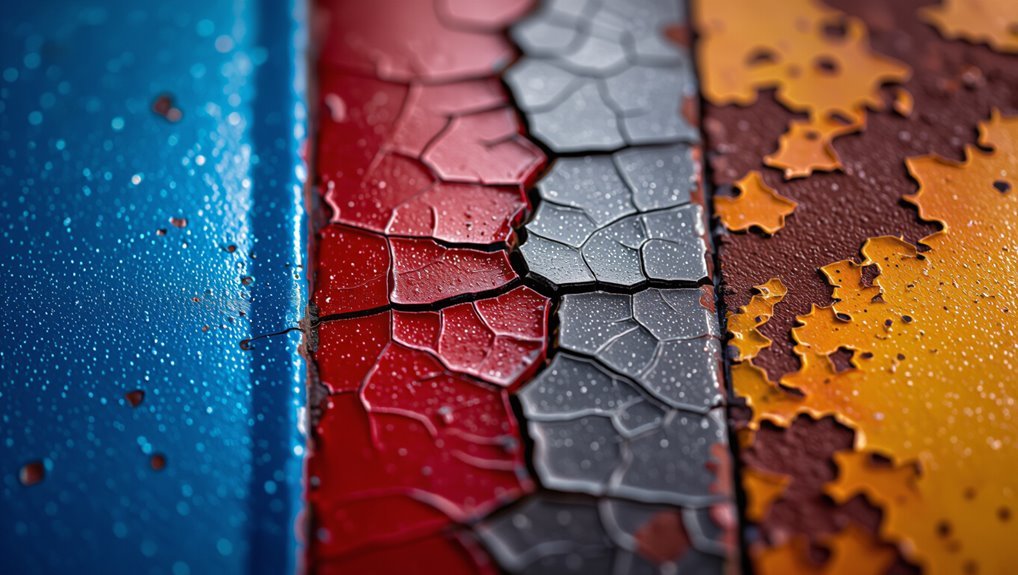
Wondering why your spray paint is cracking? Check adhesion first: poor spray paint adhesion from dirty, oily, or glossy surfaces causes flakes.
Test small areas, scrape gently, and inspect for undercoat failures. Note environmental factors like humidity, temperature swings, and dust during curing—they weaken bonds.
Once identified, clean, sand, and control conditions before repainting to prevent repeat cracking.
Is It Cracking or Just Wrinkling?
After checking adhesion and environmental causes, you’ll want to tell whether the finish is actually cracking or simply wrinkling—those look similar at a glance but come from different problems and need different fixes.
For accurate spray paint evaluation, inspect edge patterns: cracks split through layers; wrinkles form raised, rippled surface texture.
Test with gentle bend or solvent spot to confirm diagnosis and choose the right repair.
Contamination: Why Spray Paint Cracks and How to Clean
How did contaminants get between your surface and the paint?
You’ll see contamination effects when surface contaminants ruin paint adhesion. Identify contamination sources, then use cleaning methods and cleaning solutions to restore pre paint cleanliness.
Don’t panic—follow preventative measures.
- Feel betrayed.
- Act fast.
- Reclaim control.
Surface Prep Mistakes That Cause Failure
Skip the quick scrub and you’ll pay for it later—many paint failures start with sloppy surface prep.
If you don’t confirm surface cleanliness, oils, dust, and old coatings prevent adhesion and cause cracking. You must sand, degrease, and remove rust.
Also check substrate compatibility so primers and paints bond correctly. Proper prep prevents failures and extends finish life.
Layer Incompatibility: When Paints Fight Each Other
When you apply a new coat over an incompatible base, the two layers can’t flex or bond the same way, so stresses build up and the topcoat cracks or flakes.
You’ll feel frustrated when finishes fail—check paint compatibility and adjust layering techniques.
Consider:
- Test adhesion.
- Use proper primer.
- Match resin types to prevent peeling and wasted time.
Avoid Thick Coats: Spraying Technique Tips
If you spray on heavy, wet coats you’ll trap solvents and build up layers that don’t cure evenly, which almost always leads to cracking or orange peel.
Instead, apply several thin, even passes with proper overlap and keep the gun moving at a steady speed and distance so each pass flash-dries before the next.
Control spraying distance, nozzle angle, and paint consistency, adapt to substrate type and environmental factors, and practice technique.
Old Cans and Contamination: Unreliable Finishes
If your spray paint is old or the can’s propellant has degraded, it won’t atomize properly and can cause cracking.
You should also make sure the surface is clean and completely dry, because dirt or moisture prevents proper adhesion.
Check dates on cans and prep surfaces thoroughly to get a reliable finish.
Expired Spray Cans
Although the spray can looks fine, using old or contaminated cans often causes cracking because the propellant, binders, or solvents break down over time and no longer form a stable film.
You should check expiration dates and improve can storage. If you use expired spray cans you risk poor adhesion, brittle finish, and flaking.
- Frustration
- Regret
- Waste
Dirty Or Moist Surfaces
When you spray over dusty, greasy, or damp surfaces, the paint can’t bond properly and will often crack or peel as it dries; contaminants interrupt the film formation and trapped moisture expands or vaporizes beneath the coating.
You should clean, degrease, and dry thoroughly before painting.
Prioritize surface cleanliness and moisture management: use proper cleaners, tack cloths, and allow full drying time to prevent adhesion failure and cracking.
Temperature and Humidity: Painting Conditions to Avoid
Because spray paint cures by solvent evaporation and resin coalescence, the temperature and humidity during application have a huge effect on whether the finish will dry smoothly or crack.
You must respect environmental factors: choose ideal conditions, mind curing times, plan seasonal painting, and monitor humidity levels.
Don’t paint in extreme heat, cold, or high moisture.
Prevent Cracking on Plastics and Flexible Substrates
If you’re painting plastic or any flexible substrate, start with a flexible primer designed to move with the material.
Spray thin, even layers and build up multiple coats rather than one heavy one to avoid stress that leads to cracking.
Let each coat fully cure before flexing or applying the next to guarantee adhesion and flexibility.
Flexible Primer Use
Although flexible primers add an extra step, you’ll save time and avoid cracking by choosing a primer formulated for plastics and other flexible substrates.
You’ll improve adhesion properties and surface flexibility, matching primer types to paint compatibility and flexible surfaces.
Benefits include flexible coatings that move with the substrate.
- Relief
- Confidence
- Pride
Thin, Multiple Coats
Once you’ve used a flexible primer, apply your spray paint in thin, multiple coats to keep the finish pliable and prevent cracking.
Use thin coat techniques: short bursts, even passes, and light overlaps.
Let each coat flash per manufacturer directions, then add more using multiple coat strategies to build coverage without stiffness.
This preserves flexibility on plastics and flexible substrates.
Allow Full Curing
Let the paint fully cure before flexing or handling the piece—curing, not just dry-to-touch, is what builds the paint’s flexibility and adhesion on plastics and other substrates.
You’ll respect cure time and paint chemistry to prevent cracking. Follow these steps and feel confident:
- Wait manufacturer cure time.
- Test flex gently.
- Recoat only after full cure.
Solvent Bleed-Through: Spotting and Stopping Crazing
When solvent from an underlying coating migrates into fresh spray paint, it can soften the new film and cause crazing—those fine, spiderweb cracks you’re seeing. Spotting the problem early and stopping further bleed-through will save the finish.
Check for solvent interaction by testing nearby areas. Remove contaminated layers, let substrates fully dry, and use compatible primers to restore paint adhesion before recoating.
Why Rapid Drying or Baking Can Split Paint
If you speed-dry or bake spray paint to cut wait time, the outer skin hardens before solvents can escape, trapping volatiles that expand and rupture the film—so you’ll see cracking or popping as internal pressure forces weak spots open.
Rapid drying upends paint chemistry, causing brittleness and failure. You feel frustrated, helpless, enthusiastic.
- Anger
- Panic
- Regret
Rust Under Paint: How Corrosion Ruins Adhesion
Rust eats away at the metal beneath your finish, lifting and breaking the bond between paint and substrate so flakes and bubbles appear where adhesion fails.
You should perform rust inspection, then corrosion treatment and metal preparation before primer selection.
Use protective coatings, surface sealing, and paint compatibility checks.
Apply adhesion techniques, follow rust prevention and maintenance strategies to stop under-paint corrosion and restore durable finish.
Sand-Throughs: Why Flaking Starts and How to Repair
Because you sand too aggressively or skip proper feathering, you’ll often cut through primer or base coats down to bare substrate, creating thin spots that fail before surrounding paint and start flaking.
Cutting through primer by sanding too hard or skipping feathering creates thin spots that flake before surrounding paint.
You must identify sand types and surface irregularities, then use correct repair techniques and restoration methods to fix adhesion issues and address flaking causes.
- Assess
- Strip
- Recoat
Movement, Stress, and Hairline Cracking Over Time
You’ll notice hairline cracks often start where the substrate bends or shifts, because the paint can’t follow that movement.
Temperature changes also put the coating under repeated expansion and contraction, which stresses the film.
Over time that microflex fatigue shows up as tiny, spreading fissures that need a more flexible system or different prep to prevent.
Substrate Movement Effects
When a painted surface shifts—whether from thermal expansion, settling, or regular use—the paint has to flex with it, and if it can’t, the coating will form hairline cracks where stress concentrates.
You’ll notice substrate types and movement effects change paint adhesion; improve surface flexibility to reduce failure.
- Frustration
- Urgency
- Relief
Thermal Expansion Stress
If temperatures rise and fall, the substrate and the paint expand and contract at different rates, and that repeated movement puts constant shear stress on the coating. You’ll see hairline cracking from thermal expansion; give coatings room for stress relief and choose flexible products.
| Cause | Effect | Fix |
|---|---|---|
| Heat cycles | Cracks | Flexible paint |
| Cold shock | Shrinkage | Primer |
| Daily change | Wear | Allow cure |
Microflex Fatigue Cracking
Because surfaces flex and shift with normal use, microflex fatigue cracking shows up as fine, spiderweb-like hairline fractures that develop slowly over repeated movement.
You’ll notice reduced paint durability as tiny fissures spread, especially on hinges or bent panels.
You can’t ignore it; address substrate movement and use flexible coatings.
- Frustration
- Urgency
- Relief
Troubleshoot Fresh Cracking: A Step-By-Step Checklist
Although seeing fresh cracks on a newly painted surface feels discouraging, you can usually diagnose and fix the problem quickly by following a focused checklist.
Inspect substrate for contamination or poor spray paint adhesion, check cure time and humidity, confirm proper solvent and coat thickness, test flexibility and temperature exposure, and evaluate mechanical stress.
Note findings, plan corrective steps, and retest after repair.
Spot Repairs: Patching Small Cracked Areas
After you’ve diagnosed the cause of fresh cracking, you can move on to spot repairs for small affected areas.
Once the cause is identified, tackle small cracks with spot repairs using gentle sanding and appropriate fillers.
You’ll clean, sand, and choose appropriate repair materials, then apply patching techniques carefully to blend edges.
Use:
- Gentle sanding to feather.
- Thin filler for shallow cracks.
- Fine spray touch-ups and clear coat for protection.
Strip and Recoat: Fixing Large Cracked Surfaces
If the cracking covers a big area, you’ll need to assess the paint and underlying damage to decide whether stripping is necessary.
Remove all flaking and loose layers down to a stable surface before you move on.
Once it’s clean and dry, reprime the bare spots and recoat with compatible products for a durable finish.
Assess Paint And Damage
When faced with large areas of cracked spray paint, you’ll want to assess whether stripping and recoating is the best route.
Inspect adhesion, substrate damage, and remaining finish. Consider paint durability and cracking prevention before committing.
Decide based on extent, time, and cost.
- Fear: overwhelmed by scope
- Frustration: wasted effort worries
- Relief: clear plan restores confidence
Remove Flaking Layers
Start by removing all loose, flaking paint so you can see the true condition of the surface beneath.
Use appropriate removal techniques: scrape with a putty knife, sand with coarse paper or a power sander, and apply chemical strippers for stubborn areas.
Work safely with gloves, mask, and ventilation, and clean the substrate thoroughly to guarantee sound adhesion for the next steps.
Reprime And Recoat
With the loose layers removed and the substrate clean, you’re ready to strip down any remaining old finish and apply a fresh primer and topcoat to stop large cracks from returning.
Choose primer selection carefully, use proper spray paint techniques, and work patiently.
- Prep thoroughly
- Prime evenly
- Recoat with care
Pre-Paint Checklist to Prevent Cracking
Even if you’re enthusiastic to spray, taking a few methodical prep steps prevents cracking later: clean, degrease, and sand to promote paint adhesion and check surface compatibility.
Remove rust, loose flakes, and contaminants.
Strip away rust, loose flakes, and grime to ensure a clean, sound surface before painting.
Verify temperature and humidity suit the paint, dry fully, and mask surrounding areas.
Test a small patch to confirm adhesion before committing to full coats.
Products and Primers That Reduce Spray Paint Cracking Risk
When you pick the right products—quality primers, flexible paints, and compatible additives—you cut the risk of cracking before the first coat dries.
Choose spray paint options with flexible resins and match primers for adhesion; primer benefits include sealing and stress relief.
Use:
- High-flex spray paint for bends.
- Bonding primer for slick surfaces.
- Clear topcoat for protection.
Frequently Asked Questions
Can Spray Paint Cracking Be Caused by Using the Wrong Nozzle Size?
72% of hobbyists report nozzle issues; yes, using the wrong nozzle size can crack spray paint — you’ll alter atomization, nozzle types affect droplet size and paint thickness, causing uneven layers that stress and ultimately split.
Will Sanding Between Coats Always Prevent Future Cracks?
No, sanding between coats won’t always prevent cracks; you’ll need proper sanding techniques and consistent coat thickness, because solvent interaction, substrate movement, or curing issues can still cause failures even with careful sanding.
Does UV Exposure Cause Spray Paint to Crack Faster?
Yes — UV damage speeds cracking; you’ll see paint stiffen and flake like sunbaked clay. You’ll weaken paint adhesion over time, so protect finishes, use UV-stable products, and restore coatings before they fail.
Can Additives or Hardeners Increase Cracking Risk?
Yes — you can increase cracking risk if you use incompatible additive types or incorrect hardener ratios; you’ll create brittle films, poor adhesion, or extended cure stress, so always match chemistries and follow manufacturer mixing instructions precisely.
Is Cracking More Common With Metallic or Textured Spray Paints?
Cracking’s more common on textured surface coatings because they flex and grab irregularities; metallic finish paints can show cracks visually but usually crack less if applied smoothly and with proper layering, so textured surfaces pose higher risk.
Conclusion
You want a smooth finish, not flaky frustration — and you can get there. By comparing quick fixes with long-term overhaul, you’ll spot when a tiny crack needs a dab of matching paint or when the whole panel screams for stripping and primer. Clean, sand, and match layers before you spray; test on a hidden spot. With a little patience and the right products, you’ll turn a brittle mess into a lasting, glossy surface.
