
What Causes Paint to Peel? Common Reasons and Solutions
You’re seeing paint peel because adhesion failed—most often from moisture (leaks, condensation, or rising damp), poor surface prep, incompatible coatings (like oil over latex), structural movement, or simply old paint. Fix leaks, improve ventilation, strip or sand loose paint, use the right primer and compatible products, and apply thin, even coats at proper temperatures. Do these basics and you’ll stop most peeling—and keep going you’ll find step‑by‑step fixes, inspection tips, and prevention strategies.
Quick Test: Why Is My Paint Peeling?
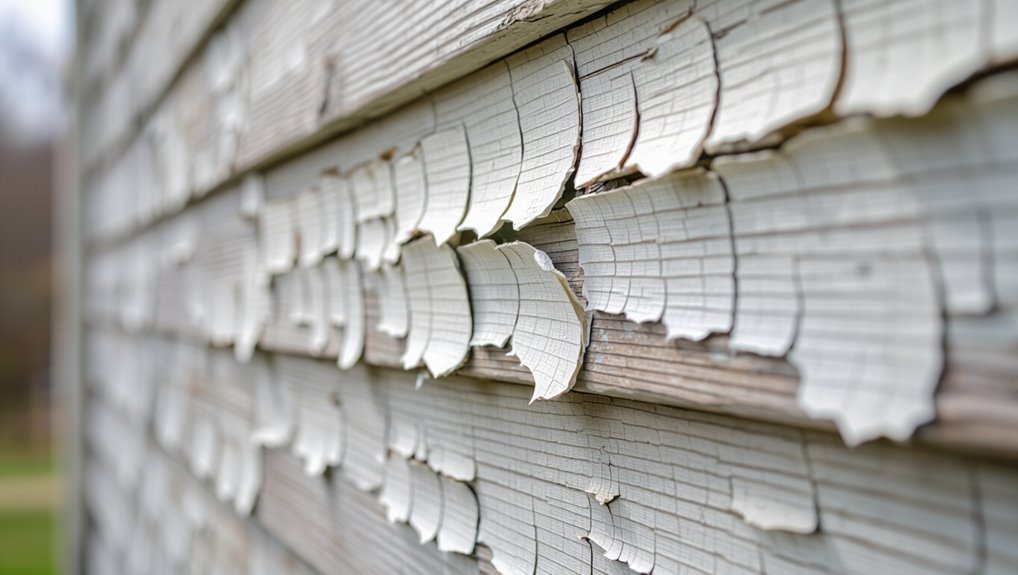
Wondering why your paint’s peeling? You can run a quick test: scrape small areas to reveal peeling patterns and substrate condition.
Check adhesion, previous coatings, and whether paint lifespan has been exceeded. Note flaking near trim, blistering, or uniform shedding—each tells you if prep, compatibility, or age caused failure.
Use findings to pick targeted repairs and correct materials.
How Moisture Causes Paint to Lose Adhesion
If your scrape showed blistering, flaking near trim, or paint that peels in sheets, moisture is a likely culprit because water undermines the bond between paint and substrate.
You’ll see adhesion loss where dampness reaches primer or bare wood.
Identify moisture sources like roof leaks, poor ventilation, or ground humidity; dry and fix the source, then strip and recoat with appropriate breathable systems.
How to Spot Leaks, Condensation, and Rising Damp
Look for visible water stains or bubbling paint on walls and ceilings, since those often mark leaks or condensation.
If you notice a musty odor, don’t ignore it — that smell usually signals persistent moisture and potential mold.
Also watch for powdery salt deposits rising from masonry, which indicate rising damp forcing minerals to the surface.
Visible Water Stains
One of the clearest signs paint is failing because of moisture is a visible water stain—brown, yellow, or gray patches that spread across ceilings or walls.
You should inspect for water damage, note changes in surface texture, and consider how paint formulation and environmental factors affected paint durability.
Use targeted stain removal, humidity control, and proven repair techniques to restore finishes and prevent recurrence.
Musty Odor Presence
Visible water stains often come with a telltale musty smell, and that odor can help you pinpoint hidden moisture sources like leaks, condensation, or rising damp.
You should act fast—musty odor signals mold and possible health risks.
Check these signs:
- Persistent damp smell
- Flaking paint nearby
- Peeling wallpaper
- Cold, damp walls
- Staining streaks near floors
Rising Salt Deposits
Crystalline white or gray deposits—known as efflorescence—often signal moisture moving through masonry and bringing salts to the surface.
You’ll spot salt damage, flaking paint, and adhesion issues where moisture migration raises surface alkalinity and alters paint chemistry.
Check for leaks, condensation, and rising damp.
Address environmental factors, use proper repair techniques, neutralize salts, and expect long term effects if untreated.
Fix Moisture Problems Before You Repaint
Before you repaint, stop and fix any moisture issues that caused the peeling—dry, stable substrates are essential for a durable finish.
Before repainting, address the moisture that caused peeling—ensure surfaces are dry and stable for a lasting finish.
You should locate sources, repair them, and prevent recurrence. Consider:
- Install moisture barriers where needed.
- Improve drainage around foundations.
- Seal leaks in roofs and walls.
- Prioritize ventilation improvement indoors.
- Use vapor-permeable primers after surfaces dry.
Why Poor Surface Prep Makes Paint Peel
Once you’ve stopped the moisture that caused the failure, inspect and prepare the surface properly—poor prep itself often makes paint peel.
You must remove surface contaminants and old paint, address uneven surfaces, and eliminate dust accumulation. Inadequate cleaning, insufficient sanding, and improper priming weaken adhesion.
Also check paint compatibility with the substrate and existing coatings so your new finish bonds and lasts.
How to Test and Clean Surfaces for Good Adhesion
If you want your new paint to stick, start by testing the surface for contaminants and adhesion so you know exactly what cleaning and prep it needs.
Use simple adhesion testing and targeted surface cleaning to remove grease, chalk, and loose paint.
Then:
- Wipe with detergent
- Rinse and dry
- Sand rough spots
- Use a solvent patch
- Perform a tape pull test
When Paint Layers Are Incompatible (Oil vs Latex)
When oil-based paint sits under latex, the two layers often won’t bond because their chemistries repel each other.
So you’ll end up with cracking or peeling rather than a durable finish. You’ll face paint compatibility issues when repainting without proper prep.
Address oil latex interaction by sanding, degreasing, and using a bonding primer or fully removing the old oil layer to guarantee lasting adhesion.
How to Tell Which Paint Is on Your Wall
Start by checking the paint sheen — eggshell, satin, or gloss can give clues about the product type.
If sheen isn’t clear, perform a simple scratch test on an inconspicuous spot to see how the layer responds.
Also review any previous records or ask the homeowner to confirm what was used.
Check Paint Sheen
One quick way to identify the paint on your wall is by checking its sheen: shine levels—flat, eggshell, satin, semi-gloss, or gloss—tell you a lot about durability and where the paint was meant to be used.
You’ll notice paint sheen effects influence cleaning and adhesion; verify sheen compatibility when matching or repainting.
- Flat: low shine, hides flaws
- Eggshell: subtle sheen
- Satin: washable
- Semi-gloss: durable
- Gloss: high shine
Perform a Scratch Test
Although it feels simple, a scratch test gives you a fast, reliable way to tell whether your wall has water-based or oil-based paint: lightly scrape an inconspicuous spot with a coin or fingernail.
If paint flakes easily it’s likely water-based; if it resists or crumbles differently, it’s probably oil-based.
Use this quick adhesion evaluation to plan proper prep and primer choices.
Review Previous Records
If the scratch test didn’t give a clear answer, check any previous records before doing more work.
Look for receipts, contractor notes, or paint cans to confirm brand and finish. That helps assess paint durability and surface tension tendencies.
Compare with sample chips and lab data if available.
- paint receipts
- contractor logs
- photos
- leftover cans
- lab reports
When You Must Strip Old Paint Before Repainting
When paint flakes, bubbles, or shows multiple layers with visible cracking, you need to strip down to a sound surface before repainting.
You’ll choose paint removal techniques and stripping methods based on substrate and condition.
Prioritize surface preparation: use chemical strippers, heat guns, or sanding options appropriately.
Prioritize surface prep: choose chemical strippers, heat guns, or sanding based on the substrate and condition.
Follow safety precautions, wear protection, and consider environmental considerations for disposal and ventilation to avoid hazards.
How Temperature and Humidity Ruin Paint Jobs
Because paint cures through chemical reactions and moisture exchange, extreme temperatures and wrong humidity levels can derail adhesion, drying, and finish quality.
You’ll see failure when conditions vary or stay unsuitable. Watch for these risks:
- temperature fluctuations stress film
- high humidity traps moisture
- low humidity causes cracking
- rapid cooling causes blushing
- prolonged dampness promotes adhesion loss
Best Temperature and Humidity for Painting and Drying
You’ll get the best results when you paint within the manufacturer’s recommended temperature range, typically between 50°F and 85°F.
Keep relative humidity around 40–60% so paint can cure evenly without trapping moisture.
Controlling both temperature and humidity prevents adhesion problems and speeds proper drying.
Ideal Temperature Range
If you’re aiming for durable, evenly cured paint, keep both temperature and humidity within the manufacturer’s recommended window—typically 50–85°F (10–29°C) for latex and 40–90°F (4–32°C) for oil-based products—and avoid extremes that slow drying or trap moisture.
You should monitor conditions to maintain ideal paint conditions and prevent temperature fluctuations:
- Paint when temps are steady
- Use heaters or fans cautiously
- Avoid direct sun
- Schedule morning or evening
- Check product specs
Optimal Humidity Levels
When humidity stays between about 40% and 60%, paint dries at a steady rate that helps adhesion and prevents blistering or soggy finishes; aim for that range whenever possible and keep conditions consistent during drying. Use humidity control, ventilation systems, dehumidifier usage, and air circulation to maintain moisture balance. Consider seasonal changes, indoor plants, paint types, surface treatments, and weather conditions.
| Tool | Purpose |
|---|---|
| Dehumidifier | Lower humidity |
| Fans | Improve air circulation |
How Structural Movement and Cracks Cause Flaking
Because buildings settle and shift over time, even small cracks in walls and trim can pry paint loose from its substrate.
You’ll notice how structural stress and foundation shifts weaken wall integrity and promote crack propagation, which undermines paint adhesion.
Signs include:
- hairline fissures
- separated trim joints
- stair-step cracks
- peeling at corners
- localized blistering
Repairing Cracks, Gaps, and Loose Trim Before Painting
Before you paint, patch any gaps and cracks with a suitable caulk or filler so paint has a solid surface to stick to.
Check trim for looseness and re-secure or replace damaged pieces to prevent future movement and peeling.
Doing these simple repairs first will make your new paint last.
Fill Gaps And Cracks
If you want your new paint to last, start by repairing cracks, gaps, and any loose trim so moisture and movement can’t undermine the finish.
Use caulking techniques and sealant options suitable for expansion joints and gap fillers; prioritize crack repair, surface priming, and adhesion promoters.
Consider weatherproofing methods and flexible coatings for paint compatibility.
- Choose compatible sealants
- Prep surfaces
- Fill gaps fully
- Smooth joints
- Test flexibility
Secure Or Replace Loose Trim
Now that gaps and cracks are sealed, turn your attention to loose or damaged trim that can let moisture and movement break a paint job.
Inspect trim, tighten fasteners, and replace rotten sections. Proper trim installation prevents gaps; use caulk and corrosion-resistant nails.
Regular trim maintenance keeps paint adhered and stops future peeling. Repaint only after repairs dry and surfaces are stable.
How Sun Exposure and UV Damage Lead to Peeling
Although sunlight feels harmless, prolonged UV exposure breaks down paint’s binders and pigments, causing the film to become brittle and lose adhesion.
Prolonged UV exposure degrades paint binders and pigments, making the film brittle and prone to loss of adhesion.
You’ll notice sun damage and color fading, reduced paint durability, and accelerated surface aging.
Consider environmental factors like heat exposure and weather resistance when inspecting siding.
- UV protection failure
- Chalky surface
- Cracking film
- Loss of adhesion
- Accelerated wear
Choosing UV-Resistant Paints and Finishes for Exteriors
When you pick exterior coatings, look for UV-stable pigments that resist fading and breakdown.
Choose resins rated for outdoor durability—acrylics, high-quality alkyds, or specialized elastomerics—based on the substrate and movement expected.
And don’t skip proper surface preparation, because primers and clean, sound surfaces make those UV-resistant systems last.
UV-Stable Pigments
Because sunlight breaks down many pigments over time, choosing UV-stable paints and finishes is essential if you want exterior colors to last and resist fading.
You’ll benefit from UV protection benefits, improved pigment longevity, and better color retention. Consider formulation advancements and mindful application techniques while weighing environmental impact.
- Choose lightfast pigments
- Check ASTM ratings
- Prefer fade inhibitors
- Test samples
- Follow prep steps
Resin Durability Options
If you want exterior paint that resists UV breakdown and stays flexible through temperature swings, focus on the resin or binder as much as you do on pigments.
Choose resin types proven by durability tests, consider resin additives for UV and flexibilizing, and match application methods to conditions.
Account for environmental factors to predict long term performance and select coatings that maintain adhesion and elasticity.
Surface Preparation Importance
Although great UV-resistant paint helps, proper surface preparation determines whether that coating will stick and stay flexible over time.
You must use correct surface cleaning techniques and thoughtful primer selection to prevent peeling.
Do these steps before painting:
- Remove dirt, mildew, and loose paint
- Sand glossy or chalky areas
- Degrease and rinse thoroughly
- Choose compatible primer
- Allow full drying before coating
When Old Paint and Natural Wear Are the Culprit
When paint’s just old, it loses the flexibility and adhesion that kept it bonded to the surface, so you’ll start seeing cracking, flaking, and eventual peeling even without other problems present.
You’ll notice faded color, chalking, and predictable wear patterns where contact or weather hit most.
Inspect regularly; remove loose layers, clean surfaces, and address underlying moisture before applying new coatings.
Cost-Effective Strategies for Repainting Aged Surfaces
Now that you’ve identified aging as the likely cause, you can tackle repainting without overspending by focusing on prep, selective repairs, and smart product choices.
Use budget friendly options and proper surface priming to extend results. Consider:
Stretch your budget and longevity with smart priming and select savings—clean, patch, prime, and reuse where sensible
- Clean and sand only where needed
- Patch cracks, not whole areas
- Use quality primer for adhesion
- Buy sample-sized paint
- Reuse tools and store leftover paint
Application Mistakes That Cause Peeling (Thick Coats, Rush)
If you hurry through painting or slap on excessively thick coats, the finish won’t bond properly and will be far more likely to blister, crack, or peel. You should follow proper application techniques and monitor paint thickness; rushing traps solvents and prevents adhesion. Use measured passes and allow drying between layers to reduce peeling risk.
| Issue | Effect |
|---|---|
| Thick coats | Poor drying |
| Rushing | Trapped solvents |
| Uneven | Weak bond |
| Skipping cure | Failure |
Correct Application Technique and Tools to Avoid Peeling
Fixing your application technique and picking the right tools prevents the paint faults you just read about.
You should follow technique guidelines, choose proper application tools, and respect drying times and environmental factors.
Emphasize surface preparation, primer selection, compatible paint types, and controlled paint layering.
- Use quality brushes/rollers
- Keep thin, even coats
- Monitor humidity/temp
- Allow full cure between coats
- Match primer to surface
Maintenance Checklist to Prevent Peeling Paint
Because regular care stops small problems from becoming big ones, you should follow a simple maintenance checklist to keep paint from peeling: inspect surfaces seasonally, clean dirt and mildew, touch up chips promptly, check and repair caulking and flashing, and control moisture sources like leaks and condensation. Use paint maintenance as preventive measures and record dates.
| Task | Frequency | Notes |
|---|---|---|
| Inspect | Seasonal | Look for bubbles |
| Clean | Monthly | Remove mildew |
| Touch-up | As needed | Seal edges |
| Seal | Annually | Check caulk |
Frequently Asked Questions
Can Pests or Insects Cause Paint to Peel?
Yes — pests can cause paint to peel. You’ll see pest damage when insects or rodents chew, nest, or create tunnels, which lets moisture exposure reach substrates, undermining adhesion and causing paint to blister, flake, or detach.
Does Salt or Coastal Air Affect Paint Adhesion?
Yes — you’ll find salt corrosion and coastal humidity weaken paint adhesion, so moisture and salty air eat binders and promote flaking; you should use corrosion-resistant primers, marine-grade paints, and frequent maintenance to protect finishes.
Will Underlying Stains (Smoke, Tannin) Make Paint Peel?
Yes — underlying stains like smoke and tannin can make paint peel. You’ll need stain removal techniques (cleaners, bleach, shellac/primer) because smoke damage effects penetrate; otherwise paint won’t adhere and will blister or delaminate.
Can Previous DIY Patch Jobs Lead to Future Peeling?
Yes — a landlord’s quick drywall patch failed because previous repairs used incompatible primer, so you’ll see peeling later. Check previous repairs for proper prep and paint compatibility, and sand, prime, then repaint correctly.
Do Incompatible Primers Cause Peeling Even if Topcoats Match?
Yes — incompatible primers can cause peeling even if topcoats match. You’ll face adhesion issues because primer chemistry must bond to both substrate and finish; mismatched formulations break down, letting layers separate over time.
Conclusion
You’ve learned the common causes of peeling paint and how to stop them, from moisture and bad prep to application mistakes and wear. Will you take the simple steps—fix leaks, dry surfaces, strip loose paint, sand, prime, and apply proper coats—to protect your walls? With routine checks and the right techniques, you’ll prevent peeling, save money, and keep surfaces looking fresh longer, so a little effort now avoids big repairs later.
