
How Long Does Rust-Oleum Spray Paint Take to Dry? Full Guide
You’ll usually get Rust‑Oleum spray paint dry to the touch in about 15–30 minutes and safe to handle in 1–2 hours, with a full cure in roughly 24–48 hours under normal warm, dry conditions. Thin, even coats, good airflow, and 50–90°F temperatures speed drying; heavy coats, high humidity, or cold will slow it. Prep surfaces, sand between coats, and allow recommended flash times for best results — keep going and you’ll learn practical tips for faster, stronger finishes.
Quick Answer: Typical Rust-Oleum Dry & Cure Times
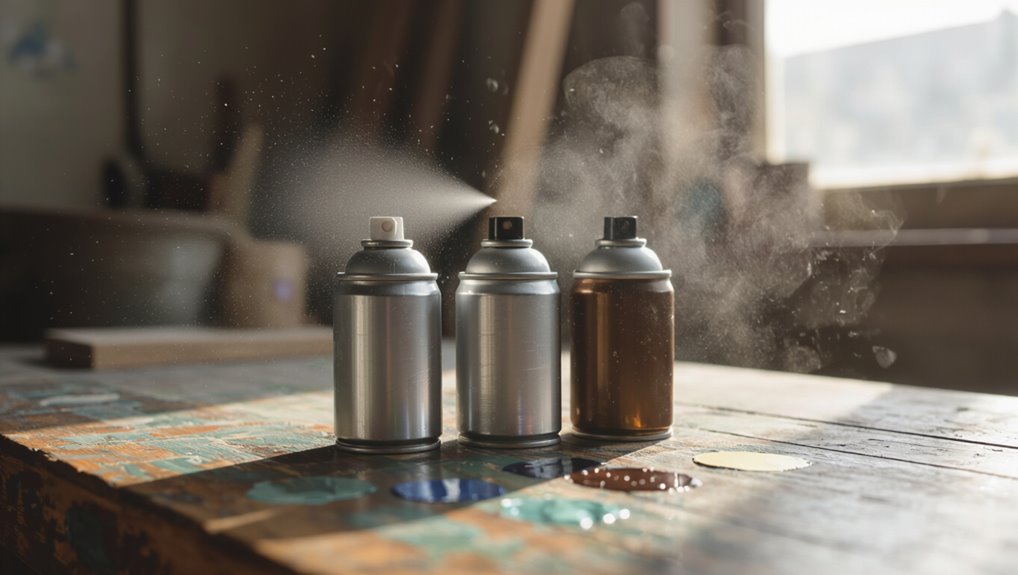
Most Rust‑Oleum spray paints feel dry to the touch within 15–30 minutes, are safe for handling in 1–2 hours, and reach full cure in 24–48 hours under normal conditions; heavier coats, lower temperatures, or high humidity will extend those times.
You’ll pick faster drying techniques by using thin coats, warm dry air, and choosing fast‑set paint formulas suited to your surface for reliable results.
Dry vs. Tack vs. Cure: What Each Term Means
Knowing touch, handling, and cure times helps you plan, but those labels—dry, tack, cure—mean different things for paint performance. You’ll learn that “dry” means touch-dry, “tack” is slightly sticky, and “cure” is full strength. Use proper drying techniques for different paint types.
| Term | Feel | Action |
|---|---|---|
| Dry | Matte | Light touch |
| Tack | Sticky | Wait |
| Cure | Hard | Full use |
Typical Rust-Oleum Spray Paint Drying Times At a Glance
You’ll usually see Rust‑Oleum labeled with a dry‑to‑touch time (often 15–30 minutes) and a recoat window or full cure time that can range from hours to days depending on the product.
Check the can for the specific recoat time before applying another layer to avoid adhesion problems.
Plan for full cure — where the paint reaches maximum hardness and chemical resistance — which most formulas achieve within 24–72 hours.
Dry-To-Touch Times
While exact times vary by formula and conditions, Rust-Oleum spray paints typically become dry-to-touch within 10 to 30 minutes; lighter coats and warmer, drier environments push the time toward the lower end.
You can speed results with proper drying techniques, keeping environmental effects in mind.
Quick tips:
- Thin, even coats
- Warm, low-humidity area
- Good ventilation
- Moderate spray distance
- Avoid heavy buildup
Recoat And Cure Times
Once the paint’s dry-to-touch phase passes, you can usually apply another coat after 15–30 minutes for most Rust‑Oleum spray formulas.
Though heavier or specialty finishes often need 24 hours before recoating; full curing typically takes 24 hours to 30 days depending on product, coat thickness, and conditions.
You should monitor recoat timing and consider cure factors like temperature, humidity, and ventilation to guarantee proper adhesion.
Which Rust-Oleum Lines Dry Fastest and Why
Because Rust‑Oleum tailors formulas for different surfaces and finishes, some product lines dry noticeably faster than others.
You’ll use fast drying options like Universal and Painter’s Touch for quick projects, and product comparisons show oil-based enamels take longer.
Consider surface, solvent, and pigment load when choosing so you get predictable dry times.
- Universal
- Painter’s Touch
- Chalked
- Stops Rust
- Specialty aerosols
Choose the Right Rust-Oleum Product for Your Timeline
Think about the product type you need—enamels, primers, and fast-dry formulas each cure at different rates, so pick one that matches how soon you need to handle the piece.
Check the can for drying time labels like “dry to touch” and “recoat after” to plan your schedule accurately.
If you need quick turnaround, choose products that state shorter tack-free and recoat times.
Product Type Matters
When you’re on a tight schedule, picking the right Rust-Oleum product makes a big difference in how quickly your project moves from spray to useable. Different formulas—fast-drying enamels, universal sprays, and specialty primers—have distinct tack, recoat, and cure times, so match the product to your timeline rather than guessing.
You’ll consider application techniques and surface types; choose accordingly.
- Fast-drying enamel
- Universal spray
- Primer for adhesion
- Rust inhibitor
- High-heat formula
Drying Time Labels
Although labels can look simple, they tell you exactly how long Rust-Oleum needs to tack, recoat, and fully cure, so read them before you start spraying.
You’ll rely on drying labels to plan projects: tack time, recoat window, and full cure.
Follow paint instructions for temperature, humidity, and coat thickness. That guarantees proper adhesion, appearance, and durability.
How Temperature Affects Rust-Oleum Drying
If you’re painting in cold or hot conditions, temperature changes how Rust-Oleum’s solvents evaporate and how the finish cures.
So you’ll see noticeable differences in tack time, recoat windows, and final hardness. You should work within recommended temperature ranges to optimize drying efficiency while being aware of humidity impact and airflow effects.
- Choose ideal temp range
- Expect slower cure when cold
- Faster tack when hot
- Avoid extremes
- Monitor manufacturer guidance
How Humidity and Airflow Change Drying Speed
Because moisture in the air slows solvent evaporation, high humidity lengthens tack time and delays recoat windows for Rust-Oleum, while good airflow speeds drying by carrying vapors away.
You should monitor humidity effects and avoid painting during damp conditions.
Position fans or work outdoors to maximize airflow impact, reduce tackiness, and shorten dust-free and handle-dry times for more reliable coatings.
Rust-Oleum Drying Differences on Metal, Wood, Plastic, and Fabric
When you spray Rust-Oleum on different substrates, drying times and adhesion vary noticeably—metal usually allows the fastest tack and cure.
Wood soaks and can slow solvent loss.
Plastics may resist adhesion and need preparation, and fabrics stay flexible but take longer to fully set.
You should:
- Test metal finish first
- Sand for wood treatment
- Use primer for plastic adhesion
- Stretch for fabric application
- Allow proper cure times
How Coat Thickness and Multiple Coats Alter Dry Time
Although a heavier coat may give quicker coverage, thicker layers trap solvents and extend tack and full cure times.
So you should apply thin, even passes and let each layer dry to the manufacturer’s recommended touch-dry stage before adding the next.
Your coat application affects drying variations: multiple thin coats dry faster and cure more reliably than one thick coat, reducing runs and uneven texture.
How to Test Dry-to-Touch, Recoat, and Full Cure Safely
To check dry-to-touch, recoat, and full cure safely, start with simple, noninvasive tests: You’ll use gentle drying techniques and practical testing methods to assess tack, adhesion, and hardness without harming the finish.
To check dry-to-touch, recoat, and full cure, use gentle, noninvasive tests to assess tack, adhesion, and hardness.
Follow cautious checks, note times, and wait longer if unsure.
- Light fingertip touch
- Fingernail edge test
- Tape adhesion pull
- Gentle flex or bend
- Smell and gloss consistency
Prep and Thinning Tips to Improve Drying
Start by making sure the surface is clean, dry, and free of grease or loose paint so the spray bonds and dries evenly.
Wipe or sand as needed, then use the thinner recommended for your Rust-Oleum formula—using the wrong solvent can slow drying or ruin the finish.
Proper prep and the correct thinner will cut drying time and give you a smoother, more durable result.
Surface Cleaning Prep
1 simple cleanup step you shouldn’t skip is giving the surface a proper wash and de-grease before you spray—any oil, dust, or old loose paint will slow drying and ruin adhesion.
You should follow surface preparation and cleaning techniques that match drying conditions and application methods.
Keep it simple:
- Soap and water
- Degreaser wipe
- Sand loose edges
- Tack cloth finish
- Rinse and dry thoroughly
Correct Thinner Choice
Once the surface’s clean and dry, pick the right thinner so your Rust-Oleum spray lays down evenly and cures on schedule.
Match thinner types to the product—acetone or mineral spirits for oil-based, alcohol blends for specialty formulas.
Thin only if manufacturer allows, test spray first, and adjust for temperature.
Choose application methods (light passes, distance) to prevent runs and speed consistent drying.
Quick Ways to Speed Drying Without Harming the Finish
When you need paint to dry faster without ruining the finish, focus on controlling the environment and using gentle accelerants.
Increasing airflow, raising temperature moderately, and lowering humidity will speed solvent evaporation while minimizing risks to adhesion and gloss.
Use quick drying techniques and guarantee ideal airflow without blasting the surface.
Employ quick-dry methods and ensure steady, gentle airflow—never blast the surface—to speed drying without damage.
Follow simple, safe steps:
- Thin thin coats
- Space coats properly
- Increase ventilation gently
- Lower humidity
- Avoid direct solvents
Tools That Safely Speed Rust-Oleum Drying (Fans, Heaters, Lamps)
Several quick, low-risk tools can help you speed Rust-Oleum drying without harming the finish: oscillating fans to boost gentle airflow, low-wattage electric heaters or heat guns on a low setting to raise ambient temperature modestly, and infrared or ceramic lamps to provide steady, indirect radiant heat. Use proper safety equipment and proven drying techniques.
| Tool | Effect | Tip |
|---|---|---|
| Fan | Airflow | Keep distance |
| Heater | Warmth | Low setting |
| Lamp | Radiant heat | Indirect placement |
Prevent Runs, Orange Peel, and Rough Texture
To prevent runs, keep your spray passes light and steady, holding the can the recommended distance from the surface.
To avoid orange peel, use thin, even coats and maintain consistent speed rather than trying to cover everything in one heavy spray.
Proper technique and patience will give you a smooth, professional finish.
Preventing Paint Runs
If you want smooth, even coverage without drips or orange peel, start by controlling how much paint you apply and the distance you hold the can—too much paint or spraying too close causes runs, while uneven passes lead to a bumpy texture.
Use proper paint application and consistent spray technique to prevent runs.
- Thin coats
- 8–12″ distance
- Smooth wrist motion
- Overlap passes
- Let tack dry
Avoiding Orange Peel
Runs are one problem, but orange peel and a rough finish can ruin a job even when drips are avoided.
You’ll prevent orange peel by using proper spray technique: keep cans 8–12 inches away, overlap passes, and move steadily.
Good surface preparation—clean, sand, and prime—ensures paint flows smoothly.
Sand lightly between coats and allow recommended flash times for a smooth, professional finish.
Fixing Sticky or Tacky Rust-Oleum Finishes
When your Rust-Oleum finish feels sticky or tacky, you can usually get it back to a smooth, dry surface without stripping the paint entirely.
Lightly scuff tacky areas, remove sticky residue with mineral spirits, dry thoroughly, and recoat thinly if needed. Good surface preparation prevents recurrence.
- Scuff gently
- Clean residue
- Use proper solvent
- Allow full dry
- Recoat thinly
Best Drying Practices: Indoor vs. Outdoor Projects
Because indoor and outdoor conditions affect drying speed so much, you’ll want to choose techniques that match your workspace: indoors, control temperature, humidity, and ventilation to speed curing and reduce overspray problems; outdoors, pick a calm, dry day with moderate temps, keep parts shaded from direct sun, and watch for dust or insects that can ruin the finish.
Use indoor ventilation to remove fumes; avoid direct outdoor sunlight.
Recommended Wait Times by Project: Furniture, Trim, Tools
If you’re painting furniture, trim, or tools, plan different wait times—furniture and high-touch pieces need longer curing than decorative trim, and metal tools often dry fastest but may require extra coats for protection.
You should consider furniture finishes, trim types, tool materials, and project conditions when timing returns.
- Allow 24–72 hours for heavy-use furniture
- 8–24 hours for decorative trim
- 1–3 hours between coats
- 48–72 hours for cured hardness
- Touch gently after initial dry
Safety: Ventilation, Temperature Control, and Fire Risk
You should work in a well-ventilated space or use a respirator to keep solvent fumes from building up.
Keep temperature between 50–90°F and humidity low for proper drying, and pause if conditions fall outside that range.
Also remove ignition sources and store cans safely to reduce fire risk.
Proper Workshop Ventilation
A well-ventilated workshop keeps solvent fumes from building up, controls temperature for proper paint curing, and reduces fire risk when you’re using Rust-Oleum spray paints.
You should prioritize airflow management, ventilation systems, fume extraction, and workspace organization to limit paint particles and negative health effects.
Follow safety precautions in your workspace setup and use a spray booth when possible.
- Air quality monitoring
- Dedicated ventilation systems
- Localized fume extraction
- Organized workspace setup
- Spray booth usage
Temperature And Humidity Guidance
Because temperature and humidity directly affect how Rust-Oleum spray paints atomize, dry, and cure, you should keep your workspace within the manufacturer’s recommended ranges and monitor conditions throughout the job. You’ll manage temperature effects and humidity impact to avoid runs, slow cure, or flash fire risks; ventilate well and remove ignition sources.
| Condition | Safe Range | Action |
|---|---|---|
| Temp | 50–90°F | Adjust heat |
| Humidity | <85% | Use dehumidifier |
| Ventilation | High | Fans/openings |
Final Checklist: Confirm Your Rust-Oleum Job Is Fully Dry
Before you declare the project finished, run through a quick checklist to make sure the Rust-Oleum coating is truly dry and ready for use.
Perform a final inspection using gentle touch and smell, verify recommended cure time, and apply approved drying techniques if needed.
- Surface cool to touch
- No tackiness
- Even sheen
- No solvent odor
- Edges fully dry
Frequently Asked Questions
Can Rust-Oleum Be Applied Over Existing Painted Surfaces Without Sanding?
Yes, you can, but you shouldn’t skip surface preparation; you’ll need to clean, degloss or scuff the existing paint for proper paint adhesion, and repair imperfections so Rust‑Oleum bonds evenly and lasts longer.
Will Spray Paint Color Shift as It Cures Over Weeks or Months?
About 20% of users notice slight shifts; you’ll rarely see dramatic change. During the curing process, color stability improves over weeks, so expect minor deepening or sheen changes as pigments settle and solvents fully evaporate.
Can Rust-Oleum Be Used on Items That Contact Food or Skin?
No, you shouldn’t use Rust‑Oleum on surfaces with food contact or prolonged skin contact; it isn’t certified for food contact safety and can cause skin sensitivity. Use FDA‑approved, food‑safe coatings or barrier finishes instead.
How Should I Store Partially Used Rust-Oleum Cans Long-Term?
Imagine a row of cans aligning like soldiers; you’ll store partially used Rust‑Oleum upright, cap tight, in a cool, dry place away from heat. Follow storage tips, note can expiration, and keep lids clean for longevity.
Is Rust-Oleum Paint Safe to Ship or Transport After Drying?
Yes — once fully cured, you can ship Rust-Oleum coated items, but you’ll need to follow shipment safety and transportation guidelines for any remaining solvent odor or flammable residue, package securely, and label per carrier rules.
Conclusion
You’ve got the facts—Rust-Oleum dries fast but patience pays off: measure twice, spray once. Let tack time pass before handling, then give full cure time for wear resistance. Pick fast-dry formulas for quick jobs, allow longer cures for furniture or tools, and control temperature and ventilation. Check spots with light pressure before use. When in doubt, wait a little longer—the extra hour now saves you repairs later.
