
How to Texture a Wall With a Paint Roller Easily
You can easily texture a wall with a paint roller by using premixed texture compound, the right nap roller, and steady, overlapping strokes. Mix compound to a creamy, peanut-butter thickness, load the roller evenly, and apply in even strips while varying pressure and angle for pattern. Let it fully dry, sand lightly if needed, and touch up seams and trim for a seamless look. Keep tools clean and practice on scrap; continue for tips on techniques and troubleshooting.
Quick Answer: How to Texture a Wall With a Roller (3‑Step Summary)
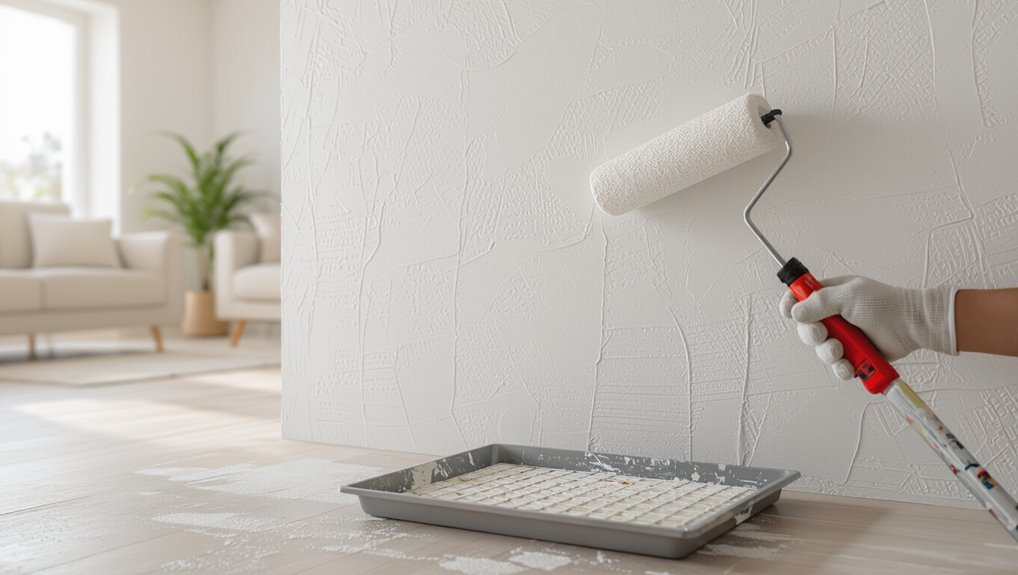
Grab a roller, a hawk or tray, and a premixed texture compound, and you can cover imperfections quickly.
Step 1: load the roller, apply compound in even strips.
Step 2: use varied roller techniques to create your chosen pattern.
Step 3: let cure, then lightly sand or touch up for desired texture variations.
Clean tools and inspect for missed spots.
How Roller Texture Changes a Room and Hides Flaws
When you roll texture onto a wall, you’ll add visual depth that makes the room feel more finished and interesting.
The pattern catches light and shadow, which can change the perceived size and warmth of a space.
It also masks minor dents, seams, and uneven patches so you won’t need perfect drywall to get a clean look.
Adds Visual Depth
Although a smooth wall can feel crisp, adding roller texture instantly brings visual depth and warmth to a room, making surfaces look more intentional and lived-in.
You’ll create visual interest with subtle shadows and highlights, enhancing furniture and color choices.
The tactile surface boosts design impact, giving spaces character without major renovations, and helps your room feel cohesive and thoughtfully styled.
Conceals Surface Imperfections
Because roller texture adds a subtle, irregular pattern, it masks minor flaws like hairline cracks, uneven drywall joints, and patchy paint so they don’t draw the eye. You’ll get effective imperfection concealment with minimal prep, and the wall texture adds cohesion. Use a roller technique that matches room style to hide blemishes and simplify touch-ups.
| Benefit | Effect |
|---|---|
| Hides cracks | Blends edges |
| Conceals seams | Smooths sightlines |
| Camouflages patches | Uniform finish |
| Reduces glare | Diffuses light |
| Simplifies fixes | Easier matching |
When to Choose Roller Texture vs. Knockdown, Spray, or Trowel
Want a quick, budget-friendly finish or aiming for a high-end, seamless look? You’ll pick based on speed, texture, and skill: roller texture benefits include easy learning and cheaper materials; application techniques are straightforward.
Consider:
- Roller — fast, low cost
- Knockdown — subtle, hides flaws
- Spray — uniform, professional finish
- Trowel — smooth, premium result
Tools and Materials You Need for Roller Texturing
You’ll need the right rollers—nap length and specialty texture rollers make a big difference—along with quality primer and paint formulated for textured surfaces.
Don’t forget safety gear and prep supplies, like masks, drop cloths, and sanding tools, to protect yourself and guarantee good adhesion.
I’ll walk you through the specific roller types, paint choices, and prep steps next.
Essential Roller Types
Choosing the right roller is essential for getting the texture you want, so know the basic types and when to use them.
You’ll pick roller materials that affect nap, stiffness, and finish, matching texture techniques to surface and compound. Use the right nap for depth, and swap materials for durability.
- Foam – smooth finishes
- Short nap – light texture
- Medium nap – standard texture
- Long nap – deep texture
Paint And Primer
Paint and primer are the foundation of a successful roller texture job, so pick products that suit your surface and the compound you’ll use. You’ll choose paint selection based on sheen and coverage, and primer types to promote adhesion and hide patches. Match primer to drywall or patched areas, then pick a durable finish that complements the texture.
| Surface | Recommended |
|---|---|
| Drywall | Acrylic primer |
| Patches | Stain-blocking primer |
Safety And Prep
Before you roll, get the area and yourself ready: wear safety glasses and a dust mask, lay drop cloths, remove or cover furniture, and guarantee good ventilation.
You’ll need safety gear for surface cleaning and wall preparation; address ventilation concerns before primer application.
- Drop cloths
- Safety gear
- Surface cleaning supplies
- Primer and roller
Pick the Right Roller Nap and Texture Compound
Start by matching the roller nap to the texture and wall surface you’re tackling: smooth walls need shorter naps (1/4″–3/8″) for fine textures, while rough or uneven surfaces call for longer naps (3/4″–1″) to hold more compound and reach crevices.
Choose a nap that carries your texture compound evenly, and pick a roller material compatible with water- or acrylic-based products to avoid shedding.
Mixing Joint Compound or Texture Paint to the Right Consistency
Start by thinning your joint compound or texture paint to a creamy, peanut-butter thickness so it spreads easily without running.
Test the mix on a scrap board and adjust with small amounts of water or compound until it holds texture but still loads the roller smoothly.
You’ll want a slightly thinner mix for finer naps and a bit thicker for heavy, slap-on textures.
Mixing To Proper Thickness
When you’re mixing joint compound or texture paint, getting the consistency right makes the difference between a smooth, even finish and a mess that won’t feather out properly.
Use proper mixing techniques and check texture consistency as you go. Stir slowly, add water sparingly, test a small patch, and restir before application.
- Stir slowly
- Add water sparingly
- Test a patch
- Restir before use
Adjusting Consistency For Roller
1. You’ll test roller consistency by mixing small batches and rolling on cardboard. Aim for a creamy, spreadable texture that coats but doesn’t drip.
Make texture adjustments with water or compound powder a little at a time, stirring thoroughly between additions. Keep notes of ratios so you can reproduce the mix, and remix as needed for consistent coverage across the wall.
How to Load a Roller for Even Roller Texture Coverage
Load the roller evenly to avoid heavy spots and thin patches that show after spraying texture. You’ll use proper roller loading techniques and texture application tips to keep coverage uniform.
Follow this quick checklist:
- Dip and roll off excess on tray ridges.
- Load from center outward for balance.
- Tap lightly to settle compound.
- Refill before roller dries.
Choose a Texture: Pros and Cons of Stipple, Skip‑Trowel, and Knockdown
After you’ve got the roller loaded evenly, you’ll want to pick the texture that fits the room’s style and practical needs.
You can choose stipple texture for subtle, forgiving coverage; skip trowel for a rustic, directional look; or knockdown texture for reduced dust and moderate hide.
Consider maintenance, light reflection, and skill—those texture techniques affect appearance, prep time, and touch‑ups.
Step‑By‑Step: Applying a Simple Stipple Texture
First, prep the wall by cleaning, repairing holes, and applying a primer so the compound adheres evenly.
Then load a thick-nap roller with joint compound and remove excess to avoid drips.
Finally, apply the compound with the roller and use short, repeated dabs to build the stipple pattern.
Prep The Wall
1. You’ll check wall condition, repair cracks, and sand glossy spots so texture sticks. Clean dust and grease; let dry.
Prime patched areas for even absorption. Tape trim and cover floors.
- Remove fixtures
- Fill holes
- Sand seams
- Clean surface
This surface preparation guarantees consistent stipple results and prevents adhesion problems.
Load The Roller
Load the roller by pouring the prepared texture mix into a wide tray, then dip and roll until the nap is evenly saturated but not dripping; you want enough material to leave a consistent stipple without heavy globs.
Work in small batches, reload often, and use a light touch with this roller technique. Keep tray edges clean and follow basic texture tips for even coverage.
Create Stipple Pattern
Start by holding the loaded roller lightly against the wall and rolling in a steady, overlapping pattern to lay down an even base of texture; don’t press hard—the nap should transfer spots of compound, not smear them.
Use a stipple technique with varied pressure and angles to create subtle texture variations.
Practice small sections, then blend edges.
- Roll
- Stipple
- Vary
- Blend
How to Roll Repeatable Patterns (Chevrons, Waves, Swirls)
Rolling repeatable patterns like chevrons, waves, and swirls takes a steady hand and a simple system you can repeat across the wall.
Start by marking guides, load the roller evenly, and practice chevron patterns on scrap.
Mark guides, load the roller evenly, and practice chevrons on scrap for consistent, repeatable patterns.
Work in consistent strokes for wave rhythm, and use controlled pressure for swirl techniques.
Keep spacing uniform and inspect often to maintain alignment and texture consistency.
Blend Seams and Trim Invisibly (Corners, Windows, Doors)
Seamless trim work comes down to matching texture, feathering edges, and hiding shifts so your corners, windows, and doors read as one continuous surface.
You’ll focus on seam blending and trim matching with light roller passes and a damp brush to soften joins.
Follow these steps:
- Roll toward trim, stopping short.
- Feather with a damp brush.
- Match texture pressure.
- Check lines from multiple angles.
Drying, Sanding, and Prepping Textured Walls for Paint
Once the texture has set, let it dry fully to avoid soft spots and dust that will gum up your sanding; depending on the compound and humidity, that can take anywhere from a few hours to overnight.
Use proper drying techniques like ventilation and gentle heat.
Choose sanding methods—soft-grit for smoothing, harder for shaping—while checking texture durability.
Finish wall preparation with vacuuming and tack cloth.
Common Problems and Fixes: Drips, Streaks, and Uneven Texture
A few common texture issues—drips, streaks, and uneven coverage—usually come from applying compound too thickly, working with the material at the wrong consistency, or moving your tools inconsistently.
You’ll spot them as raised beads, linear marks, or patchy areas once the material dries.
- Use proper roller technique for even laydown; drip prevention starts with less excess.
- Thin and mix compound for streak solutions.
- Lightly feather high spots for uneven texture fixes.
- Sand and reapply sparingly.
When to Call a Pro : and Cost‑Saving Tips for DIY Projects
If you’re tackling a large wall, textured ceilings, or repairs that affect structural elements like drywall joints or electrical fixtures, call a pro—these situations need specialized tools and experience to avoid costly mistakes. You can handle small patches, save by renting tools, and seek professional help for complex jobs. Balance budget considerations and risk.
| Tool | Use |
|---|---|
| Roller | Base texture |
| Knife | Patch |
| Hopper | Spray |
| Rental | Cost save |
Frequently Asked Questions
Can Roller Texture Be Applied Over Wallpaper?
Yes, you can apply roller texture over wallpaper, but you’ll risk poor adhesion and visible seams; you’ll usually choose specific texture types and often opt for wallpaper removal first to guarantee a smooth, lasting finish.
Will Texture Affect Electrical Outlet or Switch Plate Installation?
Roughly 70% of DIYers trim outlets after finishing; yes, texture can affect installation. You’ll make outlet adjustments for proper depth and alignment, and account for switch plate considerations so covers sit flush and screws align.
Can Textured Walls Be Painted With a Spray Gun?
Yes—you can paint textured walls with a spray gun; you’ll use spray techniques to reach crevices and maintain texture finishes. You’ll mask, thin paint as recommended, test spray patterns, and apply even, overlapping passes for coverage.
How Do I Repair Textured Ceilings vs. Walls?
About 70% of homeowners face ceiling damage differently; you’ll choose repair methods by ceiling types: use skim coats or popcorn patching for ceilings, and use joint compound and sanding for textured walls, matching texture and paint.
Are There Eco‑Friendly Texture Compounds Available?
Yes — you can choose eco friendly options like low‑VOC joint compounds, clay plasters, or recycled‑content texture mixes for texture application; you’ll reduce fumes and waste while achieving durable, attractive finishes using greener materials and methods.
Conclusion
Texturing with a roller is a quick way to refresh your room and hide imperfections—about 70% of DIYers say texture made their walls look newer without full replastering. You’ll save time and money by choosing the right nap, blending seams, and avoiding common drips. If you follow drying, sanding, and prep steps, your finish will look professional. Call a pro only for large repairs or if you want complex patterns beyond simple roller texture.
