
How to Get Grease Off Painted Walls Without Damage
Blot fresh grease gently with a paper towel, then mix a few drops of mild dish soap into warm water and dab the stain with a soft sponge; rinse with a damp microfiber and pat dry to avoid streaks. Test any cleaner on a hidden spot first to check finish and colorfastness. For stubborn buildup, sprinkle baking soda or use a gentle degreaser, always avoiding abrasive scrubbing to protect paint — keep going and you’ll find step-by-step fixes and prevention tips.
Quick: Remove Fresh Grease in 5 Minutes
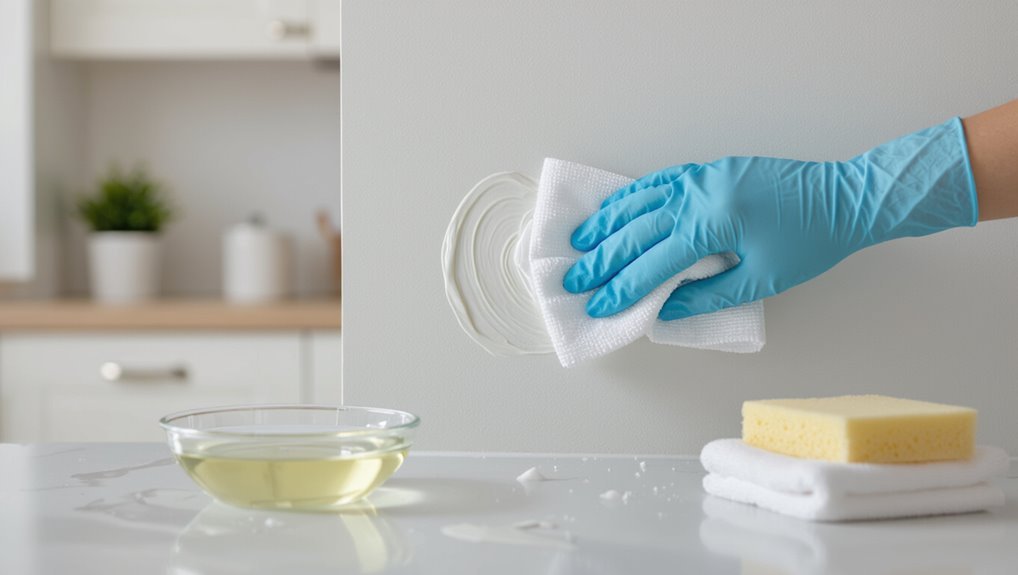
Act fast: blot excess grease gently with a clean, dry paper towel or cloth—don’t rub, which spreads the stain.
Next, mix mild dish soap with warm water, dip a soft sponge, and dab the area from edges inward.
Rinse with a damp cloth, then pat dry.
For fresh stains, these quick solutions remove grease without harming paint when you act promptly and gently.
Test Paint Finish and Colorfastness (Quick Method)
Before you tackle a full cleaning, check a hidden spot—like behind a switch plate or inside a closet—so you can see how the finish and color react.
Lightly dampen a microfiber cloth with water, mild cleaner, or solvent appropriate for your paint types.
Rub gently for 10–15 seconds to observe finish tests: look for sheen loss, color lifting, or softening before proceeding to larger areas.
Essential Tools and Gentle Cleaners to Have on Hand
Gather a few reliable tools and gentle cleaners so you can remove grease without damaging paint: a soft microfiber cloth, a non-abrasive sponge (like a magic eraser alternative), a bucket, warm water, mild dish soap, a gentle all-purpose cleaner or diluted vinegar solution, and isopropyl alcohol for spot testing and stubborn smudges.
Keep extra cleaning supplies ready, wear gloves, and protect floors for wall protection.
Remove Light Grease and Fingerprints From Painted Walls
When you spot light grease or fingerprints, reach for a gentle cleaner like diluted dish soap or a mild all-purpose spray to protect the paint.
Use a soft microfiber cloth or sponge, wring it out well, and wipe in straight, even strokes to avoid streaks.
Rinse with a damp cloth and pat dry so residue doesn’t attract more dirt.
Gentle Cleaning Solutions
If your painted walls only have light grease or fingerprints, you can often clean them with mild, non-abrasive solutions that won’t damage the finish. Use gentle solutions like diluted dish soap, white vinegar mix, or specialty wall cleaner as safe alternatives. Test first. Table below shows quick options and strengths.
| Solution | Dilution | Use |
|---|---|---|
| Dish soap | 1 tsp/1 cup | Light grease |
| Vinegar | 1:4 | Fingerprints |
| Cleaner | As label | Stubborn marks |
Safe Wiping Techniques
Start by choosing a soft, lint-free cloth or sponge and wring it out well so it’s damp, not dripping; excess water can streak paint or seep into seams.
Use safe materials like mild dish soap diluted in water.
Wipe with gentle techniques—light, overlapping strokes—rinsing the cloth frequently.
Dry the area with a clean cloth to prevent water marks and assess for remaining residue.
Lift Stubborn Kitchen Grease With Baking Soda and Mild Degreaser
Start by wiping the wall with a damp cloth to remove loose debris and protect nearby trim and outlets.
Mix baking soda with a little water to form a paste, apply it to greasy spots, then gently scrub with a soft sponge and follow up with a mild degreaser if needed.
Rinse the area thoroughly with clean water and dry it carefully to avoid streaks or paint damage.
Prepare The Surface
When baked-on kitchen grease won’t budge with a sponge, you’ll get better results by first softening the grime with a gentle abrasive like baking soda.
Then follow up with a mild, paint-safe degreaser to lift residue without harming the finish. You should perform surface preparation and a quick wall assessment before cleaning to avoid damage.
- Clear nearby items
- Test a hidden spot
- Dust loose particles
- Protect trim and outlets
- Use soft cloths
Apply Baking Soda Paste
After you’ve cleared and tested the area, soften stubborn baked-on grease with a baking soda paste before using any degreaser. You’ll mix baking soda with water to a spreadable consistency, apply gently with a cloth, let sit briefly, then wipe. Avoid scrubbing paint. Focus on paste application pressure and spot-testing to protect finish.
| Step | Tool | Time |
|---|---|---|
| Mix | Bowl | 1 min |
| Apply | Cloth | 2 min |
| Wait | — | 5 min |
| Wipe | Soft rag | 1 min |
| Repeat | As needed | — |
Rinse And Dry Carefully
Because baking soda loosened much of the residue, rinse the area with a mild degreaser solution and wipe gently to remove remaining grease without harming the paint.
You’ll use careful rinsing techniques and quick drying methods to prevent streaks or water damage.
- Blot excess cleaner with a soft cloth
- Rinse with clear water
- Use microfiber for gentle drying
- Air-dry briefly
- Inspect for spots and repeat
Use Commercial Cleaners Safely on Paint Finishes
If you choose a commercial cleaner, read the label carefully and test it on an inconspicuous spot first to make sure it won’t strip or dull the finish.
Follow commercial cleaner precautions: wear gloves, ventilate the room, and use a soft cloth.
For paint finish care, dilute as directed, limit contact time, and rinse thoroughly to avoid residue or long-term damage.
Remove Greasy Build-Up Without Stripping Paint
When you tackle greasy build-up, work patiently and use gentle methods so the paint stays intact; you’ll focus on grease removal that prioritizes paint preservation and avoid abrasive scrubbing.
Use mild solutions, test a hidden spot, and blot rather than rub.
- Start with warm soapy water
- Test in an invisible area
- Use microfiber cloths
- Blot, don’t scrub
- Rinse and dry gently
Tackle Specific Stains: Crayon Wax, Cooking Oil, and Fingerprint Grease
When you’re dealing with specific marks like crayon wax, cooking oil splatters, or fingerprint grease, each needs a slightly different approach.
For crayon, you’ll usually soften and lift the wax; for oil, you’ll break it down with a mild degreaser; and for fingerprints, a gentle cleaner and microfiber cloth will often do the trick.
Start with the gentlest method for each stain and only step up to stronger treatments if needed.
Crayon Wax Removal
Crayon wax can smudge and harden on painted walls, but you can remove it without damaging the paint by using gentle heat and careful scraping.
For crayon removal, heat briefly with a hair dryer, peel softened wax with a plastic scraper, then treat residue with mild soap or approved wax solvents sparingly.
- Heat briefly
- Scrape gently
- Blot residue
- Test solvents
- Rinse and dry
Cooking Oil Cleanup
Blot fresh cooking oil with a paper towel to lift as much as you can without rubbing it further into the paint.
Sprinkle baking soda or cornstarch for oil absorption, let sit 10–15 minutes, then gently brush off.
Use a mild dish soap and water mix to remove remaining cooking residue, dab with a soft cloth, rinse, and dry to prevent haloing.
Fingerprint Grease Tips
Although fingerprints may seem minor, their greasy residue can quickly darken painted walls and draw the eye, so you’ll want to tackle them promptly with the right approach.
- Blot gently with a damp microfiber for initial fingerprint removal.
- Use diluted dish soap for stubborn spots; rinse well.
- Test cleaners in a hidden area to protect paint care.
- Avoid abrasive scrubbers that strip finish.
- Dry gently to prevent water marks.
Troubleshooting: Marks, Haze, and Paint Damage Prevention
Start by evaluating the mark: test a small, inconspicuous area with a mild cleaner to see if the grease lifts without affecting the paint. Adjust technique based on paint finish and cleaning frequency; blot, don’t scrub. Rinse and dry to prevent haze. If damage appears, stop and touch up.
| Issue | Action | Result |
|---|---|---|
| Stain | Blot | Lifted |
| Haze | Rinse | Clear |
Prevent Grease on Painted Walls: Habits and Protective Fixes
When you change daily habits and add simple barriers, you’ll cut down on greasy splatters before they start.
Use preventive measures and protective coatings to shield paint—clean regularly, vent while cooking, position splatter guards, wipe spills fast, and install washable backsplash strips.
Protect paint by using vents, splatter guards, washable backsplashes, quick wipes, and periodic protective coatings.
- Open vents or use range hood
- Keep lids on pans
- Use washable panels
- Wipe splatters immediately
- Reapply protective coatings periodically
Frequently Asked Questions
Can I Use a Magic Eraser on All Paint Types?
You can, but you shouldn’t on all paint types; magic erasers work on many surfaces yet can dull or remove flat, chalky, or delicate finishes. Test first and combine safer cleaning techniques for sensitive paint types.
Will Vinegar Damage Semi-Gloss or Satin Finishes?
Think of vinegar as a cautious guest; you shouldn’t let it linger on semi-gloss or satin, as it can dull finishes. Try vinegar alternatives like mild dish soap or baking soda, protecting paint finish protection with quick rinses.
How Often Should I Deep-Clean Kitchen Walls?
You should deep-clean kitchen walls every 3–6 months; if you cook frequently or notice grease, clean monthly. Adopt kitchen cleaning frequency habits and wall maintenance tips like gentle cleaners, microfiber cloths, and prompt spot treatments.
Can Grease Cause Long-Term Paint Peeling?
Yes — if you ignore grease impact, it can weaken paint adhesion and compromise paint integrity over time, so you’ll see peeling, bubbling, or discoloration unless you clean and repair surfaces promptly to prevent lasting damage.
Are There Child-Safe Degreasers for Painted Walls?
Yes — you can use child friendly options and non toxic solutions like diluted dish soap, white vinegar mixes, baking soda paste, or commercial non-toxic cleaners; you’ll test a hidden spot first and rinse thoroughly to keep kids safe.
Conclusion
You’ve learned quick, safe ways to lift grease without harming paint—now keep walls cleaner longer. Did you know kitchens account for about 40% of indoor grease buildup, making routine wipe-downs a big time-saver? Test a hidden spot first and use gentle cleaners (soap, baking soda, mild degreaser) plus soft cloths. Tackle stains promptly, avoid abrasive scrubbing, and adopt simple habits like lids on pans and regular light cleaning to prevent future damage.
