
How to Finish an Acrylic Painting for a Professional Look
To finish an acrylic painting like a pro, clean edges and stray marks, tighten values and focal highlights, and balance color harmony across lights and shadows. Sand or scumble to control texture and sheen, then apply an isolation coat before a matte, satin, or gloss varnish. Check stretcher bars, fix dust or blooms, and photograph in even light with color targets. Keep humidity stable for curing, and continue to learn the glazing, varnishing, and framing steps that follow.
Quick Checklist to Finish an Acrylic Painting
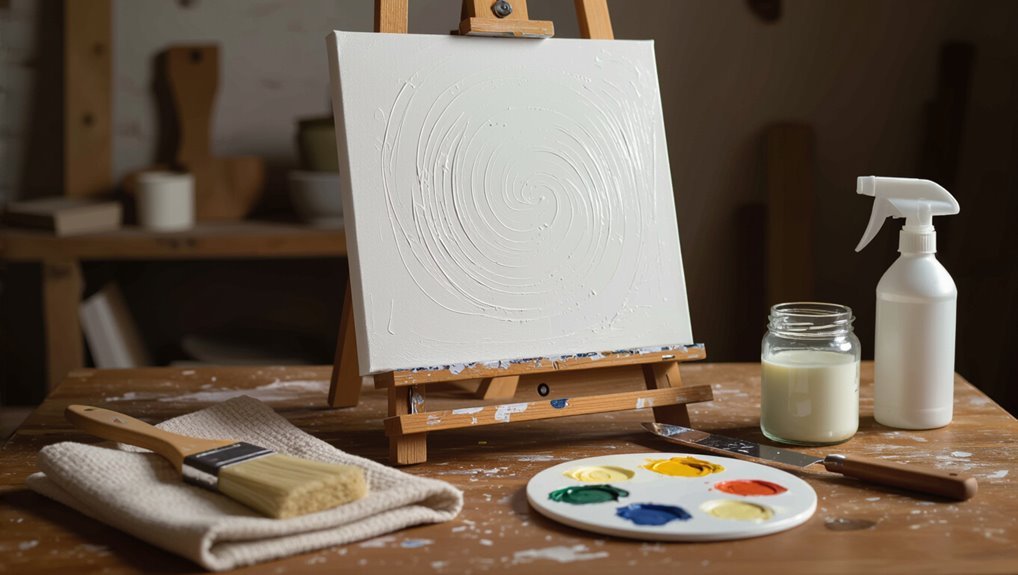
Before you call a painting done, run through a short checklist to catch common issues:
check color harmony across highlights and shadows, confirm painting composition balances focal points and negative space, guarantee edges read where aimed, verify values hold from a distance, spot any missed seams or texture glitches, and test varnish compatibility on a small area so final finishes won’t react unexpectedly.
Assess an Acrylic Painting Before Final Finishes
Ready to give your painting a final once-over? You’ll perform a focused color assessment—check value ranges, harmony, and spot color adjustments.
Do a composition evaluation: confirm focal point strength, balance, and edge clarity. Step back, view at different distances and lighting, and note fixes.
Make a concise list of tweaks before sealing or varnishing to guarantee a professional finish.
Clean Up Edges and Remove Stray Marks
Tidy up edges and remove stray marks by working methodically with the right tools: a small round or liner brush for crisp lines, a soft damp cloth or cotton swab for lifting fresh paint, and a sharp blade or sanding pad for hardened mishaps. Keep color mixing minimal near borders to preserve edge definition.
| Tool | Use |
|---|---|
| Brush | Clean lines |
| Cloth | Lift smudges |
| Blade | Remove blobs |
Refine Details and Strengthen Focal Points
1 focused pass can transform a good painting into a compelling one: refine small details with a fine brush or liner, deepen contrasts around your focal point, and simplify surrounding areas so the eye is drawn where you want it to go.
Tighten edges, boost focal emphasis with selective highlights and shadows, and adjust color harmony subtly to unify the composition without overpowering the subject.
Smooth Texture: Sanding, Scumbling, and Sheen Control
Sanding, scumbling, and controlling sheen let you move from painterly surface to a polished finish that supports your composition without erasing its energy:
You use sanding techniques to level edges, apply scumbling effects for soft shifts, manage sheen control to unify gloss, and practice texture blending to keep depth while smoothing.
- Sanding techniques for subtle leveling
- Scumbling effects for atmosphere
- Sheen control choices
- Texture blending tips
- Final inspection and touch-ups
Glaze Without Streaks: Washes and Layering Techniques
Start by mixing very thin, even washes so your glaze flows smoothly without pooling.
Layer each transparent wash only after the previous one is fully dry to build depth gradually.
Soften and blend edges with soft brushes to keep shifts seamless.
Prepare Thin, Even Washes
A thin, even wash gives you translucent color and smooth shifts without visible brushstrokes.
So mix your paint with medium or water until it flows like ink but still tints the ground. You’ll control opacity, drying, and edge softness using color mixing and wash techniques.
- Test consistency on scrap
- Use soft flat brush
- Work wet edges
- Thin in layers
- Keep strokes unified
Layer Transparently, Build Depth
When you glaze transparently, you build depth by layering thin, even films of color so each pass alters what’s beneath without hiding it; you’ll use controlled color layering, gentle washes, and patience for depth creation.
| Layer | Effect |
|---|---|
| Thin glaze | Modifies tone |
| Multiple passes | Richer hues |
| Transparent mix | Subtle shifts |
Blend Edges With Soft Brushes
Use a soft, wide brush to feather shifts so your glazes sit smoothly without streaks; you’ll work in thin, controlled washes and gently blend while the paint is still tacky to keep edges seamless.
- Choose bristles for gentle drag, prioritize brush selection for smooth flow.
- Thin layers, build depth via glazing.
- Mind color theory when merging hues.
- Work quickly, lift excess.
- Dry slightly between passes to avoid muddiness.
Blend Transitions Without Muddying Colors
Keep your color temperature consistent as you soften edges so warm and cool areas don’t cancel each other out.
Use clean glazing—thin, transparent layers with a soft brush—to ease shifts without mixing pigments on the palette.
Maintain Color Temperature
A controlled sense of color temperature will keep your shifts lively instead of dull and muddy. You’ll aim for color harmony and temperature balance by planning warm-to-cool changes, isolating hues, and avoiding overmixing.
Use crisp edge control and thin layers to preserve vibrancy.
- Plan warm-to-cool steps
- Limit mixing
- Preserve clear edges
- Layer thin washes
- Test on scrap
Use Clean Glazing
Glazing lets you blend changes without muddying colors by applying thin, transparent layers that shift tone and hue without covering the paint beneath. Use glazing techniques and careful color layering to refine edges, deepen shadows, and unify shifts. Work wet-on-dry, thin mixes, and test swatches so you preserve vibrancy and control opacity.
| Tip | Mix | Purpose |
|---|---|---|
| Thin medium | 1:4 | Transparency |
| Test swatch | small | Match tone |
| Edge work | soft brush | Smooth shift |
| Layer order | dark→light | Depth |
Choose Varnish for Acrylics: Matte, Satin, or Gloss
Finish decisions start with varnish: matte, satin, or gloss will change how your colors read, protect the surface, and affect reflections when you display the piece.
You’ll choose based on style and color consistency, and plan your varnish application ahead.
- Matte mutes glare, evens tones
- Satin balances sheen and depth
- Gloss intensifies contrast
- Consider display lighting
- Test on a sample before varnishing
Apply Isolation Coat and Final Varnish (How-To)
Now that you’ve chosen the sheen, prepare the surface with an isolation coat before your final varnish so the finish goes on smoothly and removes any surface oils, dust, or soluble remnants.
Apply a thin, even isolation coat; let it dry fully. Lightly scuff if needed, clean dust, then apply your final varnish in thin, overlapping strokes for uniform protection and sheen.
Protect and Frame Acrylics: Stretchers, Tension, and Frames
Before you hang your acrylic painting, make sure the support and framing will preserve its shape and surface: check stretcher bars for straightness and proper joinery, confirm the canvas has even tension without over-stretching, and choose a frame that protects the edges and allows for expansion.
- Inspect stretchers types for quality and fit
- Perform tension adjustment evenly
- Select frame styles to suit the work
- Use archival framing materials
- Leave slight gap for seasonal movement
Photograph and Document Your Finished Acrylic Painting
Now that your painting is protected and framed, photograph it carefully so the lighting and angles show true color and texture.
Use even, diffuse light and shoot straight-on plus a couple of angled shots to capture surface details and depth.
Save high-resolution files and include scale references so your documentation will be useful for prints, portfolios, or sales.
Lighting And Angles
Want your finished acrylic painting to look as crisp and true in photos as it does in person? Use natural lighting or controlled studio lighting, mind reflective surfaces, and make subtle angle adjustments to protect color perception.
Balance shadow play and highlight emphasis for depth when you do photo documentation.
- Shoot near window light
- Diffuse harsh bulbs
- Tilt to avoid glare
- Check reflections
- Review color accuracy
High-Resolution Documentation
If you want to share, sell, or archive your work, photograph it in high resolution so every brushstroke and color shift reads clearly; that means using a good camera (or a smartphone with RAW capability), steady support, and careful framing to capture the entire surface without distortion.
Then create high resolution scans or calibrated photos for digital archiving, include color targets, and store backups with metadata.
Troubleshooting Common Finishing Problems and Fixes
When a finish doesn’t look right, don’t panic—you can usually diagnose and fix the issue with a few targeted steps.
- Check texture issues: sand lightly, recoat sparingly.
- Address color discrepancies by testing varnish on scrap.
- Reevaluate finish techniques; switch gloss level if needed.
- Adjust application methods: thinner coats, slower drying.
- Fix dust or bloom: clean, recoat, and control humidity for consistent results.
Frequently Asked Questions
How Long Should I Wait Between Varnish Coats?
Wait about 24 hours between varnish coats; shorter in warm, dry conditions and longer if humid. You’ll guarantee proper varnish drying before the next varnish application, preventing tackiness and ensuring even, durable coverage.
Can I Varnish Over Mixed Media or Collage Elements?
Yes, you can varnish over mixed media and collage, but test adhesion, seal porous elements, and avoid thick layers; mixed media varnishing protects surfaces, and collage protection prevents lifting, discoloration, and future conservation issues.
Is It Okay to Store Paintings Flat During Long-Term Curing?
Yes — you can store paintings flat during long-term curing if you use proper painting storage and curing techniques: keep them dust-free, on a rigid, breathable surface, separated with glassine or felt, and avoid stacking or pressure points.
How Do I Prevent Varnish Blooming in Humid Conditions?
Don’t panic—start by ensuring straight varnish application in stable conditions: control humidity effects with dehumidifiers, wait until paint’s fully cured, apply thin coats, use retarder or satin varnish, and avoid sudden temperature swings.
Can I Send My Painting to a Professional Framer Without an Isolation Coat?
You can, but framing tips recommend applying an isolation coat first; it protects the paint, eases varnish removal later, and prevents glazing or sticking. If you skip it, tell the framer and use nonadhesive mounting.
Conclusion
Finish strong: do a final assessment, clean stray marks, enhance focal points, smooth textures, then apply an isolation coat and a UV-resistant varnish to protect your work before stretching or framing. Photograph your painting for records and sales. Interesting fact: conservators report that proper varnishing can extend an acrylic painting’s lifespan by over 50% compared with unvarnished works. With these steps you’ll give your painting a polished, professional finish that lasts.
