
Can You Use Magic Eraser on Painted Walls Safely?
You can usually use a Magic Eraser on painted walls if you test an inconspicuous spot first and scrub very gently, because the melamine foam physically abrades dirt like ultra-fine sandpaper. Avoid flat, eggshell, and delicate trim finishes, and stop at the first sign of dulling, streaks, or primer showing. Rinse and dry after each test and limit repeated scrubbing to preserve sheen; keep going and you’ll find safer techniques, alternatives, and repair tips.
Quick Answer: Is a Magic Eraser Safe on Painted Walls?
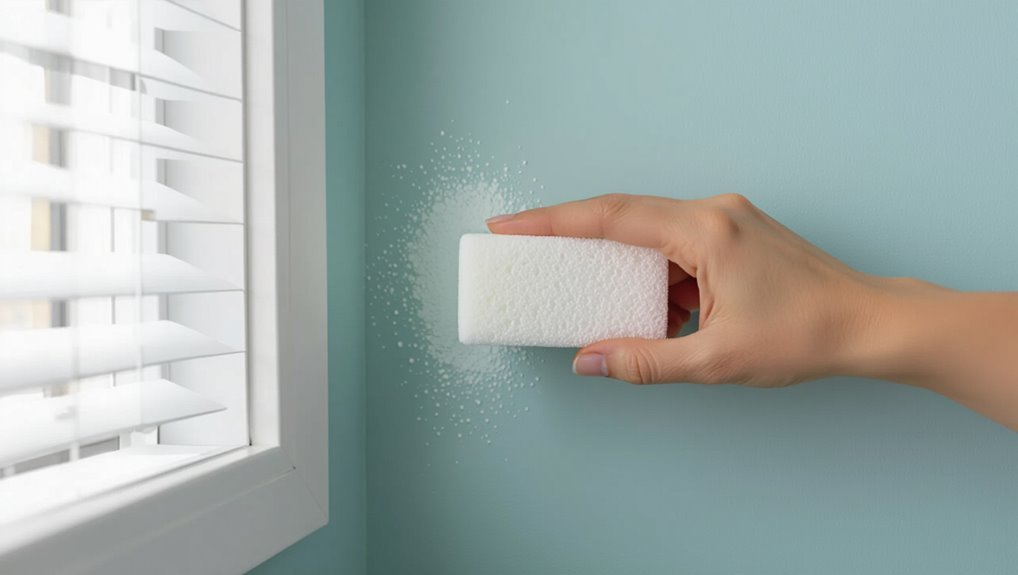
Wondering whether a Magic Eraser is safe on painted walls? You can often use it for spot cleaning because its magic eraser effectiveness removes scuffs and grime quickly.
Still, you’ll test a hidden area first to verify paint protection, use light pressure, and avoid glossy or delicate finishes.
If paint lifts or dulls, stop and choose gentler methods immediately.
How Magic Erasers Work: Melamine Foam and Abrasion
Melamine foam is the secret behind a Magic Eraser’s cleaning power: its open-cell structure creates millions of microscopic, abrasive edges that physically scrape away grime when you rub them over a surface.
You’ll notice melamine properties give a sponge-like feel yet act like very fine sandpaper, so your technique matters. That abrasion boosts cleaning efficiency, removing stains without harsh chemicals.
Which Paint Finishes Are Most Vulnerable (Flat → Semi-Gloss)
If your walls have a flat finish, be careful—its lack of sheen and weaker binder makes it the easiest to scuff or remove with a Magic Eraser.
Eggshell and satin hold up a bit better but can still show dull spots or slight abrasion if you scrub hard.
Semi-gloss is the most durable against melamine foam, though you should still test a small area first.
Flat Finish Vulnerability
Because the way a paint finish reflects light also affects how it reacts to abrasion, flatter paints tend to be the most vulnerable when you use a Magic Eraser.
You’ll notice dulling, scuffing, or slight thinning quickly. For flat finish maintenance, limit scrubbing, test inconspicuously, and prefer gentler wall cleaning techniques like soft cloths and mild soap before resorting to abrasive sponges.
Eggshell And Satin Risks
While eggshell and satin finishes resist wear better than flat paints, they’re still softer than semi-gloss and can show abrasion from a Magic Eraser—think light dulling, faint streaks, or subtle surface sheen changes where you scrub.
You should test a hidden spot first; eggshell finishes reveal scuffs more, while satin finishes tolerate scrubbing slightly better but can still lose sheen if you press too hard.
Semi-Gloss Durability
Stepping up from eggshell and satin, semi-gloss offers the toughest surface most Magic Eraser users will encounter.
You’ll find semi-gloss longevity resists scuffs and repeated scrubbing better, so you can use gentle pressure without immediately dulling finish.
Still, test a hidden spot first and limit aggressive use—proper paint maintenance and mild cleaners keep sheen intact and extend the coat’s life.
Paint Types That Resist Magic Eraser Abrasion
If you want surfaces that shrug off Magic Eraser abrasion, look for paints with high hardness and strong binders—like semi-gloss and high-gloss latex, epoxy, and some alkyd finishes—which resist the sponge’s micro-abrasion and maintain their sheen.
You’ll get better paint durability and easier wall maintenance when you pick these tough coatings.
- Kitchen cabinets
- Trim and baseboards
- Entryway walls
How Paint Sheen Changes the Risk of Dulling
If you use a Magic Eraser on high-sheen surfaces, you’ll notice it can quickly dull the glossy layer because the abrasive action removes the topcoat.
Matte finishes are more durable regarding hiding scuffs but can still lose pigment or build-up if scrubbed hard.
You’ll want to test an inconspicuous spot first so you don’t accidentally ruin the finish.
High-Sheen Surfaces Risk
Because higher sheens sit on the paint surface rather than soaking in, they reflect light more and show any dulling or abrasion from a Magic Eraser faster than flat or eggshell finishes.
You should test a small area first and adjust your wall maintenance approach for sheen variations.
- Test hidden spots
- Use gentler pressure
- Limit frequency
Matte Finish Durability
While matte paint hides imperfections better than glossier finishes, it’s also more prone to visible dulling when you scrub with a Magic Eraser; the sponge abrades the thin, porous surface that soaks in pigment, so repeated or heavy-handed cleaning can leave matte walls looking uneven or flattened. You should limit scrubbing to preserve matte finish longevity and follow gentle matte finish maintenance.
| Risk | Action | Frequency |
|---|---|---|
| Dulling | Spot test | Once |
| Abrasion | Light pressure | As needed |
| Staining | Dab, not scrub | Immediate |
| Finish loss | Repaint patch | Rare |
| Gloss change | Avoid Magic Eraser | Preventative |
3-Step Spot Test to Check Paint Durability
Before you attack a whole wall, run a quick 3-step spot test to see how the paint holds up to a Magic Eraser.
Before tackling the whole wall, do a quick 3-step Magic Eraser spot test to avoid surprises.
You’ll perform a simple paint durability assessment using practical testing methods to avoid surprises.
- Choose an inconspicuous spot and gently rub for 10 seconds.
- Rinse, dry, and inspect for sheen or color change.
- Wait 24 hours, then reassess.
Step-by-Step Safe Technique for Using a Magic Eraser
Before you start, test an inconspicuous spot to confirm the paint won’t come off.
Use only gentle pressure with the Magic Eraser—pressing hard can remove paint.
If the test shows no damage, proceed carefully over the rest of the area.
Test Inconspicuous Spot
Pick a small, hidden area—like inside a closet or behind furniture—and try the Magic Eraser there first to confirm it won’t damage the paint.
Use this test area to check finish reaction and spot potential wall damage before tackling visible spots.
- Note color change or dulling
- Take a photo for comparison
- Wait a few minutes to reassess
Gentle Pressure Only
Now that you’ve checked an inconspicuous spot and confirmed the paint holds up, proceed with gentle pressure only when using the Magic Eraser: wet and wring the pad, apply it lightly to the stain, and let the foam do the work—pressing hard can strip finish or leave shiny spots.
Use gentle techniques, keep to strict pressure limits, and finish with a damp cloth to remove residue.
How Much Pressure Is Too Much When Scrubbing Walls?
When you scrub painted walls with a Magic Eraser, press just hard enough to lift stains without gouging the finish—light to moderate pressure usually does the job because the sponge’s micro-abrasives do most of the work.
You should test an inconspicuous spot, adjust pressure techniques, and refine scrubbing methods to prevent dulling paint.
- Start gently, increase only if needed
- Use short strokes
- Stop if paint sheens change
Where to Avoid Using a Magic Eraser (Trim, Edges, Texture)
Don’t use a Magic Eraser on delicate trim and molding—it’s easy to strip the finish or sand down paint on narrow profiles.
You should also avoid heavily textured areas, since the sponge will flatten texture and get stuck in crevices.
Instead, reserve the eraser for flat, durable paint and use gentler tools around edges and textured surfaces.
Trim And Molding
1 common mistake is treating trim and molding like flat wall surfaces—you’ll damage paint and finishes if you scrub them with a Magic Eraser.
For proper trim maintenance and molding care, use gentle cleaners, soft cloths, and spot-test first. Avoid aggressive scrubbing on edges or stained varnish.
- Use a mild soap solution
- Spot-test an inconspicuous area
- Prefer soft microfiber over abrasive pads
Textured Surface Areas
Textured walls and surfaces—like orange peel, popcorn, or heavily brushed finishes—won’t respond well to a Magic Eraser, so avoid scrubbing them aggressively; the pad will abrade peaks, flatten texture, and lift paint.
For textured finishes, spot-test first on an inconspicuous area.
You’ll preserve texture and finish by using gentler cleaners, soft brushes, or targeted wall maintenance techniques instead of abrasive pads.
Signs You’ve Damaged Paint From Scrubbing
If you scrub too hard with a Magic Eraser, you’ll start to see telltale changes: dull patches where the sheen has been removed, thin-looking spots that show the substrate or primer, and fine scratches or streaks in the finish.
You’ll notice altered paint texture and color fading tied to cleaning frequency and harsh scrubbing techniques. Watch for reduced paint longevity and surface sensitivity impacting wall maintenance and wall protection.
- uneven gloss and streaks
- primer showing through
- roughened texture and increased wear
Fixing Minor Paint Damage After Magic Eraser Use
If you notice small scuffs after using a Magic Eraser, you can fix them with simple spot-painting techniques that blend new paint into the surrounding area.
Start by prepping the surface—clean, lightly sand any rough edges, and wipe away dust—so the touch-up adheres smoothly.
Use a small brush or sponge and thin coats of matching paint, feathering the edges until the repair disappears.
Spot Painting Techniques
When a Magic Eraser lightens or scuffs a small patch, you can usually hide the damage with a quick spot paint instead of repainting the whole wall.
You’ll do spot touch ups by feathering edges and matching sheen for smooth paint blending. Try simple tools and small amounts to avoid overworking the area.
- Use a fingertip brush
- Dab, don’t brush
- Check in daylight
Surface Prep Steps
Before you touch up the scuffed spot, clean and evaluate the area so you know exactly what needs fixing.
Gently wash with mild cleaning solutions, rinse, and let dry.
Lightly sand rough edges, wipe away dust, and apply primer if bare drywall shows.
Match paint, feather edges with a small brush or roller, and let cure before evaluating final touch-ups.
Restore Dulled Sheen: Buffing, Touch-Ups, and Clear Coat
Though cleaning with a Magic Eraser can lift grime, you may still see a dulled or uneven sheen on painted walls. Restoring that finish calls for careful buffing, targeted touch-ups, and—when appropriate—a protective clear coat.
Though a Magic Eraser removes grime, gentle buffing, spot repairs, and a clear coat restore an even, refreshed sheen.
You should use gentle buffing techniques, match paint for spot repairs, and consider clear coat application to uniform the sheen.
- Light microfiber buffing
- Feathered touch-ups
- Satin clear coat application
Safer Cleaning Alternatives for Painted Walls
If you want to clean painted walls without risking damage from abrasive products like Magic Erasers, pick gentler options such as a soft microfiber cloth with mild dish soap and water, a diluted vinegar solution for grease, or a pH-neutral cleaner made for painted surfaces. Use eco friendly options, biodegradable cleaners, soap water, essential oils sparingly, gentle abrasives like baking soda.
| Method | Use | Caution |
|---|---|---|
| Microfiber cloths | Dusting/wiping | Rinse often |
| Vinegar solution | Degreasing | Dilute |
| Baking soda paste | Stain spot | Test first |
| Biodegradable cleaner | General | Follow label |
Homemade Gentle Cleaners That Remove Marks Safely
Make simple, gentle cleaners at home that lift scuffs and marks without harming paint: a few drops of mild dish soap in warm water works for everyday grime.
Make gentle DIY cleaners—few drops of mild dish soap in warm water lift scuffs without harming paint
A 1:4 white vinegar-to-water mix cuts grease, and a paste of baking soda and water lets you spot-treat tougher marks—always test a hidden area first and apply with a soft cloth or sponge.
- Use soap and water for routine wipes.
- Try a homemade vinegar solution for grease.
- Apply a baking soda paste or citrus based sprays; essential oil cleaners add scent.
Choosing a Magic Eraser Product: Original vs. Gentler Brands
When you’re deciding between the original Magic Eraser and gentler alternatives, weigh how abrasive the product is against your paint finish and the stain you’re tackling. You should review product comparisons and brand effectiveness: choose original for tough scuffs, gentler for delicate sheens.
| Product | Use case |
|---|---|
| Original | Heavy marks |
| Gentle brand | Light marks |
| Mid-range | Versatile |
| DIY foam | Sensitive finishes |
Child & Pet Safety When Using Melamine Foam Cleaners
Because melamine foam can release tiny particles and cleaning agents during use, you’ll want to keep kids and pets out of the room until surfaces are wiped down and the area’s ventilated.
Keep kids and pets out until surfaces are wiped and the room is well ventilated to avoid exposure.
Follow simple steps to protect child safety and pet safety:
- Air out the room and wipe surfaces thoroughly.
- Store cleaners up high, sealed.
- Rinse hands and toys after cleaning.
Long-Term Habits to Reduce Abrasive Cleaning Needs
If you adopt a few simple daily habits—like wiping spills immediately, using mats in high-traffic areas, and switching to gentler cleaners—you’ll cut down on the need for abrasive scrubbing and keep painted surfaces looking newer for longer.
You should build cleaning habits that include spot checks, microfiber dusting, and routine gentle washes. These preventive measures save paint and reduce reliance on harsh tools.
Cost vs. Benefit: Magic Eraser vs. Touch-Up Paint
Though a Magic Eraser can quickly remove scuffs and marks, you’ll want to weigh its short-term convenience against touch-up paint’s longer-lasting fix.
You should do a cost analysis comparing immediate savings to paint longevity benefits so you choose what’s cheapest and least disruptive over time.
- Quick, low-cost cleanup
- Small investment for lasting match
- Consider frequency and surface area
When to Call a Pro or Repaint Instead of Repairing
After weighing Magic Eraser cleanup against touch-up paint, you’ll still face situations where repair isn’t worth the effort and a pro or full repaint makes more sense.
If damage is extensive, uneven, or the finish is obsolete, explore repair options briefly but favor repaint.
Consider cost, time, color matching, and underlying issues in your repaint considerations, then hire a pro when scope or skill exceeds your comfort.
Common Myths About Magic Erasers, Debunked
When you reach for a Magic Eraser, remember it’s not a miracle cleaner—it’s an abrasive melamine foam that works differently than soaps or solvents.
You should use myth clarification to guide cleaning techniques, avoid over-scrubbing painted surfaces, and test first. You’ll learn what it can and can’t do so you protect finishes and save time.
- It’s not paint-safe by default
- Testing prevents damage
- Gentle pressure matters
Frequently Asked Questions
Can Magic Erasers Remove Permanent Marker From Painted Walls?
Yes — you can often remove permanent marker from painted walls with a Magic Eraser, but you’ll test first; marker stains may lift while some wall finishes can dull or strip, so use gentle pressure and spot-check.
Will Using a Magic Eraser Affect VOCS or Off-Gassing From New Paint?
An ounce of prevention: you won’t change VOC concerns much by lightly using a Magic Eraser, but you could harm paint durability if you scrub hard; test a hidden spot, use gentle pressure, and ventilate the room.
Can Magic Erasers Remove Stickers, Adhesive Residue, or Wall Decals?
Yes—you can. You’ll use Magic Eraser for sticker removal techniques and adhesive residue solutions, gently rubbing to lift decals and sticky film; test a hidden spot first, avoid over-scrubbing to prevent paint damage.
Are There Paint-Safe Alternatives for Textured Popcorn or Stucco Ceilings?
Like a gentle rain, you can clean textured popcorn or stucco ceilings using paint-safe alternatives: use mild detergent, microfiber dusters, low-pressure steam, or specialized ceiling sponges; match cleaning methods to paint types to avoid damage.
Can a Magic Eraser Be Used on Wallpaper or Vinyl Wall Coverings?
You can use a Magic Eraser on some wallpaper or vinyl, but test first. It can damage delicate wall texture or printed patterns; follow gentle cleaning tips, dab lightly, avoid excessive pressure or prolonged scrubbing.
Conclusion
You can use a Magic Eraser on painted walls, but tread carefully: it’s abrasive and can dull or remove finish—especially on flat or low-sheen paints. Test a hidden spot first, keep the pad barely damp, use gentle pressure, and limit use to stubborn marks. For semi-gloss or enamel, damage risk drops. Think of the eraser like sandpaper in disguise—handy for spot fixes but not a daily cleaner. When in doubt, touch up or repaint.
