
How to Make Ceiling Look Higher With Paint Design Tricks
You can instantly make a low ceiling feel taller by painting the ceiling a shade lighter than the walls and using pale neutrals or warm whites to bounce light upward. Add vertical elements like subtle stripes, tall panels, or faux beams to draw the eye skyward, and paint trim a lighter, glossier tone to extend the walls. Avoid dark horizontal bands and heavy drapery. Try swatches and simple lighting tweaks to see dramatic results, and keep going to learn practical step‑by‑step tips.
Quick Answer: Paint Tricks That Instantly Lift Ceilings
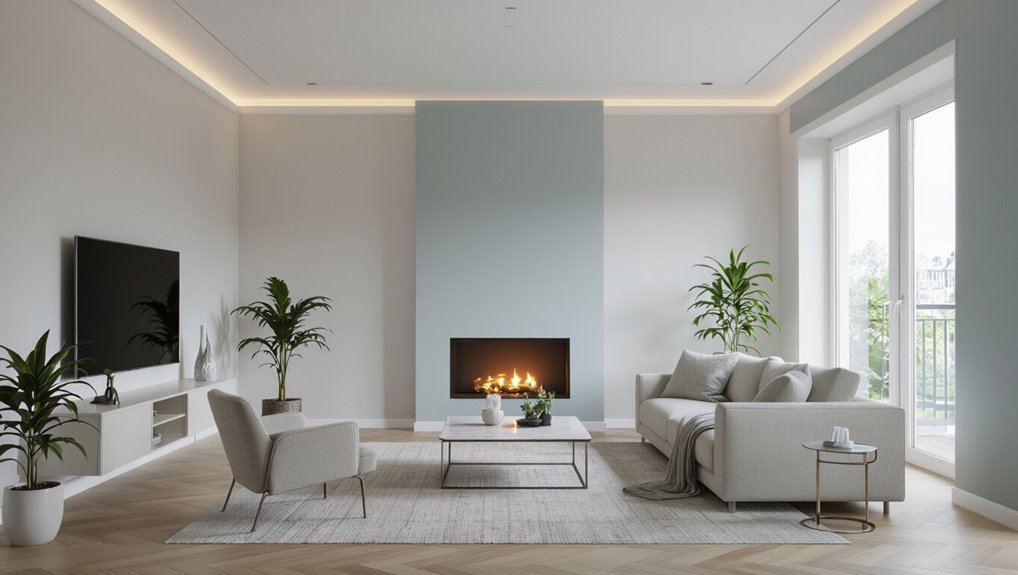
One simple trick is to paint the ceiling a shade lighter than the walls to make it recede and feel higher.
Paint the ceiling a shade lighter than the walls to visually recede and make the room feel taller.
You’ll also use vertical stripes, gloss contrasts, and trim in coordinating tones to draw eyes upward.
Consider smooth paint textures to reflect light uniformly and avoid heavy textures that flatten perception.
These quick paint moves tweak ceiling heights without structural changes.
Why Paint Changes Perceived Ceiling Height
You can change how tall a room feels simply by choosing the right paint and placement.
High-contrast trim, lighter ceilings, and bright walls manipulate light and edges, while vertical stripes or painted columns draw your eye upward.
Those simple visual tricks make the ceiling seem higher without any construction.
Color Contrast Effects
Because your eyes judge distance by contrasts, paint choices can trick the brain into seeing a taller or shorter room: darker ceilings recede and feel higher, while lighter ceilings read as closer and lower. You’ll use color psychology, accent colors, ceiling textures, architectural details, lighting influences, pattern placement, spatial perception, room atmosphere, color harmony, and design principles.
| Contrast | Effect | Tip |
|---|---|---|
| Dark ceiling | Recedes | Use matte |
| Light ceiling | Advances | Pair with trim |
| Two-tone wall | Vertical lift | Align patterns |
Lightness And Brightness
While paint alone won’t change your ceiling’s height, lightness and brightness strongly sway how your eyes measure vertical space: lighter, brighter colors reflect more light and make ceilings read as nearer, while darker, muted tones absorb light and let surfaces recede.
Use light neutrals and airy tones, consider color psychology and paint finishes, highlight ceiling textures with ambient lighting to enhance visual depth and room contrast.
Vertical Line Illusions
If you want a room to feel taller without moving a wall, vertical lines in paint and trim can trick the eye by drawing attention upward.
Use narrow vertical stripes, tall accent panels, or subtle color gradients that move from darker base to lighter near the ceiling.
Combine with pattern mixing sparingly, and align lines with light sources and furniture for a cohesive, elongated effect.
Pick the Right Paint Color for Your Room
When you choose paint, pick hues that reflect light and lift the ceiling—pale neutrals, soft pastels, and warm whites work best because they make the room feel airy and open.
- Use light tones to brighten space
- Balance color psychology with function
- Keep ceiling slightly lighter than walls
- Consider natural light direction
- Test swatches to match room ambiance
Best Color Families for Taller‑Looking Ceilings
Picking the right paint sets the stage, but choosing the best color family will determine how much height you visually gain; cool, airy families like pale blues and soft greys recede from the eye and make ceilings feel farther away, while warm neutrals and creamy whites reflect light upward without closing the space. Use color psychology and subtle contrast with ceiling textures.
| Family | Effect |
|---|---|
| Pale blue | Expands |
| Soft grey | Recedes |
| Creamy white | Brightens |
| Warm neutral | Uplifts |
| Muted pastels | Soften |
Lighter vs. Darker Ceilings: When to Choose Each
If you want a room to feel more open, lighter ceilings bounce light and visually expand the space.
Choosing a darker ceiling can add drama and intimacy, especially in larger or well-lit rooms.
Think about how you use the room—practical spaces benefit from light tones, while cozy or theatrical areas can handle moodier hues.
Light Ceilings Expand Space
A brighter ceiling can make a room feel noticeably taller, while a darker one can add intimacy and drama—so choose based on the mood and scale you want.
You’ll want to use light hues, smooth ceiling textures, and reflective paint finishes to boost height.
Tips:
- Pick pale, warm tones
- Use satin or eggshell
- Keep trim light
- Minimize clutter
- Add vertical accents
Dark Ceilings Add Drama
While light ceilings open up a room, darker ceilings pull your eye upward and add instant drama, so choose them when you want a cozy, sophisticated, or theatrical feel.
You can create dramatic contrasts with walls and trim, use glossy or matte finishes to emphasize ceiling textures, and anchor lighting to draw focus upward.
Dark ceilings read intentional and elevate mood without crowding the space.
Consider Room Functionality
Because ceiling color affects mood and function, you should match it to how you use the room:
- For bedrooms, choose soft light tones to calm and expand — functionality focus on rest.
- In dining rooms, darker ceilings add intimacy; match room purpose for entertaining.
- Home offices benefit from neutral light shades to boost focus.
- Playrooms tolerate bold darks for drama and coziness.
Use Gloss and Sheen to Lift Ceilings
Shiny surfaces can trick your eye, so use gloss and sheen on the ceiling to make the room feel taller without changing structure.
You’ll balance light reflection against ceiling textures by choosing smoother areas for higher sheen and textured spots with flatter paint finishes.
Test samples under different lighting, then apply a subtle sheen to gently lift perceived height without overwhelming the space.
Paint Vertical Stripes to Make Ceilings Look Taller
If you want a quick, painter-friendly trick to visually raise a room, paint narrow vertical stripes on the walls to draw the eye upward.
You’ll use striped patterns and color psychology to control scale and mood.
Try these tips:
Try these quick, painter-friendly tips to visually raise a room with narrow vertical stripes.
- Choose narrow vs. wide stripes
- Use contrasting or tonal hues
- Keep ceiling color light
- Align stripes with architectural lines
- Test samples before committing
Paint Crown Molding and Trim to Add Height
Paint your crown molding and trim a few shades lighter than the walls so your eye reads a taller shift between wall and ceiling.
Use high-gloss finishes on trim to catch light and create crisp, upward lines.
For an even taller look, extend a bit of the ceiling color down onto the top of the wall to blur the boundary.
Paint Trim Lighter Than Walls
A lighter trim color draws the eye upward and creates a crisp edge that makes your ceiling feel taller. So choose a shade several tones brighter than the walls and apply it to crown molding, window casings, and baseboards for instant vertical lift.
- Use consistent trim color throughout
- Contrast with wall texture subtly
- Keep lines clean and sharp
- Paint around light fixtures carefully
- Refresh scuffs often
Use High-Gloss Finishes
When you finish with flat walls, switch to high-gloss paint on crown molding and trim to catch light and add visual lift to the ceiling.
You’ll amplify high gloss reflections that draw the eye upward.
Choose sheen selection thoughtfully—use durable, easy-to-clean trim finishes that contrast subtly with matte walls.
This crisp trim treatment creates perceived height without changing architecture.
Extend Ceiling Color Down
Try extending the ceiling color down onto crown molding and trim to blur the boundary between wall and ceiling and make your room feel taller.
You’ll get a seamless ceiling extension that tricks the eye. Consider these tips:
- Paint trim the same hue for continuity
- Use a subtle color gradient near corners
- Pick matte or satin finishes
- Keep moldings simple
- Test samples first
Faux Beams and Cornices That Emphasize Verticals
If you want to draw the eye upward without major renovation, install faux beams or tall cornices that create intentional vertical lines; they visually lift the ceiling and give the room a more expansive feel. You’ll use faux beams for vertical emphasis, paint contrasts, and shadow play to reinforce height. Consider placement, scale, finish, and lighting.
| Placement | Scale | Finish |
|---|---|---|
| Cornice height | Beam width | Matte |
| Corner focus | Spacing | Stain |
| Near windows | Proportion | Painted |
Accent Walls That Make Ceilings Look Taller
Use a vertical stripe accent on a focal wall to draw the eye upward and make the room feel taller.
Pair it with high-contrast trim—think crisp white against a deep hue—to sharpen lines and emphasize height.
Keep stripes and trim simple and well-proportioned so the effect reads as intentional, not busy.
Vertical Stripe Accent
When you paint a single wall with bold vertical stripes, your room instantly feels taller because the eye follows the upward lines, creating a strong sense of height.
Use these ideas to enhance that effect:
- Try striped wallpaper for crisp verticality.
- Contrast with diagonal patterns elsewhere sparingly.
- Blend color gradients for subtle lift.
- Add textured finishes or wall murals.
- Employ ceiling stencils, paint techniques, artistic accents.
High-Contrast Trim
Although it might seem subtle, painting trim in a darker or contrasting shade immediately draws the eye upward and frames the wall-to-ceiling junction, making your ceiling read as higher than it is.
Use high contrast colors on crown molding and window casings to create vertical emphasis.
Try bold trim techniques—thin dark bands or layered profiles—to guide sightlines upward and visually extend room height.
Best Ceiling Colors and Edge Techniques
Wondering which ceiling colors and edge treatments actually make a room feel taller? Use color psychology and paint techniques to enhance room dimensions.
Consider ceiling textures and paint finishes alongside lighting effects and architectural features. Match design styles to scale.
Try:
- Soft white ceiling with glossy edge
- Pale cool tones
- Thin contrasting trim
- Continuous wall-to-ceiling color
- Subtle recessed lighting wash
Ombre Ceilings: Gradual Lifts That Suggest Height
Gradients give your ceiling a gentle upward pull by shifting color from darker at the walls to lighter toward the center, tricking the eye into perceiving more height.
You can use subtle ombre techniques—blend two or three tones with soft brush or roller shifts.
These gradient effects draw attention upward, create depth without molding, and work well in low rooms to visually lift the space.
Use Window and Door Trim to Extend Vertical Lines
After you’ve lifted the eye with an ombre ceiling, carry that vertical momentum down the walls by emphasizing window and door trim.
Use trim styles to create vertical accents that mirror ceiling textures and reinforce design illusions. Apply color blending and paint techniques to architectural details and repeat design patterns.
Mirror ombre ceilings with vertical trim—blend paint and repeat patterns to extend those design illusions down the walls
- Tall casing
- Contrasting color
- Slim pilasters
- Matched molding
- Extended jambs
Strategic Satin or Gloss Finishes for Upward Focus
Use satin or gloss finishes strategically to guide the eye upward by adding subtle sheen where walls meet the ceiling.
You can paint narrow reflective accent strips along crown molding or vertical trim to catch light and create a lifted effect.
Keep the sheen contrasts minimal so the highlights read as vertical cues, not flashy distractions.
Strategic Sheen Placement
When you want the eye to travel upward, apply satin or gloss finishes selectively rather than across the whole room.
Use strategic sheen effects to lift sightlines with subtle gloss variations that catch light.
Try these targeted placements:
- Door frames
- Crown molding
- Upper wall band
- Narrow pilasters
- Window trim
These choices create upward focus without overwhelming the space.
Reflective Accent Strips
If you want the eye to travel upward without repainting entire walls, add narrow satin or gloss accent strips that catch light and create a subtle vertical pull.
You’ll use reflective finishes sparingly, choosing colors slightly lighter or darker than the wall.
Careful accent placement at corners, above trim, or as spaced vertical lines reinforces height while staying elegant and low‑effort.
Wall Patterns (Chevrons, Panels) That Elongate
One smart way to make a room feel taller is to introduce vertical-focused wall patterns like chevrons or tall paneling; they draw the eye upward and create the illusion of height without remodeling.
- Use geometric patterns for crisp vertical lines
- Apply color gradients to lift sightlines
- Employ bold contrasts and paint layering
- Add subtle wall textures and ceiling motifs
- Maintain visual continuity and design balance
Pair Paint With Lighting to Enhance Height
Because paint and light work together, you can manipulate perceived height by choosing finishes and fixtures that guide the eye upward; use lighter hues on the ceiling, satin or eggshell finishes to catch light, and wall-mounted uplights or cove lighting to wash walls toward the ceiling for a taller feel.
Pair subtle paint textures with upward-directed lighting, highlight ceiling murals sparingly, and position sconces to lift sightlines.
Budget Painting Hacks for Renters and Quick Updates
When you’re renting or need a fast refresh, small, inexpensive painting tricks can make ceilings read taller without permanent changes.
Use budget friendly finishes and affordable paint options for quick DIY updates.
Choose budget-friendly finishes and affordable paint to refresh rooms quickly—DIY updates that look polished without the cost.
Try renter approved techniques:
- temporary wall decals
- easy ceiling stencils
- removable wallpaper tips
- simple color schemes
- minimalist design ideas and creative wall art
Common Mistakes That Make Ceilings Feel Lower : and Fixes
If your room feels squat, you’re probably making a few common design mistakes that compress the ceiling—dark horizontal stripes, heavy window treatments, low-hanging fixtures, or crowded furniture all pull the eye downward.
Fixes: swap heavy drapes for slim panels, raise curtain rods, choose streamlined lighting, declutter sightlines, and apply ceiling color psychology to pick lighter, reflective tones.
These low ceiling solutions lift perception.
Step‑by‑Step Plan: Choose Color, Practice, Paint for Height
Once you’ve settled on the right light, warm tone, map out a simple plan: pick your ceiling color, practice on a scrap, then paint in defined stages so you don’t overwhelm the room.
Use color psychology to guide choices that lift room ambiance.
- Test samples by window
- Observe at different times
- Choose flat or eggshell
- Tape crisp edges
- Paint from center outward
Frequently Asked Questions
Can Paint Alone Correct Truly Low Structural Ceilings?
No, paint alone can’t correct truly low structural ceilings, but it can help; you’ll use color contrast and lighting effects to create visual height, tricking the eye while structural changes remain the only real fix.
Will Textured or Popcorn Ceilings Affect Paint Tricks’ Effectiveness?
Like a bumpy road slowing a race car, textured ceilings can blunt paint techniques’ impact. You’ll still use paint techniques and ceiling colors to tweak visual perception, but textures reduce crisp lines and subtle contrasts’ effectiveness.
How Do Ceiling Paint Tricks Impact Resale Value?
They can boost appeal if you use neutral ceiling color psychology that complements walls; buyers follow resale trends favoring bright, airy rooms. You’ll avoid bold contrasts that risk dating the space and hurting offers.
Are There Maintenance Differences for High‑Gloss Ceiling Finishes?
Yes—you’ll notice maintenance differences: high gloss durability resists scuffs but shows flaws, so you’ll use gentler cleaning techniques, soft cloths, mild detergents, and avoid abrasive pads or harsh chemicals to preserve sheen.
Can Ceiling Height Tricks Be Combined With Wallpaper or Decals?
Yes—you can combine them, which ironically makes tiny rooms feel pretentious: use ceiling patterns and color gradients with wallpaper or decals, matching scale and contrast, and you’ll elevate perceived height without overwhelming the space.
Conclusion
You’ve got simple, high‑impact tools to make your ceiling feel taller—color, contrast, and smart lighting. Pick lighter hues, extend wall color up, or paint a lighter band around the crown to lift the eye. Pair paint with uplighting and trim tricks, avoid dark horizontal stripes, and test samples first. With these small changes, your room will breathe easier—like a deep, invigorating inhale—making height feel effortless and intentional.
