
Does Duct Tape Rip Paint Off Walls? What You Should Use Instead
Yes — duct tape can rip paint off walls, especially on fresh, glossy, or poorly adhered surfaces and if left on for days. You’ll increase the risk by pulling it off quickly or at a sharp angle, using high-tack tape, or repeatedly taping the same spot. Safer options include low-tack painter’s tape, removable adhesive strips, mounting putty, or mechanical hooks for heavier items. Keep a test patch and follow removal best practices to avoid damage, and below you’ll find practical alternatives and fixes.
Quick Answer Will Duct Tape Rip Paint Off Walls?
Yes — duct tape can pull paint off walls.
You’re most likely to see damage if the paint is old, poorly adhered, or glossy, or if the tape stays stuck for a long time or is applied with strong pressure.
Test a small hidden spot first and remove the tape slowly at an angle to reduce risk.
Short direct answer
duct tape can pull paint off walls, especially if the paint is old, poorly adhered, or the tape stays on for more than a few minutes.
If you’re asking does duct tape rip paint off walls, the short answer is: sometimes.
You should test a small hidden area first, peel slowly and at a low angle, and consider gentler alternatives to avoid risking damage.
When duct tape is most likely to damage paint
When paint is old, chalky, or poorly bonded to the wall, you’ll be much more likely to pull it off with strong adhesive tape.
You’re also at higher risk if you leave tape on for days, apply it on fresh or glossy finishes, or peel it back quickly at a steep angle.
Temperature changes and porous surfaces increase lifting, so test first.
How Paint Adheres to Walls Basic Understanding
Think about the surface you’re working with—drywall, plaster, wood, or painted metal—all bond with paint differently.
You’ll notice finishes matter too: flat and eggshell grip less than satin, semi-gloss, or gloss.
Also consider paint age and condition, since fully cured paint holds better while old, chalking layers are more likely to fail.
Types of wall surfaces (drywall, plaster, wood, painted metal)
Surfaces matter: drywall, plaster, wood, and painted metal each accept paint differently, so you’ll need to match your prep and primer to the substrate for a lasting finish.
You should sand glossy wood and metal, fill plaster cracks, and use drywall compound for seams.
Clean, degrease, and prime porous or slick surfaces appropriately so tape removal won’t pull finished paint.
Paint finishes and adhesion strength (flat, eggshell, satin, semi-gloss, gloss)
Although finish sheen may seem like a cosmetic choice, it directly affects how paint sticks and how durable that finish will be; flatter sheens hide imperfections but grip less, while glossier finishes resist wear and clean more easily because they cure into a harder, more adhesive film.
You’ll find flat and eggshell can be more prone to lifting with strong tape, while satin to gloss hold up better and tolerate cleaning.
Age and condition of paint (cured vs. old/chalking paint)
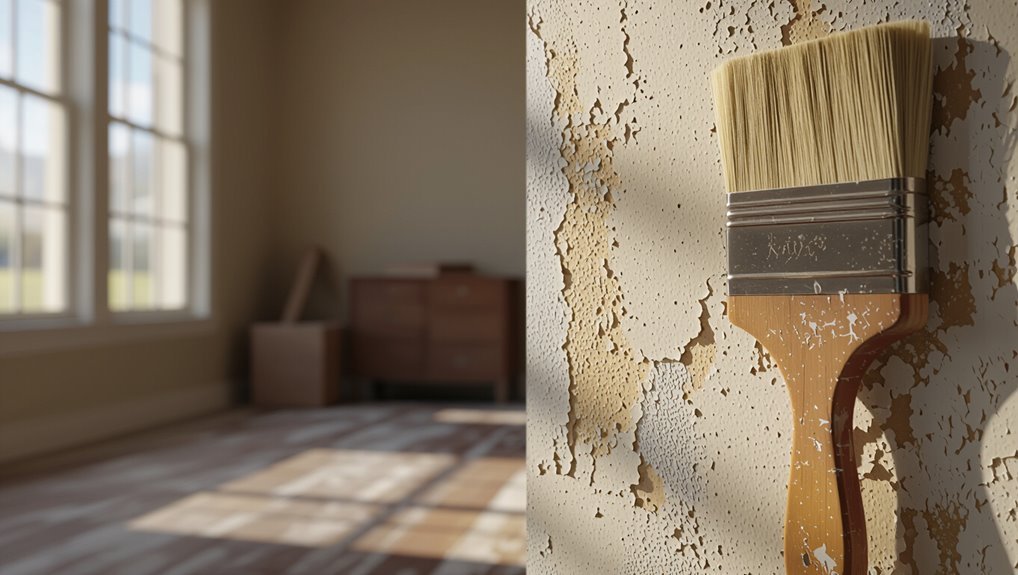
sheen affects adhesion, but how long paint’s been on the wall and what it’s gone through matters just as much.
If paint’s fully cured and intact, it resists tape removal.
Old, weathered, or chalking paint loses binders and flakes when pulled.
You’ll risk peeling or powder transfer with strong adhesives; test a small area, use low-tack options, or avoid tape on compromised surfaces.
Why Duct Tape Can Remove Paint The Science
When you press duct tape onto painted walls, its adhesive can out-grip the paint bond and pull flakes away.
The tape’s stickiness interacts with the paint film’s surface tension and elasticity, so brittle or poorly cured paint is far more likely to lift.
Environmental stressors like high humidity, extreme heat, or prolonged sunlight weaken the paint bond and raise the risk of removal.
Adhesive strength vs. paint bond
Think of duct tape as a test of how well paint is actually stuck to a surface: its adhesive wants to cling to whatever it touches, and if that bond is stronger than the paint’s attachment to the substrate, the paint comes off with the tape.
You’ll see failure where adhesion to tape exceeds paint-to-wall bond—poor prep, weak primers, or old paint increase risk.
Surface tension and paint film elasticity
Because paint behaves like a thin elastic skin on the wall, the tape doesn’t just test adhesion—it changes the stresses in the paint film as you pull it off.
You create tension that can exceed the film’s cohesive strength or its grip to the substrate. If the paint’s elasticity is low or the tape stretch is high, peeling concentrates force and can lift or fracture the paint.
Environmental factors that increase risk (humidity, temperature, sunlight)
If you’ve painted in varying conditions, you’ve seen how humidity, temperature, and sun exposure change paint’s grip and toughness. These environmental factors alter the paint’s moisture content, elasticity, and adhesion so that a strip of duct tape can more easily lift or crack the film.
You’ll notice high humidity softens paint, heat increases brittleness, and UV dries binders, all raising peel risk.
Real-World Scenarios When Duct Tape Has Removed Paint
When you use duct tape for temporary mounting, hanging posters, or quick patching, you can unintentionally pull off paint as you remove it.
The risk varies with the surface and finish—flat or poorly adhered paint peels more easily than glossy, well-cured coatings.
Below are real case examples showing how different substrates and finishes respond to taped applications.
Common situations (temporary mounting, hanging posters, patching)
Since you probably use duct tape for quick fixes, it’s easy to underestimate how it can lift paint in everyday scenarios like temporarily mounting signs, hanging posters, or patching torn materials.
You peel tape off after events, move displays, or fix rips, and the adhesive can strip flakes or whole sections, especially on aged or poorly bonded paint, leaving visible damage you didn’t expect.
Case examples of damage by surface and finish
Though it seems harmless, duct tape can pull paint off a surprising range of surfaces, and you’ll notice the damage varies with the finish and age of the coating.
You’ve seen it: glossy trim flakes, chalky primer lifts, satin walls gum up, and older latex peels.
Examples:
- Gloss trim: large strips.
- Chalky primer: powdery loss.
- Satin wall: sticky smears.
- Aged latex: whole flakes.
Alternatives to Duct Tape What You Should Use Instead
When you need to hang or secure items without risking paint damage, reach for removable adhesive products like Command picture-hanging strips or low-tack masking and painter’s tapes matched to the surface.
For lightweight items, tack-free mounting options such as poster putty or mounting squares work well, while heavier pieces are better off on mechanical solutions like hooks, nails, or paint-friendly adhesive hooks.
Each option has specific uses and load limits, so pick the right one for the job to protect your finish.
Removable adhesive products (command strips, picture hanging strips)
A few simple strips can save you from ruined walls and stubborn tape residue: removable adhesive products like Command or picture-hanging strips hold frames, hooks, and lightweight decor securely, then pull off cleanly without sanding or repainting.
You’ll follow weight limits, prep the surface, press firmly, and remove slowly along the wall. They’re ideal for renters and temporary displays.
Low-tack masking and painter’s tapes (types and recommended uses)
Painter’s and low-tack masking tapes come in several grades you’ll pick based on surface sensitivity and project length: delicate-paper tape for freshly painted walls, medium-strength painter’s tape for trim and windows, and more durable masking tape for short-term outdoor or rough-surface work.
Choose low-tack for cured paint and wallpapers, blue painter’s tape for crisp lines, and green or purple for UV resistance; always test a small area first.
Tack-free mounting options (putty, mounting squares, poster putty)
Removable putties and mounting squares give you a clean, tack-free way to hang lightweight items without the mess or damage of duct tape.
You press poster putty or foam mounting squares behind photos, posters, or small frames; they grip without adhesive residue and peel off cleanly.
Test a small patch first, follow weight limits, and replace putty periodically to maintain hold.
Mechanical hanging methods (hooks, nails, adhesive hooks designed for paint)
Choose hooks, nails, or paint-safe adhesive hooks when you need a reliable, low-mess way to hang heavier or long-term items—these mechanical options give far better support and cleaner results than duct tape. You’ll pick based on weight, wall type, and removal needs; adhesive hooks avoid holes, nails hold heavier loads, and proper anchors prevent damage.
| Option | Best use |
|---|---|
| Adhesive hooks | Light to medium, removable |
| Nails | Heavy, permanent |
| Anchors | Hollow walls, heavy items |
| Picture hooks | Frames, steady support |
Step-by-Step: Safest Ways to Attach Things Without Damaging Paint
First, you’ll assess the wall and paint condition to know what it can handle.
Then pick a product based on the item’s weight and how long you’ll leave it up, and use the correct application technique for removable adhesives.
When it’s time to take things down, remove slowly at a low angle, add gentle heat if needed, and clean any residue.
Step 1 Assess the wall surface and paint condition
Before you attach anything, take a close look at the wall’s surface and paint condition so you know which methods will hold without causing damage.
Check for peeling, bubbling, chalky or freshly painted areas and textured versus smooth finishes. Lightly press a fingernail to test adhesion.
Note any repairs, moisture stains, or fragile trim so you avoid relying on adhesive methods there.
Step 2 Choose the right product based on weight and duration
Match the fastener to what you’re hanging: consider the item’s weight, how long it needs to stay up, and the wall’s condition so you pick a product that holds without harming paint.
For lightweight, short-term items use removable hooks or painter’s tape.
For heavier or long-term loads choose anchors, screws, or adhesive strips rated for the weight and paint type to avoid failure or peeling.
Step 3 Proper application technique for removable adhesives
Prepare the surface and gather your materials so you can apply removable adhesives cleanly and securely: wipe the wall with a damp, lint-free cloth, let it dry completely, and check the paint’s finish (flat paints need extra caution).
Measure and mark placement, press adhesive pads or strips firmly for the recommended seconds, avoid stretching, align items straight, and test with gentle tension before hanging heavier objects.
Step 4 Safe removal process (angle, heat, cleaning residue)
Slowly peel the strip back at a low angle while supporting the painted surface with your other hand to minimize stress; if the adhesive resists, warm it first with a hair dryer on low to soften the glue and reduce pulling.
- Lift corner gently.
- Pull along the wall, not away.
- Reapply heat for stubborn spots.
- Wipe residue with mild solvent and a soft cloth.
Mistakes That Lead to Paint Damage
Watch out for habits that harm finishes: using high-tack tape on delicate paint, leaving adhesive stuck too long, or peeling tape the wrong way can all strip or lift paint.
Don’t keep reapplying tape to the same spot, since repeated adhesive and removal wears the surface.
We’ll go through how each mistake causes damage and how to avoid it.
Using high-tack tape on vulnerable finishes
If you press high-tack tape onto delicate or aged paint, you’ll often pull off flakes or leave stubborn residue when you remove it.
You should avoid aggressive tapes on chalky, glossy, or thinly coated surfaces. Instead, test a small hidden area first, choose low-tack painter’s tape for temporary needs, and peel slowly at a shallow angle to minimize finish damage.
Leaving adhesive on too long
When you leave tape or stickers stuck to paint for too long, the adhesive can harden and become much harder to remove without pulling paint or leaving gummy residue behind.
You should check taped areas regularly and peel off labels within days, not weeks. If removal’s delayed, consider softening adhesives with heat or a gentle solvent first, then clean the surface to avoid staining.
Improper removal technique
Don’t yank tape off the wall — aggressive pulling, scraping with metal tools, or twisting labels can lift paint, tear drywall paper, or leave streaks that are hard to hide.
Instead, peel slowly at a low angle, support the paint edge with your other hand, warm adhesive slightly with a hair dryer, and use plastic cards for stubborn bits to minimize tearing and surface damage.
Reapplying tape to the same spot repeatedly
Although re-taping the same spot seems like a quick fix, doing it repeatedly weakens both the adhesive bond and the paint beneath it.
You’ll lift fresh paint each time you peel the tape, and residue builds up, forcing stronger adhesion.
Rotate to a new area, use low-tack painter’s tape, or replace tape often to avoid cumulative damage and preserve the finish.
Prevention and Best Practices
Before you stick anything, test the adhesive on an inconspicuous spot so you can see how it reacts.
Inspect taped areas regularly and remove tape promptly, and consider using protective backing or barrier layers to shield the paint.
If you rent, choose temporary, low-residue options and clear them more often; homeowners can use stronger adhesives but should still follow the same inspection and protection routine.
Testing adhesives on an inconspicuous area
When you’re about to use duct tape or any adhesive on painted surfaces, test it first on an inconspicuous spot so you’ll know how the paint will react. A small patch behind a trim or inside a cabinet can reveal lifting, staining, or finish softening without risking visible damage.
Press a short tape piece, wait 24–48 hours, peel slowly, and inspect for residue, discoloration, or film changes.
Routine inspection and timely removal
After you’ve tested how paint reacts to tape, make routine inspections part of your process so small issues don’t become big repairs.
Check taped areas weekly, looking for lifting, bubbling, or discoloration. Remove tape promptly if you spot damage or if adhesive has hardened.
Use slow, steady pulls at low angles and re-evaluate your adhesive choice to prevent recurring problems.
Using protective backing or barrier layers
If you want to protect painted surfaces from tape adhesive and accidental spills, add a removable backing or barrier layer between the tape and the paint; thin plastic sheeting, low-tack paper, or a clear release film will stop direct contact while still letting tape do its job.
Cut the barrier to fit, secure its edges with low-tack tape, and replace it after spills or prolonged exposure to prevent residue buildup.
Recommendations for renters vs. homeowners
A removable barrier protects paint from tape and spills, but your approach should change depending on whether you’re renting or owning.
If you’re renting, choose low-tack tapes, use protective film, and test a small patch before applying anything widely.
If you own, you can use stronger adhesives or repaint afterward, but still prep surfaces, remove tape slowly, and keep edges sealed to prevent damage.
Tools and Products to Repair Paint Damage If It Happens
If you spot chips or scratches, you can start with quick fixes like touch-up pens, spackling, or paint markers to mask the damage.
Assess whether the blemish needs a full repaint or just a patch by checking size, depth, and surrounding finish.
For larger or color-matching jobs, consider professional restoration to guarantee a seamless result.
Temporary fixes (touch-up pens, spackling, paint markers)
When small chips, scratches, or scuffs show up, quick fixes like touch-up pens, spackling, and paint markers’ll keep damage from getting worse until you can do a proper repair.
You’ll match color with pens for tiny nicks, fill shallow gouges with lightweight spackle then sand smooth, and use paint markers for precise lines. These stop deterioration and hide flaws temporarily.
When to repaint vs. patch
Because small chips and isolated scuffs rarely need a full repaint, you’ll save time and money by patching them with the right tools; reserve repainting for widespread fading, multiple mismatched touch-ups, or texture/finish changes that patching can’t hide.
Use spackle for holes, fine-grit sanding, primer for bare spots, and matching touch-up paint for seamless repairs—repaint only when damage is extensive.
Professional restoration options
Though small DIY fixes work for nicks, serious paint damage calls for professional-grade tools and products you may not have on hand.
Hire a pro or rent an electric sander, paint sprayer, and wet/dry vac. They’ll use high-build primers, color-matched durable paints, and flexible patching compounds to blend repairs seamlessly.
You’ll get faster, longer-lasting results and proper surface prep.
FAQ
You’ll want clear answers to whether duct tape can strip paint from different surfaces, if heat can lift tape safely, and whether gentler tapes exist for painted walls.
Ask about how long removable adhesive strips can stay up and which tapes hold up best on outdoor painted surfaces.
I’ll walk through each question with practical tips and precautions.
Will duct tape remove paint from every painted surface?
Will duct tape pull paint off every painted surface? Not always. It depends on paint type, age, and adhesion.
Fresh, poorly cured, or low-quality paint peels more easily, as do matte finishes and improperly prepped walls. High-gloss, well-cured, or primed surfaces resist tearing.
Test a small hidden spot first and remove slowly at a low angle to reduce risk of pulling paint.
Can you use heat to safely remove duct tape without peeling paint?
If a slow peel and a small test patch didn’t give you confidence, heat can often soften adhesive and make duct tape come off without yanking paint.
Use a hairdryer on low to medium, keep it moving, and warm for 30–60 seconds before peeling at a shallow angle.
Stop if paint softens or bubbles; cool and test again to avoid damage.
Are there duct tapes that are safe for painted walls?
Wondering whether any duct tapes are safe for painted walls? You’ll find low-tack, painter’s-grade duct tapes designed to minimize adhesive residue and paint lift.
They work best on cured, smooth paints and for short-term use. Always test a small, hidden area first and remove slowly at a low angle.
If paint’s delicate, opt for painter’s tape or removable adhesive strips instead.
How long can removable adhesive strips stay on the wall?
How long you can leave removable adhesive strips on a wall depends on the brand, the surface, and environmental conditions.
Generally, manufacturers rate strips for weeks to months—commonly 6–12 months for indoor, stable conditions.
You should follow package guidelines, test a small spot first, and avoid prolonged exposure on delicate or newly painted surfaces to reduce residue and paint lift risk.
What’s the best tape for outdoor painted surfaces?
Which tape you choose for outdoor painted surfaces depends on the paint type, exposure, and how long you need it to stick—go with a high-quality UV-resistant painter’s tape or a 3M exterior-grade masking tape for short- to medium-term use, and choose weatherproof, silicone-coated outdoor adhesive or specialty exterior mounting tape for longer-term or heavy-duty needs.
Test a small area first; remove slowly and use heat if needed to prevent finish damage.
