
What Paint Finish Works Best for a Hallway That Gets Heavy Traffic
You’ll want a durable, washable finish that hides marks but cleans up easily. Go with satin for long wall runs — it offers a soft sheen, good scuff resistance, and wipes clean without showing every imperfection. Use semi-gloss on trim, doorways, and high-contact spots for extra toughness and easier scrubbing. Prep with primer and keep a little mixed paint for touch-ups. Keep going and you’ll get practical tips on selection, care, and products.
Quick Answer Best Paint Finish for a High-Traffic Hallway
Go with a satin or semi-gloss finish for a high-traffic hallway.
These finishes resist scuffs and wipe clean easily.
You’ll get durable protection without an overly shiny look.
Direct recommendation summary
While some finishes balance durability and appearance, you’ll get the best results in a high-traffic hallway by choosing a satin or semi-gloss paint—both resist scuffs, clean up easily, and hold up to frequent contact better than flat or eggshell finishes.
For what paint finish for hallway, pick satin for subtle sheen and durability, or semi-gloss where extra washability and impact resistance matter most.
One-sentence rationale
Because hallways see frequent contact and occasional scuffs, pick satin for a low-key sheen with good durability or semi-gloss when you need maximum washability and impact resistance.
You’ll get a finish that hides minor flaws yet cleans easily, so traffic won’t ruin walls; choose semi-gloss for doorways and trim where knocks are likelier, and satin for broader wall runs to balance look and longevity.
Basic Understanding Paint Finishes Explained
A paint finish is the surface sheen and texture you see once paint dries, and it matters because it changes durability, cleanability, and overall look.
You’ll commonly find flat, eggshell, satin, semi-gloss, and gloss finishes, each with different reflectivity and resistance to wear.
Choosing the right finish affects how well the hallway stands up to scuffs, how easy it’s to wipe clean, and how the space reads visually.
What is a paint finish and why it matters
Though you might think paint is just color, the finish dictates how it looks, wears, and cleans—so choosing the right one matters for high-traffic hallways.
The finish is the surface quality—sheen and texture—that affects durability, scuff resistance, and ease of cleaning.
Pick a finish that balances appearance with practical performance so your hallway stays attractive and low-maintenance over time.
Common paint finishes and their characteristics
You’ll want to know how matte, eggshell, satin, semi-gloss, and high-gloss finishes handle wear and cleaning in a busy hallway.
Each finish offers different levels of sheen, durability, and scuff resistance, so you’ll weigh appearance against practicality.
Let’s compare their key traits to help you pick the best fit for your traffic and maintenance needs.
Matte (flat)
Because matte (often called flat) paint soaks up light instead of reflecting it, it hides surface imperfections and creates a smooth, understated look that many homeowners prefer for low-traffic walls and ceilings.
You’ll like its non-reflective finish, but it scuffs easily and’s hard to clean, so it’s not ideal for busy hallways where durability and washability matter.
Eggshell
Eggshell offers a subtle sheen that’s more reflective than matte but still soft, making it a popular choice for hallways where you want a bit more durability without a glossy look.
You’ll find it resists scuffs better than flat finishes and cleans more easily, yet it hides minor surface imperfections.
It balances appearance and practicality for moderate-traffic corridors.
Satin
Satin gives a soft, velvety sheen that’s glossier than eggshell but subtler than semi-gloss, so it stands up well to frequent touching and cleaning in busy hallways.
You’ll get a durable, washable surface that hides minor imperfections better than higher-sheen options.
It’s great for trim and walls where scuffs occur; use a quality satin formula for easier maintenance and long-lasting appearance.
Semi-gloss
If you want a finish that’s tougher and shinier than satin, semi-gloss is the next step up.
You’ll get a durable, moisture-resistant surface that stands up to scuffs and frequent cleaning. Its slight sheen highlights trim and doors, making dirt easier to spot and remove.
Use semi-gloss in busy hallways where longevity and easy maintenance matter most.
High-gloss
While it shows every imperfection more readily than lower-sheen options, high-gloss delivers the toughest, most reflective surface you can choose for a hallway.
You’ll get unmatched durability and easy cleaning—ideal where hands, bags, and scuffs frequent. Use it sparingly on trims, doors, or lower walls; prep and smooth surfaces well, since flaws won’t hide.
Its shine brightens tight corridors.
How finish affects durability, cleanability, and appearance
Because the finish you choose changes how paint stands up to traffic, cleans up after scuffs, and looks over time, it’s one of the most important decisions for a hallway. You’ll want a durable, washable finish that hides wear without looking flat. Compare options below:
| Finish | Benefit |
|---|---|
| Eggshell | Subtle sheen, decent durability |
| Satin | Easy to clean, forgiving |
| Semi-gloss | Very durable, highlights imperfections |
Primary Considerations for Hallways with Heavy Traffic
For heavy-traffic hallways you’ll want a finish that stands up to wear and resists abrasion.
Choose paints that are highly washable and stain-resistant so you can clean scuffs and spill marks without damaging the surface, and consider how easy touch-ups will blend in.
Also factor in light reflection in narrow spaces and prepare the surface properly, including removing or addressing previous coatings, for the best long-term results.
Durability and abrasion resistance
Durability matters most in high-traffic hallways, so you’ll want a finish that stands up to constant foot traffic, scuffs, and frequent cleaning.
Choose higher-sheen options like satin or semi-gloss for tougher film integrity and better resistance to abrasion.
Look for paints formulated with durable resins and added abrasion-resistant additives so the surface resists wear, maintains appearance, and requires fewer repairs over time.
Washability and stain resistance
When you choose paint for a busy hallway, prioritize washability and stain resistance so spills, fingerprints, and shoe scuffs wipe away without dulling the finish.
Pick a high-quality, washable latex or acrylic formula labeled scrubbable; test with mild detergent.
Lighter, low-sheen colors hide marks less, so balance color choice with easy-clean performance, and follow manufacturer care instructions for best results.
Scuff resistance and touch-ups
1 key thing to check is how well the finish resists scuffs and how easily you can touch up damage: choose paints labeled scuff- or mark-resistant and keep a small amount of the original mixed paint for quick repairs, since timely touch-ups prevent chips from spreading and keep hallways looking neat.
You’ll also use fine-grit sanding and feathering to blend patches so repairs stay discreet.
Light reflection and appearance in narrow spaces
Two things matter most in narrow, high-traffic hallways: how much light the finish reflects and how that reflection shapes the space, so pick a paint sheen that brightens without highlighting flaws.
Choose a satin or low-luster eggshell to bounce light gently, make corridors feel wider, and hide minor texture.
Avoid high-gloss near imperfections; matte can swallow light and make tight areas gloomy.
Surface preparation and previous coatings
Although a good sheen helps, the long-term performance of paint in heavy-traffic hallways starts with proper surface preparation and knowing what’s already on the walls.
You’ll clean, sand, and seal stains, remove loose paint, and repair dents or plaster cracks.
Test for oil- or enamel-based coatings; use appropriate primers or deglossers.
Proper prep guarantees adhesion, durability, and easier maintenance.
Recommended Paint Finishes for High-Traffic Hallways
For high-traffic hallways, you’ll usually pick between satin for a balanced finish, semi-gloss for maximum durability, or eggshell paired with a durable topcoat as a compromise.
I’ll cover the pros and cons of each—when satin gives the best look with decent cleanability, when semi-gloss stands up to scuffs but shows imperfections, and when eggshell plus a protective coat saves appearance without sacrificing too much durability.
I’ll also note the rare cases where high-gloss or matte makes sense.
Best overall finish: Satin pros and cons
When you want a balance of durability and a soft sheen, satin is often the best overall choice for high-traffic hallways; it resists scuffs and wipes clean more easily than eggshell while avoiding the glossy look some people find too shiny.
You’ll get good stain resistance, moderate washability, and minimal highlight of wall imperfections—ideal if you want durable, attractive walls without a high-gloss finish.
Best for maximum durability: Semi-gloss pros and cons
If you want the toughest finish for a busy hallway, go with semi-gloss: it stands up to scuffs, frequent cleaning, and moisture better than satin or eggshell.
You’ll get a durable, washable surface that resists stains and holds up to traffic.
Drawbacks: it highlights surface imperfections and has a shinier look some people find too reflective.
Choose prep and smooth walls.
Compromise option: Eggshell in combination with durable topcoat pros and cons
Because eggshell gives you a softer, low-luster look without sacrificing much durability, pairing it with a clear, durable topcoat can be a smart compromise for busy hallways.
You get nicer aesthetics plus added scuff resistance and easier cleaning.
Downsides: added cost, potential sheen mismatch, and careful application required to avoid brush marks or cloudy finish from the topcoat.
When to choose high-gloss or matte (exceptions)
You might still consider more extreme sheens for specific hallway needs: high-gloss for areas that demand maximum washability and impact resistance, or matte when you want to hide surface imperfections and reduce reflections.
Choose high-gloss near doors, stairs, or kid zones where scuffs are constant and cleaning matters.
Pick matte in dim, narrow halls where glare reveals flaws or you prefer a softer, forgiving look.
How to Choose the Right Finish Step-by-Step
Start by evaluating the type and volume of traffic your hallway gets and inspect the wall condition and substrate for damage or repairs.
Consider location and lighting to pick a sheen that hides flaws or resists scuffs, then choose the paint formulation—acrylic for flexibility and easy cleanup or alkyd for extra durability—along with the appropriate sheen.
Finally, plan for maintenance and touch-ups so your finish stays looking fresh over time.
Step 1 Assess traffic type and volume
When planning a durable paint finish, first look at who uses the hallway and how often—foot traffic from kids, pets, or heavy footfall from office staff changes the level of wear you’ll need to resist.
Count daily passes, note peak times, and consider luggage or cleaning equipment. That lets you choose a finish with appropriate abrasion resistance and cleanability to match real-world use.
Step 2 Inspect wall condition and substrate
A quick wall inspection tells you what the substrate will tolerate and what prep it needs before you pick a finish.
Check for peeling paint, stains, cracks, dampness and texture differences.
Lightly sand glossy areas, repair holes and prime bare plaster or drywall.
Note trim and baseboard condition.
Your findings determine needed repairs and primer type so the finish adheres and lasts.
Step 3 Choose finish based on location and lighting
Because lighting and traffic interact, you’ll want to match finish to both the hallway’s use and how it’s lit: brighter, well-lit corridors tolerate lower-sheen paints that hide flaws, while dim or narrow hallways benefit from glossier finishes that reflect light and resist scuffs.
Consider sightlines, doorways, and adjacent rooms; pick a sheen that balances concealment, durability, and light bounce for that specific location.
Step 4 Select paint formulation (acrylic vs. alkyd) and sheen
Now decide between acrylic and alkyd formulas and lock in the exact sheen, since formulation affects durability, cleanup, and how the paint holds up to scuffs while sheen controls reflectivity and washability.
Choose acrylic for easier cleanup, lower VOCs, and flexibility; pick alkyd for tougher abrasion resistance.
Opt for satin or semi-gloss in hallways—they balance durability and appearance without glaring reflections.
Step 5 Plan for maintenance and touch-ups
Step 5 is where you make upkeep painless: plan how you’ll clean, touch up, and when you’ll repaint so small scuffs never become big jobs.
Keep a small can of mixed paint and a matching brush or sponge near the hall.
Wipe marks weekly with mild cleaner.
Inspect quarterly, repair chips promptly, and schedule a fresh coat every 3–5 years depending on wear.
Preparation and Application Best Practices
Before you paint, clean, patch, and sand surfaces and apply a primer that matches the substrate to guarantee adhesion and durability.
Use the right tools—brushes for trim, a high-quality roller for walls, or a sprayer for a smooth factory-like finish—and follow manufacturer drying times between the recommended number of coats.
Finish with a protective clear coat or wipeable sealer in very high-traffic areas for added longevity.
Surface prep: cleaning, patching, sanding
Good surface prep makes the paint last and look professional, so start by thoroughly cleaning, patching, and sanding the hallway walls.
Wash with mild detergent, remove grease and scuffs, and let dry. Fill holes and cracks with spackle, sand smooth, and feather edges.
Lightly sand glossy spots for keying. Remove dust with a tack cloth so paint adheres evenly and looks flawless.
Priming recommendations for best adhesion and durability
A quality primer creates the foundation your paint needs to stick and resist wear, so choose one that matches your wall material and the topcoat you’ll use.
Use a stain-blocking primer for marks, a bonding primer for glossy or problematic surfaces, and a mildew-resistant primer in damp areas.
Apply thin, even coats, allow full cure, and address any remaining imperfections before painting.
Application tips: brushes, rollers, and spraying for smooth finish
Choose tools that suit the surface and paint type, because the right brush, roller, or sprayer makes the difference between visible brush marks and a factory-smooth finish.
Use a high-quality angled nylon brush for trim, a short-nap roller for smooth walls, and practice steady passes.
If you spray, thin per instructions, mask thoroughly, and back-roll lightly to eliminate texture.
Number of coats and drying times
1–2 coats usually cover most hallways, but you’ll need a third when switching finishes, painting over dark colors, or covering high-traffic scuffs.
Let each coat dry fully per manufacturer directions—typically 2–4 hours for latex, longer for oil-based—before recoating.
Light sanding between coats improves adhesion.
Factor humidity and temperature: slower drying can attract dust, faster curing may trap brush marks, so plan accordingly.
Using protective clear coats or wipeable sealers
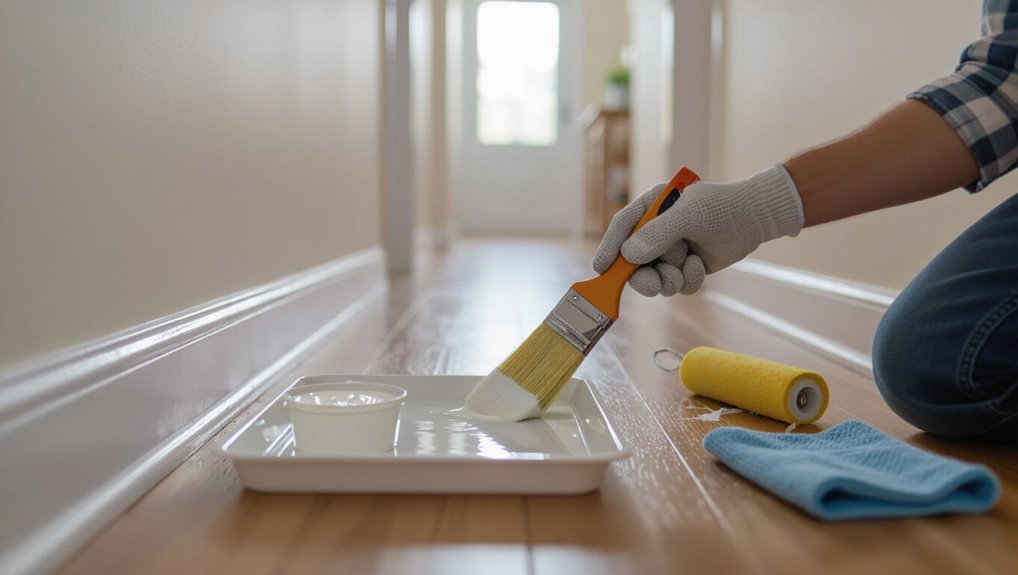
If you want your hallway paint to resist scuffs, grime, and frequent wiping, add a clear protective coat or wipeable sealer after the final paint has fully cured; these products boost durability without changing color.
Choose water-based polyurethane or acrylic sealers for low yellowing, apply thin even coats with a synthetic brush or roller, sand lightly between coats, and allow full cure before heavy use.
Common Mistakes and How to Avoid Them
Don’t pick a finish just because it looks good—you’ll regret it if it can’t stand up to traffic.
Always prime and prep properly, and use quality paint made for high-traffic areas to avoid premature wear.
Apply it with the correct technique and tools so your hallway stays durable and easy to maintain.
Choosing finish based only on appearance
While a glossy sheen might catch your eye, choosing a paint finish based only on appearance can leave you with a hallway that looks great but wears poorly.
Instead, balance looks with durability, cleanability, and maintenance needs. Don’t pick matte purely for style if it stains easily, and avoid ultra-flat finishes in scuff zones—opt for a practical mid- to high-sheen where traffic demands resilience.
Skipping primer or inadequate surface prep
1 common shortcut that costs you time and money is skipping primer or rushing surface prep.
If you don’t remove grease, repair dinged drywall, or sand glossy surfaces, paint won’t adhere or wear evenly.
Use a quality primer, patch and sand imperfections, and clean thoroughly.
That prep prevents peeling, stains, and frequent touch-ups in a high-traffic hallway.
Using low-quality paint for high-traffic areas
If you pick bargain paint to save a few dollars, you’ll likely pay more later in touch-ups and repainting because low-quality formulas thin out, scuff easily, and hide poorly—especially in busy hallways.
Choose durable, washable paints with higher pigment and binder content. They’ll resist marks, require fewer coats, and keep your hallway looking fresh longer, saving time and money over cheap alternatives.
Incorrect application technique leading to premature wear
Even with quality paint, poor application will make your hallway wear out faster—streaks, roller marks, and uneven coverage attract dirt and chip sooner.
You should prep surfaces, sand glossy spots, and use the right roller nap for your finish.
Apply thin, even coats, maintain a wet edge, and let proper drying times prevent premature scuffs and peeling, extending durability and appearance.
Maintenance, Repair, and Longevity Tips
Keep a simple cleaning routine tailored to your finish—mild detergent for eggshell, a gentle non-abrasive cleaner for satin, and tougher scrub solutions only for semi-gloss or trim.
For scuffs and chips, you’ll want quick spot repairs: clean the area, sand lightly, apply touch-up paint, and feather the edges so it blends.
Know when to touch up versus repaint—frequent small fixes and using washable topcoats or scrubbable paints extend life, but widespread wear or color fading means it’s time for a full repaint.
Cleaning routines and approved cleaners by finish
Start with a simple, regular routine you can stick to: dust or vacuum weekly, spot-clean scuffs as they appear, and do a gentle wash every few months depending on foot traffic.
Use mild detergent and water for eggshell or satin; low‑alkaline, non‑abrasive cleaners for semi‑gloss and gloss.
Rinse well, dry with a soft cloth, and test cleaners in an inconspicuous spot first.
Spot repair steps for scuffs and chips
1 simple approach will keep small scuffs and chips from becoming bigger problems: assess the damage, clean the area, sand or feather the edges if needed, apply touch-up paint or filler, then blend and seal.
Work quickly after cleaning, match paint sheen, use a small brush or sponge for precise application, feather strokes outward, let dry fully, then inspect and recoat only if necessary.
When to repaint vs. touch up
When wear is limited to a few scuffs or chips, a quick touch-up will usually do the job; but when damage is widespread, colors have faded, or patches keep reappearing, you should plan a full repaint to restore protection and uniform appearance.
Touch up for isolated blemishes and minor fading; repaint when multiple areas need work, stains persist, or the finish no longer withstands cleaning.
Products that extend lifespan (washable topcoats, scrubbable paints)
If repainting is the right move, choose products that help the new finish last: washable topcoats and scrubbable paints resist grime and let you clean high-traffic hallways without stripping color or sheen.
You’ll want a durable acrylic or alkyd topcoat and a paint rated for multiple scrubs. Test cleaners on a hidden spot, follow manufacturer cure times, and address scuffs promptly to preserve the finish.
Comparisons and Buyer’s Guide
Now let’s compare finishes side-by-side so you can see how eggshell, satin, and semi-gloss perform in hallways.
I’ll recommend specific durable brands and product lines that stand up to traffic and cleaning.
We’ll also weigh cost versus longevity so you can pick the best value for your budget.
Side-by-side comparison of finishes for hallways
Choosing the right paint finish for a high-traffic hallway comes down to balancing durability, cleanability, and appearance—so you’ll want a clear side-by-side comparison to decide what’s best for your space. Compare pros, cons, and ideal spots to pick confidently.
| Finish | Durability | Cleanability |
|---|---|---|
| Flat | Low | Moderate |
| Eggshell | Medium | Good |
| Semi-gloss | High | Excellent |
Recommended paint brands and product lines for durability
Start with a short list of trusted brands—Benjamin Moore, Sherwin-Williams, Behr, and PPG—and you’ll find product lines built specifically for high-traffic durability.
You want washable, scuff-resistant paints that hold up to constant use. Consider these options to feel confident:
- Benjamin Moore Aura — reliable, rich finish
- Sherwin-Williams Duration — tough and washable
- Behr Marquee — stain-blocking power
- PPG Timeless — durable, low-maintenance
Cost vs. longevity trade-offs
While a higher-priced paint and quality primer will raise your upfront cost, they usually cut long-term expenses by needing fewer touch-ups and recoats. Think of it as paying more now to save time, labor, and materials later.
You should weigh durability against price: eggshell or satin balance cost and wear, semigloss lasts longer but costs more.
Calculate life-cycle cost per year.
Real-World Scenarios and Case Examples
Think about practical examples: in a family home with kids and pets you’ll want a durable, scrubbable eggshell or satin that hides fingerprints.
In contrast, an apartment building hallway usually needs commercial-grade semi-gloss or abrasion-resistant coatings for heavy use.
For narrow, low-light hallways, pair a satin finish with lighter, warmer colors to reflect light without showing every imperfection.
We’ll walk through these scenarios and the trade-offs so you can pick the right combo for your space.
Family home with kids and pets recommended approach
Because hallways take constant wear in a busy family home, you’ll want a paint finish that stands up to scuffs, cleans easily, and still looks good—typically a satin or semi-gloss for durability and wipeability, with high-quality enamel or washable formulations for extra protection around doors and lower walls.
Choose neutral, forgiving colors; paint lower walls with washable trim color; touch-up kits speed repairs.
Apartment building hallway commercial-grade considerations
When you’re specifying paint for an apartment building hallway, prioritize commercial-grade durability, stain resistance, and easy maintenance—qualities that cut long-term labor and replacement costs.
Choose high-hide, scrubbable semi-gloss or satin epoxy-acrylic blends, consider low-VOC formulations for tenant safety, and opt for washable, impact-resistant wall systems.
Budget for periodic touch-ups and use durable trim finishes to minimize visible wear.
Narrow, low-light hallway finish and color pairing
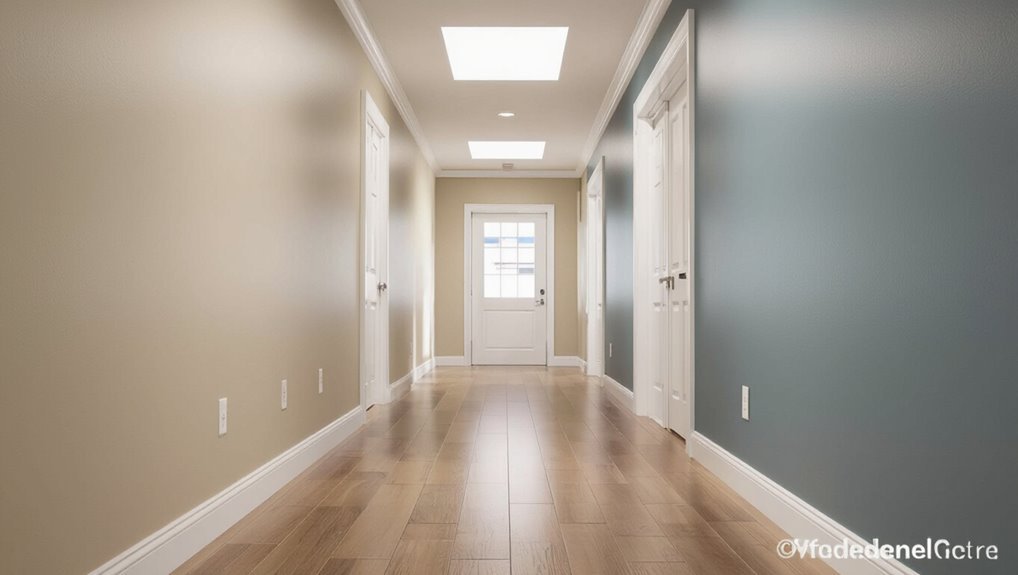
If you’re dealing with a narrow, low-light hallway, choose finishes and colors that visually broaden the space and hold up to traffic: use eggshell or satin on walls for light reflection and easy cleaning, pair with semi-gloss trim for durability, and pick pale warm neutrals or soft pastels to bounce light.
Add a darker floor or runner to hide scuffs and anchor the corridor.
FAQs
You probably have practical questions like whether matte can survive heavy hallway traffic or if semi-gloss will look too shiny in a home.
You’ll also want to know how often a busy hallway needs repainting, whether you can skip sanding over glossy finishes, and if washable flat paints are a real option.
Let’s answer those FAQs so you can pick a finish that lasts and looks good.
Can I use matte paint in a high-traffic hallway?
Curious whether matte paint can stand up to a busy hallway? You can use matte for its elegant, low-sheen look, but it’s less durable and harder to clean than satin or semi-gloss.
If you choose matte, pick a high-quality, washable formula and expect touch-ups. Reserve matte for low-impact areas or pair it with a tougher trim finish to reduce wear.
Is semi-gloss too shiny for a residential hallway?
How bright or reflective semi-gloss looks in a hallway depends on your lighting, color choice, and how much gloss you want to show; it’ll read shinier than satin but won’t overwhelm a residential space when used thoughtfully.
You’ll get durable, washable walls ideal for scuffs and fingerprints.
Choose softer colors, moderate artificial light, and trim in semi-gloss to balance sheen and practicality.
How often will I need to repaint a hallway with heavy use?
Wondering how often you’ll need to repaint a heavily used hallway? Expect touch-ups every 1–2 years for scuffs and chips; a full repaint typically runs 3–5 years depending on traffic, wall material, and paint quality.
Using durable, washable finishes and regular cleaning stretches that interval. Monitor wear near doorways and handrails and address damage promptly to avoid more extensive repainting.
Can I repaint over glossy finishes without sanding?
Yes—you can repaint over glossy finishes without sanding in some cases, but you’ll need to prepare the surface properly so the new paint will adhere.
Clean thoroughly with a degreaser or TSP substitute, rinse and let dry.
Then use a high-adhesion primer or bonding primer designed for glossy surfaces.
Test a small area first to confirm proper adhesion before painting the whole hallway.
Are there washable flat paints that work for hallways?
If you want the low-sheen look of flat paint but need durability for a busy hallway, there are washable flat formulas that hold up surprisingly well.
Choose water-based, stain-resistant flat or matte paints labeled “washable” or “scrubbable.” Use a quality primer and proper application.
Clean gently with a soft sponge and mild detergent; avoid abrasive scrubbing to maintain finish and color.
