
How to Paint Over a Lacquer Finish Without Peeling or Cracking
You can paint over lacquer successfully if you prepare it right: scuff the surface with 220–320 grit sandpaper, clean with a degreaser or TSP, and remove any loose or brittle finish. Do a solvent and tape test to verify stability, then apply a high-bond primer made for slick surfaces and sand between coats. Use thin, even topcoats and allow full drying to avoid peeling or cracking. Follow the full steps below to get reliable, long-lasting results.
Quick Answer Can You Paint Over Lacquer and How to Avoid Peeling
Yes—you can paint over lacquer, but you’ll need to scuff the surface, clean it, prime with a bonding primer, and use a compatible topcoat to prevent peeling.
Skip painting if the lacquer is flaking, soft, or on a high-wear surface unless you’re prepared to strip it first.
Follow those prep steps and you’ll get a durable finish.
Short, actionable summary steps
Quick steps: you can paint over lacquer if you prep correctly—sand to scuff the surface, clean off dust, apply a high-adhesion primer (preferably solvent-based or a bonding primer), then use a compatible topcoat.
Follow these concise actions for how to paint over a lacquer finish:
- Sand with 220–320 grit, remove dust
- Use solvent-based or bonding primer
- Apply thin, even topcoat layers
- Cure fully between coats
When painting over lacquer is not recommended
When shouldn’t you paint over lacquer?
You shouldn’t if the lacquer is peeling, blistering, or poorly adhered — painting will trap failure.
Also avoid painting on furniture or antiques with high value unless you’re committed to altering them.
Don’t paint surfaces that get heavy wear, heat, or moisture without proper prep.
If you can’t sand, degloss, or prime thoroughly, don’t paint over lacquer.
Understanding Lacquer Finishes
Lacquer is a fast-drying film finish made from nitrocellulose or acrylic resins dissolved in solvent, giving you a hard, glossy surface that’s more brittle and solvent-sensitive than polyurethane or varnish.
Compared with shellac, lacquer sands and buffs to a smoother sheen but doesn’t bond as tenaciously as modern polyurethanes, so it reacts differently to sanding and chemical primers.
Because lacquer can remain slightly soluble and has a very smooth, nonporous surface, paint often fails to stick unless you remove or properly scuff and chemically prepare it first.
What is lacquer? (composition and properties)
Sheen and solvent define lacquer: it’s a fast-drying clear or colored finish made from nitrocellulose or acrylic resins dissolved in volatile solvents, sometimes with plasticizers and UV stabilizers added for flexibility and durability.
You’ll notice it forms a hard, smooth film that sands well, resists abrasion, and cures by solvent evaporation, leaving a brittle but glossy surface that can crack if stressed.
How lacquer behaves vs. other finishes (shellac, polyurethane, varnish)
Because it dries by solvent evaporation into a hard, brittle film, lacquer will respond differently than other common finishes in ways that matter when you paint over or repair it. You’ll notice lacquer sands, flakes, and re-solves more readily than shellac, polyurethane, or varnish, so choose prep and primers accordingly.
| Finish | Hardness | Solvent Sensitivity |
|---|---|---|
| Lacquer | High | High |
| Shellac | Medium | High |
| Polyurethane/Var. | High | Low |
Why paint adhesion fails on lacquer (chemistry and surface issues)
When you try to paint over a dried lacquer surface, adhesion often fails because the film’s chemistry and surface properties repel new coatings: lacquer cures by solvent evaporation into a dense, non-porous, and relatively inert layer that doesn’t provide mechanical tooth or chemical groups for most paints and primers to bond to.
You’ll need abrasion or a compatible primer to roughen or chemically bridge that inert surface.
Assessment Is Your Lacquer Surface Ready to Paint?
Before you start, figure out which lacquer you’re dealing with—nitrocellulose, acrylic, or catalyzed—as each behaves differently under paint.
Check for underlying problems like peeling, cracking, or a brittle surface that will stop new paint from sticking.
Then perform simple adhesion tests: a tape pull to spot loose finish and a solvent test to see if the lacquer softens or lifts.
Identifying types: nitrocellulose, acrylic, catalyzed
Start by confirming which lacquer you’re dealing with—nitrocellulose, acrylic, or catalyzed—because each requires a different prep and paint approach.
Check labeling, age, and solvent test: nitrocellulose softens with lacquer thinner, acrylic resists thinner but reacts to ammonia, catalyzed finishes cure hard and may need chemical stripping or sanding.
Match your primer and paint to the lacquer type for adhesion and durability.
Signs of underlying problems (peeling, cracking, brittleness)
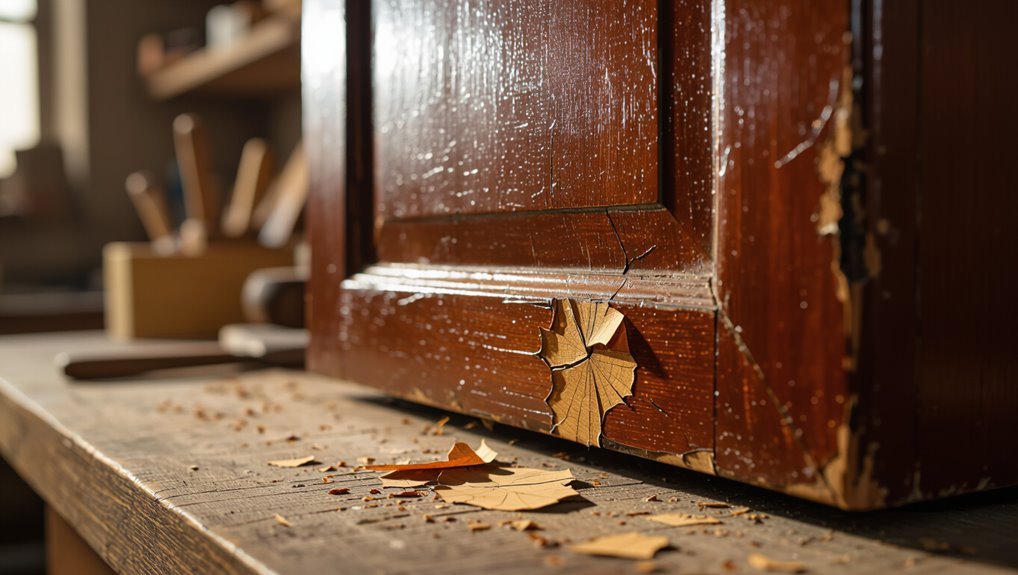
Now that you’ve identified the lacquer type, inspect the surface for signs that it won’t hold new paint: peeling, cracking, flaking, or a brittle, powdery feel all indicate adhesion or cure failures.
Check edges, corners, and high-wear areas for lifting or missing finish.
Soft spots, whitening, or uneven gloss suggest contamination or improper cure; these need addressing before you repaint.
Testing adhesion: tape test and solvent test
Two simple tests—an adhesive tape check and a solvent wipe—will tell you whether the lacquer will hold new paint or needs more prep.
For the tape test, press strong tape, pull sharp; if finish lifts, sand to bare wood.
For the solvent test, rub denatured alcohol; if finish softens or dissolves, strip or seal.
Only proceed when both tests show stability.
Materials and Tools You’ll Need
Before you start, gather the cleaning agents, deglossers, and solvents you’ll need to remove dirt and break the lacquer’s sheen.
Pick the right abrasives and sandpapers with matching tools, then choose a primer and paint application method—brush, roller, or spray—based on the project.
Don’t forget safety gear and plan for good ventilation while you work.
Cleaning agents, deglossers, and solvents
Someone tackling a lacquered surface needs the right cleaning agents, deglossers, and solvents to guarantee new paint will adhere.
You’ll remove grease, break surface gloss, and dissolve old residues safely.
- TSP substitute for degreasing
- Liquid deglosser to chemically dull shine
- Denatured alcohol for light cleaning
- Mineral spirits for stubborn lacquer residues
Abrasives, sandpaper grits, sanding tools
You’ll need a range of abrasives and sanding tools to strip shine and feather edges so new paint will stick properly.
Choose grits and tools for each stage: start coarse for flaws, finish fine for bonding, and use powered or hand options for control.
- 80–120 grit for defect removal
- 150–220 grit for smoothing
- 320–400 grit for final prep
- Sanding block and orbital sander
Primers, paints, brushes, rollers, spray options
1 essential step is choosing the right primer and paint system so your new finish bonds to the lacquer and holds up over time.
Pick a high-bond primer, compatible topcoat (acrylic enamel or waterborne alkyd), and tools that suit the surface.
Prep and apply thin, even coats for durability.
- bonding primer
- compatible paint
- brush/roller selection
- spray option choice
Safety gear and ventilation
After choosing the right primer, paint, and application method, protect yourself and keep fresh air moving—working over lacquer can release strong fumes and fine particulates.
Wear an N95 or respirator with organic vapor cartridges, safety goggles, and nitrile gloves. Open windows, use cross-ventilation, and run a fan or exhaust to the outside.
Stop if you feel dizzy or nauseous.
Step-by-Step Process to Paint Over Lacquer
Start by thoroughly cleaning and degreasing the lacquered surface so paint will stick.
Remove any loose or flaking lacquer—either scrape or use a chemical remover—then sand the surface with recommended grits to create mechanical adhesion.
Finish with a solvent wipe or deglosser, let it dry, and apply a bonding primer designed for lacquered surfaces.
Step 1 Clean and degrease the surface
Wipe the piece thoroughly to remove dust, grease, and grime before you do anything else—cleaning is essential because oil and residues prevent primers and paint from adhering to lacquer.
Use a mild degreaser or trisodium phosphate solution, work with a microfiber cloth, and rinse with clean water.
Let the surface dry completely before moving on so primer bonds evenly and paint won’t lift.
Step 2 Remove loose or flaking lacquer (mechanical and chemical options)
Scrape or dissolve any loose, flaking lacquer so the new primer and paint will grab solidly to the substrate.
Use a putty knife or scraper for lifted areas, taking care not to gouge. For stubborn patches, apply a lacquer-compatible remover per instructions, then wipe residue with solvent and a clean cloth.
Remove dust and allow the surface to dry before priming.
Step 3 Sand for mechanical adhesion (recommended grits and techniques)
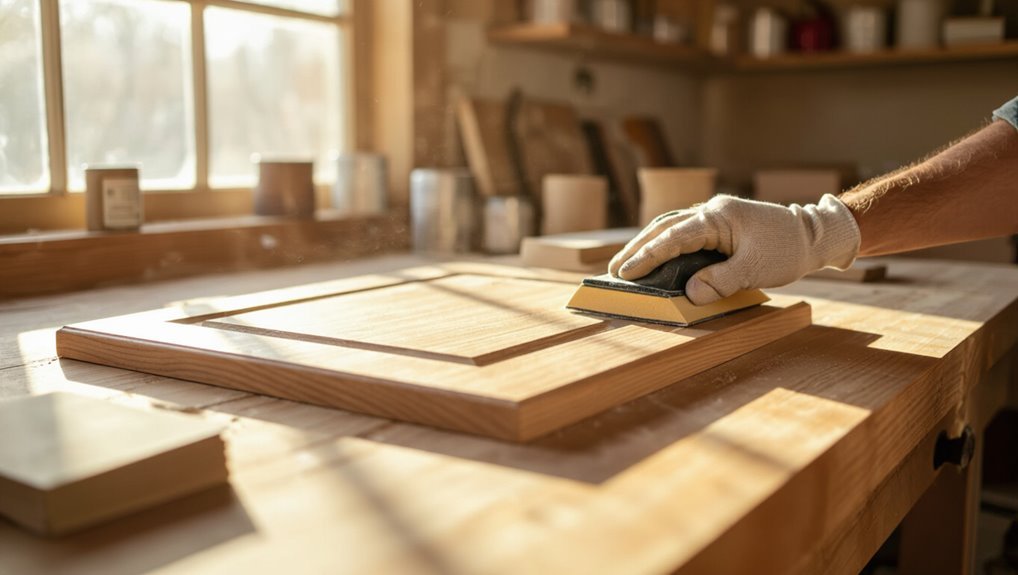
With loose lacquer removed and the surface clean, you’ll create the key mechanical “tooth” that helps primer and paint stick by sanding the finish.
Start with 180–220 grit to dull sheen, then progress to 320–400 grit for a smooth, keyed surface.
Sand with the grain, use light even pressure, and remove dust between passes to guarantee uniform adhesion.
Step 4 Use a solvent wipe or deglosser and allow to dry
Break out a lint-free rag and a quality solvent wipe or liquid deglosser and work methodically across the sanded surface so you remove all sanding dust, oils, and remaining lacquer residue.
Wipe in overlapping strokes, change cloths when dirty, and let the surface air-dry fully—typically 10–30 minutes depending on product and ventilation—before proceeding to the next step.
Step 5 Choose and apply the correct primer (bonding primer/adhesion-promoting)
Once you’ve removed dust and residue, choose a high-quality bonding primer specifically formulated for slick surfaces. Apply thin, even coats with a brush or roller, following manufacturer flash and recoat times. Lightly sand between coats if needed. Test adhesion before topcoating.
| Primer Type | Best Use |
|---|---|
| Acrylic | Quick-drying |
| Epoxy | Heavy-duty |
| Shellac | Stain-blocking |
Step 6 Fill and repair cracks or dents, then sand smooth
After the primer’s dry and you’ve confirmed it bonds, inspect the lacquer surface for dents, gouges, or shrinkage lines and mark every defect you’ll need to fix.
Use a compatible filler or lightweight spackling, apply in thin layers, let cure, then level with a flexible putty knife.
Sand progressively with fine grits to a smooth, feathered edge before wiping dust away.
Step 7 Apply paint (number of coats, drying times, brush vs. spray)
Begin applying your paint in thin, even coats, working methodically so each layer dries uniformly; typically you’ll need two to three coats with light sanding (220–320 grit) between coats if the surface feels rough.
Allow manufacturer-recommended dry times—often 1–4 hours for water-based, longer for oil—then assess coverage.
Use a high-quality brush for detail, spray for smooth, fast finish, avoiding overloading.
Step 8 Seal or topcoat considerations for durability
With your coats applied and sanded smooth, plan the finish protection—choosing the right sealer or topcoat will determine how well the paint resists chips, stains, and wear.
Pick a compatible, non-yellowing polyurethane or water-based lacquer sealer if you need chemical resistance.
Apply thin, even coats, light-sand between coats, follow manufacturer cure times, and prioritize adhesion over gloss for long-lasting durability.
Alternatives to Full Refinishing
You don’t always have to strip an entire lacquer surface to fix a problem; spot-priming and touch-ups can save time and maintain most of the original finish.
Consider partial stripping when damage is localized or the topcoat is failing in specific areas, while a full strip makes sense for widespread issues or stubborn adhesion problems.
For many projects, a specialty adhesion primer or barrier coat lets you paint directly over lacquer without aggressive sanding or complete refinishing.
Spot-priming and touch-ups
If you’re not ready to strip the whole piece, spot-priming and touch-ups let you address chips, scratches, and small worn areas without a full refinish.
Clean and sand only the damaged spots, apply a compatible bonding primer, feather edges, then paint with matching topcoat.
Work in thin layers, cure between coats, and inspect for adhesion to prevent future lifting or visible changes.
Partial stripping vs. full strip: when each makes sense
Spot-priming and touch-ups can keep a piece usable for years, but sometimes damage, multiple paint layers, or stubborn lacquer sheen mean more work is required.
You’ll choose partial stripping for localized damage, veneer repairs, or when original finish has value.
Opt for full stripping when adhesion is poor across the surface, odors persist, or you need a uniform base for strong color changes.
Using specialty adhesion primers or barrier coats
Sometimes a full strip isn’t necessary—specialty adhesion primers and barrier coats let you bond new paint to lacquered surfaces without removing the old finish.
You’ll clean and scuff lightly, then apply a primer formulated for slick finishes or a vinyl-based barrier coat.
These products improve adhesion and block solvent interactions, reducing peeling and cracking.
Follow manufacturer cure times before topcoating for lasting results.
Common Mistakes That Cause Peeling or Cracking
If you skip proper cleaning or deglossing, paint won’t adhere and will likely peel.
Not sanding enough, using the wrong primer, or painting over contaminated or failing lacquer sets you up for cracking.
Applying paint too thickly or working in humid, cold, or dusty conditions makes those problems much worse.
Skipping proper cleaning or deglossing
When you skip proper cleaning or deglossing, paint won’t stick to lacquer and will blister, crack, or peel off within weeks.
You need to remove grease, wax, and dust, then dull the glossy surface so primer and paint can bond.
Use a suitable degreaser and a liquid deglosser or fine abrasive, then wipe clean and let everything dry before priming and painting.
Inadequate sanding or wrong primer choice
Cleaning and deglossing set the stage, but inadequate sanding or choosing the wrong primer will still let paint lift and crack.
You need to scuff lacquer with fine-grit sandpaper to create tooth, remove dust, then apply a primer specifically formulated for glossy finishes or solvent-based adhesion.
Skipping these steps or using a latex primer risks poor bonding, eventual peeling, and visible cracks.
Painting over contaminated or failing lacquer
Because lacquer can hide contaminants and failures beneath a glossy surface, you’ll get peeling or cracking if you paint over greasy, powdery, or delaminating old finishes without addressing them first.
You should clean with a degreaser, remove loose or flaking lacquer, sand feathered edges, and apply a bonding primer only to a sound, dust-free surface.
Test adhesion before finishing.
Applying paint too thickly or in poor environmental conditions
If you slap paint on too thickly or work in temperatures and humidity that are off, the coating won’t cure properly and will be prone to cracking, sagging, or peeling.
Apply thin, even coats, sanding lightly between layers. Follow manufacturer drying times, keep conditions within recommended temperature and humidity ranges, and use proper ventilation.
That prevents trapped solvents and adhesion failure.
Best Practices and Tips for Long-Lasting Results
Work in moderate conditions—ideally 50–75°F with 40–60% humidity—so paint bonds properly and dries predictably.
Wait the manufacturer’s recommended drying and full curing times between coats, and pick a paint system that’s compatible with lacquer (often an enamel or specially formulated oil/latex primer and topcoat).
Finally, keep up simple maintenance like gentle cleaning and avoiding harsh solvents to prevent premature failure.
Ideal temperature and humidity for application
When you paint over lacquer, choosing the right temperature and humidity is essential for proper adhesion and curing; aim for 65–75°F (18–24°C) and 40–60% relative humidity so the paint dries evenly without trapping solvents or moisture.
Work in stable conditions, avoid drafts or direct sun, and delay application during high humidity or extreme heat to prevent bubbling, poor leveling, or weak bonds.
Recommended drying and curing times between coats
After you’ve matched temperature and humidity for the best adhesion, let each coat dry and cure the proper amount before applying the next one to avoid trapping solvents or causing delamination.
Follow manufacturer recoat times: wait tack-free time, then full dry before recoating.
For lacquer overcoats expect shorter flash times (30–60 minutes) and full cure in several days; be patient for durable results.
Choosing compatible paint systems (latex vs. oil vs. enamel)
1 clear rule will save you time: pick paints that chemically and mechanically bond with the lacquer rather than hoping they’ll stick.
Test adhesion with primer: shellac or adhesion-promoting primers bridge lacquer to latex, oil, or enamel.
Use oil or enamel for high-wear surfaces; latex works if you prime properly.
Always follow manufacturer compatibility guidelines and cure times to prevent peeling or cracking.
Maintenance advice to prevent future failure
Having chosen compatible paints and a proper primer, keep the finish working by following a few simple maintenance habits.
Wipe spills promptly with a soft cloth, avoid abrasive cleaners, and use mild soap when needed.
Place felt pads under objects, limit direct sunlight and humidity swings, and touch up chips quickly.
Inspect annually and recoat thinly if wear appears to prevent peeling or cracking.
Troubleshooting Problems After Painting and How to Fix Them
If your newly painted surface feels tacky, shows bubbling or fish-eyes, or later peels, flakes, cracks, or alligators, you’ll want to diagnose the cause quickly.
You’ll check for contamination, poor adhesion, incompatible products, or application errors and then follow targeted fixes like washing and sanding, spot-priming, or re-coating with proper materials.
I’ll walk you through how to inspect each problem and the corrective steps to get the finish right.
Tackiness, bubbling, or fish-eyes: causes and remedies
When your newly painted surface stays tacky, develops bubbles, or shows tiny craters called fish-eyes, you’re looking at common adhesion or contamination problems that you can usually fix without starting over.
Remove solvent-sensitive contaminants with a tack cloth and solvent; sand glossy spots, feather edges, then recoat with a compatible primer.
Allow full flash times, control humidity, and use proper thinner or retarder to prevent recurrence.
Peeling or flaking after curing: inspection and repair steps
Tackiness, bubbling, and fish-eyes are usually surface-level issues you can correct and move on from, but peeling or flaking after the paint has cured signals a deeper adhesion failure that needs a careful inspection and a methodical repair.
Probe edges, lift loose paint, and note substrate condition. Remove all failed areas, sand to sound material, clean, prime with a compatible bonding primer, then repaint in thin coats.
Cracking or alligatoring: diagnosis and corrective actions
Because cracking or alligatoring means the paint film is failing, you’ll want to diagnose the cause before patching so the repair holds.
Check for incompatible topcoat over lacquer, excessive thickness, or substrate movement.
Remove failed paint, sand to sound edges, clean, and apply appropriate primer compatible with lacquer (shellac or specific bonding primer).
Recoat with thin, flexible layers to prevent recurrence.
Materials Comparison and Quick Reference
Next you’ll get a compact primer comparison chart showing features, pros and cons, and best use cases so you can pick the right bonding and stain-blocking option.
Then you’ll see a paint-type comparison focused on what works over lacquer—oil-based, water-based acrylics, and specialty enamel systems—with notes on adhesion, durability, and finish.
Use these quick references to match the primer and paint to your project’s needs and prep level.
Primer comparison chart (features, pros/cons, use cases)
Choosing the right primer makes all the difference when you’re painting over lacquer; this chart breaks down common primers by features, pros and cons, and best use cases so you can match the product to your project.
| Primer | Key feature | Best use |
|---|---|---|
| Shellac | Excellent adhesion, seals | Small repairs, glossy lacquer touch-ups |
| Oil | Durable, blocks stains | High-wear surfaces |
| Acrylic | Fast-dry, low odor | Large areas, furniture |
Paint type comparison for lacquer-over projects
Paint selection matters when you’re covering lacquer because not every paint bonds well or gives the finish you want; you’ll want a product that adheres, levels, and handles the use-case of the piece. Choose waterborne enamel for durability, acrylic for ease, or oil for smoothing. Compare quickly:
| Type | Bonding | Feel |
|---|---|---|
| Waterborne enamel | Strong | Hard, modern |
| Acrylic | Good | Easy, matte |
| Oil | Excellent | Smooth, traditional |
FAQ
You probably have a few quick questions, like whether latex paint will stick to lacquer or if you need to strip it completely first.
You’ll also want to know which primer to use, how long to wait before topcoating, and whether sanding lacquer can release hazardous dust or fumes.
I’ll answer each so you can choose the safest, most durable approach.
Can I paint over lacquer with latex paint?
Wondering whether latex will stick to lacquer? You can use latex over lacquer if you properly scuff and clean the surface, apply a high-adhesion primer designed for glossy finishes, and allow proper drying between coats.
Skipping prep causes poor adhesion, peeling, or cracking.
Test a small area first to confirm adhesion and finish before painting the entire piece.
Do I need to remove lacquer completely before painting?
Do you have to strip lacquer completely before painting? Not always. You can often scuff and clean lacquered surfaces, then apply paint if the finish is sound and well-adhered.
Remove lacquer only when it’s peeling, flaking, or contaminated. Test adhesion first: sand a small area and try paint. If paint lifts, fully strip to bare wood before proceeding.
What primer works best over lacquer?
If the lacquer surface is sound after your adhesion test, pick a primer that bonds to slick finishes and blocks any residual solvent or stain.
Use a high-adhesion bonding primer or a shellac-based primer for stubborn finishes; oil-based primers also work well.
Apply thin, even coats, sand lightly between coats, and guarantee good ventilation.
Choose a primer compatible with your topcoat.
How long should I wait before topcoating a primer over lacquer?
How long should you wait before topcoating primer over lacquer?
Wait until the primer feels dry to the touch and has flashed off—typically 30 minutes to 2 hours for quick-dry primers, longer for oil-based products (4–24 hours).
Follow the primer’s label for recoat times.
Lightly tack-rag before topcoating and confirm the surface is dust-free for best adhesion and smoothness.
Will sanding lacquer release toxic dust or fumes?
Before you sand lacquer, consider the health risks: sanding can release fine dust and, if the finish contains heavy metals or lead (common in older coatings), hazardous particles as well as fumes from trapped solvents.
Wear an N95 or P100 respirator, use dust extraction or a vacuum sander, ventilate the area, and wet-sand when appropriate.
Test old finishes for lead before disturbing them.
Final Checklist Before You Paint
Once you’ve prepped the surface and chosen your materials, run through a concise final checklist to catch any missed steps and prevent problems mid-project.
Confirm dust-free surface, proper adhesion primer, compatible paint, and ventilation. Double-check tools, tack cloth, and stir paint. Take photos for reference, then paint.
Confirm a dust-free surface, adhesion primer, compatible paint, stirred supplies, good ventilation, and reference photos before painting.
- Surface clean and sanded
- Primer applied and cured
- Paint compatibility verified
- Workspace ventilated and lit
