
How Long Does Behr Exterior Paint Last on Your Home?
You can expect Behr exterior paint to protect and look good for roughly 5–12 years depending on the line and how well you prep and maintain surfaces. Economy lines last about 5–8 years, Premium Plus often 5–10, and Marquee typically 8–12; elastomeric coatings can stretch toward 10–15 on masonry. Lifespan also depends on substrate, climate, and application quality, so follow prep and upkeep steps to get the most life—more specifics follow below.
How Long Does Behr Exterior Paint Last on Your Home Quick Answer
You can expect Behr Premium Plus to last about 5–10 years on typical siding, while Behr Marquee often stretches to 8–12 years with proper conditions.
Longevity depends most on surface prep, climate exposure, and application quality. Keep those factors in check and your paint will reach the upper end of its range.
Direct lifespan ranges for common Behr exterior lines (e.g., Behr Premium Plus, Marquee)
Most Behr exterior lines will last between about 5 and 15 years on a typical home, depending on the product and conditions.
If you ask how long does Behr exterior paint last, expect Marquee around 10–15 years, Premium Plus 7–12 years, and basic economy lines nearer 5–8 years.
Your finish, prep, and exposure will shift those ranges up or down.
One-sentence summary of factors that most affect longevity
Although product choice sets the baseline, how long Behr exterior paint lasts on your home comes down to prep quality, surface type, climate/exposure, paint finish and color, and ongoing maintenance.
You’ll get maximum longevity when you thoroughly clean and repair surfaces, pick the right finish and pigment for sun and moisture exposure, apply proper coats, and perform routine inspections and touch-ups to prevent decay.
Understanding Exterior Paint Longevity What Determines Durability
To understand how long Behr exterior paint will last on your home, you’ll need to compare formulations (acrylic, latex, elastomeric) and the right Behr product for your substrate.
You should also account for primer choice and surface prep, environmental stresses like UV and moisture, and how well the paint adheres to wood, stucco, vinyl or metal.
Finally, application quality and proper coat thickness directly affect durability, so proper technique matters as much as product selection.
Paint formulation differences (acrylic, latex, elastomeric) and Behr product family overview
When you compare acrylic, latex, and elastomeric exterior paints, you’ll see they differ in binder chemistry and performance—acrylics use a durable polymer that resists fading and chalking, latex (water-based) offers ease of cleanup and flexibility, and elastomeric coatings provide thick, bridge-like protection for hairline cracks; knowing these basics helps you match Behr’s product families to the challenges your exterior faces.
| Type | Strength | Behr Line |
|---|---|---|
| Acrylic | Fade resistance | Premium Plus Ultra |
| Latex | Flexibility | Marquee |
| Elastomeric | Crack-bridging | Elastomeric Roof & Masonry |
Role of primer and surface preparation
1 key factor that determines how long exterior paint lasts is the condition of the surface and the primer you use—skip either, and even premium Behr coatings won’t perform as designed.
You should clean, scrape, sand, and repair substrates, then apply a compatible primer for adhesion and stain blocking.
Proper prep prevents peeling, improves coverage, and extends service life.
Environmental and climate influences (UV, humidity, temperature swings)
Sunlight, moisture, and temperature swings each attack exterior paint in different ways, and they combine to set the true lifespan of a Behr finish.
You’ll see UV fade and break down binders, humidity encourages mildew and lifting, and repeated freeze–thaw or heat cycles cause cracking and loss of adhesion.
Match product and maintenance to your climate to extend durability.
Substrate types (wood, stucco, vinyl, metal) and adhesion considerations
Different substrates demand different prep and paint choices, so you’ll extend a Behr finish’s life by matching product and technique to the surface.
On wood, remove rot, prime bare areas, and use flexible acrylics.
For stucco, choose elastomeric/masonry formulas and guarantee clean, dry texture.
Vinyl needs high-adhesion acrylics and low-heat colors; metal requires rust treatment and a metal primer.
Application quality and coat thickness
Apply paint evenly and at the right thickness to get the lifespan you paid for: how you roll, brush, or spray—and how many wet mils you lay down—directly affects adhesion, weather resistance, and how long a Behr exterior finish will hold up.
You should follow manufacturer wet-mil recommendations, avoid thin coats, and apply multiple uniform coats for durability, letting each dry fully before recoating.
Typical Lifespans by Behr Product and Surface
You’ll want to compare expected lifespans for each Behr line across common surfaces—wood siding, stucco and masonry, vinyl and aluminum siding, and trim like doors and shutters.
I’ll summarize typical years of service per product and include a clear longevity table for quick comparison.
That way you can pick the right Behr product for each surface and budget for future maintenance.
Expected lifetime on wood siding (per product)
When you pick a Behr exterior product for wood siding, expect lifespans to vary by formulation and surface prep: premium alkyd and 100% acrylic masonry/wood coatings typically last 8–15 years, mid‑range acrylic latex paints 5–10 years, and specialty stains or primers may need reapplication sooner depending on exposure and maintenance.
For best results, prep thoroughly, use quality primers, and monitor high‑sun or moisture‑prone areas annually.
Expected lifetime on stucco and masonry (per product)
Expect typical lifespans on stucco and masonry to differ by product:
Behr Premium Plus and Marquee acrylics typically last 8–12 years on cementitious surfaces with proper prep.
Elastomeric coatings can protect 10–15 years by bridging hairline cracks.
Masonry stains and concrete-specific paints often last 6–10 years depending on porosity and exposure.
Regular maintenance and correct application extend these ranges.
Expected lifetime on vinyl and aluminum siding (per product)
Because vinyl and aluminum shed moisture differently than masonry, the lifespan you’ll get from each Behr product varies noticeably by substrate and exposure.
On vinyl, Behr Premium Plus Ultra and Marquee typically last 7–12 years with proper prep and UV-resistant formulas; on aluminum, expect 8–14 years thanks to metal primers and elastomeric options.
Regular cleaning extends these ranges.
Expected lifetime on trim, doors, and shutters (per product)
Shifting from siding to smaller, high-wear elements like trim, doors, and shutters means you’ll need to judge products by abrasion resistance and gloss retention more than by moisture shedding.
Premium Behr enamel and Marquee exterior enamels typically last 8–12 years on trim and doors with proper prep.
Behr Premium Plus lasts about 5–8 years on shutters and trim, shorter under heavy sun or frequent contact.
Longevity table comparing common Behr lines and surfaces
To make comparisons quick and useful, here’s a compact lifespan table that shows typical years you can expect from common Behr exterior lines across different surfaces; use it as a planning guide rather than a guarantee, since prep, climate, and maintenance change outcomes.
| Product/Surface | Typical Years |
|---|---|
| Premium Plus on siding | 8–12 |
| Marquee on trim/doors | 10–15 |
How to Maximize the Lifespan of Behr Exterior Paint
Before you paint, inspect the surface carefully to find rot, loose material, or failing old coatings so you can assess what needs cleaning or repair.
Clean each siding type with the proper method and cleaner, replace or fix damaged areas, then pick the right Behr product and primer for your climate.
Finally, apply the correct tools, number of coats, and drying times to guarantee the paint performs as long as possible.
Step 1 Inspecting and assessing the surface
When you’re getting ready to paint, start with a careful inspection of the entire exterior so you know exactly what needs repair or cleaning before any paint goes on.
Check for damaged siding, peeling or blistering paint, rot or soft spots, and loose trim.
Prioritize repairs, note moisture sources, and plan patching or priming so paint adheres and lasts.
- Damaged siding
- Peeling paint
- Rot/soft spots
- Loose trim
Step 2 Cleaning: best methods and cleaners for siding types
Although cleaning might feel like a chore, doing it correctly is essential for paint adhesion and longevity; you’ll remove dirt, mildew, and chalk that prevent Behr exterior paint from bonding properly.
Use appropriate cleaners and pressure levels for each siding type so paint lasts.
- Vinyl: mild detergent, soft brush
- Wood: oxygen bleach, gentle scrubbing
- Fiber cement: TSP substitute, low-pressure rinse
- Brick/masonry: masonry cleaner, avoid high pressure
Step 3 Repairing and replacing damaged material before painting
Cleaning gets paint to stick, but repairs keep it there; you’ll want to fix or replace damaged siding, trim, and caulk so moisture and movement don’t undermine Behr’s finish.
Patch rot, tighten loose boards, and swap warped trim. Replace failing backer or flashing, remove old loose caulk, and use proper fasteners.
Solid substrate prevents cracking and peeling, extending paint life.
Step 4 Choosing the right Behr product and primer for your climate
Which Behr product will hold up best where you live?
You’ll choose formulations for humidity, sun, salt, or freeze-thaw cycles: Premium Plus Ultra for milder climates, Marquee or Premium Plus Exterior with added UV and mildew resistance for intense sun or coastal exposure.
Match primer type to substrate and conditions—stain-blocking, bonding, or moisture-resistant—to guarantee adhesion and long-term protection.
Step 5 Correct application: tools, number of coats, and drying times
Step 5 gets you painting the right way: use the proper tools, apply the recommended number of coats, and respect drying times so the finish bonds and lasts.
Use quality brushes, rollers, or a sprayer for even coverage. Follow Behr’s coat guidance—usually two—sanding lightly between coats when needed.
Wait full cure times before exposure to moisture or heavy wear.
Step 6 Post-application maintenance schedule
Now that your paint has been applied and fully cured, keep it looking and performing its best with a simple, regular maintenance schedule.
Inspect annually for chips, blistering, and mildew.
Wash surfaces with mild detergent and a soft brush every 1–2 years.
Touch up small areas promptly and reseal caulking as needed.
Repaint high-exposure areas every 7–10 years to preserve protection and appearance.
Common Problems That Shorten Paint Life and How to Avoid Them
You’ll want to watch for common issues like peeling, fading, mildew, and blistering because each has a specific cause and fix.
Learn how proper surface prep, correct product choice, and moisture control prevent flaking, chalking, mold, and cracks.
Address problems early so small repairs don’t turn into full repainting.
Peeling and flaking: causes and cures
When paint peels or flakes, it’s usually signaling a failure at the surface—poor adhesion, trapped moisture, or improper prep—and you can fix most issues by addressing that root cause.
Scrape loose material, sand to sound edges, and clean thoroughly.
Repair leaks, dry surfaces, and use appropriate primer for substrate.
Repaint with compatible Behr exterior paint following temperature and humidity guidelines.
Fading and chalking: causes and preventive tactics
Although sunlight and weather gradually break down paint binders, you can prevent most fading and chalking by choosing the right Behr exterior formula, prepping surfaces well, and following application guidelines.
Use UV-resistant, high-quality pigments, apply proper primer, and maintain recommended film thickness.
Clean surfaces periodically, remove loose chalk with a stiff brush, and touch up thin or exposed areas to extend color retention and finish integrity.
Mildew and mold growth: identification and treatment
Sunlight and regular cleaning help slow fading, but moisture and poor ventilation can invite a different threat: mildew and mold.
You’ll spot black, green, or gray fuzzy patches on shaded siding, eaves, or trim. Treat by scrubbing with a diluted bleach or commercial mildew cleaner, rinsing thoroughly, and allowing surfaces to dry.
Improve drainage and airflow to prevent recurrence.
Blistering and cracking: moisture and substrate issues
If moisture gets trapped beneath the paint or the substrate is improperly prepared, you’ll see blisters form and eventually the coating will crack and peel.
Prevent this by fixing leaks, drying and sanding surfaces, and using proper primers on bare wood, metal, or stucco.
Apply Behr when temperatures and humidity are within recommended ranges, and remove failing paint back to a sound substrate before recoating.
Comparison: Behr vs. Other Popular Exterior Paints
When you compare Behr to other popular exterior paints, look first at durability claims and warranty terms to see which brands back their performance.
Then weigh price against real-world performance to decide if a higher-cost option actually gives longer life on your walls.
Finally, match each paint to your climate and substrate—what’s best for humid coastal wood may not be ideal for sun-baked stucco.
Durability and warranty comparison
Comparing Behr’s exterior paint to other popular brands, you’ll notice differences in formulated durability, coverage, and the length and terms of warranties, so choosing the right product depends on your climate, surface prep, and desired maintenance schedule.
| Brand | Warranty/Notes |
|---|---|
| Behr | Limited warranty, good UV resistance |
| Sherwin-Williams | Longer premium warranties |
| Benjamin Moore | Strong coverage, variable terms |
| Valspar | Budget warranty, decent mildew resistance |
Price vs. performance trade-offs
Because your budget often dictates choices as much as performance does, weighing Behr’s cost against competitors means looking beyond sticker price to coverage, durability, and required prep.
You’ll find Behr often undercuts premium brands while offering solid longevity, but you might need more coats or prep on challenging surfaces.
Compare lifecycle cost — materials, labor, and maintenance — to choose smartly.
Best fits by climate and substrate
If you live in a humid, sun-drenched, or freeze-thaw climate, your paint choice should match those stressors — and the same goes for the surface you’re coating.
You’ll pick Behr for UV resistance and mildew inhibitors; competitors may beat it on breathability or adhesion to cedar and stucco.
Match product specs to climate and substrate for longest life.
- Humid: mildew-resistant formulations
- Sunny: high UV fade resistance
- Freeze-thaw: flexible, crack-resistant coats
- Porous substrates: breathable primers and paints
Cost Considerations Related to Longevity
You’ll want to weigh the higher upfront cost of premium Behr formulas against how they can extend the time between repaints.
In many cases, paying more now means fewer repaint cycles over a 5-, 10-, or 15-year span, which can lower total lifetime expense.
Below we’ll look at simple ROI scenarios to show when the premium option pays off.
Upfront cost vs. long-term repainting schedule
One clear way to judge Behr exterior paints is to weigh the higher upfront cost against how long you’ll go before repainting.
Consider your budget, house size, and expected exposure when choosing a higher-grade formula.
Calculate annualized paint cost by dividing total project expense by projected years of service.
That helps you compare options and decide if the initial premium fits your long-term plan.
When paying more yields longer intervals between repaints
Because premium Behr formulas resist fading, chalking, and mildew better than economy lines, paying more upfront often stretches the time before you need a full repaint.
You’ll save on labor and materials over years, especially on high-exposure surfaces.
Choose higher-grade sheens and primers to maximize durability, and maintain surfaces with regular cleaning and repairs so that longer intervals between repaints actually materialize.
ROI example scenarios (5-, 10-, 15-year outlook)
While upfront costs for premium Behr paints are higher, they can cut your long-term repaint frequency and total spend; over 5, 10, and 15 years you’ll see how buying quality can lower cumulative labor and material costs, reduce downtime, and preserve curb appeal so that the higher initial outlay pays off.
| Years | Repaints | Estimated Cost |
|---|---|---|
| 5 | 1 | $1,200 |
| 10 | 1 | $1,800 |
| 15 | 2 | $2,400 |
Best Practices and Maintenance Checklist
You’ll want a simple annual and seasonal inspection checklist to spot peeling, mildew, or failing caulk before problems spread.
Do routine cleaning and timely touch-ups to stretch Behr’s lifespan, and follow clear DIY guidance for small nicks and chips.
Call a pro for widespread blistering, structural issues, or when repairs need specialized prep or equipment.
Annual and seasonal inspection checklist
As seasons change, set a simple routine to inspect your exterior paint at least quarterly and after severe weather so small issues don’t turn into costly repairs.
You’ll check for peeling, chalking, and discoloration; note siding joins, trim, and caulking; document locations and severity; schedule repairs before erosion worsens.
- Look for bubbling or flaking
- Inspect caulk and seams
- Note sun‑exposed fading
- Photograph problem areas
Simple upkeep tasks to extend life (cleaning, touch-ups)
After you document problem spots during inspections, keep them from worsening with a few simple upkeep tasks.
Rinse siding and trim annually with a soft brush and mild detergent to remove mildew, dirt, and pollen.
Dry surfaces before touching up. Sand loose edges, prime bare areas, and apply matching Behr exterior paint in thin coats.
Recheck seals and caulking around openings.
When to call a pro vs. DIY touch-up guidance
Wondering whether to tackle a spot yourself or call a pro?
If damage is small—scuffs, tiny chips, or isolated peeling—you can clean, sand lightly, prime, and touch up with matching Behr paint.
Call a pro for widespread peeling, structural issues, blistering, or color-matching across large areas.
Also hire a pro for high or hard-to-reach spots to guarantee safety and consistent results.
Real-World Case Studies and Expected Outcomes
You’ll look at three real-world scenarios to see how Behr performs: a high-UV dry climate with faster fade, a humid coastal setting prone to chalking and salt damage, and a well-prepped suburban home that typically reaches its maximum expected lifespan.
We’ll compare typical lifespans and common failure modes for each case. Use these examples to set realistic expectations for maintenance and repaint timing.
Case 1: High-UV, dry climate outcomes and lifespan
Because intense sun and low humidity speed pigment and binder breakdown, you’ll see the clearest differences in Behr exterior paint performance in high-UV, dry climates—think Arizona, Southern California, or parts of the Southwest.
Expect faster chalking, fading, and microcracking; high-quality Behr coatings with UV additives and proper surface prep often last 7–12 years.
Routine inspections and timely recoats extend service life.
Case 2: Humid, coastal climate outcomes and lifespan
When you’re dealing with humid, coastal conditions—think salt spray, frequent fog, and year-round moisture—Behr exterior paints face a different set of stresses than in dry, high-UV climates.
Their lifespan hinges on mildew resistance, adhesion, and corrosion protection. In real-world cases, well-formulated Behr acrylics with anti-mildew agents and proper priming typically last 6–10 years on siding and trim, while unprimed or poorly ventilated surfaces can show peeling, blistering, and mildew within 2–4 years.
You should inspect yearly, use corrosion-resistant primers on metal, guarantee ventilation, and address mildew promptly to maximize life.
Case 3: Well-prepped suburban home outcomes and lifespan
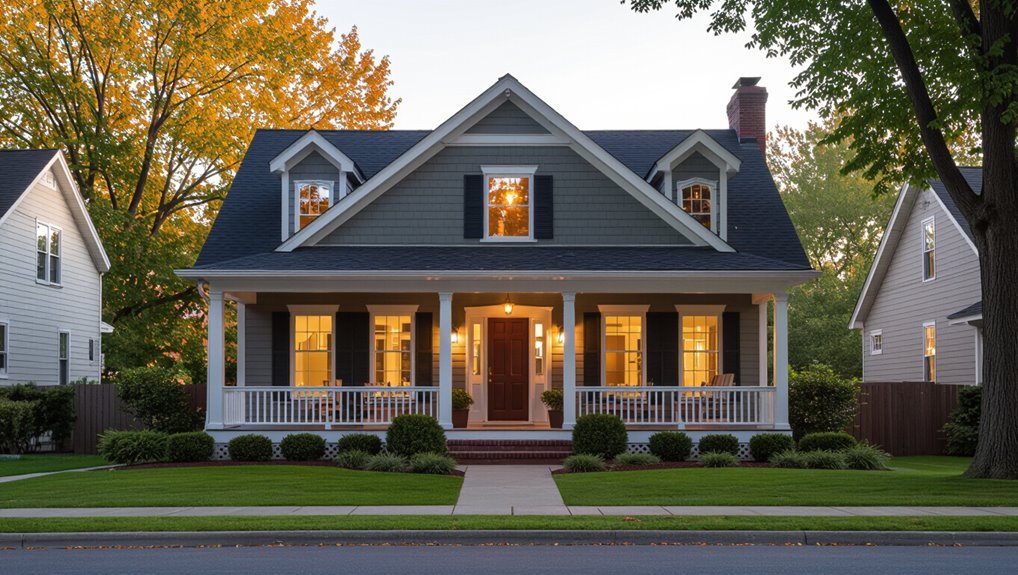
If you prep surfaces correctly—cleaning, sanding, using high-quality primers, and ensuring dry, well-ventilated conditions—Behr exterior acrylics and premium alkyds typically deliver their full rated lifespan on a suburban home: expect 8–12 years on siding and 10–15 years on trim and doors, with color retention and gloss holding up well under routine maintenance.
You’ll see few failures if you address mildew, touch up chips, and repaint selectively.
Frequently Asked Questions (FAQ)
You probably have a few practical questions about Behr exterior paint—how often you’ll need to repaint, what their warranty actually covers, and whether you can put it over oil-based paint.
You’ll also want to know recommended wait times between coats and before rain, and whether darker colors shorten the paint’s lifespan.
I’ll answer each of these clearly so you can plan maintenance and expectations.
How often should I repaint a house with Behr exterior paint?
How often should you repaint a house with Behr exterior paint?
You’ll typically plan for repainting every 5–10 years, depending on climate, sun exposure, surface prep, and paint quality.
Inspect annually for peeling, chalking, or fading; address problem areas sooner.
Well-prepared, sheltered surfaces with premium Behr and proper maintenance can reach the upper end of that range.
Does Behr offer a warranty on exterior paint, and what does it cover?
Knowing when to repaint is important, but you’ll also want to understand Behr’s warranty protections before committing.
Behr typically offers a limited warranty covering peeling, blistering, and excessive fading when applied per instructions and on recommended surfaces.
Warranty length and specifics vary by product and purchase location.
Keep receipts, follow prep guidelines, and contact Behr customer service for claims and required documentation.
Can I apply Behr exterior paint over existing oil-based paint?
Can you put Behr exterior paint over existing oil-based paint? Yes, but you’ll need to prep first: clean, sand gloss to dullness, and etch or use a bonding primer designed for oil surfaces.
Once the surface is properly abraded and primed, Behr’s exterior acrylics will adhere and perform.
Skipping prep risks adhesion failure, peeling, and shortened paint life.
How long should I wait between coats and before exposing to rain?
Before recoating or letting the weather hit your newly painted surfaces, wait until the paint is dry to the touch and has cured enough to resist moisture — typically 2–4 hours between coats for Behr exterior acrylics in mild conditions, and at least 24–48 hours before exposure to rain.
Cooler, humid, or shaded conditions extend these times; follow label guidance and avoid rushing for best adhesion and durability.
Will a darker color shorten the lifespan of exterior paint?
While darker exterior colors absorb more heat and can lead to slightly higher surface temperatures, they don’t automatically shorten paint lifespan if you use a quality exterior formula and proper prep.
Hotter surfaces may increase thermal stress and UV degradation, so choose UV-resistant, exterior-grade paint and follow recommended application and maintenance to keep dark finishes lasting.
You should expect slightly more fade over time and plan for touch-ups.
