
How to Fix Peeling Paint on a Concrete Floor for Good
You can stop peeling paint by removing all loose coating, fixing moisture and contamination, and prepping the slab for good adhesion. Scrape or grind to sound concrete, clean and degrease, repair cracks or spalls, then test for moisture. Use a compatible primer and a durable coating like epoxy or acrylic made for concrete, follow cure times, and control drainage to prevent return of moisture. Keep maintenance up, and if you stick with the full process below you’ll find more detailed guidance.
How to Fix Peeling Paint on a Concrete Floor for Good
You want a lasting fix, not a temporary patch.
Quick answer: fully remove loose paint, etch and clean the concrete, then apply a high-quality concrete primer and epoxy or acrylic floor paint.
The best permanent fix in one sentence is to properly prepare the surface and use a durable concrete-specific coating system.
Quick Answer Best Permanent Fix in One Sentence
Strip down all loose paint, etch the concrete, and apply a high-quality epoxy or acrylic concrete primer and paint system designed for floors to secure the coating bonds permanently.
For how to fix peeling paint on concrete floor, prep thoroughly, repair cracks, confirm the slab is dry, use manufacturer-recommended products, and follow cure times so you’ll get a durable, professional-looking finish that resists future peeling.
Understanding the Problem
Before you start fixing peeling paint, you’ll want to know why it’s happening — moisture, poor adhesion, or a bad primer each call for a different fix.
Check the patterns and depth of failure to tell if it’s just a surface issue you can recoat or a structural problem that needs patching.
If large cracks, spalling, or compromised concrete are present, plan on replacement or professional repair rather than a quick touch-up.
What Causes Paint to Peel from Concrete
Although it’s frustrating to see paint flake off a concrete floor, most peeling traces back to a few clear causes you can address: moisture intrusion, poor surface prep, incompatible coatings, or heavy wear.
You should check for dampness, efflorescence, oil or dust, and loose laitance.
Also confirm the paint matches concrete and application conditions; otherwise adhesion fails and paint eventually lifts.
Signs Your Concrete Paint Failure Is Surface vs. Structural
Distinguishing surface from structural paint failure starts with simple observations you can make right now: look at how the paint is detaching, where it’s occurring, and what the substrate beneath looks like.
If paint flakes off in thin layers and concrete is sound, it’s surface-related—adhesion, moisture, or contamination.
Deep cracks, spalling, or chunks coming away indicate structural issues that go beyond simple repainting.
When to Replace vs. When to Repair
If the damage’s limited to flaking paint, surface contamination, or small hairline cracks, you can usually repair and repaint;
but when concrete shows deep spalls, undermining, or widespread structural cracking, replacement or professional structural repair is required.
Inspect depth, extent, and moisture sources.
Repair when substrate is sound and defects are shallow.
Replace or call a pro if load-bearing integrity is compromised or deterioration is extensive.
Tools, Materials, and Safety Preparation
Before you start, gather the right tools—scrapers, grinders or wire brushes, a shop vacuum, and rollers or sprayers—and pick materials and paint made for concrete like epoxy or acrylic concrete paint.
You’ll also need safety gear (gloves, eye protection, respirator) and good ventilation to handle dust and fumes.
Finally, estimate costs and set aside time for prep, curing, and any repairs so the job isn’t rushed.
Tools You’ll Need
You’ll need a compact set of tools and protective gear to strip loose paint, prepare the surface, and apply a new coating: a stiff wire brush and floor scraper for removing flakes, an angle grinder or sander with a diamond cup or coarse-grit disk for stubborn areas, a shop vacuum and tack cloth for cleanup, concrete patching compound and a putty knife for repairs, a masonry primer and floor paint with rollers and extension poles for application, plus eye protection, a respirator, heavy-duty gloves, and knee pads to keep you safe.
- Safety gear
- Surface prep tools
- Repair tools
- Application tools
Materials and Paint Types Recommended for Concrete
1 key to a long-lasting repair is choosing the right materials and paint for concrete: pick a high-quality concrete or masonry primer, a durable epoxy or acrylic latex floor paint formulated for concrete, and compatible patching compounds and sealers so layers bond properly.
You should also choose:
- Epoxy or acrylic latex floor paint
- Concrete/masonry primer
- Portland-based patching compound
- Concrete sealer
Safety Gear and Ventilation Requirements
Wear proper personal protective equipment and set up ventilation before you touch any paint, primer, or patching compound so you’ll protect your lungs, eyes, and skin from dust, fumes, and chemical splashes.
Use respirators, goggles, gloves, and fans.
Follow this checklist:
- N95 or organic vapor respirator
- Chemical-resistant gloves
- Safety goggles
- Box or exhaust fan for airflow
Cost and Time Estimates
Now that you’ve got your safety gear and airflow sorted, let’s look at what tools, materials, and prep will cost you and how long each step takes. Expect $50–$200 for tools, $30–$150 for coatings, and 3–8 hours total for a small area.
| Item | Estimated |
|---|---|
| Tools | $50–$200 |
| Time | 3–8 hrs |
Step-by-Step Repair Procedure
Start by evaluating and documenting the peeling areas so you know the scope of work and any underlying damage.
Then clear and protect the surrounding space, remove all loose paint by scraping, grinding, or pressure washing, and thoroughly clean or etch the surface to remove grease and contaminants.
Finish this phase by repairing cracks and spalls with appropriate patching compounds before you prime and repaint.
Step 1 Assess and Document the Damage
1. You’ll inspect and record every peeled, blistered, or flaking area so you know scope and causes.
Note moisture spots, cracks, adhesion failures, and surface contaminants. Photograph each problem zone and label measurements.
Create a simple checklist and priority list:
- Location
- Size
- Cause
- Urgency
This gives a clear repair plan and materials estimate.
Step 2 Prepare the Area (Clear, Dry, and Protect Surroundings)
Before you begin repairs, clear the workspace, let the floor fully dry, and protect nearby surfaces to prevent new damage or contamination.
Remove furniture and loose debris, tape edges, and guarantee good ventilation.
Follow these steps:
- Move objects away from the work zone.
- Sweep and vacuum thoroughly.
- Use fans or wait for complete dryness.
- Cover walls, trim, and vents securely.
Step 3 Remove Loose Paint (Scraping, Grinding, Pressure Washing)
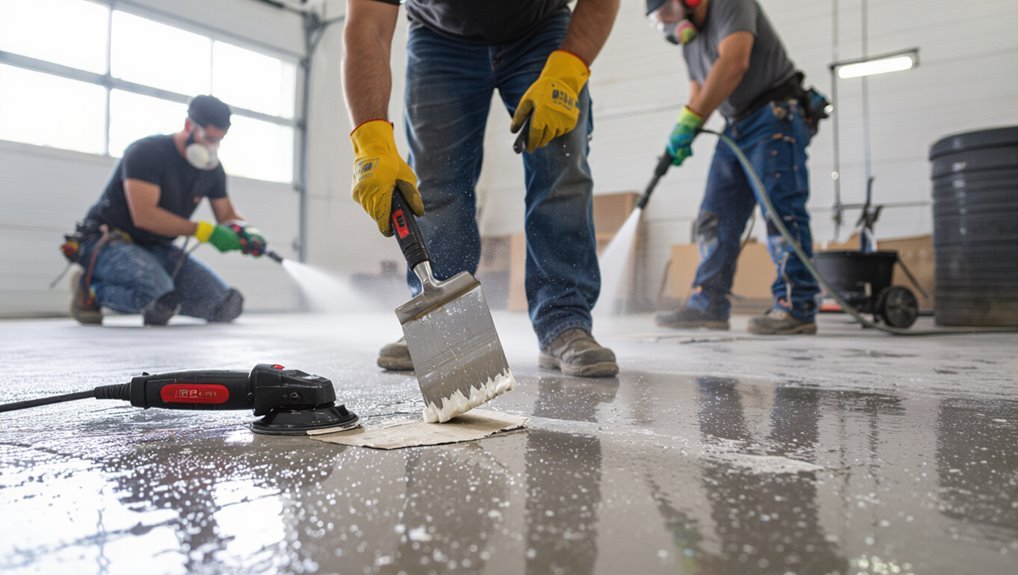
Begin by removing all loose and flaking paint so the new coating will bond to a sound surface; scrape with a stiff scraper, grind stubborn areas with a concrete grinder or wire cup, and use a pressure washer for larger sections.
Work methodically, keep dust down with a vacuum attachment, and recheck for any remaining loose paint before proceeding to the next step.
Step 4 Clean and Degrease the Surface (Detergents, Acid Etch Options)
Once you’ve removed loose paint, clean and degrease the concrete thoroughly so new coatings will stick; use a heavy-duty detergent and stiff brush for general grime and a commercial concrete degreaser or solvent for oil and grease spots.
- Rinse thoroughly with clean water.
- Scrub stubborn stains until gone.
- Neutralize acids per product instructions.
- Let surface dry 24–48 hours before priming.
Step 5 Repair Concrete Defects (Cracks, Spalls, Patching Compounds)
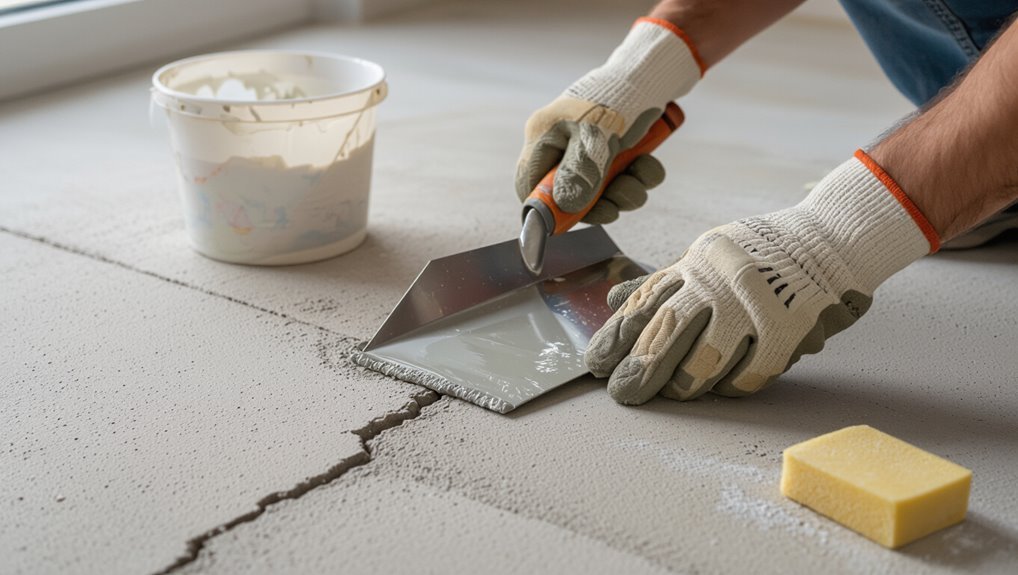
Inspect the floor for cracks, spalls, and other surface defects so you can choose the right repair method and materials.
Remove loose concrete and dust, widen hairline cracks with a chisel if needed, then clean again.
Use appropriate patching compound or epoxy for structural cracks, polymer-modified mortar for spalls, and level and smooth repairs.
Allow full cure before proceeding.
Step 6 Test and Apply Concrete Etcher or Primer for Adhesion
Prepare to test and apply an etcher or primer so the paint will bond to the concrete; proper adhesion prevents future peeling and extends the life of your finish.
Test a small area, follow product instructions, and apply evenly.
Focus on:
- Clean surface
- Compatibility check
- Wet/dry timing
- Coverage rate
Allow full cure before painting.
Step 7 Choose and Apply the Right Paint/Coating (Types and Methods)
With the surface etched and primed to guarantee adhesion, it’s time to pick the paint or coating that’ll withstand traffic and moisture on your concrete floor.
Choose based on use, then apply per instructions. Consider these options:
- Epoxy — durable, chemical-resistant
- Acrylic latex — easy, UV-stable for garages
- Polyurethane topcoat — abrasion-resistant
- Concrete-specific masonry paint — breathable, simpler to recoat
Step 8 Proper Drying, Curing, and Recoat Timing
Because proper drying and curing determine the coating’s durability, you’ll follow specific timing and environmental steps before walking on or recoating the floor.
Monitor temperature and humidity, wait manufacturer-recommended cure time, and avoid traffic until fully set.
Follow this checklist:
- Temperature within range
- Relative humidity controlled
- Minimum tack-free time met
- Full cure time respected
Step 9 Final Sealing and Optional Topcoats for Durability
Seal the repair with a durable topcoat to lock in adhesion and protect the floor from wear, chemicals, and moisture.
Choose an epoxy or polyurethane topcoat, apply evenly, and follow cure times. For added toughness or slip resistance, consider a clear sealer or broadcast fines.
Prioritize ventilation and manufacturer instructions.
- Clean
- Prime
- Coat
- Cure
Choosing the Best Paint or Coating for Concrete Floors
You’ll want to pick a coating based on durability and location: epoxy and polyurethane resist heavy traffic and chemicals, while acrylic and latex are easier for light-use areas.
For garages and high-traffic spots, choose epoxy or commercial-grade polyurethane, while breathable acrylic or masonry-specific coatings work better for basements and patios.
Consider professional-grade systems when you need maximum toughness, chemical resistance, or warranty-backed performance.
Comparison of Paint Types (Epoxy, Acrylic, Latex, Polyurethane)
Picking the right coating for a concrete floor hinges on what you need most—durability, ease of application, chemical resistance, or budget. You’ll weigh epoxy for toughness, acrylic for quick coats, latex for low cost, and polyurethane for UV and chemical resistance.
| Type | Strength |
|---|---|
| Epoxy | Very durable |
| Acrylic | Fast drying |
| Latex | Economical |
| Polyurethane | Chemical/UV resistant |
Best Options for Garages, Basements, Patios, and High-Traffic Areas
For garages, basements, patios, and other high-traffic areas, choose a coating that matches the space’s wear, moisture, and appearance needs—epoxy or polyaspartic for garage floors and heavy traffic, breathable acrylic or masonry paint for damp basements, and UV-resistant polyurethane or acrylic blends for patios.
- Durability
- Moisture tolerance
- Slip resistance
- UV stability
Select based on floor prep and expected use.
When to Use Professional-Grade Coatings
When your concrete floor faces heavy traffic, chemical exposure, persistent moisture, or you need a long-lasting, low-maintenance finish, opt for professional-grade coatings like epoxy, polyaspartic, or polyurea.
They’ll resist abrasion, spills, and stains far better than DIY paints.
Hire a pro if substrate prep, moisture mitigation, or fast cure times matter—you’ll get proper adhesion, warranty, and a durable, easy-to-clean surface.
Common Mistakes to Avoid
Don’t skip thorough surface prep, because paint won’t stick to dirt, loose flakes, or old sealers.
Don’t paint over moisture, use the wrong product, or skip primer—those choices invite peeling and failure.
And don’t rush drying or recoating; following recommended cure times prevents bubbles and adhesion loss.
Skipping Surface Preparation
Although it may seem like a shortcut, skipping surface preparation almost always causes paint to peel sooner rather than later.
You’ll regret not cleaning, etching, and repairing cracks first. Loose debris, grease, or powdery residue prevents adhesion.
Spend time on proper prep—sweep, degrease, etch, and patch—so the coating bonds solidly and lasts.
Cutting corners here costs you repainting later.
Painting Over Moisture or Active Leaks
If water’s getting through the slab or you’ve got active leaks, you can’t just slap paint on and expect it to stick — moisture will lift the coating and cause bubbling, flaking, or mold growth.
You must find and fix the source, dry the slab thoroughly, and use a vapor barrier or proper repairs before repainting; otherwise the new finish won’t last.
Using the Wrong Paint Type or Skimping on Primer
When you choose the wrong paint or skip primer, the coating won’t bond properly and you’ll soon see peeling, flaking, or rapid wear.
Use a concrete-specific epoxy or masonry paint and apply a compatible primer to improve adhesion.
Prepare the surface—clean, etch, and repair—so paint can stick.
Don’t assume household latex will hold up; invest in proper products for durability.
Rushing Drying Times and Recoating
Skipping proper primer or using the wrong paint sets you up for trouble, but rushing the drying and recoating process will undo even the best prep.
You must follow manufacturer drying times, factor temperature and humidity, and avoid recoating too soon. If paint feels tacky or soft, wait longer.
Proper cure prevents bubbles, poor adhesion, and premature peeling—patience saves time and money.
Preventing Future Peeling Maintenance and Best Practices
To prevent peeling from coming back, you should set a regular cleaning and maintenance schedule and check the floor for wear.
Control moisture with proper drainage, dehumidification, or a vapor barrier before repainting.
For high-traffic or chemical-exposed areas, use tougher coatings and touch-up promptly when you spot damage.
Routine Cleaning and Maintenance Schedule
A simple, consistent cleaning and inspection routine will keep your concrete floor’s coating intact and stop small issues from turning into peeling.
You should:
- Sweep and dust-mop daily to remove grit.
- Wet-mop weekly with pH-neutral cleaner.
- Inspect monthly for chips, bubbles, or wear.
- Touch up paint and repair small defects promptly to prevent spread.
Moisture Control and Vapor Barrier Recommendations
Because moisture trapped under the coating is the most common cause of peeling, you should control both groundwater and indoor humidity before recoating concrete floors.
Test slab moisture with a meter or calcium chloride kit. Seal cracks, slope soil away, and install a vapor barrier under slabs where possible.
Use breathable primers or epoxy-compatible moisture mitigation systems to prevent future failures.
Tips for High-Traffic and Chemical-Exposed Floors
If your concrete floor sees heavy foot traffic, vehicle use, or harsh chemicals, you’ll need a tougher coating strategy to prevent peeling and reduce maintenance.
Use epoxy or polyaspartic systems rated for abrasion and chemical resistance, profile and prime the surface, and broadcast silica for traction.
Recoat on schedule, clean spills promptly, and use mats or wheel protectors to minimize wear and chemical exposure.
Cost, Time, and When to Hire a Pro
You can save money by doing the repair yourself, but professionals bring speed, guarantees, and specialized tools.
If the damage is extensive, the slab is cracked, or moisture problems keep recurring, you should call a contractor.
When you do, ask about surface prep methods, warranties, timeline, and exact costs so you know what you’re paying for.
DIY vs. Professional: Pros and Cons
When weighing whether to tackle peeling paint on your concrete floor yourself or hire a pro, consider cost, time, and the scope of the job—DIY saves labor expenses but can eat up weekends and risk mistakes, while professionals cost more upfront yet finish faster and guarantee results.
| Option | Cost | Time |
|---|---|---|
| DIY | Low | High |
| Pro | High | Low |
Signs You Should Call a Contractor
Wondering whether this job is beyond your toolbox?
If paint keeps peeling despite prep, covers large areas, or reveals moisture or structural cracks, call a contractor. You’ll save time and avoid wasted materials. Expect higher cost but faster, durable results.
Hire a pro when the job needs specialized equipment, moisture testing, or when your schedule won’t allow proper curing and quality control.
Questions to Ask a Concrete Coating Professional
How much will it cost, and how long will it take? Ask specifics: estimates, timeline, prep steps, and warranty.
Also confirm licensing and insurance.
Use this checklist:
- Detailed written estimate
- Project start and end dates
- Surface prep and materials listed
- Warranty terms and coverage
Hire a pro if damage is extensive, moisture issues exist, or you want a durable, guaranteed finish.
Troubleshooting: Problems After Repair
If paint starts peeling again after you’ve fixed it, check for poor surface prep, incompatible products, or trapped moisture as likely causes and fixes.
Look for blistering, bubbling, or discoloration as clues to adhesion or moisture problems and strip and reseal affected areas if needed.
If moisture keeps coming back, test for hydrostatic pressure or vapor drive and address the source before repainting.
New Peeling After Repainting Possible Causes and Fixes
When your fresh paint starts peeling again, don’t assume the job failed — look for common causes like poor surface prep, trapped moisture, incompatible products, or painting under the wrong conditions.
Check adhesion, re-clean and etch bare concrete, test moisture with a tape or calcium chloride test, use compatible primer and floor paint, and only repaint when temperature and humidity meet product specs.
Blistering, Bubbling, or Discoloration What to Do
After you’ve repaired peeling and repainted, you might still spot new defects like blisters, bubbles, or odd discoloration—these often point to trapped moisture, solvent entrapment, or poor adhesion rather than a bad paint color.
Scrape affected areas, sand to sound concrete, and allow full solvent cure. Reprime with a breathable adhesion primer and use a compatible paint system; test a small patch before finishing.
Dealing with Persistent Moisture-Related Failures
Because moisture problems can reappear even after thorough repairs, you’ll need to treat persistent dampness as a separate issue rather than a finishing flaw.
Inspect for hydrostatic pressure, rising damp, or plumbing leaks. Install vapor barriers, improve drainage, or add a dehumidifier.
Repair cracks and reseal with breathable products. Test with a moisture meter before repainting and address root causes, not just symptoms.
Frequently Asked Questions
You probably have a few common questions about lifespan, surface prep, and moisture when fixing peeling paint on concrete.
I’ll cover how long a proper job should last, whether you can paint over old paint, how to spot moisture-related failure, when epoxy makes sense, and whether spot repairs will do.
Read on for clear, practical answers.
How long should a properly applied concrete floor paint last?
Wondering how long properly applied concrete floor paint will hold up?
With correct prep, primer, and a quality epoxy or acrylic coating, expect 5–15 years in normal residential use.
High-traffic, vehicle, or chemical-exposed areas shorten lifespan; garages or commercial spaces may need recoating every 2–7 years.
Regular cleaning and prompt repairs extend service life and maintain appearance.
Can I paint over existing paint without removing it completely?
Can you paint over existing concrete floor paint without stripping it all off? Yes, but only if the old coating is sound.
Scrape loose flakes, wire-brush glossy areas, and sand to dull remaining paint. Clean thoroughly, repair cracks, and use a suitable primer before recoating.
If adhesion problems persist or large areas peel, full removal is safer for a long-lasting finish.
How do I know if moisture is the cause of peeling?
How can you tell if moisture’s behind peeling paint on your concrete floor?
Check for blistering, flaking that starts from the bottom up, efflorescence (white powdery deposits), musty odors, or dampness after dry weather.
Tape a plastic sheet to the floor for 24–48 hours; trapped condensation indicates rising moisture.
Also look for nearby water sources, poor drainage, or a history of leaks.
Is epoxy always better than regular paint for concrete floors?
If moisture caused the peeling you just checked for, you’ll want a finish that resists water and abrasion—so is epoxy always the better choice than regular paint? Not always.
Epoxy bonds strongly, handles traffic and chemicals, and seals moisture when applied correctly. But it’s costlier, needs proper prep, and can fail over trapped moisture.
Choose epoxy for heavy use; use quality concrete paint for lighter, dry areas.
Can I repair small peeled spots without repainting the whole floor?
Wondering whether you can patch small peeled spots without repainting the whole floor? Yes—you can.
Clean and degrease the area, chip loose paint, sand feathered edges, then apply a concrete primer.
Use a matching concrete paint or epoxy patch, feathering into surrounding surface. Cure fully before light use.
Larger or widespread peeling still needs full resurfacing for long-term durability.
