
How to Get a Glossy Finish on Painted Wood That Actually Lasts
You’ll get a lasting glossy finish by prepping well, choosing compatible paint and clear coats, and applying thin, even wet coats with quality brushes, rollers, or a sprayer. Sand progressively, fix dents, and remove dust before priming. Let each coat fully dry, scuff-sand lightly between coats, then apply three thin clear coats like polyurethane or lacquer for durability. Cure fully before heavy use and maintain with gentle cleaning; keep going to learn specific products, tools, and troubleshooting tips.
Quick Answer How to Get a Glossy Finish on Painted Wood That Actually Lasts
Want the fastest path to a durable glossy finish? Start with a well-sanded base coat, use a high-gloss enamel or acrylic lacquer, and top with a clear polyurethane or water-based varnish for protection.
For quick picks, grab a deglosser or 220–320 grit sandpaper, a quality high-gloss enamel (like Benjamin Moore Advance) or water-based lacquer, and a clear polyurethane (Minwax Water-Based or Varathane) depending on smell and durability needs.
One-sentence summary of the fastest path to durable gloss
Start by sanding to smooth the surface, prime with a compatible high-build primer, apply two thin coats of high-gloss paint, and finish with a durable clear topcoat—this sequence gives you the fastest path to a gloss that actually lasts.
Follow proper drying times, sand lightly between coats, use quality tools, and maintain clean conditions so you’ll know how to get a glossy finish on painted wood that endures.
Recommended products at a glance
1 quick list: the essential products are a medium-grit and fine-grit sandpaper, a high-build wood primer (oil or acrylic depending on your paint), a quality high-gloss paint, a durable clear topcoat (polyurethane or conversion varnish), good brushes or a foam roller, tack cloths, and masking supplies.
- Choose primer matched to substrate and paint.
- Prefer low-VOC, high-solids topcoat for durability.
- Use quality application tools and proper sanding between coats.
Basic Understanding Glossy Finishes Explained
When you’re aiming for a glossy finish, you’re really choosing a sheen level that affects how light and surface details show up.
Durability comes down to film build, adhesion, and wear resistance, which vary between clear coats like polyurethane, varnish, lacquer, and conversion finishes.
Pick oil-based for tougher, more durable films and richer depth, or water-based for faster drying, lower odor, and easier cleanup.
What ‘œglossy’ means: sheen levels and visual effects
Although “glossy” sounds simple, it actually refers to specific sheen levels and the way light interacts with a painted surface.
You’ll see matte, satin, semi-gloss, and high-gloss scales; each reflects light differently, altering contrast and perceived depth. Higher sheen boosts color saturation and highlights texture, while lower sheen softens imperfections.
Choose based on aesthetic goals and cleaning needs.
Why durability varies: film build, adhesion, and wear resistance
Because a glossy finish isn’t just about shine, its durability comes down to three practical factors you can control: film build (the thickness of the paint layer), adhesion (how well that layer bonds to the wood), and wear resistance (how it stands up to scrubbing, impacts, and UV).
You’ll manage film build by application technique, improve adhesion with proper prep and primers, and boost wear resistance through correct curing and maintenance.
Types of clear coats and finishes (polyurethane, varnish, lacquer, conversion)
Clear coats act as the final armor for painted wood, and choosing between polyurethane, varnish, lacquer, or conversion coatings affects gloss, durability, and application ease. You’ll pick based on sheen, hardness, and cure time. Compare options:
| Type | Strength | Typical Use |
|---|---|---|
| Polyurethane | High | Floors, trim |
| Varnish | Moderate | Outdoor wood |
| Lacquer/Conversion | Very high | Cabinet shops |
When to choose oil-based vs. water-based products
When you’re deciding between oil-based and water-based finishes, focus on durability, yellowing, and dry time to match the product to your project.
Choose oil-based for high-traffic surfaces, deeper sheen, and slower curing that levels well, but expect some yellowing.
Pick water-based for quick dry, low odor, true-clear finish, and easier cleanup—ideal for light woods, modern paints, and fast schedules.
Preparation: Foundation for a Lasting Gloss
Before you start painting, thoroughly assess the wood and any existing finish to determine whether you need stripping, spot repairs, or simple recoat.
Clean grease and mildew, sand progressively from coarse to fine for proper adhesion, and fill or level defects so the surface is smooth.
Finish with a tack cloth and careful dust removal to guarantee a flawless glossy topcoat.
Assessing the wood and existing finish
If you’re after a durable, glass-like gloss, start by closely inspecting the wood and whatever finish is already on it; that’s the foundation for every successful refinishing job.
Check for flaking, cracks, raised grain, previous coatings (oil, latex, lacquer), and areas of wear.
Note glossy versus matte patches, contaminants embedded in paint, and any structural damage so you can plan sanding, repairs, or stripping.
Cleaning methods for painted wood (degreasing, mildew removal)
Having evaluated the surface for damage and previous coatings, you’ll now remove contaminants that can spoil a glossy finish: grease, grime, and mildew.
Use a mild degreaser or TSP substitute, rinse thoroughly, and dry.
For mildew, apply a diluted bleach solution (1:3 bleach to water), scrub gently, rinse, and dry in sunlight if possible.
Wear gloves and ventilate.
Sanding: grit progression and techniques for adhesion
When you sand, start with a coarser grit to remove old finish and smooth damage. Then work progressively finer so each pass eliminates the scratches from the previous one. This staged approach gives paint something clean and keyed to bite into, which is essential for long-lasting gloss.
Use consistent pressure, sand with the grain, clean dust between grits, and finish with a fine 220–320 grit for ideal adhesion.
Repairing surface defects: filling, leveling, and feathering
Patch and level every ding and gouge before you prime so the gloss will sit smooth and even.
Use a paintable wood filler for deep defects and spackle for shallow pits. Apply in thin layers, let each cure, then sand flush with progressively finer grits.
Feather edges into surrounding wood to eliminate ridges. Clean residues before priming to guarantee adhesion.
Tack cloths and final dust removal
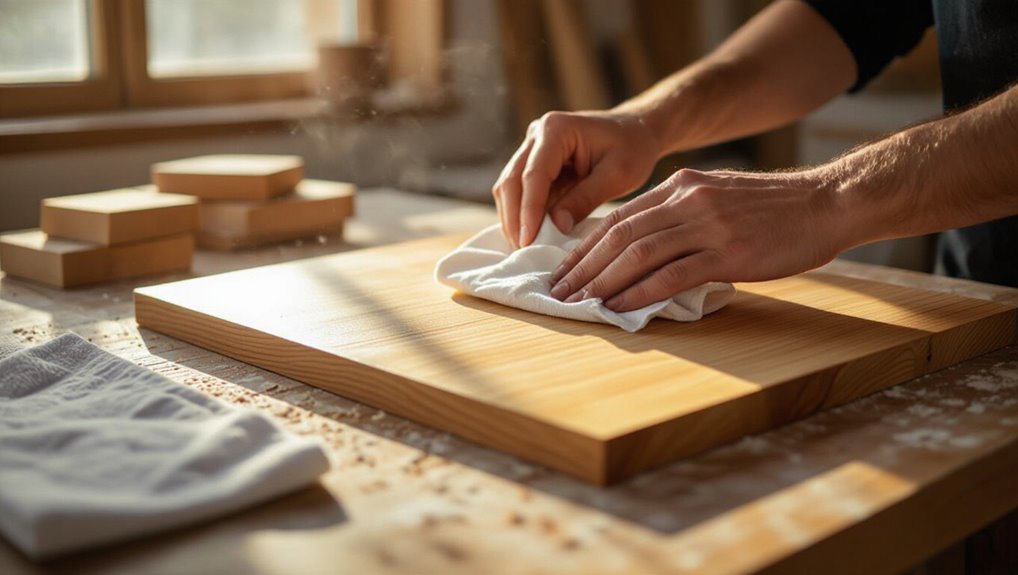
After you sand and feather repairs smooth, remove every trace of dust before priming or painting; even tiny particles will show up under a glossy finish.
Use a high-quality tack cloth, fold it lightly, and wipe in one direction. Don’t overuse solvents—lightly dampen if needed.
Finish with a soft brush or a compressed-air blast to catch hidden debris before you apply primer or paint.
Paint Selection and Application Best Practices
Choose a paint that’s compatible with your glossy topcoat and follow application methods that give a smooth, even base—whether brushing, rolling, or spraying.
Let each coat fully dry and cure per the manufacturer’s times before topcoating, and scuff-sand lightly between coats when the finish feels slightly rough.
I’ll cover specific brush/roller tips, spray settings, drying cues, and scuff-sanding technique next.
Choosing paint compatible with a glossy topcoat
When you want a durable, mirror-like finish, pick a base paint formulated to bond with high-gloss topcoats and to resist oils and solvents that can interfere with adhesion.
Choose water- or alkyd-based primers compatible with your topcoat, match chemistry (latex topcoat over latex primer), and verify manufacturer compatibility.
Avoid low-adhesion “furniture” paints unless labeled as topcoat-ready to guarantee long-lasting gloss.
Proper paint application for smooth base coats (tips for brushes, rollers, spray)
Matching paint chemistry sets you up for success, but how you apply those base coats determines whether the surface will end up glassy or full of flaws.
Use high-quality synthetic brushes for latex, natural-bristle for oil. Roll with a short-nap foam or microfiber cover for minimal texture.
Keep wet edges, apply thin, even coats, and feather out brush marks. Consider HVLP spray for flawless coverage.
Drying and cure times before topcoating
Although you’re keen to topcoat, let the paint fully dry and begin curing so the finish bonds and stays glossy; follow the manufacturer’s recommended dry times and consider temperature, humidity, and coat thickness, since shortcuts invite tackiness, blistering, or poor adhesion.
Check recoat windows, extend times in cool or humid conditions, and wait longer for oil-based or high-build systems to cure before applying your final gloss.
Scuff-sanding between coats: when and how
If you want a truly smooth, glossy finish, you’ll need to scuff-sand between coats to knock down dust nibs, raised grain, or brush marks so subsequent layers bond evenly; use fine-grit sandpaper (220–320) or a fine synthetic abrasive pad, apply light, even pressure, and wipe with a tack cloth before the next coat.
Sand once each coat after it’s dry to the touch, avoid cutting through paint, and remove dust.
Step-by-Step: Applying a Durable Glossy Topcoat
Now you’ll pick a clear coat that fits the project—polyurethane, polycrylic, or lacquer—then prep it exactly as the label directs (mixing, thinning, and stirring).
Decide whether you’ll brush, roll, or spray based on the piece and your skill, and aim for wet, even coats with proper flash times in the recommended temperature and humidity.
Finish with the right number of coats and build for high-traffic areas to guarantee long-lasting gloss and protection.
Step 1 Selecting the right clear coat for the job
Because the clear coat you choose determines durability, sheen, and application method, start by matching the product to the project’s needs.
Pick oil-based for tough wear and warm tones, waterborne for low odor and faster cure, and polyurethane or conversion varnish for heavy-duty surfaces.
Match gloss level to desired shine, guarantee compatibility with your paint, and consider indoor versus outdoor exposure.
Step 2 Preparing the clear coat (mixing, thinning, stirring)
1. You’ll prepare the clear coat by reading the label, measuring components, and mixing thoroughly.
Use the recommended thinner and ratio for temperature and viscosity; add small amounts, stir slowly to avoid bubbles, and let the mix rest per instructions.
Strain through a fine filter before use. Keep tools clean, note pot life, and mix only what you’ll apply within that timeframe.
Step 3 Application method comparison: brush vs. roller vs. spray
When choosing how to apply your clear coat, consider the size of the piece, the finish you want, and your skill level—brushing gives control for small or detailed areas, rollers speed coverage on flat surfaces, and spraying produces the smoothest, most uniform gloss on larger projects.
| Method | Best for | Notes |
|---|---|---|
| Brush | Detail | Control, visible strokes |
| Roller | Flats | Fast, slight texture |
| Spray | Large | Smooth, requires practice |
Step 4 Wet coats, flash times, and recommended environmental conditions
Once you’ve chosen your application method, plan how many wet coats you’ll apply, how long to let each “flash” or tack up between passes, and the ideal workshop conditions so each layer levels and bonds without trapping solvent or dust.
Work at 65–75°F with 40–60% humidity, allow 5–15 minutes flash for thin solvent-based coats (longer if cooler), and avoid drafts and dust.
Step 5 Number of coats and recommended build for high-traffic surfaces
After you’ve got your flash times and environmental controls sorted, decide how many wet coats you’ll need to build a durable glossy film for high-traffic areas.
Generally apply three thin wet coats for everyday wear; increase to four or five for tabletops, stair treads, or commercial use.
Aim for 6–8 mils total dry film thickness, sanding lightly between coats to guarantee adhesion and uniform gloss.
Step 6 Final cure time and testing hardness
Give the finish enough time to harden fully before subjecting it to heavy use—typically 7–30 days depending on product and conditions—because surface dry time isn’t the same as full cure.
Check hardness by gently pressing with a fingernail, then use a cotton ball with mineral spirits in an inconspicuous spot. If no mark, the cure is sufficient; otherwise wait longer.
Troubleshooting Common Problems and How to Fix Them
If your glossy finish shows runs, sags, or an orange-peel texture, you’ll want to identify whether it’s a technique, viscosity, or spray issue and correct it before recoating.
When you see blushing, cloudiness, or blooming, humidity or solvent entrapment is usually to blame and can often be cleared with proper flash time or retouching with compatible products.
For adhesion failures, scratches, or dulling, you’ll inspect the substrate and prep, then use targeted sanding, priming, or spot repairs to restore a smooth, bonded gloss.
Runs, sags, and orange peel: causes and corrective actions
Runs, sags, and orange peel are common finish defects that usually mean something went wrong with application or conditions, and you can fix most of them with the right diagnosis and technique.
Check spray distance, pressure, and tip size; thin or mix per instructions.
Sand out runs (320–400 grit), feather edges, then recoat.
For orange peel, flatten with fine sanding and apply even, light coats.
Blushing, cloudiness, or blooming: humidity and solvent issues
When humidity’s high or solvents evaporate too quickly, paint can turn cloudy, blush, or “bloom,” leaving a milky or hazy finish instead of a clear gloss.
To fix it, wait for dry, low-humidity conditions, use slow-evaporating solvents or retarder additives, thin coats properly, and guarantee adequate flash time between coats.
Light sanding and recoating after full cure clears minor bloom.
Poor adhesion or peeling: diagnosing adhesion failures
Cloudiness from humidity or fast solvents can sometimes mask a deeper problem: poor adhesion.
Check for peeling, flaking, or edges lifting; tap to hear hollow sounds. Test adhesion with a sharp blade or tape pull in an inconspicuous spot.
Consider surface contamination, inadequate sanding, incompatible primers or topcoats, and insufficient cure time.
Address by stripping, re-prepping, and using proper primer and compatible paint.
Scratches, scuffs, and dulling: repair and spot-fix methods
Although a glossy painted surface will eventually pick up scratches, scuffs, and general dulling, you can often restore small areas quickly without refinishing the whole piece.
Clean the spot, lightly sand feathering edges, apply matching touch-up paint or glaze, then wet-sand and polish with fine compound.
For minor scuffs, try automotive polish or scratch remover.
Finish with protective clear coat.
Mistakes to Avoid for a Long-Lasting Gloss
Don’t rush cure times or recoat windows, because you’ll compromise hardness and sheen.
Make sure you prep properly and use compatible products, and avoid painting in extreme temperature or humidity.
Don’t over-thin or over-brush, which can ruin flow and durability.
Rushing cure times and recoat windows
If you recoat or handle painted wood before the finish has fully cured, you’ll likely trap solvents, dull the gloss, and weaken adhesion — turning what should be a durable, shiny surface into one that chips or becomes cloudy over time.
Wait the manufacturer’s full recoat and cure times, control temperature and humidity, and test a small area before heavy use to guarantee a true, lasting shine.
Skipping proper surface prep or using incompatible products
Once the paint has cured, pay equal attention to what you did beforehand—skipping proper surface prep or mixing incompatible products will undo careful drying and recoat work.
You must clean, sand, and remove contaminants; feather edges and use primers compatible with both substrate and topcoat.
Don’t combine oil and water-based products without a proper bonding primer, or you’ll get peeling, blushing, or poor adhesion.
Applying in the wrong temperature/humidity
Because paint reacts to its environment, you’ll get uneven gloss, drips, or extended cure times if you apply in too-hot, too-cold, or overly humid conditions.
Check manufacturer’s recommended temperature and humidity ranges, control the room with heaters, fans, or dehumidifiers, and wait for stable conditions.
Don’t rush; curing affects hardness and sheen, so schedule work when conditions match product specs.
Over-thinning or over-brushing
Although thinning can help flow and leveling, over-thinning paints their binders and lowers film build, which leaves a dull, weak finish that chips sooner.
Don’t dilute more than the manufacturer recommends. Use appropriate brush size and gentle, even strokes—over-brushing drags binders and creates thin, streaky areas.
Let coats dry fully before lightly sanding and re-coating to build a durable, glossy film.
Maintenance and Prevention: Keep the Gloss Looking New
Keep the gloss looking new by sticking to a simple cleaning routine with mild, non-abrasive cleaners and soft cloths.
In high-traffic spots use pads, mats, or felt to prevent scratches, and learn when a light recoat will do versus a full refinishing.
For exterior painted wood, stay on top of sealers and touch-ups so weather doesn’t break the finish down.
Cleaning routine and recommended cleaners
A simple weekly wipe-down will prevent dirt and oils from dulling your glossy finish, and a gentle, pH-neutral cleaner is usually all you need.
Use a soft microfiber cloth, wrung damp—not soaking—and follow wood grain. For stubborn spots, mix mild dish soap with water, rinse, then dry immediately.
Avoid abrasive pads, ammonia, or oil-based solvents that can damage the topcoat.
Preventive measures for high-traffic areas (pads, mats, felt)
Place protective pads, mats, and felt under anything that will rub, slide, or sit on your painted wood—chairs, plant pots, lamps, and decorative objects—to stop scratches and scuffs before they start.
Use nonabrasive, adhesive or slip-on pads, replace worn pieces promptly, and add area rugs or runner mats in walkways.
Check pads periodically and clean under mats to prevent trapped grit.
When and how to refresh the finish (recoat vs. full refinishing)
If your painted wood still has good adhesion and only shows light wear—minor scratches, dull spots, or thin areas—you can recoat to restore shine without stripping down to bare wood.
Clean, scuff-sand, and apply a compatible gloss topcoat.
For widespread peeling, deep damage, or multiple layers of incompatible coatings, strip, repair, prime, and refinish fully to guarantee lasting gloss and adhesion.
Long-term care tips for exterior painted wood
Because exterior paint faces sun, rain, and temperature swings, keeping its gloss means proactive, simple care you can do seasonally: wash with mild soap, rinse thoroughly, and inspect for chipped spots; touch up small defects, sand and recoat dull areas, and reseal joints and exposed end grain to prevent moisture intrusion.
Also trim vegetation, clear gutters, avoid pressure-washing damage, and recoat high-wear zones every few years.
Product Recommendations and Tools Checklist
Now that you’re focused on preserving that glossy look, pick the right clear coat for the job—waterborne polyurethane for indoor furniture and cabinets, tougher oil- or solvent-based finishes for trim and exterior wood.
Gather essential tools and accessories like sanders, quality brushes or rollers, respirators, and tack cloths so you’ll be ready to work cleanly and safely.
Decide whether to buy budget or professional-grade products based on how durable and smooth you need the finish to be.
Best clear coats for indoor furniture, cabinets, trim, and exterior wood
For indoor furniture, cabinets, trim, and exterior wood you’ll want clear coats that match the surface, wear level, and look you’re after; choose polyurethane for heavy-traffic floors and cabinets, water-based polyacrylic for low-odor indoor pieces, spar urethane or marine varnish for exterior exposure, and lacquer for fine furniture that needs fast drying and a glass-like sheen.
- Polyurethane — durable, satin to gloss.
- Water-based polyacrylic — low odor, clear.
- Spar urethane/marine varnish — UV and moisture resistant.
Tools and accessories you’ll need (sanders, brushes, respirators, tack cloths)
Gathering the right tools before you start will save time and prevent costly mistakes; you’ll need sanding gear, quality brushes or applicators, personal protective equipment, and cleaning supplies.
Choose sanders and grit progression, soft foam brushes or high-quality synthetic bristles, a respirator for fumes, and tack cloths to remove dust.
- Sanding kit (orbital, blocks, papers)
- Brushes/rollers/tips
- Respirator, gloves, tack cloths
Budget vs. professional-grade options
While you can get decent results on a tight budget, choosing professional-grade tools and materials will save you time and reduce rework on high-visibility pieces. You’ll balance upfront cost with longevity: buy a good brush, quality clearcoat, and proper respirator for frequent projects; use budget items for infrequent touch-ups.
| Item | Budget | Pro |
|---|---|---|
| Brush | $ | $$$ |
| Clearcoat | $ | $$$$ |
| Respirator | $ | $$$ |
FAQ Glossy Finish on Painted Wood (5 Common Questions)
You’ll likely have questions about shine, durability, and troubleshooting—like whether glossy finishes reveal flaws more than satin or matte and if you can top latex paint with a gloss.
You’ll also want to know curing times, how water-based gloss compares to oil for floors and cabinets, and how to fix a cloudy or milky finish.
We’ll answer those five common FAQs so you can finish confidently.
Will a glossy finish show more imperfections than satin or matte?
Curious whether a glossy finish will highlight every ding and brushstroke? Yes — glossy sheens reflect more light, making surface flaws, texture, and uneven primer or sanding more visible.
If you want shine without emphasizing imperfections, prep thoroughly: fill, sand, and prime.
Alternatively, choose satin or matte to mask flaws while still offering protection and easier touch-ups.
Can I put a glossy topcoat over latex paint?
Yes — you can put a glossy topcoat over latex paint, but you need to prepare the surface so the finish adheres and stays smooth.
Lightly sand to dull the sheen, clean off dust and oils, then apply a compatible water-based or oil-based clear coat per manufacturer instructions.
Test a small area first to verify adhesion and color compatibility before finishing the whole piece.
How long does a glossy finish take to fully cure and harden?
How long it takes for a glossy finish to fully cure depends on the type of product and the conditions it’s in.
Fast-drying acrylics may be touch-dry in hours and fully cured in 3–7 days; oil-based or polyurethane finishes often need 7–30 days.
Temperature, humidity, and ventilation speed curing.
Avoid heavy use until the manufacturer’s recommended full-cure time has passed.
Is a water-based gloss as durable as oil-based for floors and cabinets?
Which holds up better under heavy use—water-based or oil-based gloss?
You’ll find oil-based finishes typically resist wear, scratches, and chemicals better on floors and high-use cabinets.
However, modern water-based formulas have closed much of that gap—dry faster, yellow less, and clean up with soap.
Choose oil for maximum toughness; pick water-based for quicker return-to-service and lower VOCs.
How do I remove cloudy or milky finish after application?
Ever notice a cloudy, milky haze after you’ve applied a clear coat? That’s usually moisture, solvent bloom, or inadequate curing.
Let it cure fully in a warm, dry spot. If haze persists, rub wet with 0000 steel wool and mineral spirits or use a fine polishing compound, then buff.
Recoat only after surface is completely dry and smooth.
Quick Checklist: Steps to a Durable Glossy Finish (Printable)
Before you start, check our quick printable checklist to make sure your prep, application, and cleanup are all covered.
You’ll find a pre-project checklist for surface prep and materials, an application checklist for timing and technique, and a post-application checklist for curing and care.
Grab the sheet, follow each step, and you’ll get a durable glossy finish every time.
Pre-project checklist
Start by gathering everything you’ll need so the job goes smoothly: sandpaper (various grits), tack cloths, high-quality primer and gloss paint, compatible brushes or a foam roller, drop cloths, painter’s tape, respirator or mask, and safety gear.
Inspect the wood for damage, test-fit parts, and plan ventilation. Confirm drying times and temperatures.
- Protect area
- Prep surfaces
- Verify supplies
Application checklist
1. You’re ready to apply finish; follow this quick, printable checklist to get a durable glossy surface.
- Confirm paint fully cured, clean surface with tack cloth, and remove dust.
- Apply thin, even coats of glossy topcoat with a quality brush or foam applicator; sand lightly between coats.
- Maintain recommended dry times and avoid humidity or direct sunlight during application.
Post-application checklist
Once the final coat dries, check the surface carefully and follow this short post-application checklist to lock in that glossy, durable finish:
- Inspect for pinholes, dust nibs, or uneven sheen; lightly sand and spot-recoat if needed.
- Wait full cure time, then apply a paste wax or protective clear coat per product instructions.
- Clean gently with a soft cloth and mild cleaner; avoid abrasives and heavy use for 48–72 hours.
