
Is Matte Finish Paint Actually Washable? The Truth About Cleaning It
Yes — you can wash matte-finish paint, but you’ll need to be careful. Matte has low sheen and a softer binder, so aggressive scrubbing or harsh cleaners can dull or scuff it. Test a hidden spot first, use a soft sponge or microfiber with mild detergent, blot or use light circular motions, and rinse frequently. Higher-quality, washable matte formulations and proper priming hold up better. Keep cleaning gentle and you’ll preserve the finish — keep going to learn practical tips and when to repaint.
Is Matte Finish Paint Actually Washable? Quick Answer
Yes — matte finish paint can be washed, but it’s generally less scrubbable than satin or semi-gloss and needs gentler cleaning to avoid dulling or scuffing.
Use mild soap, a soft cloth or sponge, and light pressure, and spot-test any cleaner first.
For homeowners or renters: if you want easier maintenance, consider a higher-sheen paint in high-traffic areas.
Direct answer summarizing washability and key caveats
Although matte paint isn’t as tough as satin or semi-gloss, you can wash it gently — just expect to use milder cleaning methods and avoid abrasive scrubbing.
If you’re wondering “is matte finish paint washable,” the answer is yes, but it’s more delicate: use soft cloths, mild detergent, and light pressure.
Test a hidden spot first and limit cleaning frequency to preserve finish.
One-sentence takeaway for homeowners and renters
Curious if matte paint holds up to cleaning? You can keep matte walls looking good with gentle, regular care: avoid harsh scrubbing, test cleaning solutions in an inconspicuous spot, use soft cloths or sponges, and address stains promptly.
If you rent, check your lease; if you own, choose higher-quality washable matte for easy maintenance and fewer touch-ups over time.
What Is Matte Finish Paint? Basic Understanding
Matte finish paint gives you a flat, non-reflective surface that hides wall imperfections and creates a soft, modern look.
You’ll often choose matte for walls and ceilings—or for trim in low-traffic areas—because it provides a smooth, understated appearance.
Compared with eggshell, satin, and semi-gloss, matte has the lowest sheen and typically a different binder composition, which affects durability and washability.
Definition and visual characteristics of matte finish
Think of matte finish paint as a low-sheen coating that absorbs light instead of reflecting it, giving walls a soft, non-glossy look.
You’ll notice muted colors, minimal surface glare, and a velvety texture that helps hide minor imperfections.
Matte provides a uniform, contemporary appearance but shows contrast differently than shinier finishes, emphasizing depth without shiny highlights.
Common uses and where matte is chosen (walls, ceilings, trim)
Rooms often use matte finish paint because it hides imperfections and gives a calm, contemporary look without glare.
You’ll pick matte for living room and bedroom walls, ceilings where you want subtlety, and on large surfaces that shouldn’t reflect light.
You might avoid trim or high-traffic areas, but choose matte for statement walls, textured surfaces, and anywhere a soft, uniform appearance matters.
How matte paint differs from eggshell, satin, semi-gloss (sheen and composition)
Although they all cover walls, paint finishes differ mainly in sheen and binder levels, which affect durability, washability, and how light reflects off the surface. You’ll notice matte has lowest sheen and more pigment, eggshell adds slight sheen and better scrub resistance, satin boosts binder for durability, semi-gloss is hardest, easiest to clean.
| Finish | Sheen | Durability |
|---|---|---|
| Matte | Low | Low |
| Eggshell | Low-med | Moderate |
| Satin/Semi-gloss | Med-high/High | High |
Why Matte Paint Feels Less Washable: Science and Materials
You’ll notice matte paints often feel less washable because their pigment binders and thinner protective resins make the finish less durable than glossier formulas.
The rougher, light-absorbing surface texture both hides scuffs and grabs dirt, so stains don’t wipe away as easily.
Check manufacturer scrub-resistance and washability ratings to compare real-world durability before you choose a matte.
Paint composition and pigment binders that affect durability
At the heart of why matte paint feels less washable is chemistry: the binders and pigments that give matte its low sheen also make its surface softer and more porous.
Surface texture and light absorption vs. reflection
The rough, micro-textured surface of matte paint scatters and absorbs light instead of reflecting it in a smooth mirror-like way.
That texture traps dirt and makes stains appear deeper, so when you wipe, residues lodge in tiny valleys.
You’ll need gentler techniques and targeted cleaners to avoid disturbing pigments while lifting soil from the micro-rough surface without causing sheen changes.
Manufacturer ratings: scrub resistance and washability standards
Because manufacturers test paints to specific scrub-resistance and washability standards, you can compare finishes objectively rather than guessing which will clean up best.
Look for ASTM, ISO, or EN ratings and “scrub cycles” on labels: higher numbers mean tougher surfaces. Manufacturers also note stain resistance and recommended cleaners.
Use these specs to choose matte formulations treated for durability if you need easier maintenance.
Factors That Determine If a Matte Paint Is Washable
Whether your matte paint cleans up well depends on several practical factors: the paint’s formulation (premium vs. budget), how well the surface was prepped and primed, and how many coats you applied.
It also hinges on what you’re cleaning—grease and scuffs behave differently than fingerprints—and which tools or cleaners you use, from mild soap to stronger solvents.
Keep these elements in mind when you choose and maintain matte finishes so you get the durability and washability you need.
Paint quality and formulation (premium vs. budget)
If you want a matte finish that’s truly washable, quality and formulation matter more than the sheen itself.
You’ll notice premium matte paints use higher-grade binders, pigments, and washable additives that resist scrubbing and staining.
Budget options often sacrifice binder content and durability, so they scuff and absorb dirt.
Choose formulations labeled “washable” or “scrubbable” and follow manufacturer care instructions.
Surface preparation and primer role
Good paint and formulation won’t make much difference if you skip proper surface prep and priming; they set the stage for adhesion, durability, and washability.
You should clean, sand, and repair surfaces so primer bonds evenly. Use a primer suited to substrate and stain-blocking needs—latex for drywall, bonding primer for glossy or tricky surfaces—so your matte topcoat cleans without peeling or ghosting.
Number of coats and application method
While the right number of coats and a careful application won’t magically make every matte paint ultra-scrubbable, they’re central to how well the finish stands up to cleaning.
You should apply recommended coats—usually two to three—for full coverage and durability, allow proper drying between layers, and use even, thin strokes or a quality sprayer to avoid texture that traps dirt and resists gentle wiping.
Type of stains and typical soil (grease, fingerprints, scuffs)
What kind of mess are you dealing with matters more than you might think: matte paint handles dust and light dirt well but reacts differently to grease, fingerprints, and scuffs.
You’ll find oily stains sink in and leave sheen differences, fingerprints sometimes smudge without leaving residue, and scuffs can abrade the finish.
Severity and age of the mark determine how gently you must treat it.
Tools and cleaning agents used (mild soap, detergents, solvents)
Marks like grease or scuffs don’t just change appearance—they affect how you should clean them, and that dictates the tools and agents you’ll choose.
Use soft microfiber, nonabrasive sponges, and gentle brushes.
Start with mild soap and water, move to diluted household detergent for tougher grime, and reserve solvent cleaners for persistent stains—testing first in an inconspicuous spot to avoid finish damage.
How to Clean Matte Finish Paint: Step-by-Step Guide
Before you start cleaning, you’ll want to assess the finish and test a hidden spot to make sure the paint holds up.
Gather gentle supplies—soft sponge, microfiber cloth, and a mild cleaner—and use a blotting or light circular motion, rinsing as you go.
For stubborn stains try targeted fixes like a baking soda paste or careful Magic Eraser use, and stop if the finish starts to fade—that’s when repainting may be the best option.
Step 1 Assess the finish and test a hidden spot
Wondering where to begin? You’ll inspect the wall closely, feel the texture, and pick a hidden spot to test cleaning.
Try a gentle wipe, wait, then compare.
- Check for sheen or roughness
- Choose behind furniture or inside a closet
- Use minimal pressure on the test
- Look for color shift, dulling, or lifting
Step 2 Gather safe cleaning materials (soft sponge, mild cleaner, microfiber)
Anyone can assemble the right tools quickly: grab a soft, non-abrasive sponge or a high-quality microfiber cloth and a mild, pH-neutral cleaner (diluted dish soap or a gentle all-purpose cleaner works well).
You’ll also want a bowl of lukewarm water, clean microfiber for drying, and a lint-free towel to avoid streaks.
- Soft non-abrasive sponge
- Microfiber cloths (clean)
- Mild pH-neutral cleaner
- Bowl of lukewarm water
Step 3 Gentle cleaning technique: blotting, circular motion, rinse
With your materials ready, you’ll move on to the cleaning technique that protects the matte surface:
start by gently blotting any fresh stains with a damp microfiber to lift residue without rubbing.
Then use a soft sponge and mild cleaner in small, circular motions to work on stubborn spots—always keeping pressure light to avoid altering the finish.
After cleaning, rinse the sponge and wipe the area with plain water, then pat dry.
Step 4 Handling stubborn stains: targeted approaches (baking soda paste, Magic Eraser use guidance)
Tackle stubborn stains by using targeted, low-abrasion methods that lift marks without dulling the matte finish: try a paste of baking soda and water applied gently with a soft cloth for greasy or scuffed spots.
Reserve a Magic Eraser for small, persistent blemishes—using it lightly and testing first in an inconspicuous area to make sure it doesn’t remove paint.
Use small circular motions, rinse, and dry.
Step 5 When to stop and when to repaint
If stains or scuffs won’t budge after gentle cleaning and targeted spot treatments, don’t keep scrubbing—stop and reassess.
Inspect damage: if finish is dulled, paint’s thin, or coating flakes, patching won’t hide it.
Touch up small areas; repaint the whole wall if discoloration or texture mismatch is obvious.
Plan prep, primer, and matching matte paint for best results.
Comparison: Matte vs. Other Finishes for Cleanability
When you compare matte to eggshell, satin, and semi-gloss, you’ll see matte hides imperfections but usually scores lower on scuff resistance and washability.
That makes it a trade-off: great for low-traffic rooms where looks matter, less ideal for busy hallways or kids’ rooms where you need frequent cleaning.
We’ll weigh the pros and cons so you can decide if matte will hold up where you plan to use it.
Visual comparison of durability and washability
Although matte paint gives walls a sophisticated, low-sheen look, you’ll notice its finish hides scuffs differently than glossier options and usually requires more careful cleaning; compare durability and washability visually to choose wisely.
| Finish | Durability | Washability |
|---|---|---|
| Matte | Moderate | Gentle wipe |
| Eggshell | Good | Mild scrub |
| Semi-gloss | High | Vigorous clean |
Pros and cons of choosing matte for high-traffic areas
Because matte hides imperfections better than glossy paints, you might be drawn to it for busy hallways and living rooms — but you’ll trade off tougher cleaning.
You’ll enjoy subtle look and fewer glare issues, yet stains and scuffs demand gentler care and more frequent touch-ups compared with satin or semi-gloss.
- Softer, forgiving appearance
- Lower scrubbability
- Easier to touch up visually
- Shows oily fingerprints more
Common Mistakes That Damage Matte Paint While Cleaning
Don’t reach for abrasive scrubbers or harsh chemicals when cleaning matte paint, because they’ll strip the finish.
You shouldn’t soak the surface or scrub aggressively either, and always patch-test new commercial cleaners before using them widely.
Follow the manufacturer’s care instructions to avoid avoidable damage.
Using abrasive scrubbers or harsh chemicals
When you scrub matte paint with abrasive pads or blast it with strong chemicals, you’ll quickly strip away the delicate flat surface and leave shiny spots, scratches, or uneven patches.
Avoid scouring pads, steel wool, or bleach-based cleaners; they etch and discolor.
Use soft microfiber, mild detergent, and gentle circular motions.
Test any product on an inconspicuous area first to prevent irreversible damage.
Over-wetting the surface or scrubbing too hard
If you soak matte paint or scrub it aggressively, you’ll saturate the surface and loosen binder, which can cause streaking, patchiness, or even peeling.
Don’t drench walls; use a barely damp microfiber and light pressure. Work small areas, blot spills instead of rubbing, and let surfaces dry between passes.
Gentle, controlled cleaning preserves the finish without removing pigment or texture.
Skipping a patch test or using untested commercial cleaners
Over-wetting and heavy scrubbing can ruin a matte finish, but you can also damage it by skipping a simple patch test or by applying unknown commercial cleaners.
Test any cleaner on an inconspicuous spot first. If it alters texture or sheen, don’t use it.
Stick to mild, proven solutions and follow contact time guidance. When unsure, choose water and gentle soap.
Ignoring manufacturer care instructions
Although it might seem tedious, ignoring the manufacturer’s care instructions is one of the quickest ways to ruin a matte finish.
You’ll want to follow their recommended cleaners, dilution ratios, and tools—using stronger products or abrasive pads can strip the finish or alter sheen.
Manufacturers test compatibility; when you ignore guidance, you risk voiding warranties and causing irreversible damage that’s costly to repair.
Prevention and Best Practices to Keep Matte Walls Clean
To keep matte walls looking their best, choose washable or scrub-resistant matte formulas and prime properly so the finish holds up to cleaning.
You should stick to a routine of dusting and spot-cleaning and use wainscoting or washable coverings in high-contact areas.
These simple steps cut down on scrubbing and help your matte paint last longer.
Choosing washable or scrub-resistant matte formulations
When you’re picking a matte paint for high-traffic rooms, opt for formulations labeled “washable” or “scrub-resistant” so you won’t be surprised by staining or rubbing damage later; these paints add tougher binders and special pigments that let you clean gently without changing the finish.
Check technical data for scrub ratings (ASTM/DIN), stain resistance, and recommended cleaning methods, and choose reputable brands with clear maintenance guidance.
Proper surface prep and priming to improve washability
Because prep and priming set the foundation for lasting, washable matte walls, you should start by cleaning, repairing, and sealing surfaces before you paint.
Sand glossy spots, fill holes, and remove dust. Choose a high-quality primer suited to your substrate and stains.
Primer bonds paint, evens porosity, and improves durability so your matte finish resists scuffs and accepts cleaning without degrading.
Routine maintenance tips (dusting, spot-cleaning schedule)
Having prepped and primed properly, you’ll want a simple routine to keep matte walls looking their best:
- Dust weekly with a microfiber cloth or soft brush to prevent buildup.
- Spot-clean stains promptly using a damp sponge and mild detergent.
- Test-clean inconspicuous areas before larger efforts.
- Schedule a gentle full-wall wipe every 3–6 months to maintain even appearance and catch issues early.
Protective measures in high-contact zones (wainscoting, washable wall coverings)
If you expect heavy traffic in certain areas, protect matte walls with targeted solutions like low-profile wainscoting, chair rails, or washable wallcoverings that take the wear instead of the paint.
You’ll reduce scuffs and simplify cleaning; choose washable vinyl or PET-backed coverings for kitchens, hallways, and kid zones.
Install trim at chair height and clean coverings per manufacturer guidance to extend paint life.
When to Repaint: Signs Matte Finish Is Beyond Cleaning
If you’re noticing sheen loss, permanent stains, or a powdery surface from binder breakdown, it’s time to contemplate repainting.
You might switch to a more durable finish or a washable matte formulation to prevent repeat issues.
When you repaint, use proper surface prep, a quality primer, and a paint labeled for cleanability to maximize future maintenance.
Visible wear: sheen loss, permanent staining, binder breakdown
When your matte-painted wall starts showing patchy dull spots, areas that won’t clean no matter how hard you scrub, or a chalky powder rubbing off onto your hand, it’s a clear sign the finish is failing.
You’ll notice sheen loss, stubborn permanent stains that absorb into the film, and binder breakdown leaving a gritty, friable surface—signs it’s time to repaint rather than keep cleaning.
Choosing a more durable alternative finish or washable matte options
Although a matte finish can give rooms a soft, modern look, you’ll want to switch to a more durable or washable option once cleaning fails and the film’s breaking down.
Consider satin, eggshell, or washable matte formulations that use tougher binders and higher scrubbability ratings.
Choose low-VOC, stain-resistant paints for high-traffic areas so you don’t repaint frequently.
Repainting tips to maximize future cleanability
Because wear and permanent staining mean cleaning won’t restore the surface, it’s time to repaint to preserve appearance and make future upkeep easier.
Scrape loose paint, sand glossy spots, and prime stained areas. Choose a washable matte or eggshell formula, apply even coats, and let curing time elapse before cleaning.
Use high-traffic-friendly colors and schedule touch-ups to extend longevity.
FAQs About Washing Matte Finish Paint
You probably have specific questions—like whether a Magic Eraser is safe, if some matte paints are labeled washable or scrub-resistant, or whether cleaning will leave water spots or streaks.
You’ll also want to know how often you can clean matte walls without harm and when it’s better to touch up versus repaint.
Below are concise answers to those common FAQs.
Can I use a Magic Eraser on matte paint?
Wondering if a Magic Eraser’s safe for matte paint? You can use one cautiously, but it’s abrasive and may dull or remove finish if you scrub hard.
Test in an inconspicuous spot first, use gentle pressure, and avoid prolonged rubbing.
For stubborn marks, try milder cleaners or a soft sponge before resorting to a Magic Eraser to minimize damage.
Are there matte paints labeled ‘œwashable’ or ‘œscrub-resistant’?
Yes — many manufacturers now sell matte finishes that’re labeled “washable” or “scrub-resistant,” but those terms cover a range of durability, so you should check the product specs and test first.
Read abrasion or scrub ratings (ASTM or proprietary), note recommended cleaners, and try a discreet patch.
Even labeled mattes can vary: some endure gentle scrubbing, others only light wiping without losing sheen or showing abrasion.
Will water spots or streaks be visible after cleaning?
How visible water spots or streaks are after cleaning depends on the paint’s formulation and your technique: matte finishes hide light spotting better than glossy ones, but they can still show mineral deposits, streaks from detergent residue, or uneven drying if you don’t rinse and dry properly.
Use distilled water, mild cleaner, and a soft cloth; dry promptly in overlapping strokes to minimize visible marks.
How often can I safely clean matte-painted walls without damaging them?
Generally, you can clean matte-painted walls occasionally without harm, but frequency depends on traffic and soil levels: lightly soiled areas once every few months, high-traffic spots (hallways, kitchens, kids’ rooms) every 4–6 weeks, and spills or marks as soon as you can to prevent staining.
Use gentle cleaners, soft cloths or sponges, test a hidden patch first, and avoid scrubbing to preserve the finish.
Is it better to touch up or repaint when damage occurs?
Wondering whether to touch up a scuff or just repaint the whole wall?
If damage is small and you saved the original paint, touch-ups work—clean, feather edges, and apply thin layers.
For large, faded, or uneven areas, repainting guarantees a uniform finish.
Match sheen and primer when needed.
Choose touch-up for quick fixes; repaint for consistent, long-lasting results.
Visual Guide and Quick Reference
You’ll find photo examples that show successful cleaning side-by-side with damage outcomes so you know what to aim for and what to avoid.
Use the quick one-page checklist to follow safe steps, spot-testing tips, and recommended supplies before you start.
Keep the checklist handy during cleaning to prevent mistakes and protect your matte finish.
Photo examples of successful cleaning vs. damage outcomes
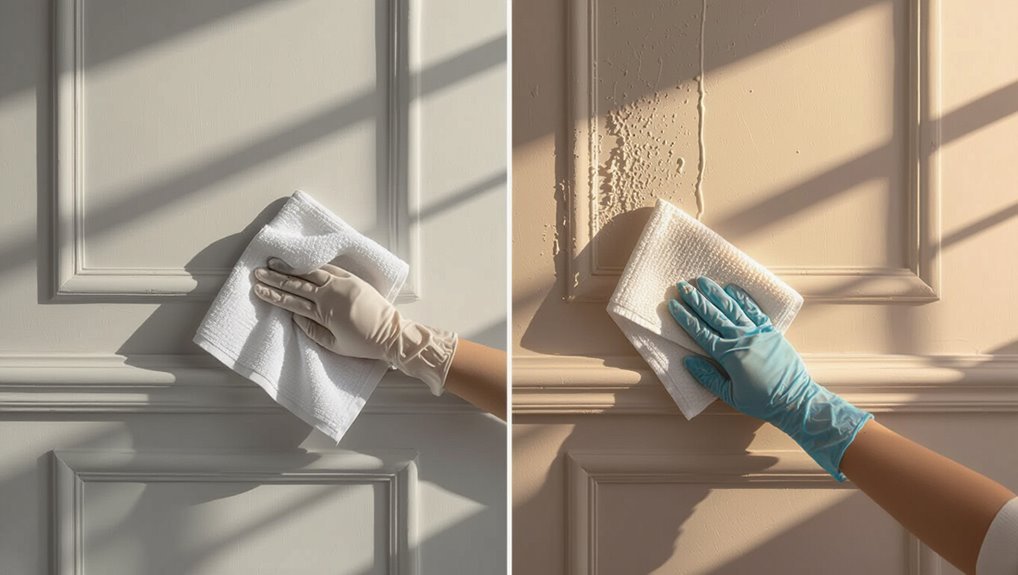
A set of clear before-and-after photos will help you tell when cleaning a matte finish worked and when it caused harm—look for uniform color and intact texture in successful cleanings, and for sheen changes, streaks, or micro-scratches in damaged examples.
Include close-ups of problem areas, wide shots for context, and labeled notes on method used so you can correlate technique with result.
Quick one-page checklist for cleaning matte paint
How should you clean matte paint quickly and safely? Use this one-page checklist to protect finish and remove marks without sanding or sheen loss.
- Test hidden spot with mild soap and water first.
- Use a soft microfiber, gentle circular motion, low pressure.
- For stubborn marks, try diluted baking soda paste, rinse promptly.
- Avoid abrasive pads, strong solvents, and excessive scrubbing.
