
How Do You Clean Latex Paint From Brushes Properly?
You can clean latex paint from brushes quickly by wiping off excess, rinsing under warm running water, and massaging the bristles with mild soap until the water runs clear. Use a brush comb or old fork to work out trapped paint, reshape the tip, and let the brush dry flat or hanging to keep its profile. For tacky or dried paint, soak in warm soapy water or use an appropriate solvent, and follow up with combing and reshaping if you want more tips.
Quick Answer : Clean Latex Paint From Brushes Fast
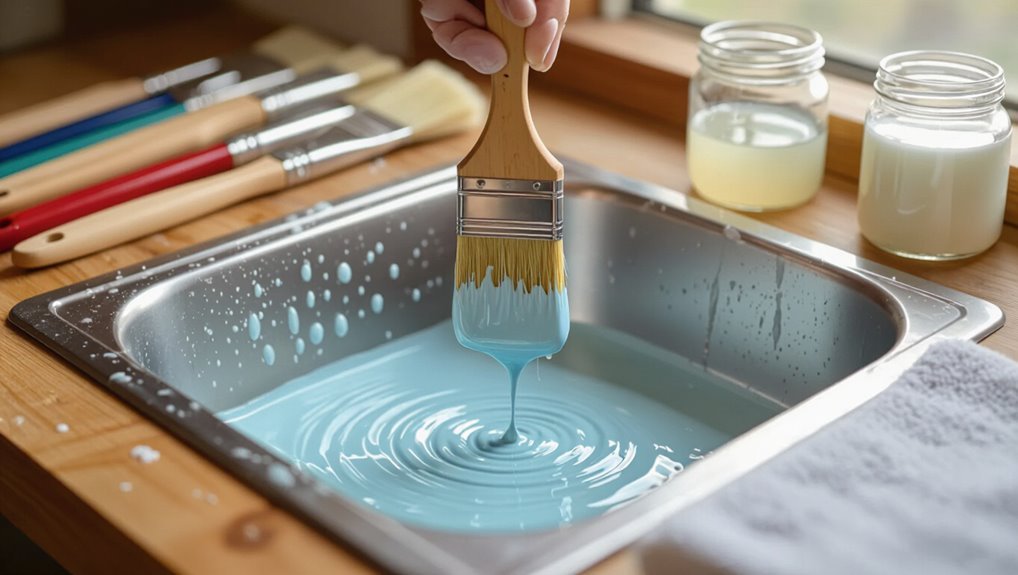
Start by wiping off as much wet paint as you can with a rag or paper towel.
Then rinse the brush under warm running water while massaging the bristles to loosen remaining latex.
Work quickly: use gentle soap and comb bristles, remove trapped paint, and reshape the tip.
Proper brush maintenance prevents hardening.
If paint’s thick, consider slight paint thinning before cleaning to speed removal.
When to Clean: Timing That Saves Bristles and Work
Clean your brush as soon as you pause for more than a few minutes or when switching colors, because letting latex dry even slightly makes bristles stiff and harder to restore.
For effective brush maintenance, rinse and agitate immediately, especially between color changes.
Use timing strategies like short frequent cleans during breaks and a thorough wash after finishing to preserve shape and performance.
Gather Tools and Supplies for Latex Paint Cleanup
Before you start rinsing, gather the right cleaning supplies like mild soap, brush comb, disposable gloves, and plenty of clean water.
Pick sturdy containers — a wide-mouthed bucket for initial rinses and a smaller jar for final soaks or for solvent if needed.
Having these on hand will keep cleanup quick and protect your work area.
Gather Cleaning Supplies
Because the right tools make cleanup faster and protect your brushes, gather everything you need before you begin: a sink or large bucket, warm water, mild dish soap, a brush comb or old toothbrush, rags or paper towels, disposable gloves, and a container for soaking stubborn paint.
You’ll follow basic brush maintenance, rinse thoroughly after use, and establish a cleaning frequency to prevent hardened bristles.
Choose Appropriate Containers
When you’re prepping to clean latex paint from brushes, pick containers that’re sturdy, the right size, and easy to empty—use a deep sink or a rigid bucket for initial rinsing, a smaller lidded jar for soaking stiff bristles, and a shallow tray for soapy work so brushes rest without bending.
Choose container types that suit volume, label them, and plan storage solutions for wet and dry brushes.
Rinse Fresh Latex Paint From Brushes: Step-by-Step
Start by flushing out as much excess paint as you can into the can or a disposable container.
Hold the brush under lukewarm running water and work the bristles with your fingers to loosen remaining paint.
Finish by combing through the bristles with a brush comb or old fork to remove trapped paint and reshape the tip.
Flush Out Excess
Push the brush against the side of a clean sink or bucket and work fresh latex paint out of the bristles with a steady back-and-forth motion.
Flush until runoff runs clearer, spreading bristles to release trapped pigment. You’ll improve brush maintenance and guarantee paint longevity by removing excess early.
Shake gently, blot on a clean rag, and inspect for remaining clumps before further cleaning.
Use Lukewarm Water
Run lukewarm water over the bristles, keeping the flow gentle so you don’t drive paint deeper into the ferrule; aim for a temperature that feels comfortably warm to your wrist, not hot.
Swirl the brush under the stream to loosen paint, checking often.
Regular cleaning frequency preserves bristle shape and lifespan—consistent rinsing supports brush preservation and makes deeper cleaning easier later.
Comb Bristles Clean
After rinsing, combing the bristles will remove trapped paint that water alone can’t reach. You’ll use a brush comb or old fork, working from ferrule to tip, then repeat under running water. These comb techniques speed drying and extend life — essential brush maintenance.
| Tool | Action |
|---|---|
| Fork | Separate bristles |
| Comb | Pull residual paint |
| Fingers | Final shape-up |
Remove Dried or Tacky Latex Paint From Brushes
If your brush has dried or tacky latex paint, don’t panic — you can often restore the bristles without replacing the tool.
Start by soaking tips briefly in warm water to loosen tacky spots, then gently work paint removal with a soft brush or your fingers.
Rinse thoroughly, reshape bristles, and dry flat.
Regular brush maintenance prevents future buildup and preserves performance.
Deep Cleaning: Soap, Combs, and Solvent Choices
When a brush needs deep cleaning, start with warm soapy water to loosen latex and work the bristles gently with your fingers.
Use a brush comb to remove trapped paint, then pick a solvent—mild brush cleaner or mineral spirits—only if soap won’t do the job.
You’ll save the brush by matching the comb and solvent to bristle type and paint condition.
Soap And Water Technique
Start by rinsing the brush under warm running water to loosen paint. Then work a mild dish soap into the bristles with your fingers or a brush comb to break up remaining latex—use short, vigorous strokes at the ferrule where paint hides.
Rinse until water runs clear, reshape the bristles, squeeze out excess, and let the brush dry flat or hanging to preserve brush care and extend its life.
Comb And Solvent Selection
After you’ve loosened and rinsed most of the paint with soap and water, use a comb and the right solvent to get the bristles truly clean.
Choose a metal brush comb for comb effectiveness, running it from ferrule to tip.
Match solvent types to residual paint: warm soapy water first, then rubbing alcohol or mineral spirits for stubborn latex.
Rinse and reshape bristles.
Care Differences: Natural Vs. Synthetic Brushes
Because natural and synthetic brushes are made from different fibers, you’ll need to care for them slightly differently to keep them performing well:
Natural and synthetic brushes require different care—tailor cleaning methods to preserve fibers and maintain performance.
For natural care, rinse with warm water, use gentle soap, and avoid excessive scrubbing that damages hairs.
For synthetic maintenance, you can be more vigorous, use stronger detergent, and make certain bristles are free of clumped latex.
Inspect ferrules regularly for trapped paint.
Reshape, Dry, and Store Latex Paint Brushes Properly
Once the bristles are clean, reshape them while they’re still wet so they dry in the proper profile and don’t splay.
Gently reform the tip with your fingers, remove excess water with a lint-free cloth, and hang or lay flat to dry away from heat.
For long-term brush maintenance, store in a protective cover or wrap, following storage tips to keep shape and dust-free.
Troubleshooting: Stiff Bristles, Buildup, and Odor
If your brush feels stiff, has visible paint buildup, or smells musty, don’t panic—you can usually revive it with targeted cleaning and care.
Soak bristles in warm, soapy water, work out paint buildup with a brush comb, rinse thoroughly, and air-dry.
For odor removal, use vinegar or baking soda rinses.
Regular maintenance prevents stiff bristles and supports long-term brush rejuvenation.
Eco-Friendly Disposal and Reuse of Paint and Wash Water
When you’re finished cleaning, don’t pour paint or wash water down the drain; instead, separate usable leftover latex for future touch-ups and let dirty rinse water settle so solids can be removed and disposed of properly.
Strain and dry sludge for hazardous-waste pickup, use eco-friendly solvents sparingly to revive brushes, and take excess and containers to paint recycling or community hazardous-waste events.
Frequently Asked Questions
Can I Wash Latex-Painted Clothes in the Same Sink as Brushes?
No, you shouldn’t — you’ll contaminate clothes and sinks. For paint care, rinse brushes in a utility sink or bucket, keep laundry tips separate, pre-treat any accidental spots, and launder clothes separately afterward.
Are Disposable Brush Covers Worth Using for Short Projects?
Yes — you’ll find disposable brush covers deliver disposable brush benefits: they speed cleanup, protect bristles between coats, and boost project efficiency, so you’ll work faster and toss covers afterward without worrying about extended soaking or tedious cleaning.
Can I Use a Dishwasher to Clean Paintbrushes?
No — you shouldn’t: using a dishwasher won’t reliably clean brushes and can damage bristles and your machine. Think of it like dunking a paintbrush in a storm; use paint removal techniques and follow brush care tips instead.
How Long Can Wet Brushes Sit in Water Before Bristles Deform?
You shouldn’t let wet brushes sit in water more than a few hours; you’ll risk bristle splaying and handle swelling. For proper brush care and paint maintenance, rinse promptly, reshape bristles, and store upright.
Do Pet-Safe Cleaners Affect Paint Removal or Brush Longevity?
Generally, gentle, green solutions won’t worsen removal; they’ll mildly reduce paint removal efficiency but preserve bristles. You’ll use paint removal techniques alongside brush maintenance tips, rinsing promptly, avoiding harsh solvents, and drying thoroughly.
Conclusion
Clean your brushes promptly—about 80% of paint-related brush damage happens when people let latex dry on bristles—so rinsing within minutes preserves shape and performance. Use warm water, mild soap, and a brush comb to remove fresh paint; soak stubborn buildup in a vinegar solution or commercial cleaner. Reshape, hang to dry, and store flat or upright. Proper cleanup extends brush life, saves money, and keeps future paint jobs smoother and faster.
