
How to Make Bubble Paint for Fun Diy Art Projects
You can make vibrant, kid-safe bubble paint with tempera or poster paint, gentle dish soap, water, and a bit of glycerin or corn syrup for stronger bubbles. Mix about 1 part paint, 3 parts water, and 1 part surfactant, whisk gently to avoid collapsing foam, then blow bubbles with straws or wands and press paper on top for prints. Use washable, non-toxic supplies, protect surfaces, and store mixtures airtight; keep exploring for tips on wands, preservation, and classroom setups.
How This Guide Helps You Make Bubble Paint
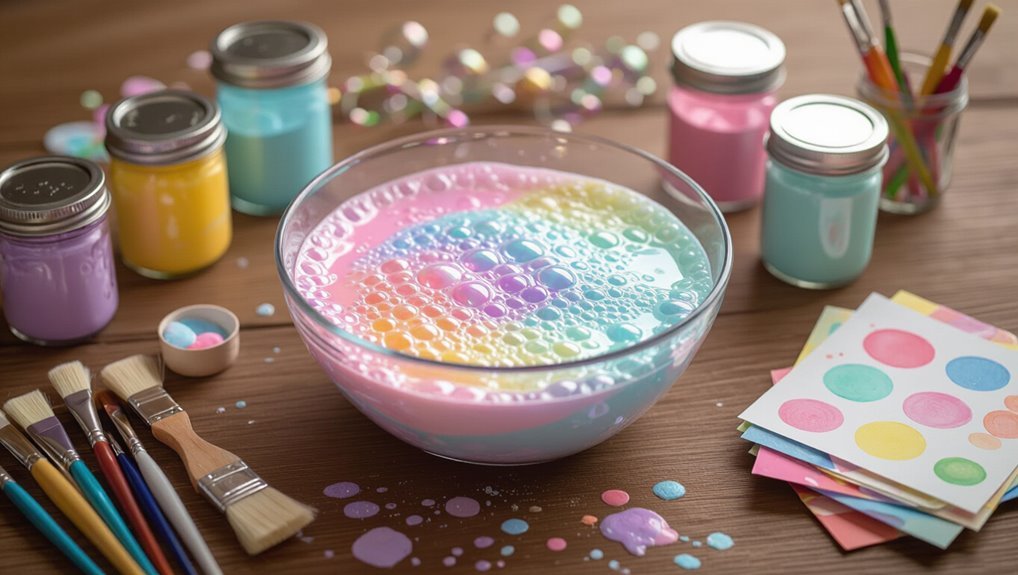
This guide shows you step-by-step how to make vibrant, safe bubble paint with common household materials, so you can jump straight into the fun without guessing proportions or techniques.
You’ll get clear recipes, safety tips, and troubleshooting so you can enjoy bubble paint benefits while supervising kids.
Follow simple steps that encourage creative exploration, save time, and minimize mess for focused, playful outcomes.
What Bubble Paint Is: And Why Kids Love It
When you blow colored bubbles onto paper, you get bubble paint — a playful mix of soap, water, and pigment that leaves ephemeral, ringed patterns and surprising textures kids love to explore.
Bubble paint—blown soap, water, and pigment—creates fleeting ringed patterns and delightful, tactile surprises kids love to explore.
You’ll see why children prefer it for creative exploration: it’s sensory, unpredictable, and visual.
- Hands-on mixing
- Color blending
- Pattern discovery
- Immediate results
Safety First: Non-Toxic Supplies and Age Limits
As kids mix, blow, and chase colorful bubbles, you’ll want to make sure every ingredient and tool is safe for little hands and mouths.
Choose non toxic materials—child-safe paint, gentle dish soap, and washable pigments. Supervise closely, avoid small parts, and keep wipes handy.
Follow age considerations on product labels: typically best for preschoolers and up, with adult supervision required.
Gather Essential Materials You Likely Already Have
You probably already have most of what you need for bubble paint: washable tempera or poster paint, gentle dish soap, a little water, washable food coloring or powdered pigment, and some small containers or cups for mixing.
For bubble paint basics, gather these essential tools and start experimenting.
- Paints
- Soap
- Mixing cups
- Straws
Best Household Soaps and Detergents for Bubble Paint
Soap choice matters: pick something gentle and sudsy so your bubbles hold color and kids’ hands stay soft.
You’ll want a mild dish soap or a clear, dye-free liquid detergent to avoid staining and odor. Measure sparingly—too much reduces bubble quality.
For sensitive skin, choose hypoallergenic formulas. Test a small batch first to confirm foam stability and color transfer before full projects.
Choosing Paints: Tempera, Acrylic, or Watercolor?
You’ll want to compare tempera, acrylic, and watercolor for how they mix with bubbles, dry, and hold color.
Consider which surfaces you’ll paint on—paper, cardstock, or canvas—to pick the best match.
I’ll point out pros and cons of each so you can choose quickly and confidently.
Paint Type Comparison
When deciding between tempera, acrylic, and watercolor for bubble painting, consider how each handles dilution, color intensity, and cleanup so you can pick the best fit for your project.
- Tempera: forgiving, creamy paint texture, easy cleanup, good for kids.
- Acrylic: vibrant, less dilution, strong color mixing potential.
- Watercolor: translucent, needs more control, subtle results.
- Experiment to learn which suits your technique.
Best Surface Matches
Surface choice matters because tempera, acrylic, and watercolor all behave differently on paper, canvas, or fabric, so pick the support that matches the paint’s dilution, opacity, and planned finish. You’ll consider surface textures and paint absorption: absorbent paper suits watercolor, primed canvas fits acrylic, and sturdy fabric or heavyweight paper handles tempera.
| Surface | Best Paint |
|---|---|
| Watercolor paper | Watercolor |
| Mixed media paper | Tempera |
| Primed canvas | Acrylic |
| Cotton fabric | Tempera |
| Poster board | Acrylic |
Quick Bubble-Paint Recipe and One-Step Print
You’ll love how easy the bubble-paint formula is: mix tempera or acrylic with a bit of dish soap and water until it foams.
Blow bubbles with a straw or bubble wand and press paper gently on top for a single-step bubble print.
This quick method gives vibrant, textured prints with minimal prep.
Simple Bubble-Paint Formula
Try this ultra-simple bubble-paint formula that mixes just three pantry ingredients into a vibrant, foamy ink you can blow and print in one step.
- Combine dish soap, tempera paint, and water.
- Stir gently to avoid popping bubbles.
- Blow or use a straw to create colorful bubbles.
- Press paper onto bubbles to capture prints.
This bubble paint invites playful art exploration.
Single-Step Bubble Print
If you liked the simple three-ingredient mix, here’s an even quicker option: make a single-step bubble paint that’s ready to print as soon as you blow.
Mix washable paint with a bit of mild dish soap and water until bubbly.
Dip paper, blow through a straw, and press gently to capture prints.
This quick art techniques tweak saves time and looks playful.
Simple Bubble-Paint Recipe for Beginners (Step-by-Step)
Start with just a few common ingredients—dish soap, tempera or acrylic paint, water, and a set of drinking straws—and you’ll be ready to make vibrant bubble paint in minutes.
- Mix paint, water, and a splash of soap.
- Blow bubbles with a straw onto paper.
- Let prints dry flat.
- Experiment: bubble paint history inspires creative variations for color and layering.
Thicker Bubble-Paint Recipe for Bolder Prints
When you want bolder, more textured bubble prints, thickening the mix gives you better bubble walls and richer color transfer; add a binder like liquid starch, cornstarch paste, or a bit of clear glue to your paint-soap-water base to achieve a heavier consistency that still traps air.
You’ll mix thicker mixtures for bold prints, enhancing bubble texture and vibrant colors while blowing or dipping carefully for clear impressions.
Transparent Bubble-Paint Mix for Layered Art
Because transparent bubble paint lets you build visible layers without muddying colors, you can stack prints to create depth and subtle overlays.
You’ll favor delicate layering techniques and mindful color blending to maintain clarity.
Try these approaches:
- Apply faint base bubbles.
- Let each layer dry fully.
- Use complementary hues sparingly.
- Overprint translucent tones for soft depth.
Mix Ratios and Measuring Tips for Consistent Bubbles
If you want consistent, printable bubbles every time, precise mix ratios and simple measuring tricks are your best tools; small deviations in water, paint, or surfactant dramatically change bubble size and opacity.
You’ll use reliable measuring tools—syringes, spoons, or small cups—to repeat ratios. Aim for steady mix consistency: start with 1 part paint, 3 parts water, 1 part surfactant and tweak slightly.
Tools and Techniques to Create Big Bubbles
Now that you’ve got consistent mixes, you’ll want to look at bubble solution ingredients, wand and frame design, and blowing techniques to get huge, durable bubbles.
Choose ingredients that boost film strength, build or buy wide, sturdy wands or looped frames, and practice steady, controlled blows and gentle wrist movements.
I’ll walk you through simple recipes, DIY wand plans, and the exact breathing tips that work best.
Bubble Solution Ingredients
When you want big, long-lasting bubbles, the right solution ingredients matter more than fancy wands; glycerin or corn syrup plus a gentle detergent and water form the core, while a small amount of baking powder or salt can boost stability.
You’ll adjust bubble solution ratios for best bubble longevity. Try these mixes:
- Dish soap + water
- Glycerin added
- Corn syrup alternative
- Pinch of salt
Wand And Frame Design
A simple wand or a large looped frame makes all the difference in crafting giant bubbles, so pick tools that balance size, weight, and flexibility for the conditions you’ll use them in.
Choose lightweight materials like PVC or bamboo, add soft cloth for rims, and secure frame embellishment for durability.
For aesthetics and grip, apply wand decoration like tape, ribbon, or foam.
Blowing Techniques And Tips
Getting big bubbles takes more than a good wand—you’ve got to master how you move and where you aim the film.
You’ll use steady breath and gentle motion; practice blowing techniques to pop fewer bubbles and improve bubble control.
Try these steps:
- Slow, even exhale.
- Smooth arm sweep.
- Aim with frame tilt.
- Shelter from wind.
How to Blow Bubbles Safely With Straws and Pumps
Although it seems simple, blowing bubbles with straws or pumps takes a bit of technique to keep kids safe and your paint mixture intact. You’ll check straw types, use gentle breath, avoid mouth contact with shared straws, and supervise. Use pumps for younger kids and low-pressure blows to prevent splashes and spills.
| Tool | Tip | Risk |
|---|---|---|
| Plastic straw | Short bursts | Ingestion |
| Paper straw | Gentle blows | Softening |
| Pump | Hands-free | Overpressure |
| Funnel | Controlled flow | Clogging |
Step-by-Step: Capture Bubble Prints on Paper
First, mix your bubble paint to the right consistency so it holds color without popping too fast.
Then blow or pump bubbles onto the surface and carefully press a sheet of paper over the bubbles to transfer the prints.
Peel the paper away to reveal the pattern and let it dry.
Prepare Bubble Paint Mix
Mix the paint and bubble solution so the colors stay bright and the bubbles form easily.
Use simple mixing techniques to avoid foam collapse and keep pigment vivid. Prepare small batches and test consistency.
- Measure paint to soap ratio.
- Stir gently, not vigorously.
- Thin with water incrementally.
- Test bubble strength before printing.
Press And Transfer
Now that your bubble paint has the right consistency and you’ve confirmed strong bubbles, you’re ready to press and transfer those impressions onto paper.
Gently lay cardstock over bubbling cups, press evenly to capture bubble texture, then lift straight up.
For layered effects, repeat with different colors after drying.
Use light print pressing to avoid smudges and preserve crisp, delicate patterns.
Best Papers and Surfaces for Bubble Painting
Choose the right surface and your bubble prints will look sharper, last longer, and resist smudging.
You’ll pick bubble paint surfaces suited to your bubble art techniques and color mixing goals. Consider paper types and texture variations; try outdoor painting on sturdier materials.
- Watercolor paper (heavy)
- Mixed-media board
- Cardstock (smooth)
- Canvas panel (sealed)
How to Preserve Bubble Texture After Printing
After your prints dry, you’ll want to seal the bubble texture with a clear medium to lock in the raised patterns and protect the colors.
Use a spray varnish or brush-on acrylic and apply thin, even coats so the bubbles stay defined.
Handle the prints by the edges and store them flat to avoid smudges or crushed textures.
Seal With Clear Medium
Because the bubbly surface is fragile once it dries, you’ll want to seal it quickly with a clear medium to lock in the texture and color.
Use a gentle, even coat to avoid disturbing bubbles.
Try these bubble durability techniques for preserving art:
- Spray varnish, light mist
- Clear acrylic sealer, brush-on
- Matte or gloss, test first
- Thin layers, dry between coats
Handle Prints Carefully
When you lift a bubble print, hold it by the edges and support the paper from underneath so the textured surface doesn’t flex or smear; even slight bending can crush delicate bubble peaks.
Let prints dry flat, avoid stacking, and move them on a rigid board.
For print preservation, apply a light clear fixative spray from 12 inches away, using even passes to protect bubble texture.
Layer Bubble Prints for Depth and Color
If you want richer, more dynamic bubble art, build your design by layering prints of different colors and bubble sizes.
You’ll use bubble layering techniques to create depth and vibrant color blends that sing. Press lighter, then darker layers; vary bubble size; let each layer dry slightly before adding the next; rotate hues for contrast.
Layer colors and sizes—start light, deepen with darker layers, let each dry slightly, and rotate hues for lively depth.
- Light base
- Mid tones
- Dark accents
- Highlights
Use Stencils and Masks With Bubble Paint
Stencils and masks let you control where bubbles land, so you can create crisp shapes, negative space, and layered patterns with bubble paint. You’ll try stencil techniques to get sharp edges and experiment with mask designs for selective texture. Align masks, blow bubbles, lift gently, and layer colors. Practice on scrap paper to refine placement and pressure.
| Tool | Purpose |
|---|---|
| Paper mask | Define negative space |
| Plastic stencil | Repeat patterns |
Combine Bubble Paint With Stamps and Collage
While you’re exploring bubble paint, try combining it with stamps and collage to add structure and contrast to the organic bubble textures.
You’ll layer torn paper, found ephemera, and stamped motifs, then blow or press bubble art overlays for depth.
Try these approaches:
- Press bubble paint over collage
- Stamp techniques before sealing
- Collage frames around bubbles
- Mix transparent papers for dimension
Bubble-Paint Projects for Preschoolers
You can easily adapt the collage-and-stamp ideas to preschool-friendly bubble-paint activities that focus on sensory play and big, bold marks.
Set up washable paints mixed into bubble solution, provide sturdy paper, and let kids blow or press bubbles to transfer patterns.
Guide color mixing, encourage exploration, and display finished bubble art to celebrate creativity while keeping cleanup simple and safe.
Bubble-Paint Crafts Tweens and Teens Will Love
You can experiment with bold color-blowing techniques and layer hues for striking bubble patterns.
Try using upcycled materials like old t-shirts, cardboard, or glass jars to turn your bubble art into unique projects.
When you’re done, think about framing pieces, making zines, or gifting custom-wrapped prints to show off your work.
Colorful Bubble Techniques
Colorful bubble techniques turn simple soap-and-paint mixtures into striking, textured art that tweens and teens will want to show off.
You’ll enjoy bubble exploration and paint experimentation while layering hues, popping bubbles, and creating patterns.
Try these quick approaches:
- Thin color blends for marbled swirls
- Thick bubbly stamps for texture
- Layered bursts for depth
- Metallic highlights over popped bubbles
Upcycled Material Ideas
After experimenting with layered bursts and metallic highlights, try bringing bubble paint to life with recycled supplies that cut waste and boost creativity.
Use upcycled bottles for squirt tools, cardboard palettes and egg carton trays for mixing, and glass jars or tin canisters for storage.
Stamp with plastic lids, texture with old toothbrushes, and collage with newspaper collages, scrap paper and fabric scraps for mixed-media fun.
Display And Gift Options
Presentation matters—whether you’re showcasing a gallery wall in your room or wrapping a handmade gift, bubble-painted pieces make memorable keepsakes and stylish decor.
You’ll explore display options and easy gift ideas that highlight texture and color.
- Frame small prints for a rotating gallery
- Mount canvases on clipboard rails
- Make greeting cards from scraps
- Wrap art around mason jars for candles
Bubble-Paint Abstract Wall Art (Adult Projects)
When you swap kid-style templates for bold scales, bubble-painting turns into a striking way to create abstract wall art that feels modern and tactile.
You’ll explore layered bubble shapes and deliberate color mixing to build depth. Work on stretched canvases, vary bubble size and opacity, and let edges overlap.
Frame raw pieces or varnish them for a polished, gallery-ready finish.
Seasonal and Holiday Bubble-Paint Ideas
If you want to tailor bubble-paint projects to the seasons, think beyond literal motifs and use color, scale, and finish to evoke holidays and weather—warm metallics and deep berries for autumn, frosty blues and pearlescent white for winter, bright pastels for spring, and saturated tropical hues for summer.
- Use seasonal colors to set mood.
- Mix textures for holiday themes.
- Vary bubble size for impact.
- Add metallic or matte finishes for contrast.
How to Photograph and Digitize Bubble Art
Because bubble paintings rely on texture, light, and subtle color shifts, you’ll want to capture them with care to preserve their depth and translucence for printing or digital sharing. Use soft side lighting, tripod, macro mode, and neutral background. Apply photographing techniques then subtle digital editing for color balance and detail.
| Lighting | Camera | Editing |
|---|---|---|
| Soft side | Tripod | Color balance |
| Natural | Macro | Sharpening |
| Diffuser | Manual | Crop |
Troubleshooting: Weak Bubbles or Popping Too Fast
If your bubbles are weak or bursting too fast, check the soap-to-water ratio and try increasing the soap slightly for better film strength.
You can also add a few drops of glycerin or a tablespoon of corn syrup to improve the solution’s durability.
Test small adjustments until the bubbles hold long enough to make clear paint patterns.
Adjust Soap And Water Ratios
When your bubbles are weak or pop too quickly, tweak the soap-to-water ratio to find more stability and longevity.
- Start with 1 part soap to 4 parts water and test for bubble stability.
- If bubbles pop, add more soap in small increments for improved bubble longevity.
- If solution feels slimy, dilute slightly.
- Record ratios and conditions so you can replicate successful mixes.
Improve Bubble Solution Strength
Although you’ve already tweaked soap and water, strengthening your bubble solution often requires targeted fixes—add glycerin or corn syrup to slow evaporation, use a gentler dish soap, and let the mix rest before testing so surfactants fully hydrate.
To boost bubble strength, experiment with small solution additives amounts, stir gently, avoid foaming, and test outdoors or over smooth surfaces to prevent premature popping.
Troubleshooting: Paint Separates or Clumps – Fixes
Clumps or separation happen when the bubble mixture’s ratios, mixing method, or resting time are off, but you can usually fix it quickly.
You’ll want to restore paint consistency and bubble stability so bubbles form evenly.
- Gently whisk to recombine separated layers.
- Add a teaspoon water or glue to thin clumps.
- Strain through a fine sieve.
- Remix and test small batches before use.
How Humidity and Temperature Affect Bubble Paint
Fixing separation and clumps gets your mixture back to working order, but the air around you’ll still affect how those bubbles form and behave.
Higher humidity slows evaporation, boosting bubble longevity and often producing larger bubble size.
Hot, dry conditions speed drying, shrinking bubbles and causing quick pops.
Work in moderate temperature and humidity for consistent results, and adjust water or soap slightly as needed.
Make Scented or Glitter Bubble Paint Safely
If you want scented bubble paint, pick mild, food-safe extracts or essential oils that are safe for skin and use them sparingly.
For sparkle, skip loose glitter and choose biodegradable glitter or mica powders to avoid inhalation and environmental harm.
Always test a small batch on skin and label mixes so everyone knows what’s inside.
Safe Scent Choices
When adding scent to your bubble paint, choose mild, natural fragrances and use them sparingly to avoid irritation. Essential oils can be potent, so dilute them well or opt for food-grade extracts like vanilla or citrus.
Consider these scent options and follow fragrance safety tips:
- Start with a small test batch.
- Use food-grade extracts.
- Dilute essential oils heavily.
- Note allergies and label jars.
Glitter Alternatives
Scented bubble paint can be lovely, but you might want to skip loose glitter for safety and cleanup reasons; fortunately, there are safer sparkle options you can add instead.
Try mica powder, biodegradable glitter, or pearl pigments as glitter alternatives that won’t scratch skin or clog drains.
For eco friendly options, use plant-based glitters or finely ground shells; mix sparingly for subtle shine.
Eco-Friendly and Biodegradable Bubble-Paint Options
Because you can make bubble paint that’s gentle on the planet, choosing biodegradable and non-toxic ingredients keeps craft time safe for kids and the environment.
Choosing biodegradable, non-toxic bubble paint ingredients keeps craft time colorful, kid-safe, and gentle on the planet.
Use eco friendly materials and biodegradable options like these:
- Plant-based dish soap and water.
- Cornstarch-thickened paint.
- Natural food coloring.
- Recycled paper stencils.
You’ll craft vibrant, low-waste bubble art responsibly.
Set Up a Kid-Friendly Bubble-Paint Station
Start by clearing a flat, well-lit workspace and laying down a washable drop cloth or newspaper to protect surfaces and make cleanup simple. Arrange paints, bowls, brushes; keep wet wipes and aprons handy for bubble paint safety and quick creative cleanup. Supervise closely and label supplies.
| Item | Purpose | Tip |
|---|---|---|
| Aprons | Protect clothes | Tie snugly |
| Wipes | Remove smudges | Keep accessible |
| Bowls | Mix paints | Stable base |
Run a Classroom Session: Lesson Plan and Tips
Now that your station’s ready, plan a simple lesson that guides kids through safety, mixing ratios, and creative techniques for bubble painting.
You’ll focus on classroom engagement and art integration, set time limits, and model techniques. Use clear steps so students experiment safely and expressively.
- Safety briefing
- Demonstration
- Guided practice
- Share and reflect
Storage Tips for Leftover Bubble-Paint Mixtures
When you have leftover bubble-paint mixture, store it properly so it stays safe and usable for your next session.
Seal it in an airtight container, label with date and color, and refrigerate for up to a few days.
For best mixture preservation, avoid contamination—use clean tools and don’t mix fresh paint into old.
Discard if texture or smell changes.
Cost Breakdown and Next Steps for Mixed-Media Play
1 simple way to keep your bubble-paint sessions budget-friendly is to break costs into ingredients, tools, and replacement parts so you can see where to cut or splurge.
Do a cost comparison, use creative budgeting, then plan mixed-media steps.
- Buy basics in bulk
- Reuse tools
- Swap materials for texture
- Budget for adhesives and sealants
Frequently Asked Questions
Can Bubble Paint Be Used on Fabric That Will Be Washed Regularly?
Yes, you can, but bubble paint durability varies; you’ll need fabric preparation techniques like prewashing, heat-setting, and using fabric medium or fixative so the prints hold up when you wash them regularly.
Can You Make Bubble Paint Glow Under Blacklight?
Yes — you can make bubble paint glow under blacklight by mixing glow pigments into your bubble solution; you’ll get striking blacklight effects, but test ratios for visibility and washability before applying to finished fabrics or projects.
How Long Do Bubble-Print Pigments Remain Lightfast Outdoors?
Like a fading sunset, you’ll see lightfast duration vary: typical bubble-print pigments last months to a few years under outdoor exposure, and you’ll need UV-stable binders, coatings, or shade to extend their lifespan.
Can Bubble Paint Be Safely Used on Food-Related Items or Surfaces?
No, you shouldn’t use bubble paint on food-related items or surfaces; it’s not food safety rated and may contain nonfood-safe paint ingredients. Use food-safe dyes or sealants made and labeled for contact with food instead.
Are There Compatibility Issues Using Bubble Paint With Resin or Varnish?
Yes — you might see compatibility issues with resin or varnish; you should run compatibility tests first. Bubble paint additives can cause resin reactions like bubbling, poor adhesion, or clouding, so test small samples before sealing larger pieces.
Conclusion
Now that you’ve seen how simple ingredients turn into bubbly color, you’re ready to plunge in and make magic with bubble paint. You’ll delight kids (and maybe yourself) as prints bloom with each pop and splatter. Keep safety and cleanup in mind, try different soaps and colors, and save extras for another day. So grab a tray, stir up a batch, and let playful experiments lead your next masterpiece.
