
How to Paint Over a Pink Wall Without Bleed
You can reliably cover a pink wall by prepping, sealing, and priming first: clean and sand the surface, patch holes, then apply a stain-blocking primer (shellac or high-hide acrylic), tinting it slightly toward your final color. Work in thin, even coats and let each dry fully before recoating, then finish with two topcoats in your chosen sheen. Test a small area in different light. Keep going and you’ll find tips on tools, techniques, and troubleshooting to guarantee no pink returns.
Quick How-To: Cover a Pink Wall Without Bleed
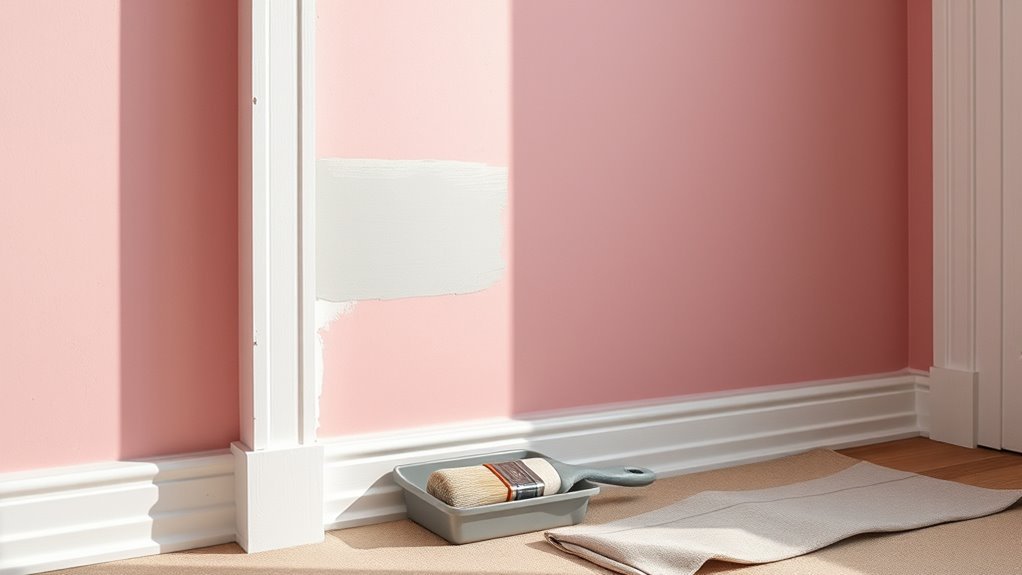
If you’ve got a pink wall to repaint, start by cleaning the surface and repairing any holes or peeling paint so the new coat sticks evenly.
Next, sand glossy spots lightly and wipe dust away.
Test a small swatch using a high-hide primer or a stain-blocking base; let it cure before topcoating.
Choose topcoat color mindful of color psychology—warm neutrals temper pink undertones, while cool tones can clash.
Do a paint brand comparison on coverage and tint strength, picking one with proven stain-blocking power.
Apply two thin, even coats, allowing full drying between layers for best results.
Fast Fix: Primer-First Method in 5 Steps
Start by prepping the surface so it’s clean, dry, and any peeling paint is sanded smooth.
Apply a stain-blocking primer to stop the pink from bleeding through and let it fully flash before the next coat.
Finish with a smooth topcoat, using even strokes and light sanding between coats for a flawless result.
Surface Prep Essentials
Because a stubborn pink undertone can show through even high-quality paint, you’ll want to tackle surface prep with a primer-first approach to save time and get true color the first coat. You’ll clean, sand, repair, and mask carefully so primer bonds and hides tint. Consider color psychology when choosing your final hue and opt for eco friendly paints to reduce fumes. Follow these five quick steps: clean, sand, patch, prime, and paint. Use the checklist below to stay efficient.
| Task | Purpose |
|---|---|
| Clean | Remove grease/dust |
| Sand | Promote adhesion |
| Patch | Smooth imperfections |
Stain-Blocking Primer
When a pink undertone threatens your new color, reach for a high-quality stain-blocking primer to lock in pigment and prevent bleed-through. Apply primer after cleaning and sanding; it creates a barrier so pink decor won’t ghost through lighter or cooler paints.
Choose a solvent- or shellac-based primer for stubborn pigments, or a high-hide acrylic primer for easier cleanup. Roll or brush evenly, follow manufacturer dry times, and spot-check with a small sample of your new color.
Remember color psychology: sealed walls let your chosen hue read true, avoiding unintended warmth or emotional cues from lingering pink.
Smooth Topcoat Application
With the primer sealed and dry, you’re ready to lay down a smooth topcoat using the primer‑first method in five quick steps. You’ll pick an eco friendly paints formula, stir gently, and test a small patch to check sheen and color psychology effects under your room’s light.
Work wet edges and use a high-quality roller for even coverage. Finish with a light cross-roll to remove texture. Allow proper dry time between coats and sand lightly if needed for ultra-smooth results.
- Cut in edges precisely.
- Roll from top to bottom.
- Inspect and touch up.
Why Pinks Show Through New Paint
You’ll notice pinks often peek through because their high color saturation and warm pigments overpower lighter topcoats.
Transparent pigments and finishes let that underlying hue show unless you block it with the right undercoat. That’s why picking an effective primer and proper undercoat is key before you roll on your new color.
Color Saturation Levels
Because pink pigments are often highly saturated, they tend to show through new coats of paint more than muted colors do. You’ll notice pink undertones peeking through when saturation contrast between the old and new colors is high.
To control bleed, you should assess and address saturation before priming.
- Evaluate: hold a sample over the wall to spot saturation contrast.
- Neutralize: apply a tinting primer or a thin grey undercoat to reduce vibrancy.
- Seal: use a high-hide primer, then finish with two topcoats for even coverage.
These steps help you predict and prevent pink showing through.
Pigment Transparency Issues
Why does pink often peek through new paint? You’ll see that many pink pigments are semi-transparent and stain underlying layers. Pigment mixing choices—titanium dioxide vs. organic magenta—drive opacity.
When you apply a lighter or cooler color, those translucent pink molecules transmit through thin coats, altering final hue. Color psychology explains why you notice warm undertones; pink reads emotionally strong, so small bleed affects perceived mood.
To avoid surprises, apply full-coverage formulations and sufficient coats, inspect under different lights, and adjust tint strength before painting. Understanding transparency helps you predict results and choose materials that block unwanted pink.
Undercoat And Primer
Now that you know how pigment transparency lets pink peek through thin coats, focus on what goes under your finish: the undercoat and primer. You’ll stop bleed by choosing blocking primers, then layer with an opaque undercoat that matches final sheen. Consider how Color psychology affects choices—warmer bases neutralize rose undertones.
Remember historical palette pigments often had stronger staining, so prep matters.
- Use a stain-blocking primer rated for tannin and dye coverage.
- Apply an undercoat with high-hide properties, tinted toward the new color.
- Sand lightly between coats and inspect under varied light to confirm coverage.
Surface Prep Checklist Before Priming Pink Drywall
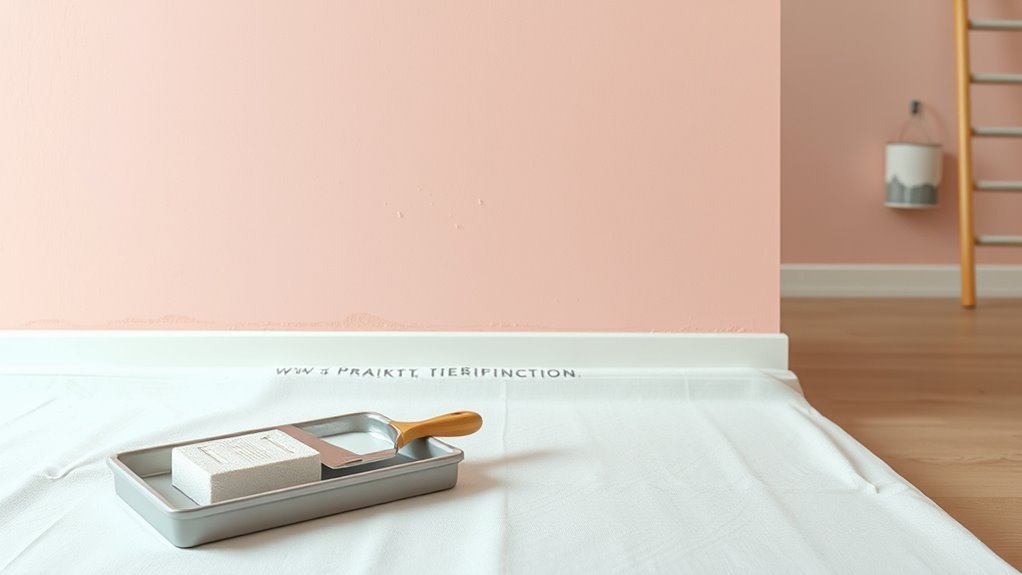
Before you prime pink drywall, run through a focused surface-prep checklist so the new paint covers evenly and won’t bleed through. Inspect for holes, cracks, and loose tape; fill and sand smooth. Remove dust with a dry microfibre cloth, then vacuum edges and corners. Sand glossy patches to promote adhesion. Deglaze if needed, but don’t deep-clean greasy stains here.
Consider how color psychology and historical color trends affect your primer choice—opt for a tint if moving to a cool or neutral scheme. Mask trim, protect floors, and allow drywall to fully dry before applying primer.
How to Clean Greasy or Stained Pink Surfaces
Start by wiping the wall with a degreasing cleaner or a mix of warm water and dish soap to remove surface grease.
If stains persist after rinsing and drying, apply a stain-blocking primer or treat the spots with a targeted cleaner like trisodium phosphate (TSP) following the product instructions.
Once the surface is clean and dry, you’ll be ready to prime and paint without bleed-through.
Remove Surface Grease
If the pink surface shows oily streaks or fingerprints, tackle the grease first so your new paint won’t lift or stain. You need clean, dry walls for good paint adhesion. Work in small sections and test a hidden spot.
- Mix warm water with a few drops of dish soap; wipe with a microfiber cloth to lift surface grease.
- Rinse with plain water, then blot dry to remove residue that can block primer bonding.
- For stubborn but non-staining grime, use a diluted trisodium phosphate substitute, rinse thoroughly, and let fully dry before priming.
Treat Persistent Stains
Once surface grease is removed, you may still see stubborn stains or ghosting that won’t lift with soap and water. Treating these properly will prevent bleed-through when you prime and paint.
Inspect the wall for pink stains, smoke marks, or tannin ghosting. Spot-treat with a trisodium phosphate (TSP) solution or a commercial stain remover, following safety directions and rinsing well.
For deep discoloration, apply a shellac-based primer to seal stains. Then check for color consistency across the surface.
Feather primer edges to avoid lap marks. Allow full cure time before finishing so your new paint lays down clean and even.
Repair Holes So Pink Won’t Peek
Before you paint, fix any holes so the pink can’t show through later. You want a smooth, neutral base because color psychology and interior design rely on consistent undertones. Patch small dents with spackle, press firmly, and wipe away excess.
Before painting, repair holes and spackle small dents for a smooth, neutral base so pink won’t show.
For larger holes, use a backing patch or mesh and apply joint compound in layers.
- Clean hole edges and remove loose paint.
- Apply patch material, compound, and let dry fully.
- Sand lightly and inspect for gaps; reapply if needed.
Prime patched areas before painting so the new topcoat covers evenly and pink won’t peek.
Sanding Tricks for Better Primer Adhesion
Start by sanding with the grain to avoid visible scratches that will show through primer. Use fine-grit sandpaper to scuff the surface just enough for the primer to grip without damaging the wall.
Wipe or vacuum the dust thoroughly so the primer bonds cleanly and you don’t trap particles under paint.
Sanding With The Grain
- Inspect grain and mark trouble spots.
- Sand along grain, feathering edges into surrounding areas.
- Wipe clean, tack cloth, then spot-prime before full priming.
You’ll get a smoother finish and truer color after topcoat.
Use Fine Grits
When you sand with fine grits—think 220 to 320—you’re creating just enough tooth for primer to grab without scuffing the surface or showing scratch marks through the topcoat.
Use light, even passes following the grain or wall texture contours so you don’t flatten patterns or create low spots. Fine sanding helps primer adhere uniformly, which matters when neutralizing pink undertones and applying colors influenced by color psychology.
Don’t overwork corners or edges; they take less abrasion. Swap to a soft sanding block for curved areas, and replace worn paper—consistent grit and pressure give the smooth, receptive surface you need.
Clean Dust Thoroughly
How thoroughly did you remove the sanding dust? You want a pristine surface so primer bonds and paint texture reads true; dust ruins adhesion and alters how color psychology plays in the room.
After sanding, follow these steps:
- Vacuum with a brush attachment, then tack cloth the walls.
- Wipe with a damp microfiber cloth, rinsing frequently to avoid streaks.
- Let walls fully dry, then run your hand to feel for residue before priming.
Be meticulous — trapped dust can cause blotchy coverage and texture inconsistencies. Clean walls ensure primer and topcoat behave predictably, preserving your intended color effect.
Tools to Cover Pink Walls Without Bleed
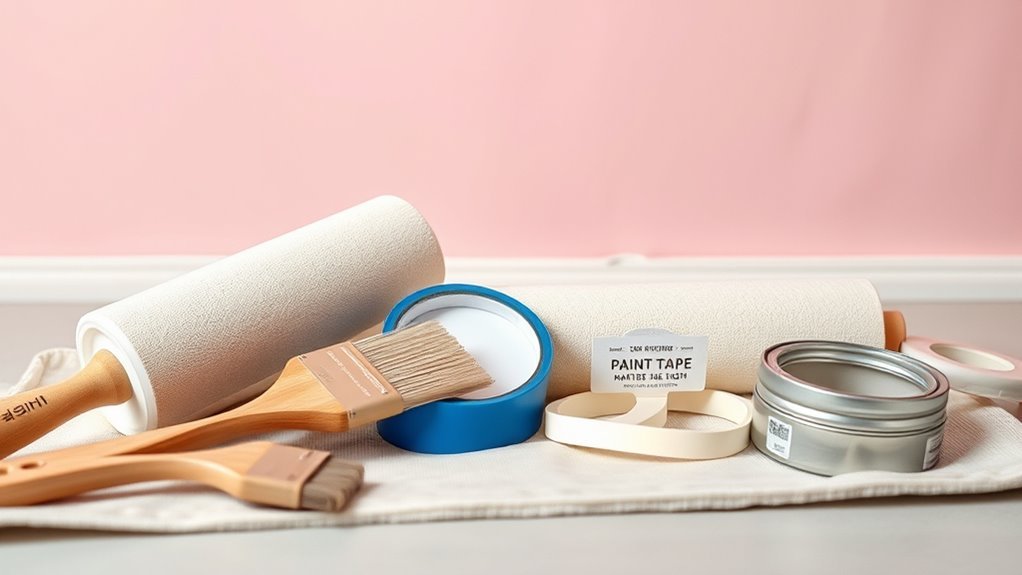
Although a strong primer is your most important tool, you’ll also want the right brushes, rollers, and sanding gear to make sure pink doesn’t bleed through.
Together these tools help you prepare the surface, apply consistent coverage, and smooth out imperfections so the new color lays down evenly.
Choose a nylon or polyester brush for cutting in, a 3/8–1/2″ nap roller for smooth walls, and a sanding block (120–220 grit) to knock down gloss.
Have a sturdy tray, disposable liners, and a pole for reach.
Also pack a mixing stick for color mixing and spare tools for decorative techniques.
Masking and Protecting Trim When Covering Pink
Before you start rolling primer or paint over that pink, protect your trim so stray paint and bleed-through don’t turn into extra sanding and touch-ups. Tape precisely along edges with high-quality painter’s tape, press firmly, and cover floors and hardware with drop cloths. Use low-tack tape near delicate moldings to avoid peel damage.
Consider how color psychology and historical trends affect your trim choice; classic white or bold contrast can change perception.
Follow this simple sequence:
- Clean trim, remove dust.
- Apply tape, run a putty knife along edges.
- Cover and secure drop cloths before painting.
How to Seal Seams and Caulk Gaps to Stop Bleed
Before you paint, inspect seams and joints closely for gaps where the pink could bleed through. If you find openings, run a bead of paintable caulk into the seam and smooth it so it fills evenly.
Let the caulk cure fully before priming and painting to create a reliable barrier.
Inspect Seams Carefully
When you inspect seams and gaps closely, you’ll catch the small openings where old pink paint can seep through and ruin your new coat. You’ll check trim, drywall joints, and corners for uneven seam alignment and signs that joint reinforcement failed. Use your fingertip and a flashlight to feel and see gaps. Note areas needing attention so you don’t skip them later.
- Probe gaps with a putty knife to reveal hidden cracks.
- Mark misaligned seams and loose tape for repair.
- Take photos to track problem spots before you prep and caulk.
Apply Paintable Caulk
Since gaps and seams are the most likely paths for pink to bleed through, seal them with a quality paintable acrylic latex caulk so your new color stays true. You’ll run a bead along baseboards, trim joints, and drywall seams, smoothing with a wet finger or tool for a tight seal.
Let it cure fully before priming. Proper caulking respects color psychology: neat, crisp edges prevent unexpected warm undertones that alter mood.
In period homes, attention to seams preserves historic color significance while updating palettes. Caulk avoids hidden pink migration, making your topcoat’s hue predictable and lasting.
Which Primer Types Block Pink Bleed Best
Curious which primers will stop that stubborn pink from bleeding through? You’ll want a primer that blocks tint and provides consistent paint sheen for topcoat uniformity. Consider these reliable options:
- Shellac-based primer — Excellent stain blocking; dries fast and seals deep pigments.
- Oil-based primer — Strong tint coverage and adhesion on glossy surfaces.
- High-hide acrylic primer — Waterborne, low odor, good for multiple coats and easier cleanup.
Use color psychology to decide whether to tint primer slightly toward your new color for fewer topcoats. Test a small patch before committing to the whole wall to ensure complete coverage.
When to Use Stain-Blocking vs High-Hide Primer
Now that you know which primers block pink bleed, decide whether you need a stain-blocking or a high-hide primer based on how much pigment you’re covering and the wall’s condition.
Use stain-blocking primer when deep pink shows through, stains exist, or tannins seep—it’s formulated to seal and prevent bleed.
When deep pink bleeds through, or stains and tannins appear, use a stain-blocking primer to seal and prevent bleed.
Choose high-hide primer for even coverage over moderately tinted walls and to improve paint texture and topcoat uniformity with fewer coats.
Also consider color psychology: strong undertones may need stain-blocking to guarantee your new hue reads true.
Assess surface porosity, previous finishes, and desired finish before priming.
Oil-Based Primer: Pros and Cons for Pink Walls
If you’re dealing with a stubborn pink that won’t quit, an oil-based primer can be a strong ally because it seals pigment and tannin bleed more reliably than many water-based options. You’ll appreciate coverage on varied wall textures and when pink decor risks showing through light topcoats.
Consider these pros and cons:
- Pros: excellent stain blocking, smooth finish on rough textures, fewer coats needed.
- Cons: strong odor, longer dry and recoat times, requires mineral spirits cleanup.
- Tip: ventilate well, test a small area, and pair with a high-hide topcoat for best results.
Shellac Primer: Fastest Fix for Stubborn Pink
Shellac primer works because it seals stains and prevents pink pigments from bleeding through your new paint.
Apply it with a brush or roller in thin, even coats and wipe up any drips—thin coats dry fastest and stick best.
Expect tack-free dry in about 30 minutes and full recoat within an hour so you can finish the job quickly.
Why Shellac Works
Because it seals and blocks stains at the surface, a shellac-based primer gives you the fastest, most reliable way to stop stubborn pink from bleeding through new paint. You’ll appreciate its quick stain-locking chemistry, especially if the pink came from intense pigment trends like pink psychology or pink fashion choices that saturated the wall.
- Rapid seal: isolates dye molecules immediately.
- Strong bond: creates a stable base for topcoat adhesion.
- Versatile: works on glossy or porous finishes.
Use shellac when you need certainty; it prevents tint migration so your new color stays true.
Application And Drying
When you’re ready to apply the shellac primer, work in small sections so the fast-drying formula doesn’t tack up before you can smooth it out. Use a high-quality brush for trim and a roller with a short nap for walls, keeping a wet edge to avoid lap marks.
You’ll move quickly: apply thin, even coats to control sheen and prevent streaks. Allow recommended flash times—often 30–60 minutes—before recoating or topcoating.
Check for consistent color blending at edges and feather strokes to hide gradations. Match surface porosity for texture matching, sanding lightly between coats if needed for a uniform finish.
Tinted Primer: When Color-Matching Helps
If your new paint has a dramatically different hue than the pink underneath, tinting the primer to a close match will cut the number of finish coats you need and reduce bleed-through. You’ll pick a tint that balances color psychology—cooler tones calm, warmer tones energize—so the undertone won’t fight your chosen paint finish.
Match by holding swatches under natural light and ask the counter for a primer tint.
Steps to follow:
- Test a small primed patch with your finish.
- Let it dry fully and evaluate in different light.
- Adjust tint or proceed to topcoat once satisfied.
Layering Primers: When Extra Coats Are Needed
If the pink shows through or the staining is severe, you’ll want to assess how many extra coats the wall needs before topcoating.
Choose a high-build primer designed for tinting and coverage so each layer adds more opacity.
Let each coat dry fully between applications to lock in color and prevent bleed-through.
Assess Stain Severity
Because coverage depends on the type and intensity of the pink showing through, start by examining the wall in good light and noting any spots where the old color bleeds, stains, or shows patchy saturation. You’ll assess severity to decide if extra primer layers are needed.
Consider color psychology and historical trends only to understand why certain pigments sink or react.
Check stains methodically:
- Note isolated spots versus broad wash-through.
- Rub with a damp cloth to test pigment transfer.
- Mark oil-based, water-based, or tannin-like stains for treatment.
Document findings; severe or widespread bleed means plan for additional priming.
Choose High-Build Primer
When you need to block strong pink tones, choose a high-build primer that lays down thicker, more opaque coverage than standard primers. You’ll apply extra coats based on how intense the pink is, the paint’s pigment, and your target finish. High-build primers help even out wall texture and reduce show-through, so your topcoat needs fewer layers. Consider color psychology when picking a neutral primer—cool grays can temper warm pinks. Use light sanding between coats for a smooth base. Match primer type to topcoat (latex or oil) and plan for at least one heavy coat.
| Benefit | When to Use |
|---|---|
| Coverage | Intense pinks |
| Texture | Rough walls |
| Layers | Fewer topcoats |
| Tone control | Color psychology |
| Adhesion | Old paint |
Allow Proper Drying
After applying your high-build primer, give each coat ample time to dry so subsequent layers bond and block the pink effectively. You’ll avoid tackiness and color bleed by respecting manufacturer times and room conditions. Longer cures help seal pigments, which matters when color psychology makes you choose warmer or cooler topcoats.
Match drying to your chosen paint finishes; gloss dries differently than matte. Follow this quick checklist:
- Check manufacturer dry and recoat times; extend in cool or humid rooms.
- Lightly sand between coats only after full surface cure for better adhesion.
- Monitor for spots that show pink through and add another primer coat.
How Much Extra Primer and Paint You’ll Need
If your walls are bright pink, plan on using more primer and paint than usual to block bleed-through and achieve even coverage. You’ll need extra primer for one or two sealed coats; count on 50–100% more primer than a neutral wall. For topcoat, budget an extra gallon if your room is large or the pink is intense. Consider how color mixing affects opacity and allow for longer paint drying between coats. Estimate materials, buy a little extra, and keep receipts for returns.
| Surface Size | Primer Qty | Paint Qty |
|---|---|---|
| Small | 1 qt | 1 qt |
| Medium | 1 gal | 1–2 gal |
| Large | 2+ gal | 3+ gal |
Prime a Pink Wall: Step-by-Step
Because pink pigments can stubbornly bleed through, start priming systematically to lock color and create a uniform base.
Prep: clean, sand glossy spots, and patch holes so primer adheres. Choose a high-hide stain-blocking primer, considering color psychology—neutralizing warm pinks prevents undertone shifts.
- Apply primer with a brush along edges, then roll in overlapping W-patterns.
- Spot-treat any visible pink with a touch of shellac-based or high-hide primer.
- Feather out seams and lightly back-roll for even texture.
Work methodically, ventilate, and follow manufacturer coverage rates.
Historical pinks may need extra coats; assess opacity visually.
How Long to Wait Between Primer and Paint Coats
When the primer feels dry to the touch and no longer tacky, you can usually apply your first paint coat within 1–4 hours for water-based primers and 24 hours for oil- or shellac-based primers. Follow the primer’s recoat time on the label and factor in room temperature and humidity, since cooler or damper conditions can extend drying substantially.
You’ll wait between coats until paint is dry to the touch and not easily marred—often 2–4 hours for latex, longer for enamels. Check seams and test a small patch.
Proper wait times prevent lifting, guarantee true color psychology effects, and let interior lighting reveal accurate tones.
Applying Topcoat Over Primer Without Reveal
Ready to lay down a flawless topcoat that hides any hint of the old pink? You’ll work confidently: inspect the primer for full coverage, sand lightly for tooth, and wipe dust.
Ready to lay a flawless topcoat: check primer coverage, sand lightly for tooth, and wipe away dust before painting
Consider color psychology when choosing sheen—matte conceals, satin balances light.
Apply thin, even passes with a loaded brush or roller, keeping a wet edge to avoid reveal lines. Let each coat dry per primer instructions before recoat.
If historical pink shades peek through, add a thin second primer spot coat before finishing.
Clean tools, inspect in varied light, and touch up quickly for seamless results.
How to Choose the Right Topcoat Over Pink
Pick a topcoat that matches your goals for durability, sheen, and coverage: choose a high-hide latex or acrylic enamel for strong color blocking. A lower-sheen finish (matte or eggshell) can help mask any remaining pink undertones. Alternatively, satin/semi-gloss finishes are suitable where you need wipeability and light reflection.
Consider color psychology when selecting tones—cool neutrals minimize warmth, while warm beiges can harmonize with residual pink. Test samples over primer to confirm hide.
If you plan decorative finishes, verify the topcoat accepts glazes or metallics. Balance practicality and mood to achieve a consistent, bleed-free result.
Finish Selection: Flat, Satin, or Semi-Gloss
When you pick a finish—flat, satin, or semi-gloss—you’ll change how much the wall reflects light and how much the pink underneath shows through.
You’ll also affect durability: flatter finishes hide imperfections but wear faster, while semi-gloss resists scuffs and cleans easily.
Think about traffic and cleaning needs so you can choose the sheen that balances appearance and maintenance.
Finish Sheen Effects
Although sheen might seem minor, it changes how color, texture, and imperfections show—so choose wisely between flat, satin, and semi-gloss. You’ll want to weigh finish sheen and how reflective surfaces alter perception: flat hides flaws and mutes a pink undertone; satin gives slight glow and cleans more easily; semi-gloss reflects light strongly, emphasizing edges.
Match sheen to room use and lighting to avoid highlighting bleed or patchiness. Quick checklist:
- Flat — camouflages uneven spots in low-traffic areas.
- Satin — balances washability and soft reflection.
- Semi-gloss — use sparingly where you want durable shine.
Durability And Maintenance
Sheen affects appearance, but durability and maintenance will determine how long your paint keeps looking good and how often you’ll have to touch up a wall that used to be pink.
You’ll pick flat for low-traffic rooms to hide imperfections, satin for balanced cleanability, or semi-gloss where scuffs and moisture demand frequent washing.
Consider color psychology too: darker neutrals hide marks less than soft shades, affecting perceived upkeep.
For best paint durability, prep thoroughly, use a quality primer and choose a finish suited to the room’s use.
Regular gentle cleaning and prompt spot repairs will extend the life of your new coat.
Painting Over Pink With a Dark or Saturated Color
If you’re switching a pink wall to a dark or highly saturated color, plan for extra steps so the old hue won’t bleed through and dull the new finish. You’ll block stain, prime, then paint using mindful color blending and crisp brush techniques to get even coverage. Follow these steps:
- Apply a high-adhesion, stain-blocking primer; let it fully cure.
- Use tinted primer toward your final shade, cutting coats with thin, even brush techniques and rollers.
- Lay on two thin topcoats, inspecting between coats for any pink showing; touch up as needed.
You’ll get a rich, bleed-free result.
Switching From Pink to White or Pale Neutrals
Moving from a dark, saturated makeover to choosing white or a pale neutral calls for a different approach because light colors reveal any underlying tint more readily. You’ll need to neutralize pink undertones before finishing with white or soft greige.
Start by cleaning and lightly sanding, then apply a stain-blocking primer designed for dye migration. Consider test patches since pink psychology and color psychology explain how residual warmth can alter perceived whiteness.
Apply thin, even primer coats, let them cure, then lay down your chosen light topcoat. If any pink shows through, add another primer layer rather than extra topcoat.
Spot-Priming vs Full-Priming: Which to Choose
Wondering whether to spot-prime or prime the whole wall? You’ll decide based on coverage needs, budget, and how visible the pink shows under new paint.
Spot-priming works for small areas where color blending is easy, but full-priming prevents bleed-through across larger surfaces and gives a uniform base for the topcoat.
Consider interior lighting—bright light reveals imperfections and color shift more, so lean toward full-priming in well-lit rooms.
Quick checklist:
- Spot-prime for minor stains and isolated patches.
- Full-prime for whole walls, strong original pink, or high-traffic rooms.
- Choose high-hide primer for best results.
How to Test for Bleed Before Finishing?
Want to be sure the pink won’t sneak through after you finish? Test small areas before committing: clean a patch, apply your primer, then topcoat. Observe under natural and artificial light to account for color psychology effects. Use eco friendly paints for test spots if you’re sensitive to odors. Allow full drying and inspect at different angles; press a sheer tissue to detect tint transfer. Repeat on varied wall sections.
| Test Step | What to Look For |
|---|---|
| After primer | No pink halo |
| After topcoat | Uniform color, no bleed |
Quick Fixes When Pink Bleeds Through After Painting
If your test spots looked fine but pink still peeks through on the full wall, don’t panic—there are fast, practical fixes you can try.
First, spot-prime the bleed areas with a high-hide stain blocker; let it dry fully. Then repaint with your chosen topcoat, considering color psychology to pick a complementary tone that masks undertones.
If remnants persist, lightly sand and apply a second primer coat. Try this sequence:
- Clean, spot-prime with stain-blocking primer.
- Repaint targeted areas; blend edges.
- Sand and reapply primer, then finish.
For vintage rooms, match historical shades when selecting final colors.
Cost-Saving Tips That Keep Full Coverage
Saving money while still getting full coverage starts with choosing the right primer and paint—pick a high-hide stain-blocking primer and a mid- to high-quality topcoat labeled for good coverage so you avoid extra coats.
Choose a high-hide primer and a quality, high-coverage topcoat to save money and avoid extra coats.
You’ll save by prepping well: clean, sand, and fill imperfections so paint adheres and covers uniformly.
Use sample pots to test how color psychology affects light and mood in your room before buying gallons.
Roll efficiently with a high-density roller and maintain wet edges to prevent lap marks.
Reuse trim and tool-friendly materials, buy only needed quantities, and track historical color trends to choose timeless, resale-friendly shades.
Low-VOC Primers & Paints for Pink Walls
You’ve got the prep and coverage strategy down, now pick low-VOC primers and paints that’ll stop pink undertones from bleeding through without compromising indoor air quality. Choose a tinted bonding primer designed for stain blocking, then match a low-VOC topcoat with strong pigment opacity.
Consider finishes—eggshell hides imperfections better than flat in high-traffic rooms. Remember pink psychology and cultural significance when selecting neutrals; cooler neutrals counter warm pinks.
Try this quick checklist:
- Use a high-hide, low-VOC primer tinted toward the new color.
- Apply two coats of a high-opacity low-VOC paint.
- Ventilate during drying to minimize odors.
Hiring a Pro: When to Call a Painter
When prepping for a big color change—or whenever the job’s scope or your schedule feels overwhelming—call a professional painter to save time and avoid costly mistakes.
For major color changes or tight schedules, hiring a pro saves time and prevents costly mistakes.
You should hire a pro if walls show heavy staining, textured surfaces, or extensive patching; pros handle sealing, priming, and color-lift issues that DIYers often miss.
Ask about experience with historical pinks and how they prevent bleed-through from older pigments.
Discuss color psychology to make sure your new hue reads as desired under your room’s light.
Get written estimates, timelines, and warranty details so you know expectations before work begins.
Common Mistakes That Cause Pink Reveal
If you skip proper sealing or try to cover a saturated pink with only one coat of latex, the old color will often bleed back through and ruin the new finish. You’ll also make mistakes that let pink reveal happen.
- Skipping primer — assuming Pink psychology won’t affect tint pull-through.
- Using thin coats — thinking multiple light layers beat a stain-blocking primer.
- Poor surface prep — leaving glossy spots where paint won’t adhere.
Avoid shortcuts. Respect Pink aesthetics by choosing a quality stain-blocking primer, sanding or deglossing, and following manufacturer drying times to prevent bleed.
Maintenance Tips to Keep Paint From Discoloring
Because fresh paint can still shift color over time, you’ll want a simple maintenance routine to keep your walls looking true to the day you finished them. Clean gently with a soft cloth and mild detergent monthly, avoid harsh chemicals that harm paint durability, and touch up chips promptly. Monitor sunlight exposure—UV alters color psychology effects and fades pigments. Rotate artwork and blinds to prevent uneven fading. Use consistent temperature and humidity to reduce stress on coatings.
| Task | Frequency |
|---|---|
| Dust/clean | Monthly |
| Touch-up | As needed |
| Sunlight check | Quarterly |
Final Inspection Checklist Before Declaring the Job Done
Before you call the job finished, walk the room with a checklist in hand and inspect paint coverage, edges, and surface texture for any missed spots or bleed-through. You want consistent color psychology impact and even paint durability across walls.
Before declaring the job done, walk the room and inspect coverage, edges, and texture for missed spots or bleed-through.
Use natural light, step back, and feel for texture differences. Note any thin areas or bleed traces, touch up with thin coats, and confirm primer fully covered pink undertones.
- Check edges, corners, and trim for clean lines.
- Scan surfaces for thin coverage or sheen inconsistency.
- Test durability: light scuff, dry time, and adhesion.
Frequently Asked Questions
Will Wallpaper Over Pink Require Different Prep Than Painting?
Yes — you’ll prep differently: wallpaper over pink needs primer sealing to block bleed-through and guarantee adhesion, while paint color selection matters less for wallpaper; you’ll still clean, smooth, and use appropriate adhesive and backing preparation.
Can Pink-Painted Ceilings Bleed Into Freshly Painted Walls?
Yes — pink-painted ceilings can bleed into freshly painted walls, but you can prevent pink bleed with proper painting techniques: use a stain-blocking primer, seal seams, and apply neat cutting-in before rolling to avoid color migration.
Do Tinted Caulks Prevent Pink Seepage Around Trim?
Yes — tinted caulks can help; you’ll reduce pink bleed mitigation by choosing a caulk color selection that matches or neutralizes the pink, creating a better base so new paint conceals any seepage around trim effectively.
Will Humidity or Temperature Cause Pink to Reappear Later?
Yes — humidity effects and temperature impact can make pink reappear later. You should control moisture and curing conditions, use a stain-blocking primer, and avoid extreme temperatures so pigments won’t migrate or bleed back through the new paint.
Can Mattress or Smoke Stains Under Paint Affect Pink Bleed?
Yes — mattress or smoke stains can cause pink stain bleed if not sealed; you should block them with a stain concealment primer so pigments and odors won’t migrate through your new paint and reappear later.
Conclusion
You’ve prepped, primed, and painted with care, so why risk pink peeking through? Trust the primer-first method, address stains or grease, and follow the inspection checklist to catch any trouble before it’s permanent. If things still show, call a pro to avoid costly rework. With regular maintenance and the right products, your new color will stay true—so enjoy the fresh look and rest easy knowing you did it right.
