
How to Paint Shutters Exterior for a Fresh Home Look
You can refresh your home’s curb appeal by cleaning shutters, sanding or scuffing them, priming with a material-appropriate primer, then applying durable exterior paint in semi-gloss or satin for easy maintenance. Remove hardware and label pieces if you’ll paint off the house, or paint in place for small jobs; use an angled sash brush, small foam roller, or sprayer for smooth coverage, and allow proper drying between coats. Keep going to learn tools, color tips, and maintenance steps.
Quick Step-by-Step: Paint Exterior Shutters
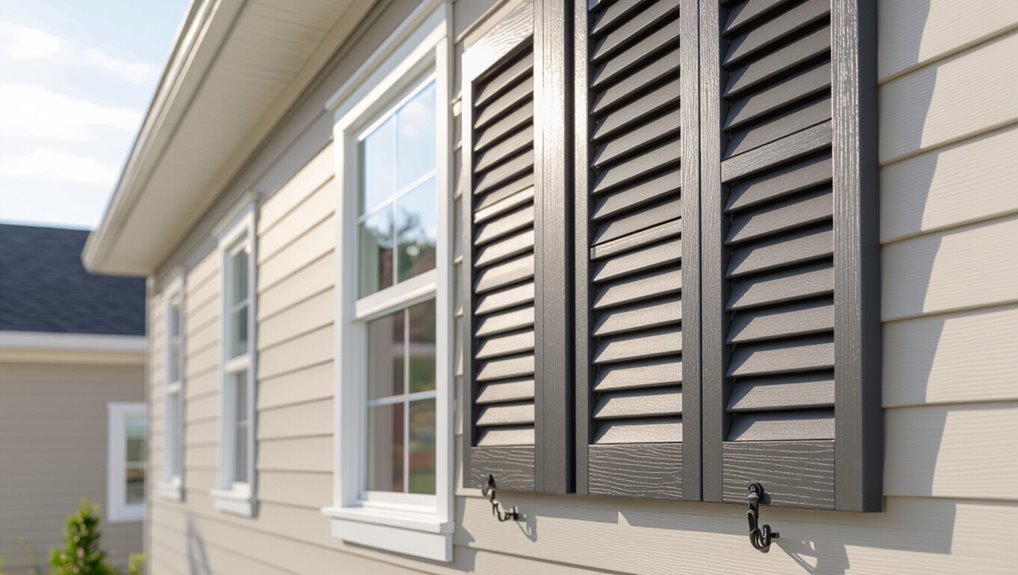
Before you begin, gather your supplies—cleaner, sandpaper, primer, paint, brushes, and drop cloths—so you won’t interrupt the job once you start.
Clean, sand, and prime shutters; apply two thin coats, letting each dry fully.
Choose colors using current color trends, test samples, and protect surrounding trim.
Finish with hardware reattachment and follow maintenance tips for longevity and easy touch-ups.
Should You Paint or Replace Shutters?
Before you grab a brush, check the shutters’ condition to see if rot, warping, or broken slats mean replacement is smarter.
Compare the cost of repairing and painting versus buying new shutters and factor how much value new ones add to your home’s curb appeal.
Also think about material and style—some materials take paint and last longer, while others might look better replaced to match your home’s design.
Assess Condition First
If your shutters show peeling paint, warped panels, rot, or loose louvers, you’ll need to decide whether painting will restore them or if replacement is the smarter choice.
Start with a thorough shutter inspection: probe for soft spots, check hardware, and test paint adhesion with a scrape.
If structure’s sound and adhesion’s good, you can refinish; otherwise replace damaged units.
Cost Versus Value
Now that you’ve assessed condition, weigh cost versus value to decide whether painting will save money or if replacement is smarter.
Do a quick cost analysis and value assessment: painting costs less upfront, extends life, and boosts curb appeal; replacement fixes structural failure and may add resale value.
Consider:
- Painting materials/labor
- Repair needs
- Replacement price
- Resale impact
Material And Style
Look at the shutters’ material and style to decide whether painting will do or if replacement makes more sense.
If shutters are solid wood or durable composite, you can refresh them with new color schemes.
If they’re warped, rotted, or outdated shutter styles, replacing gives better curb appeal and longevity.
Match new shutters to your home’s architectural lines for cohesive results.
Identify Your Shutter Material: Wood, Vinyl, or Metal
Before you pick paint or prep methods, figure out whether your shutters are wood, vinyl, or metal so you can choose the right products and prep steps.
Identify shutter types by weight, texture, and fasteners.
Consider durability factors, weather resistance, maintenance tips, and cost analysis to weigh material advantages and installation techniques against style compatibility, design trends, and color psychology.
- Wood
- Vinyl
- Metal
- Composite
When to Remove Shutters vs. Paint in Place
If your shutters are easy to unfasten and in need of thorough sanding, priming, or a color change that requires even coverage on all edges, take them down so you can work faster and avoid drips on siding or windows.
Leave them in place for simple touch-ups, minor repainting, or when removal risks damaging fragile fasteners or surrounding trim.
Decide by shutter styles, access, weather, and maintenance tips to save time and protect finish.
Safely Remove and Label Shutter Hardware
Before you start painting, carefully remove each hinge, screw, and latch so you don’t strip threads or bend metal.
Lay parts out in order and label them with masking tape or small bags so reassembly is quick and accurate.
Keep fasteners from the same shutter together and note which side they came from.
Remove Hardware Carefully
Start by removing hinge pins and any visible screws so you don’t damage the shutter or the surrounding trim.
Use proper tools for different hardware types and note installation techniques as you go. Work on a soft surface to prevent scratches and keep parts visible.
- Use correct screwdriver
- Support shutter
- Save small parts
- Inspect for damage
Label Parts Clearly
After you’ve carefully removed and set aside hinge pins and screws, label each part so reassembly goes smoothly; use masking tape and a fine-tip marker to note hinge locations, top/bottom orientation, and which shutter they belong to.
You’ll sort parts by shutter styles and keep fasteners together in labeled bags. This helps you reattach hardware properly and preserve your color psychology choices when installing freshly painted shutters.
Tools and Supplies for Painting Shutters
A well-chosen set of tools and quality supplies makes painting shutters faster and gives a longer-lasting finish.
You’ll need items that suit paint preparation and different shutter styles to get smooth, durable results.
- Sandpaper and sanding block
- High-quality exterior primer and paint
- Brushes, angled sash brush, and foam rollers
- Painter’s tape, drop cloths, and cleaning rags
Safety Gear and Ladder Tips for Exterior Work
You’ve got the right tools and supplies, but working on exterior shutters adds hazards you won’t face indoors, so gear up before you climb.
Wear gloves, eye protection, and a dust mask; use non-slip shoes.
Inspect and lock the ladder, set it on level ground, and use a helper or stabilizer for ladder stability.
Inspect and secure your ladder on level ground; lock it and use a helper or stabilizer for safe climbing.
Follow safety precautions and avoid overreaching.
Clean and Degrease Shutters Before Painting
Before you paint, wipe away loose dirt and dust so the finish can bond properly.
Use a degreasing cleaner on grimy spots, then rinse all residue off with clean water.
Let the shutters dry completely before you sand or prime.
Remove Surface Dirt
Start by knocking loose dust and cobwebs with a soft brush or leaf blower. Then wash the shutters with a mild detergent solution to remove grime and oily residues that prevent paint from sticking.
Use appropriate cleaning techniques for proper surface preparation before sanding. Then:
- Rinse thoroughly
- Let fully dry
- Inspect for remaining dirt
- Repeat spot-cleaning as needed
Degrease With Cleaner
Degrease the shutters with a solvent-based cleaner or a dedicated TSP substitute to remove oils, grease, and any remaining film that soap missed; these contaminants will cause paint to repel or peel if not fully removed.
You should wear gloves, test a small area, and apply cleaning solutions with a scrub brush or microfiber.
Use proven degreasing techniques to guarantee a clean, paint-ready surface.
Rinse And Dry Thoroughly
Once you’ve scrubbed with a cleaner, rinse the shutters thoroughly with clean water to remove all residue and cleaner traces; any leftover film will interfere with paint adhesion.
You’ll then dry completely to prevent moisture trapping that harms paint durability and shutter maintenance.
- Use a hose with steady pressure
- Wipe slats with a microfiber
- Air-dry in shade
- Check for damp spots
Repair Cracks, Splits, and Rotted Wood
Inspect each shutter closely for cracks, splits, and soft or crumbling wood before you paint so you can address structural problems that will undermine the finish. Do a crack assessment, remove rot, apply wood treatment and filler, and replace irreparable sections so paint bonds well.
| Issue | Action | Result |
|---|---|---|
| Hairline crack | Fill | Smooth finish |
| Split | Clamp+glue | Stabilized |
| Rot | Replace | Durable surface |
| Minor decay | Treat | Prevent spread |
Sanding Techniques by Shutter Material
Before you paint, you’ll want to sand differently depending on the shutter material:
Use medium-grit then fine-grit sandpaper for wood shutters to smooth grain and remove old finish.
For metal, use a wire brush or coarse abrasive pads to remove rust and roughen the surface for primer.
For vinyl slats, lightly scuff with fine abrasive or a Scotch-Brite pad to promote adhesion without damaging the material.
Sanding Wood Shutters
Start by deciding how aggressive the sanding needs to be based on the shutter’s condition and wood type.
For wood shutters, use progressive sanding techniques: start with coarser grit to remove old finish, then finer grits for smoothness.
Focus on wood preparation, grain direction, and dust removal so primer and paint adhere properly.
- Assess
- Coarse grit
- Fine grit
- Clean dust
Abrasive Techniques For Metal
When you’re working on metal shutters, choose abrasive methods that remove old coatings and corrosion without gouging the substrate; use wire brushes, sanding discs, or chemical strippers as appropriate.
Then follow with fine abrasive pads to feather edges and create a uniform surface for primer and paint.
For metal preparation, focus on rust removal, surface adhesion, paint compatibility, protective coatings, and precise finishing techniques.
Prep For Vinyl Slats
Shifting from metal to vinyl means changing your approach: vinyl slats are softer and can melt or tear if you use the same aggressive abrasives you’d pick for steel.
Use fine grit and light pressure, clean residues, and choose compatible vinyl paint options. Follow these shutter maintenance tips to prolong finish.
- 220–320 grit sand
- Test a hidden area
- Wipe with solvent
- Prime if needed
How to Strip Old Paint When Needed
If the shutters have multiple flaking layers or the paint’s bubbling and chalking, you’ll want to strip them down to bare wood before repainting; this guarantees a smooth, long-lasting finish.
Choose paint removal techniques—chemical strippers for intricate profiles, heat guns or sanding for flat surfaces—follow safety precautions like gloves, goggles, ventilation, and drop cloths, and test a small area before proceeding.
Fill Nail Holes and Seams for a Smooth Surface
Before you paint, pick a filler suited to the shutter material—wood putty for wood, exterior-grade spackle for trim, or a flexible caulk for gaps.
Fill nail holes and seams neatly, packing the filler so it bonds well.
Once dry, sand smooth so the surface is even and ready for primer.
Choose The Right Filler
Although you can skip straight to painting, choosing the right filler will save you time and give your shutters a seamless finish.
So pick a product that matches the substrate and paint type. You’ll consider filler types and application techniques to prevent cracking or shrinkage.
Choose compatible wood or exterior fillers and follow drying times.
- Wood filler
- Exterior-grade caulk
- Epoxy filler
- Paintable spackle
Smooth And Sand Seams
Start by filling nail holes and seams so your shutters look uniform and the paint lays on smoothly.
Use a quality filler for seam filling, press it into gaps, then let it cure.
Plane high spots if needed, then apply progressive sanding techniques—start coarse, finish fine—so surfaces are even.
Wipe dust away and inspect before priming and painting.
Preventing Lead Paint Risks on Older Shutters
If your home was built before 1978, assume older shutters may have lead-based paint and take steps to protect yourself and others; wear a properly fitted respirator, use gloves, and keep dust contained while you inspect and prep.
Follow lead paint regulations and hire pros for safe removal when needed.
- Test paint first
- Contain work area
- Use wet methods
- Dispose as hazardous waste
Best Primer for Shutters (Wood, Vinyl, Metal)
Next you’ll pick the right primer for the shutter material so your paint sticks and lasts.
For wood, choose an oil- or acrylic-based primer that seals grain and prevents tannin bleed; for vinyl, use a flexible, adhesion-promoting primer; and for metal, pick a rust-inhibiting, metal-specific primer.
Follow the manufacturer’s instructions and let each coat dry fully before painting.
Wood Shutter Primers
Because shutters face sun, rain, and temperature swings, choosing the right primer matters for durability and adhesion.
You’ll prep wood by sanding, cleaning, and addressing rot—wood shutter maintenance matters.
Follow primer selection tips: pick an oil-based or high-quality acrylic primer that seals tannins and bonds well.
Consider:
- Exterior-grade sealing
- Tannin-blocking
- Flexibility for movement
- Fast drying
Vinyl Shutter Primers
Wood and vinyl need different primer qualities, so after handling wood-specific prep you’ll switch to products made for nonporous materials.
Choose a bonding primer labeled for vinyl to promote adhesion and resist peeling. You’ll enjoy vinyl shutter benefits like low maintenance and color retention when you pair primer with appropriate vinyl shutter colors.
Clean and scuff sand surfaces before priming for best results.
Metal Shutter Primers
For metal shutters, pick a primer formulated for metal that promotes adhesion, resists rust, and tolerates outdoor exposure.
You’ll improve metal shutter durability and guarantee metal paint compatibility by choosing a corrosion-inhibiting, exterior-grade product.
Prep with degreasing and light sanding, then apply per instructions.
- Corrosion inhibitor
- Excellent adhesion
- Fast drying
- Exterior-rated compatibility
When and How to Apply Primer to Shutters
When your shutters show bare wood, peeling paint, or uneven color, it’s time to prime them before you paint; priming guarantees better adhesion, blocks stains, and creates a uniform surface for topcoat color.
Choose primer types suited to material—oil-based for metal, acrylic for wood.
Clean and sand first, then apply thin, even coats with brush or spray. Follow drying times and sand between coats.
Choose the Right Exterior Paint for Shutters
Now you’ll pick a durable exterior finish that stands up to sun, rain, and temperature swings.
Choose a semi-gloss or satin latex for easy cleaning and long-lasting protection.
Match the shutter color to your trim so the finished look feels cohesive and intentional.
Pick Durable Exterior Finish
Choosing a durable exterior finish for your shutters means picking paint that resists fading, moisture, and temperature swings so your work lasts and looks sharp.
You’ll weigh durability comparison and finish types, balancing longevity with maintenance.
Consider:
- 100% acrylic latex for UV and flexibility
- Oil-based for adhesion on older surfaces
- Satin for moderate sheen and washability
- Semi-gloss for easy cleaning
Match Color With Trim
After you’ve picked a durable finish, make sure the shutter color complements your trim so the whole exterior feels cohesive. Use color psychology to pick contrasts or subtle matches that enhance curb appeal. Test swatches at different times of day to confirm trim harmony.
| Option | Effect | Tip |
|---|---|---|
| Bold | Attention | Accent sparingly |
| Neutral | Calm | Layer textures |
| Contrast | Dynamic | Balance proportions |
Select a Finish: Flat, Satin, or Semi-Gloss
The finish you pick affects durability, sheen, and how imperfections show, so match it to your shutters’ material and exposure.
You’ll balance color psychology with finish durability: flatter hides flaws, satin offers subtle sheen, semi-gloss resists weather best.
Choose based on maintenance and look.
- Flat hides imperfections
- Satin balances sheen and washability
- Semi-gloss maximizes durability
- Consider material and exposure
Match Shutter Color to Your Home’s Palette
Think about how your shutters will complement existing trim by echoing or accenting those tones.
You can create visual interest by choosing a contrasting hue against the siding that still feels balanced.
Also consider your home’s architectural style—classic homes often suit traditional palettes while modern designs can handle bolder choices.
Complement Existing Trim
Start by looking at your home’s existing trim colors and pick a shutter shade that harmonizes rather than competes; you’ll want shutters that either echo a trim tone for cohesion or provide a deliberate contrast that ties into other exterior elements like doors or rooflines.
Use color harmony and measured trim contrast to unify the facade.
Consider:
- Match undertones
- Sample paint
- Coordinate accents
- View at dusk
Contrast With Siding
After you’ve considered trim harmony, turn your attention to how shutters interact with your siding—this is where they can either pop or blend into the background.
Choose shutter color that complements or contrasts with your siding harmony: a bold shade makes features pop, while a muted tone creates cohesion.
Test samples against sunlight and nearby landscaping before committing to a final hue.
Consider Architectural Style
While your siding and trim set the stage, matching shutter color to your home’s architectural style guarantees the final look feels intentional and authentic.
You should consider historical significance and regional influences so choices respect era and locale. Pick tones that complement materials, scale, and rooflines.
- Colonial: deep neutrals
- Victorian: bold accents
- Craftsman: earthy hues
- Mediterranean: warm terracotta
Test Color Samples on Shutters First
Wondering how a color will actually look on your house? You’ll want to do sample application with small test patches on shutters to evaluate finish options and lighting impact throughout the day.
Compare color selection against color trends, seasonal colors, and your neighborhood palette. Inspect wet and dry samples, note undertones in different light, then choose confidently before painting all shutters.
Brush Techniques for Hand‑Painting Shutters
Now that you’ve tested colors, pick the right brush—usually a high‑quality angled sash brush for control and a small flat for panels.
Use long, consistent strokes that follow the shutter’s grain and avoid overworking edges.
Keep the brush loaded correctly and wipe excess paint to maintain a smooth, drip‑free finish.
Choosing The Right Brush
- Natural vs synthetic
- Width choice
- Angled vs straight
- Handle comfort
Proper Brush Strokes
With the right brush in hand, your stroke technique becomes what really determines a smooth, even finish on shutters.
Use long, steady strokes along the grain, feathering edges to avoid ridges. Reload sparingly, wiping excess.
For slats, paint from top to bottom with controlled pressure.
These brush techniques guarantee consistent paint application and clean lines without overworking the surface.
Maintaining A Smooth Finish
Start by keeping your brush loaded just enough to lay down a thin, even coat—you’ll avoid drips and brush marks when you pull long, confident strokes along the grain.
Use deliberate smoothing techniques to boost finish quality as you work. Focus on consistency, light pressure, and immediate feathering at overlap edges.
- Light pressure
- Long strokes
- Feather overlaps
- Inspect and touch
Roller Tips for Even Shutter Coverage
Although rollers cover large shutter surfaces fast, you’ll get streaks and buildup unless you use the right size, nap, and technique.
Choose a small foam or 1/4–3/8″ nap for panels, match roller techniques to shutter profile, and keep paint consistency slightly thin for smooth spread.
Load lightly, roll with the grain, maintain a wet edge, and finish with light cross-rolls to even coverage.
How to Spray‑Paint Shutters Like a Pro
Spray-painting shutters gives you a smooth, shop-quality finish quickly when you set up and technique your way through it.
You’ll mask, prime, and spray in light, overlapping passes for even coverage; choose paint informed by shutter styles and color psychology to complement your home.
- Mask edges
- Use light coats
- Maintain distance
- Inspect between coats
Sprayer Setup, Tip Sizes, and Cleanup
Before you spray, set up the sprayer correctly so pressure, hose length, and filter are right for smooth, even coverage.
Pick a tip size based on the paint viscosity and the shutter profile—smaller tips for thin latex and detailed louvres, larger for thicker primer or heavy-bodied coatings.
After the job, flush the system immediately to prevent clogs and maintain consistent spray performance.
Sprayer Setup Basics
Get your sprayer dialed in before you start—proper setup, the right tip, and a quick cleanup plan will save time and give you a professional finish.
You’ll adjust ideal sprayer settings, follow sprayer maintenance tips, and prep shutters. Focus on pressure, distance, and overlap.
- Check connections
- Test spray pattern
- Adjust pressure
- Flush and store
Tip Size Selection
Now that your sprayer’s pressure and pattern are right, pick the correct tip size to match your paint and the shutter profile. You’ll use a larger tip for thicker coatings and deep shutter sizing, smaller for thin paints. Match tip to paint selection, test spray, then clean thoroughly to avoid clogging and keep edges crisp.
| Emotion | Tip | Action |
|---|---|---|
| Relief | .015 | Test |
| Pride | .013 | Spray |
| Confidence | .009 | Clean |
Drying Times and Ideal Weather for Painting
Drying times for exterior shutter paint depend on the paint type, humidity, and temperature, so plan for at least 24 hours between coats for latex and up to 48 hours for oil-based paints under typical conditions.
You’ll monitor drying conditions and weather considerations, avoiding rain and temperatures below 50°F. Check surface tack before recoat.
- Choose dry days
- Low humidity
- Mild temps
- No wind or rain
How Many Coats to Plan For
How many coats you’ll need depends largely on how well the surface is prepped and the paint you choose.
Bare or patched wood usually needs a primer plus one or two finish coats, while well-primed or previously painted shutters may only need one topcoat.
Also factor in paint type—high-quality acrylics often cover better than cheaper latex, so you might need fewer coats.
Surface Preparation Needs
Before you pick up a brush, figure out how many coats you’ll need based on the shutter material and the condition of the old finish: bare wood or heavily weathered shutters usually need a primer plus two topcoats.
Previously painted but sound surfaces can get by with one primer and one topcoat. Lightly sanded, well-adhered paint may only need a single topcoat after proper cleaning.
Use surface cleaning techniques and assess paint adhesion factors before painting.
- Remove dirt, mildew, and chalking
- Sand glossy spots for adhesion
- Fill cracks and prime bare areas
- Tack cloth before topcoat
Paint Type Impact
Different paint formulations change how many coats you’ll need, so pick a type with both finish and coverage in mind. You’ll choose based on paint durability and color psychology: gloss hides less, flat needs more. Plan 2–3 coats typically; priming can reduce coats. Consider exterior formulas for UV resistance and lasting finish.
| Type | Typical Coats |
|---|---|
| Acrylic | 2 |
| Oil-based | 2 |
| Satin | 2 |
| Flat | 3 |
Tips for Painting Louvers and Slats
When you’re painting louvers and slats, work deliberately and in sections so each blade gets even coverage without drips or missed edges.
Use louver painting techniques that favor thin coats and a small angled brush. Consider slat color choices for contrast or uniformity.
Follow this quick checklist:
- Clean and sand
- Prime narrow edges
- Brush along grain
- Allow full drying between coats
Preventing and Removing Mildew on Shutters
If your shutters sit in damp or shaded spots, mildew can appear quickly, so prevent it by keeping surfaces clean, dry, and well-sealed.
For mildew prevention, clean quarterly with a mild detergent or diluted bleach, rinse thoroughly, and dry.
For mildew removal, scrub affected areas gently, repaint with mildew-resistant primer and topcoat, and trim nearby foliage to improve airflow.
Fixing Orange Peel Texture and Brush Marks
Don’t panic if your freshly painted shutters show an orange peel texture or visible brush marks — you can smooth them out with a few straightforward steps.
Sand lightly with fine-grit, wipe clean, and inspect for defects. Use proper brush technique and thin coats, then wet-sand between coats for texture repair.
- Sand
- Clean
- Recoat
- Wet-sand
Troubleshooting Blistering, Peeling, and Chalking
Blistering, peeling, and chalking are common signs that moisture, poor adhesion, or UV breakdown are attacking your shutters, and you can diagnose the cause quickly by checking a few key things.
Inspect for trapped moisture, failed primer, or sun exposure.
Use blister prevention techniques, moisture control methods, and proper surface prep.
Choose peeling paint solutions and chalking issues remedies for lasting results.
Quick Fixes for Chipped or Scratched Paint
A few quick repairs can restore chipped or scratched shutter paint in under an hour, letting you avoid a full repaint.
You’ll prep, sand, and spot-prime before matching color and applying paint for clean results. For simple scratch repair, use a fine brush and thin coats, letting each dry fully.
- Clean
- Sand
- Prime
- Paint
Reattaching Shutters and Hardware Without Damage
Gather your tools and take your time when reattaching shutters and hardware so you don’t damage fresh paint or misalign fittings.
Use padded clamps, soft cloths, and gentle pressure while checking shutter alignment visually and with a straightedge.
Clamp gently with padded cloths and a straightedge, checking alignment carefully to protect paint and ensure even shutters.
Confirm hardware compatibility before fastening, use proper screws, and tighten incrementally.
Work slowly to avoid scratches, stripping, or uneven gaps.
Touch‑Up Techniques After Installation
Once the shutters are back in place, inspect every edge and hinge area for nicks, drips, or missed spots so you can address flaws while paint is still fresh to the touch.
Use precise touch up techniques and careful paint application to blend repairs. Follow these steps:
- Sand tiny blemishes smooth.
- Feather paint edges.
- Use small brushes.
- Reinspect and cure.
Seasonal Care: Protect Paint From Sun and Snow
Because sun and snow attack painted shutters in different ways, you’ll need a simple seasonal routine to keep finishes intact: inspect for sun damage in spring, wash away winter salts, and touch minor chips after snow exposure.
Regular seasonal maintenance preserves paint longevity.
Apply UV‑blocking sealant for weather protection and check fasteners to guarantee exterior durability throughout the year.
Long‑Term Maintenance for Painted Shutters
While regular seasonal checks keep shutters sound year to year, long‑term maintenance focuses on preventing gradual wear and preserving finish integrity so you don’t face costly repairs later.
You’ll extend shutter longevity by scheduling consistent seasonal upkeep and addressing issues promptly.
- Inspect for peeling or blistering.
- Touch up chips and seal edges.
- Tighten hardware and hinges.
- Repaint every 8–12 years as needed.
Eco‑Friendly and Low‑VOC Paint Options
If you want a durable finish without exposing yourself or the environment to harsh chemicals, choose low‑VOC or zero‑VOC exterior paints formulated for shutters; they cut down on fumes and off‑gassing while still providing weather resistance. You’ll use eco friendly materials and low VOC options to protect wood, metal, and composite shutters while keeping air quality safe.
| Paint Type | VOC Level | Best For |
|---|---|---|
| Acrylic Latex | Low | Wood |
| Milk Paint | Zero | Restoration |
| Waterborne Alkyd | Low | Metal/composite |
Budget Breakdown: DIY vs. Professional Painting
How much will painting your shutters actually cost, and where can you save by doing it yourself versus hiring a pro?
You’ll weigh DIY Savings against Professional Expertise in a clear Cost Comparison of materials, labor, and Time Investment.
Consider your Skill Level and desired Quality Assurance before deciding.
Consider your skill level and desired finish—choose DIY for savings, pro for guaranteed quality and peace of mind.
- Materials
- Labor
- Time
- Finish quality
When to Hire a Pro: Signs You Need a Contractor
You’ve compared costs, time, and the finish you want, so now consider when the job really needs a contractor.
If shutters are rotten, require structural repair, or you lack specialized tools, schedule a contractor consultation.
Hire pros when permits, paint-matching, or tight project timeline constraints exist.
You’ll save time, avoid mistakes, and guarantee a durable, professional result.
Scaling the Process for Multiple Homes
When managing shutters for multiple homes, plan a repeatable workflow so you can move quickly from one property to the next.
Use consistent materials, checklists, and batching to save time across multiple properties.
Apply scaling strategies to staffing, scheduling, and supply management.
- Standardize steps
- Batch similar tasks
- Centralize supplies
- Track progress and metrics
Creative Color Ideas: Contrast, Tone‑On‑Tone, Accents
Scaling your process makes it easier to experiment with color across multiple homes.
So now let’s look at creative palettes that make shutters pop. Use color psychology and seasonal trends to choose complementary hues for bold statements or subtle elegance.
Mix tone‑on‑tone for refined layers, add accent trims for flair, and balance historical influences, neighborhood styles, and your personal preferences for cohesive, confident results.
How Painted Shutters Affect Curb Appeal and Resale
Although shutters are a relatively small element, their color and finish can dramatically shape a home’s first impression and perceived value.
You can influence curb appeal and resale value by choosing thoughtful hues and quality finishes. Consider impacts such as:
- Visual contrast with siding
- Architectural coherence
- Perceived maintenance level
- Buyer appeal and marketability
Final Checklist Before Finishing the Job
Before you call the job done, run a quick, targeted checklist to catch missed touch-ups, guarantee secure hardware, and confirm a clean, even finish that will hold up to weather and inspections.
Do a visual inspection for drips, thin spots, and uniform gloss. Tighten hinges and screws, remove painter’s tape, sand tiny flaws, and apply any final touches for durability and neat appearance.
Next Projects: Repaint Trim, Doors, or Siding
Ready for the next step? Now that shutters look sharp, tackle trim painting, explore door styles, and refresh siding options.
Choose accent colors that tie everything together and plan primer, paint type, and weather windows. Prioritize areas by visibility and condition.
Select accent colors that unify the look, choose primer and paint wisely, and schedule work by visibility and condition.
- Exterior trim painting techniques
- Popular door styles to match shutters
- Siding options and prep
- Accent colors for cohesion
Frequently Asked Questions
Can I Paint Shutters While They Remain Shuttered (Closed) Against Windows?
Yes, you can, but you shouldn’t. You’ll need proper shutter preparation and careful painting techniques to avoid drips, prep windows and hardware, mask edges, and use thin coats so paint cures evenly without sticking to the glass.
How Do I Handle Shutters With Built‑In Blinds or Glass Inserts?
Ironically, you’ll treat them gently: remove or mask glass inserts, tape around built‑in blinds, and avoid paint in slats. You’ll perform blind cleaning first, then paint, preserving shutter maintenance and protecting delicate components.
Will Painting Shutters Affect Window Warranties or Seals?
Yes — painting shutters can affect warranty implications and seal integrity if you alter moving parts or add moisture. You should check manufacturer terms, use compatible products, and avoid sealing frames or clogging weep holes to protect coverage.
Can I Use Leftover Interior Paint for Exterior Shutters?
You can, but you shouldn’t: interior paint lacks UV resistance and weatherproofing, so for lasting color selection and paint durability you’ll want exterior-grade paint to avoid fading, peeling, and premature maintenance on your shutters.
How Do I Transport Large Shutters to a Paint Area Without Damaging Them?
You’ll use gentle shutter care and smart transport techniques: wrap shutters in soft blankets, secure with straps on a padded rack or inside a van, carry two people per panel, and avoid stacking to prevent dents or warping.
Conclusion
You’ve given your shutters simple, smart sprucing — and you’ll see striking street-side style. By selecting suitable surfaces, safely stripping and sanding, and sealing with steady strokes, you’ll create classic curb appeal that can seriously sell. Stay sensible: savor contrast or subtle tone-on-tone treatments, stick to sturdy supplies, and schedule small seasonal spruces. Confident, careful coating converts characterless components into charming, cheering curbside credentials — a savvy, sound investment.
