
How to Take Off Latex Paint: Safe Removal Methods
Match the method to the surface and paint age: fresh latex lifts with warm water, mild soap, and blotting, while older drips may need re-wetting, gentle scraping with a plastic scraper, or isopropyl alcohol spot treatment. For stubborn areas use a low‑VOC chemical stripper, light heat gun passes, or gentle abrasion, testing a hidden spot first. Wear gloves, goggles, and a respirator, ventilate well, and bag residue for proper disposal — keep going to learn detailed surface‑specific steps and safety tips.
Decide Method by Surface & Paint Age
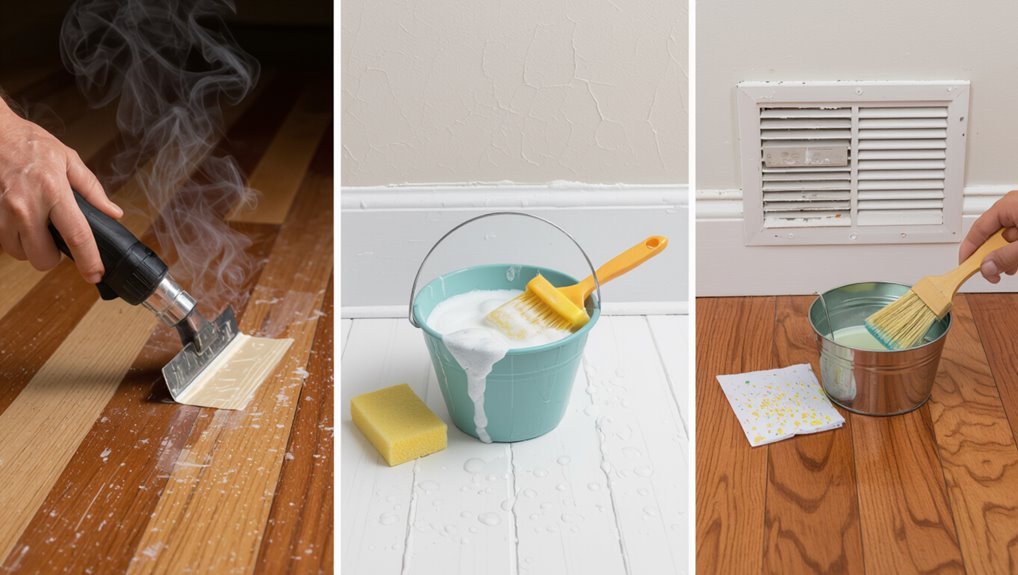
Start by matching your removal method to both the surface and how long the latex paint’s been on it.
You’ll assess surface types — porous wood, glossy metal, textured drywall — then note paint age: fresh, partially cured, or fully hardened.
Choose gentle scraping, warm soapy washes, or chemical strippers accordingly, testing a small area first to avoid damage and adjust technique.
Quick Wins: Remove Fresh Latex Paint Drips Now
Now that you’ve matched the method to the surface and paint age, act fast on fresh latex drips to prevent sanding or chemicals later. For fresh paint cleanup, blot excess with a damp cloth, lift with a plastic scraper, and re-wet stubborn spots. Immediate solutions save time and finish.
| Tool | Action |
|---|---|
| Cloth | Blot |
| Scraper | Lift |
| Water | Re-wet |
Which Solvent to Try First (Water, Soap, Alcohol)
Start with warm water to soften fresh latex paint and blot gently with a cloth.
If water alone doesn’t lift the spot, mix in a few drops of mild dish soap and scrub lightly.
For stubborn residue, try a small amount of isopropyl rubbing alcohol on a hidden area first to test for damage.
Start With Warm Water
Because latex paint is water-based, you should try warm water first — it loosens fresh paint and often removes smudges without harsh chemicals.
You’ll feel warm water benefits immediately: it softens film and reduces scrubbing. Use an ideal temperature that’s comfortably hot but won’t scald or warp surfaces.
Blot, rinse, and repeat until paint lifts; avoid strong abrasives.
Add Mild Dish Soap
Try a small dab of mild dish soap next — it’s the logical second step after warm water because it breaks up paint’s oils and lifts stubborn smears without harsh solvents.
You’ll notice mild soap benefits quickly; dish soap effectiveness shows on skin, fabric, and painted trim.
- Use warm water
- Apply gently
- Rinse thoroughly
- Pat dry
Try Isopropyl Rubbing Alcohol
Reach for isopropyl rubbing alcohol when warm water and mild dish soap haven’t budged the latex paint; it’s a stronger solvent that breaks the paint’s bond without the aggressiveness of acetone or paint thinner.
You’ll appreciate isopropyl benefits: quick drying, low residue, and safer fumes.
Use proper application techniques—test a hidden spot, dab with a cloth, wait briefly, then gently scrape or wipe away softened paint.
Choose a Low‑VOC Chemical Paint Stripper
When you’re ready to strip latex paint, pick a low‑VOC chemical stripper that balances effectiveness with safety. These products reduce harmful fumes while still softening or lifting the paint so you can scrape or wipe it away.
You’ll consider eco friendly alternatives and key health considerations.
- Read labels for VOC content
- Choose citrus or soy formulas
- Wear gloves and a respirator
- Test on a small area
Use a Heat Gun to Remove Latex Paint Safely
If you use a heat gun to remove latex paint, work in short passes and keep the nozzle moving so the surface doesn’t scorch or blister; the goal is to soften the paint just enough to lift with a scraper or putty knife. Adjust heat settings, wear goggles and gloves, and observe tool safety.
| Task | Tip |
|---|---|
| Preheat | Start low |
| Distance | 6–8 inches |
| Ventilation | Keep windows open |
| Breaks | Let tool cool |
Scraping, Sanding, and Putty Knife Techniques
Grab a sturdy scraper or putty knife and work at a shallow angle to lift softened latex paint without gouging the substrate.
Use scraping techniques first, then follow with gentle sanding methods to smooth edges. Protect surrounding areas and wear a dust mask.
- Start with a firm, thin blade
- Soften paint where needed
- Sand with fine grit
- Clean residue thoroughly
Remove Latex Paint From Wood Floors & Furniture
After scraping and smoothing painted surfaces, you’ll often face spots on hardwood floors or furniture that need gentler, wood-safe methods. Use mild detergent, warm water, and a soft cloth; try rubbing alcohol or citrus-based remover on small areas, then refinish if needed. Prioritize wood floor techniques and furniture care to avoid damage.
| Method | When to use |
|---|---|
| Soap/water | Fresh drips |
| Alcohol/citrus | Dried spots |
Remove Latex Paint From Drywall & Plaster
Start by checking the drywall or plaster for gouges, bubbling, or peeling so you know how much repair you’ll need.
Use gentle methods—soft scraping, warm soapy water, or a mild solvent—so you don’t damage the substrate.
Once the paint’s off, patch any blemishes, sand smooth, prime, and repaint for a clean finish.
Assess Surface Damage
Before you attempt paint removal, inspect the drywall or plaster closely to determine how the latex has bonded and whether the substrate is intact, bubbled, cracked, or crumbling.
You’ll perform a damage assessment focused on surface integrity before choosing methods.
Check for:
- Loose or flaking paint
- Soft or sagging areas
- Hairline or full cracks
- Water stains or mold signs
Gentle Paint Removal
Now that you know how the paint has bonded and whether the substrate is stable, you can proceed with gentle removal methods that protect drywall and plaster.
Use gentle techniques: soft scrapers, nylon pads, warm soapy water, and low-pressure steam.
Test a small area first.
Wear goggles, gloves, and a mask; ventilate the room.
Follow safety precautions to avoid damage and health risks.
Repair And Repaint
Patch any gouges, sanding-scratched areas, or residual adhesive spots so the surface is smooth and ready for primer; use a lightweight spackle for small holes and a setting compound for deeper damage, then sand feathered edges with fine-grit paper and wipe away dust with a damp cloth.
You’ll guarantee paint adhesion and proper surface preparation.
- Prime patched areas
- Sand between coats
- Use compatible paint
- Inspect for imperfections
Remove Latex Paint From Fabric, Carpet & Upholstery
Accidents happen, but you can usually remove latex paint from fabric, carpet, and upholstery if you act quickly and choose the right technique for the material.
Blot wet paint, scrape dried bits gently, pre-treat with detergent or rubbing alcohol, then launder or spot-clean per fabric care and upholstery maintenance guidelines.
Test cleaners on hidden area first to avoid damage.
Remove Latex Paint From Glass, Metal & Plastic
If the paint is still wet, wipe up drips right away with a damp cloth so they don’t spread.
For dried spots, soften the latex with warm soapy water or a commercial remover before scraping gently.
Always test cleaners on an inconspicuous area and use nonabrasive tools to protect the glass, metal, or plastic finish.
Clean Fresh Paint Drips
When you catch a fresh latex paint drip on glass, metal, or plastic, act quickly—wet paint wipes away far easier than dried.
Use gentle cleaning techniques and simple paint prevention tips to avoid spread.
Try:
- Blot excess with a damp cloth
- Rub with mild soap and water
- Use a plastic scraper for edges
- Rinse and dry to finish
Soften Dried Paint
Loosen stubborn latex by softening the dried film before you scrape or scrub—this reduces chipping and surface damage on glass, metal, or plastic.
Apply warm, soapy water or a commercial remover per label, let dwell to exploit latex paint characteristics, then gently lift softened areas with a plastic scraper.
Test a small spot first. Repeat as needed, rinsing residues promptly to avoid streaks.
Protect Surface Finish
To protect the finish on glass, metal, or plastic, start by choosing gentle cleaners and tools that won’t scratch or dull the surface; soft cloths, nonabrasive pads, and plastic scrapers work best.
Use these surface protection techniques and finish preservation tips to remove paint safely:
- Test cleaner in an inconspicuous spot
- Work gently in small sections
- Rinse and dry promptly
- Avoid harsh solvents
Safety Gear & Ventilation for Latex Paint Removal
Start by suiting up: wear nitrile gloves, safety goggles, and a respirator rated for organic vapors or particulates depending on your method, and choose coveralls or long sleeves to protect skin from solvents and abrasives.
Use protective equipment properly, inspect seals, and replace damaged gear.
Open windows, run fans, and position exhaust to outdoors—apply ventilation techniques to dilute fumes and keep the work area safe.
Dispose & Clean Up: Handling Waste and Residue
When you’ve finished stripping or sanding latex paint, gather and contain all scrapings, rags, used abrasive pads, and solvent-soaked materials in sealable, labeled bags or metal cans so they can’t ignite or leach into drains.
Then follow local waste management rules and choose eco friendly disposal options. Securely transport or schedule pickup, and clean tools with minimal water.
- Segregate waste
- Label containers
- Use certified drop-off
- Avoid drains
Troubleshooting: Stubborn Spots, Ghost Stains, When to Call a Pro
If stubborn spots or ghost stains won’t lift with standard stripping or sanding, don’t panic—try targeted techniques first: use a citrus or soy-based remover for stubborn stains, light solvent for ghost impressions, gentle abrasion, and repeat local applications.
Test a small area, then escalate.
Call for professional help if substrate damage, persistent discoloration, or safety concerns arise—experts have stronger removal techniques and containment.
Frequently Asked Questions
Can Latex Paint Be Removed From Electronics or Circuit Boards Safely?
About 60% of electronics failures involve contamination, so yes—you can often remove latex paint safely using gentle paint removal techniques like isopropyl alcohol and soft brushes; you’ll protect components by powering down, avoiding harsh solvents, and practicing careful circuit board care.
How to Prevent Paint From Re-Adhering After Removal?
You’ll prevent paint re-adhesion by thorough surface preparation: clean, dry, and sand to remove residues. Use proper adhesion techniques like primers or adhesion promoters, avoid contaminants, and cure fully so new coatings bond reliably.
Can Latex Paint Removal Methods Harm Indoor Plants?
Right off the bat, you shouldn’t toss caution to the wind: some removal methods can stress plant health and introduce paint toxicity. You’ll want barriers, ventilation, and gentle cleaners so plants don’t suffer or absorb toxins.
Are There Pet-Safe Paint Removal Options for Household Surfaces?
Yes — you can use pet friendly solutions like gentle soap, vinegar, baking soda paste, or commercial non toxic alternatives labeled pet safe; you’ll ventilate, keep pets away during treatment, and rinse thoroughly afterward.
How Long Must a Surface Cure Before Repainting After Removal?
You’ll usually wait 24–72 hours for the surface to cure before repainting; coincidentally, that’s often when sunlight dries dust away, aiding surface preparation and ensuring ideal paint adhesion so your new coat bonds properly.
Conclusion
Think of removing latex paint like untangling a knot in sunlight: start gently, work methodically, and don’t yank. Match your method to the surface and how fresh the drip is, try water/soap or rubbing alcohol first, then step up to low‑VOC stripper or heat if needed. Protect yourself with ventilation and gloves, bag waste responsibly, and fine‑tune stubborn spots with patience. If the stain keeps clinging, call a pro before you tear the fabric of the piece.
