
What Finish for Bedroom Paint: Choosing the Perfect Sheen
You’ll usually want a low-luster finish like eggshell or satin for a bedroom because it hides minor imperfections, cleans up easily, and keeps the space soft and restful. Eggshell gives warmth with a subtle glow; satin adds durability for higher-traffic rooms or kids’ spaces. Matte works for a cozy retreat but needs gentler cleaning. Consider wall condition and use, patch and prime as needed, and try samples on your wall to confirm — continue for tips on testing, prep, and maintenance.
Best Bedroom Paint Finish : The Short Answer
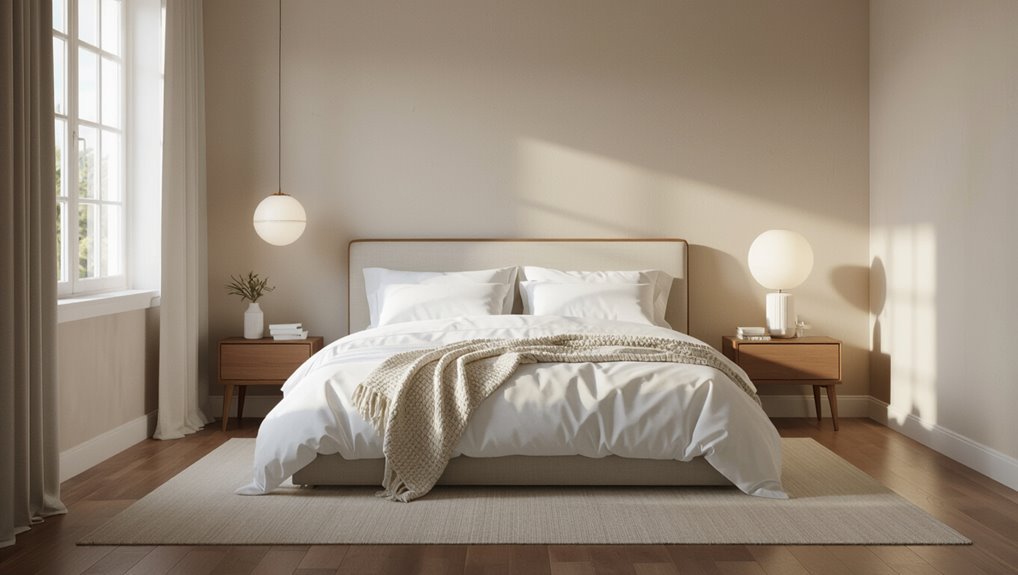
For most bedrooms, you’ll want a low-luster finish like eggshell or satin — they hide imperfections better than flat paint and clean up easier than flat while still keeping glare minimal.
You’ll favor these sheens because color psychology helps create calm, while texture influence softens surfaces.
Pick eggshell for subtle warmth or satin for durability; both balance appearance, maintenance, and restful ambiance.
How Sheen Changes Light and Mood
You’ll notice matte keeps colors soft and absorbs light, while eggshell adds a subtle glow that reflects a bit more.
That small change in sheen can make a room feel brighter or cozier depending on your lighting.
Think about how much natural and artificial light you have before choosing.
Matte vs. Eggshell Glow
While both matte and eggshell finishes can suit a bedroom, their subtle differences in sheen change how light behaves and how the room feels—matte soaks up light for a soft, cozy look, while eggshell reflects a gentle glow that lifts brightness and shows more texture.
You’ll notice matte benefits in hiding flaws and creating calm, while eggshell characteristics add subtle depth and easy cleaning.
Sheen Impact On Brightness
How does a paint’s sheen actually change a room’s light and mood?
You’ll notice sheen reflection directs light—glossier finishes bounce more, boosting brightness perception and making spaces feel lively.
Matte absorbs light, softening contrast and creating calm.
Choose gloss where you want energy or highlight architectural details, and matte or eggshell to maintain warmth and reduce glare for restful, cozy bedrooms.
How to Pick a Sheen in 3 Steps
Start by evaluating how you use the room so you can pick a sheen that fits traffic and activities.
Check your walls for imperfections—smoother sheens show flaws while flatter options hide them.
Finally, match the sheen to the durability you want for cleaning and wear.
Assess Room Use
Because different activities demand different durability and cleanability, you should assess how the bedroom will be used before choosing paint sheen.
Consider room functionality and space aesthetics to match sheen to use. Decide whether the room is a high-traffic, kid-focused, guest, or minimalist retreat.
- Kids’ playroom
- Master bedroom
- Guest room
- Minimalist/zen space
Evaluate Wall Condition
Before you pick a sheen, take a close look at your walls for dents, cracks, texture, and previous finishes—those flaws will guide your choice.
If wall texture is uneven, opt for a flatter sheen to hide imperfections. Smooth, repaired surfaces handle higher sheens better.
Also consider paint adhesion; porous or glossy old paint may need sanding or primer to guarantee the new finish sticks.
Match Desired Durability
Now that you’ve assessed wall condition, focus on how much wear the room will see so you pick a sheen that lasts.
Match desired durability by weighing durability considerations against aesthetic goals and lifestyle factors. Choose washable or scrubbable sheens for high traffic; matte for low.
Consider cleaning frequency, kids/pets, and longevity.
- Traffic level
- Cleaning needs
- Aesthetic priority
- Budget
Flat Finish: When to Choose It for Bedrooms
If you want a soft, non-reflective look that hides wall imperfections, choose a flat finish for bedrooms.
You’ll create a calm mood—color psychology matters—because flat paint absorbs light and reduces glare. It emphasizes surface texture and feels restful, so pick it for low-traffic rooms, ceilings, or rental spaces where touch-ups are occasional.
Avoid it where frequent cleaning’s needed.
Eggshell Finish: Softness Plus Easy Care
When you want a gentle, low-sheen look that still stands up to everyday life, choose an eggshell finish; it gives walls a soft glow without showing every fingerprint or scuff.
You’ll enjoy its soft texture and easy maintenance.
Consider advantages:
- Subtle sheen hides minor flaws.
- Cleans with a damp cloth.
- Warm, cozy ambiance.
- Durable for bedrooms.
Satin Finish: Best for High-Traffic Bedrooms
If you like the soft glow of eggshell but need something tougher for a busy bedroom, satin is a smart step up; it keeps a warm look while standing up to daily wear.
You’ll appreciate satin durability for scuffs and wipe-downs, and satin aesthetics that subtly reflect light without glaring.
Choose satin when traffic and style both matter.
Semi-Gloss and Gloss: Trim and Specialty Uses
1 clear rule: use semi-gloss or gloss for trim and specialty areas where durability and easy cleaning matter.
You’ll prefer these sheens for high-contact woodwork and moisture-prone spots.
Consider trim styles and specialty finishes to match room character and maintenance needs.
- Window casings
- Door frames
- Baseboards
- Built-in cabinetry
How Each Sheen Hides (Or Shows) Wall Flaws
You’ll notice matte and eggshell finishes do the best job of masking small imperfections because they absorb light instead of reflecting it.
Satin gives a soft sheen that can gently reveal texture while still smoothing the look of minor flaws.
Semi-gloss reflects the most light, so it’ll highlight bumps and patchy spots—good for trim but risky for imperfect walls.
Matte Versus Eggshell
Wondering which sheen makes flaws vanish? You’ll spot differences: matte hides bumps and small dents with soft diffusion, while eggshell slips toward subtle sheen revealing slight texture.
Consider color combinations and texture effects when choosing.
- Matte masks imperfections best.
- Eggshell shows mild surface detail.
- Use matte for uneven walls.
- Pick eggshell for subtle depth.
Satin And Semi-Gloss
Some sheens balance shine and forgiveness differently: satin gives a soft luster that gently reveals minor bumps, while semi-gloss throws light and highlights every imperfection.
You’ll prefer satin texture if you want subtle concealment and a cozy look that tolerates small flaws.
Choose semi gloss durability for trim or high-traffic walls where washability matters, though it will demand smoother surfaces.
Match Sheen to Paint Color and Natural Light
Because sheen changes how color reads, match it to both the hue and the room’s natural light so the finish complements rather than contradicts your choice.
Consider how light reflection alters color perception and pick a sheen that balances vibrancy and depth.
- Soft matte tames bright hues.
- Satin lifts muted tones.
- Eggshell smooths uneven light.
- Semi-gloss adds clarity in low light.
Choose a Finish by Bedroom Use and Lifestyle
Think about how the room gets used each day—higher activity means you’ll want a tougher, more washable finish.
If kids or pets frequent the space, pick a finish that resists scuffs and cleans up easily.
Match your choice to how much maintenance you’re willing to do so the paint holds up without extra work.
Daily Activity Level
Anyone who uses their bedroom for more than sleeping should match the paint finish to daily activity: high-traffic or multifunctional rooms benefit from tougher, easier-to-clean sheens, while low-use or purely decorative spaces can get away with softer finishes.
- Define activity zones and pick scrubbable sheens for work or play areas.
- Keep softer finishes in true sleep environment zones.
- Use semi-gloss near doors and trim.
- Matte works for low-touch walls.
Child And Pet Considerations
If kids or pets share the room, pick a finish that stands up to spills, scuffs, and frequent cleaning without looking industrial.
You’ll want low-VOC paints with safety features like non-toxic formulas and quick drying.
Choose satin or eggshell for durable, pet friendly options that hide marks yet still feels warm. They balance resilience and a comfortable, attractive bedroom vibe.
Maintenance And Cleaning Needs
Because how you use the bedroom determines how often you’ll clean the walls, choose a finish that fits your routine and tolerance for upkeep.
- High-traffic? Pick satin or semi-gloss for better stain resistance.
- Low-traffic? Matte hides imperfections but needs gentler cleaning.
- Allergies? Smooth finishes resist dust and ease cleaning frequency.
- Budget? Eggshell balances looks and cleanability without frequent repainting.
Finish Choices for Kids’ and Guest Bedrooms
When you’re choosing a paint finish for kids’ or guest bedrooms, think about durability, maintenance, and the room’s designated use; kids’ rooms usually need tougher, washable finishes, while guest rooms can favor softer sheens for a more refined look.
Balance kids’ preferences with easy-clean satin or eggshell, and prioritize guest comfort with low-sheen matte or eggshell to minimize glare and show fewer flaws.
Finish Choices for Master Bedrooms and Retreats
Kids’ and guest rooms often demand practicality, but your master suite is where you’ll prioritize comfort and atmosphere.
Choose finishes that enhance color psychology and subtle texture impact to set mood. Consider these options:
- Matte for soft, cozy retreats.
- Eggshell for slight sheen and warmth.
- Satin for easy cleaning and gentle glow.
- Low-luster for sophistication without glare.
Prep and Repair by Finish (Sanding, Priming, Patching)
Start by evaluating the walls for dents, nail holes, and gloss differences so you know exactly what sanding, priming, and patching each finish will require. Use proper sanding techniques for sheen shifts, targeted patching tips for holes, and priming methods suited to porous or glossy surfaces. Focus wall preparation on smooth, even substrates before painting.
| Tool | Use |
|---|---|
| Sandpaper | Blend edges |
| Primer | Seal areas |
| Patch | Fill dents |
Cleaning and Maintenance by Sheen
After you’ve smoothed and sealed the walls, think about how each sheen will affect everyday cleaning and long-term upkeep.
After sealing the walls, consider how each paint sheen will impact cleaning and long-term maintenance.
- Flat: low sheen durability, hide imperfections but need gentle cleaning tips to avoid scuffs.
- Eggshell: moderate sheen durability, easier to wipe with mild soap.
- Satin: good sheen durability, resists marks and handles regular cleaning.
- Semi-gloss: highest sheen durability, best for frequent scrubbing and spot treatments.
Test Bedroom Paint Sheens at Home (Quick Method)
Wondering which sheen will look and wear best in your bedroom? Tape small cards with sheen samples on different walls and observe them at various times and lighting.
Use quick test techniques: paint 4×4-inch swatches, let them dry, then check from different angles and distances.
Note reflectivity, touch-feel, and how imperfections show so you can decide confidently.
Final Checklist to Pick the Perfect Bedroom Sheen
Now that you’ve tried samples on different walls and in different light, use this checklist to confirm the sheen that best balances appearance, durability, and maintenance for your bedroom.
- Consider color psychology: does the sheen support mood and light?
- Check texture contrast: does sheen highlight or hide surface flaws?
- Test cleanability and scuff resistance where you’ll touch walls.
- Match sheen to trim and furniture for cohesive, practical results.
Frequently Asked Questions
Can I Use One Sheen on Walls and a Different Sheen on the Ceiling?
Yes — you can. You’ll often use different sheens to create subtle color contrast and boost aesthetic appeal; glossy ceilings reflect light differently, while flatter walls hide flaws, letting you balance durability and visual texture.
How Does Sheen Affect Allergen Buildup or Dust Visibility Over Time?
Like a magnet, sheen influences allergen retention and dust accumulation: you’ll notice glossier finishes show and attract dust more, while flatter paints hide particles but can trap allergens in textured surfaces, so clean accordingly.
Are Certain Sheens Better for Rooms With Humidity or Condensation?
Yes — you’ll want humidity resistant options; satin and semi-gloss perform best because their sheen durability comparison shows they’re easier to clean and resist moisture damage, while flat paints can peel or stain in damp conditions.
Will Changing Sheen Affect VOC Levels or Drying Times?
Yes — changing sheen can tweak VOC emissions and drying speed. Think of it like weathering: glossier paints often dry faster and can off-gas more, while flatter sheens usually slow drying and may emit fewer VOCs.
Can I Repaint Over a Glossy Finish Without Sanding First?
Yes — you can repaint over a glossy finish, but you’ll need proper repainting techniques: clean, degloss with sanding or chemical duller, apply bonding primer, then paint for durable adhesion and smooth results.
Conclusion
You’ve picked a sheen that whispers, not shouts — a soft hush for restful nights or a gentle sheen that wipes clean like a knowing smile. Picture walls that cradle light, hide the small indiscretions, and stand ready for life’s little moments. Trust your test swatches, balance feel with upkeep, and choose the finish that keeps your bedroom feeling like a private haven — comfortable, forgiving, and quietly confident.
