
What Is the Most Popular Interior Wall Color in 2026?
The most popular interior wall color in 2026 is warm greige — a balanced gray-beige that feels calm, sophisticated, and widely resale-friendly. You’ll find it in surveys, paint-brand launches, and model homes because it adapts to modern, cottage, and minimalist styles while pairing easily with whites, muted greens, and natural textures. Its undertones shift with light and smart bulbs, so sample it in your space. Keep going and you’ll discover pairing tips, painting tricks, and testing hacks.
The Single Most Popular Interior Wall Color of 2026
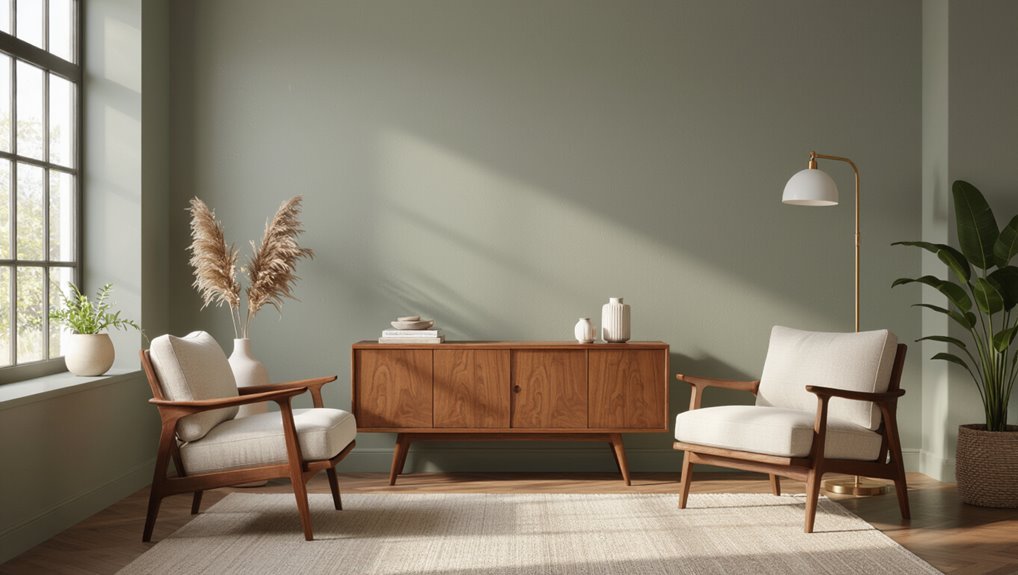
One shade stands out above the rest: warm greige—a balanced mix of gray and beige that’s cozy without feeling dated.
You’ll find its timeless elegance adapts to modern and traditional rooms, anchoring decor while allowing accents to pop.
It delivers subtle emotional impact, calming yet sophisticated, so you’ll choose it for longevity, resale appeal, and spaces that need neutral warmth without losing character.
Survey Data & Paint-Brand Releases That Back the Ranking
You’ll see how national survey trends, recent paint-brand launches, and regional color preferences all line up to support the top pick.
We’ll compare percentage shifts from consumer polls, note which manufacturers introduced matching collections, and highlight where tastes differ by region.
That context will show why this color rose to the top in 2026.
Survey Trends Snapshot
Curious which colors homeowners are actually picking in 2026?
You’ll see survey trends showing a shift toward muted greens and warm neutrals, driven by color psychology and historical influences that favor calm, restorative palettes.
Regional surveys, resale-minded buyers, and renter preferences all tilt similarly.
Weekly polling and home-inspection data confirm steady adoption rather than a fleeting fad, supporting the ranking’s validity.
Paint-Brand Launches
Because manufacturers track buyer demand closely, recent 2026 paint-brand launches mirror the survey shift toward muted greens and warm neutrals: major brands rolled out curated collections, new pigment formulas, and coordinated trim palettes that reflect the calm, restorative tones homeowners are choosing.
You’ll see paint trends reflected in limited-edition hues and brand collaborations that make selecting showroom-ready, harmonious schemes faster and more reliable.
Regional Color Preferences
Brands aren’t just following national trends—they’re tailoring palettes to regional tastes, and the survey data highlights clear geographic differences in color preference.
You’ll see regional influences tied to cultural significance and historic trends: coastal areas follow climate effects with cool hues, cities show urban preferences rooted in artistic movements, while rural aesthetics favor warm tones reflecting lifestyle choices and local heritage.
Why Designers and Homeowners Chose It
When you walk into a room painted in this year’s standout hue, you immediately notice how it balances warmth and restraint—designers and homeowners picked it because it adapts to light, complements both minimalist and layered styles, and makes spaces feel intentional without shouting.
You’ll appreciate its color psychology and emotional impact through:
- Calm neutrality
- Versatile contrast
- Textural friendliness
- Timeless appeal
How Its Undertones Shift in Different Light
If you step into the same room at dawn, midday, and dusk, you’ll see the undertones of this year’s go-to wall color subtly shift—from a soft greige in cool morning light to a warmer, taupe-leaning hue in the afternoon and a muted, almost clay-like glow as the sun sets—so plan finishes and furnishings knowing light will reveal different faces of the paint.
You’ll notice light perception alters apparent color temperature, so test swatches at times you use the space most.
How Smart Lighting and Materials Change the Color
You’ll notice how adaptive color temperatures from smart bulbs can warm or cool the same paint within minutes, changing its perceived hue.
The reflectance of flooring, textiles, and finishes will bounce that light differently, shifting contrast and saturation across the room.
Use dynamic accent coordination—automated lamps and smart trim lighting—to harmonize walls with changing materials and moods.
Adaptive Color Temperatures
Although walls keep their pigments, smart lighting and responsive materials can alter how you perceive them throughout the day.
You’ll notice shifts via adaptive lighting that affect mood and color psychology. Use controls to tailor ambiance:
- Warm mornings for calm focus.
- Cooler midday for clarity.
- Soft evenings for relaxation.
- Dynamic scenes for social settings.
Material Reflectance Shifts
When smart lighting and engineered surfaces work together, they don’t just change how bright a wall looks—they change its apparent color by altering reflectance and spectral response.
You’ll notice material innovation shifts perceived hue as coatings, microtextures, and spectrally tuned pigments interact with LEDs.
Designers use this with color psychology to evoke mood, so you can tailor ambiance through surface choice and programmable light without repainting.
Dynamic Accent Coordination
If you want a room that shifts mood without repainting, smart lighting and engineered materials let accents change color on command by coordinating spectral output with surface responses.
You’ll control color psychology and maintain accent harmony while sensors adjust tones to time, activity, or preference.
- Automate scenes
- Sync fixtures + finishes
- Use responsive coatings
- Prioritize user cues
Best Rooms for This Interior Wall Color
Curious where this color works best in your home? You’ll choose rooms based on color psychology and room functionality: calming bedrooms, focused home offices, and inviting living areas.
| Bedroom | Home Office | Living Room |
|---|---|---|
| Restful | Productive | Sociable |
| Soft light | Minimal clutter | Warm seating |
Pairing: Trim, Ceilings, and Accent Colors
Start by choosing trim and ceiling shades that make the main wall color sing without stealing the show.
Select trim and ceiling shades that let your wall color sing, enhancing it without competing for attention.
You’ll consider trim styles, ceiling finishes, and accent hues to achieve color harmony.
Balance texture contrasts and lighting effects; note spatial impacts and color psychology.
Follow design trends while using decor elements wisely.
- Crisp white trim
- Soft matte ceiling
- Muted accent hues
- Subtle texture contrasts
Furniture & Textiles: Modern, Cottage, Minimalist
You’ll mix layered neutral textures—think boucle, linen, and sisal—to add depth without competing with your walls.
Sprinkle soft pastel accents through cushions or throws to brighten the room gently.
For a modern or minimalist look, choose sleek monochrome fabrics that keep lines clean and the palette restrained.
Layered Neutral Textures
When you layer neutral textures across furniture and textiles—think boucle sofas, linen slipcovers, and woven jute rugs—you create a warm, tactile backdrop that works with modern, cottage, and minimalist styles alike.
You’ll embrace layered textures and neutral palettes to add depth without clutter.
- Boucle sofa
- Linen slipcover
- Woven jute rug
- Wool throw
Soft Pastel Accents
While muted tones won’t overpower a neutral scheme, they’ll gently lift it—think mint side chairs, blush throw pillows, and powder-blue ceramic vases that add personality without fuss.
You’ll use pastel palettes to introduce soft contrasts across modern, cottage, and minimalist settings, relying on color psychology to calm rooms, highlight focal points, and make textiles feel intentional rather than decorative.
Sleek Monochrome Fabrics
Because monochrome fabrics strip distractions, they let texture and form do the talking—think charcoal linen sofas, snow-white slipcovers, and dove-gray wool throws that read as cohesive rather than flat.
You’ll use sleek textures and subtle monochrome patterns to layer interest. Try these approaches:
- Mix linen and wool
- Add matte leather
- Contrast pile heights
- Keep trim tonal
Painting Tips for This Interior Wall Color
1 simple prep step will save you hours: take time to properly clean and patch your walls before you paint.
You’ll consider color psychology to set mood and choose finishes that suit light.
Use proper application techniques—quality roller, even strokes, cutting in first—and work in thin, consistent coats.
Let each coat dry fully and inspect for touchups before declaring it done.
Cheap Ways to Sample the Color Before Committing
A few low-cost tricks let you test the color without buying gallons: grab sample pots, peel-and-stick swatches, or scribble strips on poster board to see the hue in different lights and next to your furnishings.
- Use color swatches for quick comparisons.
- Buy small paint samples for walls.
- Try DIY testing with peel-and-stick.
- Assess lighting effects, room size, visual impact, and color psychology as budget options.
Common Mistakes With This Color : And Fixes
When you pick this popular hue, it’s easy to make avoidable mistakes—wrong undertone pairings, over- or under-saturating a room, and ignoring how natural light shifts the color through the day. You’ll face common pitfalls: neglecting lighting effects, mismatching complementary shades, and overlooking texture interplay and color saturation. Fixes: test samples, consider color psychology and emotional impact for trend longevity.
| Problem | Fix |
|---|---|
| Wrong undertone | Sample under varied light |
| Flat texture | Add tactile fabrics |
Frequently Asked Questions
Is This Color Pet- and Kid-Friendly for Hiding Marks?
Yes — you’ll find it pet- and kid-friendly because its stain resistance and washability features hide scuffs and marks; you’ll still want a durable finish, quick spot-cleaning routine, and washable paint for high-traffic areas.
How Does It Affect Resale Value in Different Markets?
It boosts resale modestly in stable markets and strongly in trendy neighborhoods; you’ll want neutral hues aligned with market trends and buyer preferences, since neutral, durable tones appeal broadly and help buyers envision their own decor, increasing offers.
Can This Color Be Used in Small, Windowless Rooms?
Yes — you can use it in small, windowless rooms; it boosts light reflection and brightens room ambiance, so you’ll feel more open and calm, though you might add layered lighting and reflective surfaces to avoid flatness.
What Complementary Exterior Paint Colors Work With It?
Like a soft linen sweater, you’ll pair it with warm greiges, deep charcoal trim, muted sage, or clay terracotta; these exterior design choices follow current color trends, and they’ll harmonize your facade while boosting curb appeal.
Are There Eco-Friendly Paint Options in This Color?
Yes — you can choose eco-friendly paints in that hue: low-VOC and zero-VOC formulas made with sustainable materials, natural pigments, and recycled resins. They’re certified and consider color psychology, so you’ll get safety and mood benefits.
Conclusion
So, in short: this year’s go-to wall tone isn’t just “beige” — it’s a quietly confident warm greige that makes rooms feel gently upgraded without shouting. You’ll find it flattering in most lights, forgiving with furniture and fabrics, and easy to tweak with smart bulbs or textured finishes. Try samples in real light, avoid stark contrasts, and you’ll get a space that looks thoughtfully curated — not like you tried too hard.
