
30 Wheelchair-Accessible Bathroom Ideas for Comfort and Convenience
You deserve a bathroom designed for easy wheelchair access, starting with wide doorways and smooth roll-in showers without curbs. Choose lever-style faucets and fold-down shower seats for simple, safe use. Add grab bars for stability, guarantee an adequate 60-inch turning radius, and improve ventilation for comfort. Use contrasting colors to define spaces clearly. These smart ideas create both convenience and safety, making daily routines effortless. Keep exploring to discover even more practical solutions for your ideal accessible bathroom.
Wide Doorways for Easy Wheelchair Access
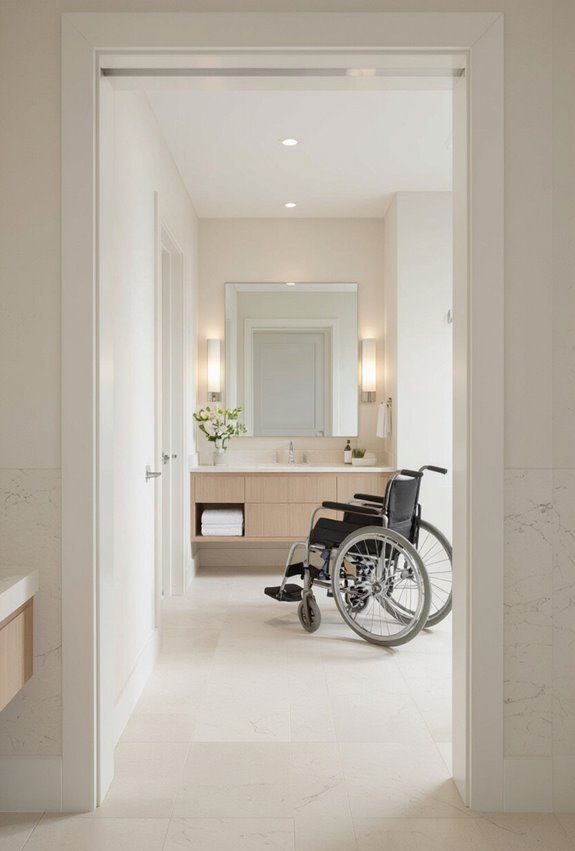
A wide doorway makes all the difference when it comes to wheelchair accessibility in your bathroom. You need at least 32 inches of threshold clearance to easily roll through without snagging.
Also, consider the door’s swing radius to make certain your wheelchair can maneuver without obstruction. Proper sizing here prevents frustrating barriers and lets you move freely and safely.
Lever-Style Faucets for Simple Operation
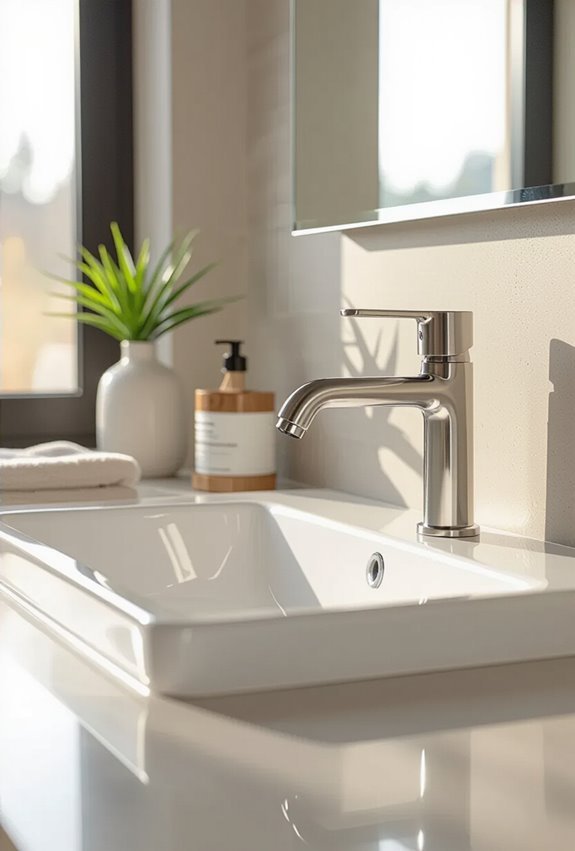
Choose lever-style faucets to make controlling water flow and temperature effortless. A single lever design lets you adjust settings with minimal effort, perfect for limited hand mobility.
Pair these faucets with an ADA compliant pull bar nearby for added support and safety. This combination enhances convenience and independence, making your bathroom truly wheelchair accessible and user-friendly.
Roll-In Showers Without Curbs
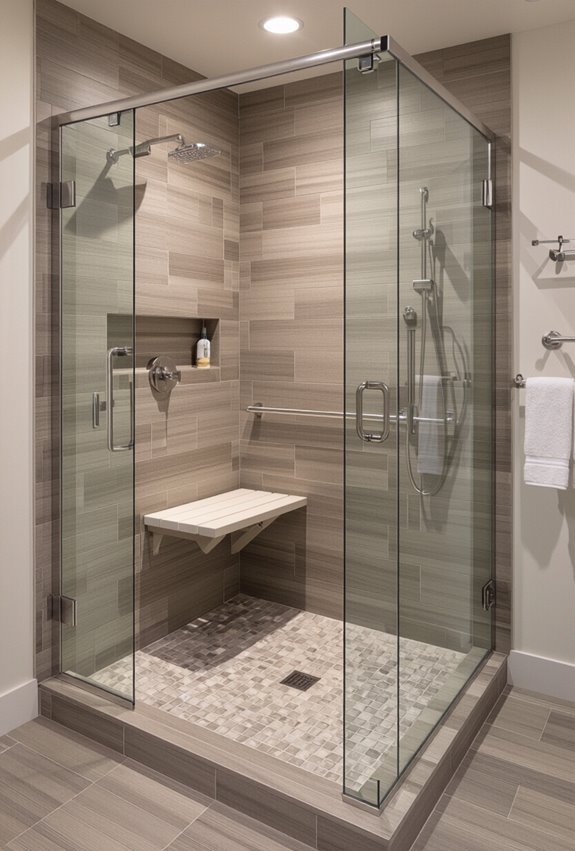
Lever-style faucets make daily tasks easier, but the shower area also needs thoughtful design to guarantee full accessibility.
Roll-in showers without curbs let you enter smoothly, while bench style seating provides a comfortable resting spot. Incorporate a textured niche to hold toiletries securely within reach, preventing slips. This design makes certain your shower is both safe and convenient for wheelchair use.
Grab Bars for Safety and Stability
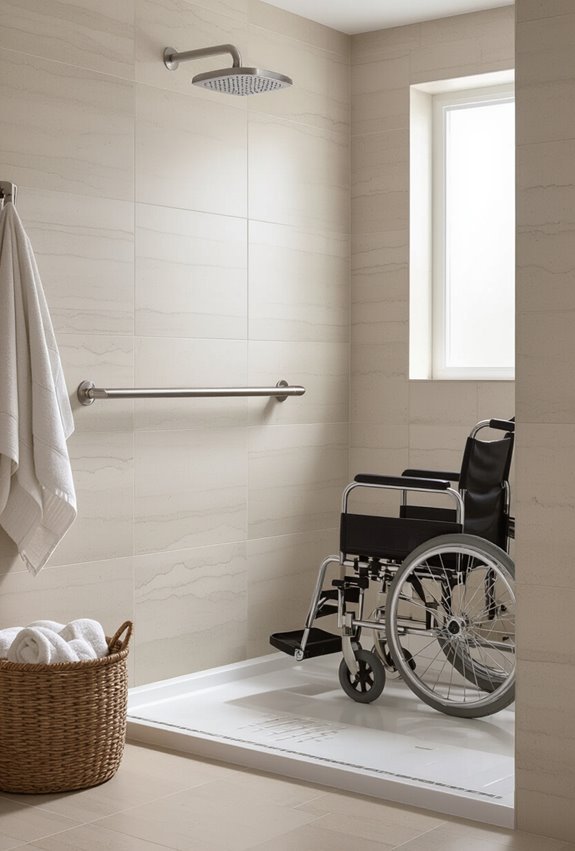
Install grab bars strategically throughout your bathroom to boost safety and provide reliable support when moving around.
Choose stainless grabbers for durability and easy maintenance, ensuring they hold firm under pressure.
If style matters, opt for decorative grabrails that blend seamlessly with your decor while enhancing stability.
Proper placement near the toilet and shower maximizes your safety and independence.
Non-Slip Flooring to Prevent Falls
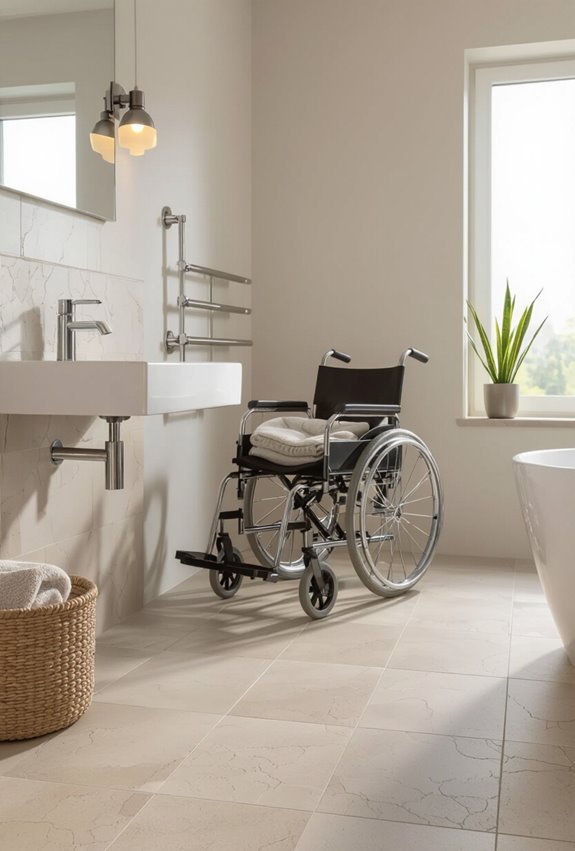
Because wet surfaces can turn hazardous quickly, choosing non-slip flooring is essential to prevent falls in your bathroom.
Opt for textured vinyl, which provides excellent grip even when wet. Additionally, place rubber mats near the shower and sink areas for extra traction.
These simple choices help you maintain safety and confidence while moving around your wheelchair-accessible bathroom.
Lowered Sinks With Knee Clearance
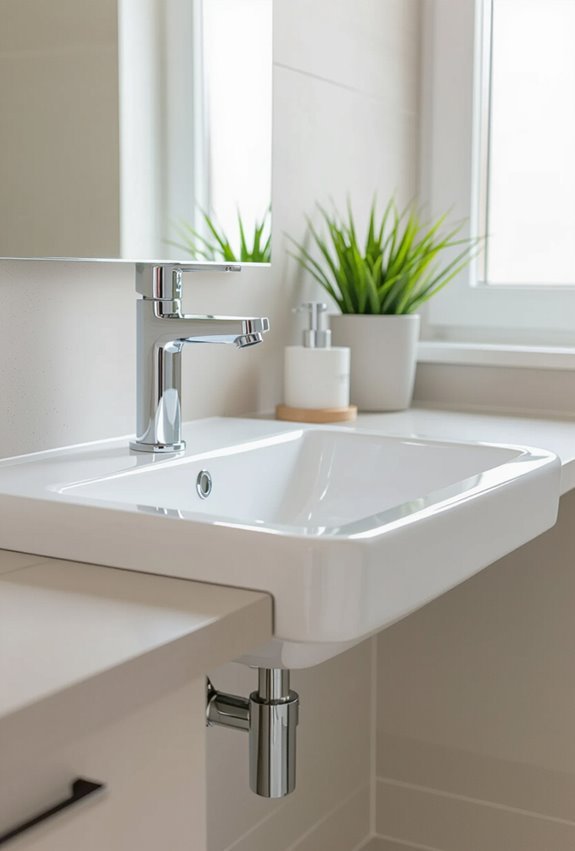
Non-slip flooring keeps your bathroom safe, but accessibility doesn’t stop there. Choose a lowered sink with knee clearance to easily roll under without strain.
A compact vanity maximizes space while providing essential knee protection, preventing bumps and discomfort. This setup guarantees you can comfortably use the sink without obstacles, enhancing both convenience and independence in your wheelchair-accessible bathroom.
Adjustable Shower Heads for Flexibility
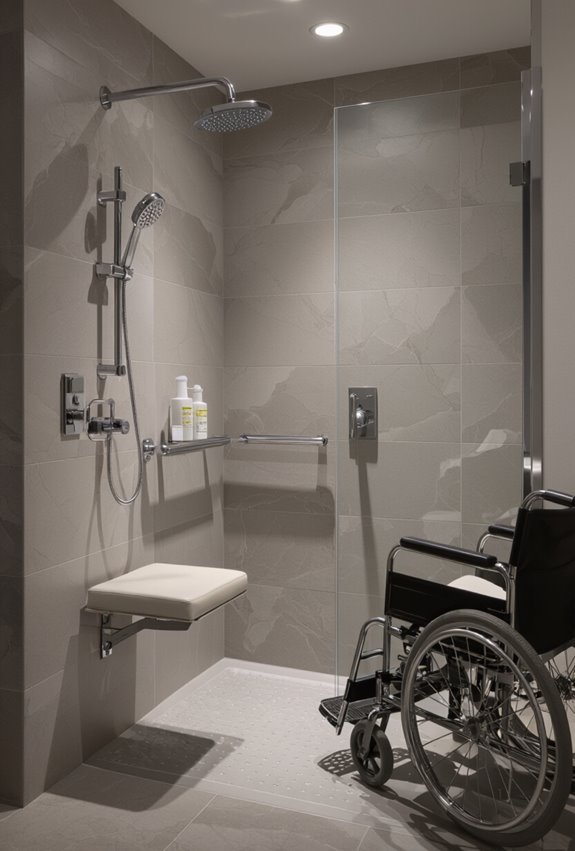
Enhance your showering experience by choosing an adjustable shower head that moves with you. Look for models with adjustable height features to accommodate various seating positions and standing users.
Many options are water conserving, helping you save on utility bills while reducing waste. Installing an adjustable shower head adds flexibility and comfort, making your bathroom truly accessible and efficient.
Curbless Bathtubs for Easy Transfers
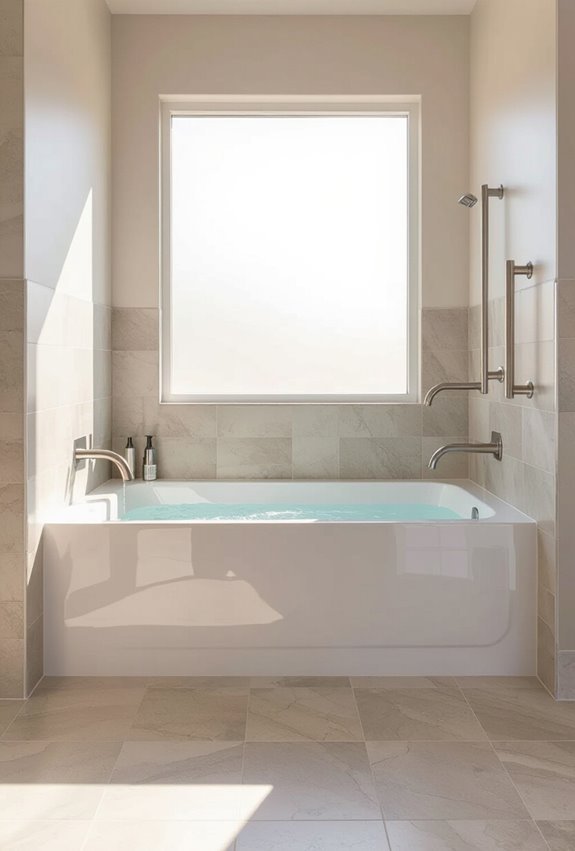
When stepping into a bathroom designed for accessibility, curbless bathtubs make transfers much easier and safer.
You’ll appreciate integrated grabbars that provide steady support while entering or exiting the tub. Textured flooring prevents slips, enhancing safety every step of the way.
These features combine to offer you a comfortable, convenient bathing experience without the hassle of high edges or barriers.
Wall-Mounted Toilets With Height Considerations
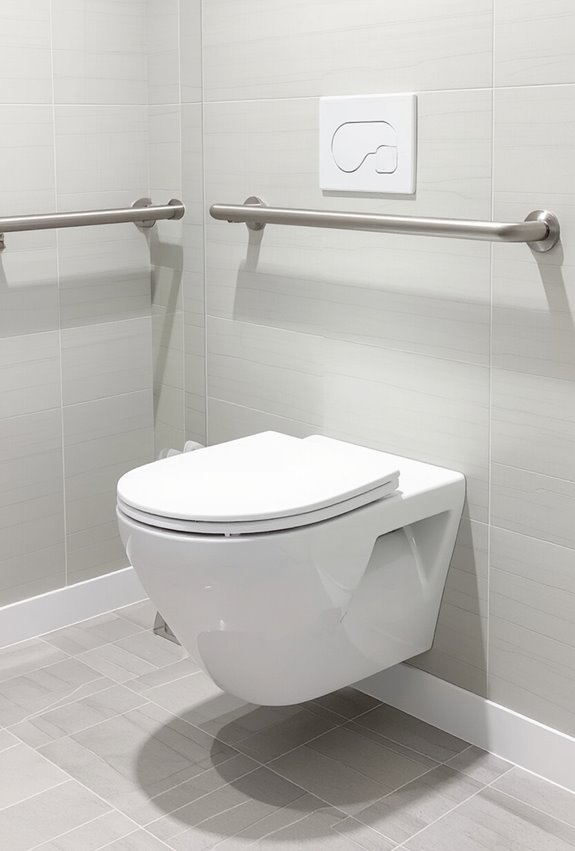
Just as curbless bathtubs improve ease of movement, wall-mounted toilets with proper height adjustments can make a big difference in your bathroom’s accessibility.
A wall hung design offers space saving benefits and easier cleaning. Choose an amputee friendly adjustable height model to customize comfort and support, ensuring safe, convenient use tailored to your specific needs and mobility requirements.
Using Touchless Faucets for Hygiene
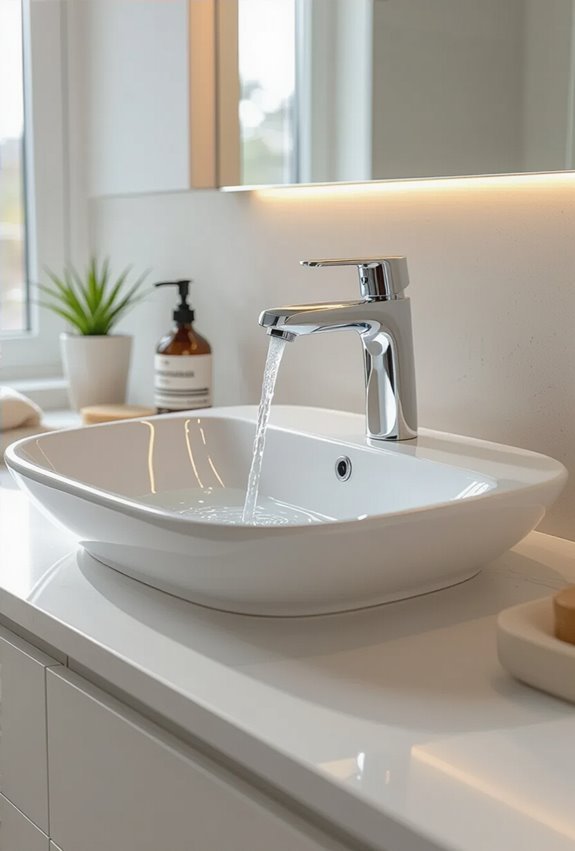
Touchless faucets often make a significant difference in maintaining hygiene, especially in wheelchair-accessible bathrooms. You’ll appreciate how touchless aesthetics keep surfaces cleaner by reducing contact points.
Just remember regular sensor maintenance guarantees they work reliably and prevent water waste.
Installing these faucets not only promotes cleanliness but also adds modern convenience, making your bathroom safer and easier to use every day.
Open Under-Sink Space for Wheelchairs
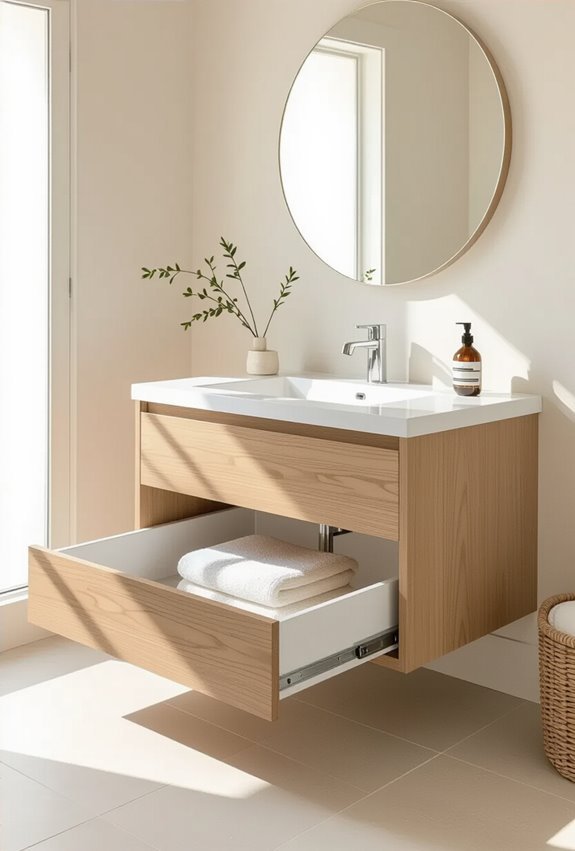
Create more freedom of movement by designing an open under-sink space for your wheelchair-accessible bathroom. Choose open cabinetry to allow easy access to plumbing and to accommodate your wheelchair comfortably.
Removable panels offer flexibility for maintenance and customization without restricting space. This design guarantees you can get close to the sink while keeping the area functional and accessible.
Installing Handheld Shower Wands
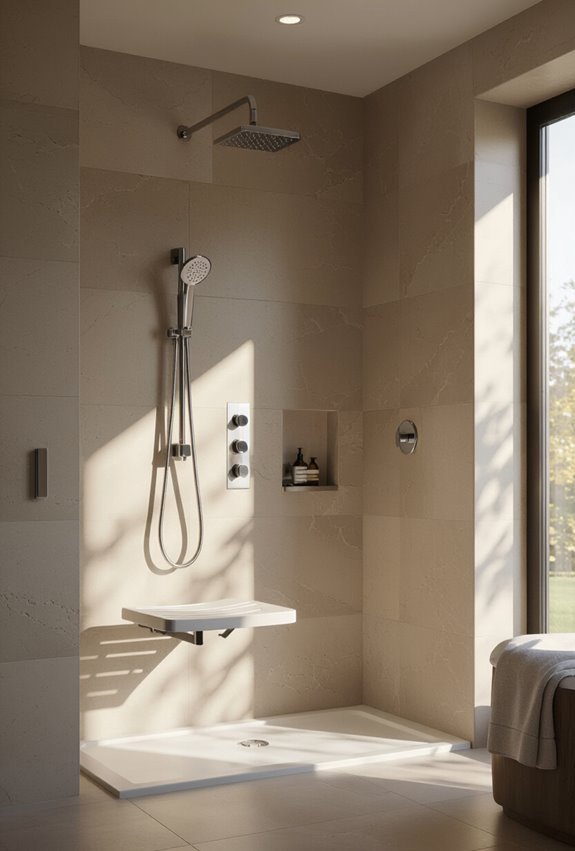
Installing handheld shower wands lets you control water flow easily while seated or standing, making showering safer and more comfortable.
You can adjust temperature control precisely, preventing sudden hot or cold bursts.
Plus, handheld wands promote water conservation by targeting specific areas, reducing overall usage.
Their flexibility enhances convenience, helping you maintain independence during daily hygiene routines.
Clear Floor Space for Maneuverability
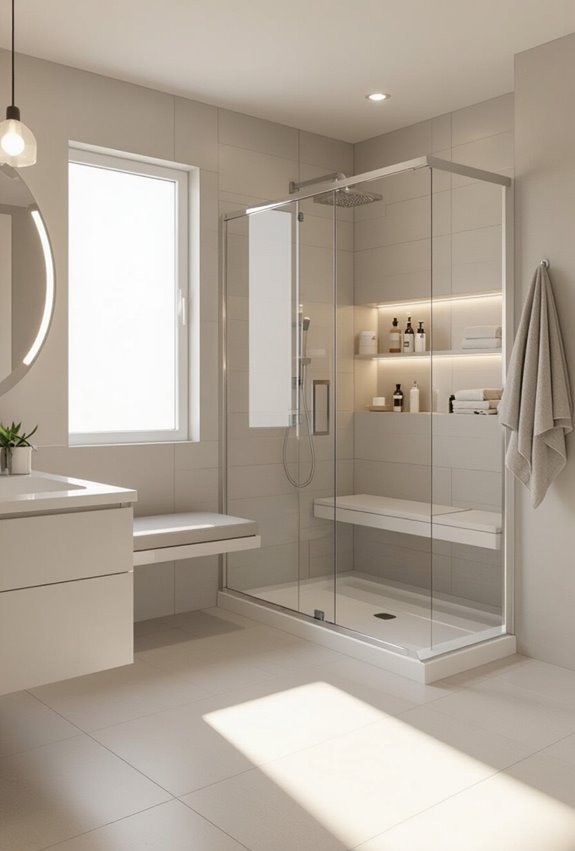
Ensuring ample clear floor space in your bathroom lets you move your wheelchair freely and safely.
Keep clear pathways free of obstacles to avoid accidents.
Designate maneuvering zones near the sink, toilet, and shower so you can turn and position your wheelchair with ease.
Prioritizing these spaces enhances both comfort and convenience during daily routines.
Accessible Storage Within Reach
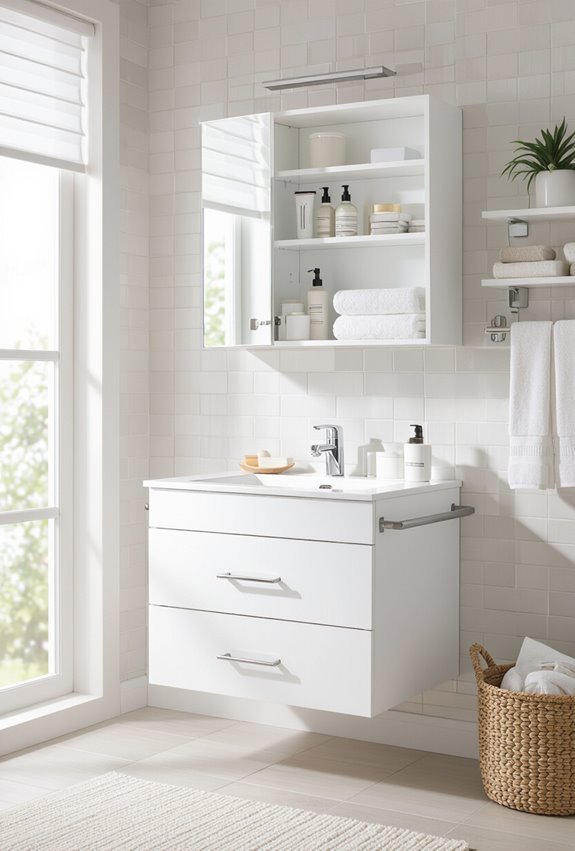
Once you’ve cleared enough space to move comfortably, the next step is to make sure your storage is easy to reach.
Use magnetic bins on walls for quick access to small items, and install pivot baskets inside cabinets to bring contents closer without straining.
These solutions keep essentials within arm’s reach, enhancing convenience and independence in your wheelchair-accessible bathroom.
Rounded Countertop Edges to Avoid Injuries
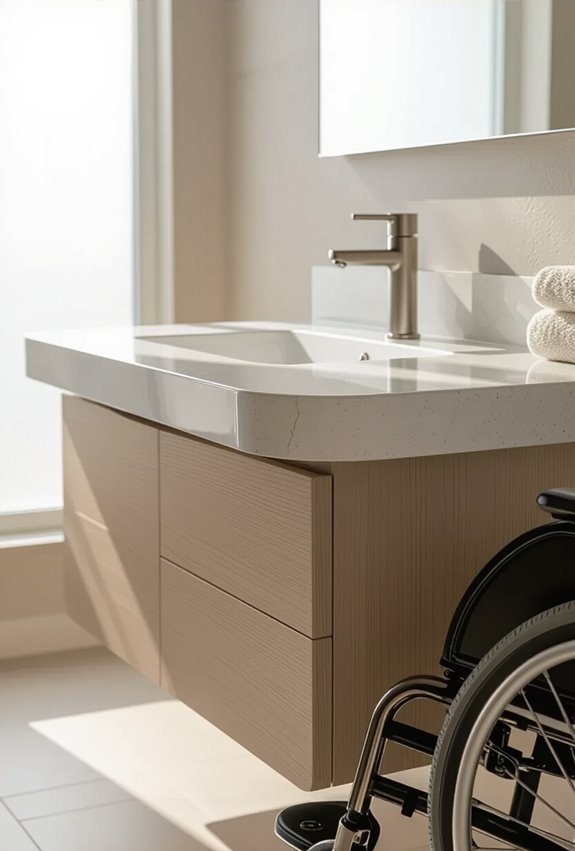
A bathroom with rounded countertop edges markedly reduces the risk of injuries, especially in tight spaces where maneuvering a wheelchair can be challenging.
You’ll want to choose rounded corners and cushioned edges on all counters to prevent bumps and bruises.
These features create a safer environment, letting you move freely without worrying about sharp surfaces that could cause harm.
Using Bright, Even Lighting for Visibility
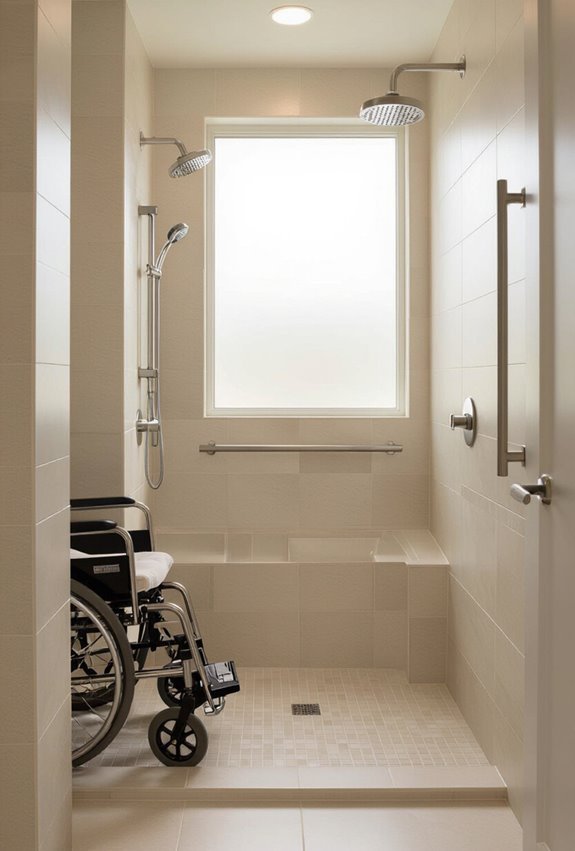
Bright, even lighting greatly improves visibility in a wheelchair-accessible bathroom, helping you navigate safely and confidently.
Choose fixtures with glare reduction to prevent harsh reflections that can cause discomfort or accidents.
Opt for a color temperature that mimics natural daylight, enhancing clarity without straining your eyes.
Proper lighting makes certain every detail is visible, making your bathroom both functional and comfortable.
Smart Controls for Temperature and Lighting
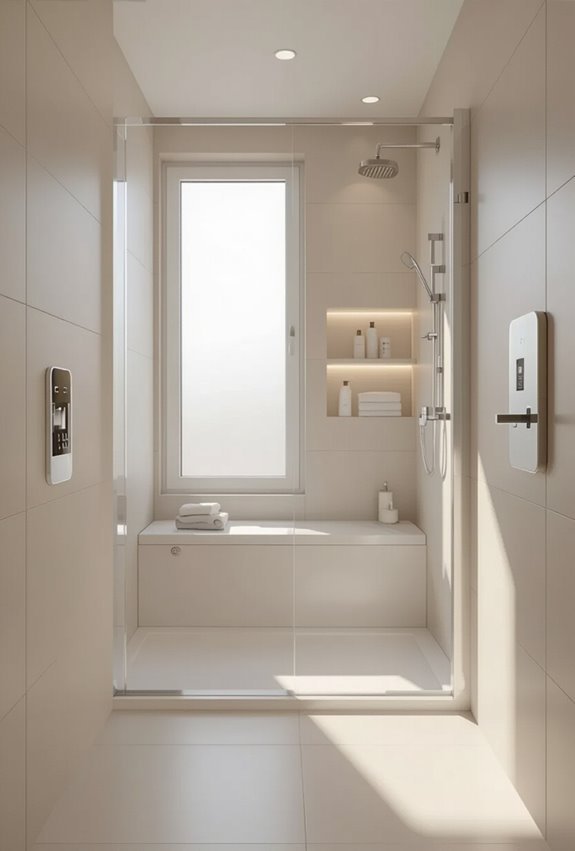
While managing temperature and lighting can be challenging in a wheelchair-accessible bathroom, smart controls simplify the process by putting adjustments right at your fingertips.
Voice thermostats let you set the perfect temperature without reaching, while automated dimmers adjust lighting smoothly for comfort and safety.
These features enhance your independence and make your bathroom environment more convenient and enjoyable.
Wide, Easy-Access Bathroom Mirrors
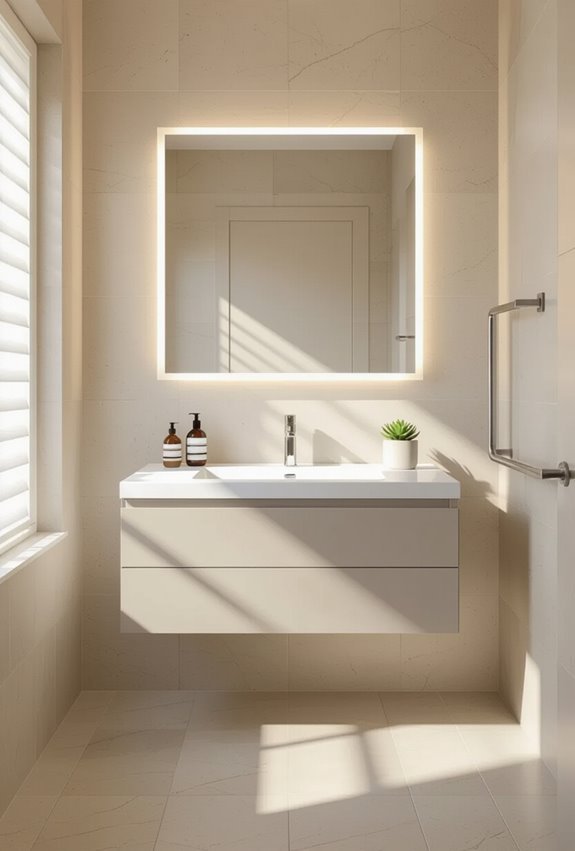
Many wheelchair users find that wide, easy-access bathroom mirrors make daily routines simpler and more comfortable.
You can choose tilt mirrors to adjust angles easily, ensuring clear views from different heights.
Adding magnifying mirrors helps with detailed tasks like shaving or makeup.
Positioning these mirrors thoughtfully enhances visibility and convenience, making your bathroom more functional and user-friendly.
Installing Emergency Call Buttons
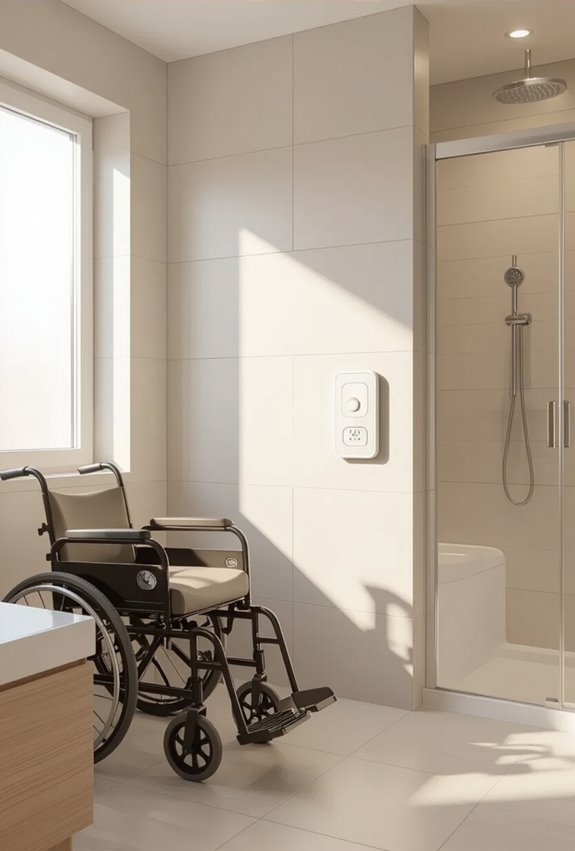
Adding emergency call buttons in your bathroom can materially boost safety and peace of mind for wheelchair users.
You should install panic buttons within easy reach from the toilet and shower areas.
Toilet alarms help alert caregivers quickly during an emergency, reducing response time.
Make certain these devices are loud, visible, and simple to use to guarantee maximum effectiveness and convenience.
Lever Handles on Doors for Ease of Use
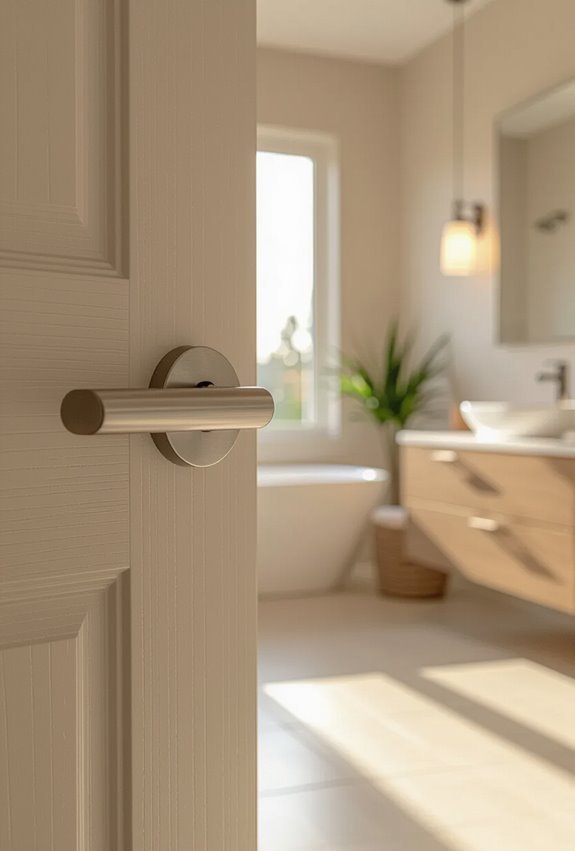
Choose lever handles for your bathroom doors to make opening and closing effortless, especially if you use a wheelchair or have limited hand strength. Opt for spring loaded levers to guarantee doors close gently without extra effort. Adding tactile indicators helps you easily identify handles by touch, increasing convenience and independence in your wheelchair-accessible bathroom.
Anti-Scald Valves for Safe Water Temperature
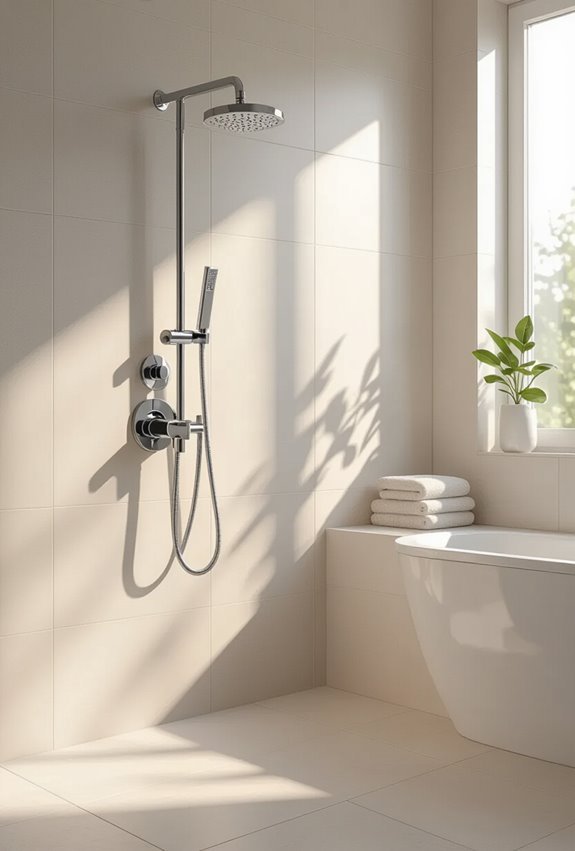
Although it might seem like a small detail, installing anti-scald valves can protect you from sudden temperature spikes in the water.
These temperature regulators guarantee consistent warmth, preventing burns and discomfort.
Using Contrasting Colors to Define Spaces
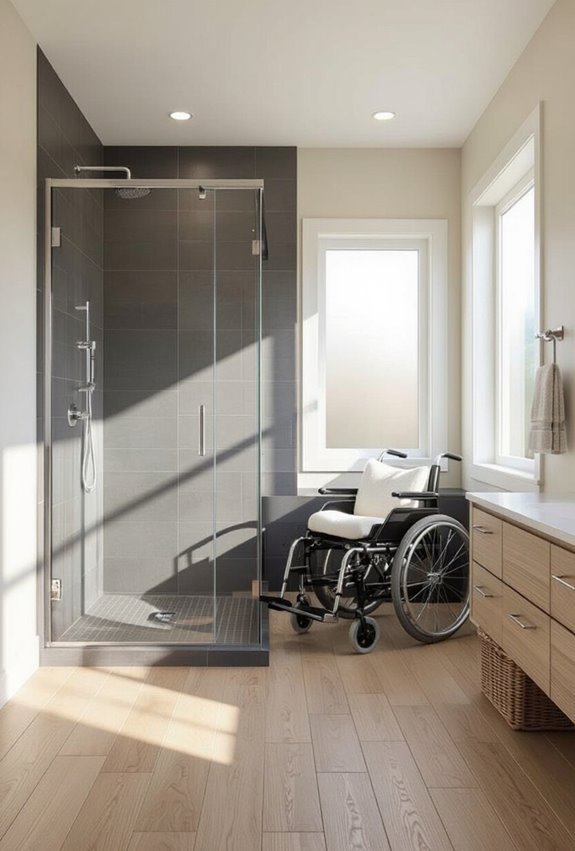
Several design experts recommend using contrasting colors to clearly define different areas within a wheelchair-accessible bathroom. You can enhance safety and navigation by applying color contrast between walls, floors, and fixtures.
Incorporate textured edges on surfaces to provide tactile cues, helping you identify boundaries easily. This combination of visual and tactile elements makes moving around your bathroom more intuitive and secure.
Ventilation Solutions That Work for Wheelchairs
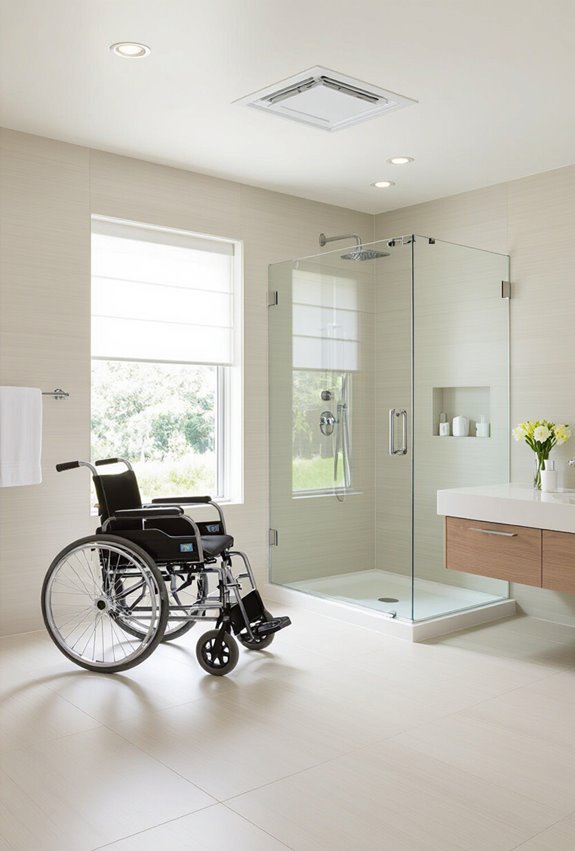
Color contrasts and tactile cues improve safety and navigation, but proper ventilation plays a key role in maintaining comfort and air quality in a wheelchair-accessible bathroom.
You can install ceiling exhausts to efficiently remove moisture and odors without obstructing movement. Additionally, portable fans offer flexible airflow options, allowing you to adjust ventilation based on your needs while keeping the space comfortable and fresh.
Designing Bathrooms With Adequate Turning Radius
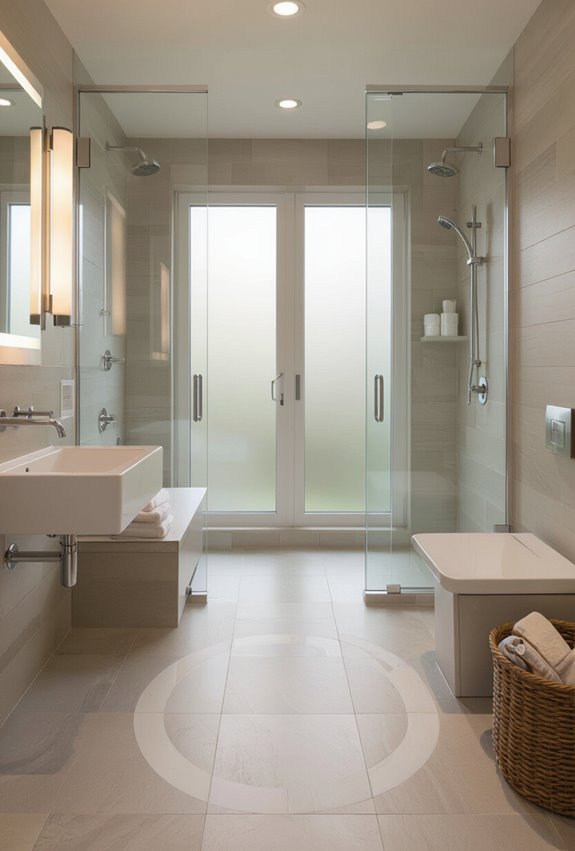
Ensuring enough turning radius in your bathroom is essential for easy maneuvering and independence.
Aim for minimum clearances of at least 60 inches in diameter to allow smooth center turning of a wheelchair.
Plan your layout carefully to avoid tight corners or obstacles, ensuring you have ample space for comfortable and safe movement throughout your bathroom.
Tips for Maintaining a Comfortable Accessible Bathroom
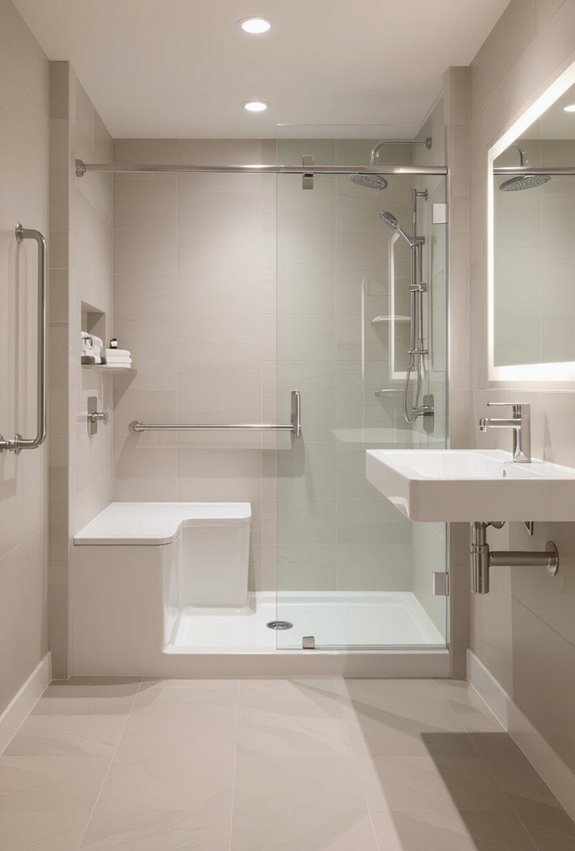
Once you’ve created enough space for easy wheelchair movement, keeping your bathroom comfortable and accessible becomes the next priority.
Focus on routine cleaning to prevent buildup and maintain hygiene. Incorporate scent management with mild, non-irritating fragrances to keep the space fresh without overwhelming sensitivities. Regularly check fixtures and grips to confirm safety and ease of use, making your bathroom both welcoming and functional.
Wide Doorways
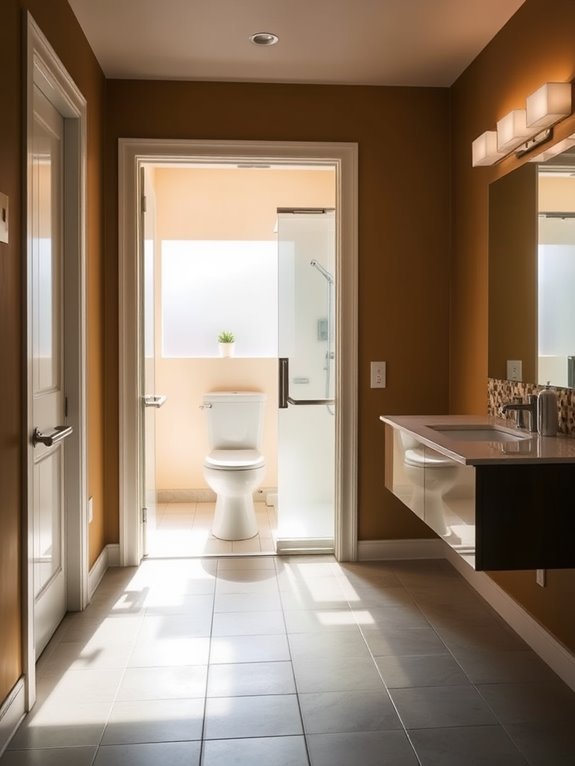
Wide doorways are essential for creating an accessible bathroom that accommodates wheelchair users.
By ensuring door widths of at least 32 inches, you make navigation easier and safer. This feature not only allows for smooth entry and exit but also enhances overall usability.
When designing your space, consider the layout to minimize obstacles, ensuring a comfortable experience for everyone.
Non-Slip Flooring
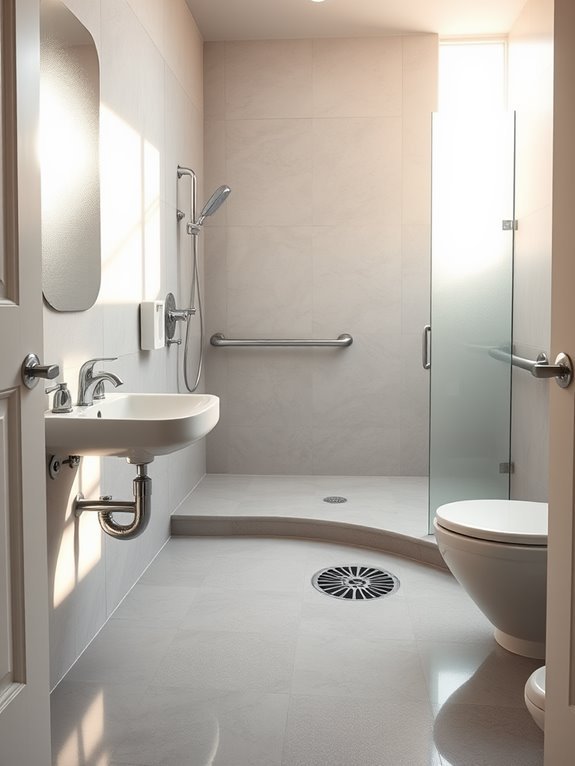
Safety is paramount in a wheelchair accessible bathroom, and non-slip flooring is an essential feature that helps prevent accidents.
Choosing the right flooring can make a significant difference. Consider these factors:
- Material: Opt for rubber or textured tiles for better grip.
- Maintenance: Guarantee it’s easy to clean and resistant to moisture.
- Style: Select designs that complement your bathroom decor while prioritizing safety.
Touchless Faucets
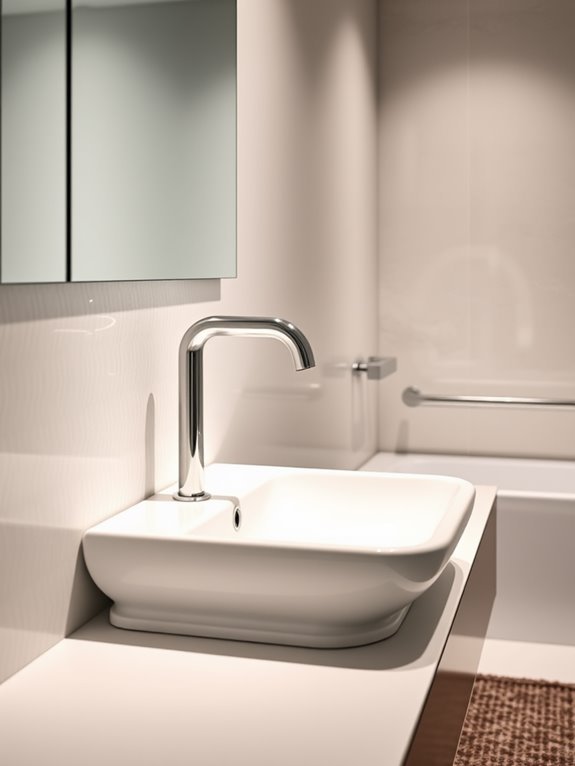
After enjoying the benefits of a curbless shower entry, the next step in creating an accessible bathroom is incorporating touchless faucets.
These faucets make it easier to maintain hygiene without needing to touch handles.
Consider these features:
- Sensor activation – Water flows automatically when you place your hands under the faucet.
- Temperature control – Set your preferred temperature for comfort.
- Easy installation – Many models fit standard plumbing setups.
Wall-Mounted Toiletries
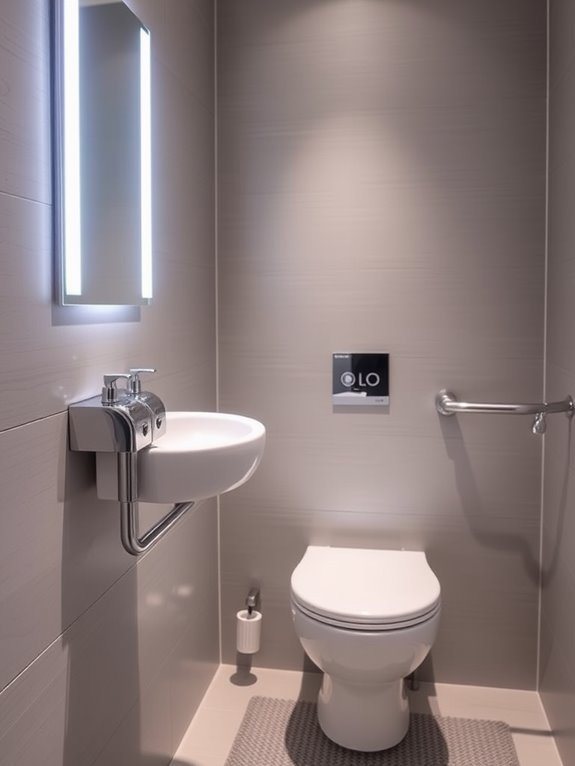
Incorporating wall-mounted toiletries in a wheelchair accessible bathroom can greatly enhance both functionality and independence.
By installing shelves, soap dispensers, and towel racks at accessible heights, you’ll find it easier to reach your essentials.
This setup not only saves space but also minimizes clutter, making your bathroom more organized and user-friendly.
Enjoy the convenience of having everything within arm’s reach!
Conclusion
Creating an accessible bathroom isn’t just about meeting needs; it’s about weaving comfort and independence into everyday life. With wide doorways welcoming you like open arms and roll-in showers that embrace freedom, each feature plays a crucial role. Grab bars stand like sturdy friends, and non-slip flooring guarantees safety beneath your feet. By incorporating these essential elements, you transform a space into a sanctuary—where every moment flows smoothly, and every visit feels like a gentle reminder of your strength.
