
35 Small Bathroom Design Ideas With a Bathtub on a Budget
You can fit a stylish bathtub into a small bathroom without overspending by choosing a compact or slim soaking tub, a short alcove model, or a corner pairing with a curbless shower to free floor space. Use wall-mounted faucets, recessed niches, floating shelves, and clear glass panels to keep sightlines open. Refinish existing tubs, pick waterproof vinyl flooring, and set a clear budget with DIY tasks and permits. Keep going for practical layouts, fixture picks, and budget tiers.
Search Intent and Best Format: Quick Budget Design Ideas (Informational Listicle)
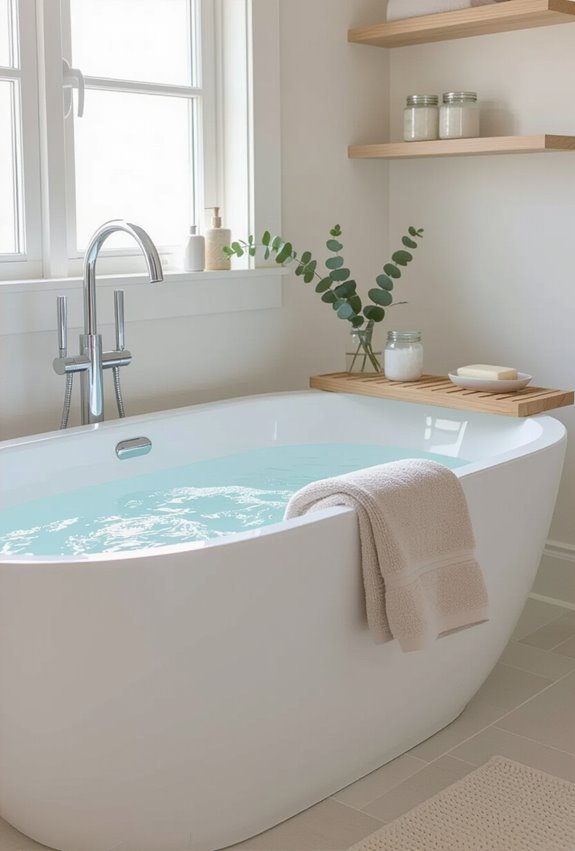
When people search for “small bathroom design ideas with bathtub on a budget,” they want quick, practical tips they can act on now—so present a tight listicle that prioritizes cost, space-saving, and easy execution. You’ll list clear steps: swap bulky storage for space saving accessories, choose budget friendly materials, reuse fixtures, paint light colors, and prioritize layout changes that maximize function without costly plumbing or major demolition.
Choose a Compact Tub That Fits Small Bathrooms
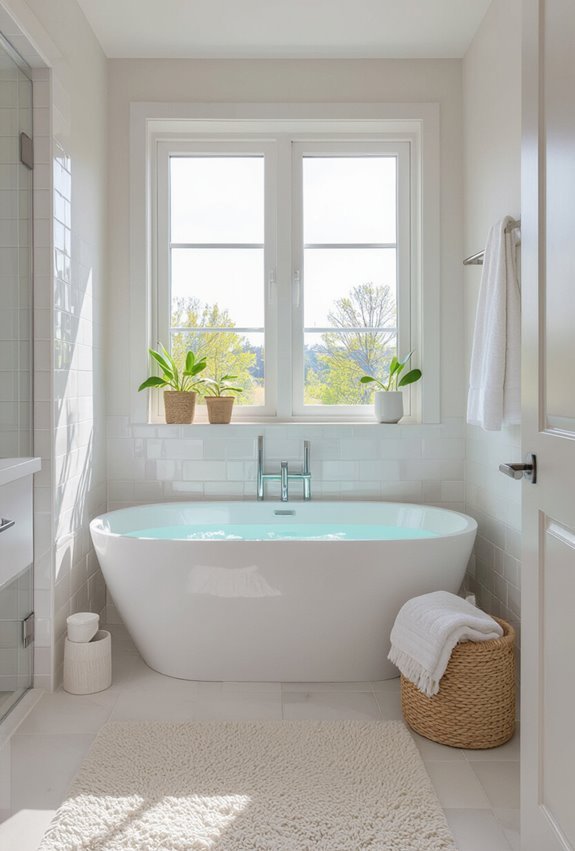
You can free up floor space and keep a tub in a small bathroom by choosing a compact model designed for tight layouts.
Opt for a compact clawfoot or a mini freestanding tub to add character without overwhelming the room.
Measure carefully, pick a shallow depth to save space, and choose wall-mounted faucets to maximize usable ledge and circulation.
Install a Short Alcove Bathtub to Save Space and Cost
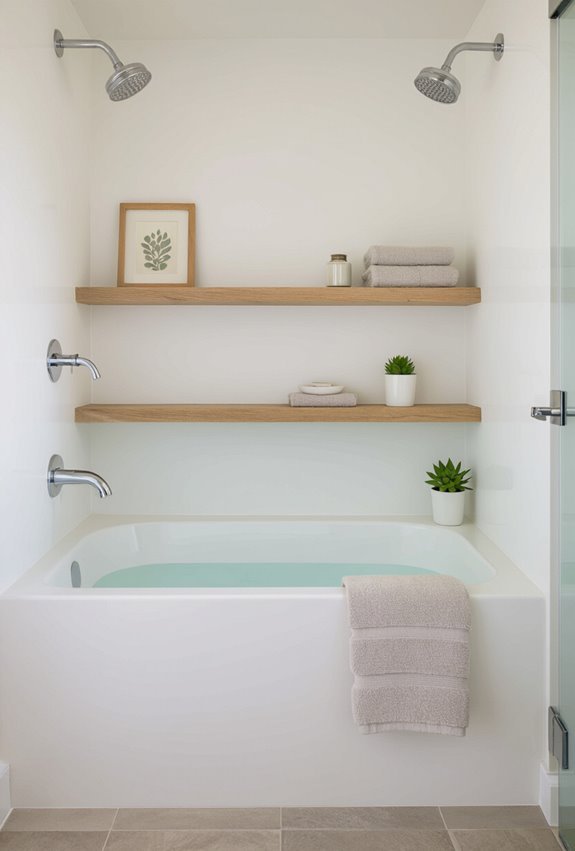
Install a short alcove bathtub to reclaim floor space and cut costs without sacrificing functionality. You’ll fit a practical tub into tight footprints using a space saving alcove layout, freeing room for storage or a wider vanity.
Choose budget fixtures and simple surrounds to keep installation affordable. You’ll maintain comfort, reduce plumbing changes, and get a clean, efficient bathroom on a budget.
Use a Drop-In Tub With a Tiled Surround for DIY Appeal
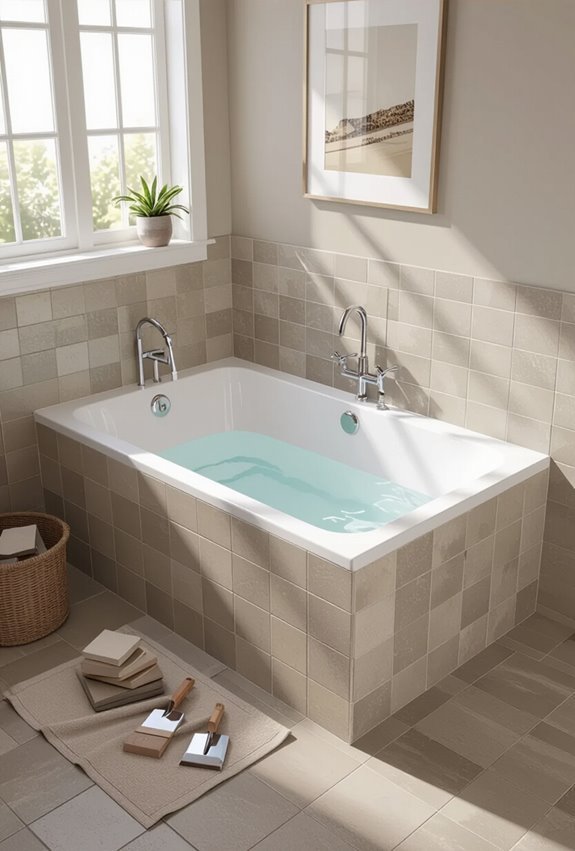
If a short alcove tub saves space and cost but feels too utilitarian, consider a drop-in tub with a tiled surround for a more finished, DIY-friendly look.
You can build a simple DIY surround, install waterproof backer board, and add tiled edging for a clean shift. This approach hides plumbing, customizes height, and gives a polished result without pro-only skills.
Opt for a Slim Soaking Tub to Keep Footprint Small
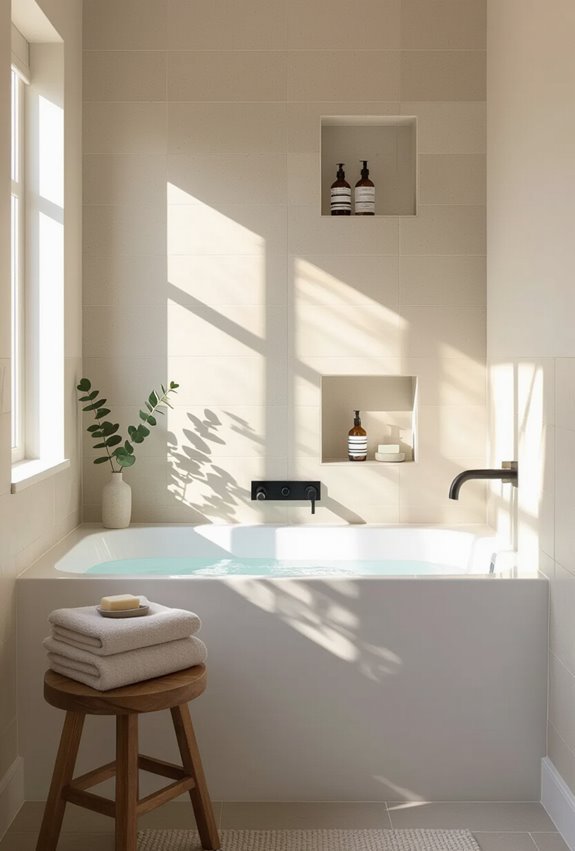
When space is tight, choose a slim soaking tub to get a full soak without widening your bathroom footprint. You can pick a narrow freestanding model for modern minimalism or a slim clawfoot for vintage charm.
Both save floor space, deliver deep water, and simplify installation. Measure carefully, prioritize depth over length, and match finishes to existing fixtures for cohesive, budget-friendly impact.
Fit a Tub Under a Sloped Ceiling for Wasted-Space Wins
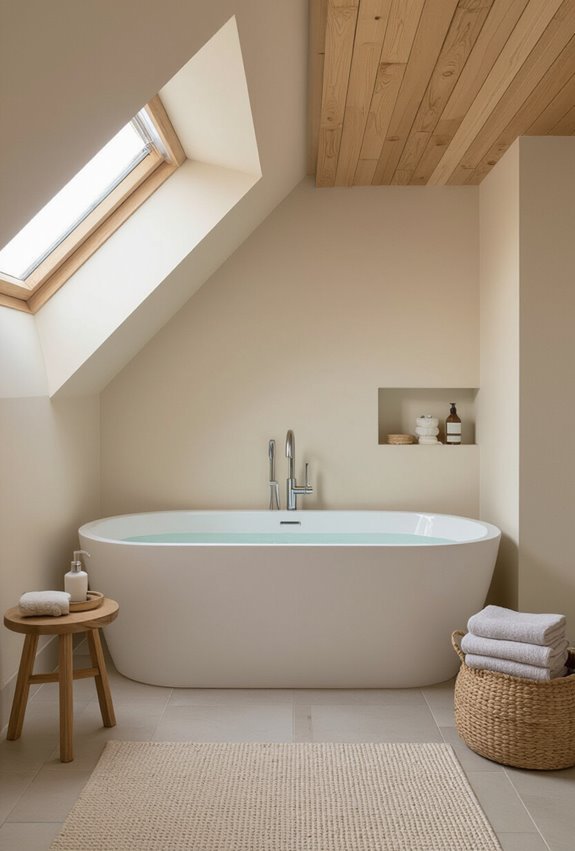
If you’ve got a sloped ceiling, tuck a low-profile tub beneath it to turn dead space into a cozy soaking nook; the reduced height won’t affect seating but frees up central headroom and circulation.
You can add eaves storage for towels and toiletries and install sloped lighting or wall-mounted fixtures to enhance ambiance without crowding.
Keep finishes light to broaden the feel.
Replace a Full Wall With a Glass Shower Screen to Open the Room
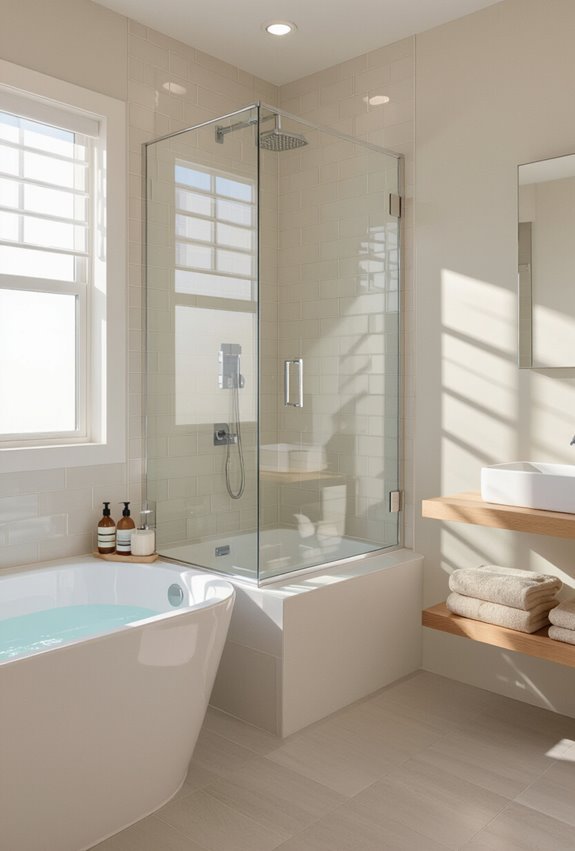
Opening up sightlines with a frameless or slim-profile glass shower screen immediately makes a small bathroom feel larger and brighter, letting natural and artificial light travel across the space instead of being trapped by a full wall.
Replace the partition with a Sliding glass solution or a single Frameless panel to preserve openness, reduce visual clutter, and keep cleaning and installation costs budget-friendly.
Use Clear or Frosted Glass to Make the Tub Area Feel Larger
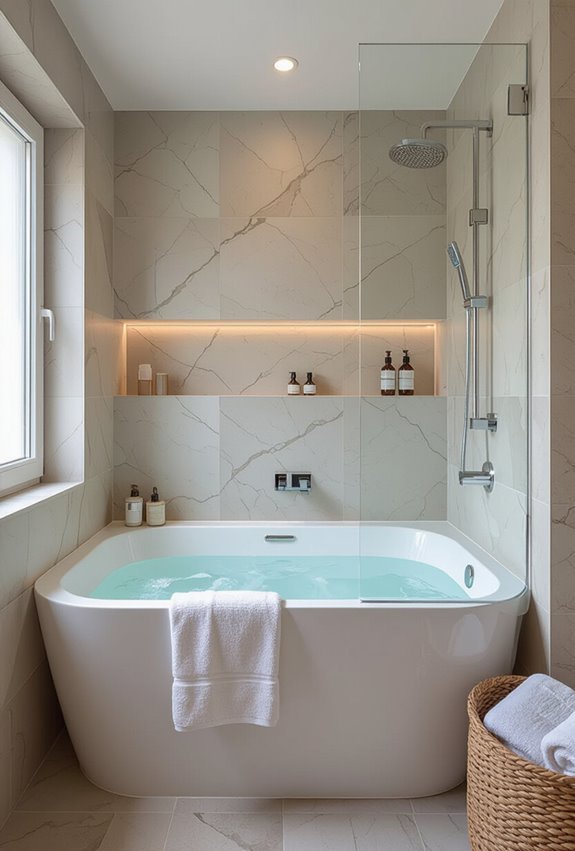
Drawing the eye through the space, clear or frosted glass around your tub keeps sightlines uninterrupted so the room feels bigger and airier.
Choose frosted panels for privacy without bulk, or clear glass to maximize light. Minimal glass hardware maintains a streamlined look and won’t clutter the visual field.
You’ll create a clean, open vibe on a modest budget.
Choose Lightweight Acrylic Tubs for Lower Cost and Easier Install
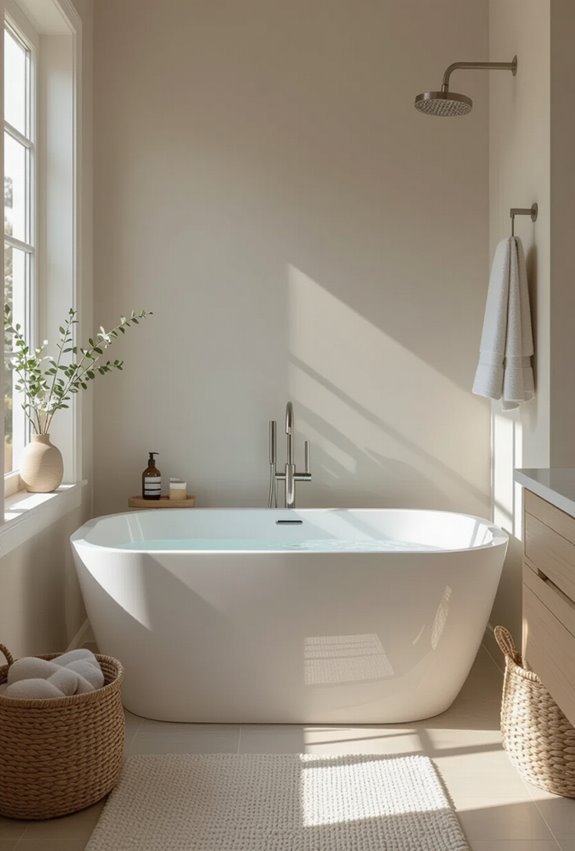
Pick a lightweight acrylic tub when you want a budget-friendly, easy-to-install option that still looks good in a small bathroom.
You’ll appreciate lightweight installation—no heavy lifting, faster fit, and lower labor costs.
Acrylic maintenance is simple: wipe with mild soap, avoid abrasive cleaners, and repair minor scratches with kits.
It’s an affordable, practical choice that maximizes space and convenience.
Use Large-Format Tiles Around the Tub to Visually Enlarge the Room
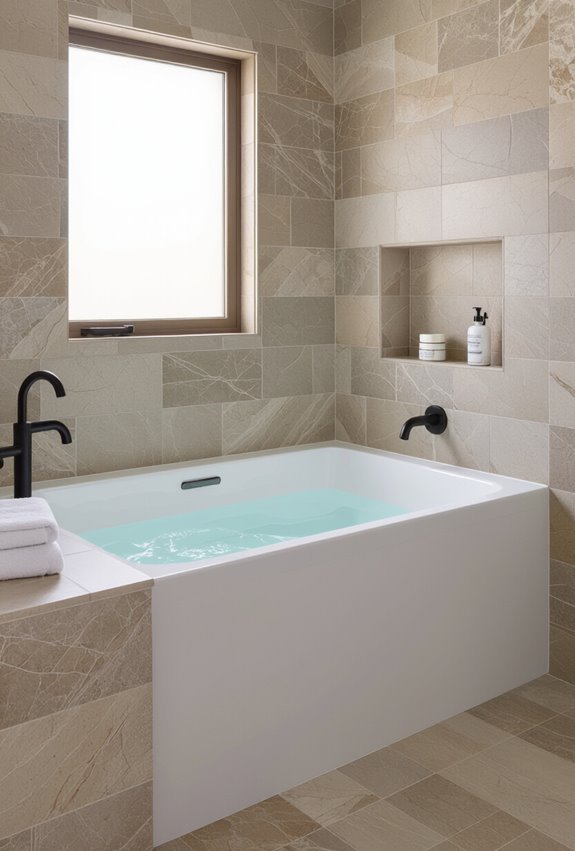
When you install large-format tiles around the tub, they’ll create fewer grout lines and make the walls read as one continuous plane, instantly enlarging a small bathroom’s appearance without raising costs dramatically.
Choose large format pieces for grout minimization and easier cleaning. You’ll get a seamless look that promotes visual expansion, simplifies maintenance, and updates the space affordably.
Create a Monochrome Palette to Make a Small Bathroom Feel Spacious
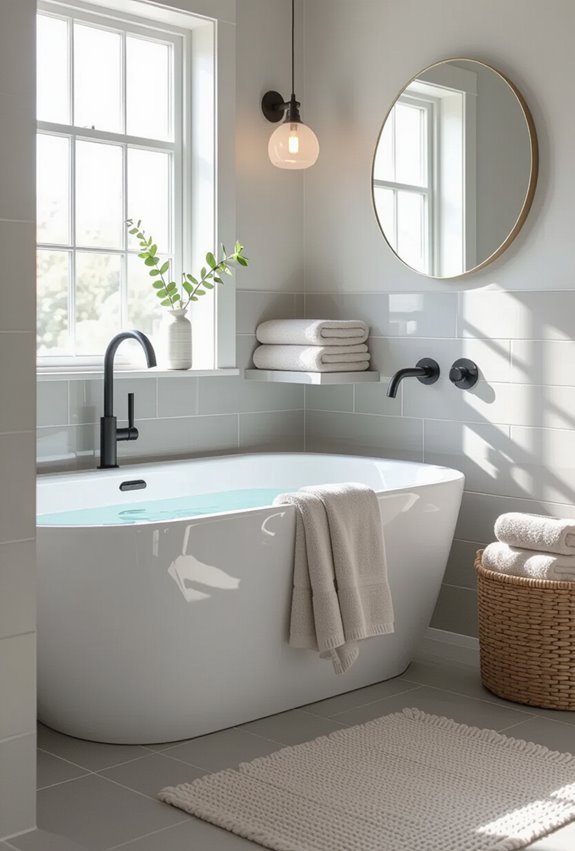
Pairing large-format tiles with a monochrome palette amplifies the streamlined look: keeping walls, floor, and fixtures in a single color family makes the room read as one continuous volume and removes visual clutter.
You’ll choose monochrome fixtures and simple hardware, add tonal textiles for softness, and use varied textures or matte and gloss contrasts to create depth without breaking the unified, spacious feel.
Add Vertical Stripes or Tall Tiles to Increase Perceived Height
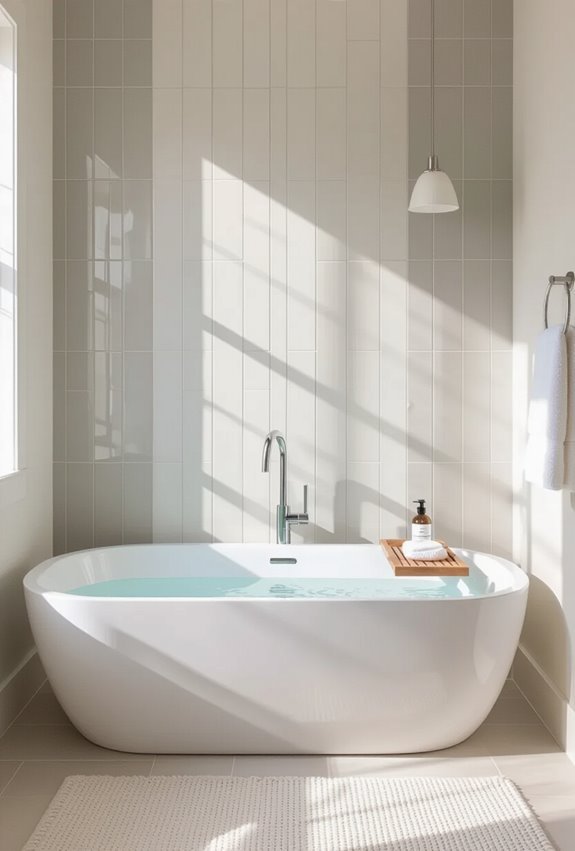
Because your eye follows lines, vertical stripes or tall tiles instantly make a low bathroom feel taller—drawn upward, the ceiling seems higher and the space feels less cramped.
Use vertical tiles around the tub or on one accent wall to create a stripe illusion that guides sightlines. Choose narrow, contrasting strips sparingly, and keep finishes light to amplify height without crowding the budget.
Install a Narrow Tub Ledge or Shelf for Storage Without Clutter
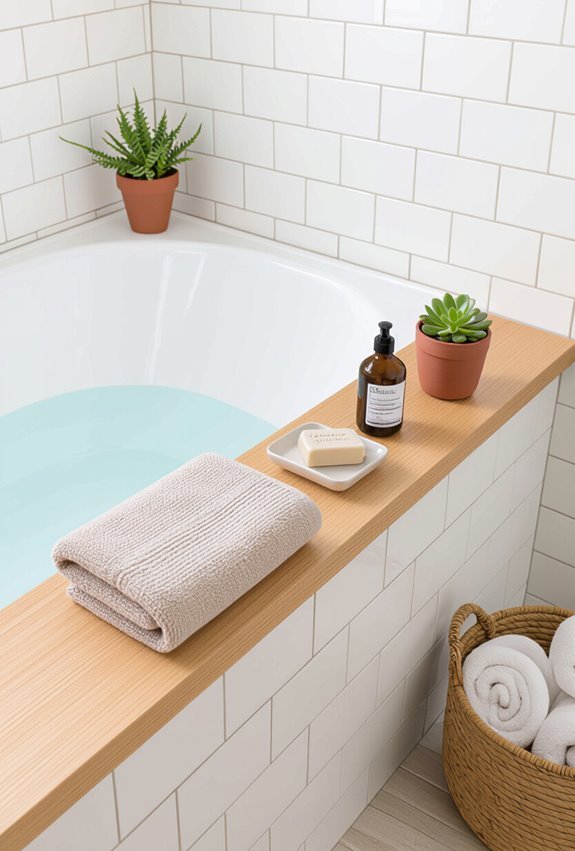
For tight bathrooms, adding a narrow ledge or shelf along the tub gives you targeted storage without crowding the space.
Mount a recessed shelf or slim storage ledge at tub height for shampoo, soap, and a bath caddy.
Choose water-resistant materials and keep items minimal to prevent clutter.
This approach maximizes function while preserving footprint and visual calm.
Add Floating Shelves Above the Tub to Free Floor Space
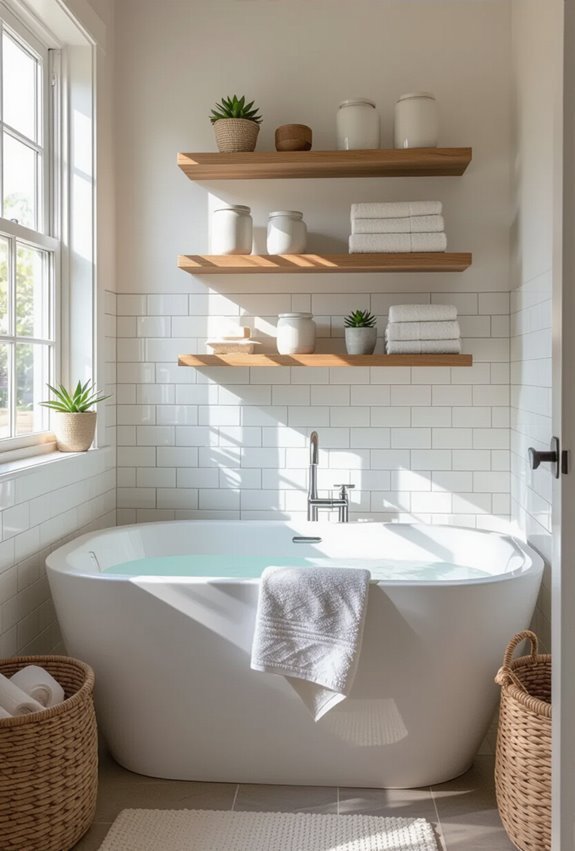
Step up storage without stealing floor space by installing floating shelves above the tub — they keep toiletries and decor within reach while leaving the room feeling open.
You’ll mix practical floating caddies for shampoo and soap with small tubs of plants or tub side artwork to personalize the space.
Choose moisture-resistant materials, stagger shelf depths, and secure anchors for safety and lasting use.
Use Recessed Niches in the Tub Wall for Cheap Built-In Storage
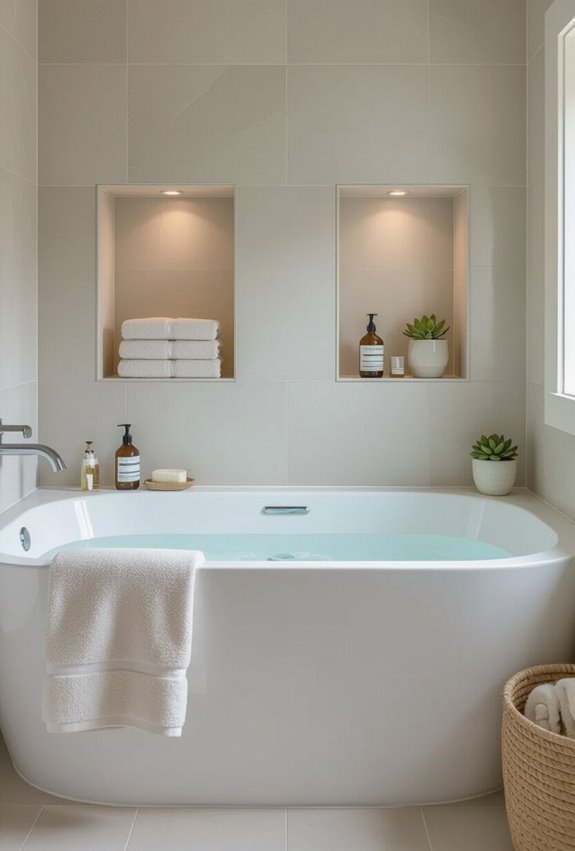
Floating shelves save floor space, but recessed niches give you built-in storage that’s even sleeker and often cheaper.
You can create a built in alcove in the tub wall to hold shampoo, soap, and decor without protruding shelves.
A simple tiled recess blends with your surround, stays waterproof, and cuts clutter.
Install one or two sizes to suit bottles and candles.
Swap Out Bulky Vanities for a Slim Pedestal or Wall-Mounted Sink
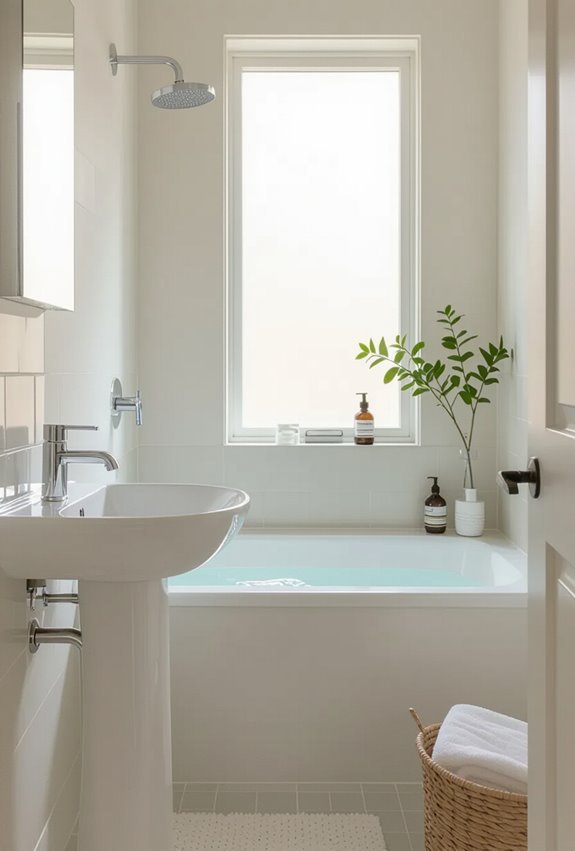
Swap a bulky vanity for a slim pedestal or wall-mounted sink to instantly free up floor space and make your small bathroom feel airier.
Choose a floating basin to create visual openness, or a narrow console with a slim shelf for toiletries. You’ll gain room for a laundry basket or stool, simplify cleaning, and achieve a modern look without major plumbing changes.
Reuse or Refinish Existing Fixtures to Cut Costs
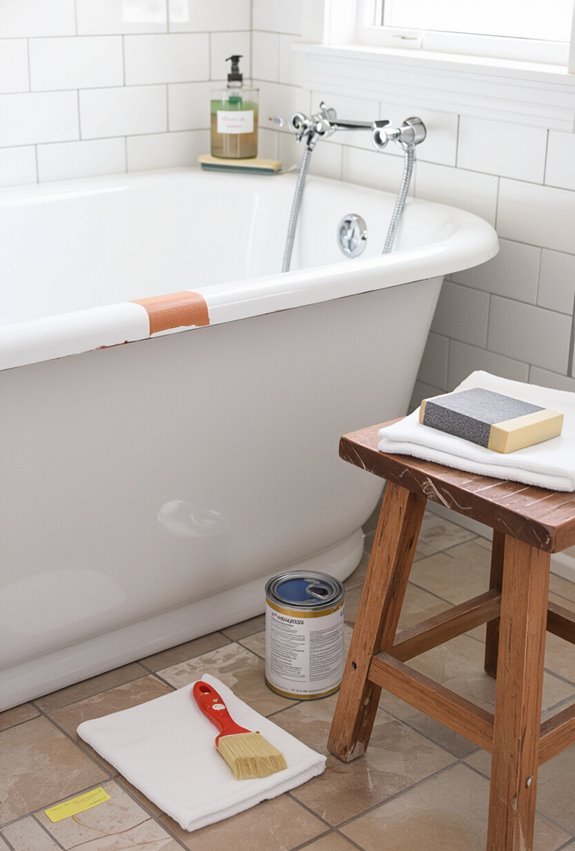
Give your bathroom a fresh look without buying new pieces by refinishing and repurposing what you already have. You can tackle fixture painting to renew tubs, cabinets, and tiles with durable, water-resistant coats.
Combine that with hardware polishing for knobs, towel bars, and trims to restore shine. Repurpose shelves or baskets for storage so the space feels updated without major expense.
Choose Compact Lighting That Brightens the Tub Zone on a Budget
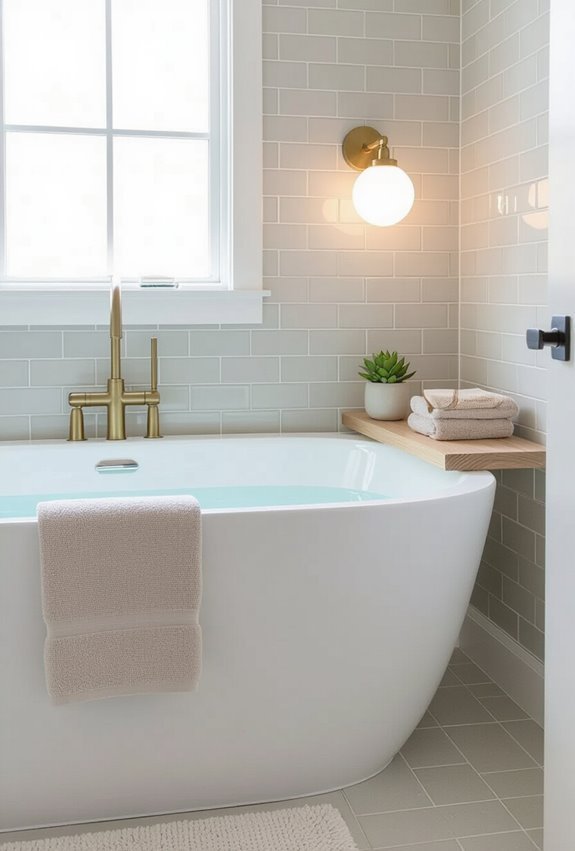
Often you can brighten the tub zone dramatically with compact, budget-friendly fixtures that don’t overwhelm a small bathroom. Choose LED sconces beside the tub for focused, shadow-free light and mount bright pendants over a corner for ambient glow.
Pick slim profiles, warm daylight tones, and dimmable options to control mood. Affordable bulbs and simple wiring upgrades make impact without breaking your budget.
Use Mirrors or a Mirrored Cabinet to Double Perceived Space
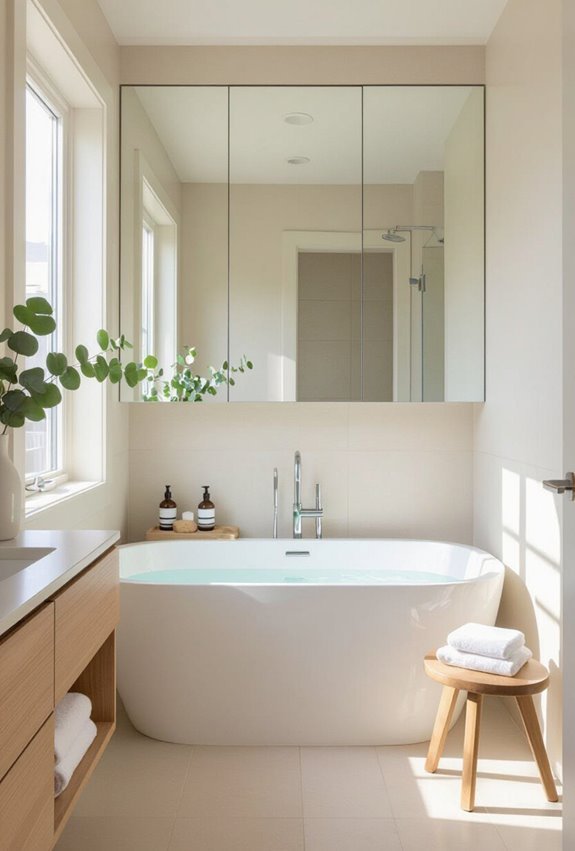
Good lighting makes mirrors work even better, so after brightening the tub zone you can use reflective surfaces to literally double perceived space.
Hang a large wall mirror or install a mirrored cabinet above the sink to bounce light and sights. Choose reflective storage options—mirrored doors or a slim glass wardrobe style unit—to hide clutter while expanding visual depth without costly renovation.
Pick Water-Resistant, Inexpensive Flooring That Complements the Tub
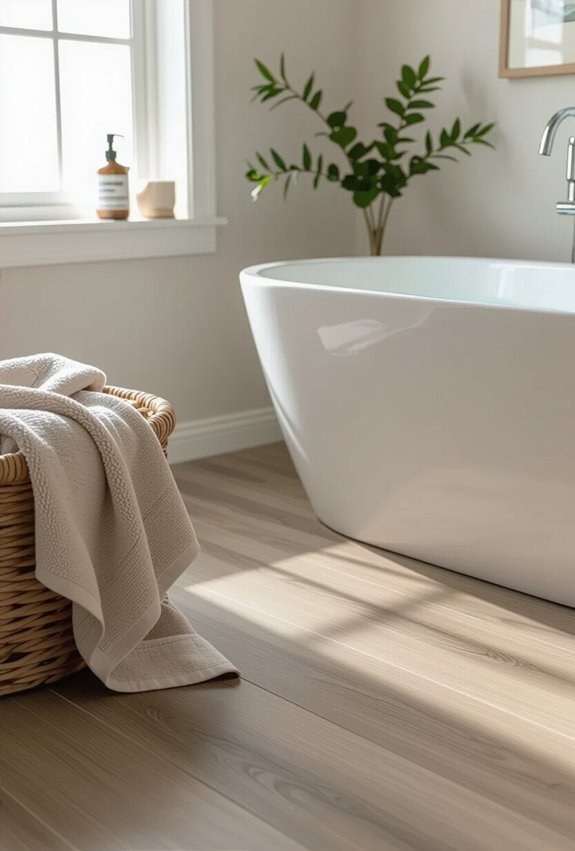
Flooring is one of the smartest places to save on a small bathroom—pick water-resistant, budget-friendly options that still look cohesive with your tub. Choose waterproof vinyl for easy installation and low maintenance, or consider cork flooring for warmth and natural texture if sealed correctly.
Match color and scale to your tub, keep grout lines minimal, and prioritize durability over trendy finishes.
Use Shower Curtains Strategically to Add Pattern and Depth
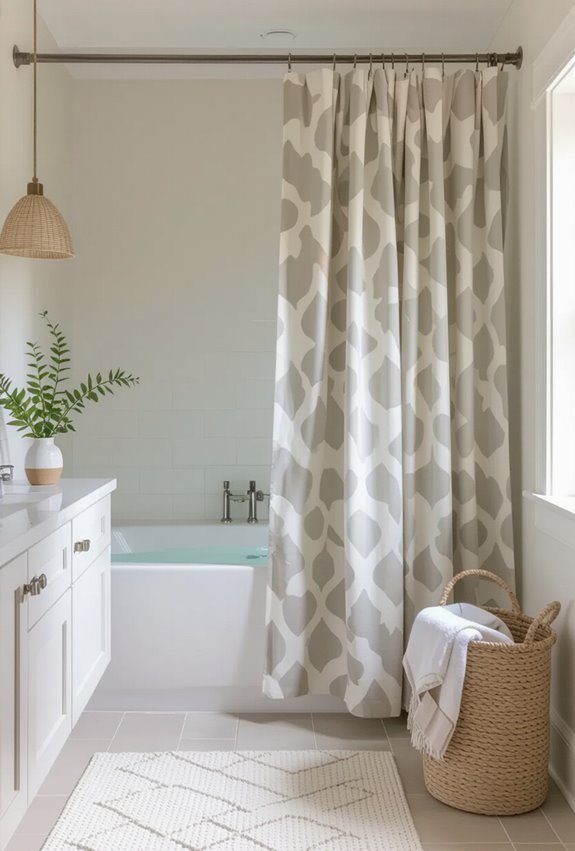
While a shower curtain’s practical role is to keep water off the floor, you can use it to introduce pattern, color, and visual depth that makes a small bathroom feel larger and more styled.
Choose bold pattern placement to draw the eye upward or along the tub. Try curtain layering—sheer over patterned or solid—so you add texture, privacy, and dimension without costly renovation.
Prioritize Upgrades That Increase Resale Value in Small Bathrooms
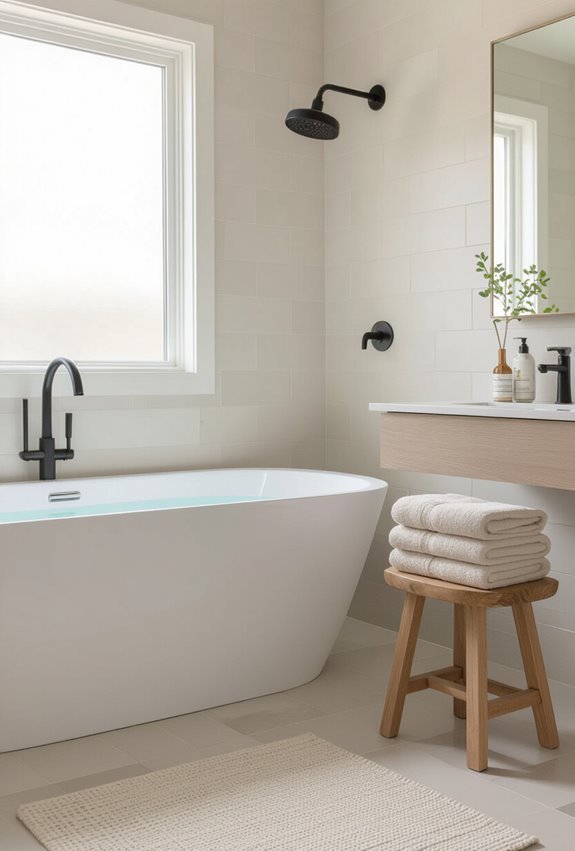
Value matters most when you’re picking upgrades for a small bathroom—focus on changes buyers notice and that yield strong returns.
Prioritize fresh fixtures, durable tile, neutral paint, efficient lighting, and a clean tub surround to boost curb appeal and buyer interest.
Balance cost with return optimization by choosing classic, low-maintenance options that make the space feel updated and move-in ready.
Budget Breakdown: Low, Mid, and Near-Premium Ways to Update a Tub
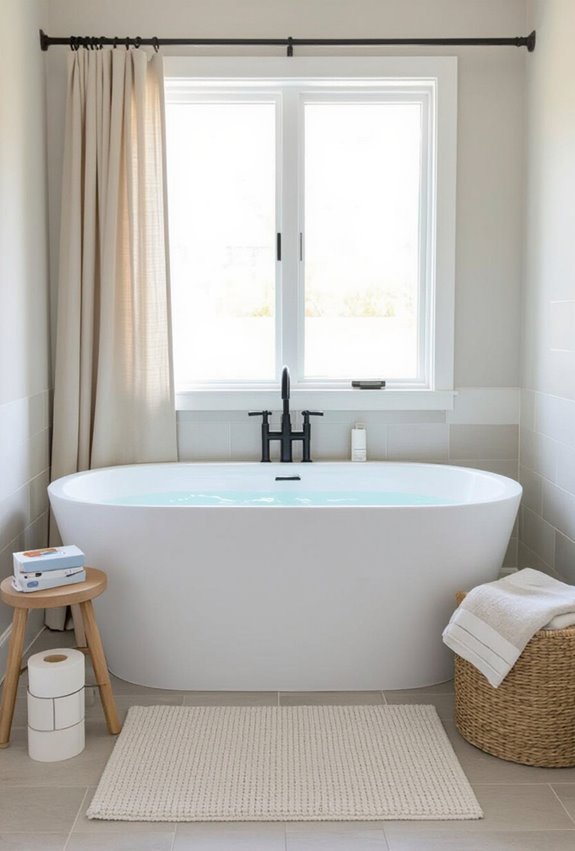
When you’re updating a tub on a budget, it helps to know what each spending tier buys you so you can prioritize impact over impulse.
Low: refinish or swap hardware; focus on DIY material sourcing.
Mid: reglaze, new fixtures, minor tile—budget for modest labor estimates.
Near-premium: replace tub, upgrade surround, higher-end finishes and pros; expect larger labor estimates and longer timelines.
Common Mistakes to Avoid When Installing a Tub in a Small Bathroom
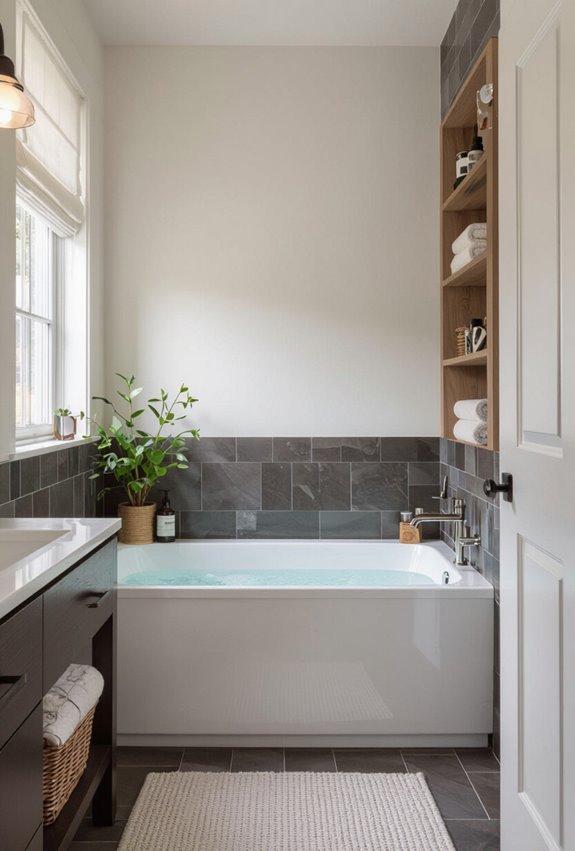
Although a small bathroom limits choices, you can still avoid common mistakes that eat time and money during a tub installation.
Don’t skip plumbing permits; inspectors catch shortcuts. Measure clearances precisely so doors and fixtures work. Account for ventilation concerns to prevent mold and water damage. Avoid oversized tubs, poor slope for drainage, and cheap waterproofing that forces costly repairs.
r design, offering areas to stash toiletries, towels, and bath essentials.
Conclusion
With these 15 budget-friendly bathtub ideas, you’re not just transforming your small bathroom; you’re creating a personal oasis that could rival a luxury spa! Imagine soaking in a compact tub while the world outside fades away. You’ll be the envy of all your friends, turning your tiny space into a relaxation haven. So go ahead, plunge into these fabulous options and make your dream bathroom a reality—because who says size matters when it comes to indulgence?
