
What Exterior Paint Colors Fade the Most
Bright, vivid hues fade fastest on exteriors—think reds, oranges, and many vibrant blues and purples—because their organic pigments break down under UV and heat. Pastels also look washed quickly since low pigment loads and high reflectance make fading obvious. Earthy, inorganic pigments like iron oxides and neutrals hold up best. Proper formulation, finish, and maintenance slow loss, and a few simple tests and product choices will help you pick colors that stay true longer if you want to learn more.
Quick Answer: Which Exterior Paint Colors Fade Most
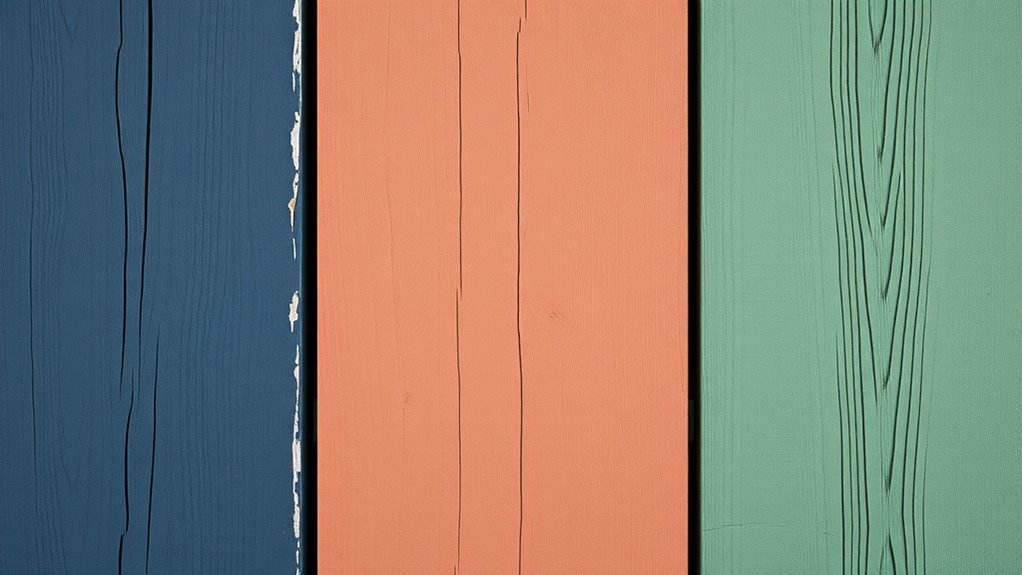
Because pigments break down under UV exposure, some exterior paint colors will fade faster than others. You’ll notice vibrant reds, bright oranges, and certain yellows losing intensity sooner because their organic pigments are more UV-sensitive.
Deep blues and greens often hold up better, though cheap formulas can still wash out. Consider color psychology when choosing hues—fading can alter perceived warmth or calmness of your home.
Historical trends show popular exterior palettes shifted toward muted, more fade-forgiving tones in sunny regions. You’ll want durable pigments and quality binders to preserve chosen effects and minimize uneven weathering over time.
How to Use This Guide (Who, When, Quick Tips)
When you’re choosing colors or planning maintenance, this guide helps you decide what matters most, when to act, and which quick steps save time and money. You’ll learn who benefits (homeowners, painters), when to inspect, and quick fixes. Use color psychology to pick hues that age gracefully and consider paint texture for hiding wear. Refer to the table below for concise actions.
| Who | When | Quick Tip |
|---|---|---|
| Homeowner | Annual check | Patch small chips |
| Painter | Before job | Test swatches |
| Realtor | Pre-sale | Neutral trims |
| DIYer | After storms | Clean and touch |
Follow these targeted steps to prioritize care.
What Causes Exterior Paint to Fade (UV, Heat, Moisture)
You’re up against three main culprits when paint fades: UV radiation breaks down pigments, prolonged heat accelerates binder breakdown, and moisture promotes mildew and coating failure.
Each factor attacks paint differently, so you’ll see varying patterns of chalking, cracking, or staining.
Understanding how UV, heat, and moisture work will help you choose the right products and maintenance.
UV Radiation Damage
How does sunlight actually break down exterior paint? You see ultraviolet (UV) photons hit pigments and binders, breaking molecular bonds and causing colors to fade unevenly. UV attacks organic dyes more than inorganic pigments, so color psychology and cultural influences that favor vibrant, trendy hues can push you toward shades that won’t last outdoors.
UV also degrades clear coats and causes chalking, making surfaces dull and less reflective. You can’t stop UV, but you can choose UV-resistant formulations, lighter tones that hide breakdown, and protective topcoats to slow photochemical damage and preserve the look you aimed for.
Heat-Induced Degradation
Although sunlight’s UV rays start the breakdown, heat speeds it up by softening binders and accelerating chemical reactions in paint films. When surfaces bake, pigments lose vibrancy faster; organic dyes and some reds and blues are most vulnerable.
You’ll notice chalking, gloss loss, and subtle shifts that change a home’s perceived temperature and mood. Because color psychology shapes how people feel, fading alters curb appeal and emotional impact—what once felt warm or lively can seem dull or washed out.
You can mitigate heat-induced degradation by choosing heat-resistant formulations, reflective pigments, and proper surface preparation to extend color life.
Moisture And Mildew Impact
Heat and sun aren’t the only culprits; moisture plays a big role in paint deterioration by softening film binders and encouraging biological growth. You’ll see chalking, blistering, and streaks where dampness persists, and mildew feeds on organic contaminants, darkening or staining pigments.
When mildew colonizes surfaces, it breaks down binders faster, so colors lose vibrancy unevenly. Consider how color psychology and historical trends influenced material choices—past palettes often used pigments prone to moisture damage.
To protect finishes, you should improve drainage, use mildew-resistant formulations, and prime properly so moisture won’t undermine color retention or aesthetic intent.
How Pigment Chemistry (Organic vs Inorganic) Affects Fade
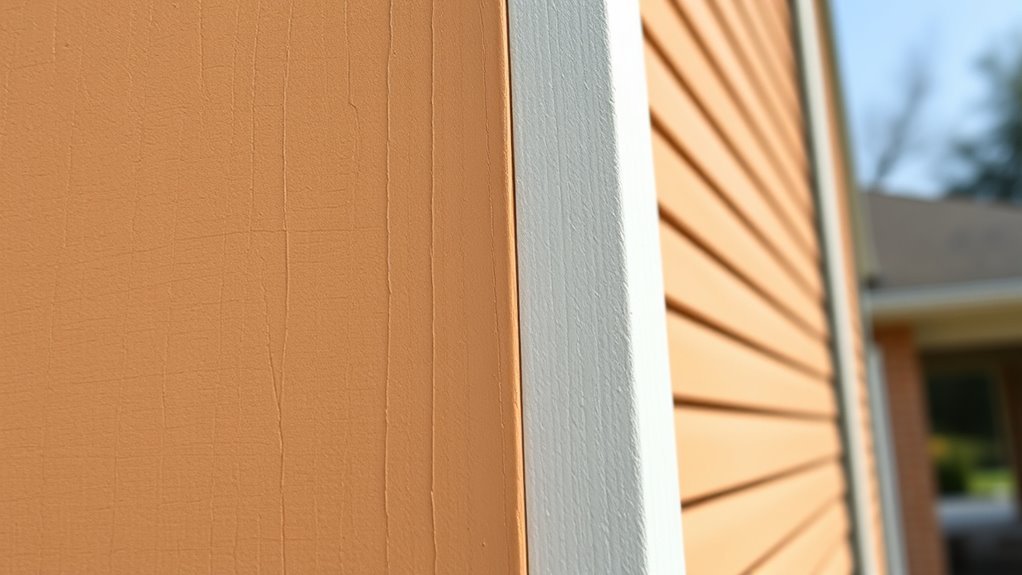
You’ll notice pigments play a big role in how fast paint fades. Organic pigments, like many bright reds and blues, break down quicker under UV and lose intensity sooner.
Inorganic pigments, such as iron oxides and titanium dioxide, resist fading and help maintain color longer.
Organic Pigments Fade Faster
Because organic pigments are built from carbon-based molecules with complex, conjugated structures, they absorb visible light strongly but break down faster under UV exposure than most inorganic pigments. You’ll notice bright reds, oranges, and some yellows—often derived from organic pigments or natural dyes—lose vibrancy sooner.
That’s because their molecular bonds cleave or rearrange under sunlight, altering color. When you choose exterior paint, expect these hues to require more frequent touch-ups or UV-stabilized formulations.
You can mitigate fading by selecting coatings with UV absorbers, pigments blended for durability, and proper surface preparation to slow degradation.
Inorganic Pigments Resist Fade
While organic pigments tend to break down under UV, inorganic pigments hold up much better thanks to their mineral-based, lattice structures that resist photochemical attack. You’ll notice inorganic colors—iron oxides, ultramarine—fade less, so your choices stay truer to color psychology aims and historical palettes. They’re often preferred for exteriors where longevity matters. Pick inorganic-rich formulations when you want stable hues that convey desired moods over years. Below’s a simple comparison to guide choices:
| Property | Effect |
|---|---|
| Durability | High |
| UV Resistance | Strong |
| Color Stability | Consistent |
| Typical Uses | Exteriors |
| Historical Use | Common in palettes |
Why Reds & Oranges Lose Vibrancy Fastest
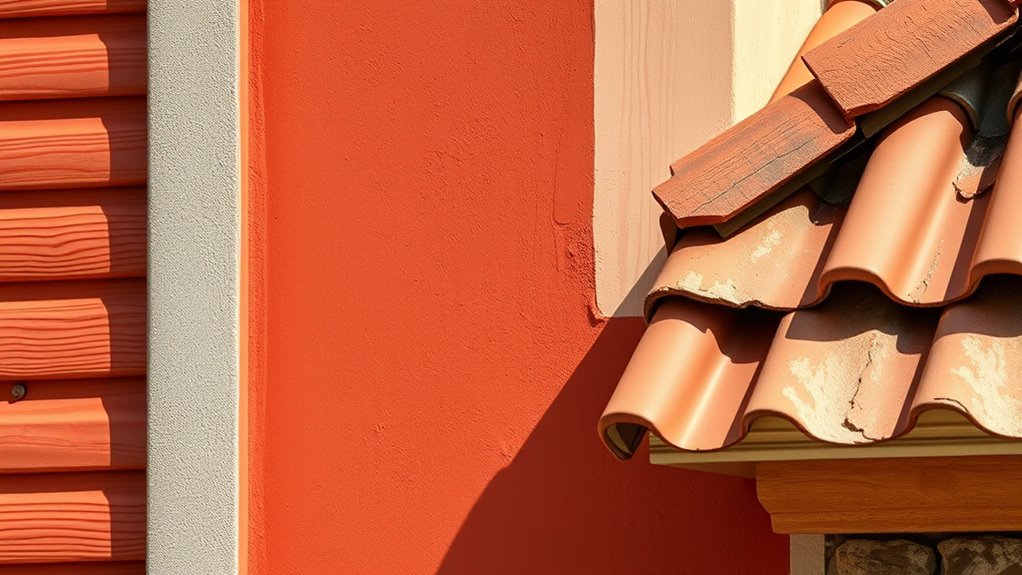
When sunlight hits a red or orange surface, its shorter-wavelength pigments absorb more UV and visible energy and break down faster than cooler colors. So you’ll see those hues dull and shift toward brown or pink sooner.
You’ll notice how color psychology-driven choices—bold reds signaling warmth or energy—require more upkeep because molecules fade unevenly, altering mood and curb appeal. Paint manufacturers add stabilizers, but exposure, pigment type, and surface prep matter most.
Also consider seasonal color trends: bright oranges that wow in summer may look washed out by autumn. Pick muted tones or UV-resistant finishes if you want lasting vibrancy.
Why Vivid Blues & Purples Fade Over Time
How do vivid blues and purples lose their punch so quickly? You notice fading because their pigments absorb UV differently; violet and cobalt molecules break down under sun exposure, so surfaces that once pop turn washed out.
Vivid blues and purples fade fast—their pigments break down under UV, leaving once-bright surfaces washed out.
You’ll also see how color psychology colors expectations—people expect blues to stay cool and stable, so noticeable fading feels jarring.
Historical trends show how synthetic dyes evolved yet still struggled with lightfastness, explaining why older homes often sport uneven tones.
You can mitigate loss by choosing high-quality UV-resistant formulas, using primers, and placing trim or overhangs to limit direct sunlight on those eye-catching hues.
How Deep Greens and Teals Hold Up Differently
You’ll notice deep greens and teals react differently to sunlight because their pigments vary in stability.
Pay attention to undertones — a blue-leaning teal will fade toward blue, while a yellow-leaning green can shift toward a muddier olive.
Those pigment and undertone interactions determine the fade pattern you’ll see over time.
Sunlight Versus Pigment Stability
Although sunlight brings out a paint’s best tones, it also accelerates degradation. You notice deep greens and teals age differently because sunlight interacts with pigment chemistry and UV sensitivity.
Color psychology and cultural associations might influence your choice, but they don’t change how fast certain pigments break down. Organic dyes in teal often fade faster than inorganic green pigments like chromium-based compounds.
You should inspect samples under bright light, consider pigment stability ratings, and prioritize UV-resistant formulations.
Undertone And Fade Patterns
When you compare deep greens and teals side by side, their undertones reveal why they age so differently. You’ll notice blue-leaning teals keep cooler notes longer, while yellow or brown undertones in deep greens shift toward olive or khaki. Color psychology and historical trends show you how perception changes as pigments fade—teals read fresher, greens earthier. You should choose primers and UV-resistant finishes based on undertone. Visualize fading like layers:
| Shade | Undertone | Fade Result |
|---|---|---|
| Deep Forest | Brown-yellow | Olive tint |
| Teal Ocean | Blue | Muted slate |
| Evergreen | Yellow | Khaki hue |
| Jade | Blue-green | Dusty green |
Why Black and Near-Black Paint Chalks and Fades Unevenly
Because dark pigments absorb far more sunlight and heat than lighter hues, black and near-black exterior paints break down faster and show chalking unevenly as different surfaces and orientations get hit by sun, moisture, and pollutants at varying rates.
You’ll notice high-traffic sides, south-facing walls, and textured materials bleach and powder sooner. That uneven chalk alters gloss and can mislead color psychology, making areas feel older or dingier.
Maintenance’s tougher: spot-cleaning reveals contrast, and repainting demands careful prep. You should weigh aesthetic goals against environmental impact, selecting formulations with UV stabilizers and low-VOC binders to reduce fading and pollution.
Why Pastels Look Washed but Lose Less Pigment
If you pick a pastel for your siding or trim, you’ll often notice it looks faded or “washed out” even though the paint has actually retained most of its pigment. Low pigment concentration and high reflectance make small losses obvious. You’ll see subtle sun bleaching, but pastels’ lightness hides dramatic fading.
That softness ties into color psychology: paler hues read calm, airy, and aged even when intact. When coordinating with interiors, pastel exteriors ease interior coordination by linking muted exterior tones to softer indoor palettes.
Choose pastels for understated longevity, knowing perceived washout is often visual character, not heavy pigment loss.
How Binder and Formulation Change Fade Resistance
Although pigment choice matters, the binder and overall formulation play the biggest role in how a paint weathers. Binders lock pigments in place, control film elasticity, and determine resistance to UV-induced breakdown. Additives and pigment loading tune hardness, flexibility, and color retention.
You’ll notice acrylic and urethane-rich binders resist fading better than inexpensive alkyds because they form tougher, more UV-stable films. Formulators balance lightfast pigments, stabilizers, and UV absorbers to extend color life.
Understanding color psychology and historical trends helps you choose hues that maintain perceived vibrancy as coatings age and lose chroma slowly over years.
Why Gloss & Satin Finishes Show Less Fading Than Flat
Gloss and satin finishes resist visible fading better than flat paints because their smoother, denser films reflect more light and shed contaminants that accelerate pigment breakdown. You’ll notice maintained vibrancy longer, so your color psychology goals—calming blues or energetic reds—stay truer to intent.
These finishes form a tighter barrier against UV and dirt, reducing the rate pigments degrade and minimizing cleaning frequency. That’s often better for environmental impact since you repaint less and use fewer harsh cleaners.
Choose gloss or satin where durability and cleaner surfaces matter, but balance sheen with desired aesthetic and how light will hit the surface.
Do “Fade‑Resistant” Pigments Actually Work?
When manufacturers label pigments as “fade‑resistant,” they’re promising slower color loss, but you still need to check what that claim really means for your project. You’ll find some pigments truly resist fading better, but performance varies by pigment chemistry, exposure, and substrate. Consider color psychology—fading can alter perceived warmth or coolness—and how changes affect architectural harmony. Test samples in sunlight and read independent fade ratings. Below is a quick comparison to guide choices:
| Pigment Type | Typical Durability |
|---|---|
| Inorganic oxides | High |
| Organic dyes | Lower |
| Engineered pigments | Variable |
UV Stabilizers, Additives, and Their Real Benefits
You’ll want to know the different UV stabilizer types — like UV absorbers and HALS — and how each protects pigments and binders.
Ask how additives influence paint’s long-term benefits, such as slowed degradation and retained color.
Understanding both helps you pick coatings that actually last in sunlight.
UV Stabilizer Types
Because sunlight attacks paint in several ways, manufacturers add different UV stabilizers and additives to slow degradation and preserve color and binders. You’ll encounter Hindered Amine Light Stabilizers (HALS) that protect polymers, UV absorbers that intercept harmful rays, and antioxidants that delay breakdown.
Choose pigments with built-in UV resistance for stronger longevity. Consider how color psychology and historical trends influenced popular pigments—lighter shades often relied more on reflective additives, while darker hues needed stronger stabilizers.
You’ll still balance cost, appearance, and durability; know each stabilizer’s role so you pick coatings tailored to exposure and desired lifespan.
Additives’ Long-Term Benefits
Although additives work behind the scenes, they deliver measurable long-term benefits you can count on. You’ll notice UV stabilizers slow pigment breakdown, keeping hues truer longer and preserving the color psychology homeowners choose to evoke warmth or calm.
Mildewcides, dispersants, and antioxidants guard film integrity so chalking and fading don’t accelerate after a few seasons. Over time, these compounds reduce maintenance frequency and repainting costs, aligning with historical trends that favored tougher formulations as climates and expectations changed.
When you pick exterior paint, prioritize proven additive packages— they offer tangible lifespan gains, not just marketing claims.
How Climate (Sunny, Humid, Coastal) Changes Fade Patterns
When you compare sunny, humid, and coastal climates, you’ll see that each environment accelerates paint fading through different mechanisms. You notice sunny areas bleach pigments fast, shifting color psychology by dulling vibrant hues once used to signal warmth.
Humid climates encourage mold and tannin stains that alter tones unevenly; historical trends show older homes in such regions often darkened unpredictably.
Coastal exposure combines UV, salt spray, and wind abrasion, stripping gloss and eroding binders so shades wash out quicker.
You’ll pick finishes and maintenance schedules knowing which forces dominate, extending color life by matching choices to local wear patterns.
Choosing Colors for Hot, Sunny Climates
Sunny, high-UV environments demand a different color strategy than humid or coastal areas, since intense sunlight both fades pigments and alters perceived warmth. You should favor mid-tone neutrals and desaturated colors that resist obvious fading and keep contrast balanced.
Use lighter shades to reflect heat but avoid stark whites that bleach out and show chalking. Consider Color psychology: warm, muted hues feel inviting without overstating intensity as they age.
Follow Historical trends for sun-drenched regions—Mediterranean ochres and adobe tones prove durable choices. Test samples in full sun, choose high-UV-resistant formulations, and plan for routine maintenance.
Choosing Colors for Humid, Coastal, or Polluted Areas
Because moisture, salt, and airborne particulates accelerate discoloration and surface breakdown, pick colors and finishes that hide soiling and age gracefully in humid, coastal, or polluted settings.
You’ll favor mid-tone, slightly warm neutrals and muted blues or greens that mask salt stains and grime while leveraging color psychology to maintain curb appeal.
Avoid pure whites and very dark shades that show streaking or absorb heat, respectively.
Choose satin or semi-gloss finishes for easier cleaning and better paint durability.
Test samples on the actual exterior, inspect after storms, and prioritize low-maintenance palettes that conceal wear without sacrificing style.
How Siding Material (Wood, Stucco, Fiber Cement) Affects Fading
Color choice and finish aren’t the only things that determine how quickly paint will fade—you also need to take into account the siding material itself.
Wood warms and cools, absorbing UV and moisture, so pigments can break down faster; you’ll see more uneven fading on grain and raised panels.
Wood swells and shrinks with sun and moisture, accelerating pigment breakdown and causing uneven fading along grain and panels.
Stucco’s texture scatters light, softening contrast and often masking minor fading, but its porosity can trap salts that alter color over time.
Fiber cement holds pigments well and resists UV, giving steadier retention.
Think about color psychology and historical palettes when choosing shades that age gracefully on each substrate.
How Application Quality and Paint Thickness Influence Retention
When painters apply coatings unevenly or too thin, you’ll see fading and wear much sooner than with a properly built-up finish. You should insist on correct wet film thickness, consistent overlap, and full coverage so pigments and UV blockers form a durable layer.
Application technique affects how color psychology reads over time—faded hues change perception. Historical trends show older, thin applications lose chroma faster.
Check manufacturer specs and use proper tools to deliver desired film thickness.
- Measure wet/dry film thickness
- Avoid rushed spraying or skim coats
- Use recommended spread rates
- Verify uniform curing conditions
How Maintenance, Cleaning, and Recoating Slow Visible Fading
If you want paint to hold its hue, schedule regular cleaning, inspections, and timely recoats so UV exposure, dirt buildup, and surface degradation never get a foothold. You’ll remove pollutants that accelerate breakdown and reveal early chalking or flaking, letting you recoat before substrate damage forces heavier work.
Lighter, high-chroma colors show dirt and fading sooner, so tie maintenance to color psychology and curb appeal goals. Follow historical trends for local climates—regions with strong sun need shorter recoat cycles.
Use gentle wash methods, inspect after storms, and choose compatible primers and topcoats to extend useful color life.
How to Test Color Fade on Your House Before Committing
Before you commit to a new hue, try a small, timed test patch on an inconspicuous wall and monitor it under real sun and weather for several months. You’ll see actual fade rates, verify how sunlight alters saturation, and judge whether the shade complements landscaping and Color psychology goals.
Before painting, test a small patch outside and monitor it over months to see real fading and color shifts
Note how the swatch reads at different times and against siding, trim, and your interior coordination plans. Record photos, dates, and conditions.
Consider these quick steps to make an informed choice:
- Pick representative exposure: north, south, or full sun
- Use the exact paint and finish
- Photograph monthly, same time
- Compare swatch to samples inside
When to Choose Formulation Over Color for Longevity
When longevity matters more than the exact shade, focus on formulation: high-quality pigments, UV-resistant additives, and the right binder or resin will keep paint looking truer longer.
You’ll get better fade resistance from a paint engineered for sun exposure than from one that’s merely a trendy color.
Pigment Quality Matters
Because the pigment itself absorbs sunlight and weathers differently, you should prioritize paint formulation over exact shade when longevity matters. You’ll still consider color psychology and cultural symbolism for curb appeal, but choose high-quality pigments that resist breakdown.
Pigment chemistry affects lightfastness, staining, and how quickly hues shift; manufacturing consistency matters more than a trendy tint. Ask for pigment type, concentration, and proven fade ratings when comparing paints.
Pair durable pigments with proper application and maintenance to extend life.
- Inquire about pigment family
- Check supplier fade data
- Prefer concentrated pigments
- Demand consistent batches
UV-Resistant Formulations
Pigment choice matters, but the paint’s UV-stable formulation often has the bigger impact on long-term color retention—so prioritize binders, UV absorbers, and stabilizers over chasing a specific hue.
You’ll want UV-resistant formulations when exposure is high; they block fading mechanisms so your chosen color psychology—calm blues or energizing reds—actually lasts. Think beyond trends and cultural associations that push you toward a shade; a durable formula preserves the meant mood and avoids frequent recoats.
Ask manufacturers for accelerated UV test data, warranties, and specific stabilizer types so you can pick longevity over fleeting appearance.
Binder And Resin Choice
If you care about a color lasting as much as how it looks, prioritize the binder and resin over the shade itself: these components dictate how well paint resists UV breakdown, chalking, and weathering. You’ll choose acrylic or alkyd binders based on flexibility, adhesion, and pigment retention; high-quality resins lock pigments and slow fading.
Think beyond color psychology when selecting formulation—durability affects perceived hue over time and ties into interior coordination by keeping exterior and interior palettes aligned longer. Inspect technical data sheets and favor UV-stable polymers for sunny exposures.
- Prefer 100% acrylic for fade resistance
- Consider urethane-modified resins
- Check pigment volume concentration
- Match formulation to climate
Final Checklist: Pick Exterior Colors That Stay True Longer
When you’re ready to lock in a color that will hold up over time, run through a quick checklist to make sure you’ve covered the most important durability factors.
Consider color psychology and historical trends to choose hues that suit your home and neighborhood while resisting regret.
Think about color psychology and neighborhood history to pick hues you’ll still love years from now
Pick high-quality, UV-resistant pigments and matching primers.
Favor mid-tone colors over intense darks for less fading.
Match binder/resin properties to your climate and surface.
Test samples on different elevations and monitor them through sun and rain.
Plan maintenance: clean annually and touch up within five years.
Document formulas for future repaints.
Frequently Asked Questions
Can Faded Exterior Paint Be Color-Matched and Spot-Repaired Seamlessly?
Yes — you can. You’ll use color matching techniques and seamless touch-up methods, blending faded and original pigments, feathering edges, matching sheen, and applying thin overlapping coats so repairs disappear and last without obvious shifts.
Do Metal Roofs or Gutters Affect Adjacent Paint Fading?
About 60% of fading happens from UV exposure, so yes—you’ll notice metal roof effects and gutter impact on adjacent paint: metal radiates heat and reflects UV, gutters channel water and debris that accelerate localized fading and staining.
How Do Bird Droppings and Tree Sap Accelerate Fading?
Bird droppings and tree sap accelerate fading by etching and chemically breaking down paint, so you’ll see discoloration and loss of binders faster; you should clean them promptly to prevent long-term degradation and uneven fading.
Will Applying a Clear Uv-Protective Sealer Help Older Paint Layers?
Yes — you’ll give tired paint a gentle boost: a clear UV protection sealer can slow further breakdown and improve paint longevity, though it won’t fully hide severe chalking or base-layer damage already underway.
Are Eco-Friendly/Low-Voc Paints More Prone to Fading?
Generally, you won’t see more fading with eco friendly paints or low VOC formulations; manufacturers use durable pigments and binders, but extreme sun, poor prep, or cheaper batches can still cause faster color loss over time.
Conclusion
You want colors that won’t sulk and fade, so pick pigments that actually fight the sun. Ironically, the loudest reds and oranges demand the most shelter, while stubborn earth tones and quality inorganic pigments laugh at UV. Maintain them — pressure-wash, touch up, recoat — and the paint will behave. Test a patch, choose durable formulations over trendy hues, and you’ll enjoy a house that looks intentional, not like it lost an argument with summertime.
