
How to Paint Stained Glass Windows for Beautiful Effects
You can paint stained glass beautifully by prepping and degreasing the glass, then building translucent layers with enamels, acrylics, or glass stains for depth. Work in stages, wipe selectively for detail, and vary brush pressure or sponging for texture. Fire or cure between coats, seal when finished, and use highlights, shadows, and sparing metallic accents to make forms glow. Follow safety and kiln schedules for durability — keep going to uncover pro tips and troubleshooting.
What You’ll Learn: Create, Restore, and Finish Painted Stained Glass
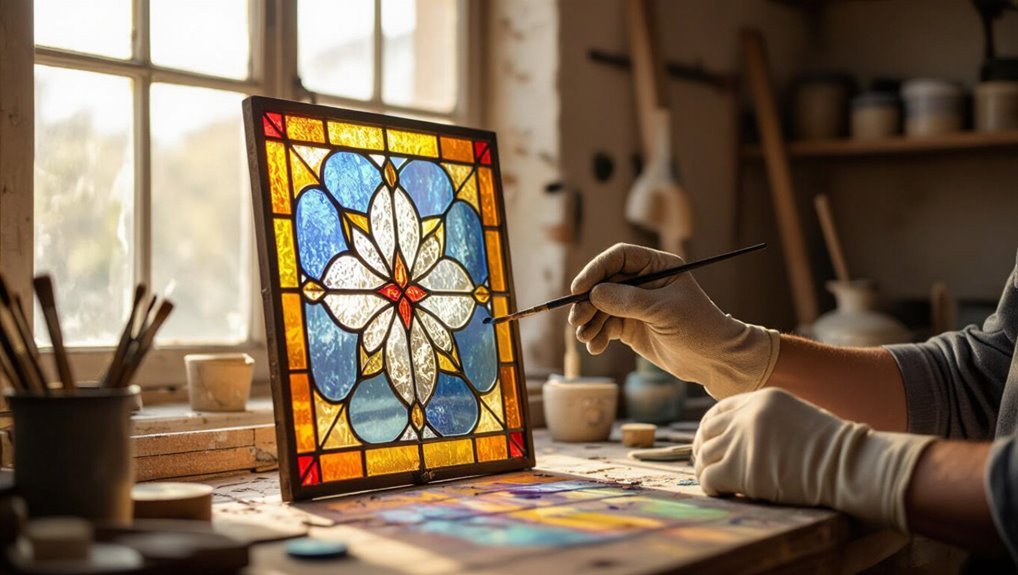
In this section you’ll learn the core skills for creating, restoring, and finishing painted stained glass: choosing and prepping glass, mixing and applying paints and stains, firing and sealing, and repairing lead or solder joints.
You’ll explore design inspiration and historical techniques so you can plan pieces, match colors, and execute durable finishes.
You’ll master careful cleaning, accurate brushwork, and safe kiln practices for lasting results.
Quick Process: Paint Stained Glass in 6 Steps
Start by prepping the glass so your paint will adhere and your design stays crisp.
Then apply paint in controlled layers, letting each cure enough to avoid smudging.
Finish by sealing the work and allowing a full cure for durability.
Prep The Glass
Clear the workspace and gather your cleaning supplies before you touch the glass; a dust-free, grease-free surface makes paint adhere evenly and prevents visible flaws.
Examine glass types for porosity and coatings, then choose prep tools—lint-free cloths, isopropyl alcohol, gentle scrubbers.
Degrease, remove residues, and mask edges. Proper preparation techniques guarantee consistent adhesion and a flawless finish once you start painting.
Apply Paint Layers
Once you’ve prepped the glass and masked surrounding areas, you’ll build the colors in thin, even layers so each coat dries properly and the final look stays vibrant. Adjust paint viscosity for smooth strokes, test color blending with glazing techniques, and let each thin coat level before adding another. Keep edges clean and work methodically.
| Step | Action | Tip |
|---|---|---|
| 1 | Thin coat | Control viscosity |
| 2 | Blend | Feather edges |
| 3 | Repeat | Dry fully |
| 4 | Refine | Clean lines |
Seal And Cure
After your color layers are smooth and fully dry, you’ll move on to sealing and curing to protect the paint and stabilize the finish.
Choose a compatible clear sealer, apply thin even coats, and follow manufacturer curing methods for temperature and time.
Wear gloves and a respirator as safety precautions.
Inspect for tackiness, recoat if needed, and allow final cure before installation.
Best Paints for Stained Glass: Enamels, Acrylics, Glass Stains
Choosing the right paint can make or break your stained glass project, so it’s worth knowing how enamels, acrylics, and glass stains differ in finish, durability, and application.
You’ll pick enamels for longevity and varied enamel types (fired or air-dry).
Acrylics offer fast drying and flexible acrylic qualities for layering.
Glass stains give transparent color but need sealing; choose based on light, handling, and oven-firing needs.
Tools for Smooth Lines and Texture: Brushes, Sponges, and Knives
Lines and texture start with the right tools: a selection of brushes, sponges, and palette knives gives you control over edges, gradients, and surface character.
You’ll use specific brush techniques for crisp leading lines and soft blends, sponge effects for mottled translucency, and knife applications to scrape or layer paint.
These tools accelerate precise texture creation and expressive detailing on glass.
Prepare the Glass: Cleaning, Etching, and Masking for Adhesion
Now that you’ve picked the tools for crisp lines and textured effects, you’ll prepare the glass surface so paint will stick and look clean.
Use solvent and lint-free cloths for cleaning techniques, degrease edges, and rinse thoroughly.
Clean glass with solvent and lint-free cloths, degrease edges, then rinse thoroughly before proceeding.
Apply etching methods or mild acid alternatives to promote adhesion, then mask with low-tack tape or frisket film.
Dry fully before painting.
Transfer Designs and Lay Out Lead or Faux Leading
Before you start painting, transfer your full-size cartoon or pattern onto the glass and lay out the lead or faux leading so every joint and flow reads correctly.
Use reliable transfer methods—carbon paper, pouncing, or tracing—to place lines accurately. Follow your design inspiration, adjusting lead widths for silhouette and strength.
Clamp or tape templates, check solder points, and correct misalignments before painting.
Basic Stained-Glass Painting Techniques: Washes, Glazing, Layering
You’ll build color by applying transparent layers so light can pass through and colors mix optically.
Use controlled paint washes to tint areas evenly without obscuring your drawn lines.
Practice glazing and layering to control intensity and achieve depth without overworking the glass.
Transparent Color Layers
Transparent color layers let light carry your painting, so you’ll build depth and vibrancy without obscuring the glass beneath.
You’ll apply thin, glazed washes that preserve light refraction and support subtle color blending across panes.
Layer selectively, letting each dry fully, and adjust translucency to enhance highlights and shadows.
This technique keeps luminosity while creating rich, jewel-like tones and controlled contrasts.
Controlled Paint Washes
After building luminous layers, you’ll focus on controlled paint washes to shape form and define details without losing that light.
Use thin, diluted pigments to modulate tone, practicing wash techniques for gradients and subtle shadows. Emphasize color blending at edges, lifting or glazing to correct values.
Work patiently in stages, letting each wash cure so transparency and line work remain crisp and luminous.
Build Depth: Stippling, Sponging, and Drybrush Effects
Layer subtle texture onto your glass by practicing stippling, sponging, and drybrush techniques—each adds a different sense of depth without obscuring light. You’ll use color mixing and texture blending to vary opacity and mood. Practice light taps, soft sponges, and drybrushing strokes to suggest form.
| Technique | Effect | Tip |
|---|---|---|
| Stippling | Speckled depth | Vary pressure |
| Sponging | Soft shifts | Dab, don’t drag |
| Drybrush | Grainy highlights | Remove excess paint |
Add Highlights, Shadows, and Metallic Accents for Luminosity
When you want glass to sing with light, add crisp highlights, deep shadows, and a few metallic accents to define form and catch the eye.
Use precise highlight techniques—thin strokes, reflected light—and deliberate shadow placement to sculpt depth.
Craft highlights with thin strokes and subtle reflections; place shadows deliberately to sculpt luminous depth.
Apply subtle metallic finishes sparingly for shimmer.
Balance with careful color blending so highlights and shadows read naturally without overpowering the composition.
Antiquing Finishes for Painted Stained Glass
Now you’ll explore antiquing finishes that give painted stained glass a lived-in, historic look.
Choose patina techniques—chemical, painted, or rubbed-on—that suit your design and substrate.
Then build depth with layered glaze washes, allowing each thin layer to dry and adjusting translucency until the aged effect reads right.
Choosing Patina Techniques
How do you decide on a patina that will both age and harmonize with your painted glass? You assess patina effects by testing on scrap glass, noting how finishes settle and highlight brushwork.
Consider color variations to complement pigments and lead lines. Choose chemical or natural patinas based on desired sheen, contrast, and durability, and always seal tested results before applying to the final piece.
Layering Glaze Washes
After you’ve settled on a patina that complements your colors and lead lines, start thinking about glaze washes to build age and depth.
You’ll layer thin stains, manipulating color blending and texture techniques to suggest wear and highlight details. Work in stages, wipe selectively, and seal when satisfied.
- Apply translucent washes
- Vary brush pressure
- Feather edges for gradation
- Test before sealing
Cure, Fire, and Seal Painted Stained Glass Safely
When you finish painting, give the glass time to cure, then fire and seal it carefully to lock in the paint and protect the piece; following proper curing, kiln firing, and sealing steps prevents flaking, discoloration, and weak adhesion.
You should follow cure techniques, monitor ramp schedules, and use ventilation.
Prioritize fire safety, wear protective gear, and verify seals for durability before installation.
Fixes and Prevention: Flaking, Brush Marks, and Color Shifts
If your painted glass starts to flake, shows visible brush marks, or shifts color, you can usually correct the problem and prevent it from recurring by addressing surface prep, paint consistency, and firing technique; tackle the root cause rather than just covering defects so the fixes hold long-term.
- Clean, degrease, and scuff for flaking prevention
- Thin paint for even flow
- Use soft brushes for brush mark solutions
- Adjust kiln schedule to stabilize color
Frequently Asked Questions
Can Painted Stained Glass Be Cleaned With Regular Household Cleaners?
No — you shouldn’t use regular household cleaners on painted stained glass; you’ll risk damaging paint durability. Instead, use gentle cleaning techniques: soft cloths, mild soap diluted in water, and avoid abrasives or ammonia-based products.
How Does Humidity Affect Drying and Curing Times?
You’ll be shocked—humidity impact is huge: high moisture slows solvent evaporation, creating drying challenges and extended tacky times, while low humidity speeds skinning but can cause cracking; you’ll need controlled ventilation and patience for proper curing.
Are There Legal Restrictions for Selling Restored Historic Stained Glass?
Yes—you’ll face restoration regulations and historical preservation rules; you’ll need permits, provenance documentation, and sometimes approvals from preservation boards or owners before selling restored historic stained glass, especially for protected or landmarked pieces.
Can Painted Stained Glass Be Used Outdoors Year-Round?
Yes — you can. Think of painted glass as a brave sailor: you’ll choose outdoor durability and weather resistance measures, seal and durable-fire kiln the paints, and regularly inspect so it weathers seasons without surrendering its light.
How Do I Repair Hairline Cracks Without Replacing Panes?
You can stabilize hairline cracks with clear epoxy or UV-curing resin, injecting and clamping gently to bond edges; this crack repair preserves appearance and supports glass preservation, then polish cured resin and seal edges to prevent moisture.
Conclusion
You’ve learned how to paint, finish, and preserve stained glass so your pieces glow for years. Try combining enamels with metallic highlights to catch light and depth. Remember: proper curing prevents 87% of common failures—most paint problems come from inadequate firing or sealing. With careful prep, smooth application, and the right cure, you’ll avoid flaking and color shifts. Now pick a simple design, practice your techniques, and let your glass tell its story.
