
How to Repair Paint Peeled off With Tape Damage
If tape pulls paint off, first remove loose flakes, sand edges smooth, and clean the area; fill chips with spackle or epoxy for deeper gouges, let it dry, then sand flat. Prime any bare substrate, match paint color and sheen, and apply thin, even coats with a small brush or mini roller, feathering into the surrounding finish. Remove masking slowly after cure to avoid repeat damage, and keep going to learn step-by-step tips for an invisible repair.
Why Tape Caused Your Paint to Peel
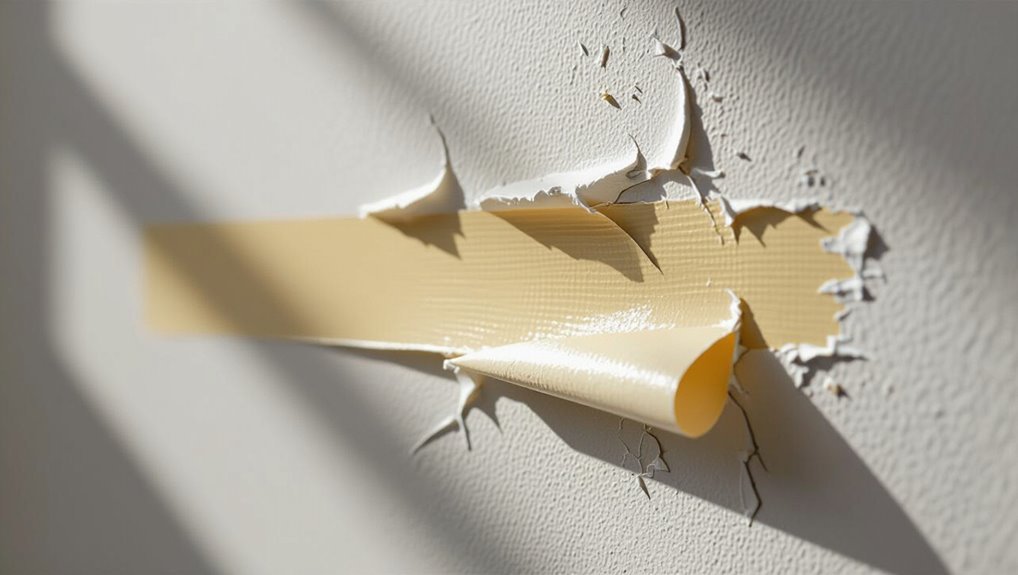
When paint peels after you remove tape, it’s usually because the adhesive grabbed loose or weak paint and pulled it away from the substrate.
Old paint, improper surface prep, or using high-tack tape on delicate finishes all increase that risk.
You should evaluate tape adhesion and paint compatibility before masking, test tape on an inconspicuous area, and choose low-tack options to protect finishes.
DIY Decision Checklist: Can You Fix Peeled Paint?
Before you start peeling away old paint, decide whether the damage is something you can realistically fix yourself or if it needs a pro.
Assess peel size, substrate condition, and whether underlying layers are compromised. If small and surface-only, consider diy repair options and basic paint adhesion techniques.
If widespread, bubbling, or on porous material, hire a pro to avoid recurring failure.
Tools and Materials You’ll Need for a Tape-Peel Repair
Before you start, gather the essential tools you’ll need so the repair goes smoothly.
You’ll want items like a putty knife, fine-grit sandpaper, a small brush, and a utility knife, plus recommended materials such as spackling compound, primer, and matching paint.
Having everything on hand will save time and help you get a clean, lasting finish.
Essential Tools Overview
Toolbox essentials set the stage for a successful tape-peel repair: you’ll need a sharp utility knife or razor blade, a thin putty knife or stiff card for lifting the tape edge, high-grade adhesive remover (or isopropyl alcohol), clean lint-free cloths, fine-grit sandpaper, and a replacement adhesive or edge-sealing tape suited to the surface.
Choose tool types that match repair techniques and surface delicacy.
Recommended Materials List
Gather these materials before you begin so you won’t have to stop mid‑repair: a sharp utility knife or razor, a thin putty knife or stiff card for lifting edges, high‑grade adhesive remover (or 90%+ isopropyl alcohol), clean lint‑free cloths, fine‑grit sandpaper, replacement adhesive or edge‑sealing tape matched to your surface, and disposable gloves to protect your hands.
Choose supplies suitable for your paint types and consider tape alternatives for delicate finishes.
Choose the Right Filler: Spackle vs. Joint Compound vs. Epoxy
For small nicks from peeled tape, you’ll usually reach for spackle because it’s a quick patch that sands and paints fast.
If the damage is deeper or structural, epoxy gives you a much more durable repair that won’t crumble.
We’ll also touch on when joint compound makes sense as a middle-ground option.
Spackle: Quick Patch
Pick the right filler and your tape repair will be quicker and cleaner: spackle, joint compound, and epoxy each suit different damage types.
Use spackle for small gouges and nicks; you’ll like spackle techniques that call for thin layers and feathering. It’s quick drying, sands smooth, and accepts primer and paint fast—ideal when you need a tidy, fast patch without heavy tools.
Epoxy: Durable Repair
While spackle handles quick cosmetic fixes, epoxy gives you a long-lasting structural repair when tape or backing has failed; you’ll want it for deep gouges, loose joints, or areas that need strength and moisture resistance.
You’ll mix and apply epoxy carefully, sand or sculpt as needed, then paint.
Consider epoxy applications for load-bearing spots; epoxy benefits include durability, water resistance, and strong adhesion.
Pick Matching Paint Color and Sheen for Patched Areas
Although a small patch might seem insignificant, matching the paint color and sheen is essential so the repair blends with the surrounding surface; you’ll save time and avoid repeated touch-ups by getting this right the first time.
Test color matching with swatches under real light, feather edges, and use the same sheen selection—flat, satin, or semi-gloss—as the original.
Touch up small areas gradually for a seamless finish.
Protect Surrounding Surfaces Before You Start
Before you start sanding or painting, lay down drop cloths to catch dust and stray paint.
Tape or mask off adjacent trim, outlets, and flooring so they stay clean and undamaged.
Taking these simple steps will make cleanup easier and protect your surrounding surfaces.
Use Drop Cloths
Start by laying down a drop cloth to protect floors, furniture, and nearby surfaces from adhesive residue, solvent drips, and loosened tape pieces.
Choose a durable cloth or plastic sheet for drop cloth benefits: it catches debris, shields paint, and speeds cleanup.
Secure edges with low-tack tape so the covering won’t shift while you work, keeping focus on protecting floors and nearby items.
Mask Adjacent Areas
With drop cloths in place, mask any nearby surfaces you’ll want to keep clean—trim, baseboards, window frames, and hardware—so solvents or stray adhesive won’t cause damage. Use proper masking techniques and careful tape selection to avoid lifting paint; press edges firmly. Remove tape slowly after drying.
| Area | Tape Type | Tip |
|---|---|---|
| Trim | Low-tack | Test first |
| Baseboards | Painter’s | Press edges |
| Frames | Delicate | Remove slow |
| Hardware | Micro | Cover tightly |
| Corners | Crepe | Angle cut |
Remove Loose and Flaking Paint Safely
You’ll work methodically to remove loose and flaking paint so new tape and finish will adhere properly; first inspect the area, mark any soft edges, and note whether the substrate beneath is wood, drywall, or metal.
Use gentle tools and PPE for safe removal, preserving sound paint to promote paint adhesion.
- Scrape loose flakes carefully
- Sand feathered edges
- Vacuum debris and wipe clean
Soften Stubborn Tape Edges Without Damaging Paint
After you’ve removed loose paint and cleaned the surface, soften any stubborn tape edges so the remaining finish won’t peel when you lift or re-tape.
Gently warm the tape edge with a hairdryer on low, then lift slowly at a sharp angle.
Use mild adhesive residue solutions sparingly and test a hidden spot.
These tape removal techniques minimize stress and protect delicate paint.
Clean the Wall After Tape Removal
1 simple wipe-down will remove most glue and dust left after you peel the tape.
Use gentle wall cleaning techniques and mild detergent so you won’t strip paint.
Follow tape removal tips to avoid re-soiling. Clean thoroughly, let dry, then inspect for residue.
- Mild soap solution
- Soft microfiber cloth
- Rubbing alcohol for stubborn spots
When to Scrape vs. When to Sand
Check whether the paint is firmly adhered before you choose a method, since loose paint calls for scraping while well-adhered paint can be sanded.
Consider the surface contour—flat areas sand smoothly, but irregular or raised edges often need careful scraping to preserve shape.
Also judge the damage depth: shallow scuffs are fine for sanding, while deeper gouges require scraping and possible filling.
Assess Paint Adhesion
When you’re deciding whether to scrape or sand, start by testing how well the paint clings to the surface—you’ll save time by choosing the right method up front.
Check paint quality and note prior surface preparation; feel for flaking, adhesion, and hardness.
Then choose technique:
- Loose flakes — scrape.
- Edge lifting — light sanding.
- Firm, intact coating — scuff and clean.
Evaluate Surface Contour
Surface contour matters because it determines whether scraping or sanding will give you a smooth, durable finish. You’ll choose scraping for pronounced ridges, drips, or thick tape buildup, and sanding for gentle shifts and slight edge lifts.
Use surface analysis to map contours, then perform a focused damage assessment. Scrape where material is raised and sand where changes are smooth, blending to a uniform plane.
Consider Depth Of Damage
Now that you’ve mapped the contour and chosen scraping for raised areas and sanding for gentle shifts, assess how deep the damage goes before picking a method.
Use depth assessment and damage classification to decide whether paint lifts, substrate gouges, or micro-etching require scraping, filling, or fine sanding.
- Lifted paint: scrape.
- Substrate gouge: fill then sand.
- Micro-etching: fine sand.
Feather Edges for an Invisible Repair
Although tape leaves a raised edge that’s easy to spot, you can blend that ridge into the surrounding material by feathering the edges—carefully sanding and tapering the repair so it disappears into the original surface.
Use feathering techniques and blending methods to sand progressively finer, remove high spots, and feather filler shifts.
Work lightly, check from different angles, and stop when the seam virtually vanishes.
Apply Primer Over Exposed Substrate
Before you paint, cover any exposed substrate with a quality primer to seal porous areas and promote adhesion; this step prevents stains from bleeding through and helps the topcoat lay on evenly.
You’ll focus on primer application and substrate preparation to guarantee bonding.
Follow these steps:
- Clean and sand the area.
- Apply thin, even primer coats.
- Let primer fully cure before topcoat.
Fill Small Chips and Gouges With Spackle
Start by cleaning and sanding the chipped area so the spackle will bond properly.
Use a putty knife to press spackle into the gouge, then smooth it level with the surrounding surface.
Let it dry fully before sanding smooth and priming for paint.
Prep The Damaged Area
Clean the area around chips and gouges so the spackle can bond properly: wipe away dust, loose tape fibers, and any peeling paint with a damp cloth or a soft brush.
Do a quick damage assessment and surface preparation so spackle adheres.
Then:
- Remove loose debris and tape residue.
- Lightly sand edges for a smooth profile.
- Clean again and let dry.
Apply And Smooth Spackle
Press spackle into the chip or gouge with a putty knife so it fully fills the void, then smooth it flush with the surrounding surface.
Use thin layers for proper spackle application, letting each dry before adding more.
Employ smoothing techniques like a damp knife pass to remove excess and feather edges.
Sand lightly when dry, wipe clean, and prime before repainting.
Repair Deeper Damage With Joint Compound
When the tape’s pulled away and you’re left with gouges or uneven joints, you’ll want to fill and reshape the area with joint compound before re-taping; this gives you a smooth, stable surface that helps the new tape bond and hides the repair.
- Use joint compound application techniques: press, feather edges.
- Layer thin coats to rebuild profile.
- Sand lightly between coats for seamless repair techniques.
Drying Times: How Long Before Sanding?
How long should you wait before sanding? You’ll let joint compound or primer dry fully—typically 24 hours for thin coats, 48+ for thicker repairs or humid conditions.
Use proper drying techniques: ventilation, low heat, and dehumidifiers to speed curing without cracking.
Only start sanding when the surface feels hard and cool.
Begin sanding only after the surface feels fully hard and cool to the touch.
Follow basic sanding tips: test a small area first.
Sand for a Smooth, Flush Finish
Start sanding with light, even strokes to blend the joint compound into the surrounding drywall so the repair sits flush with the wall surface.
You’ll use proper sanding techniques and smoothing methods to feather edges, avoid gouges, and check flushness visually. Follow a progression of grits and keep motion consistent.
- Use fine-grit block
- Feather edges
- Check alignment
Remove Sanding Dust Before Painting
After sanding, don’t paint over the dust—wipe it away so primer and paint will adhere properly.
Use brushing and tack cloths as sanding techniques to lift grit; vacuum with a soft-brush attachment for larger debris.
Wipe with a damp lint-free cloth, let dry, then inspect for remaining particles.
Proper dust removal prevents bumps and guarantees a smooth, durable touch-up finish.
Brush Technique for Touch-Up Paint
Choose the right brush and load it properly to get a seamless touch-up: pick a high-quality synthetic-bristle brush sized to the repair area, dip only a third of the bristles into paint, and tap off excess on the can rim so you avoid drips.
Work in thin strokes, feather edges, and practice blending techniques.
- Match brush sizes.
- Use light strokes.
- Feather to blend.
Use a Roller for Small Patched Areas
When working on small patched areas, pick a mini roller with a nap suited to your paint and surface so you get smooth coverage.
Prep the patch by sanding lightly and wiping it clean so the roller lays paint evenly.
Roll on thin, even coats and let each one dry before adding another to avoid lap marks.
Choose The Right Roller
A small, smooth roller makes patching tape damage much easier, so pick one sized to the area you’re fixing.
You’ll want a low-roller nap for smooth surfaces and match roller types to paint sheen. Choose a compact handle for control and a lint-free cover to avoid debris.
- Nap: low (1/8″–1/4″)
- Types: foam or short-fiber
- Size: 4–6″
Prep The Patched Surface
Before you roll, clear and sand the patched area so the patch sits flush with the surrounding surface; that guarantees the roller lays down paint evenly and hides edges.
Use fine-grit sanding techniques to feather edges, remove dust, and smooth filler from patching methods.
Wipe with a damp cloth, let dry, and check for low spots. Small imperfections may need light resanding before painting.
Apply Even Thin Coats
Because thin coats dry evenly and hide patch edges better, roll light, overlapping strokes rather than heavy passes that puddle paint.
You’ll control paint application, avoid drips, and match texture using a small roller. Let each thin layer dry fully before the next, and sand lightly between coats for seamless blending.
- Use a 4″ foam roller
- Apply two to three thin layers
- Sand between coats
Spray Touch-Ups for Seamless Blending
When you’re ready to blend repaired tape seams into surrounding paint, use light, even misting from a spray can or airbrush to avoid buildup and visible edges.
You’ll practice spray techniques that feather color into original finish, keeping passes quick and overlapping.
Use blending methods like cross-hatching and variable distance, then inspect under good light to confirm smooth shifts before final curing.
How Many Paint Coats You Need
After you’ve feathered and matched the repaired seam, decide how many paint coats you’ll apply based on coverage and durability rather than guesswork.
Use paint layer techniques that build thin, even films for maximum coverage and adhesion. Apply, dry, and inspect between coats; stop when color, texture, and hide are consistent.
Build thin, even paint layers; apply, dry, and inspect between coats until color, texture, and hide match.
- Light primer coat
- Two thin color coats
- Final inspection coat
Match Sheen So the Patch Disappears
If you want the repair to vanish, match the surrounding sheen exactly—gloss, semi-gloss, satin, and flat reflect light differently, and even a perfect color match will stand out if the finish doesn’t.
Check existing finish with a small swatch, choose paint labeled for sheen matching, and apply with the same tool and stroke.
Proper color blending relies on consistent sheen.
Blend Fresh Paint Into Existing Wall Color
Now that you’ve matched the sheen, blend fresh paint into the existing wall color so the repair disappears visually.
Use careful color matching and subtle blending techniques to feather edges and avoid hard lines. Work fast while paint’s wet, thin outer strokes, and step back often.
- Feather edges
- Thin outer strokes
- Check color in different light
Fix Peeled Paint on Glossy Trim and Molding
Check the peeled area to see how much paint lifted and whether the substrate is intact.
You’ll want to sand and clean the trim, feather the edges, and prime any bare wood or glossy spots.
Then refinish with a compatible gloss paint so the repaired section blends with the surrounding molding.
Assess Damage Extent
Start by closely inspecting the peeled area to determine how deep and widespread the damage is; you’ll want to know whether paint is flaking only on the surface or if the underlying wood or primer is exposed.
Check for tape residue and note needs for surface preparation.
- Surface-only flaking
- Primer or bare wood exposed
- Adjacent finish lifting
Prep And Refinish
Prep the area by removing loose paint and any adhesive residue, then sand the glossy surface lightly to give new paint something to bite into.
Wipe clean, mask adjoining surfaces, and apply primer formulated for slick trims to boost paint adhesion.
Feather edges, use thin coats of matching gloss, and follow proper repair techniques so finish blends seamlessly and resists future tape damage.
Repair Paint Peeled From Textured Walls or Painted Wallpaper
When tape pulls paint off textured walls or painted wallpaper, you’ll want to assess the damage and remove any loose flakes before doing repairs; keeping the remaining texture intact is key to a seamless fix.
For textured wall repair and wallpaper restoration, follow concise steps:
- Clean and trim loose bits.
- Feather-in joint compound or wallpaper adhesive.
- Sand gently, prime, then match paint or paper.
Fix Paint Peeled From Brick or Masonry (Tape-Related)
Start by evaluating the damaged area to see how much paint and mortar were lifted and whether the brick is intact.
You’ll need to clean loose paint and dust, then repair any crumbling mortar or surface voids so the new paint will adhere.
Once the surface’s sound and dry, prime any bare masonry and repaint with a breathable masonry paint matched to the surrounding finish.
Assess Damage And Surface
Before you jump into repairs, take a close look at the peeled area to determine how deep the damage goes and what surface you’re dealing with—brick, mortar, or a painted masonry veneer.
Do a surface evaluation and damage analysis:
- Note paint loss extent and substrate exposure.
- Check for loose or crumbling mortar.
- Identify remaining intact coating and moisture issues.
Prep And Repaint Brick
Strip away loose paint and dust so new coating can bond properly to the brick; you’ll need to clean, repair, and prime the exposed areas before repainting. Dress mortar gaps, apply masonry primer, and follow with brick sealing. Match pigments for accurate color matching and feather edges from tape damage. Table below helps plan steps.
| Task | Tool | Time |
|---|---|---|
| Clean | Brush | 30m |
| Repair | Mortar | 1h |
| Prime | Roller | 30m |
| Paint | Brush | 1h |
Fix Paint Peeled From Metal Surfaces (Tape-Related)
When tape pulls paint off metal, you can usually restore the finish without a full repaint by removing loose flakes, smoothing the edges, and applying compatible primer and touch-up paint.
When tape strips paint from metal, remove loose flakes, smooth edges, prime, and apply compatible touch-up paint.
You’ll manage tape adhesion issues with proper surface preparation, sanding lightly, cleaning, priming, and matching paint.
Follow steps:
- Sand and clean
- Prime compatible metal primer
- Apply touch-up paint and cure
Repair Paint Peeled After a Move or Furniture Tape
If you moved furniture or used tape during a move and the paint peeled, you can fix small areas without repainting the whole wall by removing loose flakes, feathering the edges, and matching primer and paint to the existing finish.
After surface preparation, sand lightly, prime, and touch up with matching paint.
Address moving damage, improve furniture protection, and practice paint preservation to prevent repeats.
Minimize Visible Seams on Large Patched Areas
Because large patched areas draw the eye, you’ll want to blend edges and texture carefully so seams disappear.
Use seam blending techniques and patch texture tips to match surrounding finish. Focus on feathering compound, matching texture, and sanding lightly for a seamless look.
- Feather joint compound outward
- Recreate texture with stipple or brush
- Sand and spot-prime before final coat
Cure Times and How to Inspect Your Finished Repair
Expect the repair to need anywhere from a few hours to several days to fully cure, depending on compound and humidity.
You’ll want to check touch-up areas for tackiness and even drying before sanding or painting.
Finally, inspect the finished surface for texture, adhesion, and visible seams so you can spot any last corrections.
Cure Time Expectations
When you finish the repair, remember that cure times vary by tape type, ambient temperature, and humidity, so don’t assume it’s ready to handle stress immediately.
You should let the finish set to protect paint adhesion and prevent re-peeling. Inspect visually and by gentle touch after the suggested cure time.
- Check manufacturer cure time.
- Look for uniform gloss and adhesion.
- Avoid loading early.
Touch-Up Drying Checks
1 simple check after the repair is to confirm the finish has fully dried before you put any stress on the area.
Use gentle touch and time-based cues from drying techniques—temperature, humidity, and manufacturer cure times—to judge readiness.
With touch up methods, probe edges gently, avoid solvents, and wait longer if tackiness or solvent odor remains to prevent rework or lifting.
Final Surface Inspection
After you’ve confirmed the touch-up is dry to the feel and free of tackiness, give the repair its final surface inspection focused on full cure times and visible integrity.
You’ll apply final touches, confirm hardness, and verify appearance against an inspection checklist.
- Check hardness and edge adhesion.
- Compare gloss/color match.
- Look for dust, runs, or pinholes.
Touch Up Small Chips Later Without Redoing Work
If small chips appear after the tape comes off, you can fix them quickly without redoing the whole job by spot-painting and feathering the edges; keep a small brush, matching paint, and a damp sponge handy so you can blend the repair into the surrounding finish.
Use precise touch up techniques: dab thin layers, feather outward, wipe excess with the sponge, and let each coat dry before evaluating paint blending.
Prevent Color Shift and Fading Over Time
To prevent color shift and fading over time, pick a UV-resistant paint so the pigment holds up under sun exposure.
After painting, apply a quality clear coat to seal and protect the finish.
These steps’ll keep your repaired area matching the rest of the surface for longer.
Choose UV-Resistant Paint
When you repaint tape-damaged areas, pick a UV-resistant paint so colors won’t shift or fade under sunlight; these formulas include stabilizers that block ultraviolet rays and protect pigments, keeping repairs from becoming obvious over time.
- Prioritize UV protection benefits for true color match.
- Check labels for lightfastness to guarantee paint longevity.
- Test a small patch in sun-exposed areas before finishing.
Use Quality Clear Coat
After sealing your paint with a UV-resistant formula, protect that matched finish further by applying a high-quality clear coat that resists yellowing and UV degradation. You’ll preserve color and prevent fading; clear coat benefits include durability and gloss retention. Follow proper application techniques: thin, even passes, correct flash times, and recommended temps.
| Tip | Reason |
|---|---|
| Thin coats | Avoid runs |
| Flash times | Proper cure |
Prevent Tape-Related Paint Peeling in Future Projects
Although masking tape seems like a small detail, choosing the right type and applying it carefully will keep your paint edges crisp and prevent peeling.
You should focus on tape selection and surface preparation, test adhesion, and remove tape at the right angle and timing.
- Test tape on scrap for adhesion.
- Clean and dry surfaces thoroughly.
- Peel slowly at 45° after paint cures.
Tape Types Safe for Fresh Paint
If you want crisp edges without lifting fresh paint, pick a tape formulated for delicate surfaces and low tack.
You should use painter’s masking tape, low-adhesion paper tape, or specialty delicate-surface tape.
Follow masking techniques like firm but gentle application and short-term placement.
For tape recommendations, test a small corner first, and avoid heavy-duty or duct tapes that’ll likely pull paint.
How Long to Wait Before Applying Tape to New Paint?
When you’re working with newly painted surfaces, let the paint cure rather than just dry—taping too soon can lift or peel the finish.
Let newly painted surfaces cure—not just dry—before taping to avoid lifting or peeling the finish.
You should wait based on paint type, humidity, and manufacturer guidelines before any tape application to avoid damage during paint curing.
- Latex: 7–14 days
- Oil/enamel: 24–72 hours
- High humidity: add extra days
Remove Tape Without Pulling Paint Next Time
To avoid peeling fresh paint, pull the tape slowly and at a low angle while the adhesive is still tacky but the paint has had time to cure.
You should warm old tape with a hair dryer, score edges with a razor, and pull steadily toward the wall.
These tape techniques protect edges, reduce lifting, and improve paint preservation so future touch-ups aren’t needed.
When to Call a Pro Instead of DIYing
Although small scrapes and tidy tape mistakes you can fix yourself, some tape damage needs a pro’s touch—especially when paint has lifted across large areas, drywall paper’s torn, or the substrate is exposed and crumbling.
You should call for expert assessment when repair risks structural harm or matched finish matters.
Consider pro vs. con for:
- Structural or widespread lifting
- Torn drywall paper
- Exposed, crumbling substrate
Cost Comparison: DIY Repair vs. Professional Repair
If you handle the repair yourself, you’ll usually spend less upfront but invest more time and risk imperfect results; hiring a pro costs more, yet you get speed, warranty, and a higher chance of a seamless finish.
For clear cost analysis, compare materials, tools, and time for DIY against labor, materials, and guarantees for professional repair options so you pick the best value.
Common Mistakes That Make Peeling Worse
When you try quick fixes or skip proper prep, you can actually make peeling worse instead of better.
You need correct peeling prevention and smart tape selection; otherwise damage spreads. Follow steps below to avoid mistakes:
- Rushing: you peel paint too aggressively, widening the area.
- Wrong tape selection: adhesive lifts surrounding paint.
- Skipping prep: dirt or loose edges prevent proper adhesion.
One-Afternoon Timeline for a Quick DIY Repair
Now that you know what not to do, you can tackle a quick repair in an afternoon with a clear, step-by-step plan.
Start by cleaning and sanding the peel, then apply primer and lightweight filler.
Sand smooth, wipe dust, and paint matching coats with drying breaks.
Use quick fixes like touch-up pens or small brushes and consider tape alternatives such as low-tack masking for future protection.
Pro Tips to Make Your Tape-Peel Repair Invisible
Because small details make the biggest difference, focus on matching texture, sheen, and edge blending to make the repair disappear.
You’ll choose tape types carefully, sand feathered edges, and use small brushes for touchups so paint finishes align.
- Match tape types and remove slowly.
- Sand and feather surrounding texture.
- Blend edges, use correct paint finishes and thin layers.
Frequently Asked Questions
Can I Repair Paint Peeled From Plaster or Lath Walls the Same Way?
Yes — you can, but methods differ: for plaster repair you’ll use patching compound and bonding agent; for lath walls you’ll secure loose lath, fill gaps, then apply plaster repair and finish so paint bonds and hides damage.
Will Wallpaper Adhesive Underneath Affect My Tape-Peel Repair?
Yes — wallpaper adhesive can interfere with your tape-peel repair. You’ll need to remove tape residue and old adhesive first using a gentle adhesive removal method, then clean, sand, prime, and repaint for proper adhesion and finish.
Can Humidity or Temperature Cause the Repaired Patch to Fail Later?
Yes — humidity effects and temperature fluctuations can cause the repaired patch to fail later. You’ll see adhesion loss, blistering, or cracking if moisture or thermal expansion stresses recur, so control climate and use compatible materials.
Are There Safe Paint Removers for Delicate Surfaces With Tape Damage?
Yes — you can use safe removers formulated for delicate surfaces; you’ll choose products based on adhesive types, test small areas first, wear gloves, and reapply protective coatings after cleaning to prevent further damage and guarantee adhesion.
How Do I Repair Paint Peeled From Painted Fabric or Upholstery?
About 60% of DIYers report better results when they prep thoroughly: you’ll start with fabric preparation—clean, sand, and prime—then choose paint selection suited for upholstery; you’ll patch, feather edges, and seal with flexible topcoat.
Conclusion
Like repairing a favorite book’s torn page, fixing tape-peel damage restores the story of your wall. You’ve learned why tape pulls paint, how to choose tools and fillers, and when to call a pro. With matched paint, careful sanding, and patience, your patch will vanish like a well-placed edit. Take your time, follow the steps, and your wall will read like new—no plot holes, just a smooth, seamless finish.
