
What Type of Roller Is Best for Painting Walls
For most interior walls you’ll want a 9–12″ woven or microfiber roller with a 3/8″–1/2″ nap for lightly textured drywall and a 3/4″–1″ nap for rough or stucco-like surfaces; synthetic covers work best with latex paints while natural or woven covers suit oil-based or heavy-bodied paints. Use mini rollers for trim and touch-ups, keep covers clean to avoid shedding, and pick a snug core and sturdy frame for smooth, consistent results—keep going and you’ll get tips on sizing, nap choices, and care.
Quick Answer: Best Rollers for a Pro Wall Finish
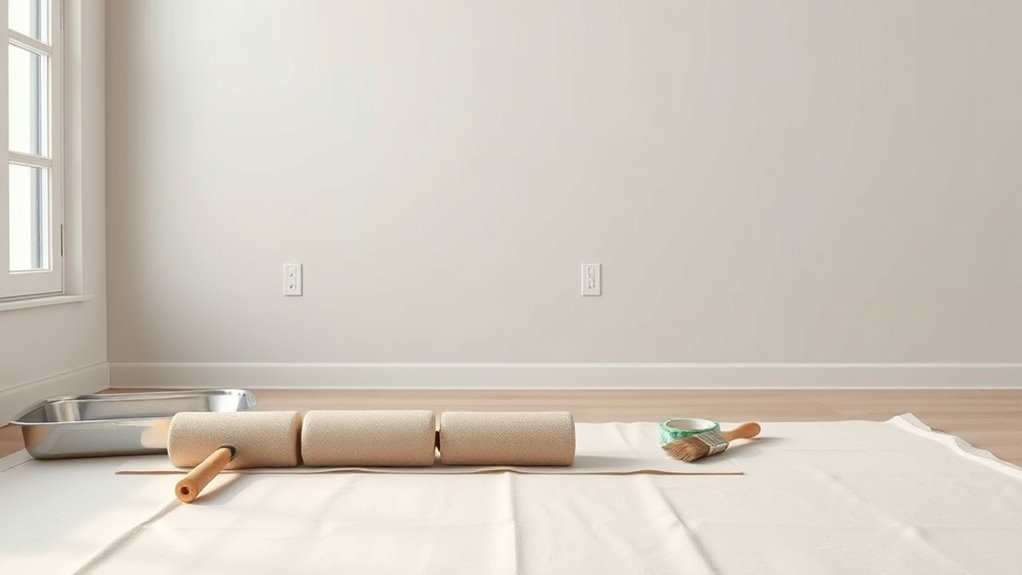
Want a pro-looking wall without the hassle? You’ll pick a medium-nap synthetic roller for smooth to semi-rough walls, balancing coverage and minimal splatter. Match nap length to texture: shorter for smooth, longer for textured.
Choose quality paint brands and rollers designed to work together so color schemes lay down evenly and true. Use a 9–12-inch roller for standard rooms and a separate trim brush for edges.
Maintain a consistent loading and rolling rhythm to avoid lap marks. Clean and store rollers per manufacturer instructions to preserve nap and prevent contamination between colors.
How to Choose a Roller: The Decision Checklist
If you’re set on a medium-nap synthetic roller for most walls, the next step is picking the right specifics to match your room, paint, and technique. You’ll choose by balancing surface smoothness, paint sheen, color matching needs, and comfort. Consider roller ergonomics to reduce fatigue and improve control.
Assess pile density and sleeve quality for even coverage, and match roller width to room size so you work efficiently.
- Surface type (smooth vs. subtle texture)
- Paint type (latex, enamel, specialty)
- Finish and color matching requirements
- Handle design and weight for ergonomics
- Sleeve durability and lint-free rating
Nap Length: Coverage, Texture, and Tradeoffs
When you pick a roller, nap length determines both coverage and finish. Use a short nap on smooth walls for a fine, even coat.
Choose a long nap to reach into textured surfaces and crevices. Each choice trades finish smoothness for paint-holding capacity, so match nap to your wall texture.
Short Nap: Smooth Surfaces
Because short-nap rollers hold less paint and lay it down smoothly, they’re your best choice for finished drywall, plaster, and other flat, even surfaces. You’ll get fine paint texture control and faster touch-ups, and roller ergonomics matter because lighter, shorter naps reduce fatigue during precise work.
Use them when you want crisp edges and minimal stipple.
- Excellent for smooth surfaces and trim blending
- Produces uniform sheen with less overspray
- Easier to manage for small repairs
- Cleans quickly and stores compactly
- Ideal for thin, even coats without hiding flaws
Long Nap: Textured Coverage
Although long-nap rollers pick up and hold more paint, they excel at getting deep into textured surfaces so you cover faster and hide imperfections. You’ll find them ideal for rough plaster, popcorn ceilings, and pronounced wall texture where short naps miss crevices.
They lay thicker coats, reducing passes and masking flaws, but expect slightly less control on edges. Choose a durable synthetic or blended fabric to balance roller durability and paint release.
Remember longer naps can shed more and use extra paint, so weigh coverage speed against material waste and finish uniformity before you commit.
Which Nap for Smooth Plaster and Trim?
If you’re painting smooth plaster or trim, pick a short-nap roller—typically 1/8″ to 3/16″—so the finish stays even and sharp without leaving texture. You’ll get crisp edges and minimal stipple, which helps when you’re doing color matching or finishing after careful wall preparation.
Use a high-density foam or woven microfiber cover, and keep coats thin to avoid runs. Roll toward trim for uniform coverage, then cut in with a brush for perfect lines.
Use a high-density foam or woven microfiber roller, apply thin coats, roll toward trim, then cut in with a brush.
Clean rollers thoroughly to prevent debris marks.
- Choose 1/8″–3/16″ nap
- Prefer high-density materials
- Apply thin, even coats
- Roll toward trim
- Clean and store properly
Which Nap for Lightly Textured Drywall?
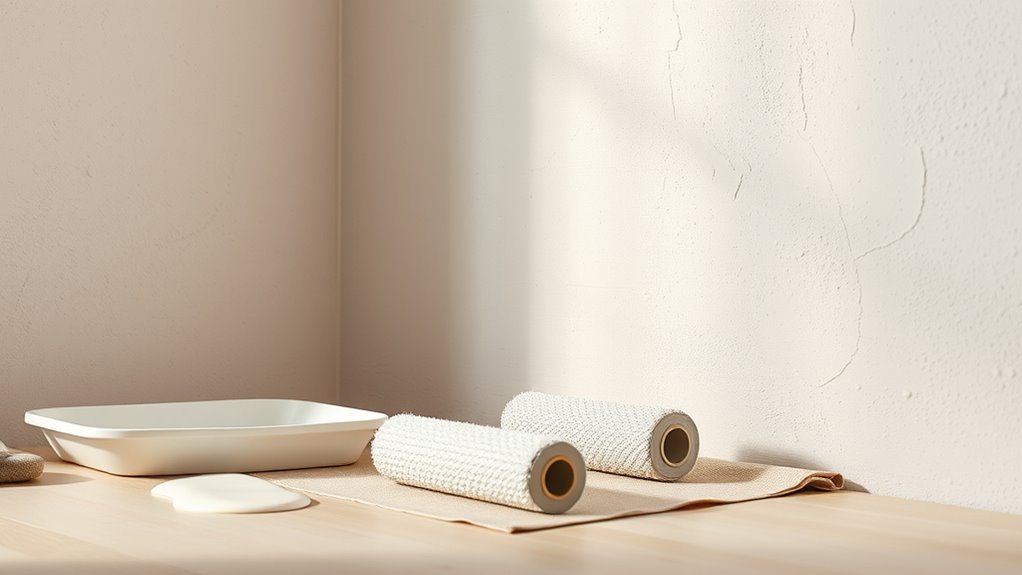
Wondering which nap works best for lightly textured drywall? You’ll usually choose a 3/8″ to 1/2″ nap to reach shallow crevices without oversaturating the surface.
That nap holds enough paint to cover subtle peaks and valleys, so you’ll get even color matching across the wall and avoid lap marks.
For smooth blending areas, back-roll to blend edges and inspect under the room’s light to verify the paint sheen reads consistently.
Use a high-quality woven roller for fewer lint issues, and test a small patch first to confirm texture fill and sheen before doing the whole room.
Which Nap for Rough or Stucco-Like Walls?
For rough or stucco-like walls, you’ll want a thick nap (3/4″ to 1″ or more) to get paint deep into the crevices.
Pick durable fabrics like polyester or lambswool that hold more paint and resist matting.
Test a small area to confirm the coverage and how the texture reads before committing to a full coat.
Choose Thick Nap
Which nap do you pick for rough or stucco-like walls? You’ll want a thick nap—3/4″ to 1— to reach crevices and get even coverage after proper wall preparation techniques. Thick naps hold more paint, reduce trips to the tray, and help when choosing paint colors over textured surfaces so hues read consistently.
Use a sturdy roller core and press firmly but evenly.
- Opt for 3/4″–1″ nap for heavy texture
- Test on a small patch before full roll
- Load roller generously to fill pores
- Roll in multiple directions for uniformity
- Keep an extra roller for touch-ups
Consider Fabric Material
Although nap length determines how much paint reaches a textured surface, the roller’s fabric matters just as much: choose woven or knit covers made from resin-benetted polyester, lambswool, or a blend designed for heavy texture because they resist shedding, hold plenty of paint, and release it evenly into crevices. You’ll want covers with tight fabric weaving for controlled release and proven material durability so they don’t break down on rough stucco. Pick high-density piles for pickup and low lint for finish. Compare options quickly:
| Feature | Benefit |
|---|---|
| Fabric weaving | Even paint release |
| Material durability | Lasts on rough surfaces |
| Lint level | Cleaner finish |
| Paint load | Fewer dips |
Test Coverage And Texture
When you’re deciding on a roller nap for rough or stucco-like walls, think in terms of texture depth and paint capacity. You’ll want a thick nap (3/4″–1¼”) to reach crevices and hold more paint, which speeds coverage and improves Color matching across uneven surfaces.
Do Paint preparation first: clean, patch, and prime so the nap transfers paint uniformly. Test a small area to compare finish and absorption, noting roller pressure and overlap. Choose synthetic blends for durability on abrasive textures.
- Test with primer and topcoat
- Check nap pick-up and release
- Note finish consistency
- Adjust pressure for texture
- Evaluate coverage speed
Roller Cover Materials : When to Use Microfiber, Woven, or Foam
If you’re choosing a roller cover, pick the material that matches your paint type and surface texture—microfiber for smooth, semi-smooth finishes; woven for heavy-bodied paints and textured walls; and foam for ultra-smooth surfaces or trim work. You’ll get better roller cover durability with woven options on rough surfaces, while microfiber balances paint absorption and smooth laydown. Foam gives the slick finish you want on doors and cabinets. Match pile length to texture, clean covers promptly, and replace when nap mats or shedding appear.
| Material | Best Use |
|---|---|
| Microfiber | Smooth walls |
| Woven | Textured walls |
Synthetic vs. Natural Covers: Which to Choose and Why?
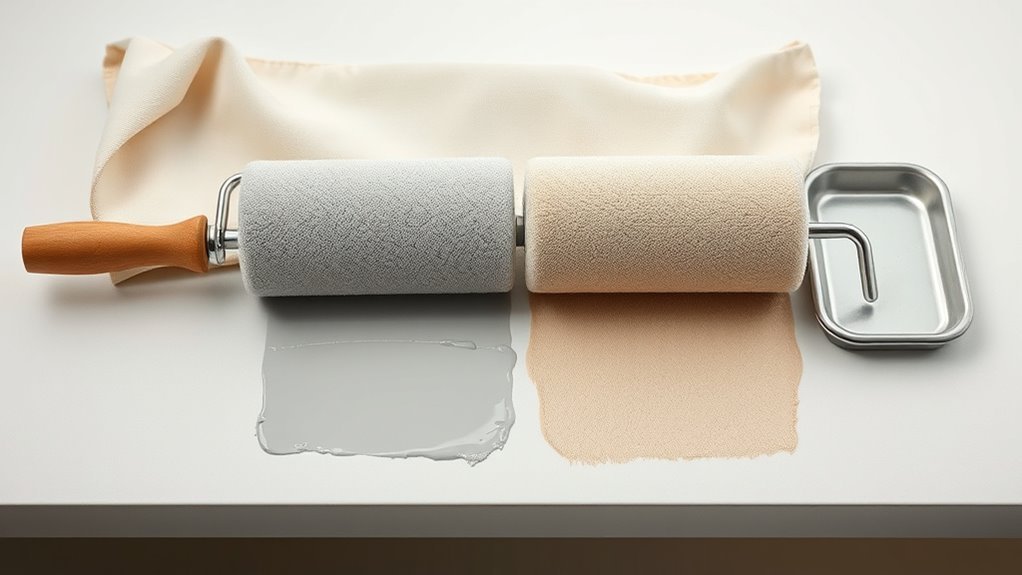
Because the cover material affects paint pickup, release, and finish, you’ll want to pick synthetic or natural fibers based on the paint and surface you’re working with. You’ll choose synthetic covers for water-based paints and smooth walls because they shed less lint and hold consistent nap.
Natural covers suit oil-based coatings and textured surfaces, offering superior paint carrying and a warm finish. Match cover type to your paint chemistry and texture for best results.
Consider durability, cleaning, lint, finish, and cost when deciding.
- Durability differences
- Cleaning and solvent resistance
- Lint and finish quality
- Paint-loading capacity
- Cost versus lifespan
How Core Quality and Fit Affect Roll Performance
How closely does the roller core fit your frame, and how well is it made? You want a snug fit; loose cores wobble, splatter, and wear faster.
Make sure the roller core fits snugly—loose cores wobble, splatter, and wear out faster.
Core durability matters: dense, well-bonded cores resist crushing and keep pile even across the roll. Check for wobble by spinning the sleeve before loading paint.
Fit compatibility is key: cores sized to your frame prevent slipping and reduce fatigue while you work. Cheap adapters or mismatched sizes produce streaks and uneven pressure.
Choose sleeves with sturdy cores that match your frame for smoother application, fewer touch-ups, and longer-lasting performance.
Which Roller Frame Should You Pick : Fixed, Swivel or Extension?
When you pick a roller frame, think about the job’s scope and your comfort. Fixed frames are simple and sturdy for flat walls. Swivel frames give you better access to corners and textured surfaces. Extension frames (or pole-compatible frames) let you reach high areas without a ladder.
You’ll choose based on reach, control, and Roller frame ergonomics to reduce fatigue and improve consistency. Proper frame stability also supports paint adhesion techniques by keeping the nap in correct contact.
Consider these quick factors:
- Weight and grip comfort
- Swivel action smoothness
- Pole-lock reliability
- Frame rigidity for even pressure
- Ease of cleaning
Best Roller Sizes for Walls, Corners, and Trim
Now that you’ve considered frames, pick roller sizes that match each task to save time and get cleaner edges. You’ll use a 9–12″ nap roller for large walls, a 4–6″ for tight spots, and a 2–3″ mini for trim and corners. Color coordination of covers helps you avoid cross-contamination, and labeled roller storage keeps sets ready. Change sizes for texture and reach, and keep a mini for touch-ups. Choose naps to match surface porosity, not just size.
| Task | Recommended Roller |
|---|---|
| Large walls | 9–12″ nap |
| Tight spots | 4–6″ |
| Trim/corners | 2–3″ |
Match Paint Rollers to Paint: Latex, Enamel, Primer
Because different paints behave differently, you should match your roller cover material and nap to the paint type—latex, enamel, or primer—to get even coverage and reduce shedding or texture problems.
You’ll pick synthetic knap for latex, denser woven or short-nap for enamel, and medium nap for primer to hold and release coating evenly.
Consider color matching and paint compatibility when choosing sheen and texture to avoid lap marks or wrong finish. Test a small patch to confirm.
- Synthetic (nylon/poly) for latex
- Short nap for enamel finishes
- 3/8″–1/2″ nap for primers
- Test for color matching
- Check paint compatibility
Cleanup, Reuse, and Lifespan: Care Tips for Rollers
You should clean rollers thoroughly after each use—water and mild soap for latex, mineral spirits for oil-based paints—to prevent dried-on buildup.
Store them wrapped in plastic or suspended to keep the nap from matting so you can reuse them for several more jobs.
Inspect rollers for flattened nap, loose fibers, or uneven coverage to know when it’s time to replace them.
Proper Roller Cleaning
How long do you want your roller to last? You’ll extend its life with proper roller cleaning after each job. Rinse out excess paint, use a brush or comb to remove trapped fibers, and wash with warm soapy water for water-based paints or the proper solvent for oil-based.
Follow paint roller maintenance steps promptly so dried paint doesn’t ruin the nap.
- Rinse until water runs clear
- Use a roller comb for deep cleaning
- Squeeze, don’t twist, to protect the nap
- Dry thoroughly before storing
- Note roller storage tips to prevent deformation
Storage And Reuse
When you clean and store rollers properly, they’ll stay usable for many jobs and still give a smooth finish; treat them as tools, not disposables. After washing paint out, spin or blot excess moisture, then reshape the nap.
For Storage tips, keep rollers in a breathable bag or hung on a rod to avoid flattening and mildew. Wrap sleeves in plastic only for short-term between coats. Label foam cores with date and paint type.
For Reuse techniques, test on scrap before starting, and rotate between similar finishes to prevent contamination. Proper care extends lifespan and guarantees consistent results.
Signs Of Wear
Although rollers seem sturdy, they’ll show telltale signs when they’re past their prime: uneven coverage, frequent lint shedding, and streaks or thin spots on the wall are the most obvious. You’ll notice reduced paint durability and more touch-ups as nap mats or globs build up. Check the core for deforming and the nap for thinning; a compromised roller damages your wall surface finish.
Clean thoroughly after use, but don’t expect miracles once fibers break down. Replace rollers when performance drops—costs beat repainting.
- Visible lint transfer
- Matted or bald nap
- Irregular paint release
- Distorted roller core
- Persistent streaks
Quick Buying Checklist and Common Mistakes to Avoid
Before you buy, make a short checklist to avoid costly mistakes and pick a roller that fits your wall texture, paint type, and budget. Check nap length for smooth or textured walls, choose material compatible with latex or oil, and confirm roller size for coverage. Verify handle comfort and frame sturdiness.
Consider how nap affects color matching and paint sheen perception. Buy a quality cover and a spare to speed work.
Avoid common mistakes: using wrong nap, cheap covers that shed, skipping primer, and neglecting to test a small patch. These steps save time and improve finish consistency.
Frequently Asked Questions
Can Roller Nap Affect Paint Sheen or Finish Gloss Level?
Yes — you’ll notice roller nap can alter paint sheen and perceived finish gloss by affecting texture and reflectivity; longer naps leave more stipple, reducing sheen, while shorter naps produce smoother, glossier appearances on walls.
Can Rollers Be Used for Ceiling Popcorn Texture Removal?
Yes — but cautiously. You’ll want to test first: popcorn removal can clog and damage rollers, so roller compatibility matters. Use stiff scrapers and specialized tools instead; only use durable, easily cleaned rollers for occasional cleanup.
Are There Health Concerns From Lint or Fibers in Freshly Painted Rooms?
Yes — you should care: airborne fibers from lint can cause mild irritation and risk paint contamination, so you’ll vacuum, wipe surfaces, use low-lint rollers or tack cloths, and ventilate well while painting and drying.
Can You Use a Roller With Stain-Blocking or Odorless Paints Safely?
Like a guard dog, you can use stain-blocking or odorless paints with care: you’ll follow roller safety, choose stain resistant rollers, ventilate, wear a mask if needed, and clean rollers promptly to avoid lingering fibers or fumes.
How Do Temperature and Humidity Impact Roller Performance and Drying?
You’ll notice humidity effects slow drying and make nap pick up more paint, while temperature influence alters viscosity and cure time; work in moderate warmth and low-to-moderate humidity, or drying’s slower and finish risks unevenness.
Conclusion
You’ve got the tools to pick the right roller, so trust your judgment and match nap, size, and material to the surface and paint. With proper cleanup and care, a good roller will save time and give you a pro-looking finish—think of it as a reliable workhorse that keeps coming back for more. Use the checklist, avoid common mistakes, and you’ll paint with confidence and smoother results every time.
