
A Painting Is Never Finished, Only Abandoned What Da Vinci’s Quote Really Means
When Da Vinci said “a painting is never finished, only abandoned,” he meant you can always improve a work, so the task becomes knowing when to stop; perfection’s a moving target and practical limits—time, fatigue, purpose—must decide closure. He urged iterative making and acceptance of imperfection, not careless abandonment, and reminded artists to set clear goals and checkpoints so tweaks serve intent. Keep going and you’ll uncover practical ways to apply this idea to your process.
A Direct Answer What Da Vinci Meant by “A Painting Is Never Finished, Only Abandoned”
You can read the quote as a plain warning: a work can always be adjusted, so it’s never truly “finished” in an absolute sense.
For artists, that means knowing when to stop and accept imperfect progress instead of chasing endless tweaks.
For observers, it reminds you that what you see is one moment in a work’s life, not its final truth.
Plain-language summary of the quote
Perfection is an illusion; when da Vinci said “A painting is never finished, only abandoned,” he meant that every artwork can always be nudged, refined, or rethought.
The artist eventually stops working not because it’s objectively complete but because they’ve chosen to stop.
You should accept that a painting is never finished only abandoned, letting choices and limits define when you stop.
Immediate implications for artists and observers
Having accepted that a painting is never finished but abandoned, you can see immediate effects on how artists work and how viewers respond: you’ll embrace iteration, prioritize decisions over perfection, and stop agonizing over finality.
You’ll recognize choices as part of process, accept residue and uncertainty, and value progress. Observers will attend to intention and change, interpreting works as moments rather than endpoints.
Historical Context of the Quote
When you consider this line, remember who Leonardo was then: a restless artist-engineer juggling commissions, experiments, and notebooks.
Trace how the wording shifted in letters, workshop talk, and later citations to see the phrase’s origins and variations.
Notice how contemporaries and later artists read it—as a practical confession, a philosophical stance, or a convenient aphorism.
Who Leonardo da Vinci was when he said it
Leonardo da Vinci was a restless observer and inventive thinker in his late 40s and 50s when he wrote about art, working as a painter, engineer, and court artist whose notebooks show he mixed scientific inquiry with aesthetic ambition.
You’d meet a polymath balancing commissions, experiments, and patron pressures, refining works obsessively while accepting practical limits, so his remark reflects practiced pragmatism, not resignation.
Origins and variations of the phrase through time
Although the exact wording you know today wasn’t fixed in his lifetime, the idea—expressing that art must imitate nature and be judged by usefulness and truth—circulated in drafts, marginal notes, and later copies.
How contemporaries and later artists interpreted it
Because the idea tied art to nature and usefulness resonated with practical workshop concerns, contemporaries picked it up as a guideline for training, commissions, and critique.
You trace how pupils accepted pragmatic restraint, patrons demanded workable completion, and rivals dismissed perfectionism.
Later artists reclaimed the line as freedom to leave works open, experiment, or emphasize process over polish, shaping modern attitudes toward unfinished art.
Basic Understanding What “Never Finished, Only Abandoned” Means
When you look at a painting, remember it’s often the result of many technical passes—glazes, corrections, and adjustments—that never truly stop.
That iterative process ties to a philosophical view that perfection is asymptotic, so artists keep refining rather than declaring a final truth.
In Renaissance workshops this tension met practical limits: studio practices and patron demands often forced works to be handed over before the artist felt they were complete.
The technical reality of painting as iterative work
If you look closely at a painting’s process, you’ll see it’s built through repeated decisions—layers added, altered, and sometimes removed—rather than a single, decisive act.
You mix, test, glaze, scrape, varnish, and step back, adjusting tone, edge, and composition. Each pass solves problems and creates new ones, so you stop when function, intent, and time align, not when perfection’s reached.
The philosophical idea of imperfection and endless refinement
You’ve just seen how painting advances through repeated adjustments, and that practical rhythm points to a deeper idea: works of art aren’t fixed endpoints but ongoing negotiations between intent and limitation.
You confront flaws, choices, and diminishing returns, accepting that perfection is asymptotic. You refine until meaning and resources align, then let go—acknowledging imperfection as productive, not failure, and value in continuous effort.
Relationship to Renaissance workshop practice and patronage
Think of a Renaissance workshop as a conversation rather than a solitary triumph: masters, apprentices, and patrons all shaped a painting’s life, so works were often adjusted, delegated, or halted according to changing needs and resources.
You see why “never finished” fits: commissions shifted, budgets tightened, reputations mattered, and collaborative authorship meant pieces evolved until someone stopped them, sometimes permanently.
Deep Dive Practical Interpretations for Artists
You’ll need clear criteria for when a piece is finished—technical goals met, composition resolved, or further work causing harm.
Weigh your original vision against diminishing returns to decide if additional hours will add value or just noise.
Acknowledge emotional and psychological drivers—fatigue, fear of imperfection, or shifting priorities—that often prompt abandonment.
When to stop working: criteria artists use
When a painting starts to read clearly and the decisions you make no longer improve the work, it’s time to stop—trusting that sense of diminishing returns will save you from overworking details into lifelessness.
You’ll use clear criteria: visual coherence, emotional intent achieved, compositional balance, successful values and edges, and technical stability.
If fixes feel speculative, sign off and let the piece breathe.
Balancing vision vs. diminishing returns
Although your original vision drives the work, you need to measure each adjustment against diminishing returns: ask whether a tweak moves the piece closer to its core intent or just adds polish that risks flattening energy.
Set clear stopping criteria—contrast, focal strength, and emotional clarity.
Prioritize changes that resolve compositional problems or sharpen meaning; skip refinements that only chase perfection and sap momentum.
Emotional and psychological factors that drive “abandonment”
Polishing and stopping rules help you avoid endless tinkering, but sometimes the force that makes you walk away is less technical and more emotional.
You’ll quit when perfectionism, fear of failure, or attachment to an earlier idea blocks progress. Fatigue, self-doubt, deadlines, and desire for novelty push you toward closure.
Learn your triggers, set limits, and view abandonment as a deliberate, strategic choice.
How to Apply the Idea in Your Own Practice
To put Da Vinci’s insight into practice, you’ll start by setting clear intentions and checkpoints so your work stays purposeful.
Keep records and versions as you go, and train yourself to stop when a piece meets its goals rather than chasing endless tweaks.
For commissioned or timed projects, plan your exit strategy up front to protect both quality and deadlines.
- Define goals before starting and outline success criteria.
- Set objective checkpoints to evaluate progress.
- Use versioning and documentation to track changes and decisions.
- Recognize “good enough,” limit tweaks, and schedule project exits.
Step 1: Define clear goals before starting
Before you pick up a brush or sketch a single line, decide what you want the piece to achieve: express an emotion, practice a technique, tell a story, or solve a compositional problem.
State one primary goal and one secondary aim. That focus guides material choices, time allocation, and when to stop.
You’ll work with intention, learn faster, and resist endless tinkering.
Step 2: Set objective checkpoints for evaluation
Once you’ve set a clear primary and secondary goal, decide how you’ll measure progress so you can tell when the piece is working.
Pick concrete checkpoints: composition balance, color harmony, value range, and focal clarity.
Schedule short reviews at milestones (blocking, refinement, final glaze).
Use specific criteria and yes/no pass conditions so you quickly identify fixes and avoid endless tinkering.
Step 3: Use versioning and documentation to track progress
3 simple habits will save you hours and keep your work readable: name each version clearly, log what you changed, and date every file.
Use descriptive filenames and a changelog or commit messages so you can revert or compare.
Tag milestones, note decisions and reasons, and keep brief status summaries.
These records help you track progress, justify choices, and share work without confusion.
Step 4: Learn to recognize “good enough” vs. compulsive tweaking
Even when the piece feels nearly finished, learn to tell the difference between solid judgment and perfectionist compulsion so you don’t waste hours chasing tiny, invisible gains.
Set criteria for completion, trust objective checks (distance, time, peer feedback), and limit tweaks to preset windows.
If changes don’t improve core intent or readability, stop—embrace thoughtful restraint rather than compulsive polishing.
Step 5: Plan exits for commissions and time-bound projects
When you’re taking on commissions or time-limited projects, decide up front how—and when—you’ll exit so the work doesn’t outgrow the deadline or your enthusiasm.
Set clear milestones, acceptance criteria, and a final handoff checklist. Communicate limits with clients, build buffer time, and document deliverables.
Commit to stoppoints to protect your schedule and sanity, then honor them.
Case Studies and Examples
Look at famous Da Vinci works like the Mona Lisa and the unfinished Adoration of the Magi to see the quote in practice.
Compare contemporary artists who embrace or reject his approach to understand its modern relevance.
Also weigh real-world examples of “abandoned” versus “finished” pieces to sharpen your judgment about completion.
Famous works by Da Vinci that reflect the idea
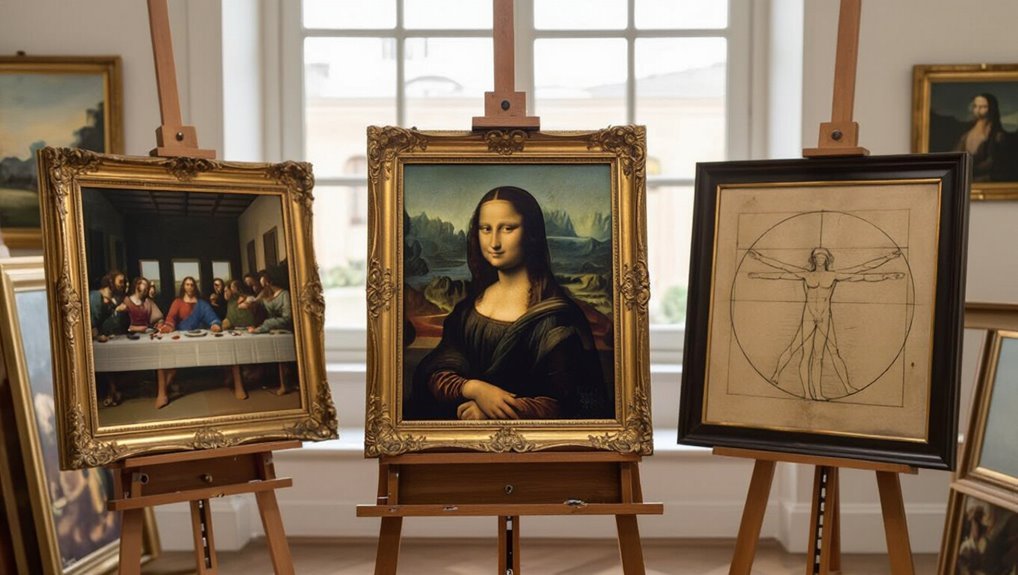
Although Leonardo’s notebooks span science and art, his paintings give you the clearest examples of his maxim that art is the queen of all sciences, because they blend observation, technique, and invention into single works that still shape how we see.
You study the Mona Lisa’s sfumato, the Last Supper’s composition, and St. John the Baptist’s enigmatic gesture, noting iterative revisions and unresolved possibilities.
Contemporary artists who embrace or reject the concept
Leonardo’s blend of observation, technique, and invention still casts a long shadow, but contemporary artists respond to his maxim in varied ways: some pick up his scientific curiosity and fuse rigorous research with studio practice, while others push back, insisting that art’s value lies in feeling, irreproducibility, or social critique rather than empirical method.
You’ll see makers who iterate obsessively, and others who deliberately leave work raw, performative, or community-driven.
Real-world examples of “abandoned” vs. “finished” works
Frequently, the line between “abandoned” and “finished” hinges less on intent and more on context: you’ll find works left incomplete because an artist moved on, faced practical limits, or deliberately stopped to preserve openness, while others reach apparent completion through circulation, conservation, or market recognition.
You compare da Vinci’s unfinished studies, Basquiat’s sketchy canvases, and museum-restored frescoes to see how audiences assign finality.
Common Mistakes and Misapplications
Don’t use Da Vinci’s words as cover for sloppy work—you’ll need solid execution to back up creative intent.
Don’t over-polish your piece until spontaneity and energy vanish.
And don’t ignore client or project constraints; balancing vision with requirements is part of the craft.
Mistake: Using the quote as an excuse for poor execution
Treating Da Vinci’s line about art as a free pass for sloppy work is a mistake you’ll want to avoid: the quote celebrates insight and refinement, not shortcuts or neglect.
You should still plan, practice, and honor craftsmanship. Use the idea to accept honest stopping points, not to justify carelessness.
Aim for deliberate choices, clear standards, and responsibility for the workmanship you present.
Mistake: Over-polishing to the point of losing spontaneity
When you keep sanding and reworking a piece past the point of clarity, you risk erasing the gestures and surprises that gave it life; you’ll smooth out energy, tighten expression, and end with technically perfect but soulless work.
Trust initial marks, step back, set limits, and stop when intent reads.
Preserve spontaneity by resisting endless tweaks and honoring bold choices.
Mistake: Ignoring client or project constraints
Preserving spontaneity matters, but so does working within the limits set by your client or project.
If you ignore briefs, budgets, or timelines, you’ll create work that can’t be used or paid for.
Balance creative impulses with practical requirements: ask clarifying questions, propose constrained experiments, and adapt ideas to specs.
That way your art stays essential and relevant without derailing the project.
Best Practices and Tips for Artists and Creators
You’ve already seen how overworking a piece can blur its impact, so now let’s focus on clear practices that keep you decisive and collaborative.
Use concrete habits, communication tactics, and tool-based checkpoints to finish work confidently and on time. Below are four focused points to guide your approach:
- Set strict time-boxed stages (sketch, refine, finish) to prevent endless tweaking.
- Use brief, documented briefs and check-ins to keep collaborators and clients aligned.
- Adopt finalization tools (versioning, checklists, and constrained palettes) to make finishing decisions easier.
- Practice a “one-pass” review where you commit to a limited set of edits before declaring completion.
Practical habits to avoid endless tinkering
If you want to stop endlessly tweaking a piece, set clear finish criteria before you begin and stick to them—decide what “done” looks like with respect to function, emotion, and time spent.
Use timed sessions, wind-down rituals, and a “one-change” rule after review. Track progress with checkpoints, accept diminishing returns, and archive iterations so you can move on confidently without second-guessing.
Communication strategies for collaborators and clients
When you collaborate with others, clear expectations and regular check-ins keep projects moving and reduce friction; set scope, deadlines, and decision authority upfront.
Use concise updates, share visual progress, and confirm approvals in writing.
Ask for specific feedback, prioritize changes, and negotiate compromises early.
Close projects with a signed sign-off to prevent scope creep and ambiguous revisions.
Tools and techniques to make decisive finishing choices
Although finishing choices can feel intimidating, you can make them decisively by using targeted tools and clear criteria: set a finish goal (mood, focal point, and designated audience), compare options side-by-side with quick thumbnails or mock-ups, limit your palette and surface treatments to a few tested combinations, and use time-boxed trials so you don’t overwork a piece.
Use checklists, calibrated reference swatches, and versioned photos to conclude.
Comparison “Finished” vs “Abandoned” in Different Contexts
You’ll notice “finished” and “abandoned” mean different things across visual arts, design, and writing, and that context changes the maker’s threshold for completion. For commissioned work you’ll often have external deadlines and client expectations shaping whether you call something done, while personal projects let you stop or restart based on your own goals. Compare these scenarios quickly using the table below to spot where decisions shift.
| Context | How “Finished” vs “Abandoned” is judged |
|---|---|
| Visual arts | Aesthetic readiness vs. lost interest or reworkability |
| Design | Client approval and usability vs. scope creep or shelving |
| Writing | Narrative closure vs. drafts left incomplete |
Visual arts vs. design vs. writing: how the concept shifts
If you think of “finished” as a clear, final state, you’ll find that visual arts, design, and writing each bend that idea in different directions: you’ll treat paintings as open-ended, edits as functional decisions, and prose as iterative narrative choices.
You abandon a canvas when intuition says stop, finalize designs for use, and release writing when clarity and voice meet purpose, not perfection.
Commissioned work vs. personal projects: decision differences
When someone pays you for a piece, finishing means meeting a brief, schedule, and expectations; when you work for yourself, abandoning can feel like betrayal or relief.
You weigh external commitments, edits, and deadlines differently than personal vision. Commissioned work demands closure; personal projects let you iterate or walk away without stakeholder fallout.
Decide by value, time, and emotional cost, then act.
Broader Meanings Philosophical and Creative Takeaways
When you read Da Vinci’s line about “finished” and “abandoned,” you’re asked to rethink perfectionism and let creative freedom guide progress.
That mindset frees you to iterate—making prototypes, drafts, and experiments without needing them to be perfect the first time.
You can apply this to tech, design, or writing by embracing continuous refinement instead of waiting for a mythical final product.
How the quote relates to perfectionism and creative freedom
Although Da Vinci’s line about perfection can feel like a demand for flawless work, it actually frees you to focus on exploration over fixating on an unattainable ideal.
You stop policing every brushstroke and accept imperfection as part of expression. That shift dissolves paralysis, encourages risk-taking, and lets you finish projects that teach you more than endlessly chasing an impossible, static standard ever would.
Implications for iterative processes in other fields (tech, design, writing)
Letting go of perfection in art opens a practical pathway for iterative work in tech, design, and writing: you start shipping rough drafts, prototype features, and publish essays that invite feedback rather than waiting for a mythical flawless version.
You iterate fast, learn from actual use, prioritize improvements, and treat releases as experiments—reducing risk, accelerating learning, and building products and stories that evolve with real-world input.
FAQ
You’ll find the answers to common questions below, from whether the quote is literal or metaphorical to whether Leonardo actually spoke those words.
You’ll learn practical guidance on when to stop a piece, how abandonment can be strategic, and how teachers can apply the idea in critiques.
If you still have questions after this, ask and we’ll go further into any point you want.
Is the quote a literal statement about technique or a metaphor?
Is the famous line from Leonardo meant to be taken as a hands-on instruction or as a broader metaphor about seeing?
You should read it both ways: as practical advice about refining strokes until you accept imperfection, and as a metaphor urging you to accept unfinishedness in life and perspective.
It pushes you to balance craftly persistence with the wisdom to stop and reflect.
Did Da Vinci actually say these exact words?
Wondering whether Leonardo actually spoke those exact words?
You won’t find a verbatim source in his surviving writings; the phrase likely evolved from translations and paraphrases of his notes.
Scholars trace the idea to his notebooks’ sentiments about unfinished work, but the catchy English line is a later condensation.
How do I know when to stop working on a piece?
How do you know when a piece is finished? Trust your judgment: step back, let it rest, then revisit with fresh eyes.
If composition, values, and intent align and changes no longer improve meaning, stop.
Set limits—time, revisions, goals—to prevent endless tinker.
Remember finished doesn’t mean perfect; it means it fulfills the purpose you set.
Can “abandonment” ever be strategic or positive?
Leaving a piece unfinished can feel like failure, but sometimes abandoning work is a deliberate, strategic choice that helps your practice.
You conserve energy for stronger ideas, avoid overworking what’s already successful, and create space for experimentation.
Strategic abandonment lets you learn faster: you treat projects as studies, extract lessons, and redirect efforts toward clearer goals instead of polishing diminishing returns.
How can teachers use this idea when critiquing student work?
When you frame abandonment as a deliberate decision rather than failure, critiques shift from judgment to guidance: point out where a student wisely stopped to preserve a strong idea, highlight what was learned in the process, and suggest whether finishing, revising, or moving on will best serve their growth.
Encourage reflection, ask targeted questions, offer concrete next steps, and praise choices that show developing judgment.
