
Can You Paint Over an Asbestos Ceiling? What You Need to Know First
You can paint over an intact asbestos ceiling to help reduce fiber release, but you shouldn’t do it blind. First confirm the material with testing or a pro, don’t disturb or sand the surface, and use an approved encapsulating coating plus proper respirators and containment. If the ceiling’s damaged, crumbly, or untested, stop and consult licensed abatement services. Follow safety rules, document tests, and keep monitoring—keep going to learn safer steps and your best options.
Can You Paint Over an Asbestos Ceiling? Quick Answer
Yes — you can paint over an intact, well-adhered asbestos ceiling to seal fibers, but you shouldn’t paint if the surface is damaged, crumbling, or will be disturbed.
Your main safety takeaway is to avoid sanding, scraping, or otherwise disturbing the material and to use a suitable encapsulating paint and proper respiratory protection.
Call a licensed asbestos professional for testing and any removal or repair if the ceiling is damaged, you plan major work, or you’re unsure about the material.
Direct short answer (Yes/No and when)
You can paint over an asbestos ceiling, but only if the material is in good condition and you take proper precautions or hire a licensed abatement pro; otherwise don’t disturb it.
Yes — you can paint when tiles or plaster are intact, non-crumbling, and tested safe.
No — don’t paint if damaged, friable, or untested; then get professional assessment first.
Key safety takeaway and when to seek professional help
If the ceiling’s asbestos material is intact and non‑friable, it’s generally safe to paint over it—but if it’s damaged, crumbling, or untested, stop and get a professional inspection first.
You should avoid sanding, scraping, or disturbing the surface.
Hire licensed asbestos abatement pros if fibers are suspected, if large areas need work, or if you lack proper protective gear and containment expertise.
What Is an Asbestos Ceiling? Basic Understanding
An asbestos ceiling usually means older textured or acoustic materials like popcorn, plaster, joint compound, or loose-fill insulation that may contain asbestos fibers.
You should know the fibers are dangerous when disturbed and become airborne, where inhalation can cause serious lung disease.
If your home was built or renovated before the 1980s and you see brittle, crumbly, or dusty ceiling textures, treat it as suspect until a tester confirms otherwise.
What materials commonly contain asbestos in ceilings
Ceilings built or renovated before the 1980s often contain asbestos in several common materials, so you’ll want to know what to look for.
Check textured popcorn or cottage cheese coatings, acoustic tiles, joint compound and plaster, ceiling insulation, and mastics or adhesives.
Fibrous cement panels and some HVAC duct wraps can also contain asbestos, so treat suspicious materials with caution and consult a pro.
How asbestos fibers become hazardous
Because asbestos fibers are microscopic and durable, they become hazardous when they’re released into the air and breathed in, where they can lodge in your lungs and resist the body’s cleanup processes.
Once trapped, they irritate tissue, cause inflammation, scarring, and genetic damage over years, and raise your risk of diseases like asbestosis, lung cancer, and mesothelioma.
Typical age and indicators of asbestos-containing ceilings
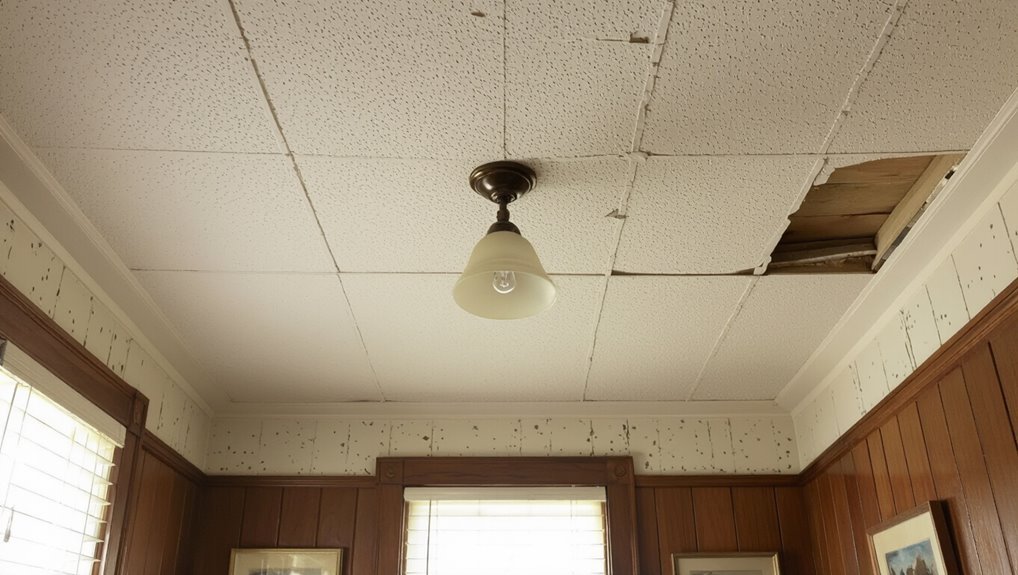
When asbestos fibers become airborne and pose a risk, you’ll want to know whether your ceiling might contain them.
Homes built before the 1980s—especially 1930s–1970s—often used asbestos in textured ceilings, popcorn finishes, and cement boards.
Look for brittle texture, yellowing, and disturbed or crumbling areas.
If unsure, don’t disturb it: hire a licensed inspector for sampling and advice.
Assessing Your Ceiling Before Painting
Before you paint, you need to figure out whether the texture contains asbestos or not, since age, appearance, and building history can tip you off.
If there’s any doubt, arrange testing—look for DIY warning signs but confirm with a certified lab or inspector—and follow regional rules on disclosure and handling.
When in doubt, treat older textured ceilings as asbestos until proven otherwise to protect yourself and stay compliant.
Identifying asbestos vs. non-asbestos textured ceilings
Although textured ceilings can look similar at a glance, you need to distinguish asbestos-containing finishes from safer alternatives before you start any work.
Look for age, dense crumbly texture, and historic product types. Don’t assume safety by appearance alone.
- Age: pre-1980s installations
- Texture: coarse, brittle particles
- Labels: old product markings or invoices
How to arrange asbestos testing (DIY signs vs. lab testing)
If you suspect asbestos, don’t guess—test.
Look for DIY signs like crumbling texture or dust but treat them as indicators, not proof.
Contact a certified asbestos contractor or accredited lab to collect samples safely; many offer pickup or on-site sampling.
Labs provide clear results and handling guidance.
Don’t disturb the ceiling yourself—improper sampling can release fibers and increase risk.
When to presume asbestos (age, appearance, building history)
When you’re planning to paint a textured or popcorn ceiling, assume it might contain asbestos if the building dates from the 1940s through the late 1980s, the surface is rough or crumbly, and renovation records or local building practices suggest asbestos use.
Check age, texture, and history; if unsure, don’t disturb it—test first.
- Old construction era
- Crumbling/rough texture
- Unknown renovation history
Legal and disclosure considerations by region
Before you paint, check the legal and disclosure rules that apply in your area because liability, testing, and removal requirements vary by jurisdiction and can affect whether you’re allowed to disturb a suspect ceiling.
Contact local health or building authorities, review disclosure laws for sales or rentals, and confirm contractor licensing and mandatory abatement procedures.
Keep records of any tests, permits, and communications.
Risks of Painting Over an Asbestos Ceiling
You need to know when painting will raise or lower your exposure risk: sealing intact asbestos can reduce fiber release, but sanding, scraping, or high-pressure cleaning will increase it.
Any disturbance during prep can send hazardous fibers into the air, so you’ve got to avoid abrasive methods and use proper controls if disturbance is likely.
Finally, encapsulation can be a safe long-term option in some cases, but removal eliminates the material and its long-term monitoring concerns—each choice has trade-offs you should weigh with a professional.
Situations where painting increases or reduces risk
Although painting can sometimes seal undisturbed asbestos fibers and lower airborne risk, it can also raise danger if you disturb the material during prep or application. You should weigh conditions carefully and choose containment or professional help when needed.
- Intact, sealed surface — painting reduces exposure risk.
- Crumbling textured ceiling — painting may not stabilize fibers.
- Sanding or scraping — increases airborne hazard; avoid DIY.
How disturbance during preparation releases fibers
When you prep an asbestos ceiling, common actions like sanding, scraping, or using a heat gun can tear fibers free from the binder and send microscopic particles into the air where you’ll inhale them.
Even light disturbance stirs dust; routine prep boosts airborne fiber counts.
Without proper containment, protection, and wet methods you’ll spread contamination beyond the work area and raise health risks.
Long-term implications of encapsulation vs. removal
If you cover an asbestos ceiling with paint or another encapsulant instead of removing it, you’ll reduce immediate fiber release but inherit ongoing maintenance and risk-management obligations.
You’ll need inspections, careful repairs, and documentation to prevent future disturbance.
Consider removal when renovation risks or long-term liability outweigh short-term cost savings.
- Scheduled inspections
- Controlled repairs
- Liability and resale implications
Options for Dealing with an Asbestos Ceiling (Decision Guide)
You’ve got four main paths to handle an asbestos ceiling: leave it alone and monitor, encapsulate it with specialized coatings, hire professionals for full removal, or cover it with a new ceiling.
Each option has different costs, risks, and disruption levels, so you’ll want to weigh safety and budget.
I’ll walk through what to expect from each choice so you can decide what fits your situation.
Option 1 Leave alone and monitor
Although it might feel counterintuitive, leaving an intact asbestos ceiling alone and simply monitoring it’s often the safest, least disruptive choice.
You’ll avoid disturbing fibers, cut costs, and maintain safety if the material’s undamaged. Check regularly, document changes, and act if deterioration appears.
- Visual inspections monthly
- Photograph and log any cracks
- Restrict access to the area
Option 2 Encapsulation (painting) overview
If you prefer a less disruptive alternative to leaving the ceiling alone, encapsulation (painting) can stabilize asbestos-containing materials by sealing fibers in place rather than removing them.
You’ll clean loose debris, repair damaged areas, and apply a specialized encapsulant or latex paint designed for asbestos surfaces.
Encapsulation reduces fiber release, costs less than removal, and requires periodic inspections to guarantee coating integrity.
Option 3 Professional removal (abatement)
When you need a permanent, guaranteed solution, hire a licensed asbestos abatement contractor to remove the ceiling safely and legally.
They’ll assess, contain, and dispose following regulations. Expect disruption, professional gear, and certified waste handling.
- Full inspection and air testing
- Containment, negative pressure setup
- Wet removal, HEPA cleanup and clearance testing
Option 4 Covering with new ceiling materials
Removing asbestos is the surest fix, but not everyone can tolerate the cost, disruption, or wait for professional abatement.
You can cover the ceiling with drywall, furring strips plus new panels, or suspended ceilings to encapsulate asbestos. Guarantee secure fastening and seal seams with appropriate caulk or tape.
This minimizes disturbance, improves aesthetics, and lets you avoid immediate removal while maintaining safety.
###
Deciding what to do with an asbestos ceiling comes down to balancing safety, cost, disruption, and your long-term plans for the space. You’ll weigh removal, encapsulation, covering, or leaving alone—each has risks, costs, and timelines. Use this quick guide to decide what feels right and safe for you.
| Option | Risk | Emotion |
|---|---|---|
| Remove | Low long-term | Relief |
| Encapsulate | Moderate | Cautious |
| Cover | Short-term | Hopeful |
| Leave | High | Anxiety |
How to Safely Paint (Encapsulate) an Asbestos Ceiling Step-by-Step
Before you start, confirm the ceiling actually contains asbestos and note its condition from test results or a professional report.
Then choose approved encapsulants and paints, prepare the room to limit disturbance, and set up proper containment.
Finally, put on the right PPE and apply the product using gentle techniques that minimize fiber release.
Step 1 Confirm presence and condition (testing/report)
How do you know if that popcorn or textured ceiling actually contains asbestos?
You’ll need a certified lab test and a visual condition check before touching it. Don’t disturb suspect material.
- Hire a licensed inspector to sample safely.
- Get a written lab report confirming fibers and friability.
- If damaged or friable, stop and consult an abatement professional.
Step 2 Choose the right encapsulant products and paints
Step 2 is picking products that will actually seal asbestos fibers and won’t make the ceiling worse: choose a licensed encapsulant formulated for asbestos (not just any ceiling primer) and pair it with paints compatible with that product so you get a durable, breathable barrier that reduces disturbance and fiber release.
Check labels, certifications, and manufacturer instructions; prefer water-based, low-VOC options rated for encapsulation.
Step 3 Prepare the area with minimal disturbance
Once you’ve chosen compatible encapsulant and paint, set up the work area to minimize any disturbance to the asbestos surface: seal off doors and vents with plastic sheeting, turn off HVAC systems, lay drop cloths over floors and furniture, and post warning signs so others stay clear.
- Tape plastic tightly to frames, overlap seams.
- Keep movement slow, avoid brushing ceiling.
- Use sticky mats at exits.
Step 4 Personal protective equipment (PPE) and containment
Before you begin applying encapsulant, put on proper PPE and establish containment so fibers won’t spread if the ceiling is disturbed.
Wear a fitted P100/HEPA respirator, disposable coveralls with hood, gloves, and boot covers.
Seal the room with plastic sheeting, create negative pressure with a HEPA-filtered fan if possible, and keep unprotected people and HVAC systems isolated until cleanup is complete.
Step 5 Application technique to minimize fiber release
With your PPE on and containment sealed, you’ll want to move slowly and deliberately to keep fibers from becoming airborne while you apply the encapsulant.
Use low-pressure tools and a thick-nap roller for even coverage. Work outward from a starting point, overlap wet edges, and avoid scraping.
- Slow, steady strokes
- Even, full coverage
- No agitation
Step 6 Cleanup, disposal, and post-work testing
Finish cleanup methodically to keep fibers contained and reduce exposure risks.
Wear PPE, wet-clean surfaces with HEPA-filtered vacuum support, and seal debris in labeled, double-bagged asbestos waste.
Dispose through an authorized facility per local regulations.
Decontaminate tools and dispose non-salvageable PPE as hazardous waste.
Arrange certified post-work air or clearance testing before reoccupying the space.
When to Hire a Professional Abatement Contractor
If the ceiling is crumbling, heavily damaged, or will be disturbed by renovation, don’t attempt DIY encapsulation — call a pro.
You’ll want to find and vet licensed asbestos contractors by checking certifications, references, and recent work photos.
Expect removal to cost more and take longer than encapsulation, so get multiple written estimates that outline timelines and disposal procedures.
Signs you should not attempt DIY encapsulation
When asbestos material is damaged, friable, or has been disturbed recently, don’t try to encapsulate it yourself—call a licensed abatement contractor.
You should hire pros if conditions increase risk or complexity.
- Visible crumbling, powdering, or loose fibers present.
- Extensive area over several square meters or multiple rooms.
- HVAC contamination, water damage, or structural work nearby.
How to find and vet licensed asbestos contractors
Those red flags—crumbling material, widespread damage, HVAC or water issues—mean you should stop and call a licensed abatement contractor rather than trying to handle the job yourself.
Check licensing and insurance, verify asbestos-specific certifications, request references and recent project photos, and confirm written work scope and disposal plans.
Get multiple bids, ask about containment methods, and never hire someone who avoids documentation.
Expected costs and timelines for removal vs. encapsulation
Deciding whether to hire a professional often comes down to cost, timeline, and risk: removal typically runs higher and takes longer than encapsulation, but it eliminates the hazard while encapsulation buys time and lowers immediate expense.
- Removal: $1,500–$6,000+; days to a week; full abatement, higher disruption.
- Encapsulation: $300–$1,200; hours to a day; cheaper, temporary control.
- Get quotes, permits, and a clear timeline before hiring.
Common Mistakes and What Can Go Wrong
Don’t sand or scrape textured ceilings—you can release deadly fibers if the material contains asbestos.
Don’t use the wrong paint or adhesive, since some products can damage the texture or fail to encapsulate it properly.
Before you start, test the material and set up proper containment and PPE so you don’t spread contamination or expose yourself.
Mistake 1 Sanding or scraping textured ceilings
If you sand or scrape a textured ceiling that might contain asbestos, you’ll release dangerous fibers into the air where they can be inhaled and lodge in your lungs.
Don’t disturb the surface. Instead, you should:
- Picture dust clouds settling from scraping.
- Imagine microscopic fibers drifting into breathing zones.
- Consider long-term health risks from a single careless action.
Mistake 2 Using the wrong paint or adhesive
Along with avoiding sanding, you also need to watch what you put on the ceiling—using the wrong paint or adhesive can do more harm than good.
If you pick solvent‑based paints, strong primers, or heavy adhesives, they can react with the textured material, causing deterioration or fiber release.
Use breathable, compatible coatings and follow manufacturer guidance to stabilize the surface without disturbing asbestos.
Mistake 3 Inadequate containment and PPE
Because asbestos fibers are microscopic and can stay airborne for hours, failing to set up proper containment and wear the right PPE dramatically raises the risk of exposing yourself and others.
You should seal off the room, use negative pressure, and wear a fitted respirator and disposable coveralls.
Visualize risks:
- Airborne fibers spreading to other rooms.
- Contaminated clothing transporting fibers.
- Disturbed ceiling releasing hidden asbestos.
Mistake 4 Failing to test before work
When you skip testing before you start work, you’re gambling with your health and your home—what looks like harmless paint or texture can hide asbestos fibers that get kicked up the moment you scrape, sand, or drill.
Don’t assume age or appearance tells you anything. Get a certified asbestos test, follow its guidance, and if positive, hire licensed abatement—don’t DIY.
Best Practices and Tips for Homeowners
When you work near an asbestos ceiling, take simple steps to minimize exposure risk like sealing the area, wearing proper PPE, and keeping disturbance to an absolute minimum.
After encapsulation, follow maintenance tips such as gentle cleaning, regular inspections for damage, and prompt repairs to the coating.
Keep clear records of testing, treatments, and disclosures so future owners and contractors know what was done before any additional work.
Minimizing exposure risk during any work
If you’re planning any work on an older textured ceiling, take steps to minimize asbestos exposure before you lift a brush or scraper.
Seal the room, shut HVAC, and wet surfaces to prevent dust.
Wear an N95 or P100 respirator and disposable coveralls.
Avoid sanding or dry scraping; disturb fibers only if a licensed pro removes them.
- Seal and wet
- PPE: respirator + coveralls
- No sanding
Maintenance tips after encapsulation
After you’ve encapsulated an asbestos ceiling, keep maintenance simple and cautious to protect the seal and avoid disturbing fibers:
Inspect visually every few months for cracks, peeling, or moisture; gently dust with a soft cloth or vacuum using HEPA filtration; avoid scraping, drilling, or hanging heavy fixtures; address leaks immediately; hire licensed abatement pros for any repairs that might breach the encapsulant.
Record-keeping, disclosures, and future work considerations
Because asbestos work can affect property value and safety, you should keep thorough records and be transparent about any encapsulation or testing you’ve had done.
Store reports, invoices, photos, and dates; share them with buyers or contractors. When planning future work, consult pros and notify anyone who might disturb the ceiling.
- Testing and encapsulation reports
- Contractor contacts and permits
- Notices for future contractors
Cost and Time Comparison: Encapsulation vs. Removal vs. Covering
You’ll want to compare typical cost ranges and the factors that drive price when choosing encapsulation, removal, or covering.
Consider how long each option takes and how much disruption it causes to your home.
Also weigh long-term value and resale implications so you pick the solution that fits your budget and future plans.
Typical cost ranges and factors affecting price
When weighing options for dealing with an asbestos ceiling, you’ll see three main approaches—encapsulation, removal, and covering—each with distinct cost and time profiles influenced by factors like ceiling size, asbestos type, accessibility, and local regulations.
You’ll pay roughly:
- Encapsulation: low–moderate (materials + contractor skill).
- Removal: high (containment, disposal, permits).
- Covering: moderate (materials, labor, finish).
Timeframes and disruption levels
Though the three approaches can all make an asbestos ceiling look fresh, they differ a lot in how long they take and how much they’ll disrupt your home.
Encapsulation is quickest—often a day or two—with minimal mess.
Covering (new drywall or panels) takes several days and creates dust.
Full removal can span days to weeks, needs containment, and causes significant disruption and cleanup.
Long-term value and resale implications
Wondering which approach gives the best long-term value? You’ll weigh upfront cost, future liability, and buyer perception.
Encapsulation is cheapest now but can deter some buyers; removal boosts marketability yet costs more; covering balances cost and appearance but may raise questions.
- Encapsulation: low cost, possible disclosure impact.
- Removal: high cost, stronger resale appeal.
- Covering: moderate cost, mixed buyer reactions.
###
In comparing costs and timelines for dealing with an asbestos ceiling, you’ll find clear trade-offs: encapsulation is the cheapest and fastest option—often done in a day or two for a single room—removal demands the highest budget and can take several days to a week with licensed abatement crews, and covering (adding a new ceiling) sits in the middle on both cost and time, typically requiring a few days to finish depending on prep and room size.
| Option | Cost | Time |
|---|---|---|
| Encapsulation | Low | 1–2 days |
| Removal | High | Several days–1 week |
| Covering | Moderate | Few days |
Frequently Asked Questions
You probably have legal, safety, and disclosure questions about painting an asbestos ceiling, and it’s smart to get clear answers before you act.
We’ll cover whether it’s allowed where you live, if paint truly neutralizes the hazard, how to know if fibers were released, whether encapsulation’s safe for kids and pets, and what to tell a buyer.
Keep these points in mind as you weigh your options and next steps.
Can I legally paint over asbestos in my area?
Where you live matters: local laws and building codes determine whether you can legally paint over asbestos-containing ceilings, and you’ll need to check them before doing any work.
Contact local health or building departments, review regulations, and get permits if required. Consider certified contractors for handling.
Examples:
- City bans DIY disturbance.
- Region allows encapsulation with permit.
- Some areas require abatement by licensed pros.
Will painting permanently fix the asbestos hazard?
Although painting can reduce the chance of fibers becoming airborne by sealing the surface, it won’t permanently eliminate the asbestos hazard because underlying material can still degrade, get damaged, or be disturbed during future work.
Painting is a temporary control: you’ll need ongoing inspections, careful maintenance, and possibly professional removal if the material ages, becomes friable, or you plan renovations that could disrupt it.
How can I tell if painting released asbestos fibers into my home?
How can you tell if painting released asbestos fibers into your home? Check for disrupted, dusty patches near the ceiling, persistent respiratory irritation among occupants, or visible debris after sanding.
If you suspect release, stop work and avoid disturbing the area. Call a certified asbestos inspector for air sampling and clearance before reoccupying.
- Dust accumulation
- Health symptoms
- Professional air test
Is encapsulation safe for homes with children or pets?
If an inspector confirms that sanding or painting disturbed asbestos, you’ll understandably worry about ongoing exposure for kids and pets.
The good news is that encapsulation can be a safe option when done properly. Hire a licensed contractor, use HEPA containment, and keep children and animals away during work and drying.
Follow post‑work air testing and maintenance recommendations to guarantee long‑term safety.
What should I tell a potential buyer about an asbestos ceiling?
When you’re selling a home with an asbestos ceiling, be honest and provide key facts: whether the material is presumed or tested asbestos, any inspection or testing reports, records of abatement or encapsulation work, and current condition and maintenance recommendations so buyers can assess risk and cost.
Disclose known risks, estimated remediation costs, and suggest qualified inspectors or contractors.
- Inspection reports
- Remediation history
- Maintenance tips
