
Can a Quart of Paint Cover One Wall? How to Calculate What You Really Need
Yes — a quart can cover a single wall, but it depends on size, finish, texture, and coats. Measure your wall (height × width), subtract windows and doors, then divide by the quart coverage you expect (real-world: 75–100 sq ft per quart). Smooth walls and light color changes use less; textured or dark-to-light jobs need more. Always round up and keep extra for touch-ups. Keep going to learn practical examples, calculations, and tips.
Can a Quart of Paint Cover One Wall? Quick Answer
A quart of paint typically covers about 100–125 square feet, so it can cover a small wall or provide a single coat on a larger one.
You’ll be fine with a quart for a narrow or short wall, or if you’re only touching up and the existing color is similar.
If the wall is large, textured, or you’re applying multiple coats or switching colors, you’ll need more than a quart.
Direct short answer (typical coverage ranges and outcome)
Typically, one quart of paint covers about 75–100 square feet, so it can cover a single small wall or touch up a larger one depending on wall height and window/door openings.
You’ll find that a quart of paint covering one wall often depends on texture and color change. Expect one thin coat on smooth walls; rough surfaces or strong color shifts usually need more.
When a quart is likely sufficient vs when it’s not
When you’re dealing with a small, smooth interior wall and aren’t making a dramatic color change, a quart will usually cover it with one thin coat.
You’ll need more if walls are textured, porous, or larger, or if you’re shifting from dark to light.
Plan for two coats, primer, or a gallon when coverage, color accuracy, or durability matters.
Understanding Paint Coverage Basics
When manufacturers list paint coverage they mean the area a gallon or quart will cover (usually in square feet per gallon/quart) under ideal conditions.
You’ll see those numbers come from lab tests on smooth, primed panels, so real-world results can differ.
Expect surface type, porosity, color changes, and sheen to increase or decrease the actual coverage you get.
What ‘œcoverage’ means (square feet per gallon/quart)
Coverage tells you how much surface a container of paint will cover, usually expressed as square feet per gallon or per quart.
It’s a practical metric you’ll use to estimate how much paint to buy.
Check label coverage, note that real-world results vary with porosity and color changes, and plan for at least one coat plus touch-ups to avoid running short.
How manufacturers calculate coverage
Although labels make coverage look simple, manufacturers calculate those numbers under controlled conditions that don’t always match your walls.
They’ll test on smooth, primed panels, apply a specific film thickness, and measure dry spread.
You should treat label coverage as an estimate: use it to plan, then adjust for real conditions, trim, and multiple coats to avoid running short.
Factors that change real-world coverage (surface type, porosity, color, sheen)
Because your walls aren’t lab panels, several surface and product factors will change how much paint you actually need.
Rough or porous surfaces absorb more, so you’ll use extra coats or primer. Dark-to-light color changes require additional layers for coverage.
High-gloss sheens reflect more and can show flaws, sometimes needing more careful application; flat finishes hide imperfections but may soak up more paint.
How to Calculate Exactly What You Need
Start by measuring each wall (height × width) and subtracting areas for windows and doors to get your true paintable surface.
Convert that net area into quarts using the coverage per quart, then adjust for the number of coats and any primer.
Finally, round up and add a bit extra for touch-ups so you don’t run short.
Step 1 Measure your wall (height × width)
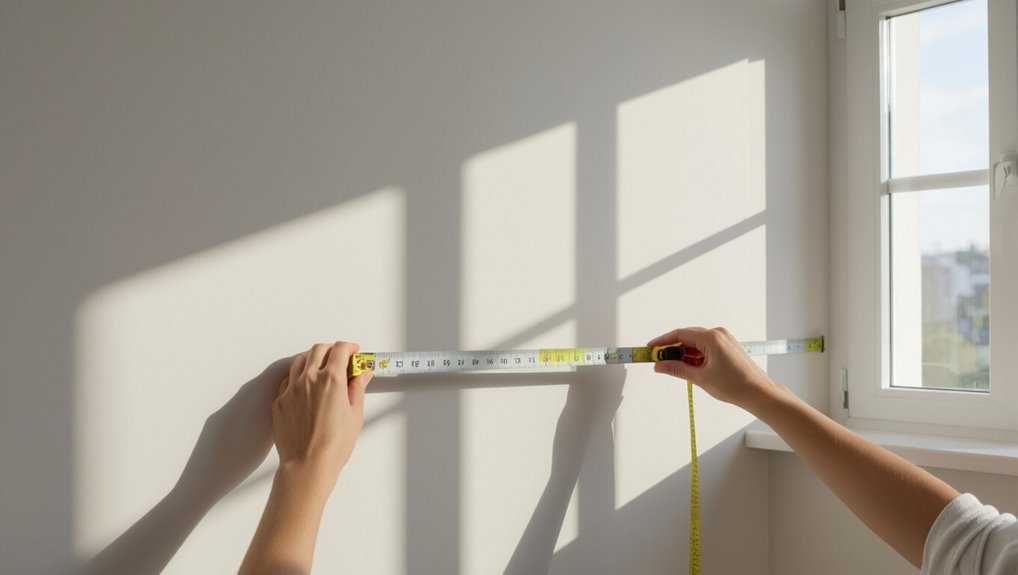
Measure the height and width of each wall in feet, then multiply them to get the square footage for that wall.
Use a tape measure, record numbers for every wall, and round to the nearest inch before converting to feet (12 inches = 1 foot).
Add each wall’s square footage to get your total painted area.
Keep measurements accurate for proper paint estimates.
Step 2 Subtract areas for windows and doors
Now subtract the square footage of windows and doors from your total wall area so you don’t overbuy paint.
Measure each opening (height × width), add them together, and subtract from the wall total. Include trim if you plan to paint it. This gives the net area you’ll actually paint.
- Measure openings accurately
- Add all openings’ areas
- Subtract from wall area
Step 3 Convert wall area into quarts needed (using coverage per quart)
Once you’ve got the net wall area, convert that square footage into the number of quarts by dividing the total by the paint’s coverage per quart (usually listed on the can); if the result isn’t a whole number, round up so you don’t run short.
Check the can for coverage (sq ft/quart), perform the division, and always purchase the rounded-up amount to guarantee complete coverage.
Step 4 Adjust for number of coats and primer
After you’ve converted wall area into quarts, factor in how many coats you’ll apply and whether you’ll use primer, since they change total paint needs. Multiply quarts by coats; subtract primer savings if it reduces topcoat layers. Use the table to plan.
| Item | Adjustment |
|---|---|
| Single coat | x1 |
| Two coats | x2 |
| Primer | -0.5 to -1 quart |
| Heavy stain | +1 quart |
Step 5 Round up and account for touch-ups
Step 5 is where you make your final adjustments: round up your calculated quarts to the nearest purchasable size and add a small allowance for touch-ups so you won’t run short.
Buy an extra quart for small repairs or color mismatches, or keep a partial can sealed. Label it with date, room, and batch number so future touch-ups match.
Common Scenarios and Examples
You’ll see four practical examples to help you plan: a small accent wall (single coat, same color), a full interior wall that needs primer, and a dark-to-light repaint requiring stain-blocking.
You’ll also get a visual guide showing typical wall sizes and how many quarts each scenario usually needs.
Use these cases to match your room to the right materials and quantities.
Example A Small accent wall (single coat, same color)
A small accent wall—say 8 feet wide by 8 feet tall—usually needs just one coat of the same color, so you can quickly estimate coverage by multiplying width by height to get square footage and dividing that by the paint’s stated coverage per gallon. Measure, compare to quart coverage, and decide if one quart suffices.
| Item | Value |
|---|---|
| Wall area | 64 sq ft |
| Coat | Single |
| Quart coverage | Check label |
| Recommendation | Compare values |
Example B Full interior wall with primer required
For a full interior wall that needs primer, start by measuring the wall’s width and height. Multiply them to get the square footage, and then account for both primer and topcoat coverage since primer rarely covers the same area as finish paint.
Calculate primer needed from its spread rate, round up, then calculate finish coats (usually two), factoring in windows/doors and waste before buying.
Example C Dark-to-light color change and stain-blocking situation
When you’re switching from a dark color to a light one and dealing with stains, plan on using a high-hide primer or a stain-blocking sealer before the finish coats; this cuts down on the number of finish coats needed and prevents bleed-through from showing through the lighter topcoat.
After priming, expect one to two finish coats of lighter paint; factor primer in your quart calculations.
Visual guide: typical wall sizes and quart needs
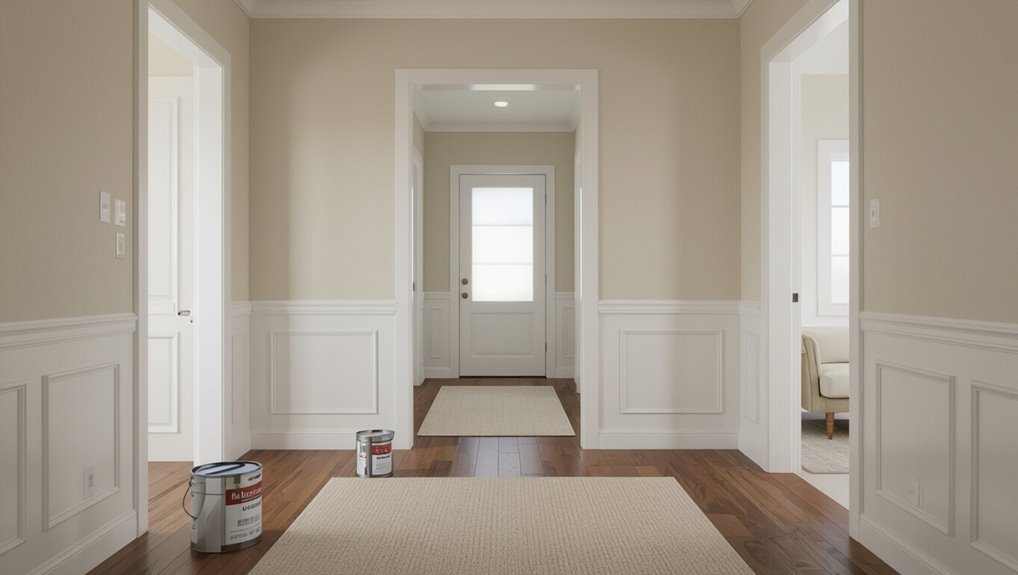
If you’ve primed and planned for stain-blocking, you can now match paint quantities to actual wall sizes.
A quart covers about 50–100 sq ft depending on porosity and coats.
Small accent wall (40–60 sq ft): one quart.
Standard bedroom wall (120–160 sq ft): you’ll need 2–3 quarts or a gallon.
High-absorption surfaces require extra coats; always round up.
Types of Paint and Their Impact on Coverage
You’ll notice latex, oil-based, and specialty paints cover differently, so pick the type that matches your surface and budget.
Sheen also matters—flatter paints hide imperfections but may need more coats than glossier finishes.
And don’t skip primer when needed, since a good primer can cut the total paint required by improving adhesion and uniformity.
Latex vs. oil-based vs. specialty paints (coverage differences)
Most homeowners notice that latex, oil-based, and specialty paints behave differently on walls and trim, and those differences directly affect how much surface a gallon will cover.
You’ll find latex usually spreads farther, dries fast, and needs fewer coats on smooth drywall.
Oil-based gives thicker coverage and fills minor flaws but dries slowly.
Specialty coatings (primers, enamels) vary; check manufacturer coverage rates.
Effect of paint sheen on coverage and appearance
While paint type affects how far a gallon will go, the sheen you pick also changes coverage and final look.
Higher sheens (satin, semi-gloss, gloss) reflect more light, highlight imperfections, and often require extra coats for uniformity.
Flat and matte hide flaws and cover more evenly with fewer coats.
Choose sheen based on room use, desired durability, and how much surface prep you’ll do.
Primer vs. paint when primer reduces total paint needed
Because a good primer seals porous surfaces and evens out color, it often cuts the amount of finish paint you need by one coat or more.
Use primer on new drywall, stained walls, or drastic color changes so you’ll need fewer finish coats. That saves money and time, and improves adhesion and durability.
Measure primer coverage like paint to factor into your total material estimate.
Mistakes That Cause You to Run Out of Paint
You’ll run out of paint when you mismeasure surfaces or don’t factor in waste from trim, cuts, and touch-ups.
Skipping primer on porous or stained walls soaks up extra paint and eats into your estimate.
Applying coats that are too thin—or trying to cover with too many heavy coats—also throws off coverage and leaves you short.
Poor measuring and not accounting for waste
If you skimp on measurements or ignore trim, corners, and overlaps, you’ll likely run out of paint before the job’s done.
Measure wall areas, include windows and doors to subtract, then add for trim, ceilings, and waste.
Factor in brush/roller absorption, multiple coats, and touch-ups.
Round up to the nearest can size so small gaps don’t force an extra trip.
Skipping primer on porous or stained surfaces
When you skip primer on porous or heavily stained surfaces, the paint soaks in unevenly and you’ll need far more coats to get full coverage.
You’ll waste paint as it disappears into bare drywall, brick, or smoke-stained walls.
Use a stain-blocking or high-adhesion primer to seal and even the surface first — it reduces coats, improves durability, and saves money.
Applying overly thin coats or too many heavy coats
Because thin coats soak into the surface and heavy ones sag or drip, both mistakes waste paint and time.
You should apply even, recommended-thickness coats and allow proper drying between them. Too-thin layers demand extra passes; overly heavy application causes runs and uneven finish that need sanding and repainting.
Follow manufacturer spread rates, use proper tools, and test a small area to avoid running out.
Best Practices and Time-Saving Tips
Before you buy a lot of paint, test coverage with a quart on a small area to confirm color and coats.
Use an efficient painting order and the right rolling/edging technique to cut waste and speed the job, and store leftover quart properly for touch-ups.
If you’ll need more than two quarts for uniform coverage, it’s usually cheaper and simpler to buy a gallon.
How to test coverage with a quart before committing
Curious how a single quart will perform on your walls? Test a small, inconspicuous area first.
Clean, dry, and mark a 2×2 ft patch; apply one thin coat, let dry, then add a second if needed. Note coverage and sheen.
- Use same brush/roller you’ll paint with
- Time drying between coats
- Photograph results for reference
Efficient painting order and technique to minimize waste
Start with a clear plan: work from ceiling to trim, then walls, and finish with doors and hardware so you avoid redoing edges and dripping onto finished areas.
Use high-quality brushes for corners and a roller with proper nap for the wall texture.
Load tools moderately, apply thin even coats, maintain a wet edge, and inspect lighting to catch missed spots and avoid unnecessary touch-ups.
Storing and preserving leftover quart for touch-ups
When you finish a project, saving the last quart for touch-ups can spare you hours later—seal the can tightly, label it with the date and room, and pour any leftover into a smaller airtight container to minimize air exposure.
Keep stored cans upside down to create a tight seal and stash them in a cool, dry place out of direct sunlight so the paint stays usable for months or even years.
Store lids separately.
When to buy a gallon instead of multiple quarts
Wondering whether to grab a gallon or several quarts? Choose a gallon when you’re painting multiple rooms, tackling a large wall, or matching a base color for touch-ups later.
Gallons save money per square foot, cut shopping trips, and guarantee consistent batch color.
Stick to quarts only for tiny areas, samples, or when storage and shelf life matter more than coverage.
Comparison: Quart vs. Gallon Costs and Convenience
When you’re comparing quarts and gallons, focus first on cost per square foot to see which gives you the best value.
Think about pros and cons for painting just one wall — quarts can cut waste and storage needs, while gallons usually lower the per-unit price and spare extra trips.
Use your wall’s area and the paint’s coverage rate to decide which option actually saves you money and time.
Cost-per-square-foot comparison
A quart of paint might look cheaper on the shelf, but you should compare cost per square foot to know which option really saves you money and hassle. Calculate price divided by coverage (sq ft) for quarts and gallons, factor in coats, and pick the best value.
| Size | Price | Coverage (sq ft) |
|---|---|---|
| Quart | $8 | 100 |
| Gallon | $30 | 400 |
| Effective $/sqft | $0.08 | $0.075 |
Pros and cons of buying quarts vs gallons for one wall
Now that you’ve compared cost per square foot, weigh how those numbers play out for a single wall: a quart may cover the space and save you money up front, while a gallon gives you extra for touch-ups or a second coat without a big price jump.
Choose a quart if you’re certain of coverage and color; pick a gallon for flexibility, future repairs, or uneven absorption.
FAQ
You’ll want answers to practical questions like whether a quart will cover a 10×8 foot wall, how long leftover paint stays usable for touch-ups, and how many coats a quart gives on rough surfaces.
Consider also how color changes coat count and whether two quarts or one gallon gives better accuracy.
These FAQs will help you plan paint quantity and avoid surprises.
Will one quart cover a 10×8 foot wall?
One quart of paint typically covers about 100 to 125 square feet, so a single quart will usually be enough for a 10×8 foot wall (80 square feet) for one coat.
However, factors like paint type, surface texture, primer use, and color change can reduce that coverage.
If you need two coats, have rough surfaces, or switch from dark to light, plan for more paint.
Can I use leftover quart to touch up after months or years?
If you kept that quart after finishing the wall, you can often use it for touch-ups months or even years later—provided you stored it right.
Seal the can tightly, avoid temperature extremes, and store upside down to create an airtight seal.
Stir thoroughly before use.
Match finish and batch if possible; small color shifts can occur over time, so test in an inconspicuous spot first.
How many coats can I expect from a quart on rough surfaces?
How many coats can a quart give you on rough surfaces?
You’ll get fewer coats than on smooth walls because texture soaks more paint. Expect one thin coat for slight texture, maybe two to three for moderately rough surfaces, and often only one decent coat on very rough stucco before needing more product.
Always test a small area to gauge actual coverage.
Do different colors affect how many coats I need?
Because colors vary in tint and opacity, they can change how many coats you’ll need. Dark or vivid shades and deep reds usually require extra coats to block previous colors.
Pale neutrals and lighter hues often cover in fewer layers. Primer helps, especially when shifting from dark to light.
Test a small area first to gauge coverage and adjust your coat count accordingly.
Is it better to buy two quarts or one gallon for accuracy?
Wondering whether two quarts or one gallon gives you more accuracy? You’ll get the same volume either way, but two quarts let you match batch numbers and finish more precisely if buying separate mixes.
One gallon reduces seams and color variation risk from mixing. For small touch-ups choose quarts; for consistent full-wall coverage, pick a single gallon.
