
How to Stick Paper to Wall Without Ruining Paint
You can hang paper without ruining paint by matching low‑tack methods to your wall and paper: use removable poster strips, mounting putty, painter’s tape, or washi tape for lightweight sheets, and clips, rails, or rated damage‑minimizing strips for heavier pieces. Clean and test a small area first, avoid wet glues, remove adhesives slowly with heat, and support textured walls with backing boards. Keep weight limits and placement in mind—keep going to learn which option fits your wall and paper.
Quick Answer: Best Ways to Hang Paper Without Damaging Paint
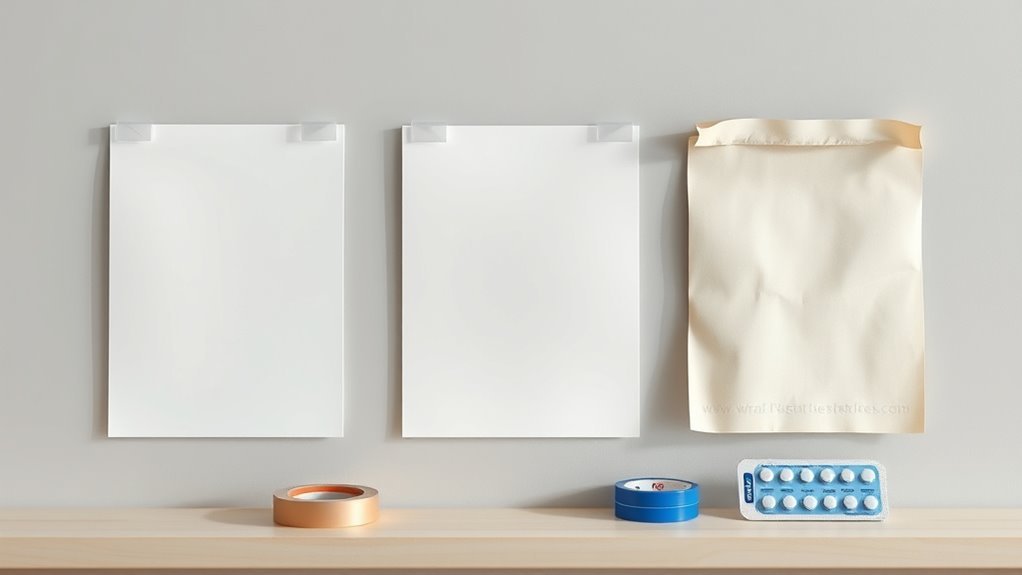
If you want to hang paper without ruining the paint, use low-damage options like removable mounting putty, painter’s tape, or poster strips; they hold well and peel off cleanly when you’re ready to remove them.
You’ll pick adhesive types based on how long you’ll leave items up and how smooth the surface is. Test a small corner first to confirm clean removal.
For textured walls, press putty into crevices or choose strips rated for uneven surfaces.
Keep weight light and spread fasteners to reduce strain.
Remove slowly at a 45-degree angle to protect the finish.
Which Wall Surfaces Affect Hanging Paper
When you hang paper, the type of wall makes a big difference. Smooth painted drywall usually holds tape and removable adhesives well.
While textured or plaster walls can cause gaps or uneven contact that weaken the bond. Consider the surface before picking an adhesive so you don’t damage the paint or have papers fall.
Painted Drywall Surfaces
Though painted drywall is the most common interior surface you’ll deal with, its finish and condition strongly affect how adhesives stick and whether paint peels when you remove paper. You should check sheen level, previous coats, and any loose or chalky paint before applying paper.
Smooth, satin or semi-gloss finishes hold adhesive differently than flat finishes, and wallpaper patterns may show bumps over imperfect areas. If paint flakes when probed, scrape and touch up or prime first.
Avoid heavy adhesives on newly painted walls until cured. Test a small patch with your chosen tape or paste to confirm removal won’t damage paint.
Textured Or Plaster Walls
Painted drywall isn’t the only surface you’ll face; textured and plaster walls present their own challenges for sticking paper. You’ll find textured surfaces grab tape and adhesives unevenly, causing lifts or tears.
For Plaster wall finishes, choose low-tack, wide adhesive strips or removable mounting putty to spread pressure without stressing the finish. Test a small, hidden area for five days first.
If the texture is deep, consider using a lightweight backing board attached with picture-hanging hooks that minimize contact with the wall.
Always remove adhesives gently, pulling slowly and angled close to the wall to protect paint and plaster.
How Paper Type Changes Your Hanging Options
How thick is the paper you’re planning to hang? Choose lightweight prints for delicate adhesives and heavier stock for clips or washi tape.
Paper patterns affect how much support you need: large repeats may demand precise alignment and firmer attachment, small motifs forgive slight shifts.
On smooth walls you can use low-tack adhesives; on varied wall textures opt for mechanical hangers or thicker mounts so edges don’t lift.
If the paper is porous, avoid wet glues that stain; coated sheets handle temporary adhesives better.
Match hanging method to paper weight, finish, and wall textures to protect paint and keep your display flat.
Removable Strips and Tabs That Won’t Peel Paint
When you want secure paper without damaging paint, pick tested removable strips like Command or similar brands that rate for your paper’s weight.
You’ll also find low-tack, wall-friendly tabs that hold light sheets and peel off cleanly when you need them gone.
Look for weight ratings and manufacturer instructions so you’ll get reliable hold without surprises.
Best Removable Strips
If you want damage-free hanging, removable adhesive strips and tabs are your best bet because they’re designed to hold paper securely while peeling away cleanly—usually without tugging off paint.
Choose strips rated for your wall textures and paint finishes; smooth walls and satin or semi-gloss paints usually allow stronger grips, while rough or matte surfaces need flexible, low-tack options.
Test one strip in an inconspicuous spot for an hour to confirm adhesion and removal.
Match strip size to paper weight, and follow manufacturer instructions for temperature and surface prep.
Remove slowly, stretching parallel to the wall for clean release.
Safe Wall-Friendly Tabs
Because you want to hang paper without risking paint, choose wall-friendly removable tabs made specifically to release cleanly; they use low-tack adhesives and stretch-to-remove technology so you can stick and peel without ripping paint or leaving residue.
You’ll press tabs on corners or along edges, matching paper size and weight. For delicate surfaces or textured wallpaper patterns, test one tab first.
Use tabs that complement decorative borders so attachments stay discreet. Remove slowly, stretching tabs parallel to the wall.
Replace tabs after repeated uses to maintain grip. With the right tabs, you’ll display prints, posters, or flyers safely and neatly.
Low‑Tack Tapes and Mounting Putties to Hang Paper
Low-tack tapes and mounting putties give you reliable, removable ways to hang paper without damaging paint, and they’re easy to use for short- to medium-term displays. You can apply strips on posters or notes, avoid corners on textured wallpaper, and test small areas near decorative wall decals. Choose tape for clean edges and putty for uneven surfaces; remove slowly and re-roll putty if dusty.
| Use | Surface | Best for |
|---|---|---|
| Low-tack tape | Smooth paint | Posters, photos |
| Mounting putty | Textured wallpaper | Irregular backs |
| Both | Near decals | Lightweight paper |
Magnetic and Clip Systems for Temporary Paper Displays
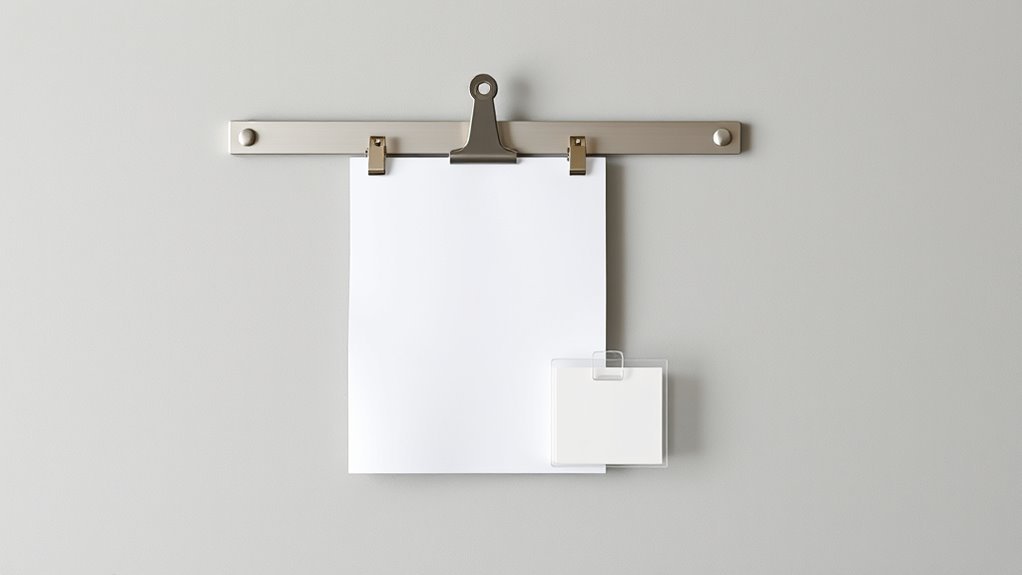
For quick, damage‑free displays you can use magnetic poster strips, removable magnetic paint, or simple clip rails with bulldog clips.
You’ll stick magnetic strips to the paper or paint a magnetic strip area on the wall, or hang a rail and clamp sheets with clips for fast swaps.
Each method keeps paint safe and makes changing prints effortless.
Magnetic Poster Strips
If you want a clean, reusable way to hang posters without touching the paint, magnetic poster strips are a great choice. You’ll attach slim magnetic rails to the top and bottom edges of your print, so it stays flat and looks like simple poster framing.
Magnetic durability means repeated use won’t weaken hold, and you won’t peel paint when you swap prints. They’re lightweight, portable, and tidy.
- Easy to align for a straight hang
- No adhesives or residue on walls
- Works with thin cardstock or photo paper
- Quick to change artwork or notices
Bulldog Clip Rails
When you want a quick, damage-free way to display papers, bulldog clip rails give you a sturdy, removable solution that’s easy to use and swap out. You’ll mount slim rails with small screws or adhesive strips that won’t peel paint.
Clips slide along the rail so you can rearrange pages fast. Use them for schedules, recipes, or artwork without sticky residue.
They suit varied spaces—from a mudroom with dog grooming checklists to a garage planning car maintenance tasks—keeping paper organized and visible. When you remove the rail, any touch-up is minimal, and the wall stays intact.
Removable Magnetic Paint
Bulldog clip rails work great where you need a line of clips, but magnetic paint lets you skip rails entirely and turn a section of wall into a reusable display area. You can paint a small panel, let it cure, then use magnets or lightweight hooks to hold posters, notes, or wall decals without tape or nails. It won’t damage paint if you prep properly and use removable adhesive magnets.
Consider portability and finish—matte hides touch marks better.
- Prep: sand, prime.
- Coverage: follow manufacturer coats.
- Magnets: choose low-profile, removable.
- Removal: repaint over when done.
Poster Hangers, Rails, and Frames With No‑Contact Backs
Because you want the art to sit flush without touching the paint, poster hangers, rails, and no‑contact frames clamp the top and bottom edges so the print floats slightly off the wall. You’ll slide your poster into slim wooden or metal rails that grip without adhesives, preserving paint and paper.
No‑contact frames use spacers or recessed backs so decorative accents and wall art appear suspended, adding a gallery feel. They’re lightweight, easy to swap, and reduce surface contact that causes scuffs or moisture transfer.
Install with minimal anchors or small nails, and you’ll change displays without repainting later.
When to Use Command Hooks and Rails for Paper Displays
If your papers are light and you need a quick, damage-free fix, you’ll want Command hooks; they’ll hold small bundles and work on many painted surfaces.
For heavier posters, multiple sheets, or a cleaner hanging line, choose rails or poster hangers designed for higher weight and even load distribution.
Always check the weight rating and the specific surface limits before you stick or mount anything.
When To Choose Hooks
When you need a strong, reusable solution for hanging multiple sheets or heavier paper items, choose hooks—Command hooks and picture rails give you secure support without nailing into the wall. You’ll protect paint protection and display notes or wall art neatly.
Opt for hooks when weight, frequent rearranging, or damage-free removal matter. Install per package directions, clean surfaces first, and test weight limits.
- Use for heavier posters or layered displays.
- Pick removable adhesive hooks for renter-friendly setups.
- Space hooks to distribute weight evenly.
- Replace strips regularly to maintain hold and avoid paint loss.
When To Choose Rails
Choose rails when you want a tidy, adjustable display that holds multiple sheets or heavier paper without damaging paint. You’ll appreciate the clean lines and easy swapping.
Use rails if your wall textures are smooth enough for adhesive backing or if you can anchor discreetly into studs.
Consider paint types—delicate finishes like matte or chalk may peel with strong adhesives, so pick low-tack strips or lightweight rails with minimal contact.
Rails reduce repeated tape marks and let you align prints precisely.
Install and remove rails slowly, following manufacturer steps, and test a small area first to protect finish and guarantee compatibility.
Weight And Surface Limits
Rails work great for organized displays, but you’ll need different hardware once paper sizes, weights, or wall finishes push beyond what rails alone can support. You should assess weight and surface limits before mounting: light posters fit rails; heavier portfolios need hooks or rails plus anchors.
Check wall texture and Paint compatibility—smooth, painted drywall accepts adhesive hooks better than heavily textured or fresh paint. Test a small area with removable hardware.
When in doubt, use Command hooks rated above your paper weight or install rails with proper anchors for studs.
- Match weight rating to paper bundle.
- Consider wall texture impact.
- Verify Paint compatibility.
- Pre-test removal.
Prep Painted Walls: Cleaning, Testing, and Priming Tips
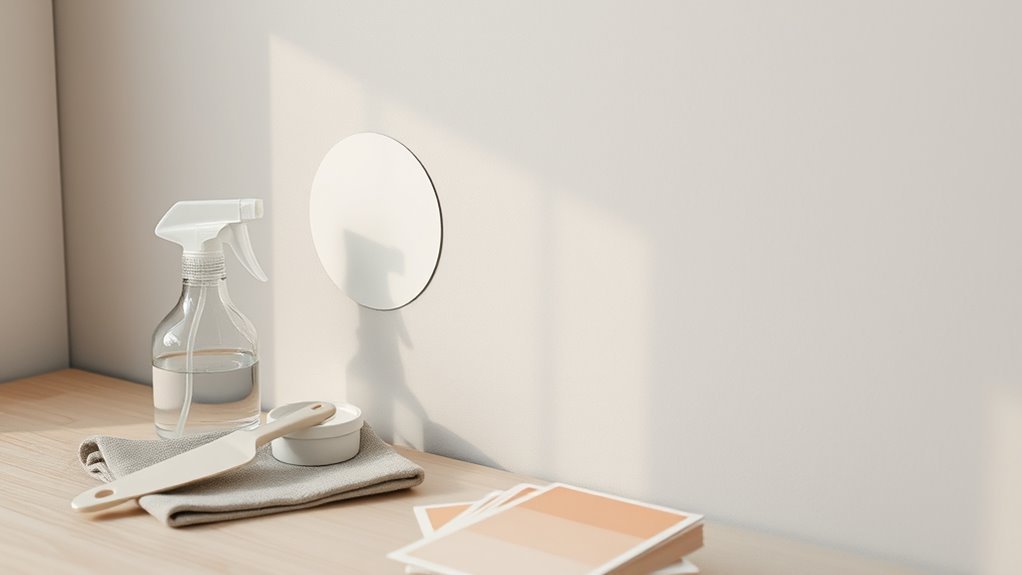
Before you stick anything to painted walls, clean the surface, test adhesion on a small hidden patch, and prime any problem areas so your paint stays intact. Wipe with mild detergent, rinse, and let dry; remove dust and oils that defeat adhesives.
Try your tape or adhesive on a concealed corner for 24 hours to check pull-off risk across different paint finishes.
Sand glossy spots lightly and apply a compatible primer where paint peels or is uneven. Match primer type to the wall and to any wallpaper patterns you plan to use so edges stay smooth and secure.
Where to Place Paper and the Weight Limits to Follow
When you decide where to put paper, pick flat, smooth sections of wall away from direct sunlight, heat sources, and high-traffic areas so adhesives last and edges don’t curl. You’ll also consider decorative borders and wall decals nearby to keep a cohesive look and avoid overlapping adhesives.
Know weight limits: lightweight paper and posters (under ~6 oz) work with removable tape; heavier prints need picture-hanging strips rated per pound or small nails near studs.
- Measure paper size and weight.
- Keep 2–3 inches clear of decorative borders.
- Use two strips for items up to 2 lbs.
- Center heavier pieces over studs.
How to Remove Adhesives Without Peeling Paint
If you want to remove tape or sticky residue without taking paint with it, go slow and soften the adhesive first — heat from a hair dryer or a warm cloth loosens the bond so you can peel gently at a low angle.
Test a hidden spot before using solvents.
For adhesive removal, use mild options: rubbing alcohol, citrus-based cleaner, or diluted dish soap. Apply sparingly on a soft cloth, blot, then lift residue with slow strokes. Avoid scraping hard.
Afterward, rinse the area with a damp cloth and pat dry to protect finish. This keeps paint intact and supports paint preservation.
Quick Fixes for Residue, Small Tears, and Paint Lift
Since accidents happen, you can fix sticky residue, tiny tears, and slight paint lift quickly with a few simple steps that minimize further damage. Gently lift edges, remove residue with a soft eraser or adhesive gel designed for paint-safe use, and press torn paper back with archival tape on the reverse for art preservation.
Since accidents happen, gently lift edges, remove residue with paint-safe products, and mend tears from the reverse.
For paint lift, support the area from beneath, apply a tiny bead of painter’s-grade adhesive, and smooth. Avoid aggressive scraping used in wallpaper removal.
- Test on an inconspicuous spot.
- Use minimal pressure.
- Choose non-acidic materials.
- Seek professional help if unsure.
What to Avoid: Moisture, Heavy Tension, and Solvents
Although a damp sponge or aggressive tug might seem like quick solutions, you’ll usually do more harm than good by using moisture, heavy tension, or harsh solvents on painted walls. You should avoid Moisture risks like soaking paper or wall, which lifts paint and causes bubbling. Don’t pull hard — Heavy tension tears paper and strips finish. Solvents can dissolve paint or leave stains.
| Action | Result |
|---|---|
| Wetting paper | Paint lifts, bubbles |
| Tugging | Tears, paint flakes |
| Solvent use | Discoloration, softening |
Choose gentle, dry methods and test in an unseen spot first.
Best Choices for High‑Traffic and Kid‑Friendly Rooms
After avoiding moisture, heavy pulls, and solvents, pick adhesives that stand up to daily wear and little hands. You want options that hold wall art securely while preserving paint protection and allowing easy, low-damage removal. Consider materials that flex, cushion edges, and resist frequent contact.
- Removable poster putty — gentle, reusable, good for lightweight prints.
- Command-style strips — strong, clean pull-off for framed pieces.
- Low-tack double-sided tape — slim profile for laminated items.
- Fabric-bordered Velcro dots — ideal for rotating displays and kid-accessible art.
Test a small spot first to confirm paint safety and adhesion.
Cost, Convenience, and Durability Comparison
When choosing between putty, Command-style strips, low-tack tape, and Velcro dots, weigh cost against how much time and care you’ll spend installing and removing them.
Putty and low-tack tape are cheap and quick but less durable. Command-style strips cost more up front yet give strong, low-damage holds. Velcro dots sit in the middle, offering reusable convenience for rotating displays at a moderate price.
For cost comparison, tally initial price and replacement frequency; putty wins low cost, strips win longevity.
Consider convenience factors like prep time, residue risk, and ease of removal. Match choice to frequency of changes and item weight.
Quick Decision Guide: Pick the Right Method for Your Wall
You’ve weighed cost, convenience, and durability; now pick the method that fits your wall, item weight, and how often you’ll change things.
Consider Wall textures and Paint finishes: smooth, glossy paints tolerate less aggressive adhesives; textured or matte surfaces may need stronger tack or mounting strips. Match method to object size and reusability.
- Lightweight paper on smooth, gloss finishes — removable adhesive tabs.
- Textured walls with posters — poster putty or painter’s tape loops.
- Heavier prints — damage-minimizing strips rated for weight.
- Frequent changes — low-residue, reusable clips or magnetic systems.
Frequently Asked Questions
Can I Reuse Adhesive Strips After Removing Them Once?
Think of a ship’s anchor briefly holding then released; you can sometimes reuse strips, but adhesive removal reduces stickiness. You’ll test, clean residue, and consider reusable strips’ limits—don’t expect original strength after multiple removals.
Will Plant Humidity or Steam Affect Temporary Paper Hangings?
Yes — plant humidity and steam effects can warp paper, loosen adhesives, and encourage mold, so you should avoid placing temporary paper hangings in constantly humid spots, use moisture-resistant fasteners, and check them regularly.
Are There Any Eco‑Friendly Adhesives Safe for Painted Walls?
Like a gentle hug, you can use eco friendly adhesives such as removable low‑VOC poster strips, recycled paper tape, or wheatpaste alternatives; they’ll give safe wall mounting without harming paint, and you’ll peel them off cleanly.
Can Hanging Paper Trigger Landlord Lease Violations?
Yes — you can trigger lease violations if Landlord Policies prohibit decorations or damage; you should check your lease, ask permission, document approvals, and use approved methods to avoid disputes and potential penalties under Lease Violations.
How Do Temperature Changes Impact Adhesive Performance?
Temperature effects matter: when temperatures drop, adhesive efficiency decreases and bonds weaken; when they rise, adhesives can soften and ooze. You’ll notice tack, curing speed, and longevity change, so you’ll choose adhesives rated for conditions.
Conclusion
You’ve got plenty of damage-free options, so don’t panic like it’s the Dark Ages—just pick what suits your wall and paper. For painted drywall, go with removable strips, low‑tack tape, or mounting putty; for textured or high‑traffic areas, choose clips or picture rails. Avoid moisture, strong adhesives, and heavy tension. Test first, replace strips often, and keep kids’ reach in mind. That way your walls stay pristine and your art stays put.
