
How Long for Coat of Paint to Dry
How long a coat of paint takes to dry depends on the type and conditions: latex or acrylic will be touch‑dry in 30 minutes to a few hours and recoatable in 2–6 hours, while oil and enamel can feel dry in 6–24 hours but may need 24–48 hours between coats and up to weeks to fully cure. Temperature, humidity, and coat thickness change times, so follow product instructions—and keep going for tips to optimize schedules and results.
Quick Answer: Typical Drying Vs Curing Times for One Coat of Paint
Although paint can feel dry to the touch within an hour or two, it usually needs much longer to fully cure. You’ll notice latex or water‑based paints dry to the touch in 1–2 hours and can be recoated in 4–6 hours.
Full curing can take 2–4 weeks. Temperature, humidity, and ventilation affect times, so you’ll speed curing by keeping conditions steady.
Choose finishes that suit color psychology goals—mattes soften tones, glosses amplify them—and consider eco-friendly options like low‑VOC formulas that dry similarly but emit fewer fumes, improving indoor air during curing.
Oil‑Based Paint: Drying Process and Expected Times
When you use oil‑based paint, it goes through distinct stages—tackiness, surface dry, and full cure—each with different timeframes. Expect surface drying in 6–8 hours for some formulations, but typical touch‑dry times range from 8–24 hours and full curing can take days to weeks.
I’ll outline what happens at each stage and how factors like temperature and ventilation change those times.
Oil Paint Drying Stages
Because oil paints cure by chemical oxidation rather than evaporation, you’ll see several distinct drying stages—skin formation, tack-free, handling, and full cure—each with its own typical timeframe depending on pigment, binder, film thickness, and conditions.
You’ll notice skin formation first as a thin surface film; avoid disturbing it.
Tack-free means fingers won’t stick, but the film beneath isn’t solid.
Handling allows gentle use or recoating without damage.
Full cure is when hardness and solvent resistance peak.
Color mixing can affect drying behavior, and correct paint storage slows unwanted skinning or contamination, preserving expected stage progression.
Typical Drying Timeframes
Now that you know the stages—skin formation, tack-free, handling, and full cure—you can use them to estimate how long an oil-based paint will take at each point.
Typically, skin forms in 6–12 hours; tack-free occurs within 24–48 hours; handling is safe after 48–72 hours; full cure can take 7–30 days.
Temperature, humidity, coat thickness, and solvent type alter timing. Cooler, humid conditions slow drying; thin coats dry faster.
Consider paint texture and manufacturer notes.
Also remember color theory: darker pigments often absorb heat and may dry slightly quicker than paler hues under the same conditions.
Latex (Water‑Based) Paint: Drying and Curing Explained
Though latex paint feels dry to the touch within an hour or two, it’s still undergoing chemical and moisture changes that affect how and when it’s safe to handle, recoat, or fully cure. You’ll notice surface dryness quickly, but curing—water evaporation and polymer coalescence—can take days to weeks. Temperature, humidity, and film thickness matter. Consider color psychology when choosing sheen and how paint texture influences light and perceived depth. Wait recommended recoat times on the label and avoid heavy use until full cure.
| Stage | Time | Action |
|---|---|---|
| Surface dry | 1–2 hrs | Light touch |
| Recoat | 2–4 hrs | Thin coats |
| Full cure | 7–30 days | Normal use |
Acrylic Paint: How Drying Differs From Latex and Oil
With acrylics you’ll notice they usually dry faster than oils but can feel slower than some latex formulas depending on thickness.
You’ll see surface absorption change drying—porous surfaces soak up water and speed paint skin formation, while slick surfaces keep it wet longer.
Keep in mind that layer thickness and humidity also shift those times, so test on your substrate before committing.
Drying Time Compared
Because acrylics dry by evaporation and polymer film formation rather than by oxidation or coalescence, you’ll notice they set much faster than oil paints and often faster than latex, though exact times depend on thickness, additives, and environment. You’ll find acrylics touch-dry in 10–60 minutes, latex in 1–2 hours, and oils in 6–48 hours; full cure varies more. Consider color matching and paint pricing when choosing fast-drying formulas or retarders. Use proper ventilation and thin layers to speed drying. Compare brands and additives for your project’s timeline.
| Paint Type | Typical Touch-Dry |
|---|---|
| Acrylic | 10–60 min |
| Latex | 1–2 hr |
| Oil | 6–48 hr |
Surface Absorption Effects
If your surface soaks up water, acrylics will behave very differently than latex or oil. You’ll notice drying speeds shift with porosity: porous drywall or raw wood drinks acrylic binder, speeding surface dry but risking a powdery finish.
Smooth, sealed substrates keep acrylics curing more evenly, like oils, though oils remain slower. Surface texture alters absorption and sheen, so sanded or primed areas need different timing.
Also check paint branding—formulation differences change how much pigment and binder penetrate. Test small areas, adjust primer or thinner, and wait recommended times from the label to guarantee uniform drying and adhesion.
Enamel Paint: Touch, Recoat, and Drying Expectations
Although enamel paints dry to the touch relatively quickly, you’ll need to know the distinctions between “touch dry,” “recoat,” and “fully cured” to plan your project correctly. You’ll notice color mixing can affect drying and paint texture influences leveling; test samples before full coats. Expect touch dry in 1–6 hours, recoat in 6–24 hours, and full cure in days to weeks depending on temperature and humidity. Handle gently once touch dry. Use light sanding between coats if recommended.
| Stage | Typical Time | Action |
|---|---|---|
| Touch dry | 1–6 hrs | Gentle handling |
| Recoat | 6–24 hrs | Sand if needed |
| Cured | Days–weeks | Full durability |
Spray Paint: Typical Drying Times by Surface
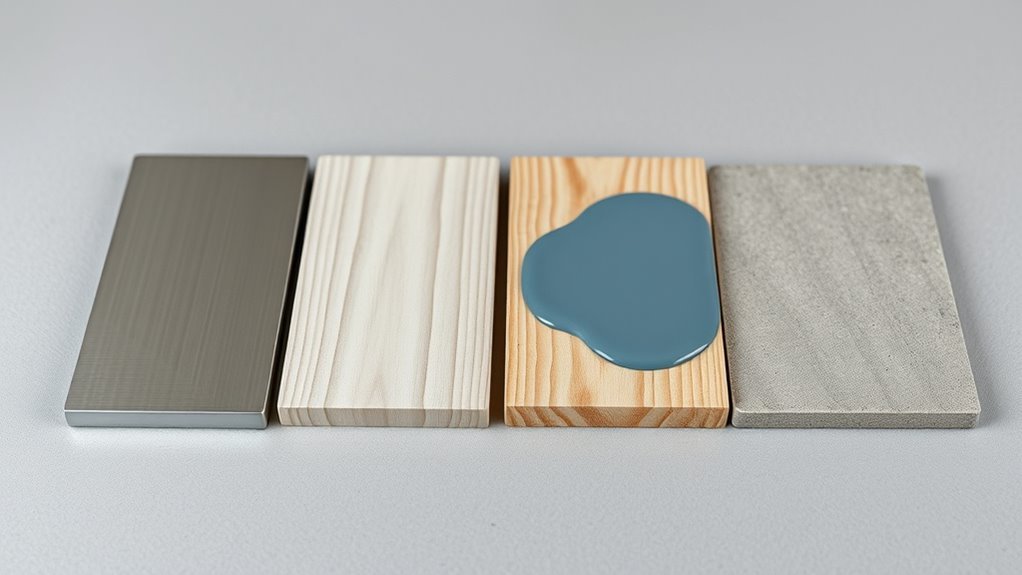
When you use spray paint, drying times change with the surface—metal usually skins over fastest, while plastic can take longer and may need a primer.
Wood soaks up thin coats and often needs extra time between layers to avoid tackiness.
I’ll outline what to expect for each material so you can plan your recoat and handling times.
Spray Paint On Metal
- Prep and primer improve adhesion
- Temperature speeds or slows cure
- Humidity prolongs tack-free time
- Proper paint storage matters
Spray Paint On Plastic
Because plastics vary so much in composition and porosity, spray paint drying times can differ a lot — and you’ll want to match your paint and prep to the specific plastic to get a durable finish.
Clean, scuff, and use a plastic primer; without adhesion promotion, paint may remain tacky for days.
Fast-dry acrylics can be touch-dry in 15–30 minutes, but cure can take 24–72 hours.
Multiple thin coats aid color blending and reduce runs; allow recommended flash times between coats.
Light sanding between coats aids texture smoothing.
Test a small scrap to confirm drying and adhesion before completing your project.
Spray Paint On Wood
How quickly will spray paint dry on wood depends on the type of paint, the wood’s porosity, and the conditions you’re working in. You’ll notice porous woods absorb faster, altering finish and color intensity; practice color theory to predict tones after drying.
Allow tack-free times of 15–60 minutes; full cure can take days. Sanding between coats helps adhesion; consider primer on raw wood. For mistakes, learn proper paint removal methods before you start.
Monitor humidity and temperature to speed drying safely.
- Test on scrap wood first
- Use primer for uniform color
- Thin coats reduce runs
- Protect cured surfaces from moisture
Primer Vs Topcoat: Drying and Recoat Differences
While both primer and topcoat dry on your wall, they do so at different speeds and for different reasons, so you’ll need to plan your recoats accordingly.
Primer absorbs and sets faster to seal surfaces; you can often sand or recoat within a few hours, depending on humidity.
Primer soaks in and sets quickly to seal surfaces—often ready for sanding or recoating within a few hours, humidity permitting.
Topcoat forms a film and may feel dry but needs longer to cure for durability.
For projects involving color matching, wait full recoat times so sheen and tone settle.
Store leftover primer and topcoat properly—proper paint storage preserves drying characteristics and ensures consistent future performance.
How Paint Sheen Affects Drying Time
Since sheen changes how paint lays and dries on a surface, you’ll notice different drying and curing behaviors between flat, eggshell, satin, semi-gloss, and gloss finishes.
You’ll find higher sheens dry to a harder, faster-to-handle surface, while flatter sheens hide imperfections and slow cure. Sheen affects sheen-dependent Color blending and the degree of Texture smoothing; satin balances modest sheen with easier cleanup.
Choose based on use: durability, light reflection, and desired finish.
- Flat: best for hiding flaws, slower cure
- Eggshell: gentle sheen, moderate cure
- Satin: balanced sheen, quicker cure
- Gloss: fastest surface set, most durable
How Coat Thickness Changes Dry and Cure Speed
Thicker films slow both surface drying and full cure because the solvent has farther to travel before it evaporates.
You’ll notice solvent evaporation rate drops as thickness increases, which can trap residual solvents and extend tack time.
Also, multiple coats interact—each layer affects the next by altering overall film thickness and drying dynamics.
Film Thickness Effects
If you put on a heavier coat, you’ll slow down solvent evaporation and lengthen both drying and curing times. You should aim for manufacturer-recommended wet film thickness to balance appearance, durability, and work time. Thicker films can trap solvents, extend tackiness, and risk wrinkling or poor adhesion.
Think about color psychology when selecting sheen and thickness—glossier, thicker films feel more vivid. Choose eco-friendly options with lower VOCs, but remember they may require thinner coats or longer cure times.
Monitor film build with a gauge and adjust spray settings or brush technique to control outcomes.
- Measure wet film consistently
- Follow label thickness specs
- Allow extra cure time for heavy builds
- Test adhesion on sample panels
Solvent Evaporation Rate
When you build a heavier wet film, solvent has to travel farther to escape, so evaporation slows and both touch-dry and full-cure times increase. You’ll notice thicker coats trap solvents, delaying skin formation and prolonging tackiness. Manage thickness to balance color mixing goals and texture enhancement without extending cure excessively. Thinner layers dry faster; allow adequate flash time between coats. Use slower solvents deliberately only when leveling matters. Monitor humidity and temperature since they change evaporation rates and final hardness. Test small areas to confirm drying time before large applications to avoid runs or incomplete curing.
| Coat Weight | Dry Time | Cure Notes |
|---|---|---|
| Thin | Fast | Good leveling |
| Medium | Moderate | Balanced finish |
| Thick | Slow | Watch solvent retention |
Multiple Coat Interaction
After you’ve managed individual coat thickness and solvent choice, consider how successive layers interact—each new film alters solvent gradients, oxygen access, and heat buildup, which together change both touch-dry and full-cure rates.
You’ll notice thicker stacks trap solvents, slowing evaporation and prolonging tackiness; oils and lacquers cure from surface inward, so inner layers stay soft longer.
Color blending can be stronger with wet-on-wet layers but may retain solvents.
Texture enhancement from relief or additives can create microclimates that affect drying.
Space coats to allow solvent escape, monitor hardness, and avoid rapid buildup that traps moisture.
- Thicker stacks = slower solvent loss
- Reduced oxygen delays surface cure
- Wet-on-wet boosts color blending
- Raised texture creates uneven drying
Why Surface Material (Wood, Drywall, Metal) Matters
Because different materials absorb, hold, and transfer moisture differently, the surface you’re painting directly affects how fast the paint dries. You’ll notice wood soaks and releases moisture unevenly, especially with varying surface texture, so it can take longer and may need primer.
Drywall absorbs quickly but evens out drying when sealed; joint compound areas might dry slower. Metal doesn’t absorb, so paint dries by solvent evaporation and can skin over while underlying layers remain soft.
Environmental factors still influence all surfaces, but knowing material behavior lets you choose primer, thinner coats, and appropriate drying time before recoating.
Temperature and Paint Drying: Safe Ranges
Different materials change how paint cures, and temperature changes do the same—so you’ll want to match your painting plan to the climate. You should aim for a stable range: most latex paints dry well between 50°F and 85°F, while oil-based paints prefer 45°F to 90°F.
Extreme cold stalls curing; excessive heat speeds skinning but can trap solvents. Paint color affects heat absorption—darker hues may dry faster in sun.
Your brush selection matters: synthetic for latex, natural for oils, both to guarantee uniform film. Monitor temps during and after application to avoid tacky or brittle finishes.
- Know the manufacturer’s recommended range
- Avoid painting near temperature extremes
- Allow cooling or warming time before recoats
- Store mixed paint at safe temperatures
How Humidity Slows Drying: And How to Compensate
High humidity slows paint curing because moisture in the air prevents solvents and water from evaporating, so your paint stays tacky longer.
To speed drying, you can increase ventilation, run a dehumidifier, or raise the room temperature slightly to encourage evaporation.
If you’re painting in very humid conditions, choose fast-drying formulations or thin coats to reduce overall drying time.
Humidity’s Effect On Drying
Ever wondered why paint seems to take forever to dry on rainy days? You notice slower evaporation when humidity’s high, so solvents linger and coatings stay tacky longer. That affects color blending and texture matching: wet edges stay soft, brush marks level less, and layers can re-wet. You’ll need patience and plan timing between coats accordingly.
- High humidity reduces evaporation rate.
- Moisture alters film formation and gloss.
- Prolonged tackiness risks dust pickup and runs.
- Extended cure times affect durability and adhesion.
Recognize humidity’s role so you schedule work when conditions favor proper drying.
Ways To Speed Drying
Because humidity slows solvent evaporation, you can’t just wait and hope—take proactive steps to speed drying. Open windows, run fans, or use a dehumidifier to lower moisture; aim for 40–50% relative humidity.
Raise temperature a few degrees, but avoid baking the paint. Thin coats dry faster, so sand lightly between layers to improve paint texture and adhesion.
Choose fast-drying formulas and low-VOC solvents when possible. Schedule work when weather forecasts predict dry air.
Remember that darker colors and certain pigments from color theory can show flaws sooner, so test a patch to confirm drying times and finish before committing.
Ventilation and Airflow: Speed Drying Safely Indoors
While you can’t rush chemical curing, boosting ventilation and airflow will speed surface drying and reduce fumes, letting you finish projects sooner and breathe easier. You should open windows, run fans, and position airflow across wet areas so color blending stays consistent and primer adhesion isn’t compromised.
You can’t hurry curing, but fresh airflow speeds surface drying, reduces fumes, and protects finish and adhesion.
Watch temperature and humidity; extreme heat can skin paint, and high humidity slows curing. Use exhaust fans where possible and keep doors open to create cross-ventilation. Monitor fumes and wear protection if needed.
- Open windows and doors for cross-breeze
- Use box or oscillating fans safely
- Run bathroom/kitchen exhaust fans
- Control humidity with a dehumidifier
Additives and Retarders: Alter Drying Time or Finish?
You can use additives to speed up or slow down drying, but they change how the paint behaves while curing.
Retarders specifically lengthen open time to help with blending. Yet they can affect gloss, hardness, and durability if overused.
We’ll look at which additives are safe for different paint types and how they influence final finish.
Additives’ Effects On Drying
When you add additives or retarders to paint, they change how solvents evaporate and how the binder sets, so drying time and final feel can shift noticeably. You’ll notice altered tack, slower skin formation, or modified flow depending on additive chemistry and presence of drying inhibitors. Use them sparingly and follow manufacturer ratios so you don’t trap solvent or weaken film strength.
- Slows surface drying without stopping cure
- Improves leveling but can extend tack time
- May require longer recoat and cure intervals
- Can interact with pigments or substrates, changing performance
Test small areas before full application.
Retarders And Finish Quality
Although retarders slow surface drying to give paint more time to level, they can also change the final feel and durability of the film. You’ll use them to improve color blending and texture enhancement, but they may soften the cure, reduce abrasion resistance, or attract dust. Test small areas, follow manufacturer dosages, and allow extra curing time indoors. Balance appearance with performance for high-traffic surfaces.
| Benefit | Risk | Tip |
|---|---|---|
| Better color blending | Longer cure time | Small test patch |
| Smoother finish | Weaker hardness | Follow dosage |
| Texture enhancement | Dust pickup | Extra curing time |
Why Solvent Evaporation Controls Surface‑Dry Time
Because most modern paints are solvent-based or contain solvent carriers, the rate those solvents evaporate largely sets the surface-dry time. You’ll notice thin, fast-evaporating solvents dry quickly, while heavier carriers linger and delay touch-dry. Temperature, humidity, and airflow change evaporation speed, so you’ll adjust conditions to meet schedules.
Also consider color psychology when choosing fast or slow-drying shades—perception of finish can shift with sheen. If you prefer eco friendly formulations, check solvent type and flash point; some low-VOC options use slower carriers.
- Higher temperature speeds solvent loss
- High humidity slows drying
- Air movement promotes evaporation
- Film thickness controls solvent escape
Chemical Curing Vs Physical Drying: Durability Effects
When you compare chemical curing mechanisms with physical drying processes, you’ll notice they affect long‑term durability very differently.
Chemical curing forms new bonds throughout the film for stronger, more resistant coatings, while physical drying mainly removes solvents and leaves the film relying on film‑forming and coalescence.
Understanding which process dominates helps you predict resistance to abrasion, chemicals, and weathering.
Chemical Curing Mechanisms
If you want a coating that truly hardens into a long-lasting film, chemical curing beats simple physical drying: chemical curing creates new polymer bonds through reactions like crosslinking or condensation, while physical drying just removes solvents or lets particles coalesce.
You’ll prefer chemically cured systems when surface toughness, solvent resistance, and consistent paint texture matter. Curing chemistry (epoxy, polyurethane, alkyd crosslinkers) controls film formation and affects color matching stability over time. You apply, the reaction proceeds, and properties lock in.
- Crosslink density governs hardness and flexibility
- Catalyst type alters cure speed and pot life
- Temperature impacts reaction completion
- Moisture can inhibit or accelerate certain cures
Physical Drying Processes
While chemical curing creates new bonds, physical drying relies on solvent evaporation and particle coalescence to form a film. So you’ll see faster surface tack loss but generally weaker long-term durability.
You’ll notice paint dries quickly to touch, and you can often adjust color blending or texture enhancement during that open time.
Because no new covalent network forms, the film resists abrasion and chemicals less well, so plan for thinner coats or protective topcoats.
Control temperature, humidity, and airflow to optimize coalescence.
For projects where speed and appearance matter more than extreme durability, physical drying is a practical choice.
Recoat Timings by Paint Type
Because different paint chemistries dry and cure at different rates, you’ll need to follow specific recoat windows for each type to avoid adhesion problems or uneven finishes. You should wait the recommended time to prevent color fading or texture variation caused by premature recoating.
Generally:
- Latex: recoat in 2–4 hours; full cure longer.
- Acrylic: recoat in 1–3 hours; flexible finish.
- Oil-based: recoat in 24–48 hours; richer color, longer cure.
- Alkyd: recoat in 8–24 hours; beware tackiness if rushed.
Check manufacturer guidelines and adjust for temperature and humidity to guarantee proper bonding and consistent appearance.
Test Paint Dryness Without Harming the Finish
When you need to check whether paint’s dry without damaging the finish, use gentle, noninvasive methods that reveal tackiness and hardness without leaving marks.
Lightly touch an inconspicuous edge with the pad of your finger—don’t press—feeling for slight stickiness that signals curing.
Try a cotton swab test: roll it gently across a hidden area to detect transfer.
Use a fingernail only at the seam where brush strokes meet to sense surface set.
Inspect under varied light to spot subtle color blending or texture enhancement that indicates drying progress.
Wait longer if any tack or gloss change appears.
When It’s Safe to Handle or Move Painted Items
If the surface feels dry to the touch and shows no tackiness, you can cautiously handle or move painted items, but don’t assume full cure—lift gently from a supported area and avoid gripping edges or corners that take longer to harden.
Check for even paint texture and consistent color mixing that indicates uniform drying. Use gloves to prevent oils from fingerprints altering the finish.
Move items slowly, avoiding sudden shifts or stacking. If unsure, wait longer.
- Support from beneath to prevent bending
- Lift near the center of mass
- Avoid rubbing painted faces
- Keep items separated while finishing
When Painted Surfaces Are Fully Cured for Heavy Use
Although surface dryness lets you handle painted items, full cure for heavy use takes longer and depends on paint type, thickness, and conditions. You’ll wait days to weeks before subjecting floors, tabletops, or high-traffic walls to heavy wear.
Alkyds often cure faster than some latex formulas, but manufacturers’ cure times matter. Keep humidity and temperature stable, avoid harsh cleaners until cure is confirmed, and test in an inconspicuous spot before full use.
Consider how finish and color influence perception—color psychology and paint color trends affect how durable-looking a surface appears—so choose durable sheens for functional areas.
Estimating Drying Time for Multi‑Coat Projects
When planning multi-coat work, you’ll want a clear coat build strategy so each layer adds protection without trapping solvents.
Allow the recommended drying time between coats—usually touch-dry then tack-free—before applying the next to prevent lifting or wrinkling.
Finally, factor in the full cure time after the last coat before subjecting the surface to heavy use.
Coat Build Strategy
Because each finish layer changes how the next one behaves, planning your coat build matters for estimating total dry time. You’ll combine practical sequencing with aesthetics—color psychology affects perceived depth, and paint history guides traditional layering techniques—so pick primers, mid-coats, and finishes that sync.
Consider solids vs. translucent systems and film thicknesses you’ll apply.
- Match primer type to substrate to reduce recoat delays.
- Use thinner first coats to avoid trapping solvents.
- Reserve heavier or pigmented coats later for coverage.
- Choose finish sheen last to control reflection and perceived uniformity.
Plan layers to predict cumulative cure time.
Drying Between Coats
If you want consistent results, plan drying time between coats around the slowest layer’s needs rather than the fastest, since each successive coat sits atop the previous film and inherits its remaining solvents and surface tack.
You’ll wait longer when you’ve thinned for spraying or when heavy pigments from color mixing slow evaporation. Check tack by touch in an inconspicuous spot; avoid hard rubbing.
Use consistent brush techniques to apply even, thin layers that dry predictably. Temperature, humidity and ventilation change timing, so adjust intervals rather than sticking to labels.
When in doubt, err toward more drying time between coats.
Final Cure Time
How long will your multi‑coat finish actually be fully cured? You’ll wait beyond touch‑dry and recoat times: full cure can take days to weeks depending on paint type, humidity, temperature, and film thickness.
Plan for gentle use until cured, and choose eco friendly options if indoor air quality matters. Consider color psychology when timing final reveal; darker tones may retain heat and cure faster.
- Allow manufacturer’s suggested cure time plus extra for humidity.
- Test a small area before heavy use.
- Use good ventilation and moderate temperatures.
- Prefer low‑VOC, eco friendly options for safer living spaces.
Planning a Painting Schedule by Room or Object Size
When you plan by room or object size, start by estimating surface area and factoring in coat count—larger rooms and furniture need more time for prep, drying, and ventilation. You’ll map schedules: small items (nightstands) often need one coat plus touch-ups; rooms require multiple coats and staggered drying. Consider color theory when choosing base coats and how paint texture affects absorption and dry times. Track humidity and temperature per space. Use this simple table to assign days and tasks so you don’t block living areas longer than needed.
| Item | Estimated Days |
|---|---|
| Small object | 1–2 |
| Small room | 2–3 |
| Large room | 3–5 |
How to Speed Up Drying for Indoor Projects Safely
Because indoor conditions slow paint drying, you can speed things up safely by controlling airflow, temperature, and humidity while using low-VOC products and proper ventilation.
Because indoor conditions slow drying, speed paint safely by controlling airflow, temperature, humidity, and using low‑VOC products.
You’ll pick a paint color suited to the room’s lighting and choose a brush selection that matches the finish for efficient application.
Increase air circulation with fans, raise temperature moderately, and run a dehumidifier if needed.
Avoid heat sources that emit VOCs or touch wet surfaces.
- Position fans to move air across wet surfaces.
- Keep windows cracked for fresh air exchange.
- Use low-VOC paints and proper respirators.
- Match brush type to paint finish and surface.
How to Slow Drying to Avoid Brush Marks and Lap Lines
If you want to reduce brush marks and lap lines, slow the paint’s evaporation by using retarders or slightly higher humidity.
You can also keep the paint at a moderate temperature before and during application so it flows out better.
These simple adjustments give you more open time to work wet edges smoothly.
Slow Evaporation Techniques
Although fast-drying paint can speed up projects, slowing evaporation helps you blend edges and avoid visible brush marks or lap lines, so you’ll get a smoother, more professional finish. You can control drying by using retarders or paint conditioners, working in smaller sections, and keeping a wet edge.
Remember proper color mixing so touch-ups match, and handle leftover product responsibly with correct paint disposal.
- Add a manufacturer-recommended retarder or conditioner sparingly.
- Thin water-based paint slightly to extend open time.
- Work with smaller, overlapped strokes to maintain a wet edge.
- Reduce airflow and avoid direct heat sources.
Adjust Paint Temperature
Slowing evaporation with retarders and smaller strokes helps a lot, but controlling paint temperature gives you another powerful tool to extend open time and reduce brush marks.
You can cool the room a few degrees or chill paint lightly to slow drying; cooler paint levels the surface longer, so you can work edges and achieve smoother color blending. Don’t overcool — condensation ruins finish — and warm spaces speed skinning.
Adjust tools: slightly warmer brushes improve flow for texture enhancement when you want brush character. Test small areas to confirm open time, lap resistance, and final sheen before committing.
Drying Paint Outdoors: Sun, Shade, and Wind Tips
When you paint outdoors, sun, shade, and wind each change drying time in predictable ways, so plan your timing and setup accordingly. You’ll use sun for faster drying but avoid blistering. Shade slows drying, reducing brush marks. Wind speeds solvent evaporation but can carry dust. Choose finishes and eco-friendly pigments compatible with exposure, and remember how color psychology affects appearance as light shifts. Test a small patch.
Consider these quick guidelines:
- Work morning or late afternoon to avoid peak sun.
- Use windbreaks when breezy.
- Allow extra cure time in shade.
- Match pigment and finish to exposure.
Managing Drying When Repainting Furniture or Cabinets
When repainting furniture or cabinets, you’ll want to know which factors — like paint type, humidity, and layer thickness — affect drying time.
You can speed cure by using thin coats, good ventilation, and a controlled temperature.
Plan touch-ups and reassembly around the manufacturer’s recommended cure times rather than just surface dry.
Drying Time Factors
Although drying times vary, you can control most factors when repainting furniture or cabinets to speed up cure and avoid tacky finishes. Consider paint type, coat thickness, temperature and humidity, and surface prep—each affects feel and cure.
You’ll also balance aesthetics and health: color psychology influences sheen choice while eco-friendly options may dry differently than solvent-based paints. Check manufacturer specs and test a hidden area.
- Choose the right paint and sheen for use
- Apply thin, even coats for consistent curing
- Work in stable, ventilated conditions within recommended temp/humidity
- Sand and clean between coats for adhesion
Speeding Up Cure
You’ve already picked the right paint, sheen, and prep routine—now speed up the cure without compromising finish quality. Work in warm, dry conditions with good airflow; a small fan and dehumidifier help solvents evaporate faster.
Apply thinner, even coats and allow recommended flash times between layers so tack dries faster and you avoid trapping solvents. Use fast-drying additives sparingly and only with compatible paints.
For cabinets, remove hardware and elevate pieces for full circulation.
Keep color mixing accurate to avoid extra coats, and store leftovers properly—sealed containers in stable temperatures—to prevent contamination that delays curing.
Handling Drying on Previously Painted or Glossy Surfaces
If your surface already has paint or a glossy finish, expect slower drying and altered adhesion unless you prep it properly. You’ll need to sand, degrease, and scuff to help new paint bond; otherwise tackiness and peeling can result.
Consider eco friendly alternatives for primers and low-VOC topcoats, and study historical painting techniques for clues on adhesion and layering.
Test a small patch and wait full cure before recoating. Follow manufacturer recoat times; glossy areas often need longer.
- Sand glossy sheen lightly
- Use bonding primer
- Choose low-VOC or eco options
- Patch-test before full application
Managing Drying on Porous Surfaces Like Raw Wood
When working with raw wood, moisture soaks in fast and evaporation varies across grain and knots, so you’ll need to control prep, product choice, and environment to get even drying and a durable finish. You should sand, remove dust, and apply a suitable primer or sealer to limit paint absorption on porous surfaces. Thin first coats, allow longer cure times, and monitor humidity and temperature. Seal knots to prevent bleed-through. Test on a scrap to judge drying rate before full application.
| Step | Purpose |
|---|---|
| Sand | Smooth, open grain |
| Prime | Reduce absorption |
| Thin coats | Even curing |
| Monitor | Control environment |
Read Paint Can Labels for Accurate Drying Guidance
Because manufacturers test their formulas under specific conditions, reading the paint can label gives you the most reliable drying and recoat times for that product. You’ll find surface prep, temperature, humidity ranges, and recommended wait times.
Labels note special cases like Color mixing that can alter drying, and whether Eco friendly options change cure behavior. Follow the label to avoid premature recoats or uneven finish.
If you’re unsure, call the manufacturer with the batch code. Keep the can for reference during the job.
- Note listed temperature and humidity ranges.
- Heed recommended recoat interval.
- Check additives or thinners used.
- Record batch and formula details.
Why Manufacturer Dry Times Differ From Real‑World Times
Reading the label gives you a baseline, but actual drying often takes longer on the job — and that’s because manufacturers test paint under controlled lab conditions that rarely match your site.
Label times are a baseline; real-world drying is often slower due to site conditions and ventilation limits.
You’ll face varying humidity, temperature swings, poor ventilation, and surface porosity that slow evaporation and curing. Fast-drying promises assume ideal airflow and substrate prep you mightn’t achieve.
Pigment load and sheen interact with color psychology choices; darker tones can absorb heat and dry differently than pastels.
Also note that environmental regulations force reformulation—low-VOC and waterborne blends behave differently—so expect manufacturer times to be optimistic compared with real-world results.
How Tools (Roller, Brush, Sprayer) Affect Dry Speed
Although the paint’s chemistry sets the ceiling for drying time, the tool you pick can speed or slow how quickly that chemistry plays out on the wall. You’ll notice a sprayer lays thin, even coats that dry faster, while a brush can leave thicker ridges that take longer.
Rollers balance speed and thickness depending on nap. Also consider color mixing—adding tints or extenders changes viscosity and drying.
Don’t forget Environmental factors like humidity and temperature interact with application method to alter cure.
- Sprayer: thin film, quick surface dry
- Brush: thicker strokes, slower dry
- Roller: variable nap thickness
- Technique influences final cure
How to Avoid Dust and Debris While Paint Dries
When paint’s still tacky, a single draft or careless step can send dust and pet hair straight onto your finish, so take a few deliberate steps to protect the surface. Seal the room: close vents, cover floors, and keep pets out. Work from clean air, use tack cloths before recoating, and avoid noisy activity that stirs particles. Gentle Brush techniques and light, consistent strokes minimize splatter and help Color blending without extra passes. Monitor humidity; lower humidity cuts drying time and exposure. Use temporary barriers and an air purifier to trap dust until the paint fully skins.
| Preventive Step | Benefit |
|---|---|
| Seal room | Less airborne dust |
| Tack cloth | Removes fine particles |
| Air purifier | Traps lingering debris |
How Contaminants (Oil, Wax, Grease) Hurt Drying and Adhesion
Keeping dust out is important, but even tiny traces of oil, wax, or grease can wreck a paint job by preventing proper wetting and bonding to the surface. You need to remove contaminant contamination before you paint; otherwise solvent and binder can’t penetrate, film formation is uneven, and adhesion fails.
Surface contamination causes fisheyes, peeling, and extended tack times. Clean with appropriate degreasers, rinse, and let dry. If you skip this, coats may blister or lift later.
- Oils repel liquid paint
- Waxes leave invisible films
- Grease traps solvents
- Contaminant contamination accelerates failure
How Color and Pigment Load Influence Drying Speed
The amount of pigment in your paint changes how fast it dries because heavier pigment loads can slow solvent escape and film formation.
Darker, warmer colors often absorb more heat and may dry a bit quicker on warm surfaces, while cool or lighter tints can reflect heat and dry more slowly.
Keep pigment concentration and color temperature in mind when estimating dry times and planning coats.
Pigment Concentration Effects
Although pigment-rich paints often look thicker, their higher solids content usually slows drying because there’s more non-volatile material for solvents to evaporate around. So you’ll notice darker or heavily loaded colors can take longer to set than paler, more transparent mixes.
You should monitor pigment concentration because high pigment saturation increases viscosity and reduces evaporation rate. Adjust thinning, layer thickness, and application technique to compensate.
Use color blending sparingly when drying time is critical, since mixing pigments can raise solids.
Consider these practical points:
- Thinner layers dry faster than heavily loaded coats
- Use compatible solvents to manage viscosity
- Test small swatches for drying time
- Note manufacturer’s solids data
Color Temperature Impact
Pigment concentration affects drying, but color temperature—whether a pigment reads warm or cool—also plays a role because different pigment chemistries and particle sizes influence how binders and solvents behave.
You’ll notice warm pigments often contain organics that can slow solvent evaporation, while cool pigments like titanium-based whites tend to speed surface film formation.
High pigment saturation raises viscosity and reduces solvent mobility, so thicker, saturated mixtures dry slower internally even if the surface feels tack-free.
To predict dry times, test a small patch under your actual conditions, adjust thinning or coat thickness, and note how color temperature and pigment saturation interact.
Overnight Temperature Swings: Impact on Cure and Finish
If temperatures dip overnight and then climb again by morning, your paint’s curing process can stall or restart unpredictably, which affects both drying time and final appearance. You’ll notice slower cure, tacky spots, or uneven sheen when temperature fluctuations hit painted surfaces, especially if you paint furniture without stabilizing the environment.
To protect finish and schedule touch-ups, monitor night lows and hold off if swings are extreme.
Monitor overnight lows and delay touch-ups when temperature swings are extreme to protect your finish and ensure proper curing.
- Move painted furniture indoors or cover to moderate temperature exposure.
- Use heat or insulation to keep overnight temps steady.
- Choose paint rated for broader temperature ranges.
- Allow extra cure time before handling.
Troubleshooting Tacky or Slow‑Drying Paint
When paint stays tacky or takes forever to dry, you’ll want to diagnose a few common causes—humidity, temperature, thick application, or incompatible layers—so you can fix the problem rather than guessing.
Check humidity and ventilate; high moisture slows solvent escape. Measure surface and air temp; cool conditions hinder curing. If you brushed on heavy coats, thin them or sand and recoat thinner.
Beware incompatible primers or oil-over-water combos. Use eco friendly formulations as intended—low-VOC doesn’t mean fast drying in damp conditions.
Consider how color psychology affects perception: darker hues look wetter longer, so allow extra drying time.
Fixing Runs, Sags, or Orange Peel From Drying Issues
Although runs, sags, and orange peel look like surface flaws, you can usually fix them without stripping the whole job by evaluating how far the paint cured and whether it’s still tacky. If tacky, gently level with a clean brush or roller to blend paint texture.
If cured, scuff sand the area, feather edges, and spot-prime before repainting. Match sheen and color matching carefully to avoid obvious patches. Work in small sections, testing your approach on an inconspicuous spot first.
- Assess cure and tackiness
- Sand and feather edges if dry
- Reprime before repainting
- Test texture and color matching
Fast‑Turnaround Projects: Drying Plans for Rentals
Fixing runs and orange peel is about evaluating cure and matching texture, but rentals force you to think faster: you’ll need drying plans that cut downtime without sacrificing finish.
For tight turnovers, schedule low‑humidity days, stage fans and dehumidifiers, and use quick‑dry primers and topcoats rated for recoat in hours.
Test a small wall for tack and adhesion before finishing.
Pack tools and leftover product with clear paint storage labeling and curing dates so touchups match.
Use color theory to choose forgiving neutrals that conceal minor imperfections.
Communicate realistic timelines to tenants and document each step for consistency.
Specialty Paints (Chalk, Milk, Epoxy): How Long to Dry
Because specialty paints cure differently, you’ll need to plan around their specific drying windows. Chalk and milk paints often feel dry in an hour but cure in days. Epoxy can be tack-free in 6–12 hours yet fully harden in 72 hours. You should follow manufacturer times, test small areas, and factor temperature and humidity.
- Use historical techniques for prepping porous surfaces to improve adhesion.
- Allow extended cure for chalk and milk before waxing or sealing.
- For epoxy, mix precisely and vent the area during curing.
- Consider eco-friendly options when choosing sealers and cleaners.
VOCs and Low‑VOC Paints: Drying Behavior Explained
When you choose low‑VOC or zero‑VOC paints, you’re changing more than just indoor air quality — you’re also altering drying and curing behavior, since these formulations rely less on volatile solvents and more on water or alternative carriers to evaporate or chemically set.
You’ll notice slower surface skinning in humid conditions and sometimes longer tack-free times compared to solvent‑based products.
VOC regulations pushed manufacturers to reformulate binders and additives, which can change flow and film formation.
To get predictable results, follow label guidance, control temperature and ventilation, and accept that drying stages—surface dry, recoat, full cure—may shift with low VOC benefits in mind.
Document Drying Times for Contractors and Clients
Knowing how low‑VOC formulations alter drying and curing helps you set realistic expectations, but you also need clear documentation for every job. You should record product, batch, substrate, temperature, humidity, and ventilation so clients know when they’ll see final color and finish.
Note how Color psychology choices affect client decisions and how Eco friendly formulations might change tack and cure times. Use concise reports that both contractors and clients can follow, and update records if conditions change.
- Product name and batch number
- Environmental conditions during application
- Expected touch, recoat, and full cure times
- Client signoff and change log
Set Realistic Timelines: DIY Vs Professional Jobs
If you’re tackling a small touch‑up, expect different timelines than a pro managing a full room—DIY projects often stretch drying and cure times because of inconsistent prep, thinner application, and limited ventilation. You should plan buffer days, consider Color psychology when picking hues that may need extra coats, and weigh eco friendly options that sometimes dry differently. Pros work faster with better tools, controlled environments, and experience estimating cure time. Use realistic schedules: don’t rush recoat or reoccupy. Communicate expected milestones whether you’re DIY or hiring help.
| Task | Typical Timeframe |
|---|---|
| Touch‑up | 1–4 hours |
| Wall coat | 4–24 hours |
| Full room | 24–72 hours |
| Cure | 7–30 days |
Choose Paint for Your Schedule: Quick‑Dry Vs Durable Finish
Wondering whether to prioritize quick‑dry formulas or go for long‑lasting durability? You’ll weigh time against performance: quick‑dry cuts project time, durable finishes resist scuffs and need fewer repaints.
Consider room use, schedule pressure, and Color psychology when picking sheen and tone. Also check eco friendly options if indoor air quality matters.
- Choose quick‑dry for tight timelines and light‑traffic areas.
- Pick durable finishes for high‑traffic spaces and longer lifespan.
- Use Color psychology to match mood and perceived space.
- Favor eco friendly options to reduce odors and VOC exposure.
How to Keep Painted Surfaces Looking Good During Cure
While paint may feel dry to the touch within hours, it keeps curing for days or even weeks, so you’ll want to protect the finish from scuffs, dust, and moisture until it fully hardens. Use low-traffic scheduling, cover surfaces with breathable drop cloths, and avoid heavy cleaning for a week. Choose Eco friendly options like low-VOC sealers if needed. Consider Color psychology when placing furniture to prevent rubbing. Monitor humidity and temperature to speed cure. Quick tips:
| Action | Timing | Benefit |
|---|---|---|
| Covering | Immediate | Prevents dust |
| Sealant | After 24h | Extra protection |
| Avoid use | 7–14d | Full hardness |
| Ventilate | Continuous | Faster cure |
Frequently Asked Questions
How Does Paint Drying Emit Odors and Affect Indoor Air Quality?
Paint odor comes from volatile organic compounds (VOCs) and solvents released as paint cures, and it degrades indoor air by raising VOC levels, so you should ventilate, use low-VOC paints, and limit exposure until odors fade.
Can Drying Time Differences Influence Paint Color Appearance Long-Term?
Yes — uneven drying can shift color consistency and weaken finish durability over time; you’ll notice subtle hue variations and faster wear where paint cured differently, so control drying conditions to preserve uniform color and lasting finish.
Are There Health Risks From Touching Partially Cured Paint?
Yes — if you touch partially cured paint you can absorb volatile chemicals and irritants; paint toxicity and skin contact can cause irritation, allergic reactions, or systemic exposure, so don’t touch wet paint and wash immediately if exposed.
How Does Undercoating or Stain Affect Topcoat Curing Compatibility?
You should match undercoat or stain to the topcoat; poor surface preparation or incompatible paint formulation will prevent proper curing, cause adhesion failures, or cause blotching, so test compatibility and follow manufacturer recommendations.
Can UV Exposure Alter Drying and Long-Term Durability of Exterior Paint?
Like sun on leather, UV effects can speed surface skinning yet hinder deep paint curing, so you’ll see faster tack but reduced long-term durability; you’ll need UV-resistant formulations and proper curing times to avoid fading and chalking.
Conclusion
You’ve seen typical drying and curing times for oil, latex, acrylic, and enamel so you can plan projects smarter. Remember, “dry” to the touch isn’t full cure — patience pays for durability. Want quick results for weekend jobs or long‑lasting finishes for high‑use areas? Choose paints and temps accordingly, and protect fresh surfaces during cure. Will a little extra wait now save you repainting later?
