
How Long for First Coat of Paint to Dry
You can expect a first coat to be dry to the touch anywhere from about 30 minutes to 24 hours depending on paint type, coat thickness and conditions. Water‑based (latex) dries fastest—often within an hour and recoatable in a few—while oil‑based or enamel paints can take 6–24 hours to surface‑dry and longer to cure. Thin, well‑ventilated coats speed drying; high humidity and cold slow it. Keep coats thin and controlled, and the next tips explain how to optimize timing.
Typical Drying Times for a First Coat
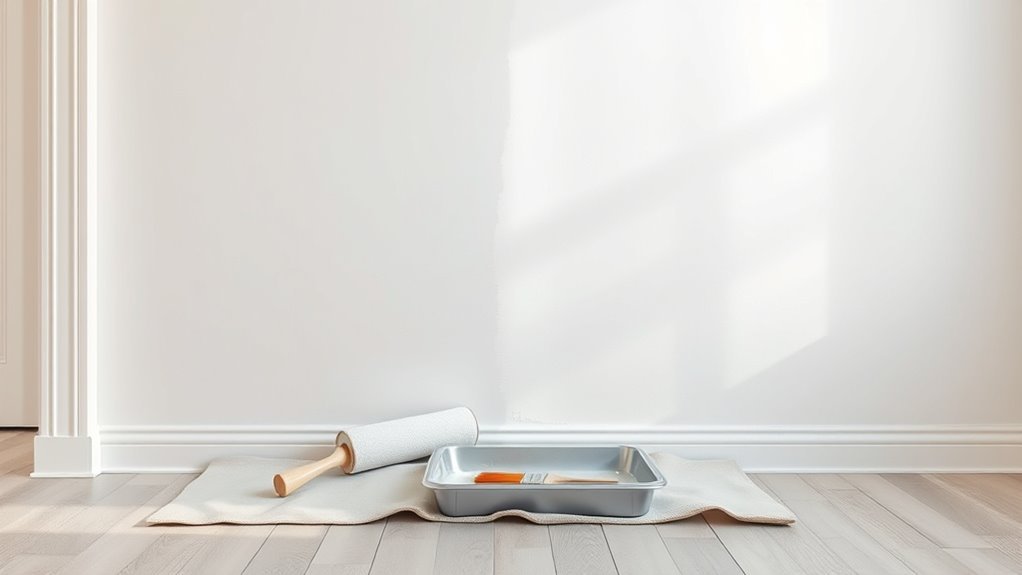
When you apply the first coat of paint, drying usually takes anywhere from 30 minutes to 24 hours depending on the paint type and conditions. You’ll notice water-based paints dry faster than oil-based ones, and temperature, humidity, and ventilation speed the process.
First-coat drying ranges from about 30 minutes to 24 hours—water-based dries fastest; temperature, humidity, and ventilation matter.
Thin coats dry quicker; thick ones tack longer. Use feel and visual cues to judge dryness without overhandling.
Remember finish and color psychology: lighter hues can show flaws sooner, while darker shades may look wet longer.
Save leftovers for touch-ups and consider paint recycling for unused cans. Plan recoat timing to match conditions and paint type.
Short Answer: When Is the First Coat Dry Enough?
Knowing typical drying ranges helps, but you’ll want a quick check to decide if the first coat is ready for the next step. You’ll know it’s dry enough when it’s no longer tacky, shows uniform color, and sands or recoats cleanly.
Consider how color psychology influences perceived finish—darker hues may look wet longer. Also factor ventilation and eco-friendly options like low-VOC paints that often feel dry faster.
Quick checklist:
- Touch test: no stickiness.
- Visual: even sheen and no streaks.
- Test recoat: light sand or small stroke holds without peeling.
Latex vs Oil-Based vs Enamel: How Paint Type Affects Dry Time
Although paint chemistry differs, you’ll notice clear patterns in how latex, oil-based, and enamel finishes dry and cure. You’ll find latex (water-based) often feels dry within 1 hour and recoatable in 4, oil-based can take 6–8 hours to surface-dry and up to 24 for recoat, while enamel coatings vary by formulation, often balancing quick tack-free times with longer curing. Consider humidity, temperature, color mixing effects, and proper paint storage to maintain consistency.
| Paint Type | Typical First-Dry Time |
|---|---|
| Latex | 1 hour |
| Oil-Based/Enamel | 6–24 hours |
Primer vs Paint: Which Dries Faster and Why
Curious which goes on and dries faster—primer or paint—and why it matters for your schedule? You’ll usually find primer dries faster because it’s formulated to seal and absorb, promoting adhesion.
Paint adds color, affects color psychology, and builds finish and paint texture, so it often takes longer to cure. Consider:
- Primer: thinner, absorbs into surface, quicker touch-dry for recoating.
- Paint: thicker, contains pigments and binders, longer drying and curing.
- Conditions: temperature and humidity alter both; follow product specs.
You’ll plan recoats better by checking manufacturer times rather than guessing.
Surface Matters: Wood, Drywall, and Metal Drying Differences
Primer and paint dry differently depending on what you’re coating, so you should factor the surface into your schedule.
On wood, porosity soaks finishes; raw wood can speed drying but may need sealer to avoid blotches, while varnished wood slows absorption.
Drywall’s paper and joint compound absorb quickly, so paint skins over faster but needs full cure before heavy use.
Metal repels moisture; primers for adhesion and rust prevention matter, and dry times depend on temperature.
Knowing these differences helps you plan coats and sanding.
Briefly, consider substrate prep, ambient conditions, and even paint history or color psychology when choosing finishes.
How Application Method and Film Thickness Affect Drying
When you change how paint’s applied or how thick each pass is, you directly change how fast it dries and how well subsequent coats adhere. You’ll notice sprayers lay thin, even films that dry quickly and preserve color blending, while rollers deposit more body. Heavy layers trap solvents, slow cure, and risk sagging.
Use brush techniques for edges and light feathering, not thick buildup.
Use brushes for crisp edges and gentle feathering—avoid heavy buildup that slows drying and hides detail.
- Sprayer: thin film, fast dry, smooth blend.
- Roller: moderate film, balanced dry, good coverage.
- Brush: precise detail, slower at heavy strokes, great for touch-ups and color blending.
How Humidity and Temperature Change First-Coat Drying
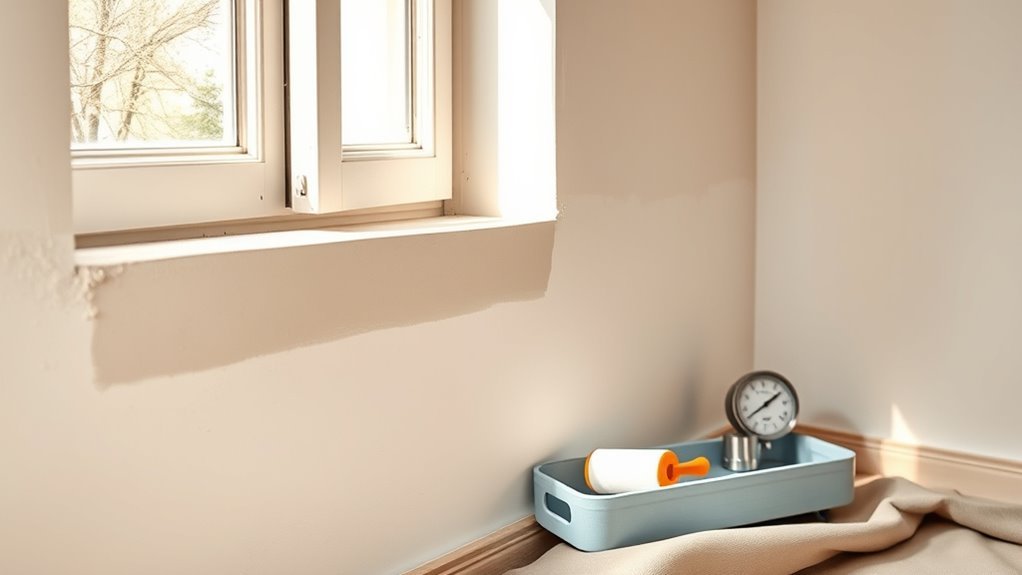
You’ll notice temperature directly speeds up or slows down how fast a first coat sets, with warmer conditions generally accelerating drying and colder ones prolonging it.
Humidity also matters because high moisture in the air slows solvent evaporation and can delay curing, while low humidity helps paint dry faster.
Together, temperature and humidity determine the realistic dry time you should expect before recoating or using the surface.
Temperature Effects On Drying
Although paint chemistry mainly drives drying, temperature and humidity play the decisive supporting roles that speed up or slow down a first coat’s cure. You’ll notice temperature affects evaporation, flow, and how paint texture settles, and it even influences how color psychology reads in a room—warm temps can deepen tones. Aim for consistent conditions when possible.
- Low temps: slow evaporation, tacky finish, longer recoat times.
- Moderate temps (50–77°F/10–25°C): ideal balance for drying and leveling.
- High temps: fast skinning, poor flow, potential cracking.
Adjust heating or ventilation to control drying without harming finish.
Humidity’s Role In Curing
Temperature sets the stage for paint to dry, but humidity often dictates the rhythm—higher moisture in the air slows solvent evaporation and can leave a first coat tacky for hours or even days, while very low humidity speeds evaporation and can cause premature skinning or poor flow. You should monitor RH and temperature: high humidity lengthens cure time and amplifies paint fumes, low humidity risks brush marks and uneven sheen that affect color selection. Use dehumidifiers or fans, avoid painting near rain, and allow extra drying time before recoating to ensure proper adhesion and finish.
| Condition | Effect | Action |
|---|---|---|
| High RH | Slow cure | Dehumidify |
| Low RH | Fast skinning | Slow application |
| Moderate | Ideal | Recoat per label |
How Ventilation and Airflow Speed Up Drying
When you boost ventilation and create steady airflow, paint solvents evaporate faster and the surface dries more evenly. You’ll notice quicker touch-dry times and fewer runs, especially with thicker paint texture.
Proper airflow also helps maintain consistent color psychology outcomes, since even drying prevents patchy sheen that alters perceived hue.
To speed drying safely and effectively:
- Open windows and doors to create cross-breeze.
- Use fans to direct air along the painted surface, not straight at it.
- Keep HVAC on low to moderate, avoiding extreme temperature shifts.
Monitor for dust and avoid high humidity during drying.
Cold-Weather vs Hot-Weather Painting: What Changes
If you paint in cold weather, solvents evaporate more slowly and coatings can stay tacky for hours or days.
While hot-weather painting speeds evaporation but raises risks of blistering and lap marks; you’ll need to adjust timing, product choice, and technique to match the conditions.
You’ll slow application in cold temps, choosing paints rated for low temperatures to protect paint texture and prevent poor film formation.
In heat, work in cooler hours, thin coats, and watch flash times to avoid uneven sheen and compromised color consistency.
Always follow manufacturer temperature ranges and allow extra cure time when it’s cold.
Fast-Dry Formulas and Additives: What Speeds Drying Safely
Having adjusted your timing and technique for weather, you can also speed safe drying by choosing the right fast-dry formulas and additives. You’ll pick products labeled fast-dry or quick-recoat for waterborne or alkyd paints, and you’ll use additives sparingly to avoid altering sheen or color mixing.
Adjust brush techniques to apply thinner, even coats so solvents evaporate faster.
- Use manufacturer-recommended fast-dry additives for waterborne paints.
- Thin alkyds slightly for warmer conditions; test small areas first.
- Maintain good ventilation and moderate heat to aid curing without overheating.
Follow instructions; test before full application.
When “Dry to the Touch” Differs From “Ready for Recoating
Although the surface may feel dry to the touch after a short time, that doesn’t mean the paint is ready for a new coat. You need to wait until solvents evaporate and the film cures enough to accept another layer without lifting or uneven absorption.
Rushing can spoil color matching and alter paint sheen, producing blotches or gloss differences. Temperature, humidity, and paint type affect cure time, so follow manufacturer guidelines rather than touch alone.
When you’re patient, the topcoat bonds properly, delivers consistent color, and maintains the designed sheen. That protects your finish and extends its lifespan.
Simple Tests to Check If the First Coat Is Ready for a Second Coat
Before adding a second coat, you can run a few quick checks to make sure the first coat is truly ready.
Gently use the touch dry test, scan for even sheen and coverage with a visual inspection, and do a small adhesion check by pressing a piece of tape or a fingernail in an inconspicuous spot.
If all three tests pass, you can proceed with more confidence.
Touch Dry Test
When the first coat feels dry to the touch, do a simple touch-dry test: gently press your fingertip into an inconspicuous spot—if no paint transfers and the surface feels firm rather than tacky, it’s usually safe to proceed with a second coat. If it’s sticky or leaves a mark, wait longer and retest every 15–30 minutes.
- Test: press lightly, check for transfer or tack.
- Timing: factor temperature, humidity, and whether you used eco-friendly paints; they can dry differently.
- Note: consider color psychology only when choosing sheen and layering—darker hues often need more coats.
Repeat until fully non-tacky.
Visual Inspection
If the paint no longer looks wet or glossy and feels uniformly smooth, you can usually move on to a second coat; assess visually under good light. Look for subtle streaks, uneven color mixing, or patches where brush techniques left ridges.
Hold a flashlight at a low angle to reveal imperfections and slight sheen differences. Run your eye across corners and edges where coverage often thins.
If you spot tiny tacky spots, wait longer. If the finish appears even, dry to the touch, and shows consistent color and texture, you’re ready to apply the next coat with proper brush techniques for a seamless result.
Adhesion Check
Although the paint may look dry, you’ll want to do a few quick adhesion checks to be sure the first coat can take a second without lifting or peeling. Gently press, scratch, and tape small areas to confirm proper cure and bond. Watch for tackiness that suggests more drying time.
Consider how color mixing or brush selection affected film thickness—heavier layers need longer.
- Press test: fingertip press for tack and resilience.
- Scratch test: use a fingernail to check for film separation.
- Tape test: apply then remove painter’s tape sharply; look for lifting.
If tests pass, proceed with confidence.
Avoiding Common Mistakes: Drips, Heavy Coats, and Poor Ventilation
Because small mistakes compound quickly, you’ll want to guard against drips, heavy coats, and poor ventilation right from the start; they’re the most common causes of long dry times, uneven finishes, and sticky surfaces.
Watch drip-prone edges and roll slow to avoid runs that ruin your paint finish. Apply thin, even layers—each dries faster and levels better than a single thick coat.
Match technique to paint color and sheen: darker hues and high-gloss finishes can show flaws more.
Improve airflow with fans and open windows, but avoid dust. Check humidity and temperature; they directly affect drying speed and film formation.
Protecting a Freshly Painted First Coat During Drying and Curing
Now that you’ve avoided drips, heavy coats, and poor airflow, focus on shielding that first coat while it dries and cures. Keep traffic away, control humidity, and avoid touching the surface. Use gentle brush techniques for any light touch-ups to preserve texture and color matching. Consider temporary barriers and warning signs to prevent bumps.
- Tape edges and lay down drop cloths to protect floors and adjacent surfaces.
- Use a fan for airflow placed to avoid direct blast on wet paint.
- Wait recommended cure times before stacking or hanging items nearby.
Monitor humidity and temperature; be patient for best results.
How to Speed Up Drying Safely Without Harming the Finish
You can speed drying by increasing air circulation—use fans to move fresh air across the surface without blasting it directly.
Control temperature and humidity by keeping the room warm and dry within the paint’s recommended range.
If you need extra heat, use low-heat tools like infrared lamps or a space heater on low to avoid blistering or softening the finish.
Increase Air Circulation
Want faster drying without risking brush marks or blistering? Increase air circulation gently to speed evaporation while protecting the finish. Use a few simple steps:
- Position fans to move air across the painted surface, not directly at it, so you don’t disturb the film.
- Open windows and doors to create cross-ventilation; choose eco-friendly options like energy-efficient fans to minimize impact and complement color psychology choices for room mood.
- Keep vents clear and remove obstacles that trap moist air; monitor the surface by touch — don’t over-hasten — and wait until it’s tack-free before recoating.
Control Temperature And Humidity
If you control temperature and humidity, you’ll speed paint drying without harming the finish by creating steady, moderate conditions that favor evaporation. Keep room temperature around 65–75°F and relative humidity between 40–50% to avoid skinning or tackiness.
Use a humidistat and adjust HVAC or a dehumidifier rather than blasting heat. Monitor manufacturer recommendations—paint branding often lists ideal ranges.
Avoid sudden swings that can cause adhesion problems or uneven sheen, which will distort a project’s apparent hue and undermine any color theory choices you made.
Consistent conditions deliver predictable drying and preserve the desired finish.
Use Low Heat Tools
While you shouldn’t blast paint with a heat gun, using low-heat tools like warm-air fans, incandescent work lights, or a hairdryer on its lowest setting can gently speed solvent evaporation without damaging the finish. You’ll avoid bubbles and discoloration if you keep devices several feet away and move them steadily.
Consider paint color and base—darker colors absorb heat faster. Match brush selection to paint type so you don’t overwork the surface while it’s drying.
Tips:
- Aim warm air indirectly, keep distance.
- Monitor temperature; stop if it feels tacky.
- Let coats cool between passes for even cure.
Estimating Total Project Time: Cure, Recoat, and Buffer Windows
Because paint drying involves multiple stages, you’ll need to plan more than just the time until the surface feels dry; include cure time, recommended recoat windows, and buffer periods for unexpected delays.
Plan beyond surface dryness: include cure times, recoat windows, and buffers for humidity, temperature, and delays.
Estimate touch-dry, recoat, and full cure based on manufacturer guidance, factoring in humidity and temperature.
Allow extra hours between coats to preserve paint sheen and guarantee color consistency; rushing invites tackiness, fingerprints, and uneven gloss.
Schedule buffer days for setbacks like weather or ventilation issues.
For large jobs, plan staggered sections so cured areas won’t be disturbed.
Track times and adjust your schedule rather than guessing.
Choosing Paint and Conditions to Speed First-Coat Drying
Pick a fast-drying paint formula and you’ll shave hours off drying time.
Prep the surface properly—clean, sand, and prime—to guarantee the coat adheres and dries evenly.
Control temperature, humidity, and airflow to speed drying without causing defects.
Paint Type Matters
If you want your first coat to dry faster, the type of paint you choose makes a big difference. You’ll pick between water-based and oil-based formulas, each affecting dry time and paint durability. Consider these points:
- Water-based (acrylic/latex): Dries quick, tolerates color mixing, cleans with water.
- Oil-based: Slower dry, offers tough paint durability and smooth finish.
- Fast-dry specialty: Additives or quick-dry enamels cut wait time but can alter sheen.
Match paint choice to schedule and finish you want. Keep humidity and temperature in mind to realize the manufacturer’s stated drying times.
Surface Preparation Techniques
Now that you’ve matched paint type to schedule and conditions, turn your attention to how the surface itself affects drying time. You’ll prep by cleaning, sanding, and priming: a smooth, porosity-controlled substrate absorbs less, so the first coat dries faster and more evenly. Consider color psychology when choosing primer/tint—lighter undercoats speed perceived drying and reduce required coats. Use proper brush techniques to avoid heavy buildup that slows drying; thin, even passes work best.
| Prep Step | Effect |
|---|---|
| Clean | Removes contaminants |
| Sand | Controls porosity |
| Prime | Seals and evens tone |
Environmental Control Tips
Because temperature, humidity, and airflow all directly affect solvent evaporation, you should regulate the environment before you open the can.
Choose fast-drying formulas and lighter paint color to reflect heat, speed curing, and hide imperfections.
Run a dehumidifier or heater to keep relative humidity around 40–50% and temperature between 65–75°F.
Use fans for gentle cross-ventilation without blasting the wet surface.
- Pick low-VOC, quick-dry paints and test a swatch.
- Monitor conditions with a hygrometer/thermometer.
- Maintain tools—proper brush maintenance avoids dragging and ensures smooth, efficient application.
Frequently Asked Questions
Can I Paint Over Wallpaper After the First Coat Dries?
Yes — you can paint over wallpaper after the first coat dries, but you’ll risk poor paint adhesion; consider wallpaper removal for best results, or prime and repair seams so paint sticks and the finish lasts.
How Long Before Moving Furniture Back Near Painted Walls?
Think of paint as a sleeping dragon: don’t wake it too soon. You should wait 24–48 hours before furniture placement, using pads and wall protection; full curing might take weeks, so be cautious with heavy contact.
Will Dust Affect the First Coat’s Drying or Final Finish?
Yes — paint dust will mar the first coat’s drying time and final finish, so don’t ignore it; you’ll need to minimize dust, wait the recommended drying time, and lightly tidy imperfections before recoating for a smooth result.
Does Paint Discolor or Yellow During the First-Coat Curing?
Usually no, you won’t see significant discoloration or yellowing during first-coat curing; paint chemistry and the drying process can cause slight shifts temporarily, but true yellowing usually appears later from aging, heat, or inadequate formulations.
Can Pets or Children Touch Walls Before Full Cure?
No — don’t let them touch yet: you’re protecting skin and breath, you’re preventing smudges and stains. For wall safety, avoid contact until paint’s fully cured to minimize drying hazards and possible exposure or damage.
Conclusion
You’ll usually be fine to touch a first coat after a few hours, but don’t assume “dry” means fully cured—if you hurry recoating or heavy use, you’ll risk tackiness or poor adhesion. Choose the right paint, keep temperatures moderate, and boost ventilation to speed drying safely. Even if you think waiting’s annoying, that short patience prevents costly fixes later—so plan your schedule around recommended recoat and cure times for best results.
