
How to Get Dried Paint Off of Stone (Easy Removal Guide)
You can remove dried paint from stone by first testing a hidden spot and wearing gloves, eye protection, and good ventilation. Gently scrape with a plastic putty knife, then try water or rubbing alcohol for latex or mineral spirits for oil-based paint. For stubborn stains use a solvent poultice, low-pressure washing, or mechanical tools on durable stone, always rinsing and testing as you go. Keep going to learn step-by-step tests, poultice mixes, and safety tips.
Quick Fix: Immediate Steps to Try First

If the paint’s still fresh or only on the surface, start with the gentlest options first: scrape gently with a plastic putty knife or old credit card, then blot any wet spots with a cloth and warm soapy water.
You should test a hidden area before using stronger cleaners. Rub gently with a soft brush and mild detergent, rinse, and repeat until the stain lifts.
For stubborn spots, dampen a cloth with mineral spirits and work in short bursts, avoiding abrasive tools that harm stone or affect color matching.
Preserve any historically significant finishes; consult a conservator for historical preservation concerns.
How to Identify Paint Type on Stone
First, feel the paint’s texture—chalky or rubbery surfaces give you a clue about whether it’s latex or oil-based.
Next, look at the sheen; glossy paints usually mean oil or alkyd, while flat finishes often mean latex.
Finally, test a small spot with water, rubbing alcohol, or mineral spirits to confirm which solvent softens the paint.
Check Paint Texture
Because different paints feel and behave differently on stone, you’ll want to examine the texture before choosing a removal method. Run your fingers gently (or a gloved fingertip) across the dried area to note roughness, grain, or tackiness.
Chalky, powdery residues suggest masonry or lime-based paints; smooth, plastic-like films often indicate acrylic or latex. Take note how paint sits in pores—stone porosity affects adhesion and how deep pigments penetrate.
Flaky layers may lift with mechanical action; deeply embedded film needs poultices or solvents. Record observations so you match removal tactics to paint texture and stone porosity.
Observe Paint Sheen
When you check the paint’s sheen, note how light reflects off the surface—glossy, satin, eggshell, or flat—and use that clue to narrow the likely paint type. You’ll look for sheen consistency across the spill and any edges where texture changes. A reflective finish often signals oil-based or high-gloss latex; flat or eggshell leans toward masonry or matte latex.
Use this quick guide to decide removal approach and tools without testing solvents yet.
- Glossy: high reflective finish, tougher bond.
- Satin: moderate sheen consistency, easier scrape.
- Eggshell: low reflectivity, fragile film.
- Flat: no sheen, porous hold.
Test With Solvents
Want to know what kind of paint you’re dealing with? Dab a small cotton swab with mineral spirits, acetone, or denatured alcohol and test an inconspicuous spot.
If the paint softens or lifts with mineral spirits, it’s likely oil-based; if acetone or alcohol works, it’s likely latex or acrylic.
Work slowly to see how the paint residue responds, removing softened bits with a plastic scraper and fresh swabs.
Always wear gloves and eye protection, and confirm solvent safety by ventilating the area and following label instructions.
Rinse the tested area with water when you finish to remove solvent traces.
Which Stones Need Gentle Care vs. Aggressive Removal
If your stone is soft and porous—like sandstone or some limestone—you’ll need to be careful because harsh scrubbing or strong solvents can etch or stain it.
For hard, durable stones such as granite or basalt, you can use more aggressive removal methods without as much risk of damage.
Start by identifying which category your stone falls into so you can choose the safest effective technique.
Soft, Porous Stones
Because soft, porous stones absorb paint and cleaners easily, you’ll need gentler methods than you’d use on harder surfaces. You’ll assess stone texture and surface porosity before acting, since rough or high-porosity materials (like limestone, sandstone, and some travertine) trap pigment.
Test a small area with mild soap and water, then proceed slowly. Use non-abrasive tools and poultices to draw paint out without grinding the stone.
- Start with water and soft brush.
- Try gentle solvent on a hidden patch.
- Use poultice to lift residue.
- Rinse and neutralize thoroughly afterward.
Hard, Durable Stones
When you’re dealing with hard, durable stones like granite, basalt, and polished marble, you can use stronger removal methods than for porous types—but still pause to identify the finish and any sealant first. You’ll test a hidden spot, use solvent, plastic scraper, or gentle abrasive pads, and avoid harsh acids on polished marble to protect stone polishing and finish. Consider weathering effects; older stones may have micro-cracks that need gentler care. Check this quick guide:
| Stone Type | Recommended Method | Notes |
|---|---|---|
| Granite | Solvent + scraper | Sealant protects surface |
| Basalt | Light abrasion | Watch for weathering |
| Marble | Mild solvent | Preserve polishing |
Safety Gear and Prep Before You Start
Before you start scraping or applying solvents, suit up with the right safety gear: chemical-resistant gloves, eye protection, a respirator rated for organic vapors, and long sleeves to protect skin from flakes and splashes. You’ll follow safety precautions and wear protective gear to minimize risk.
Before scraping or using solvents, wear chemical-resistant gloves, eye protection, an organic‑vapor respirator, and long sleeves to stay safe.
Prepare the work area: ventilate, lay drop cloths, and keep a neutralizing agent nearby. Check stone stability to avoid tripping hazards. Plan waste disposal for contaminated rags and solvents.
- Clear the area.
- Wear listed PPE.
- Ventilate thoroughly.
- Contain and label waste.
How to Test Paint Adhesion and Penetration

To see how firmly the paint’s stuck and how deep it’s soaked into the stone, start with a small adhesion test on an inconspicuous spot: score a 1-inch square with a utility knife, press and peel a piece of clear tape over the scored area, then pull it off sharply to check for lifting.
Next, dab a wet sponge to see if pigment bleeds, indicating penetration. Record results: lifting shows weak paint bonding, bleeding suggests deep soak due to high surface porosity.
Use these observations to choose removal strength and avoid damaging the stone by over-aggressive methods on fragile, porous areas.
Soft Removal: Scrape, Brush, and Wash
Now that you’ve gauged how firmly the paint’s bonded and how deep it’s penetrated, start with gentle mechanical methods to remove surface film without harming the stone.
Work patiently, testing small areas and keeping tools soft.
- Use a plastic scraper at low angle to lift flakes without gouging.
- Follow with a stiff nylon brush to dislodge residue; avoid wire brushes on soft stone.
- Wash the area with mild detergent and warm water, rubbing gently with a sponge.
- Rinse thoroughly and let dry; evaluate for residual color matching issues before considering deeper steps like repaint touch-ups or paint mixing.
Household Solvents: Vinegar, Alcohol, Citrus (When to Use)
If mechanical cleaning didn’t lift all the paint, try mild household solvents like white vinegar, isopropyl alcohol, or citrus-based cleaners to soften and dissolve residues without harsh chemicals.
Test a small, hidden area first; porous stone can absorb liquids and discolor. Use vinegar for water-based paints, alcohol for small drips or spots, and citrus cleaners for sticky, aged residues.
Apply with a soft cloth, let sit briefly, then gently agitate with a brush and rinse. These eco-friendly methods and DIY remedies work well for light cases.
Stop and reassess if paint won’t budge or stone shows damage.
When to Use Commercial Paint Strippers on Stone
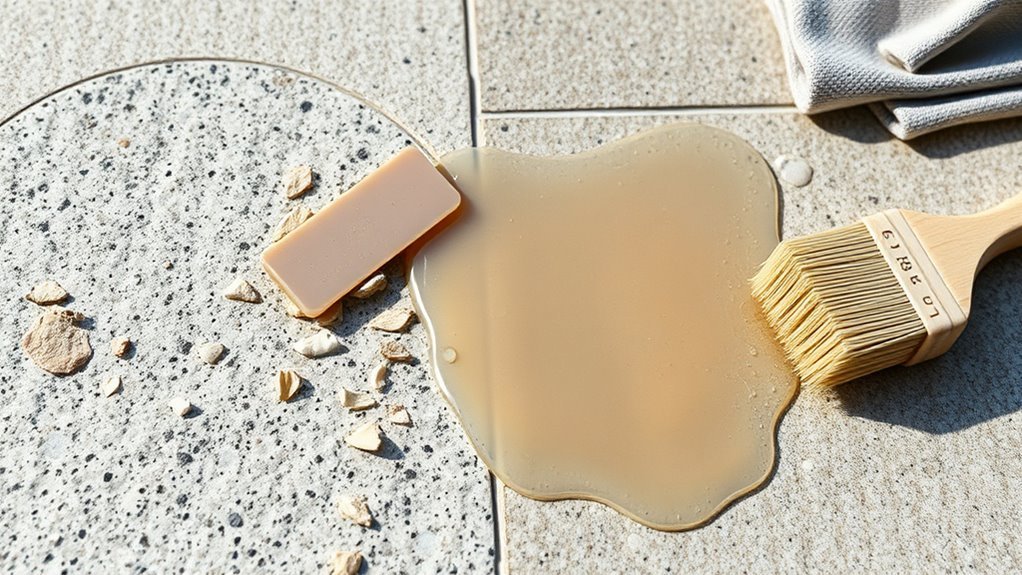
When mild household solvents won’t shift stubborn or extensive paint, you should consider a commercial paint stripper designed for stone. You’ll opt for this when paint covers large areas, has multiple layers, or resists scraping.
Prioritize Paint safety and Stone preservation by choosing a product labeled for masonry and nonacidic formulas.
- Confirm product compatibility with your stone type.
- Test a small, inconspicuous patch first.
- Use gloves, eye protection, and ventilation per instructions.
- Neutralize and rinse thoroughly to prevent residue damage.
Follow manufacturer directions closely to remove paint effectively while protecting the stone.
Use a Poultice to Pull Out Deeply Soaked Paint
Because deeply soaked paint can’t always be scraped or dissolved, you’ll use a poultice to draw the pigment out of the stone’s pores.
Mix an absorbent powder (like kaolin or paper pulp) with a solvent suited to the paint type, forming a thick paste.
Apply a 1/4–1/2 inch layer over the stain, cover with plastic, and tape edges to slow evaporation.
Let it sit until the paste dries and darkens, then lift and rinse gently.
Repeat as needed, testing discreet spots first.
This gentle method aids paint removal while prioritizing stone preservation and minimizing surface damage.
Pressure Washing Stone for Paint: When to Use It
You should reach for a pressure washer when paint covers large, flat areas of durable stone or when softer methods haven’t budged stubborn spots.
Start with a low setting (1,200–1,500 psi) and only increase toward 2,500 psi for hard stone, keeping the nozzle at a safe distance to avoid etching.
Always test a small inconspicuous area first and wear eye and skin protection.
When To Use
Wondering whether to reach for a pressure washer? You should consider pressure washing when paint is thick, covers large areas, or when paint mixing and color matching errors created obvious splashes. Use it if stone is exterior, sturdy, and you’ve ruled out gentle scraping.
- Large surface stains that hand-scrubbing can’t remove.
- Thick, cured paint layers resisting solvents.
- Exterior stone exposed to weather and debris.
- Time-sensitive jobs where speed matters.
Don’t use a pressure washer on fragile, historic, or porous stone; test a small area first and avoid assuming it’s safe without inspection.
Pressure Settings Guide
If you’ve decided a pressure washer is the right tool, pick settings that remove paint without damaging the stone. Start low—500–1200 PSI for softer stone, 1200–2000 PSI for harder stone—and test a discreet area.
Use a wider spray tip and keep the nozzle 12–18 inches away, moving in smooth passes.
Combine appropriate pressure techniques with a mild detergent or paint remover when needed.
Wear eye and ear protection, gloves, and non-slip shoes; secure bystanders and cover nearby plants.
Follow manufacturer instructions and avoid concentrated blasts on joints or softer textures—safety precautions protect both surface and you.
Mechanical Removal: Grinders, Sanders, Abrasive Pads
When paint’s already cured and solvents won’t budge it, mechanical removal is the fastest reliable option, and it’s where grinders, sanders, and abrasive pads come in. You’ll choose removal tools based on stone hardness and paint color contrast to avoid excess abrasion. Use steady pressure, test an inconspicuous area, and wear PPE.
- Angle grinder with diamond cup for thick layers.
- Orbital sander with coarse grit for flat surfaces.
- Handheld rotary tool for edges and detail.
- Non-woven abrasive pads for light scuffs and final cleanup.
Work gradually, rinse frequently, and stop if the stone etches.
Removing Oil-Based and Enamel Paint From Stone
First, you’ll want to confirm the paint is oil-based or enamel by checking the can label, testing a small scrape, or using a solvent swab.
For solvent-based removal, apply a compatible paint stripper or mineral spirits, work gently with a nylon brush or plastic scraper, and rinse thoroughly.
After the paint’s gone, protect and restore the stone with a pH-neutral cleaner, allow it to dry, and consider a breathable stone sealer to prevent future staining.
Identify Paint Type
Although oil-based and enamel paints can look similar once cured, you’ll usually tell them apart by feel, smell, and how they respond to solvents. You should inspect gloss, hardness, and any old signage clues, especially when color matching or historical preservation matters. Check these steps:
- Rub a hidden spot with a cloth and mineral spirits; oil/enamel will soften slightly.
- Smell carefully; oil paints have a solvent odor, water-based won’t.
- Scrape gently with a plastic scraper; enamel resists and chips, oil may smear.
- Note sheen and age; older oil paints often yellow and harden more.
Record findings before any removal.
Solvent-Based Removal
If the paint you identified is oil-based or enamel, you’ll need a solvent-based approach to break down the film without damaging the stone. Start by working in a well-ventilated area, wearing chemical-resistant gloves and eye protection.
Test your chosen solvent on a small, inconspicuous spot to confirm it won’t discolor or etch the surface. Choose paint solvent types like mineral spirits, acetone, or commercial enamel removers based on manufacturer guidance and stone porosity.
Apply solvent sparingly, let it soften the paint, then gently scrape with a plastic or wooden tool. Rinse thoroughly and repeat if needed, observing solvent safety throughout.
Protect And Restore
Once the paint’s softened and lifted, protect the stone and restore its appearance by neutralizing solvents, removing residue, and sealing vulnerable areas to prevent future staining. You’ll want to act carefully to preserve texture, color, and any patina important for historical preservation or artistic restoration. Follow these steps:
- Rinse thoroughly with clean water, blotting excess to avoid mineral streaks.
- Apply a mild neutralizer per product instructions, then rinse again.
- Use a soft brush and pH-neutral cleaner to remove residue without abrading.
- Seal with a breathable stone sealer suited to the stone type, testing a small area first.
Sealing and Patching After Paint Removal to Prevent Damage
After you remove paint from stone, seal and patch exposed areas promptly to prevent moisture intrusion and further deterioration.
After stripping paint from stone, promptly seal and patch exposed areas to prevent moisture intrusion and further damage.
You’ll assess the stone for chips, cracks, and porous spots, then choose sealing techniques appropriate to the material—penetrating sealers for natural stone, topical for smooth surfaces.
Clean and dry the area before application.
For small damage, use compatible patching compounds or hydraulic cement; larger voids may need mortar or epoxy fillers.
Blend patches to match texture, cure fully, then reseal patched zones.
Regular inspections and timely touch-ups will keep restored stone durable and resistant to future damage.
Troubleshooting Stubborn Spots and When to Call a Pro
Sealing and patching usually handles most issues, but you may still find stubborn paint spots that resist standard removal methods. You’ll need patience, careful testing, and awareness of color mixing effects when layers blend. Watch for altered stone tones after paint drying.
- Test a solvent on an inconspicuous area; wait for reaction.
- Use a plastic scraper and nylon brush to avoid etching.
- Try poultices for deep-set spots; repeat as needed.
- Call a pro if the stone discolors, etches, or spots persist after multiple safe attempts.
Frequently Asked Questions
Can Paint Removal Damage Stone Color or Finish Permanently?
Yes, you can permanently alter paint color or suffer finish damage if you use harsh chemicals, abrasive tools, or high heat; you should test patches first, use gentle removers, and follow manufacturer recommendations carefully.
Will Paint Residues Affect Indoor Air Quality After Removal?
Yes—you might worry, but properly removed paint residues usually won’t harm indoor air quality; paint residue effects can release VOCs if solvent-heavy, so ventilate, use low-VOC cleaners, and wear a mask to minimize exposure.
Can I Repaint Stone Immediately After Removing Old Paint?
You can’t usually repaint immediately; you’ll need to let the stone fully dry after paint removal methods and perform surface prep to guarantee adhesion and stone surface preservation, so wait the recommended cure time before applying new paint.
Are There Eco-Friendly or Biodegradable Paint Removers Safe for Stone?
Yes — you can use eco friendly removers and biodegradable solvents that’re safe for stone; you’ll choose water-based citrus, soy, or alkaline gels, test a small area first, and rinse thoroughly to protect finish and plants.
How Long Does Cured Paint Need to Weather Before Removal Attempts?
You typically wait weeks to months for paint weathering before removal timing; you’ll assess adhesion, chalking, and brittleness. If paint’s softened or flakes after light scraping, you can proceed; tougher, chemically cured coatings may need longer.
Conclusion
You’ve chipped away at paint like a gardener pulling stubborn weeds, revealing the stone’s true skin underneath. Trust the tools and gentle tests you used, but don’t rush—stone heals slower than paint peels. Seal and patch where needed to guard against future stains, and call a pro when spots stay stubborn. With patience and the right touch, you’ll restore the surface’s natural voice and keep it speaking clearly for years to come.
