
How to Stick Something on Wall Without Damaging Paint
You can stick things to painted walls without damage by prepping the surface, picking low‑tack products, and matching the method to weight and finish. Wipe with a mild cleaner, test solvents on a hidden spot, and let the wall dry. Use removable adhesive strips or padded hooks for light items, anchors or studs for heavier loads, and press firmly then wait the cure time. Remove slowly, heat if needed, and follow tips ahead to avoid paint lift and residue.
Damage-Free Hanging: 5 Quick Rules
When you want to hang something without harming the paint, start with five simple rules that make the job predictable and reversible.
First, match your method to weight—use removable hooks for light wall art and anchors for heavier items.
Second, test adhesives on an inconspicuous spot so decorative decals and tapes won’t peel paint.
Third, clean the surface with a mild, residue-free cleaner; oils defeat stickiness.
Fourth, follow manufacturer cure times before loading.
Fifth, remove slowly and heat adhesive if needed to avoid stripping paint.
Stick to these rules and you’ll keep surfaces intact and mounting simple.
Prepare Painted Walls for Damage-Free Mounting
Start by wiping the wall with a mild cleaner so dust and grease won’t stop the adhesive from sticking.
Pick an adhesive that’s rated for your paint type and the weight of what you’re mounting.
Test a small, inconspicuous spot first so you can confirm it won’t peel or stain the finish.
Clean Surface First
Before you attach anything, clean the painted surface so adhesives or hooks can bond properly and won’t pull loose later. You’ll remove dust, grease, and residues for reliable surface preparation and paint protection. Use a soft cloth with mild soap and water, then rinse and dry fully. For stubborn grime, use isopropyl alcohol sparingly and test a hidden spot first. Avoid abrasive scrubs that damage finish. Confirm the wall is completely dry before mounting. Quick checklist:
| Task | Action |
|---|---|
| Dust removal | Wipe with microfiber |
| Grease cleanup | Mild soap, rinse |
| Final check | Dry and test spot |
Choose Appropriate Adhesive
Now that the surface is clean and dry, pick an adhesive that matches your paint type and the item’s weight to prevent peeling or residue. You’ll consider adhesive chemistry and wall texture to choose a safe mount.
Match removable hooks or low-tack strips for light decor; use foam tape for slightly textured walls; prefer clear gel adhesives for ceramics where paint is glossy; and reserve construction adhesive only for heavy fixtures where paint can be repaired later.
Follow manufacturer’s load ratings, cure times, and removal instructions. Choosing wisely minimizes paint damage and makes future removal predictable and damage-free.
- Removable hooks
- Foam tape
- Clear gel adhesives
- Construction adhesive
Test Small Area
Because paint finishes and adhesives vary, always test a small, hidden spot first to see how the wall reacts. Choose an inconspicuous area near a corner or behind furniture, match the test to the same paint color and wall texture you’ll use for mounting.
Apply the adhesive per instructions, press firmly, and wait the recommended dwell time.
Remove gently, checking for lift, residue, or discoloration. If paint peels or the surface changes, switch to a gentler method or different product.
Note results and photograph the spot for reference before proceeding with full installation to avoid surprises.
Match Method to Weight and Wall Type
When choosing how to hang something, think first about the object’s weight and the wall material so you pick a method that holds securely without harming the paint. Match lighter items to removable hooks; medium pieces may need anchors; heavy objects require studs or professional hardware.
Consider wall texture and paint type—smooth latex holds adhesives better than heavily textured or fresh paint.
Smooth, cured latex paint holds adhesives far better than fresh or heavily textured surfaces—test first for reliable hanging
- Lightweight (under 1–2 lbs): adhesive strips on cured paint.
- Medium (2–20 lbs): wall anchors or toggle bolts for drywall.
- Heavy (20+ lbs): mount to studs.
- Fragile finishes: use hanging systems that distribute load.
Best Removable Adhesives by Weight & Surface
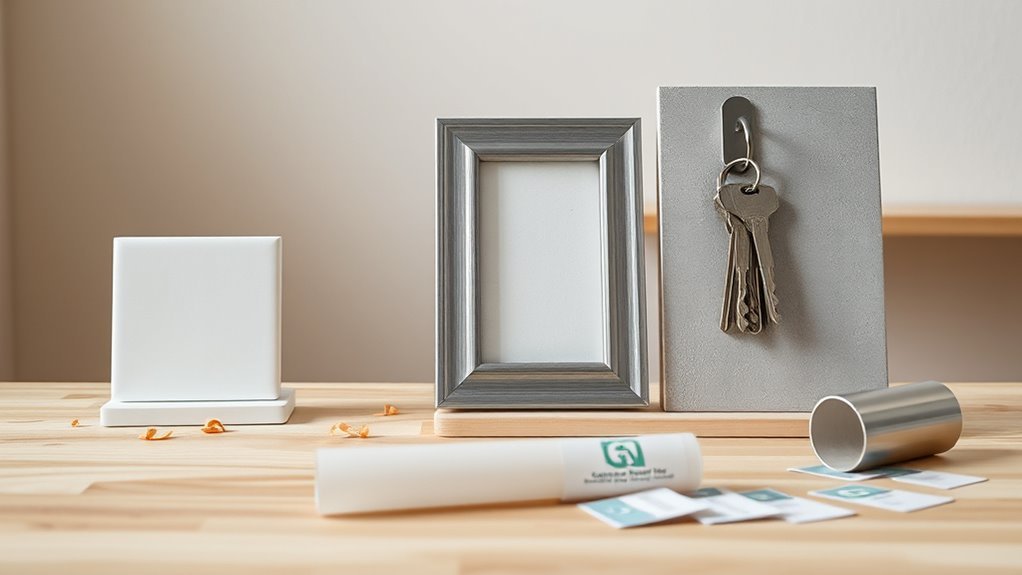
If you want a reliable, non-damaging hold, pick an adhesive that matches both the item’s weight and the wall surface.
For lightweight decor on smooth paint, use removable mounting tabs; they offer good adhesive longevity and peel cleanly.
For medium loads, try foam pads or heavier-duty strips rated by pounds per strip, watching Wall texture—textured or porous walls often need adhesives with more conformability.
For heavier items, use picture-hanging putty plus discrete anchors where allowed, but test a small patch first.
Always follow manufacturer weight ratings and temperature guidance to prevent failure and protect your paint finish.
Pick the Right Damage-Free Hook
Now that you’ve matched adhesives to weight and wall texture, pick a hook that supports that plan without harming the paint. Choose hooks rated for your load, consider surface compatibility, and avoid rough metals that scrape finishes.
For wall art and lightweight decorative accents, pick low-profile, padded hooks or plastic designs that distribute weight evenly.
- Choose weight-rated hooks to match frames or accents.
- Prefer padded or coated hooks to protect paint.
- Use wide-base hooks to spread load on drywall.
- Select removable, non-chemical hooks for painted surfaces.
Inspect packaging for surface types and test discreetly before committing.
Install Adhesive Strips, Hooks, and Hangers
Before you stick anything up, clean and prep the spot so strips and hooks adhere properly and won’t peel paint later. Choose adhesive types suited to wall texture; smooth, semi-porous, and textured surfaces need different strips. Peel backing, press firmly for 30 seconds, and wait the recommended time before hanging. Use hooks for lightweight items and hangers for frames; remove by stretching adhesive tab slowly along the wall. Practice on a hidden area if unsure.
| Surface | Best Strip | Max Weight |
|---|---|---|
| Smooth | Removable | 5 lb |
| Textured | Heavy-duty | 10 lb |
| Semi-porous | Clear | 7 lb |
Mount Shelves and Heavy Items Without Holes
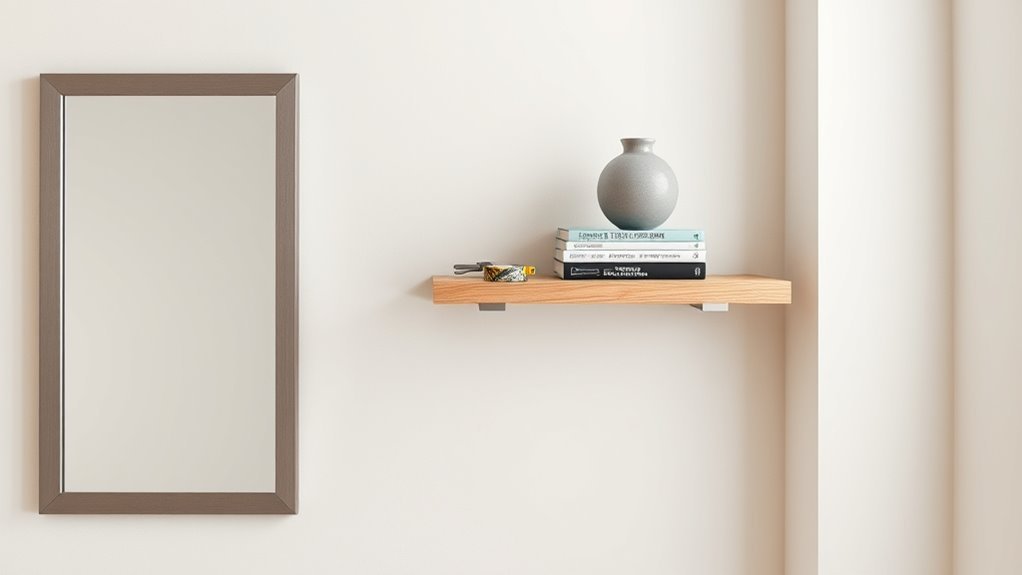
While you can’t rely on standard picture strips for heavy loads, you can still mount shelves and other bulky items without drilling by using purpose-built alternatives like adhesive mounting plates, French cleats with heavy-duty adhesive, or tension-based shelving systems.
You can hang shelves and heavy decor without drilling by using adhesive plates, heavy-duty French cleats, or tension systems.
These products distribute weight across a larger area and bond differently than simple hooks. You’ll choose based on weight, surface, and finish to protect paint and keep wall art or decorative accents secure.
Consider:
- Adhesive mounting plates rated for heavy loads.
- Heavy-duty adhesive French cleats for shelves.
- Tension floor-to-ceiling shelving.
- Adhesive-backed rail systems for modular storage.
Alternatives When Adhesives Won’t Work
If adhesives won’t bond to your wall or you can’t risk any chemical residue, look to mechanical and freestanding options that avoid the surface altogether. You can use tension rods, floor-to-ceiling poles, leaning ladders, or free‑standing shelving for alternative mounting methods that carry weight without touch.
Picture-frame easels, tabletop displays, and clamp-on fixtures offer creative display ideas for art and plants.
Magnetic picture rails or track systems anchored to trim transfer load away from paint. When renting or showing, portable grids and pegboards let you rearrange without marks.
Choose solutions sized to your space and load to guarantee stability and style.
Remove Adhesives Cleanly From Paint & Trim
When adhesives leave sticky residue on your paint or trim, you can remove them without stripping finish or leaving stains by using gentle solvents, heat, and the right tools applied with care. Start with a mild approach: warm soapy water and a soft cloth, then progress to isopropyl alcohol or a citrus-based adhesive removal product if needed. Test solvents in an inconspicuous spot for paint preservation.
- Soak cloth in warm soapy water, blot residue.
- Apply low heat (hair dryer) to soften adhesive.
- Use isopropyl alcohol or citrus solvent sparingly.
- Gently scrape with plastic card, then clean and dry.
Troubleshooting: Peel, Residue, and Paint Lift
Because adhesives and mounting methods vary, you’ll sometimes see peeling, sticky residue, or paint lifting — and you can usually fix each problem without making it worse.
If paint peels, stop pulling; support the loose area and score the edge, then reglue small sections with a clear, paint-safe adhesive or patch with matching paint after sanding.
For residue removal, warm gently with a hairdryer, then wipe with a soft cloth and a mild solvent like isopropyl alcohol or adhesive remover made for painted surfaces.
For paint lift, reattach flaking bits with conservation glue and consider peel prevention next time by using lower-tack mounts.
Frequently Asked Questions
Will Adhesives Yellow or Stain My Painted Wall Over Time?
Some adhesives can yellow or stain over time; you’ll avoid it by choosing adhesive types suited to wall surface compatibility. Test small areas, use removable or low-residue options, and remove adhesives gently to minimize staining and damage.
Can I Use Damage-Free Hooks on Textured or Popcorn Ceilings?
Yes — you can, but textured surface compatibility varies; you’ll need hooks rated for irregular surfaces and follow popcorn ceiling safety guidelines. Test a small area, avoid heavy loads, and remove per instructions to prevent damage.
Are Removable Adhesives Safe for Exterior Walls or Patios?
I’d avoid them outdoors—removable adhesives often fail with moisture and temperature swings. I once watched a banner peel off after a storm; exterior durability and adhesive longevity drop dramatically, so choose weather-rated fasteners instead.
How Do Adhesives Interact With Newly Painted or Still-Curing Paint?
Adhesives can weaken if you apply them during paint curing; you’ll get poor adhesive bonding and possible paint lifting. Wait full cure time, test a small spot, and use low-tack options to avoid damage.
Can I Hang Heavy Mirrors Using Adhesive Plus Wall Anchors Together?
Yes — think of your wall as a ship’s hull; Heavy mirror mounting can use adhesive strength for temporary seal, but you’ll rely on wall anchors for true load-bearing support, so combine them and secure anchors first.
Conclusion
You’ve learned the five quick rules and how to match methods to weight and wall type, like a carpenter choosing tools for a ship’s hull. Now pick the right removable hook or adhesive, prep the paint, and test small — you’ll hang art and shelves without leaving scars. If things go wrong, remove adhesives carefully or switch to noninvasive alternatives. With these steps, your walls stay as intact as a well-kept book’s spine.
