
Is It OK to Paint One Wall a Different Color?
Yes — you can definitely paint one wall a different color to create a focal point, define a zone, or change a room’s mood without repainting everything. Pick the wall that anchors furniture or highlights architectural features, consider light and scale, and test swatches to check undertones. Use darker shades to add depth or light hues to keep things airy, and try removable options if you rent. Keep going to get tips on placement, finishes, and removal.
Should You Paint One Wall a Different Color? A Quick Decision Guide
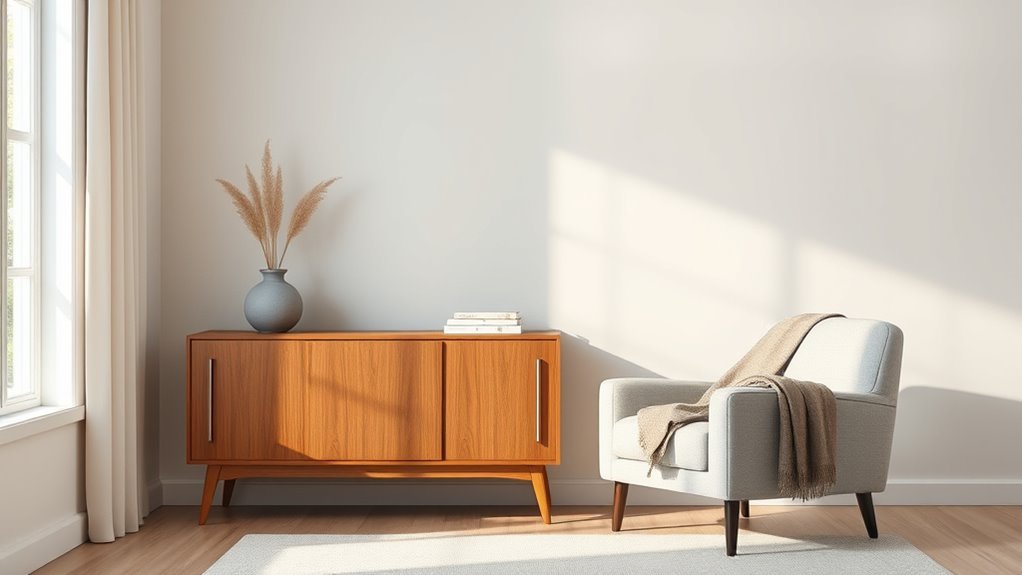
Wondering whether to paint one wall a different color? You’ll weigh purpose, scale, and mood. Decide if you want a focal point, depth, or subtle contrast; picture furniture and lighting first.
Wondering whether to paint one wall differently? Consider purpose, scale, mood, and how furniture and light will play.
Test swatches to see color mixing with existing hues and natural light, since undertones shift. Consider paint durability in high-traffic zones—accent walls still need washable, scuff-resistant finishes.
Keep trim consistent to avoid visual clutter. If a bold hue overwhelms, try a narrower wall or partial application.
Plan placement, test samples, and pick a finish that balances aesthetic impact with long-term practicality.
When a Single Accent Wall Actually Improves a Room
When you want to anchor a seating area, highlight architectural detail, or create depth without repainting the whole room, a single accent wall really helps—especially in open-plan spaces, small rooms, or areas with one dominant view. You can use an accent wall for color contrast and mood enhancement without overhauling décor.
Consider these targeted uses:
- Define a lounge or dining zone in an open layout.
- Emphasize moldings, a fireplace, or built-ins to draw the eye.
- Back a bed or sofa to create a visual focal point.
Choose a hue that complements existing finishes and scale for maximum effect.
Can an Accent Wall Make a Room Feel Smaller?
An accent wall can shrink a room if you pick a very dark or highly saturated color on the wrong surface, because darker tones tend to recede light and make that wall feel closer; but used thoughtfully—on a far wall, behind seating, or paired with lighter surrounding walls—it can actually add depth and make the space feel cozier rather than cramped. You’ll use color psychology to influence perception: cool, muted hues expand; warm, intense shades advance. Coordinate furniture coordination with scale and placement to avoid crowding. Consider contrast, lighting, and focal points to keep balance.
| Surface | Effect |
|---|---|
| Far wall | Expands |
| Side wall | Narrows |
| Behind seating | Cozy |
| Behind bed | Focalize |
How Room Size Should Influence Your Accent Wall Color
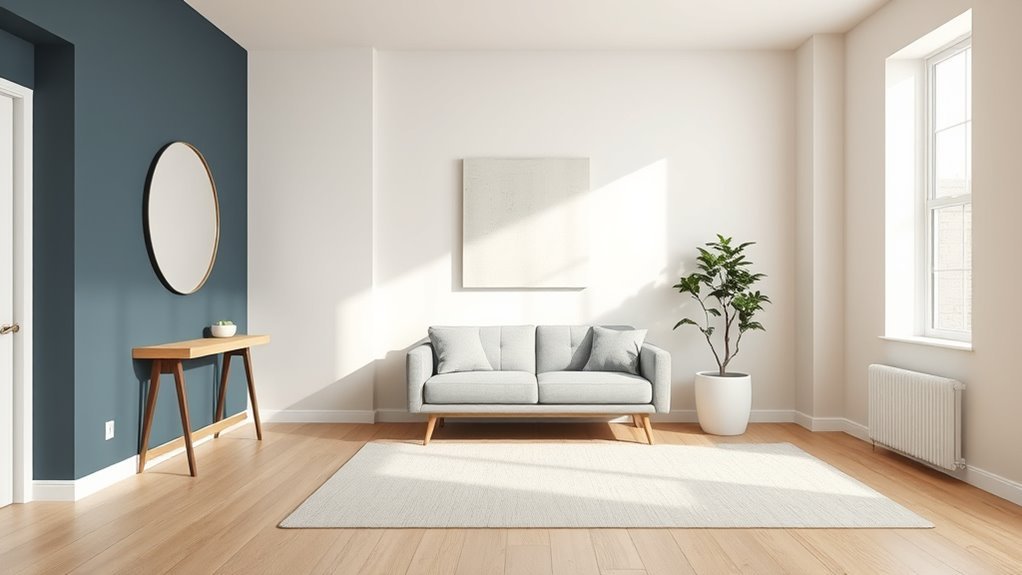
If your room is small, you’ll want lighter hues on the accent wall to keep the space feeling open and airy.
In a larger room, you can choose bolder choices to add drama without overwhelming the space.
Think about how color affects perception and pick a tone that balances size with the mood you want.
Small Rooms, Light Hues
Because small rooms feel tighter, you’ll want an accent wall that keeps the space airy rather than closing it in—so favor lighter, softer hues that reflect light and create depth without overwhelming the room. You’ll balance color pairing with neutral surroundings and introduce subtle texture contrast to add interest.
Consider these focused strategies:
- Choose pale tones that visually expand walls.
- Use glossy or satin finishes sparingly to bounce light.
- Add tactile elements (rugs, linen, woven art) instead of darker paint.
Keep trim and ceiling lighter than the accent wall to maintain openness while still defining a focal point.
Large Rooms, Bold Choices
When you’re working with a large room, go bold—deep, saturated colors can create drama without making the space feel cramped, and they’ll give you a strong focal point to anchor oversized furniture and high ceilings. You’ll balance scale by choosing hues that maintain color harmony with adjoining walls and textiles, and you’ll pick finishes that emphasize paint durability in high-traffic zones. Test samples at different times of day, pair bold tones with lighter accents to prevent heaviness, and consider textured finishes for depth. Use the quick guide below to match mood, sheen, and maintenance.
| Mood | Sheen | Maintenance |
|---|---|---|
| Cozy | Matte | High |
| Dramatic | Satin | Medium |
| Airy | Semi-gloss | Low |
| Luxe | Eggshell | Medium |
How Natural Light Affects an Accent Wall
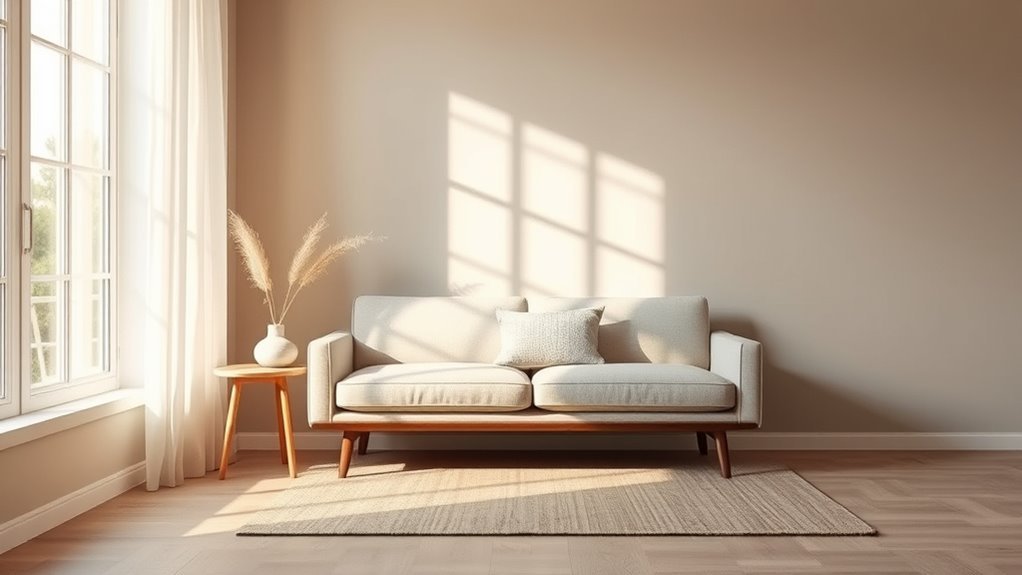
Think about how the direction of light will change the look of your accent wall—north-facing rooms keep colors cooler, while south- or west-facing walls warm up.
You’ll also notice time-of-day shifts that can make a bold hue read softer in the morning and richer at sunset.
Test paint samples at different hours to see how the color behaves before committing.
Direction Of Light
If sunlight streams in from the side, your accent wall will read brighter and more saturated on the lit edges and softer in shadow, so place bold colors where they’ll get plenty of natural light to avoid them looking flat or muddy.
Consider how the direction of light alters perceived hue and texture; lighting conditions determine whether color contrast pops or quiets. Position the wall to benefit from the dominant angle, and test swatches at different spots.
Practical tips:
- Face the accent toward primary windows for vivid contrast.
- Use cooler tones in north light.
- Reserve deep shades for well-lit walls.
Time-Of-Day Shifts
Light shifts through the day will change how your accent wall reads, so plan for morning, midday and evening looks rather than a single moment. You’ll notice cooler blue tones at dawn, bright neutral at midday, and warmer, richer hues at dusk; factor those time of day variations into your paint choice.
Test samples on the wall and observe them across several days to see real mood shifts. Position mirrors or light textiles to amplify desired effects, or add adjustable lighting to stabilize appearance after sunset.
This way your accent wall stays intentional and appealing no matter the hour.
Which Wall to Choose: Focal Point Versus Architectural Feature
When you pick a wall to paint, decide whether you want to emphasize the room’s natural focal point—like a fireplace, TV wall, or large window—or highlight an architectural feature such as a niche, built-in shelves, or molding. Each choice changes how the room reads and how your eye moves through the space.
You’ll weigh color contrast and paint durability alongside function. Pick the focal point to anchor sightlines, or choose the architectural detail to celebrate texture. Consider scale, light, and traffic.
Use a single bold wall to simplify decisions:
- Focal point
- Architectural feature
- Balance and finish
How Furniture Placement Guides Your Accent Wall Choice
Think about anchoring your room by placing your main seating or bed against the wall you plan to accent so the focal feels intentional.
You’ll also want to balance traffic flow by keeping pathways clear of bulky pieces that compete with the accent.
Arrange smaller furniture and lighting to reinforce the wall’s role without blocking movement.
Anchor With The Focal
Although the wall you pick should showcase a focal piece, let your furniture placement decide which wall that is—so position your sofa, bed, or main seating toward the wall you want to accent, and the room will feel intentionally grounded. You’ll want to deliberate on scale, sightlines, and practical use when anchoring that focal.
Think about how color mixing affects mood and test swatches for paint durability near high-contact zones. Use furniture to reinforce the accent, not compete with it:
- Align main seating to face the accent.
- Layer rugs and lighting toward the wall.
- Keep clutter minimal to highlight the focal.
Balance Traffic Flow
How will people move through the room once you place an accent wall? Consider pathways: arrange sofas and chairs to keep routes clear, letting the accent wall draw attention without blocking flow.
Use furniture placement to guide movement toward focal features, avoiding tight corridors that fight traffic management. Position storage and side tables where they support circulation, not obstruct it.
Think about sightlines—color coordination between the accent wall and furnishings helps people intuitively gravitate and pass comfortably. Test routes by walking the space; adjust layout until movement feels natural and the accent wall enhances function as much as style.
Using an Accent Wall to Highlight a Fireplace or Built-In
A single bold wall can instantly draw the eye to a fireplace or built-in, turning it into the room’s focal point without rearranging furniture or adding decor. You’ll accent architectural details and guide sightlines by choosing a hue that respects color blending with surrounding surfaces and considers paint durability for high-traffic hearth areas.
Think through finish and maintenance so soot or handling won’t show. Use contrast smartly and keep trim crisp.
Consider these steps:
- Pick a hue that complements surrounding tones.
- Choose a durable finish for easy cleaning.
- Paint trim or shelves to frame the feature.
Using an Accent Wall Behind a Bed or Headboard
When you paint the wall behind your bed a different color, you create an instant focal point that frames the headboard and anchors the room’s design. Choose a shade that supports color harmony with bedding and curtains so everything feels intentional.
Darker hues can make the bed feel cozy; lighter tones open the space. Consider paint durability for areas that get scuffs from leaning or handling; pick washable, high-quality finishes.
If your headboard is bold, use a subtler wall color to avoid competition. Experiment with samples and view them at different times of day before committing.
Using an Accent Wall Behind a TV Without Glare
Placing an accent wall behind your TV can give the media area a polished, intentional look without overpowering the screen—just plan for glare control as you choose color and finish. You’ll balance color saturation and paint durability while minimizing reflections.
Consider matte or low-sheen finishes to reduce glare; deeper hues hide contrast without adding shine. Position lighting and seating to avoid direct light on the screen.
Use these quick steps:
- Test paint samples at viewing angle and time of day.
- Choose low-sheen formulas rated for durability in high-traffic media rooms.
- Adjust lamps and window treatments to eliminate hotspots.
Color Psychology: What an Accent Wall Communicates
Though the color you choose may seem like a simple style choice, it actually sends clear signals about mood and purpose in a room. When you pick an accent wall, use color theory to align intent: cool hues calm, warm tones energize, and neutrals ground.
Consider psychological effects on occupants — appetite, focus, relaxation — and match the wall to function: a dining nook benefits from appetite-stimulating warmth, a home office from focus-enhancing muted blue.
Contrast and saturation change perception of size and depth, so choose intensity deliberately. An informed accent wall communicates atmosphere without words, shaping daily experience.
Bold Jewel Tones That Work as One-Wall Statements
If you want a dramatic focal point, a deep emerald wall gives your room instant depth and sophistication.
Try a sapphire accent wall to create a cool, calming backdrop that still grabs attention.
For a cozier, more energetic feel, a ruby wall draws the eye and warms the whole space.
Deep Emerald Impact
When you want a dramatic, refined focal point without overwhelming the room, paint a single wall deep emerald—the jewel tone brings depth and warmth while letting the other walls breathe.
You’ll tap into emerald elegance and color psychology: green soothes, signals balance, and frames furniture beautifully. Use contrast, texture, and lighting to maximize impact.
- Pair with warm metals to uplift.
- Add matte or eggshell finish for subtlety.
- Keep adjacent walls neutral to maintain calm.
You’ll create a sophisticated, moody anchor that feels intentional, cozy, and modern without dominating the entire space.
Sapphire Accent Walls
Why not let a sapphire wall do the heavy lifting in a room? You can anchor seating, artwork, or shelving with that bold jewel tone, creating instant color contrast without repainting everywhere.
Choose a matte finish to feel calm or a satin sheen to reflect light; either highlights wall texture and keeps the look intentional.
Pair sapphire with warm woods, crisp whites, or soft grays to balance intensity. If you want drama, add brass or black accents; for subtler impact, introduce textiles in muted blues.
Keep other walls neutral and let the sapphire sing as your single, confident statement.
Ruby Warmth Focus
Because a single wall painted in ruby can instantly warm a space, it becomes the room’s focal point without overwhelming the whole palette. You’ll use ruby warmth to create depth and drama while keeping other walls neutral.
Think about color psychology: ruby reads as confident and cozy, so place it where you want conversation or calm. Balance it with textured textiles and matte finishes.
Consider these approaches:
- Anchor a seating area with a ruby-back wall and soft beige furnishings.
- Highlight shelving and art against ruby for contrast.
- Pair ruby with brass accents to amplify warmth and richness.
Calming Pastels and Neutrals for a Subtle Accent
If you want a gentle focal point without stealing the room, pick a calming pastel or neutral for your accent wall. These hues soften contrast, reflect light, and create harmony with existing finishes.
You’ll use subtle color contrast to define space without shouting, pairing pale blue, soft sage, or warm taupe with white trim and natural textures. These tones support mood enhancement by making the room feel tranquil and cohesive, calming activity areas and promoting relaxation.
Keep saturation low, test swatches in different light, and coordinate textiles and art so the accent wall reads intentional rather than accidental.
Dark Accent Walls and How to Keep Them From Feeling Heavy
If you’re tempted by a dark accent wall, balance it with lighter tones on the surrounding walls and furnishings to keep the room airy.
Add reflective accents like mirrors, metallic finishes, or glossy trims to bounce light and prevent the wall from feeling heavy.
Those simple contrasts let the dark color anchor the space without overwhelming it.
Balance With Lighter Tones
When you choose a dark accent wall, balance it with lighter tones so the room feels grounded rather than gloomy. You’ll create visual balance by pairing deep paint with pale furnishings, trims, and textiles that reflect light and soften edges. Use contrast deliberately to avoid muddiness.
- Paint trims and ceilings in a crisp off-white to frame the accent.
- Add pale rugs and upholstery to expand perceived space.
- Bring in art or cushions that repeat the dark hue in small doses.
These moves keep the wall dramatic without overwhelming the room, maintaining depth and harmony.
Use Reflective Accents
To keep a dark accent wall from feeling heavy, introduce reflective accents that bounce light and add visual interest. You can layer mirrors, metallic frames, or glossy tiles to break up depth without changing paint.
Position lamps and table lamps so light skims the wall, enhancing texture and creating highlights. Choose metals and finishes that complement Color psychology—warm brass softens moody tones, cool chrome keeps things crisp.
Small reflective accents, like a glass vase or polished hardware, prevent overwhelm and maintain balance. You’ll preserve drama while making the space feel open, intentional, and inviting.
How to Pick a Complementary Palette for an Accent Wall
Looking for a palette that makes your accent wall sing? You’ll choose hues that balance mood and room scale while considering color blending and paint durability so the scheme stays cohesive and lasts. Start by picking a dominant shade, then select two supporting tones with different value or saturation.
Follow this simple approach:
- Pick the accent color first to set mood.
- Add a neutral or muted tone to ground the space.
- Introduce a contrasting pop in small doses for interest.
Test swatches on the wall, view them in varied light, and tweak until the trio reads harmonious and resilient.
Choosing the Right Paint Finish for Your Accent Wall
Now that you’ve settled on colors, pick a finish that flatters the hue and fits the room’s use.
Matte hides imperfections and supports subtle color blending when you want a soft, sophisticated accent.
Eggshell offers slight sheen and cleans easier—good for living spaces.
Satin boosts richness and handles more cleaning, so choose it where you’ll touch the wall often.
Semi-gloss reflects more light and highlights texture; use it sparingly for bolder statements or trim contrast.
Consider paint durability for high-traffic areas and humidity.
Test finishes in the room’s light before committing so the finish complements your overall design.
How to Test Colors With Swatches, Sample Boards, and Patch Painting
Before you commit to a whole wall, sample the colors in the room so you know how they’ll actually read in your light and against your furnishings. Use swatches, tape sample boards to different walls, and do small patch painting to observe hue shifts through the day.
Note how color mixing on sample boards affects undertones, and check paint durability by scuffing a dried patch gently.
Follow a simple test routine:
- Tape swatches high, mid, low for light variance.
- Create a sample board with layered mixes.
- Paint three 12×12 patches and live with them for a week.
Accent Wall Patterns and Textures: Stripes, Murals, and Faux Finishes
When you want a bold focal point without repainting the whole room, patterns and textures on an accent wall give you high impact with low commitment. You can use stripes for rhythm, wall murals for storytelling, or faux finishes to mimic plaster or wood. Try subtle color blending for ombré or layered glazes. Plan scale, lighting, and furniture to keep the wall from overwhelming the space. Test samples, tape lines, and small mural sketches first. Below’s a quick comparison to spark ideas:
| Style | Effect | Best Use |
|---|---|---|
| Stripes | Orderly elongation | Ceilings/height |
| Murals | Dramatic scene | Living/entry |
| Faux finish | Texture | Cozy/nooks |
When Wallpaper or Wood Paneling Beats Paint for an Accent Wall
If you want an accent that relies more on texture than color, wallpaper or wood paneling can give you instant depth and tactile interest. You’ll get a more durable design statement—wallpapers resist scuffs and panels hide imperfections better than paint.
Consider these options when you need longevity and a stronger tactile presence than a painted wall can provide.
Texture Over Color
Looking for more impact than a fresh coat of paint can give? You’ll choose texture over color when you want depth and tactile interest. Wallpaper or wood paneling creates texture contrast that paint alone can’t match, framing furniture and art.
Consider these practical reasons:
- Visual layering: patterns or grain add dimension and focal strength.
- Acoustic benefits: thick panels or textured paper soften sound more than flat paint.
- Longevity tradeoffs: some wallpapers and panels resist scuffs differently than paint, so weigh paint durability versus surface resilience.
Pick materials that suit room use and maintenance, and the accent wall will truly stand out.
Durable Design Statement
Texture brings depth, but durability often determines whether that texture lasts — and that’s where wallpaper or wood paneling can outshine paint for an accent wall.
You’ll choose wallpaper when you want intricate patterns that resist scuffs and fading, harnessing color psychology with consistent motifs.
Wood paneling works when impact and longevity matter, surviving knocks and moisture better than many paints.
Consider paint durability realistically: high-traffic areas need more than a fresh hue.
If you want a statement that endures, pick materials built to last.
That lasting choice keeps your accent wall looking intentional and thoughtfully designed.
Color Blocking on a Single Wall for Modern Impact
When you paint a single wall with bold color blocks, you give a room instant modern energy without overcommitting to a full repaint. You’ll use color psychology to guide contrasts—warm hues advance, cool hues recede—so the composition feels intentional.
Embrace modern minimalism by limiting shapes and hues; a restrained palette reads sophisticated. Consider these approaches:
- Vertical blocks to heighten ceilings and create rhythm.
- Horizontal bands to widen small rooms and anchor furniture.
- Asymmetric panels for dynamic focal points that still feel orderly.
You’ll transform scale, mood, and focus while keeping commitment and maintenance minimal.
How to Integrate Trim, Molding, and Baseboards With an Accent Wall
Because trim frames your accent wall, decide up front whether you want it to disappear or draw attention—you can paint it the same color for a seamless, modern look or pick a contrasting shade to highlight architectural details.
When matching, test color mixing on a scrap board so undertones align. If you want contrast, coordinate hues so trim complements rather than competes.
Choose paint formulas with high paint durability for trim and baseboards since they take scuffs; use semi-gloss or satin for easy cleaning.
For molding, consider a slightly lighter or glossier finish to catch light and define profiles without overwhelming the wall.
Trim and Ceiling Color Decisions When One Wall Differs
You’ve decided how the trim should relate to your accent wall, so next consider how your ceiling color will play into that scheme and what that means for trim choices. Keep the look cohesive by weighing contrast, flow, and room height.
Try these approaches:
Try these approaches for cohesive ceiling-and-trim color decisions that enhance flow and focal impact.
- Paint ceiling trim the same as the ceiling to make walls feel taller and keep focus on the accent wall.
- Match ceiling trim to your trim color for a unified frame that ties the accent wall to architectural details.
- Use a subtle lighter shade of the accent wall on ceiling trim for a coordinated but distinctive progression.
Consider lighting; it changes perceived tones.
How to Balance Textiles and Accessories With an Accent Wall
If an accent wall anchors the room, balance textiles and accessories so they support rather than compete with it. You’ll use color psychology to decide intensity: calm hues call for softer patterns, while bold walls tolerate higher-contrast accents.
Pick two dominant tones from the wall and repeat them subtly in pillows, rugs, or throws for textile coordination. Vary texture more than pattern to add depth without visual clutter—linen, wool, and velvet layer well.
Anchor metallics or art sparingly so they echo the wall’s mood. Edit ruthlessly: remove anything that draws attention away from the meant focal point.
Lighting Strategies to Flatter Your Accent Wall
Place your accent wall where it can catch the most natural light, since morning or afternoon sun can make colors read warmer or cooler.
Use layered artificial lighting—ambient, task, and accent—to control mood and highlight texture without washing out the hue.
Adjust fixture placement and bulb temperature to keep the wall looking intentional at any hour.
Natural Light Placement
When natural light hits an accent wall from the side, it brings out texture and depth, so position your focal wall to catch morning or afternoon sun depending on the room’s use.
You’ll highlight faux finishes or crisp color blocking by orienting the wall where angled light grazes it. Consider these placement tips:
- Place the accent wall opposite windows for balanced wash during midday.
- Use a sidewall near east or west windows to emphasize texture at sunrise or sunset.
- Test paint samples at different times to judge shifting tones and glare before committing.
Layered Artificial Lighting
Although natural light can change throughout the day, layered artificial lighting gives you consistent control over how an accent wall reads, letting you highlight color, texture, or architectural details on demand. Use layered illumination: combine ambient, task, and accent sources so you can tweak mood and focus. Position wall washers or adjustable sconces to reveal texture, add track lights for paintings, and use dimmers to shift intensity. Think about color temperature—warmer tones soften bold colors, cooler ones sharpen neutrals. Test combinations before committing to fixtures to guarantee the accent wall always complements the room.
| Fixture | Purpose |
|---|---|
| Wall washer | Texture |
| Sconce | Accent |
| Track light | Artwork |
| Dimmer | Mood control |
How to Hide Imperfections With a Textured or Dark Accent Wall
Want to disguise dings, uneven plaster, or slightly crooked drywall? Use textured finishes or Dark shades to draw focus and mask flaws. Pick a wall that naturally attracts attention, then follow this practical plan:
- Apply a subtle texture (skip heavy plaster) to blur minor bumps.
- Choose dark shades with low sheen to reduce contrast from imperfections.
- Position art, shelving, or a floor lamp to create intentional focal points.
You’ll minimize visual noise while adding depth. Test samples first under your room’s lighting, and keep adjacent walls lighter to preserve balance and avoid a heavy, closed-in feel.
Temporary Solutions: Removable Wallpaper and Peel-and-Stick Options
If you want a quick, temporary makeover, removable wallpaper and peel-and-stick panels let you change one wall without committing to paint. You’ll get lots of patterns and textures to mimic tile, wood, or bold prints.
And they come off cleanly when you’re ready for something new. This damage-free option is perfect for renters or indecisive homeowners who like to switch styles often.
Easy Temporary Makeovers
When you want a fast, low-commitment way to change a single wall, removable wallpaper and peel-and-stick tiles deliver big impact with zero sanding or paint fumes. You can test bold patterns, explore color mixing ideas, and coordinate with furniture matching without permanent commitment.
Apply and trim panels in an afternoon, then tweak placement until it feels right. Consider these quick approaches:
- Graphic wallpaper for focal drama.
- Textured peel-and-stick tiles for depth.
- Oversized decals to frame art or a bedhead.
You’ll refresh a room instantly, learn what works, and keep options open for future changes.
Damage-Free Removal
Removable wallpaper and peel-and-stick tiles not only let you test bold looks quickly but also come off cleanly when you’re ready to change things again. You’ll peel corner-to-corner without solvents, avoiding the need for harsh paint remover on rental walls.
Choose quality wall murals or textured peelables designed for removal to prevent adhesive residue. When residue appears, use warm soapy water or a gentle adhesive solvent recommended by the manufacturer, testing a small patch first.
Keep edges smooth during installation to make removal easier. These options let you experiment with a single accent wall risk-free and restore the original surface intact.
Pattern And Texture Options
Though a painted accent wall can be striking, peel-and-stick wallpapers and tiles give you instant pattern and texture without committing to a permanent change. You can experiment with Pattern variety and Texture options to match mood and scale.
They’re removable, low-commitment, and work over many surfaces, so you won’t stress about resale. Consider:
- Geometric vinyl for bold statements and easy cleaning.
- Textured peel-and-stick tiles to mimic ceramic or stone.
- Subtle grasscloth-look paper for warmth without permanence.
You’ll enjoy quick updates, simple installation, and minimal damage when you remove them—ideal if you love changing styles.
Accent Walls in Rentals: How to Avoid Losing Your Deposit
If you’re thinking about painting an accent wall in a rental, check your lease and get landlord approval first; doing otherwise can cost you your deposit.
Ask whether temporary options—peel-and-stick wallpaper, removable panels, or wash-off paints—are acceptable.
Offer solutions like professional repainting or using eco-friendly paints to reduce odors and VOC concerns.
Get approval in writing, note existing wall condition with photos, and agree on color limits.
Avoid permanent changes like outdoor murals that alter exterior appearance.
When you move out, repaint per agreement or provide a licensed contractor receipt to protect your security deposit.
Resale Concerns: Will an Accent Wall Hurt Home Value?
When buyers tour a house, bold accent walls can either grab attention or raise red flags, so pick colors and placements that appeal to a wide audience and won’t date the space. You should consider how Color psychology influences impressions and the Resale impact of choices.
Think practical steps:
Think practical steps: neutralize personal tastes, highlight features with accent walls, and choose easily reversible finishes.
- Neutralize obvious personal tastes before listing.
- Use accent walls to highlight architectural features, not hide flaws.
- Opt for reversible treatments that are easy to repaint.
If you balance personality with broad appeal, an accent wall won’t necessarily hurt value; it can enhance perceived care and style when done thoughtfully.
How to Choose an Accent Wall Color That Appeals to Buyers
When choosing an accent wall color to attract buyers, stick with neutral, timeless tones like warm greige, soft taupe, or muted blue.
You’ll also want the shade to complement the home’s architectural style—choose cooler neutrals for modern spaces and warmer tones for traditional ones.
Keep contrast subtle so the wall adds interest without overpowering potential buyers.
Consider Neutral, Timeless Tones
Because buyers picture themselves living in the space, choose neutral, timeless tones for an accent wall to broaden appeal and avoid turning off potential offers. You’ll balance current color preferences with resale value by picking subdued shades—soft greiges, warm tans, or gentle greys—that complement many furnishings and photograph well.
Also prioritize paint durability for high-traffic walls to keep finishes looking fresh through showings.
- Opt for universally flattering neutrals.
- Test samples in different light before committing.
- Choose durable, low-VOC formulas for longevity and safety.
Those choices help buyers imagine the home as theirs.
Match Color To Home Style
If you want buyers to connect with your space, match the accent wall color to the home’s architectural style and era so the palette feels intentional rather than random. You’ll pick tones that echo period details—muted sage for Craftsman, deep navy for coastal cottages, warm terracotta for midcentury—so buyers read authenticity, not a trendy experiment.
Consider color symbolism and cultural influences that might affect perception: some hues read luxurious, others homey or formal. Test swatches in different light, stage with era-appropriate furnishings, and avoid polarizing brights.
That thoughtful match helps buyers imagine living there and boosts appeal.
One Wall vs. Whole Room: Budgeting for a One-Wall Project
Although painting a single wall can cut costs, you still need to plan carefully so your budget covers paint, supplies, and any unexpected touch-ups. You’ll compare one-wall savings to whole-room expense by estimating materials, labor if hired, and cleanup.
Painting one wall can save money, but plan for paint, supplies, matching, and unexpected touch-ups.
Consider Color blending for adjacent walls and how Wall texture affects coverage—rough surfaces need more paint. Break costs into clear categories:
- Paint and primer
- Tools and masking materials
- Labor or contingency
You’ll likely save on paint volume, but factor in matching, trial samples, and potential extra coats. Budget with a small buffer to avoid mid-project surprises.
Step-by-Step Prep for Painting a Single Wall Like a Pro
Once you’ve chosen your accent wall color, start by clearing the area and gathering everything you’ll need so the actual painting goes smoothly.
Tape trim and baseboards, protect floors with drop cloths, and remove outlet covers.
Clean the wall, repair holes, and sand glossy spots for better adhesion.
Prime if the wall has stains or dramatic color change to aid color blending and improve paint durability.
Use a quality roller and angled brush for edges; work top to bottom in overlapping strokes.
Let proper drying time between coats, inspect in natural light, and replace hardware once fully cured.
Common Painting Mistakes When Doing Just One Wall
When you focus on a single wall, small errors — like skipping primer, using the wrong sheen, or cutting in unevenly — become glaringly obvious and throw off the whole room. You’ll avoid common mistakes by planning: test patches, consistent strokes, and proper tools.
Watch for poor color mixing that yields streaks, and don’t assume all paint brands match coverage or sheen. Also mind edge control so trim stays crisp.
Key pitfalls to remember:
- Skipping primer or uneven base.
- Inadequate mixing and mismatched paint brands.
- Rushing cuts and using the wrong brush or roller.
Blending a New Accent Wall With Existing Painted Walls
If you want your new accent wall to feel intentional rather than tacked-on, start by evaluating undertones and sheen so colors harmonize across surfaces. You’ll sample swatches, view them at different times, and match sheen to avoid patchy reflections. Focus on color blending at edges and use transitional hues or trim to tie walls together. Consider texture contrast—smooth paint against a textured wall can read as deliberate if balanced. Use small tests, step back, and adjust.
| Task | Tip | Result |
|---|---|---|
| Swatch | Compare undertones | Cohesive tone |
| Sheen | Match finish | Even reflection |
| Edge | Transitional hue | Smooth join |
When to Abandon the Accent Wall and Paint the Whole Room
If the accent color starts to dominate and distract from the room, you should consider painting the whole space for balance.
You’ll get better visual cohesion and avoid a lopsided feel by spreading the hue evenly. Changing to a full-room color can also simplify decorating choices and improve flow.
When Accent Color Overpowers
Because an accent wall’s whole point is to enhance, not dominate, you should rethink it if the color starts stealing focus from the room’s function or furnishings. If you notice imbalance, consider whether color harmony is off or if the finish exaggerates imperfections. Also weigh paint durability—bold hues show wear faster.
Ask yourself:
- Is the wall pulling attention from key pieces or traffic flow?
- Does the shade clash with textiles and lighting?
- Would repainting the entire room restore balance without losing character?
If most answers point to disruption, go ahead and paint the whole room for a calmer, cohesive result.
Whole-Room Cohesion Needed
When do you keep an accent wall and when do you paint the whole room? If the accent interrupts flow or clashes with furnishings, choose cohesion. You’ll want consistent undertones to avoid awkward color mixing that reads muddled across light changes.
Paint the whole room when a uniform backdrop improves sightlines, balances scale, or simplifies decorating. Consider paint durability for high-traffic areas—tougher finishes across all walls save maintenance and preserve uniform sheen.
Also, a single color can make small spaces feel larger and calmer. Trust sightlines and function: if the accent competes instead of complements, go wall-to-wall.
Accent Wall Tricks for Small Rooms That Open Space
Looking to make a small room feel larger without knocking down walls? Use an accent wall to visually expand space by guiding sightlines and boosting depth with strategic color blending and furniture coordination. Try these tactics:
- Paint the farthest wall a lighter, warmer tint to draw the eye outward.
- Use vertical stripes or a gradient to lift the ceiling visually.
- Match trim and adjacent walls to create seamless passages, anchoring key furniture in the same tonal family.
Keep accents minimal, reflect light with finishes, and position furniture to maintain clear pathways so the room reads open and intentional.
Accent Walls in Open-Plan Homes: Ensuring Continuity and Flow
Shifting from tricks that make a small room feel larger, you’ll want to think differently about accent walls in open-plan homes where multiple zones share sightlines. You’ll use accent walls to guide flow, tie adjacent areas together, and avoid visual stops.
Choose hues that prioritize color blending so progressions feel intentional; pick one dominant tone and vary saturation rather than switching palettes. Place accents on structural elements or backdrops visible from several angles to anchor circulation.
Also consider paint durability in high-traffic sightlines—scrubbable finishes keep edges crisp. Test samples across hours to assure harmony throughout changing light.
Accent Wall Ideas by Room: Living Room, Bedroom, Kitchen, Bathroom
When you pick an accent wall, think about how it can create a focal point in your living room—behind the sofa or fireplace works great.
In the bedroom, use a softer or darker shade behind the headboard to add depth and coziness.
For kitchens and bathrooms, choose moisture-friendly finishes and bold pops near cabinetry or tile to lift the space without overwhelming it.
Living Room Focal Ideas
If you want your living room to make an immediate statement, an accent wall can anchor the space and draw the eye to your best features—fireplace, media console, or a gallery arrangement—without repainting the entire room. You’ll use color blending and texture contrast to layer interest while keeping balance.
Consider focal strategies that suit your layout:
- Paint a fireplace wall deeper for warmth and cohesion.
- Frame a media console with a matte panel to reduce glare and add depth.
- Create a gallery wall on a softened hue to showcase art without overwhelming the room.
Choose scale, finish, and accessories to unify the look.
Bedroom, Kitchen, Bathroom Accents
While an accent wall can anchor any room, bedrooms, kitchens, and bathrooms each call for different approaches—think soothing, functional, and moisture-resistant choices respectively.
In your bedroom, pick calming hues or a textured mural that complements bedding and mirrors an outdoor garden view to extend tranquility.
In the kitchen, choose a durable, washable finish behind stove and sink; coordinate with kitchen appliances and open shelving so the accent feels intentional, not isolated.
In bathrooms, use moisture-resistant paint or tile to prevent peeling; confine bold color to a single wall or niche for drama without overwhelming the small, humid space.
Kid-Friendly Accent Wall Ideas and Durable Finishes
Looking for ways to make a kid’s room pop without sacrificing durability? You can combine creative color palettes with washable, low-VOC finishes so the wall stays vibrant and safe. Pick one focal wall for playful murals or geometric shapes; keep other walls neutral to balance energy.
Durable finishes resist scuffs and clean easily, and eco-friendly paints reduce fumes.
- Choose scrubbable satin or semi-gloss for high-traffic areas.
- Use stencils or removable decals for changing tastes.
- Seal chalk or magnet paint with a clear topcoat for longevity.
These choices let you refresh style while keeping walls tough.
How Seasonal Trends Influence Accent Wall Color Choices
When you plan an accent wall, seasonal color trends can steer your choices just as much as function did for a kid’s room—think spring’s pastels for a light, airy feel, summer’s saturated hues for energy, autumn’s warm neutrals for coziness, and winter’s deep, moody tones for drama.
You can use seasonal inspiration to rotate accents without repainting the whole room: swap textiles, art, or removable wallpaper to echo trends.
Follow color trend forecasting to pick enduring shades that adapt across seasons. Balance trend-driven picks with timeless neutrals so your accent wall feels intentional, not fleeting.
How to Update or Remove an Accent Wall Without Damage
If you’ve decided an accent wall has run its course, you can update or remove it without harming the surrounding surfaces by following a few careful steps: test the paint finish, soften edges with a small brush, and use the right tools for wallpaper or textured finishes.
Start by evaluating wall texture and paint sheen; sand glossy spots lightly. For paint removal or repainting, use color blending techniques to feather the new shade into adjacent walls.
Assess texture and sheen, sand glossy areas softly, and feather new paint into surrounding walls for a seamless finish
For wallpaper, score and steam gently.
- Prep and protect trim
- Strip or sand carefully
- Prime and blend for seamless repair
Real-Life Before-and-After Examples to Inspire Your Accent Wall
After you’ve stripped, sanded, and blended an old accent wall, seeing real examples can spark ideas for your own space. Look at before-and-after shots that show how color psychology shifts mood and how paint durability holds up in high-traffic zones. Note scale, trim contrast, and furniture pairing so you’ll copy what works.
| Room | Before | After |
|---|---|---|
| Living | Plain white | Deep teal focal |
| Bedroom | Beige | Soft blush calming |
| Hallway | Scuffed gray | Durable satin navy |
| Office | Crowded | Mint accent, brighter light |
Use these visuals to plan confidently.
Quick Checklist to Decide Whether to Paint One Wall a Different Color
Because an accent wall changes both feel and flow, use this quick checklist to decide if it’s right for your space. Consider scale, light, and purpose; a single wall can define a room or overwhelm it.
Because an accent wall alters feel and flow, weigh scale, light, and purpose before committing.
- Measure proportions: will a darker or bolder hue improve balance and Color harmony with existing finishes?
- Test lighting: observe the wall at different times so shadows and highlights don’t distort your chosen tone.
- Inspect Wall textures: rough or patterned surfaces read differently; sample paint on the actual texture before committing.
If answers align—go ahead. If not, tweak placement, shade, or finish first.
Frequently Asked Questions
Will Painting One Wall Different Affect Room Acoustics?
Yes — painting one wall different won’t much change acoustics; you’ll still need soft furnishings, curtains, rugs to absorb sound. You’ll enhance color coordination and design balance visually, but acoustic treatment requires materials, not just paint.
How Long Does an Accent Wall Paint Job Typically Take to Dry?
Usually it feels quick but isn’t — you’ll get tack-free paint in 1–2 hours, recoat in 4–6, and full cure in 2–30 days depending on color matching choices and paint durability, humidity, and temperature.
Can Pets Damage or Affect an Accent Wall Finish?
Yes — your pets can damage an accent wall finish: pet scratches mar paint, and wall stains from fur, paws, or accidents discolor it. You’ll need durable paint, protective measures, and regular cleaning to minimize damage.
Are There Fire-Safety or VOC Concerns With Bold Accent Paints?
Yes — you should check VOC emissions and fire safety labels; choose low‑VOC or zero‑VOC paints, guarantee proper ventilation while painting, store cans safely, and avoid flammable finishes near heat sources to reduce risks.
How to Coordinate an Accent Wall With Smart Home Devices or Cables?
You’ll integrate devices and cables by matching finishes and trim to create color coordination and design harmony; hide wires in paintable channels, use cable covers painted to the accent, and position devices against complementary backgrounds for seamless blending.
Conclusion
Like the single stroke that makes a painting memorable, an accent wall can lift a room—or tip its balance. Trust your space: pick one wall to anchor a focal point, consider size and light, and avoid overpowering small rooms. If trends sway you later, you can refresh or remove it with minimal fuss. Paint boldly when it serves the room’s purpose; otherwise, let subtlety be your guide, like a whisper in a crowded room.
