
Should I Use Interior or Exterior Paint in Garage?
Use exterior paint on garage doors, exterior-facing walls, and any surfaces exposed to weather or moisture, since it resists mildew, UV, and temperature swings. For interior walls and ceilings you can use interior acrylic or oil-based paints for a smoother finish and lower VOCs, but pick tougher epoxy or oil formulas for floors and workshop areas. Prime appropriately and guarantee good prep and ventilation for longevity — keep going and you’ll get practical tips to choose finishes and primers.
Interior vs Exterior Paint for Garages: Quick Decision
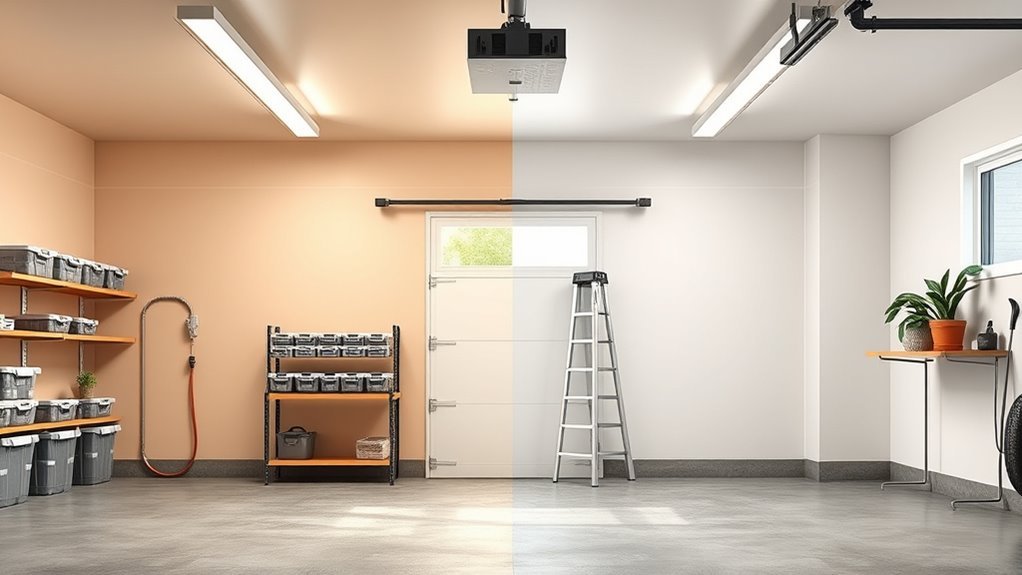
Wondering whether to choose interior or exterior paint for your garage? You’ll weigh durability, moisture resistance, and finish.
Exterior paint resists weather, mildew, and temperature swings; interior paint offers smoother finishes and lower VOC options for enclosed spaces.
Consider paint types: latex for flexibility and cleanup, oil-based for toughness in high-traffic zones.
Match application techniques to surface and paint—rollers for large flat areas, brushes for trim, and sprayers for textured concrete or cabinets.
Primer matters: use one that bonds to masonry or metal.
Choose based on exposure and substrate, not just appearance, for a practical, lasting result.
How You Use the Garage Affects Paint Choice
Think about how you actually use the garage: if you just park cars, you may prioritize easy-to-clean, oil-resistant finishes.
If you use it as a workshop, you’ll want tougher, more durable paint that stands up to abrasion and spills.
And if your garage sees moisture or wide temperature swings, choose a paint and prep that handle humidity and prevent mold or peeling.
Vehicle Storage Needs
If you store a daily driver in your garage, you’ll want paint that withstands oil splashes, road salt, and frequent opening and closing, while long-term vintage storage shifts priority to humidity control and preventing rust.
You’ll choose finishes and formulations based on vehicle protection and garage organization needs: easy-clean surfaces for daily use, or moisture-resistant coatings for stored classics.
Consider ventilation, dehumidifiers, and non-reactive paints to protect finishes and metal. Match paint VOCs to enclosed spaces and storage duration.
Examples to think about:
- Daily commuter — washable satin.
- Classic car — moisture-barrier enamel.
- Seasonal car — mid-range sheen.
- Multi-vehicle — durable epoxy.
Workshop And Durability
Because your garage doubles as a workshop, you’ll need paint that stands up to abrasion, spills, and frequent contact while still being easy to clean.
Choose hardwearing interior or exterior formulations with semi-gloss or satin finishes so marks wipe off and walls resist scuffs from tools and benches.
Consider high-adhesion primers on bare drywall or plywood.
Prioritize products that passed durability testing for impact and chemical resistance.
Plan workshop organization to reduce concentrated wear—tool rails, splash zones, and floor-to-wall connections.
Recoat schedules and spot repairs matter; tougher paint saves time and keeps your workspace looking professional.
Climate And Moisture Control
When your garage experiences high humidity, temperature swings, or frequent condensation, you’ll need paint that resists moisture, mold, and thermal movement; choose exterior-grade or specifically moisture-resistant interior paints and primers to prevent peeling, blistering, and mildew.
You should assess climate considerations and seasonal changes to decide coatings that boost paint longevity. Prioritize humidity control and air circulation to aid moisture management and temperature stability.
Consider ventilation, dehumidifiers, and insulation as environmental factors that reduce stress on finishes.
- Improve air circulation with vents or fans.
- Use moisture-resistant primer and exterior-grade paint.
- Run dehumidifiers during wet seasons.
- Insulate to maintain temperature stability.
Garage Ventilation: Why It Changes Your Paint Options
Although garages aren’t built like living rooms, the way you ventilate yours has a big effect on which paint will hold up best; ventilation controls moisture, fumes, and temperature swings that change adhesion, drying, and long-term durability.
You should consider ventilation importance because poor airflow traps humidity and vehicle exhaust, harming paint and lowering air quality.
If you ventilate well, breathable interior-grade paints or specialized low-VOC options can work; if not, durable exterior or moisture-resistant coatings are safer.
Also plan for exhaust when painting to speed curing and protect your lungs.
Match paint choice to how you actually ventilate the space.
Climate & Temperature Swings: Effects on Garage Paint
You’ll notice paint behaves differently as temperatures swing, because materials expand and contract and can crack or peel over time.
High humidity and moisture also affect adhesion and can lead to blistering or mildew if the paint isn’t formulated for damp conditions.
In climates with freeze/thaw cycles you need a coating that resists cracking and water intrusion to maintain durability.
Temperature Expansion/Contraction
If your garage sees big temperature swings between hot days and cold nights, the paint will repeatedly expand and contract, and that movement stresses the coating and substrate.
You’ll notice cracking, flaking, or adhesive failure faster where temperature fluctuations are severe. Choose flexible formulas and proper prep to improve paint longevity.
Consider these practical steps:
- Pick a paint with good elasticity and adhesion for garage surfaces.
- Prime with a flexible primer suited to your substrate.
- Apply thinner, even coats to reduce film stress during swings.
- Allow full curing between coats and avoid painting in extreme temperatures.
Humidity And Moisture Effects
Heat-driven expansion and contraction can weaken paint, and moisture adds a different set of stresses that speed up failure.
You’ll notice humidity impact in damp conditions where condensation issues promote mildew growth and blistering.
Address interior climate by improving air circulation and implementing moisture prevention: dehumidifiers, vents, and rapid drying after leaks.
Choose coatings with surface treatment that resists water absorption and provides wall protection to extend paint longevity.
Prep porous substrates with sealers and repair efflorescence before painting.
Monitor humidity levels seasonally; proactive maintenance prevents mold, peeling, and costly refinishing in your garage.
Freeze/Thaw Durability
When temperatures swing below and above freezing, your garage paint faces repeated contraction and expansion that can crack, flake, or lose adhesion over time.
You should choose coatings with freeze resistance and proven thermal stability to preserve paint longevity. Consider application methods that enhance adhesion strength and address moisture management before painting. Control temperature and account for environmental factors during cure for best results.
- Pick paints with weather resilience and tested paint compatibility for your substrate.
- Prep surfaces to reduce trapped moisture and improve adhesion strength.
- Follow temperature control recommendations during application.
- Expect improved paint longevity with proper methods.
Moisture and Condensation: Paint Needs for Damp Garages
Damp garages demand paint that resists moisture, and you’ll want coatings formulated for high-humidity environments so you don’t end up with peeling, blistering, or mold growth.
You should assess damp conditions, focus on surface preparation, and choose products with moisture barriers or waterproof coatings for stubborn leaks.
Consider condensation management: improve ventilation and use paints that balance mildew prevention with breathability factors so trapped water can escape.
During paint application, follow dry-time guidelines and apply primer designed for damp substrates.
If you control sources of moisture and pick the right system, your finish will last and stay healthier.
Sunlight & UV: Picking the Right Paint for Garage Walls
How much sun your garage gets matters because UV rays can fade colors, break down binders, and chalk finishes over time.
Sun exposure matters — UV rays can fade colors, degrade binders, and chalk finishes over time.
So pick coatings rated for UV resistance and color retention. You’ll want paint with good thermal stability to resist heat cycles and minimize color fading.
Consider light reflection: lighter, UV-stable finishes brighten the space and reduce heat buildup.
Surface texture affects paint adhesion and longevity, so prep properly.
Think about environmental impact—low-VOC UV-resistant formulas exist.
Use proper application techniques for uniform coverage and adhesion.
- Choose UV resistance and thermal stability
- Maximize light reflection with lighter tones
- Prep surface texture for adhesion
- Select low-VOC formulas and correct application techniques
Vehicle Fluids and Stains: What Paint Must Withstand
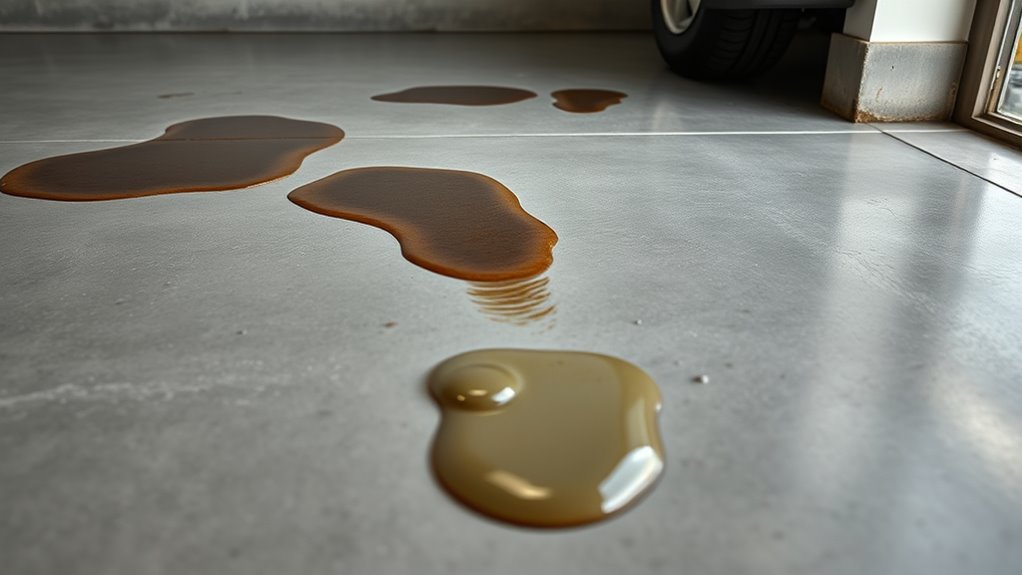
1 key challenge for garage paint is resisting vehicle fluids and stains—oil, gasoline, antifreeze, brake fluid, and road grime can penetrate or degrade ordinary coatings.
You’ll want paint performance that emphasizes stain resistance and fluid protection to keep spots from etching or discoloring.
Consider finish longevity when choosing coatings that bond to concrete or drywall; surface compatibility matters for adhesion and cure.
Factor maintenance challenges into your plan—easier-clean finishes save time.
Also weigh color options that hide marks versus lighter tones that show damage.
Finally, match application methods to the product and substrate for reliable, durable results.
Interior Paint: Pros, Cons, and Garage Uses
When you consider interior paint for your garage, weigh how well it resists wear and scuffs versus how vulnerable it’s to moisture and mildew.
You’ll also want to think about the finish and application—some interior paints go on smoothly but don’t hold up to heavy traffic or damp conditions.
I’ll outline which types of interior paints work best for different garage uses and what prep or finishes improve their performance.
Durability And Wear
Because interior paints are formulated for lower abrasion and moisture exposure, they wear differently in a garage than exterior coatings do; you’ll find that standard latex or acrylic interior paints resist scuffs and regular cleaning reasonably well but won’t stand up to constant scraping, heavy traffic, or persistent dampness.
Consider paint longevity and surface compatibility when choosing finishes. You can extend life with proper prep and tougher sheens, but expect limits.
- High-traffic floors need specialty coatings, not flat interior paint.
- Trim and doors hold up better than concrete.
- Use primers for adhesion on varied substrates.
- Recoat schedule depends on wear patterns.
Moisture And Mildew
If your garage stays relatively dry and well-ventilated, interior paints can manage occasional humidity, but they’re not designed for persistent dampness or mold-prone environments.
You’ll need proper surface preparation and product selection to reduce mold risk: clean, dry, and use a compatible primer with mildew prevention properties.
Consider moisture barriers on slabs or foundation walls and guarantee ventilation systems run during humid periods.
For climate adaptation, pick paints rated for higher humidity and follow recommended application techniques to avoid trapping moisture.
These steps improve paint longevity but don’t replace using exterior-grade solutions where chronic dampness exists.
Application And Finish
Although interior paints offer smoother finishes and easier touch-ups, they’re formulated for moderate conditions and have limits in garages where temperature swings, abrasion, and chemical exposure occur.
You’ll need careful application techniques and the right finish types to get usable results. Prep thoroughly: clean, sand, and prime for adhesion.
Choose semi-gloss or satin for scuff resistance, but expect faster wear than exterior formulas. Consider a durable clear coat in high-traffic zones.
If chemicals or extreme temps are frequent, skip interior-only products.
- Prep: clean, sand, prime.
- Apply thin, even coats.
- Pick semi-gloss/satin.
- Add clear protective coat.
Exterior Paint: Pros, Cons, and Garage Uses
When you pick exterior paint for your garage, you’re choosing a product built to resist weather, UV fading, and mildew, which makes it a sturdy option even for garages with outdoor exposure or attached walls.
You’ll appreciate exterior paint benefits like durability, moisture resistance, and easier cleaning on surfaces that face temperature swings or damp.
Exterior paint drawbacks include stronger odors, higher cost, and formulations that can be less breathable or flexible for indoor-only walls.
Use exterior paint on garage doors, exterior-facing walls, or foundations prone to damp; avoid it on finished interior spaces where indoor-specific comfort and finish matter.
Key Differences: Interior vs Exterior Paint Chemistry
When choosing paint for your garage, you’ll want to look at the resin and binder types because they control durability, flexibility, and moisture resistance.
Pigments and additives matter too, since UV stabilizers, mildewcides, and fillers affect colorfastness and performance in harsh conditions.
Understanding those chemistry differences helps you pick paint that stands up to temperature swings, humidity, and wear.
Resin And Binder Types
Because resins and binders form the film that holds pigment and adhesion together, choosing the right chemistry is essential for garage paint performance.
You’ll want to know resin types and binder properties so your paint resists moisture, abrasion, and temperature swings.
Interior formulations use softer binders for flexibility and easier cleanup; exterior ones use tougher, UV-stable resins.
Match chemistry to substrate and exposure.
- Acrylic: durable, UV-resistant, good for exterior-exposed doors.
- Alkyd: hard, solvent-based, great for floors needing abrasion resistance.
- Epoxy: excellent adhesion, chemical and wear resistance for concrete.
- Polyurethane: topcoat durability and gloss retention.
Pigments And Additives
Although they both look like color choices, pigments and additives serve very different roles in interior vs exterior garage paints, and picking the right mix affects durability, colorfastness, and performance.
You’ll choose pigment types based on lightfastness and opacity: inorganic pigments resist UV and grime outdoors, while organic pigments offer brighter indoor hues.
Additive benefits differ too—exterior formulas include UV stabilizers, mildewcides, and flexibilizers to handle temperature swings; interior blends favor low-VOC flow agents and anti-skinning components for application and air quality.
Match pigments and additives to exposure and substrate for a longer-lasting garage finish.
Humidity Resistance: Which Paint Wins for Garages?
How do paints handle moisture differently in a garage?
You’ll want a finish with strong humidity tolerance to protect surfaces and improve paint longevity.
Exterior paints often resist mold and mildew better; interior formulas can struggle in damp garages.
Choose low-VOC, mildew-resistant coatings and guarantee proper surface prep and ventilation.
- Exterior acrylic: high moisture resistance, flexible.
- Interior enamel: smoother finish, less mold resistance.
- Epoxy floor paint: seals concrete, excellent humidity protection.
- Mildew additives: boost interior paints’ resistance when exterior isn’t practical.
Match product specs to your garage’s moisture levels for best results.
Temperature Tolerance: Paints Built for Extremes
You’ll want paint that tolerates extreme temperature swings without cracking or losing adhesion.
Look for formulas rated for high heat and for repeated freeze-thaw cycling so they won’t blister or peel as seasons change.
Choosing a paint made for those extremes will keep your garage looking solid and protected year-round.
Extreme Temperature Resistance
Your garage’s temperature swings—baking in summer and freezing in winter—can stress ordinary paints, so you’ll want coatings formulated to tolerate extremes.
Choose products labeled for temperature extremes and low brittleness; they resist cracking from thermal expansion and contraction.
Look for elastomeric or acrylic-modified formulas and high-quality primers.
- Elastomeric paints flex with thermal expansion, reducing cracks.
- Acrylic-modified coatings balance flexibility and durability in wide ranges.
- High-temperature enamels hold color and structure near heat sources.
- Quality primers improve adhesion and prevent peeling under stress.
Test small areas and follow manufacturer temperature ranges for best results.
Freeze-Thaw Cycling
Because repeated freezing and thawing cycles force moisture to expand and contract in paint films and substrates, you should pick coatings designed to tolerate that stress. You’ll want paints that resist the freeze thaw impact and maintain temperature resilience so cracking, flaking, and delamination stay minimal. Choose flexible binders and proper primers, and allow full curing before winter. Test a small patch if you’re unsure.
| Feature | Benefit |
|---|---|
| Flexible binder | Absorbs movement |
| Breathable primer | Reduces trapped moisture |
| Cold-weather cure | Guarantees adhesion |
Follow manufacturer specs for best results.
VOCs and Garages: What to Know About Fumes
When you’re deciding on paint for a garage, remember that volatile organic compounds (VOCs) in many paints can create lingering fumes that affect air quality and health.
Garages are especially risky because they’re often attached to homes, poorly ventilated, and used for projects that add more fumes. You should weigh paint toxicity and health risks, use safety precautions, and consider ventilation systems before painting.
Proper surface preparation and careful application methods cut excess emissions. For odor elimination and reduced fume exposure, follow these steps:
- Choose low-VOC or no-VOC products.
- Increase ventilation and exhaust.
- Wear respirators and gloves.
- Allow extended curing time.
Best Paints for Easy Cleaning After Shop Work
If you want surfaces that wipe clean after messy projects, pick paints formulated for durability and stain resistance—epoxy or oil-based enamels and high-quality acrylic latex with a semi-gloss or gloss finish are your best bets. You’ll want coatings that tolerate solvents, scrubbing, and repeated wipe-downs; that protects finishes and improves paint longevity. Use gentle cleaners first, then stronger degreasers as needed, and test a hidden spot. The table below shows quick comparisons to guide choices.
| Type | Best Use |
|---|---|
| Epoxy | Heavy shop floors, benches |
| Semi-gloss acrylic | Walls, cabinets, tool storage |
Surface Adhesion: How Different Formulas Bond
Though adhesives and coatings differ, you’ll notice common factors that determine how well a paint bonds: surface chemistry, porosity, and the paint’s binder. You’ll want to understand adhesion mechanisms so you can choose formulas with proper paint compatibility for concrete, drywall, or metal.
Surface prep, cleaner compatibility, and primer selection change outcomes.
- Cleanliness — oils or dust block mechanical and chemical adhesion.
- Profile — rougher surfaces give better mechanical bite for thicker binders.
- Chemistry — solvent or water-based binders stick differently to substrates.
- Primer — bridges mismatches, improving long-term adhesion and durability.
When to Use Acrylic Latex on Garage Walls
If your garage is dry and climate-controlled, acrylic latex is a smart choice for finished interior walls because it sticks well and handles normal temperature swings.
You’ll appreciate the low odor and quick drying time for weekend or same-day projects.
Use it when you want a clean-looking, easy-to-maintain finish without long wait times.
Dry, Climate-Controlled Spaces
When your garage stays dry and its temperature’s controlled, acrylic latex is a smart choice for the walls because it bonds well to drywall and concrete, dries fast, and resists yellowing.
You’ll get reliable paint compatibility and predictable drying techniques in a stable environment. Use a quality primer, maintain moderate humidity, and ventilate briefly while painting.
- Prep surfaces—clean, patch, sand.
- Prime porous concrete or new drywall.
- Apply thin, even coats; follow recoat times.
- Keep temperature steady and humidity low for best cure.
These steps help you achieve durable, cleanable interior wall finishes.
Finished Interior Garage Walls
Having a dry, climate-controlled garage sets you up to choose acrylic latex for finished interior walls with confidence. You’ll get durability, easy cleaning, and true color—ideal for finished wall aesthetics. Use proper paint application techniques: clean, prime, and roll or brush evenly to avoid lap marks. Test a small area first and pick a satin or eggshell sheen for balance between scuff resistance and appearance.
| Benefit | Best Sheen | Tip |
|---|---|---|
| Durability | Satin | Clean before painting |
| Color accuracy | Eggshell | Use quality primer |
| Easy maintenance | Satin | Roll with a nap |
| Low odor | Eggshell | Test patch first |
Low-Odor, Quick-Drying Jobs
Need a fast, low‑odor solution for a garage refresh? Use acrylic latex on walls when you want low odor options and quick drying solutions that let you return tools and cars sooner.
It sticks to drywall, cleans up with water, and resists yellowing in dim spaces. Pick satin or eggshell for washable durability.
- Prep: patch holes, sand, and prime if needed.
- Ventilation: open doors and use fans to speed drying.
- Coat: apply thin, even coats to avoid runs.
- Timing: recoat in a few hours; full cure in days.
When Oil-Based or Alkyd Paints Make Sense
If you want the toughest, most washable finish for high-traffic garage areas, oil-based (or alkyd) paints still make sense in specific situations.
You’ll value oil based advantages like superior hardness, stain resistance, and smoother finish options on trim, doors, and metal.
Consider alkyd applications where durability and adhesion beat quick cure times.
Weigh longevity benefits and surface compatibility—alkyds bond well to previously painted or glossy substrates.
Account for slower drying times and environmental considerations, including stronger fumes and VOCs, plus cost implications that often mean higher price and cleanup effort.
Use them selectively where performance matters most.
Using Masonry or Elastomeric Coatings in Garages
When your garage has concrete block, poured concrete, or stucco walls and you want long-lasting protection against moisture and cracking, masonry or elastomeric coatings are the go-to choices.
You’ll need proper surface preparation to guarantee paint adhesion and avoid peeling. Choose coatings for superior weather resistance and flexible membranes that bridge hairline cracks.
Consider curing times and follow recommended application techniques to get durable results. Post-application maintenance practices keep the finish effective.
- Inspect and clean substrate.
- Repair cracks before coating.
- Apply primer and follow manufacturer’s technique.
- Allow full curing times and schedule upkeep.
Finished vs Unfinished Walls: Paint Selection Guide
Although finished and unfinished garage walls look similar at a glance, you’ll choose different paints based on surface texture, moisture risk, and desired longevity.
If you’ve got drywall or smooth plaster, use paints aligned with finished wall considerations: low-VOC interior formulas if moisture is low, or moisture-resistant interior paints where dampness occurs.
For exposed block, concrete, or studs, assess unfinished wall options like breathable masonry or exterior-grade coatings that handle humidity and efflorescence.
Prep matters: clean, repair, and prime appropriate to the substrate.
Choose coatings for durability and maintenance needs rather than purely appearance to guarantee lasting protection.
Best Finishes for Garage Walls and Ceilings
For garage walls you’ll usually want a durable satin or semi-gloss that stands up to scrubbing and scuffs.
For ceilings or low-moisture areas, a moisture-resistant flat finish can hide imperfections while resisting damp.
Choose based on traffic and humidity so the finish matches how you use the space.
Durable Satin Or Semi-Gloss
Looking for a finish that stands up to scuffs, grime, and regular cleaning? You’ll want a satin finish or semi-gloss durability for garage walls and trim.
They resist marks, wipe clean easily, and reflect enough light to brighten dim spaces without glaring. Choose based on desired sheen: satin hides imperfections a bit more; semi-gloss boosts washability.
Prep and quality paint matter most.
- Use satin where texture matters and cleaning is moderate.
- Use semi-gloss for high-contact areas and trim.
- Pick a durable, high-quality product labeled for interior use.
- Apply proper primer and two coats for best results.
Moisture-Resistant Flat Finish
Why choose a moisture-resistant flat finish for your garage walls and ceilings? You get a subtle, non-reflective look that hides imperfections while still resisting damp.
Modern flat finishes often include moisture barriers that slow mildew and water damage, boosting paint longevity. Choose formulas designed for garages—they balance breathability with protection so trapped humidity won’t blister the coat.
Flat finishes work well on varied surface textures, smoothing rough drywall or concrete without highlighting flaws. You’ll need proper prep and occasional cleaning, but this finish gives a controlled matte appearance with practical resistance suited to cooler, damper garage environments.
Choosing Paint for Garage Doors and Trim
Wondering whether to use interior or exterior paint on your garage doors and trim? You’ll choose based on exposure, material, and desired garage door finishes.
Exterior paints resist UV and moisture; interior paints give smoother sheen indoors. For trim, durability and crisp lines matter—use proper trim painting techniques and quality primer.
- Assess exposure: full sun/rain needs exterior formulas.
- Match material: wood, metal, or vinyl each take specific primers.
- Finish choice: satin or semi-gloss eases cleaning and highlights details.
- Prep thoroughly: sand, clean, and prime for adhesion and long-lasting results.
Why Garage Floors Need Specialized Coatings
Your garage floor faces oil, antifreeze, and other chemicals that ordinary paints won’t resist, so you’ll need a coating formulated for chemical resistance.
It also takes heavy wear from vehicles and foot traffic, meaning surface durability is vital to prevent chipping and peeling.
Plus, moisture and stains can penetrate untreated concrete, so a moisture-resistant, stain-proof system is essential to protect the slab and keep cleanup easy.
Chemical Resistance Needs
Because garages host cars, lawn equipment, and hobby chemicals, the floor constantly faces oils, gasoline, antifreeze, brake fluid, and solvents that quickly degrade ordinary paints.
You’ll want coatings with chemical resistance features tailored to spills and stains; check paint chemical composition for solvents, polymers, and crosslinkers that repel or resist breakdown.
Choose epoxy or polyurethane formulations designed for hydrocarbon exposure, and follow application specs so the barrier performs.
- Look for solvent and oil resistance ratings.
- Prefer crosslinked chemistries (epoxy/polyurethane).
- Confirm compatibility with cleaners you’ll use.
- Recoat intervals depend on exposure levels.
Surface Durability Requirements
Chemical resistance matters, but mechanical abuse is just as important—garage floors take constant wear from tires, dropped tools, and heavy equipment that can scratch, chip, and abrade ordinary paints.
You need coatings designed for surface abrasion and finish durability so chips and scuffs don’t force frequent repairs.
Consider environmental exposure and paint compatibility to choose products that retain adhesion strength and color retention over time.
Pick application techniques that promote uniform thickness and bonding.
Factor aesthetic considerations into a coating that meets performance needs while minimizing long term maintenance.
Prioritize systems rated for both chemical resistance and mechanical stress.
Moisture And Stain Protection
When garage floors get wet or stained, ordinary paints won’t hold up—moisture can seep through concrete, causing blistering, peeling, and loss of adhesion, while oil and other fluids penetrate and leave permanent discoloration.
You need coatings that provide moisture barriers and stain resistance to combat condensation effects and spills. Proper surface protection boosts paint longevity and saves you time.
- Prep: degrease and etch to improve adhesion.
- Primer: choose a moisture-barrier primer for damp slabs.
- Coating: select epoxy or polyaspartic for stain resistance.
- Application techniques: follow temps, cure times, and coverage for lasting results.
Epoxy vs Polyurethane vs Concrete Stain for Floors
Choosing the right floor finish for your garage comes down to durability, appearance, and maintenance: epoxy, polyurethane, and concrete stain each offer distinct advantages.
You’ll find epoxy benefits include chemical resistance and glossy finish, while polyurethane durability adds UV resistance and abrasion toughness.
Concrete stain options give penetrating color with natural texture. For smart finish comparisons, weigh longevity, cost, and slip resistance.
Consider floor maintenance—cleaning frequency and repair ease—plus color choices that suit your space.
Respect surface preparation and follow proper application techniques for each product so the finish performs as expected.
Prepare Garage Surfaces Before Painting
Before you pick paint, you’ll want to clean and degrease every surface so the coating can adhere properly.
Patch cracks and holes with a suitable filler, then sand smooth.
Finally, remove loose or peeling paint and sand glossy areas to create an even profile for the new finish.
Clean And Degrease Surfaces
Start by clearing dust, oil, and old flaking paint so new paint will stick and look right.
For solid surface preparation, use targeted cleaning techniques: sweep, vacuum, and wash with a mild detergent.
Focus on grease removal around work areas and vehicle spots; try a citrus-based cleaner or trisodium phosphate for effective degreasing.
Rinse thoroughly and let surfaces dry fully before priming or painting.
- Sweep and vacuum debris.
- Wash walls and floors with detergent.
- Apply degreaser to oil stains, scrub, then rinse.
- Inspect for remaining contaminants and repeat cleaning as needed.
Repair Cracks And Holes
Patch cracks and holes so paint adheres smoothly and the finished surface looks professional.
You’ll assess damage, widen hairline cracks slightly for proper crack repair, and remove debris.
For larger gaps, use appropriate hole filling methods—backer rod or foam for deep voids, then apply patching techniques with flexible fillers to accommodate movement.
Smooth layers, let each cure, and feather edges to blend with the substrate.
Proper surface preparation guarantees paint adhesion and reduces future cracking.
Choose fillers compatible with interior or exterior paint, follow manufacturer curing times, and inspect repairs before priming and painting for a durable finish.
Sand And Remove Loose Paint
Strip loose paint and sand rough areas so new coatings bond well and look even. You’ll start with paint scraping to remove flaking layers, then sand to feather edges. Proper surface preparation prevents peeling and guarantees a smooth finish.
- Wear safety gear, use a scraper, and work with the grain to avoid gouges.
- Use medium-grit sandpaper, then fine-grit for a uniform surface.
- Vacuum and tack cloth dust after sanding to promote adhesion.
- Spot-prime bare wood or metal to seal and prevent rust before painting.
Follow these steps and your garage paint will last.
Repair Cracks, Efflorescence, and Mold First
Before you pick a paint, fix any cracks, efflorescence, or mold so the coating will adhere and last. You’ll do surface inspection, wall cleaning, and moisture control first. For crack repair, widen and fill gaps; sealing surfaces prevents recurrence. Use efflorescence treatment to remove salts, then dry fully. For mold prevention, clean with an appropriate biocide and address humidity. These steps improve paint adhesion and guide primer selection later.
| Issue | Immediate Action | Goal |
|---|---|---|
| Cracks | Fill & seal | Structural integrity |
| Efflorescence | Clean & treat | Salt removal |
| Mold | Disinfect | Healthy surface |
Priming Options for Garage Walls and Floors
Once your walls and floors are repaired, priming sets the stage for long-lasting paint by sealing surfaces and improving adhesion.
You’ll choose primer types based on surface preparation, wall textures, and floor coatings. Consider moisture barriers for damp concrete, and confirm paint compatibility to avoid adhesion failure.
Match priming techniques and application methods to substrate porosity and expected durability factors.
- Acrylic primer for drywall and textured walls — good paint adhesion.
- Masonry/latex primer for concrete — aids moisture barriers.
- Epoxy or concrete primer for floors — bonds to coatings.
- Bonding primer for glossy or patched areas.
Application Tips for a Durable Garage Paint Job
Start by getting the surface clean, dry, and patched so paint will stick properly.
Pick the right paint—interior for controlled garages, exterior or specialty floor/coating for unheated or high-traffic areas—and follow manufacturer recommendations.
Apply evenly, allow proper curing time between coats, and avoid heavy use until the finish fully hardens.
Surface Prep Essentials
Preparation determines how long your garage paint will last, so you’ll want to clean, repair, and prime surfaces thoroughly before rolling on color.
Focus on surface cleaning with appropriate preparation tools to remove grease, dust, and flaking paint.
Consider wall textures and surface compatibility when planning priming techniques and application methods.
Account for drying times and environmental factors like humidity and temperature.
Follow safety precautions—ventilation, masks, and gloves.
- Scrape, sand, and degrease.
- Patch holes and smooth textures.
- Apply primer suited to surface and paint types.
- Allow full cure before topcoating.
Paint Type Selection
Pick the right paint type for each garage surface to maximize durability and ease of maintenance:
Use high-quality latex or acrylic exterior-grade paint for walls because it resists moisture and UV.
Alkyd or oil-modified enamel for metal doors and trim provides better adhesion.
A specially formulated garage floor epoxy or polyaspartic coating for concrete is ideal to withstand traffic, chemicals, and abrasion.
You’ll weigh paint longevity, surface compatibility, finish options, and color selection against cost considerations and environmental impact.
Read product reviews to compare durability and VOCs.
Match application techniques to products—rollers, brushes, or sprayers—to guarantee proper coverage and long-term performance.
Application And Curing
1 key to a long-lasting garage paint job is proper application and curing: apply products at the manufacturer’s recommended temperatures and humidity, use the right tools (nap rollers for walls, solvent-resistant brushes for trim, and squeegee/rollers or sprayers for floor coatings), and follow specified film thickness and recoat windows so each layer bonds and cures correctly.
You’ll want consistent application techniques and to respect curing times for durability.
Follow these practical steps:
- Clean and etch floors; remove dust before priming.
- Use long naps on walls to avoid streaks.
- Maintain ventilation to speed curing times safely.
- Keep tools and temps steady for uniform film thickness.
How Many Coats and Typical Dry Times
Once you’ve chosen the right paint and primed any bare surfaces, plan on at least two coats for good coverage and durability—one thin, even coat to seal and a second to build color and protection.
Expect latex to be touch-dry in 1–2 hours and recoat-ready in 4–6; oil-based often needs 6–8 hours to recoat.
Latex paints touch dry in 1–2 hours and can be recoated in 4–6; oil-based usually needs 6–8.
Dry times vary with humidity and ventilation, so monitor surface readiness rather than the clock.
Match coat thickness to product guidance—thin, uniform layers avoid runs and speed curing.
Use proper application techniques like rolling in consistent passes and cutting in with a steady brush for best results.
Painting in Cold or Hot Weather: Precautions
When temperatures dip below or climb well above the range the paint manufacturer recommends, you’ll compromise adhesion, drying times, and the final finish—so don’t paint in extreme cold or heat.
You should follow cold weather precautions and hot weather precautions to protect the job. Plan timing, monitor forecasts, and use products rated for your conditions. Quick tasks and small panels help when temps fluctuate.
- Choose paints labeled for low or high temps.
- Warm the space slightly for cold-weather application.
- Avoid direct sun and heat for hot-weather coats.
- Allow extended cure times before heavy use.
Improve Ventilation During and After Painting
After you’ve picked the right temperature window and let coats cure properly, make ventilation a priority to speed drying and reduce fumes.
Open doors and windows, run box fans to push air out, and position intake fans or a window fan to draw fresh air in. Use cross-ventilation rather than a single direction flow to prevent stagnant pockets.
Wear a respirator rated for paint fumes and keep people and pets away while solvents are strong.
Monitor humidity; dehumidifiers help when moisture’s high.
These ventilation strategies improve painting safety and comfort, and they help finishes cure evenly and faster.
Maintenance Tips to Extend Garage Paint Life
Keep up a simple routine to protect your garage paint and you’ll save time and money in the long run.
You should focus on paint maintenance that starts with proper surface preparation and mindful paint application. Monitor environmental factors like humidity and temperature to boost paint longevity and wear resistance under typical garage conditions.
Follow these concise steps:
- Inspect yearly for chips, cracks, and moisture intrusion.
- Touch up small damages after cleaning to prevent spread.
- Control humidity and ventilation to limit mold and peeling.
- Recoat high-traffic areas every few years to preserve finish and durability.
How to Clean Painted Garage Surfaces Safely
If you want your garage paint to stay clean and chip-free, use gentle cleaners, soft tools, and the right technique to avoid damage.
Choose cleaning methods matched to paint types and surface materials: water and mild detergent for latex, low-solvent cleaners for oil-based.
Match cleaners to paint: use water and mild detergent for latex, and low‑solvent products for oil‑based finishes.
Follow safety precautions—ventilate, wear gloves, test a hidden spot. Prefer eco-friendly cleaners when possible.
Use soft brushes, microfiber cloths, and the proper equipment needed for rinsing.
Address stain removal promptly with targeted products.
Respect drying times between washes.
Set a cleaning frequency and include this in maintenance routines to protect finish and extend life.
When to Repaint: 6 Signs Garage Paint Is Failing
Regular cleaning helps preserve your garage’s finish, but even with care you’ll eventually need a fresh coat—knowing the warning signs lets you repaint before damage spreads.
Watch for cracking, peeling, or bubbling that shows adhesion failure. Look for stains or mildew that resist garage paint maintenance cleaning.
Faded or uneven color signals UV or wear, which affects paint color selection choices when you refresh. Rust or corrosion on metal trim can undermine nearby paint and needs prompt attention.
- Cracking/peeling
- Persistent stains/mildew
- Fading/uneven color
- Rust or substrate damage
Cost Comparison: Interior vs Exterior Paint for Garages
Because you’ll balance upfront price, durability, and maintenance when choosing paint for a garage, cost comparison matters—interior paints often cost less per gallon but may need more frequent touch-ups, while exterior formulas cost more upfront for added weather resistance and longer-lasting protection on garage doors and exposed trim.
You’ll weigh cost effectiveness by estimating lifespan, coverage, and repair frequency. Interior paint can save initially, yet lower paint longevity raises long-term expenses.
Exterior paint raises first costs but can reduce repaint cycles and maintenance on exposed surfaces.
Calculate total projected costs over several years to pick the smarter investment.
Choosing Products by Budget and Garage Goals
Budget shapes every paint decision, so start by listing what you want the garage to do—weatherproof an attached door, resist stains on floors, or look finished for resale—and match products to those goals.
Budget drives paint choices—identify goals like weatherproofing, stain resistance, or resale appeal, then match products accordingly.
You’ll balance budget constraints with garage aesthetics and paint longevity while considering project timelines. Decide whether DIY vs. professional work fits your skills and schedule.
Factor environmental factors like humidity and sunlight, plus maintenance costs over time. Prioritize color selection for resale or personal taste.
- Low cost: basic interior/exterior combo for quick refresh.
- Mid: durable semi-gloss for walls and enamel for trim.
- High: specialty coatings for floors and moisture control.
- Timeline-limited: fast-dry formulas and pro installation.
Top Garage Paints and Floor Coatings (DIY & Pro)
1 clear rule when picking garage paints and floor coatings: match the product to the surface and use.
You’ll weigh DIY techniques versus Professional options, checking Surface compatibility for concrete, drywall, or metal.
Consider Color selection and Finish types—glossy epoxy, satin garage wall paint, or porous sealers—plus Application methods like rollers, sprayers, or trowels.
Read Product reviews and Brand comparisons to judge durability.
Do a Cost analysis that includes prep and labor.
Factor Environmental impact—low-VOC options reduce fumes.
Use this checklist to choose coatings that fit your skill level, budget, and the garage’s designated function.
When to Hire a Professional Painter for Your Garage
When garage work gets beyond simple rolling or you need a flawless, durable finish, hire a professional painter—especially if the job involves extensive surface repair, specialized coatings like industrial epoxy, or spraying tight areas.
You’ll save time, avoid costly mistakes, and get accurate professional recommendations on prep, product choice, and paint application.
- Structural repairs: cracks, moisture damage, or uneven walls that need stabilization.
- Floor coatings: epoxy or polyaspartic systems requiring meticulous surface prep.
- Complex surfaces: textured ceilings, cabinets, or metal doors needing spray rigs.
- Time or skill limits: you want warranty-backed results and efficient completion.
Common Painting Mistakes That Shorten Paint Life
Hiring a pro can prevent many errors, but whether you paint the garage yourself or supervise a contractor, a few common mistakes will still shorten paint life if you don’t watch for them. You must prioritize surface cleaning, correct primer selection, and proper paint preparation. Avoid application mistakes like over-thinning or poor technique that hurt paint adhesion and curing process. Mind environmental factors: temperature considerations and moisture management affect finish selection and longevity. Inspect for dust, oil, and rust. Use recommended primers and allow full cure times. Monitor humidity and avoid painting in extremes to guarantee durable results.
| Mistake | Cause | Fix |
|---|---|---|
| Poor prep | Surface contamination | Clean, sand, degloss |
| Wrong primer | Incompatible substrate | Match primer to material |
| Bad application | Runs/uneven coat | Proper tools, technique |
| Wrong finish | Premature wear | Choose durable finish |
| Ignoring conditions | Humidity/temps | Paint within specs |
Eco-Friendly Garage Paints and Ventilation Tradeoffs
Although low-VOC and water-based paints cut indoor air pollution and environmental impact, choosing them for a garage means balancing health benefits with ventilation needs because garages concentrate fumes, dust, and vehicle emissions.
You’ll want eco-friendly options and sustainable materials, but you must also manage air quality during application and use. Consider practical ventilation solutions and durable finishes that resist oil and abrasion.
Think about timing jobs when the garage is empty and use fans or open doors. Compare product labels for VOC content and durability, and accept that greener paints sometimes require better airflow to perform safely.
- Choose low-VOC water-based paints
- Use recycled or sustainable materials where possible
- Employ temporary fans and cross-ventilation
- Monitor air quality during and after painting
How Paint Color and Sheen Affect Light and Resale
You’ve already balanced health and ventilation choices for a garage; now think about how color and sheen influence brightness and buyer appeal.
You’ll use color psychology to choose tones that feel clean, spacious, or warm—light neutrals boost light reflection, while darker hues absorb it.
Sheen impact matters: higher sheens reflect more light and resist stains, improving maintenance ease, but they highlight imperfections.
Consider resale value: neutral, well-lit garages broaden buyer appeal and suggest care.
Pair aesthetic appeal with practical sheen choices to maximize perceived space and ease of upkeep, helping your garage sell faster and look intentional.
Quick Checklist: Pick Interior or Exterior Paint for Your Garage
Start by checking five quick factors to decide whether interior or exterior paint suits your garage: location and exposure (is the space insulated and climate-controlled or open to weather?), surface material (drywall, concrete, metal), moisture and temperature swings, desired finish and durability, and local VOC or code restrictions.
Use this quick checklist to choose paint types that match your garage organization and use:
- Interior paint for insulated, climate-controlled garages—easier cleanup, lower VOCs.
- Exterior paint for unheated or open garages—better weather and mildew resistance.
- High-adhesion primers for concrete or metal surfaces.
- Semi-gloss or satin finishes where durability and wipeability matter.
Frequently Asked Questions
Can I Paint Garage Cabinets and Shelving With the Same Paint as Walls?
Yes — you can, but you should pick a paint that suits cabinet finish and shelf durability needs: use a durable satin or semi-gloss enamel, prep surfaces well, and apply primer for better adhesion and long-lasting results.
How Does Paint Choice Affect Garage Acoustics and Noise Dampening?
Like a blanket muffling footsteps, you’ll notice paint’s limited sound absorption — thicker coatings and specialty acoustic paints help, but paint thickness alone won’t stop echoes; combine with insulation, panels, or soft furnishings for real noise dampening.
Are There Paint Options Safe for Garages Used as Living or Workspaces?
Yes — you can use low-VOC or no-VOC paints labeled for interiors; you’ll need good ventilation considerations during and after painting, and choose formulations with high paint durability for floors and walls to handle wear in living or workspaces.
Will Paint Color Influence Mildew Growth in a Poorly Insulated Garage?
Color selection won’t directly cause mildew; it can affect heat absorption and surface temperature, which influences mildew prevention. You’ll want breathable, mildew-resistant coatings and improved insulation/ventilation to actually stop mold growth in a garage.
Can I Apply Paint Over Old Lead-Based or Contaminated Coatings?
You can’t just paint over lead-based or contaminated coatings; you’ll need lead safe practices and contamination removal first. Hire a certified abatement pro or follow EPA guidelines, contain dust, and dispose of waste safely to avoid exposure.
Conclusion
Deciding interior vs exterior paint for your garage hinges on use, ventilation and moisture—but before you choose, pause. Picture fumes lingering on a closed weekend project, or peeling paint after the next temperature swing. If you want durability without surprises, pick the type that matches real conditions, not just labels. Ready to avoid costly mistakes and get a finish that lasts? Make one smart choice now, and you’ll thank yourself later.
