
What Color to Paint Brick Wall? Popular Options
You’ll want a brick color that fits your home’s style, sun exposure, and undertones so it looks intentional and holds up over time. Popular choices are crisp white for a modern clean look, soft gray for a neutral contemporary feel, warm taupe or beige for traditional warmth, and deep charcoal or black for dramatic contrast. Consider breathable masonry paint and test patches in different light. Keep going to get site-specific tips, finishes, and pairing ideas.
Who’s Searching for Brick Color Advice : And What They Need
If you’re shopping for brick color advice, you’re probably a homeowner, designer, or renovator facing a visible, long-term choice: you want guidance that balances style, maintenance, and resale.
You’re checking brick color trends to see what reads modern or timeless, and you’re comparing popular color palettes to fit neighborhood scale, siding, and landscaping.
You need practical info on undertones, exterior lighting effects, and surface prep so results last.
You’ll want swatches and test patches, plus notes on breathable paints and finish options.
Ultimately, you need clear, site-specific recommendations—not just pretty photos.
Quick Answer: Best Color Choices for Painted Brick
Now that you know who’s looking for brick color advice and what they need, here’s a quick, practical guide to the best color choices for painted brick.
Choose classic whites or creams to brighten and modernize; they read clean and expand small spaces.
Soft grays offer neutrality and pair with bold accents.
Deep navy or charcoal brings drama and curb appeal without overwhelming texture.
Earthy tans and warm taupes keep a cozy, traditional feel.
Use Color Psychology to match mood: calming blues, energetic warm tones.
Consider Seasonal Trends when picking accents—switchable decor can refresh without repainting.
Deciding Between Paint and Stain for Brick: When to Choose Each
When you’re weighing paint versus stain for brick, focus on long-term goals and the wall’s condition: paint gives opaque, uniform color and covers imperfections, while stain soaks in to enhance texture and lets more of the natural brick show through.
You’ll choose paint when you want total color change, stronger protection, and proven paint longevity, especially on older or patchy masonry.
Pick stain when you want subtle hue shifts, easier maintenance of natural character, and stain advantages like breathable penetration and less peeling.
Consider exposure, maintenance willingness, and removal difficulty; stains are reversible more easily than thick painted layers.
How Light Direction Changes Brick Color Perception
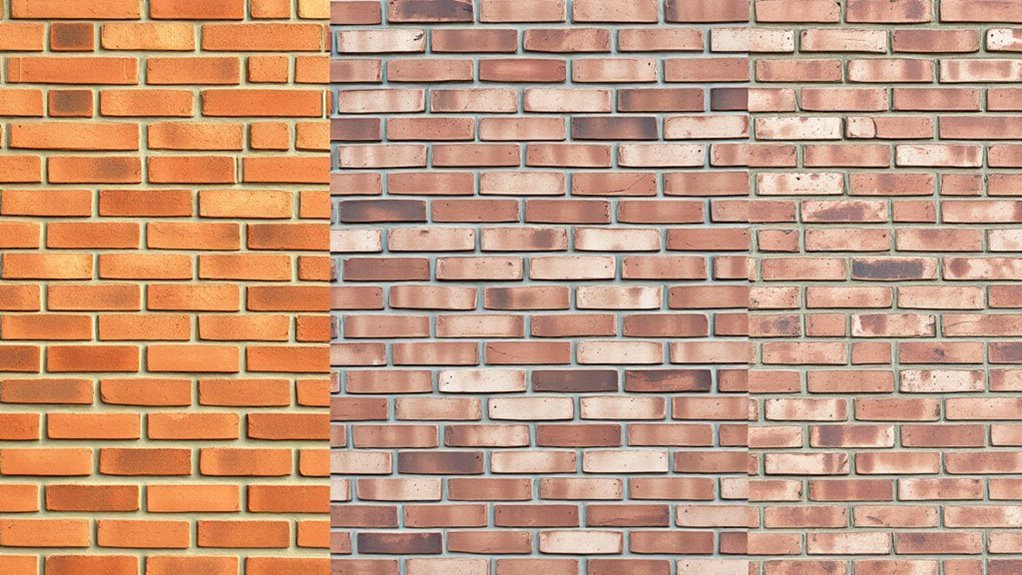
Because light hits brick from different angles, you’ll see the same wall shift in tone and texture throughout the day. You should test paint samples at morning, noon, and evening to judge true color perception under varied light conditions.
Pay attention to how shadows and highlights alter warmth and contrast so you pick a hue that stays pleasing.
- Observe samples in direct sunlight and shade.
- Note color shifts during golden hour and cloudy days.
- Compare samples under artificial evening lighting.
- Photograph samples at different times for reference.
This approach helps you choose a paint that behaves predictably across changing light conditions.
How Brick Texture Affects Paint Appearance
You’ll notice that porous bricks soak up more paint, which can dull colors and require extra coats.
Smooth, low-porosity surfaces reflect more light and keep hues crisper, so you can often use less paint.
Also consider how mortar joints contrast with the brick — recessed or colored mortar will change the overall look even after painting.
Surface Porosity Impact
Although brick’s rough surface can make paint look different than it does on smooth walls, you can control those effects by understanding porosity and texture.
You’ll notice variations in color and sheen based on surface texture and brick absorption; porous bricks drink paint, dulling color, while dense bricks reflect more light.
Test small areas, adjust coats, and choose appropriate primers to even appearance.
Consider these steps to manage porosity:
- Assess porosity with a water droplet test
- Use masonry primer for high absorption
- Apply thin, even coats rather than one thick coat
- Sand or clean to reduce extreme texture before painting
Mortar Joint Contrast
Mortar joints create lines and shadows that can make painted brick read as a pattern rather than a flat field, so think about how color and finish will interact with those seams.
You’ll assess mortar joint materials—sand, lime, cement mixes—that age and absorb differently, affecting sheen and tone.
If you want uniformity, match paint glaze to joint porosity; for depth, pick contrasting styles that highlight joints with darker or lighter hues.
Test small sections, noting how rough tuckpointing throws uneven highlights.
Ultimately, your choice should balance texture, maintenance, and the architectural character you want to emphasize.
Matching Paint Finish to Brick Surface
When choosing paint for brick, think about how matte versus glossy finishes will highlight or hide the wall’s texture.
You’ll notice matte hides imperfections and soaks into rough surfaces, while gloss reflects light and emphasizes bumps and mortar lines.
Match the sheen to the brick’s texture and the look you want—subtle and soft or sharp and bright.
Matte Vs. Glossy
Deciding between matte and glossy paint comes down to the brick’s texture and the look you want; rough, porous brick hides imperfections and suits matte, while smooth or sealed brick can handle a glossier finish that reflects light.
You’ll choose based on maintenance, appearance, and durability. Matte finishes mask flaws and give a modern, subdued look; glossy finishes boost color depth and are easier to wipe clean.
Consider these quick points to decide:
- Visibility of mortar lines
- Ease of cleaning and scrubbing
- Desired light reflection and pop
- Long-term touch-up frequency and wear
Texture And Sheen
Although brick varies from coarse and pitted to smooth and sealed, you should match the paint sheen to that surface so the finish looks intentional and lasts.
Assess texture and porosity before choosing sheen variations: low-luster or matte hides imperfections on rough brick, while satin or eggshell suits smoother, less absorbent surfaces.
Use texture techniques like stippling or thin glaze to blend mortar lines and soften shifts.
Test a small area to confirm adhesion and appearance in different light.
Seal high-traffic or exterior walls with a durable finish, and avoid high gloss on uneven brick where flaws become conspicuous.
Why Paint Brick Versus Leaving It Natural
If you’re weighing whether to paint your brick or leave it natural, consider what you want from the surface: durability, style, maintenance, or resale value.
Painting can modernize appearance and provide protective coating; leaving brick shows original character and needs different brick maintenance tips.
You’ll weigh cost, upkeep, and curb appeal, and use color psychology insights to set mood.
Think about long-term commitments, since paint needs renewal while natural brick may require tuckpointing.
Consider these quick factors:
- Visual style: contemporary vs. rustic
- Upkeep: repainting vs. occasional repairs
- Protection: sealed surface vs. porous brick
- Resale impact: buyer preferences
Preparing Brick for Paint: Cleaning and Repairs
Before you pick up a brush, get the brick clean and sound so the paint will adhere and last. You’ll start with brick cleaning techniques: remove dirt, mildew, and efflorescence using a stiff brush, mild detergent, or low-pressure washer. Inspect mortar and bricks, then apply repair methods: tuckpoint loose mortar, replace cracked bricks, and fill surface voids with compatible mortar. Let repairs cure fully and re-clean dust before painting. Use this quick checklist:
| Task | Tool | Tip |
|---|---|---|
| Cleaning | Brush/washer | Test small area |
| Mortar repair | Trowel | Match color |
| Brick replacement | Hammer/chisel | Wear PPE |
Choosing a Primer for Painted Brick
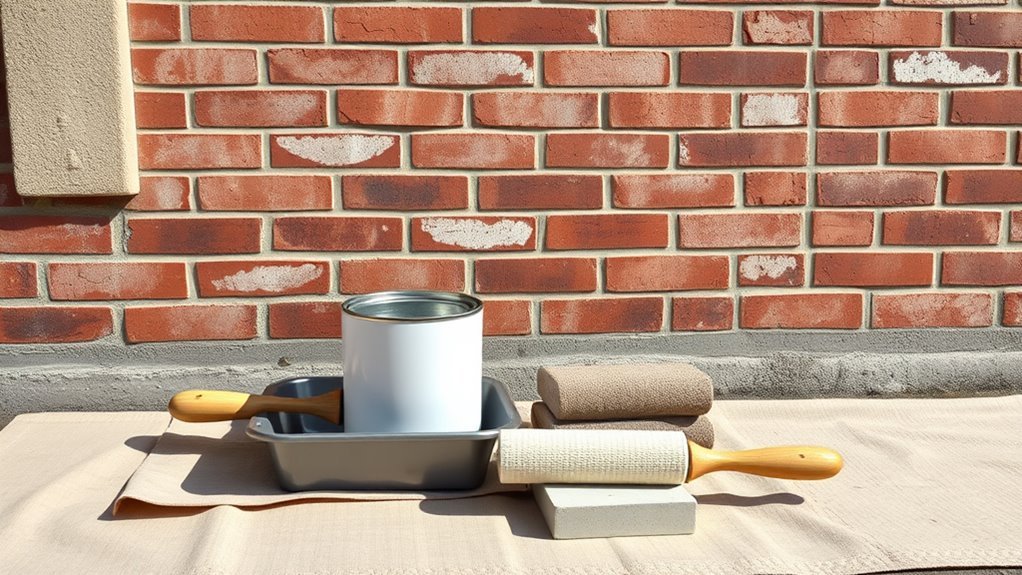
Now that the brick’s clean and repaired, you’ll want to pick the right primer type for masonry—typically a masonry-specific or high-adhesion acrylic primer.
Check the surface for efflorescence, loose mortar, or porous areas, because they’ll dictate whether you need a sealing or bonding primer.
Choosing properly guarantees the paint lasts and the color goes on evenly.
Primer Type Selection
When you’re choosing a primer for painted brick, pick one formulated for masonry that offers strong adhesion and breathability so moisture can escape through the porous surface.
You’ll weigh primer types and match them to finish goals and exposure. Acrylic primers work for most exteriors; oil-based help block stains; elastomeric seals cracks; shellac tackles severe tannin bleed.
Consider coverage, drying time, and compatibility with your topcoat.
- Acrylic: fast-drying, breathable
- Oil-based: stain-blocking, durable
- Elastomeric: flexible, gap-filling
- Shellac: excellent tannin stain control
Follow recommended application techniques for even, lasting results.
Surface Preparation Needs
You’ve picked the right primer type, but the brick won’t hold paint well unless the surface is properly prepped; start by cleaning, repairing, and checking for moisture so the primer can bond and breathe. Focus Surface cleaning, Repair techniques, and Sealing options before painting. Consider Weather considerations and Brick types to choose compatible Paint compatibility and Application methods. Do Color testing to spot Adhesion issues and guarantee Surface durability.
| Step | Key Point |
|---|---|
| 1 | Surface cleaning |
| 2 | Repair techniques |
| 3 | Sealing options |
| 4 | Color testing |
| 5 | Application methods |
How to Test Color on a Brick Sample
Before you commit to a full coat, test paint on a small brick sample to see true color and finish under real conditions.
You’ll learn how color psychology and seasonal trends affect perception, so test in morning and evening light and after rain. Apply multiple finishes and note absorption differences.
- Paint a 12×12″ sample on a loose brick or hidden area
- Try primer + color and color-only to compare
- Photograph samples at different times and in shade
- Live with the swatch for a week to judge fading and maintenance
Record results, then choose confidently based on real-world evidence.
White Brick Walls: Pros and Best Use Cases
If you paint brick white, you’ll instantly brighten cramped rooms and make spaces feel larger.
White also gives a clean, timeless look that pairs well with both modern and classic decor.
Consider it when you want a versatile backdrop that stays stylish over time.
Brightening Small Spaces
Want to make a small room feel larger and brighter? You can use white brick to amplify light and create small space illusions while adding subtle texture.
Keep finishes matte to avoid glare and balance with bright color contrasts sparingly so the room stays airy. Use trim, textiles, and art to define zones without crowding.
Consider these simple tactics:
- Paint one wall white brick to reflect light
- Add mirrors to multiply natural light
- Introduce a single bright accent for depth
- Choose low-profile, light-colored furniture
These steps help you brighten compact rooms without overwhelming them.
Timeless Modern Appeal
Though trends shift, white brick stays fresh by blending classic texture with modern minimalism, giving your space an instantly updated yet enduring look.
You’ll love how white brightens rooms, reflects light, and creates a neutral backdrop for bold art or warm wood. Use white brick to anchor living rooms, kitchens, or entryways when you want clean lines and calm contrast.
Pair it with timeless palettes—muted grays, soft beiges, or black accents—to maintain balance.
White brick suits modern aesthetics and adaptable interiors, masks imperfections, and simplifies decorating, making it a smart, versatile choice for lasting style.
Off‑White and Cream Tones for Softer Looks
When you choose off‑white or cream for a brick wall, you soften the room without losing warmth or texture. You’ll balance brightness and intimacy, letting light bounce while revealing brick’s pattern.
Consider how soft textures work with these hues and how color psychology influences mood—calming, open, welcoming.
- Pair with natural wood for contrast.
- Add layered textiles to enhance comfort.
- Use matte finish to keep subtlety.
- Test swatches in different light throughout the day.
You’ll find off‑white and cream create a versatile backdrop that supports varied styles, from minimalist to cozy, without overwhelming the space.
Warm Beige and Tan for Classic Warmth
If you’re aiming for timeless warmth, warm beige and tan cloak brick in a soft, inviting glow that feels both classic and lived‑in. You’ll pick shades with subtle beige undertones to soften mortar and highlight texture, while tan variations add depth across sunlit and shaded walls. These tones suit traditional and cottage styles, pairing well with wood trim and soft greenery. Test swatches on different elevations and watch paint dry times to confirm warmth. Use the table to compare options quickly.
| Option | Effect |
|---|---|
| Light beige | Brightens, preserves texture |
| Medium tan | Cozy, hides imperfections |
| Deep tan | Rich, anchors space |
Taupe and Greige for Modern Neutrality
Moving from warm beige and tan, taupe and greige offer a sleeker, more contemporary neutral that still flatters brick’s texture. You’ll find taupe shades and greige tones bridge warm and cool, giving you flexible backdrops that support modern aesthetics without feeling stark.
Pick finishes and accents to control mood and depth. Consider these approaches to get color harmony and visual interest:
- Use deeper taupe shades for cozy, grounded walls.
- Choose lighter greige tones to brighten while retaining warmth.
- Pair with matte finishes to emphasize texture.
- Add black or brass accents for crisp contrast and refined balance.
Soft Gray for Contemporary Yet Subtle Walls
Choose a soft gray when you want a cool, modern neutral that still feels warm against brick texture.
It reflects light subtly to brighten a space without feeling stark.
Pair it with bold accent colors or metallics to keep the look contemporary and layered.
Cool Modern Neutrals
When you want a contemporary, understated look, soft gray gives brick a clean, modern canvas without stealing warmth from the room.
You’ll find cool modern neutrals like gray, greige, and muted taupe let textures pop while staying versatile. Use color psychology to choose tones that calm or energize—the bluer grays feel cooler, while warmer grays read cozier.
Pair with wood, metal, or plants to tailor mood. Consider these approaches:
- Pale cool gray for airy, minimalist spaces
- Greige to bridge warm furnishings and modern walls
- Muted taupe for subtle depth
- Accents in charcoal for contrast and definition
Light-Reflecting Benefits
How does soft gray make a room feel brighter without looking slick or clinical? You’ll notice soft gray boosts light reflection subtly, bouncing daylight and lamp glow while keeping surfaces matte and forgiving.
You won’t get the harshness of white, yet rooms read airier; soft gray balances warmth and coolness through nuanced undertones. Use it when you want a contemporary backdrop that supports varied furnishings without dominating.
Color psychology shows muted grays calm the mind and enhance perceived space, so your brick wall feels open and composed. It’s a smart choice if you want brightness with restraint and enduring style.
Pairing With Accents
Because soft gray reads as a neutral anchor, it gives you plenty of freedom to introduce accents that pop without overwhelming the space.
You’ll use Accent Colors strategically, guided by Color Psychology, to set mood—teal energizes, mustard warms, navy grounds.
Blend Complementary Textures like matte metal, reclaimed wood, and plush fabrics to add depth and tactile interest.
For Design Cohesion, repeat one accent hue in small doses across furniture, art, and textiles so the brick and gray feel intentional.
- Try a single bold accent for focus
- Layer two muted tones for subtlety
- Add warm wood to soften gray
- Use metal for modern contrast
Deep Charcoal for Dramatic Contrast
If you want bold, modern contrast, paint your brick in deep charcoal to anchor the space and make architectural details pop.
You’ll embrace deep charcoal aesthetics that ground interiors and exteriors, creating a sleek backdrop for metal, wood, or greenery.
Consider color psychology: charcoal reads as confident and calming, yet dramatic, so pair it with crisp whites or warm timber to balance mood.
Use a matte finish to hide imperfections, or satin for subtle sheen.
Test samples in varying light, then prep thoroughly to guarantee even coverage.
Deep charcoal delivers striking, timeless contrast when executed thoughtfully.
Navy and Deep Blue for Bold Sophistication
Navy and deep blue bring a refined, moody elegance to brick walls that instantly elevates both traditional and contemporary spaces. You’ll appreciate navy elegance and deep blue sophistication for creating a striking backdrop without feeling harsh.
Use these tones to anchor furniture, highlight architectural details, or make outdoor facades feel stately. Consider finishes and lighting to balance depth and warmth.
- Pair with warm wood or brass for contrast
- Matte finish hides imperfections; satin adds sheen
- Accent with crisp white trim to brighten
- Test samples at different times of day before committing
Forest Green and Olive for Earthy Warmth
When you paint brick in forest green or olive, the space immediately feels grounded and inviting, bringing a natural warmth that complements both rustic and modern styles.
You’ll find these earthy tones anchor rooms without overwhelming them, pairing well with wood, leather, and brass. Use matte or low-sheen finishes to emphasize texture and depth.
Consider color psychology: greens evoke calm, balance, and connection to nature, making them ideal for living areas or bedrooms.
Accent with lighter neutrals or soft patterns to prevent heaviness. You can also test samples in different light to confirm the shade reads as planned.
Black Brick for High‑Impact Modern Style
While forest greens bring warmth and a natural vibe, black brick flips that feeling into bold, contemporary drama. You’ll create modern elegance with charcoal or jet-black finishes that sharpen lines and anchor interiors.
Use matte paint to hide texture or satin for subtle sheen; both make a bold statement without fuss.
Opt for matte to conceal texture or satin for a soft sheen—both deliver effortless, modern impact.
- Pair black brick with warm wood to soften contrast.
- Add brass or chrome accents for luxe touches.
- Use ample lighting to prevent heaviness.
- Keep surrounding palettes minimal to maintain impact.
You’ll get a high-impact backdrop that reads sophisticated, graphic, and intentionally modern.
Terracotta and Rust for Painted Brick
Because terracotta and rust tones echo the brick’s natural warmth, they’re an easy way to refresh a wall without losing its earthy character.
You’ll love how terracotta hues deepen a room, adding cozy, Mediterranean vibes while keeping texture visible. Pairing those tones with subtle rust accents highlights mortar lines and creates intentional variation rather than a flat coat.
Use matte or low-sheen finishes to preserve tactile appeal, and test samples in different light before committing.
These colors work well with warm woods, leather, and brass, giving you a grounded, inviting backdrop that still feels deliberately styled.
Pastels (Blush, Mint) for Playful Interiors
Try one or two pastel tones—like blush or mint—to instantly lift a brick wall into a playful focal point. You’ll transform a heavy texture into something soft and modern, using pastel palettes to balance warmth and light.
Keep finishes matte for subtlety or satin for easy cleaning.
- Pair blush with warm woods to deepen the mood
- Use mint with white trim for crisp contrast
- Add plants or brass accents to enhance playful aesthetics
- Test small areas to judge light at different times
You’ll create a cheerful, inviting room without overwhelming the original brick character.
Two‑Tone Brick Treatments and How to Do Them
If you liked the playful lift pastels give a brick wall, two-tone treatments offer a bolder way to play with contrast and rhythm.
You’ll split the wall visually—top and bottom, or mortar versus field—so decide on proportion and a crisp dividing line. Choose two tone color schemes that balance warmth and coolness; try complementary color pairings for high-impact contrast or muted neighbors for subtle depth.
Prep by cleaning and priming, mark the line with level tape, and use rollers for large areas plus angled brushes for edges. Finish with a clear sealer if durability matters.
Accent Color Ideas for Mortar and Trim
Think about using contrasting mortar shades to make the brick pattern pop or softer mortar to mute the overall look.
Pair your trim in a coordinated tone that complements the brick and ties the facade together.
Small changes to mortar and trim can highlight the brick’s texture and completely shift the house’s character.
Contrasting Mortar Shades
When you choose a mortar shade that contrasts with your brick, you’ll sharpen lines, add depth, and turn the wall into a deliberate design element rather than just a background.
You’ll use mortar color combinations to highlight pattern, scale, and texture; contrasting mortar effects can modernize or historicize a facade depending on tone and joint profile.
Pick a hue to make bricks pop or recede, then test samples in sunlight and shade. Consider maintenance and visual weight.
Try these starting ideas:
- Light mortar with dark brick for crisp definition
- Dark mortar with warm brick for drama
- Gray mortar for neutrality
- Tinted mortar for subtle warmth
Coordinated Trim Tones
Because trim and mortar frame your brick, coordinating their tones gives your whole facade a pulled-together look that feels intentional rather than accidental.
You can use coordinated color schemes to link mortar, window trim, and fascia without overwhelming the brick. Pick a neutral mortar and echo its warmth or coolness in the trim for subtle unity, or choose a deeper trim shade for crisp definition.
For bolder contrast, let trim act as an accent while mortar stays muted. Focus on trim color harmony with the brick’s undertones, test samples in daylight, and commit to one cohesive palette for best results.
Highlighting Brick Texture
After you’ve settled on coordinated trim tones, use mortar and trim accents to bring out the brick’s texture. You’ll create a texture dialogue between brick and detail by choosing mortar and trim colors that contrast or complement brick nuances.
Think subtle: a slightly lighter mortar lifts shadowed joints; a darker trim frames each course. Consider these approaches to refine the look:
- Pale mortar to highlight individual bricks and depth
- Dark charcoal trim for crisp framing and contrast
- Toned-down grout matching midtones for cohesive warmth
- Accent color on sills and lintels to punctuate architectural lines
Test samples on-site before committing.
Matching Brick Paint to Roofing and Siding
How do you make sure your painted brick complements the rest of your home’s exterior? Match undertones to roofing colors and consider siding textures; cool roofs pair with cool brick tones, warm roofs with warm hues. Test samples near trim and gutters, view at different times, and coordinate with siding patterns to avoid clashes.
| Roof Tone | Brick Undertone | Siding Texture |
|---|---|---|
| Cool gray | Blue-gray | Smooth |
| Warm brown | Terracotta | Wood grain |
| Neutral | Off-white | Stucco |
Use the table to compare options quickly, then pick samples and inspect outdoors before committing.
Choosing Brick Color for Small Versus Large Rooms
In smaller rooms, you’ll usually want lighter brick hues to open up the space and reflect more light.
For larger rooms, richer, deeper tones can add warmth and drama without overwhelming the area.
Think about how natural and artificial light affect the color before you decide.
Lighter Hues For Small Rooms
1 simple change—switching to a lighter brick hue—can make a small room feel noticeably larger and brighter.
You’ll tap into light color psychology to reflect daylight, open sightlines, and reduce visual clutter. Embrace soft creams, pale grays, or muted blushes to gain small room benefits: more perceived space, calmer mood, easier styling, and versatile accents.
Consider these quick tips:
- Use a matte finish to diffuse light evenly.
- Paint trim and ceiling the same light tone.
- Keep contrast low between wall and furniture.
- Add mirrors to amplify reflected light.
These choices help you create an airy, inviting small room without overwhelming it.
Deeper Tones For Large Spaces
When you’ve got a roomy living area or an open-plan loft, deeper brick tones can add drama and warmth without shrinking the space; rich charcoals, warm terracottas, or deep navy grounds large rooms and creates cozy focal points.
You’ll balance scale by pairing deep jewel tones with ample natural light, high ceilings, and oversized art or furniture so the wall reads intentional rather than overpowering.
Use matte finishes to emphasize texture and avoid glare.
Combine rich earthiness with lighter textiles, brass accents, and plants to keep the room layered and inviting while preserving visual depth and sophistication.
How Climate Influences Your Brick Color Choice
Because climate affects how colors look and perform outdoors, choose brick paint with both appearance and durability in mind.
Because climate changes how colors read, pick brick paint for both look and long-term durability.
You’ll match hues to local climate zones and account for seasonal trends so color stays true and finishes last. Consider sun exposure, humidity, freeze-thaw cycles, and maintenance needs when selecting pigments and sheens.
- High UV areas: pick fade-resistant, lighter hues.
- Humid climates: choose breathable, mildew-resistant formulations.
- Cold climates: use flexible, crack-resistant paints.
- Moderate climates: you can prioritize style over extreme durability.
Plan for long-term performance so your chosen color remains attractive year after year.
Color Choices That Hide Dirt and Wear
When you want paint that masks grime, dark neutral tones like charcoal or deep taupe work well.
Choose textured paint finishes to disguise stains and surface wear without constant touch-ups.
For a balanced option, mid-tone camouflage colors hide dirt while still keeping the wall feeling bright.
Dark Neutral Tones
Think of dark neutrals as practical armor for your brick—charcoals, deep greys, and warm blacks mask grime and scuffs while still reading sophisticated.
You’ll follow dark color trends that favor moody, elegant exteriors and pull neutral palette inspiration into modern facades. Choose shades that complement hardware and landscaping, then test samples in different light.
- Charcoal for contemporary curb appeal
- Warm black to dramatize architectural details
- Deep greys that blend with concrete and metal
- Slate tones that hide soot and stains
These options minimize maintenance, add depth, and keep your brick looking sharp longer.
Textured Paint Finishes
Dark, textured paints carry the same mask-like benefits as solid neutrals but add an extra layer of forgiveness: gritty, sanded, or stucco-like finishes scatter light and hide chips, stains, and uneven mortar far better than smooth coats.
You’ll appreciate how textured finishes conceal everyday grime and foot-traffic scuffs, keeping the wall looking fresher longer. Choose a mid-to-deep hue to maximize concealment, then test samples under different light.
For best results, plan your paint application: use a roller or specialty sprayer designed for texture, work in consistent sections, and allow proper drying to guarantee even coverage and durability.
Mid-Tone Camouflage
A mid-tone palette gives you the best balance between hiding grime and keeping a space feeling lively—you’ll get concealment without the heaviness of deep shades.
Choose warm greiges, muted olives, or soft taupes to mask stains while preserving contrast with trim and fixtures. Consider durability and sheen for easy cleaning.
Mid tone camouflage benefits include longevity of appearance and lower maintenance; mid tone camouflage applications suit high-traffic exteriors, entryways, and garden walls.
- Warm greige for versatile neutrality
- Muted olive to blend with landscaping
- Soft taupe for cozy, lived-in charm
- Medium slate for modern subtlety
Colors That Improve Curb Appeal and Resale Value
When you’re choosing paint to boost curb appeal and resale value, prioritize timeless, neutral tones like soft grays, warm beiges, and off-whites that let architectural details stand out and appeal to the widest range of buyers.
You’ll want a cohesive palette for siding, trim, and doors so the house reads well from the street. Consider slightly warmer neutrals in cold climates and cooler neutrals in warm regions.
Durable, low-VOC paints maintain appearance and attract eco-conscious buyers. Avoid polarizing hues that narrow appeal.
Neutral choices refresh the property, suggest good maintenance, and typically deliver a stronger return on investment.
Using Color to Highlight Architectural Features
Boosting curb appeal with neutral paint sets the stage, but you can use color to make architectural details pop and give your home personality.
You’ll focus attention, balance proportions, and express mood using targeted hues guided by color psychology. Choose a trim or feature color that complements your primary brick tone, then apply it sparingly to avoid overwhelm.
Consider contrast level, light exposure, and material texture when planning architectural accents.
Tips to get started:
- Paint window trim a darker, grounding shade for definition
- Highlight cornices with a subtle complementary tone
- Use shutters to introduce an accent hue
- Emphasize entryways for a focal point
Coordinating Painted Brick With Flooring Choices
Think about how the warmth of your painted brick should match or complement the tones in your flooring so the room feels unified.
You can also use contrasting brick colors to create visual interest against hardwood, tile, or carpet.
Keep in mind simple material-color rules—warm bricks pair better with warm woods, while cool or neutral bricks often suit stone and cool-toned floors.
Matching Warmth To Floors
1 clear rule: make your painted brick and floors feel like they’re part of the same story by matching their warmth.
You’ll choose tones that echo each other so paint and plank read as one. For warm floor options, pick brick paint with similar undertones to keep a harmonious interior design.
- If floors are honey oak, lean toward warm cream or soft taupe.
- With walnut or chestnut, pick deeper greige or muted terracotta.
- Light ash or bleached floors suit pale, warm whites.
- Natural stone pairs well with earthy, sunbaked brick hues.
Match undertones, not exact shades, for cohesion.
Contrast For Visual Interest
Matching warmth sets a calm baseline, but introducing contrast is what gives a room character and draws the eye. You can pair a warm-toned floor with a cooler painted brick to create tension that feels intentional rather than jarring.
Use color psychology to decide mood: cool neutrals calm, jewel tones energize, and high-contrast accents focus attention. Keep contrast purposeful—limit bold shifts to one or two focal areas so rooms stay cohesive.
Aim for design balance by repeating a hue in textiles or trim, tying wall and floor choices together. That rhythm makes contrast feel integrated, not accidental.
Flooring Material Color Rules
Harmony matters when you decide how painted brick will meet the floor: the material and its color set the tone for the whole composition.
You’ll want to match finishes, contrast tones, and respect scale so the space reads cohesive. Consider how flooring trends and color psychology influence mood and perceived size.
Choose hardwearing hues for high-traffic zones and softer palettes where you want calm.
Quick rules to follow:
- Pair warm brick tones with natural wood or warm neutrals.
- Use cool greys or slate with whitewashed brick for modernity.
- High-contrast dark floors ground light brick.
- Monochrome flooring elongates small rooms.
How Natural and Artificial Lighting Affect Color at Night
Because light changes after sunset, the same paint you chose by day can look colder, warmer, or completely different at night. You’ll notice nighttime ambiance shift with moonlight or streetlamps, and your color perception depends on bulb temperature and direction. Test swatches under LED, sodium, and moonlight before committing. Consider warm LEDs to cozy up cool hues or crisp whites to maintain true tones. Use layered fixtures to control shadows. Quick reference:
| Light Source | Effect on Hue | Tip |
|---|---|---|
| Moonlight | Cools | View at full moon |
| Warm LED | Warms | Use dimmers |
| Sodium lamp | Orange cast | Avoid near facades |
Painting Exterior Brick: Local Codes and HOA Rules
Before you pick a paint swatch, check your HOA’s color approval process so you don’t start a project that gets rejected.
You’ll also need to confirm whether local permits or building codes apply to painting exterior brick, especially in historic districts.
Handling approvals first saves time and prevents costly rework.
HOA Color Approval
If your home belongs to an HOA, you’ll need to get color approval before painting exterior brick—rules can restrict hues, finishes, and even whether brick can be painted at all.
You should review the HOA’s color guidelines and follow the approval process to avoid fines or required reversals. Prepare samples and a clear application showing brand, sheen, and trim contrast.
- Check the HOA palette and permitted finishes.
- Submit paint chips and photos with your application.
- Note timelines and meeting dates for review.
- Ask about required maintenance or restoration obligations after painting.
Permit And Code Compliance
When you’re planning to paint exterior brick, check local building codes and permit requirements so you won’t hit unexpected delays or fines. Some municipalities classify exterior painting as a cosmetic change that needs no permit, while others require approval for alterations that affect historic districts, fire ratings, or ventilation around masonry.
You should contact your municipal planning or building department to confirm zoning permits, timeframes, and any required inspections. Also review local regulations and your HOA covenants—failure to get written approval can force costly repainting.
Keep documented approvals and application receipts on file before starting work to protect your investment.
Low‑VOC, Durable Paints for Brick
Choosing low‑VOC, durable paint for your brick lets you protect the surface and reduce fumes without sacrificing longevity.
Choosing low‑VOC, durable brick paint protects the surface and reduces fumes without compromising longevity.
You’ll want breathable masonry formulas that resist peeling and allow moisture escape, and eco-friendly options minimize indoor odors and environmental impact.
Consider color psychology when picking tones—lighter shades brighten, darker ones anchor a facade.
Prep matters: clean, repair, and use masonry primer for adhesion.
- Choose masonry acrylic or elastomeric for flexibility
- Look for third‑party low‑VOC certifications
- Test small swatches in different light
- Use breathable sealers only if recommended
These steps help guarantee a lasting, healthier finish.
Long‑Term Maintenance for Painted Brick
Though paint on brick is tough, it still needs regular care to look good and last. Use maintenance tips like gentle pressure washing and soft brushes for cleaning methods that preserve paint durability.
Monitor weather considerations and perform seasonal checks—inspect mortar, flashing, and sealants after storms to support brick longevity. Address small cracks with proper repair techniques and spot-prime exposed areas to maintain surface treatment.
Protect against color fading by choosing UV-resistant coatings initially and cleaning pollutants promptly. Keep records of treatments and avoid harsh chemicals; proactive, steady care will extend the life and appearance of your painted brick.
When to Repaint: Signs of Failure or Fading
If paint is chalking, peeling, or your color looks washed out, it’s time to evaluate repainting so you don’t let small problems become larger ones.
You’ll watch for signs like cracking mortar, moisture stains, and areas where the finish beads water poorly. Early action preserves brick integrity and prevents costly repairs.
Use these quick checks and maintenance tips to decide:
- Run your hand for chalky residue or powder.
- Inspect for peeling paint or flaking edges.
- Look for uneven color fading across sun‑exposed faces.
- Check mortar joints and paint adhesion near trim.
Repaint when multiple signs appear.
Tools and Gear Needed to Paint Brick Properly
Before you start, gather the right tools so the job goes faster and the finish lasts longer.
You’ll need a stiff nylon brush, masonry roller with a thick nap, angled sash brush for mortar lines, and a sprayer if you’ll use spray color application techniques.
Add drop cloths, painter’s tape, safety goggles, gloves, and a respirator for solvent-based products.
Choose high-quality masonry primer and breathable exterior paint after checking paint durability considerations for your climate.
Keep a bucket, extension pole, and ladder handy.
Proper gear speeds work, guarantees even coverage, and helps the finish resist weathering.
DIY: Painting Interior Brick
Before you start, you’ll want to thoroughly prep and clean the brick so paint will adhere and look smooth.
Pick a paint finish that suits the room—matte hides imperfections, while satin or semi-gloss is easier to wipe clean.
With proper prep and the right finish, your interior brick will transform without extra headaches.
Prep And Clean Brick
Start by removing dust, cobwebs, and loose mortar so the paint will stick evenly; you’ll want to vacuum or brush the surface and then wipe it down with a sponge and a mild detergent solution.
You’ll follow simple brick maintenance tips to avoid trapping moisture. Test cleaning solutions on a hidden spot to verify they don’t damage the brick. Rinse thoroughly and let the wall dry 24–48 hours.
Repair cracks or crumbling mortar before priming. Use a stiff brush for stubborn grime and a gentle pressure wash if needed.
Wear gloves and eye protection, and ventilate the room while you work.
Choosing Paint Finish
Choosing the right finish for interior brick matters because it affects sheen, durability, and how much the wall’s texture shows through. You’ll typically pick between matte, eggshell, satin, and semi-gloss depending on look and function.
You’ll choose matte to hide imperfections and emphasize texture, but it sacrifices some paint durability. Eggshell offers subtle sheen and easier cleaning. Satin balances sheen and resilience for moderate traffic, improving finish durability. Semi-gloss resists scuffs and cleans best, ideal for high-use areas but it highlights imperfections.
Test samples on a small area to judge appearance, touch, and long-term performance before committing.
DIY: Painting Exterior Brick
Tackle exterior brick painting with clear steps and the right prep: you’ll clean, repair mortar joints, prime, and choose a breathable masonry paint so moisture can escape.
You’ll also consider color psychology and seasonal trends when picking hues to suit curb appeal. Work in mild, dry weather and test samples on inconspicuous areas.
- pressure-wash gently to remove dirt and loose paint
- patch mortar, allow full cure before painting
- apply masonry primer, then two thin coats of breathable paint
- finish edges and inspect for coverage and weep holes
Follow manufacturer drying times and keep tools clean for future touch-ups.
Hiring Pros: What to Expect and Questions to Ask
If the prep and paint steps feel overwhelming or you want a guaranteed finish, hiring a pro can save time and prevent costly mistakes. You’ll want clear expectations: ask about surface prep, warranties, cleanup, and realistic project timeline. Discuss budget considerations up front and get written estimates. Verify license, insurance, references, and photos of similar work. Confirm coatings, color-matching process, and curing times. Use the table to compare simple notes.
| Question | Why it matters |
|---|---|
| License/Insurance | Protects you |
| References | Shows quality |
| Prep steps | Affects durability |
| Timeline | Scheduling clarity |
| Warranty | Guarantees work |
Cost Breakdown: Materials, Labor, and Prep
One clear way to budget is to break costs into materials, labor, and prep so you know where your money goes. For accurate cost estimation, list paint type, primer, caulk, and tools.
Consider labor rates for surface cleaning, repairs, and multiple coats. Use budget considerations to decide DIY vs. pro.
- Primer and paint quality affect coverage and longevity.
- Surface prep (cleaning, tuckpointing, sealing) can be a big line item.
- Labor varies by region and wall complexity.
- Equipment rental or scaffolding may be needed.
Track contingencies (10–15%) for surprises and compare quotes before committing.
Common Mistakes That Ruin Painted Brick
Painting brick can go wrong quickly if you skip key steps or use the wrong products, and those mistakes often show up as peeling, poor adhesion, or uneven color that’s costly to fix. You’ll avoid trouble by cleaning, selecting masonry primer, and timing your paint application in mild, dry weather. Ignoring moisture, using interior paint, or skipping sealers speeds color fading and failure. Test a small area, follow manufacturer cure times, and use proper tools for even coverage. Learn from common errors so your finish lasts.
| Mistake | Cause | Result |
|---|---|---|
| No prep | Dirt/moisture | Peeling |
| Wrong paint | Interior/emulsion | Poor adhesion |
| Bad timing | Humid conditions | Color fading |
Fixing Peeling, Chalking, or Uneven Coverage
Even with proper prep and the right products, paint problems can still pop up over time—peeling, chalking, and uneven coverage are the most common. You can fix them without starting over.
First, identify whether you’re facing peeling paint, chalking issues, or uneven coverage, then follow these repair techniques:
- Scrape loose paint, sand edges smooth, and vacuum dust.
- Wash chalky surfaces with a trisodium phosphate solution, rinse, and let dry.
- Spot-prime bare or repaired areas with a masonry primer.
- Apply thin, even coats of high-quality exterior masonry paint, allowing full drying between coats.
You’ll restore a consistent, durable finish.
Combining Painted Brick With Reclaimed or Exposed Brick
When you mix painted brick with reclaimed or exposed sections, the contrast in texture becomes a focal point that can elevate the whole space.
You’ll want to balance color and tone so the painted areas complement rather than overpower the weathered bricks.
Start by sampling hues next to the exposed masonry to find a harmonious match.
Painted Meets Exposed Texture
If you want contrast and character, mix painted brick with patches of reclaimed or exposed brick to create a layered, tactile look that feels both modern and historic. You’ll highlight exposed finishes and let textured layers speak through wear, mortar lines, and varied pigments.
Decide where to reveal brick for focal drama—around fireplaces, entryways, or a kitchen backsplash—then paint remaining areas in a complementary hue. Consider sealing exposed patches to protect warmth and patina. Maintain clean connections so the blend reads intentional, not accidental.
Tips to plan your approach:
- Map reveal locations
- Test paint vs. brick
- Seal selectively
- Keep mortar consistent
Balancing Color And Tone
Although contrasting painted and reclaimed brick creates instant character, you’ll get the best results by tuning hue, value, and undertone so the two finishes read as a deliberate pairing.
You’ll start by sampling paint beside exposed brick, noting warm or cool undertones and overall value so you achieve color harmony across surfaces.
Keep painted areas slightly muted if reclaimed brick is weathered, or elevate them brighter when raw brick is dark.
Use grout, trim, or a unifying accent color to bridge differences and maintain tone balance.
That thoughtful restraint makes the combination feel intentional, cohesive, and visually appealing.
Trending Color Palettes for Brick in 2026
Curious which brick colors will make your home feel fresh in 2026? You’ll want trending color combinations that balance warmth and modern cool tones.
Think about contrasts that highlight texture and let you use popular accent colors for doors, trim, and planters.
- Warm terracotta with matte black accents for dramatic depth
- Soft dove gray base paired with sage or olive accent trims
- Creamy off-white brick with navy or deep teal doors
- Charcoal-stained brick highlighted by brass or copper hardware
These palettes keep brick timeless while giving you contemporary curb appeal and easy update options.
Case Studies: Small Home, Modern Renovation, and Farmhouse
Case studies show how paint choices transform different brick homes, and you’ll see practical approaches for a small house, a modern renovation, and a farmhouse that suit their scale and style.
For a small space, you’ll pick light, warm tones to expand sightlines and use color psychology to boost brightness.
In a modern renovation, you’ll favor crisp neutrals and bold trims reflecting modern trends, plus renovation tips for prepping and sealing.
For a farmhouse, you’ll embrace soft whites or muted sage to keep farmhouse charm while balancing weathered textures.
Each example considers outdoor aesthetics without detailed planting or hardscape instructions.
Pairing Painted Brick With Landscape and Hardscape
When you paint brick, the surrounding landscape and hardscape become part of the palette—so choose plants, pavers, and edging that either complement or deliberately contrast your brick color to create a cohesive curb appeal.
Painted brick turns your yard into a palette—pick plants, pavers, and edging to complement or boldly contrast.
You’ll aim for landscape harmony by repeating tones, textures, and scale; use hardscape contrast to define paths and focal points. Balance warm bricks with cool foliage, or cool paint with warm wood and stone.
Consider maintenance and seasonal interest. Quick ideas:
- Low shrubs echo paint undertones for unity
- Gravel or dark pavers create bold hardscape contrast
- Native plants reduce upkeep
- Wood accents add warmth and texture
How to Remove Paint If You Change Your Mind
If you decide the painted brick isn’t for you, removing the paint is doable but takes care and the right method for your brick type and finish.
Start by testing a small area to see how porous the brick reacts. Use gentle paint removal techniques first: chemical strippers formulated for masonry or low-pressure soda blasting.
For historic or delicate brick, try eco friendly options like microbial cleaners or biodegradable strippers, then rinse thoroughly.
Scrub with stiff brushes, avoid high-pressure washers that can damage mortar, and repair any joint damage afterward.
Wear proper PPE and consult a pro for large jobs.
Quick Decision Checklist for Picking a Brick Color
Although choosing a brick color can feel overwhelming, you can narrow the options quickly by focusing on a few practical criteria: neighborhood context, architectural style, existing materials, light exposure, and maintenance needs.
Use this quick checklist to decide confidently, keeping color psychology and seasonal trends in mind. Consider contrast, upkeep, and curb appeal.
- Match or contrast with roof and trim for cohesion.
- Test paint samples on sunlit and shaded areas.
- Pick finishes that hide flaws and suit maintenance capacity.
- Factor how seasonal trends and long-term resale affect choices.
Follow it, and you’ll pick a fitting, lasting brick color.
Resources for Visualizing Brick Colors (Swatches and Tools)
Because seeing a color in isolation can mislead, start with swatches and digital mock-ups so you can judge how paint will really read on your brick. Use color swatch tools to compare hues under different lights, and try virtual design apps that let you upload photos of your wall. Order physical samples to view at multiple times of day. Combine tools: overlay, tweak saturation, and test trim contrasts before committing.
| Tool Type | Benefit | Tip |
|---|---|---|
| Color swatch tools | Accurate hue matching | View in natural light |
| Virtual design | Photo-based previews | Test multiple angles |
| Physical samples | True finish | Paint small panels |
Frequently Asked Questions
Can Painted Brick Affect Indoor Humidity or Mold Risk?
Yes — painted brick can affect indoor humidity and mold risk. You’ll alter moisture exchange; impermeable paints can hinder humidity control, raising condensation and mold risk, while breathable coatings support humidity control and aid mold prevention.
Will Painted Exterior Brick Change Home Insurance or Appraisal?
Ironically, yes—your painted brick usually won’t tank insurance valuation; insurers care about structure, not color. But don’t expect miracles: you’ll boost aesthetic appeal, possibly nudging an appraiser’s subjective value upward.
Can You Paint Over Painted Brick Previously Treated With Limewash?
Yes—you can paint over limewashed brick, but you’ll need proper limewash removal and surface prep so color adhesion holds. Scrape, wash, etch if needed, then prime with a masonry primer before applying your paint.
How Long Before Newly Built Brick Can Be Painted Safely?
You should wait about 60–90 days before painting newly built brick, since brick curing time affects moisture content; you’ll also check paint adhesion factors like surface dryness, mortar cure, efflorescence absence, and appropriate primer to guarantee bonding.
Are There Eco-Friendly Pigments Safe for Historic Masonry?
Yes — you can choose modern earth pigments beside traditional lime washes: you’ll find eco friendly options like mineral oxides and natural iron oxides that respect historic preservation, breathable binders, and low-VOC formulations for safe masonry restoration.
Conclusion
Choosing the right brick color ties your curb appeal to practical needs—about 92% of buyers notice exterior paint, so your choice really matters. You’ll want a finish that handles sun, texture, and nearby stone or plants; paint gives dramatic change, stain keeps more natural depth. If unsure, sample swatches in morning and afternoon light, and keep removal options in mind. Pick a color that complements your home’s mood and neighborhood.
