
What Color to Paint Walls With Grey Couch? Top Matches
Pick a wall color that plays off your grey couch’s undertone: warm greys shine with creams, beiges or terracotta while cool greys pair beautifully with soft blues, sage or muted greens. For contrast, try navy, charcoal or jewel tones; for brightness, go pale pastels or warm whites. Test swatches under your room’s light and repeat the chosen hue in cushions or art for cohesion. If you want styling palettes, testing tips and finish advice, keep going.
Quick Answer: Best Wall Colors for a Grey Couch
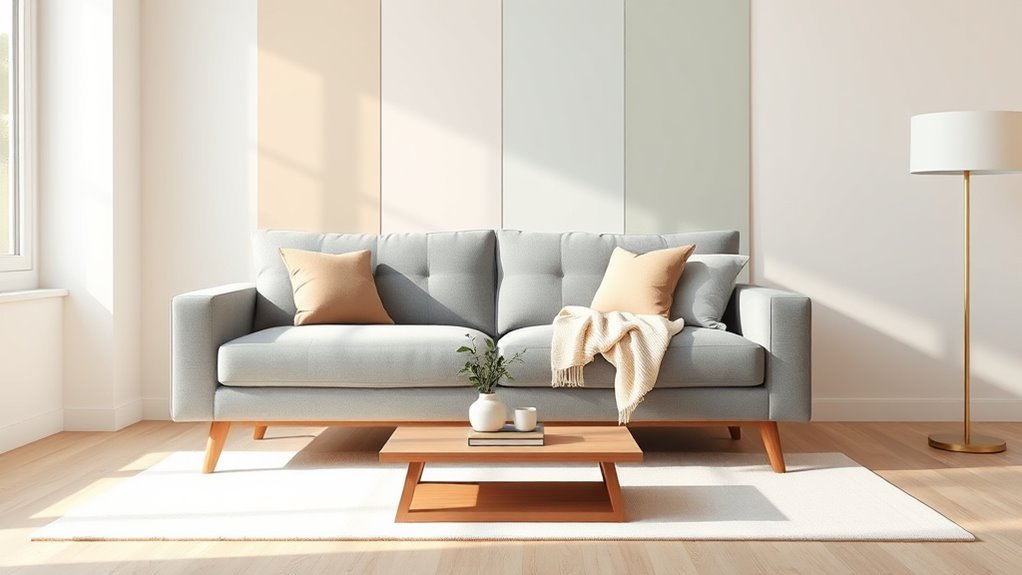
Want a quick win with your grey couch? Choose warm neutrals like beige or greige to keep things calm and versatile; they support color psychology by promoting comfort and balance.
Go for soft blues or sage green to introduce serenity and a subtle emotional impact that soothes.
If you want contrast, deep navy or charcoal adds drama and grounds the space without clashing.
For a lively feel, muted mustard or terracotta brings warmth and energy without overpowering grey.
Test samples in different light, but prioritize tones that complement your couch’s undertone for cohesive results.
How to Decide: A 3-Step Color Selection Guide
When you’re picking a wall color for your grey couch, follow three clear steps—assess the couch’s undertone and room light, choose a color family that matches the mood you want, then test samples in different spots and times of day to confirm the look.
First, note warm or cool undertones and how daylight and fixtures change perception.
Pay attention to your couch’s warm or cool undertones and how daylight and lamps alter its color.
Second, pick a color family—neutrals, blues, greens, or muted pastels—thinking about color psychology and the mood influence you want: calming, energizing, or cozy.
Third, paint small swatches, observe at morning and evening, then commit to the shade that holds up.
How Grey Shade (Light to Dark) Affects Pairings
Because grey ranges from nearly white to deep charcoal, its lightness changes how colors read against it and what balance you’ll need in a room.
You’ll use shade impact and pairing psychology to choose complements that feel intentional, not accidental.
Consider these approaches:
- Light grey: pair with soft pastels or warm neutrals to keep the room airy and soothing.
- Mid grey: combine with bold accent colors—mustard, navy, or teal—for lively contrast without overpowering.
- Dark grey: anchor the space with metallics, jewel tones, or crisp whites to prevent it from feeling heavy.
Trust contrast and proportion when mixing hues.
Why Grey Undertones Change Your Color Choices
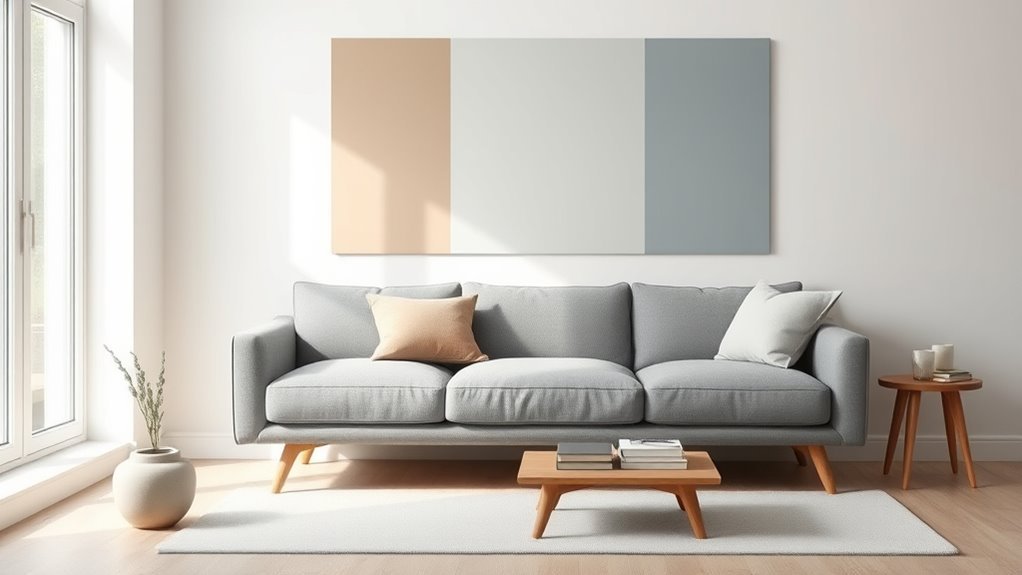
Your grey couch might look neutral, but its cool or warm undertone will steer every color choice you make.
Learn simple ways to spot undertones—compare it to pure white, hold it next to warm and cool swatches, and check it under different lights.
Remember that morning sunlight, LED bulbs, and incandescent lamps will each shift how those undertones read in your space.
Cool vs Warm Tones
Although grey might look neutral at first glance, its cool or warm undertones will steer every color you pair with it.
Cool greys favor blues and crisp hues, while warm greys call for creams, terracottas, and muted golds. You’ll choose shades based on color harmony, mood perception, and design balance, tempered by personal preference.
Consider these practical pairings:
- Cool tones: slate, navy, icy pastels for a crisp, calming room.
- Warm tones: beige, terracotta, soft golds to cozy and enliven.
- Mixed approach: anchor with neutrals, add accent color for contrast and cohesion.
Undertone Identification Tips
When you look closely at a grey couch, subtle hints of blue, brown, or green can dictate the whole room’s palette, so learn to spot them before you choose accents.
You’ll test undertones by comparing swatches: hold white paper beside the fabric, view outdoors, and photograph it—those simple undertone examples reveal cool, warm, or neutral leanings.
Once identified, match wall colors using color psychology: cool greys pair with calming blues or soft greens, warm greys suit creamy beiges or terracotta, neutrals allow flexible schemes.
Trust your eye and samples; accurate identification prevents clashing colors and guarantees harmony.
Lighting’s Color Influence
Because light shifts a grey’s mood, you’ll see undertones swing from cool to warm as the day changes, and that should guide your color picks.
You’ll notice lighting effects alter perceived hues: morning daylight emphasizes blue-greys, incandescent bulbs deepen warm taupes, and mixed light blurs subtle tones.
Consider color temperature when selecting paint and test samples at different times.
Use this simple checklist to decide:
- View samples in natural light morning and afternoon.
- Check with your regular lamps to simulate evening lighting effects.
- Choose the hue that reads well under all common color temperature ranges.
How Lighting Alters Grey and Wall Paint Perception
If you place a grey couch under warm, yellow-tinted light, its cool undertones will soften and the fabric can read more taupe or greige; under cool, blue-white light, those same fibers will look crisper and more steel-grey.
You’ll notice lighting effects shift not just the couch but adjacent wall paint: warm bulbs push neutrals toward beige, cool bulbs pull them toward blue.
Use color psychology to choose moods—warm light feels cozy, cool light feels energetic—then test paint swatches at different times and with your lamps.
Adjust bulb temperature or fixture placement before committing to paint to guarantee desired harmony.
Neutral Walls That Always Work With Grey Sofas
Although grey sofas come in countless shades, a handful of neutral wall colors reliably flatter them and simplify decisions.
Although grey sofas vary, a few neutral wall hues consistently flatter them and make styling effortless.
You’ll find neutral color schemes that ground the room, letting texture and form take center stage while keeping balance. Aim for tones that create calm, contrast, or warmth depending on mood.
- Soft greiges for subtle contrast and cohesion.
- Warm taupes to introduce cozy depth without overpowering.
- Muted charcoal accents to add drama and definition.
These options support timeless designs, work across styles, and let your grey sofa remain the versatile focal point.
Soft Whites and Off-Whites for a Clean Look
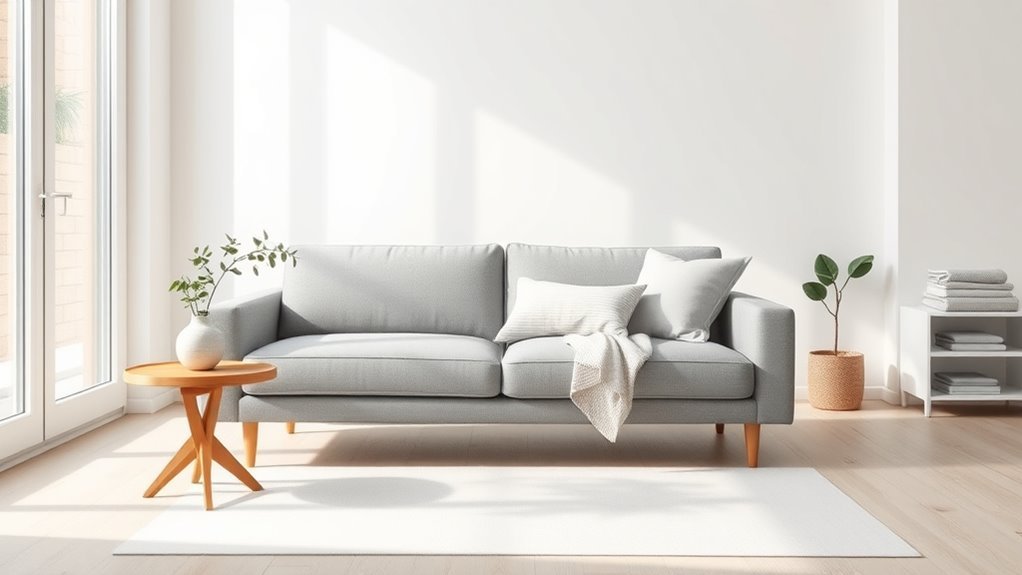
You can freshen a grey couch with crisp cool whites for a modern, airy feel.
Or choose warm, creamy off-whites to soften the room and add subtle warmth.
Both options keep the look clean while shifting the mood with temperature.
Crisp Cool Whites
A crisp cool white will make your grey couch feel fresh and modern, offering a clean backdrop that brightens the room without competing with the sofa’s tones.
You’ll find crisp whites and cool whites sharpen lines, reflect light, and create a minimalist canvas that supports throw pillows or art accents.
- Pick a cool white with blue undertones to enhance grey’s coolness and keep the palette cohesive.
- Use high-sheen trims to bounce light and define edges against the matte couch.
- Layer textures—wool, linen, metal—to prevent the space from feeling flat while staying restrained and elegant.
Warm Creamy Off-Whites
Switching from crisp cool whites, warm creamy off-whites soften a grey couch and add a welcoming, lived-in feel without washing out its tones.
You’ll like how creamy tones bring subtle warmth, complementing both light and charcoal greys. Choose off-whites with yellow-beige undertones to create cozy contrast, or pick soft white blends for a modern, clean backdrop.
These warm neutrals reflect light gently, making the room feel inviting but not dim. Pair with natural wood, textured throws, and brass accents to emphasize warmth.
Test samples in different light, since undertones shift from morning to evening.
Warm Beiges and Greiges to Cozy Up Cool Greys
When cool grey sofas feel a touch too stark, warm beiges and greiges bring immediate balance by introducing soft, sunlit undertones that cozy up the room without clashing.
You’ll find beige undertones lift the grey, creating a welcoming backdrop that feels lived-in. A cozy greige anchors seating while keeping a modern edge.
Choose finishes that reflect light subtly and add texture with wood or woven accents.
Consider these approaches:
- Warm beige for golden warmth without overpowering.
- Greige for neutral depth with modern appeal.
- Mixed tones to layer warmth and avoid flatness.
Pale Pastels That Soften a Cool Grey Sofa
If warm beiges and greiges bring cozy depth, pale pastels will gently soften a cool grey sofa without stealing focus.
You’ll find pale pinks add a subtle warmth that feels modern and inviting, pairing especially well with mid-tone greys to brighten a living area. Soft blues create a tranquil backdrop, enhancing the sofa’s cool undertones while keeping the room airy.
Choose muted, low-saturation tones to avoid competing with textiles or artwork. Keep trim crisp white and introduce accents in complementary neutrals or metallics.
These gentle palettes let your grey sofa remain the anchor while softening the overall mood.
Sage and Muted Greens for Calm Contrast
A handful of sage and muted greens can give a cool grey couch a calm, organic contrast without overwhelming the room.
You’ll enjoy sage green benefits like a soothing backdrop and easy coordination with wood or brass accents. Muted green tones bring depth without boldness, keeping the space restful.
Sage green offers a calming backdrop and pairs beautifully with wood or brass, adding quiet depth.
- Paint: choose a soft sage for full walls to frame the sofa.
- Accent wall: use deeper muted greens to add subtle focus.
- Textiles: pick cushions and throws in varied muted green tones for layered cohesion.
You’ll create a balanced, nature-inspired room that feels quietly refined.
Navy and Deep Blue Pairings With Grey Couches
If you want bold contrast, paint an accent wall in navy to anchor the grey couch and make its tones pop.
You can also use deep blue for trim to add crisp definition without overwhelming the room.
Try balancing those strong blues with light textiles so the space still feels open.
Navy Accent Walls
When you paint a navy or deep blue accent wall behind a grey couch, you’ll create a striking, sophisticated backdrop that makes the sofa’s tones pop while grounding the room.
You can balance mood and contrast by layering navy textures and adding navy accessories for cohesion. Consider these focused approaches:
- Use matte navy paint for depth, then add a velvet throw to introduce tactile contrast.
- Add framed art with lighter blues and metallics to lift the scheme without overpowering the couch.
- Keep adjacent walls neutral and increase lighting to prevent the space from feeling too heavy.
Deep Blue Trim
Shifting from a navy accent wall to deep blue trim lets you frame a grey couch more subtly while keeping that rich, saturated feel; you’ll use narrow bands of navy or deep indigo around doors, windows, baseboards, or crown molding to create contrast without overwhelming the room. You’ll enjoy deep blue aesthetics that anchor the space and make neutral upholstery pop. Trim contrast guides the eye and defines architectural lines, so pick a semi-gloss for durability. Keep walls light to avoid heaviness. Small doses of navy in pillows or art will echo the trim and balance the palette.
| Feature | Effect |
|---|---|
| Paint finish | Defines shine |
| Placement | Frames focal points |
| Accessories | Echoes color |
Jewel Tones (Teal, Emerald) for a Luxe Feel
Velvet jewel tones like teal and emerald instantly elevate a grey couch into something glamorous and grounded; you’ll get depth and warmth without overpowering the room.
You can pair jewel tone combinations with neutral throws and metallics to keep balance. Use luxurious accents sparingly so the space feels curated, not heavy.
Consider scale and light—deeper tones work on larger walls, while accent walls add drama.
- Add brass or gold fixtures for contrast.
- Use velvet cushions to echo the wall tone.
- Introduce plants or glass to reflect light and soften intensity.
Terracotta and Clay Hues to Warm Cool Greys
Because cool greys can feel crisp or aloof, adding terracotta and clay hues brings immediate warmth and a grounded, earthy counterpoint. You’ll layer terracotta textures and clay accents to soften the room, pairing burnt orange walls or muted clay trims with your grey couch. Choose matte finishes for depth, or plaster for rustic charm. Balance saturation so the grey stays central; use cushions, rugs, or pottery for pops. Experiment with undertones—warm greys pair naturally with redder terracotta, cool greys suit softer clay.
| Element | Finish | Effect |
|---|---|---|
| Wall | Matte terracotta | Warmth |
| Trim | Soft clay | Grounding |
| Accessories | Textured pottery | Cohesion |
| Fabric | Burnt orange throw | Contrast |
Blush Pinks and Warm Corals for a Modern Touch
After grounding a cool grey sofa with terracotta and clay, you can brighten the scheme with blush pinks and warm corals for a fresher, more contemporary feel.
Use blush accents to soften lines and introduce warmth without overpowering the neutral base. Consider balance and texture so the room feels intentional.
Soften hard lines with blush accents and layered textures for a warm, balanced, intentional living space
- Paint: a soft blush wall or coral feature wall to lift mood.
- Textiles: throw pillows and rugs mixing blush and warm coral accessories for cohesion.
- Accents: metallics and natural wood to anchor color, keeping the overall look modern and inviting.
Charcoal and Dark Greys for Moody Monochrome Rooms
If you want a dramatic, cohesive look, layer charcoal and deep greys to create a moody monochrome room that feels deliberate rather than heavy.
You’ll build moody ambiance by varying finishes—matte walls, satin trim, textured fabrics—and by balancing warm and cool grey undertones so the space reads rich, not flat.
Keep furnishings simple: a grey couch, metal accents, and wood or stone surfaces maintain monochrome elegance without monotony.
Introduce contrast subtly with lighter greys for ceilings or rugs, and rely on layered lighting to define planes and preserve depth while keeping the palette restrained and intentional.
High-Contrast Black or Charcoal Accent Walls With Grey
When you pair a grey couch with a high-contrast black or charcoal accent wall, you get instant drama and a clear focal point that anchors the room.
Pair a grey couch with a bold black or charcoal accent wall for instant drama and a grounded focal point
You’ll love the crisp silhouette a dark wall creates, boosting perceived depth and sophistication.
Use Color Psychology to balance mood: black feels grounding and powerful; charcoal reads warmer and more approachable.
Keep accessories minimal so the Accent Wall sings without competing elements.
- Add metallics for warmth and reflection.
- Use layered lighting to soften intensity.
- Introduce a single bold art piece to unify the palette.
This approach feels modern and intentional.
Where to Place an Accent Wall Near a Grey Couch
When you’re planning an accent wall with a grey couch, the most common choice is the wall directly behind the sofa to anchor the seating area.
You can also pick an adjacent feature wall to draw the eye and create a layered look without overpowering the room.
Think about sightlines and furniture placement so the accent complements, not competes with, the couch.
Behind The Couch
One bold decision you can make is turning the wall behind your grey couch into the room’s focal point; placing an accent wall there anchors the seating area and visually defines the space.
Choose a hue that complements cushion colors and guides artwork choices. Balance texture and tone so the wall supports, not overwhelms, the sofa. Consider scale and lighting to keep the space cozy.
- Pick a color that repeats in cushions for cohesion.
- Use a gallery or single large piece to center attention.
- Add subtle texture—wood, plaster, or matte paint—for depth.
Adjacent Feature Wall
If you want to make a bold statement without overpowering the room, place the accent wall on a plane adjacent to your grey couch—either perpendicular to or diagonally across from it—to create visual flow and define separate zones.
Positioning an adjacent feature wall draws attention without crowding seating, so you can use richer hues or textured finishes.
Try feature wall ideas like deep navy, forest green, or warm terracotta to balance cool grey.
Use accent wall designs with vertical panels, wallpaper patterns, or muted murals to guide sightlines.
Keep adjacent walls neutral so the feature wall anchors the layout.
Trim and Ceiling Color Rules for Rooms With Grey Sofas
Because trim and ceiling colors frame your grey sofa, choose tones that balance contrast and cohesion to define the room’s mood.
Because trim and ceiling hues frame a grey sofa, pick tones that balance contrast and cohesion to set the room’s mood.
You’ll want trim colors that tie molding to wall shade and ceiling finishes that lift the space without competing.
Consider these practical rules:
- Use crisp white trim for modern contrast, or soft off-white to warm the grey.
- Match ceiling finishes to trim for a seamless, airy feel; satin or eggshell keeps light reflective.
- For drama, paint trim a deeper neutral tone and keep the ceiling pale to preserve height.
Keep proportions balanced so the sofa remains focal.
Which Paint Finish Flatters a Grey Sofa?
You’ll find matte finishes give a grey sofa a muted, elegant backdrop that keeps focus on texture and shape.
If you want a bit more light and durability, satin adds a subtle sheen that’s easy to clean.
Consider room lighting and how much wear the walls will take when choosing between them.
Matte For Muted Elegance
When you want a backdrop that lets a grey sofa take center stage, matte finishes deliver a soft, nonreflective surface that keeps attention on texture and form.
You’ll find matte finishes pair beautifully with muted tones, creating a calm, collected room that highlights fabric and silhouette. Choose colors that support contrast without glare.
- Deep charcoal — anchors the space and emphasizes lighter greys.
- Warm greige — softens the sofa’s coolness while staying understated.
- Dusty sage — adds subtle color without fighting for focus.
Use matte on walls; it minimizes reflection and keeps your grey couch the focal point.
Satin For Subtle Sheen
If you want a little more life on the walls without shouting for attention, satin gives a soft, low-luster sheen that complements a grey sofa’s textures and tones.
You’ll appreciate satin finish benefits like easier cleaning and subtle light reflection that lifts mid-tone greys without competing.
Choose warm or cool undertones to match your sofa’s hue, and test samples under real light.
Consider traffic and maintenance: satin hides minor imperfections better than gloss but shows more than matte.
Understanding sheen levels helps you balance durability and mood—satin sits between soft elegance and practical resilience, ideal for lived-in living rooms.
Using Color Temperature to Match Grey Upholstery
Start by thinking of grey upholstery as having a temperature—warm greys lean toward beige or taupe, cool greys pull toward blue or silver—and match surrounding colors to that bias so the room feels cohesive.
You’ll use color psychology and mood influence to guide choices: warmer palettes add comfort, cooler ones calm.
Consider these practical steps:
- Warm grey: pair with creamy neutrals or soft terracotta for inviting warmth.
- Cool grey: choose slate blues or pale greens to enhance serenity.
- Balanced grey: opt for mid-tone neutrals or muted accent colors to maintain neutrality.
Trust temperature to unify textiles, trim, and art.
How to Test Paint Samples in a Room With a Grey Couch
Start by testing paint samples under all the lighting in your room—natural, overhead, and lamps—so you see how they shift.
Use large swatches or paint full 2×2-foot panels next to the grey couch to judge undertones and contrast accurately.
Check those panels at different times of day to make sure the color works in morning, midday, and evening light.
Test In Multiple Lights
How will the paint actually look when your grey couch is in the room? You’ll want to observe a paint sample at different times and with varied lamps to judge true lighting effects. Don’t trust a single glance.
- Morning: view the swatch in cool, natural light.
- Afternoon: watch warmth shift under brighter sun.
- Evening: assess under pendant or table lamps for artificial tones.
Move the sample near the couch and stand where you’ll sit. Note undertones that clash or harmonize.
Repeat across days with different weather. Record favorites and discard ones that read too warm, too green, or too flat.
Use Large Paint Swatches
Because small sample cards can lie, put up large paint swatches so you can see how color truly reads next to your grey couch.
Tape or poster-board panels at sofa height, covering several feet to reveal undertones and scale. You’ll notice how warmth or coolness interacts with fabric texture and nearby furnishings.
Large swatch benefits include accurate perception of depth, contrast, and mood without committing to a full paint job.
Combine this with deliberate color selection strategies: test a neutral, a warm accent, and a bold option.
Label each swatch and live with them for a few days before deciding.
Observe At Different Times
When will a paint sample look true to your eye? Test samples at varied times so your grey couch and wall color interact honestly. Observe morning, midday, and evening light:
- Morning: note cool undertones and how color psychology shifts energy perception.
- Midday: assess saturation under bright, neutral light; compare against your couch.
- Evening: watch warm artificial light and shadows; record mood influences.
Tap larger swatches, stand where you typically sit, and take photos at each time.
You’ll spot shifts in warmth, depth, and contrast, letting you choose a hue that complements your grey couch across daily lighting.
Common Color-Pairing Mistakes to Avoid With Grey Sofas
Though grey feels neutral, it still reacts strongly to the colors you pair with it. Choosing the wrong combinations can make your sofa look washed out, muddy, or oddly cold.
Though neutral, grey shifts with surrounding colors—pairings can leave your sofa washed out, muddy, or unbearably cold.
You’ll avoid common misconceptions by considering color psychology: grey shifts warm or cool depending on undertones, so don’t assume any beige, blue, or green will behave the same.
Avoid pairing similar low-contrast neutrals that flatten the room, or overly saturated hues that overpower the sofa. Skip fussy metallics and tiny patterns that clash with texture.
Test samples near the couch in different light before committing to paint or textiles.
Quick Palettes for Styles: Scandi, Modern, Traditional
If you want quick, foolproof palettes for a grey couch, pick one guiding style and stick to its core contrasts and accents.
You’ll use Scandi aesthetics, Modern minimalism, or Traditional elegance as your roadmap, letting Color psychology guide warmth and mood. Choose one palette and repeat finishes and textures.
- Scandi: pale wood, soft white, muted sage — airy, calming.
- Modern: charcoal, crisp white, brass or black accents — sleek, focused.
- Traditional: warm taupe, deep navy, gilded or walnut details — cozy, refined.
Stick to limited contrasts and a dominant accent for cohesion.
Budget Paint and Styling Tips for Rooms With Grey Couches
Because a grey couch already gives you a neutral foundation, you can save on paint and styling by choosing versatile, cost-effective options that stretch across looks. Pick a mid-tone neutral or soft accent that hides wear; many budget paint brands offer durable, washable formulas. Use styling tips like layered textiles, thrifted art, and multipurpose rugs to change vibes without repainting. Shop sales for trim or accent colors and swap cushions seasonally. Small investments in lighting and plants lift the whole room affordably.
| Item | Cost tip | Effect |
|---|---|---|
| Paint | Test samples | Safe backdrop |
| Cushions | Mix thrift/new | Quick refresh |
| Lighting | LED upgrades | Warmth boost |
| Art | DIY frames | Personal touch |
Frequently Asked Questions
How Do I Coordinate Rugs and Curtains With a Grey Couch?
Coordinate rugs and curtains by matching rug textures to your couch’s cozy feel and choosing curtain patterns that echo accent colors. Blend solids and subtle prints, balance scale, and keep contrast so the room feels layered yet cohesive.
What Accent Pillow Colors Best Complement a Grey Sofa?
You should choose accent pillows in jewel tones, blush, mustard, or navy; mix velvet, linen, and patterned pillow fabric for contrast and layered color combinations, and you’ll create depth, warmth, and stylish cohesion on your grey sofa.
Can Patterned Wallpaper Work Behind a Grey Couch?
Yes — you can use patterned wallpaper behind a grey couch; you’ll want wallpaper textures that add depth and tasteful color contrasts so the pattern complements the sofa, anchors the seating area, and doesn’t overwhelm the room.
How Do I Style a Small Room With a Grey Sofa?
Want cozy charm in miniature? You’ll use small space solutions: pick light paint, multi‑use furniture, slim coffee table, and mirrors; you’ll prioritize furniture arrangement for flow, add layered textiles and vertical storage to expand the room.
Which Artwork Colors Enhance a Grey Couch Focal Point?
Use bold artwork styles—abstract, mid-century, or botanical—to enhance a grey couch focal point; you’ll leverage color psychology by adding warm accents like mustard, coral, or terracotta and cool blues or greens for calm, balanced contrast.
Conclusion
You’ve got plenty of great options, but start by considering your grey couch’s shade and the room’s light—then pick a wall color that either contrasts (warm terracotta, navy) or complements (soft blush, pale blue). Test samples on the wall and live with them at different times. For example, a friend with a cool mid-grey sofa brightened her dim living room by painting walls a warm cream and adding mustard cushions—now the space feels cozier and visually balanced.
