
What Is the Best Way to Paint a Wall? Step Guide
You’ll get a professional finish by prepping, choosing the right paint, and using proper cutting‑in and rolling techniques. Clear and clean the area, repair and sand damage, then tape trim and remove fixtures. Prime if needed, use an angled brush for edges, and roll with the correct nap in a “W” pattern for even coverage—apply two coats and fix drips while wet. Clean tools, dispose of leftovers properly, and follow a simple schedule to keep results lasting; more tips ahead.
How to Paint a Wall: Step‑by‑Step Overview
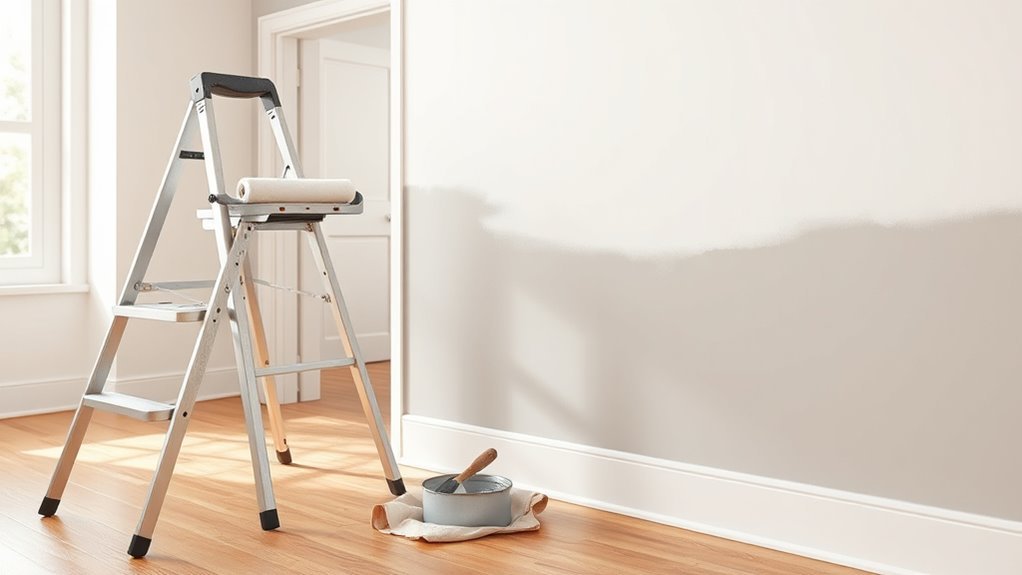
Start by preparing the space: clear furniture away or move it to the room center and cover it, remove outlet covers and light switch plates, and tape edges to protect trim and ceilings.
Start by prepping the room: move or cover furniture, remove outlet plates, and tape edges for protection.
Next, inspect and repair drywall, sand rough spots, and clean surfaces so primer bonds.
Apply primer where needed, then cut in corners and edges with a steady brush. Use a roller for large areas, working in W patterns and maintaining a wet edge.
Let coats dry fully between applications and sand light imperfections.
Rely on basic wall painting techniques and color theory to choose hues and maintain consistent coverage.
Which Paint Finish Is Right for Your Wall?
Wondering which paint finish to choose? You should match finish to function and wall texture.
Flat hides flaws on rough walls but isn’t scrubbable; choose it for ceilings or low-traffic rooms.
Eggshell balances matte and durability for living spaces. Satin or semi-gloss works where you need wipeability, like kitchens and trim.
- Imagine a cozy, matte living room softened by flat or eggshell.
- Picture a hallway resilient to scuffs with satin sheen.
- Visualize trim and doors popping with semi-gloss that’s easy to clean.
Pick a paint finish that fits the room’s use and your wall texture.
Latex vs Oil Paint: Which to Choose?
Once you’ve picked the right finish for the room, the next decision is the paint base: latex or oil.
You’ll choose latex for easier cleanup, faster drying, lower odor, and good paint durability on interior walls. It resists yellowing and minimizes color fading over time when exposed to sunlight.
Pick oil for high-traffic trim or doors where a harder, smoother surface matters; it levels well and can be more durable against knocks.
Oil takes longer to dry, needs strong solvents, and can yellow, affecting color fidelity.
Balance practical needs: cleanup, drying, and long-term appearance before deciding.
Calculate How Much Paint You Need
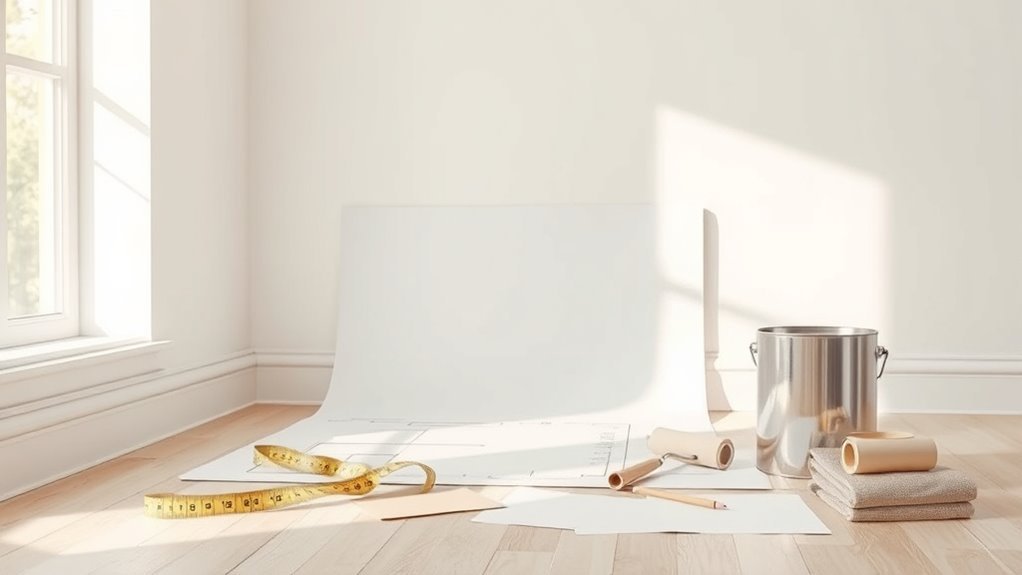
Measure the room’s walls and subtract doors and windows to figure square footage, then divide by the coverage listed on the paint can to estimate how many gallons you’ll need.
Use accurate wall dimensions so your paint quantity isn’t short. Account for two coats unless the color or primer changes.
- A 12×8 wall = 96 sq ft — visualize the space.
- A door/window combo ~20 sq ft — subtract that.
- Coverage 350 sq ft/gallon means one gallon covers roughly that area.
Round up to allow touch-ups, and buy a bit extra for pattern, texture, or minor miscalculations.
Must‑Have Painting Tools Checklist
Now that you know how much paint you need, you’ll want the right tools to make the job smooth and efficient.
Gather essential painting tools, surface-prep supplies, and cleanup/storage items before you start so you’re not stopping mid-job.
I’ll walk you through the must-haves for each stage so you can finish faster and cleaner.
Essential Painting Tools
You don’t need every gadget sold in the hardware store, but a compact set of reliable tools will make painting faster, cleaner, and give you professional-looking results.
Choose bristle quality for brushes, roller nap based on wall texture impact, and a roller frame that feels balanced. Consider paint color psychology when picking finishes; matte hides flaws, satin reflects more light.
Pack these essentials:
- High-quality angled brush for cutting in.
- Roller with appropriate nap and extension pole.
- Paint tray, liner, and a steady bucket with grip.
Keep a few rags, painter’s tape, and a handy putty knife nearby.
Surface Preparation Essentials
Because a smooth, clean surface is the foundation of any long-lasting paint job, get your prep tools ready before you open a can: you’ll want a sanding block or orbital sander for rough spots, drywall compound and a spreader for holes and cracks, a putty knife and scraper for loose paint, a stiff-bristled brush or vacuum for dust, a degreasing cleaner and sponges for grime, and quality painter’s tape and drop cloths to protect trim and floors.
Use surface cleaning first, then do a damage assessment and wall inspection including a moisture check and texture evaluation.
Consider paint compatibility, lighting considerations, and color psychology when planning.
Cleanup And Storage
After the last roller stroke dries, wrap up cleanup and storage methodically so your tools stay usable and your workspace stays tidy.
Rinse and spin out excess paint, then clean brushes with the appropriate solvent until water runs clear.
Squeegee rollers and let them air dry on a rack.
Label cans, seal lids tightly, and store paint storage containers upright in a cool, dry place away from sunlight.
Dispose of trash and used rags safely.
- A sink with running water and a brush comb.
- A rack for rollers and lids.
- Clear, labeled shelves for cans and solvents.
Pick the Right Roller Nap for Your Wall Texture
1 simple choice can make a big difference: match your roller nap to the wall’s texture.
You’ll pick short naps (1/4″–3/8″) for smooth walls to avoid stipple and get an even finish. For lightly textured or eggshell plaster, use 3/8″–1/2″.
Heavier textures like orange peel or knockdown need 3/4″–1″ naps to reach crevices and lay paint evenly.
Use synthetic naps for latex, natural for oil-based.
Test a small area to confirm coverage and sheen.
Clean or replace the roller nap between coats to prevent lint, buildup, and uneven application.
Choose Brushes for Cutting In and Trim
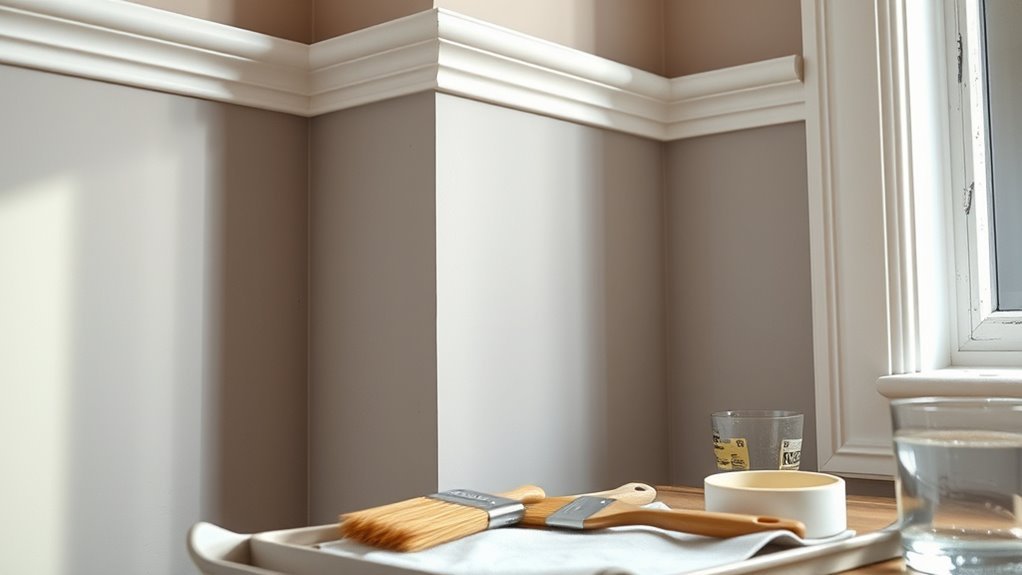
Once you’ve matched the roller nap to your wall texture, pick brushes that give you neat edges and smooth trim work. Choose brush types suited to your paint—synthetic for latex, natural for oil—and keep bristles pointed and clean.
Match your roller nap, choose brushes for your paint, and keep bristles clean for neat, smooth trim.
Practice cutting techniques on scrap to steady your hand. Visualize these three options as you prep:
- A 2–3″ angled sash brush for precise corner work and window frames.
- A 1–2″ round or filbert for tight spots and detail shaping.
- A wider flat brush for long trim runs and smoothing strokes.
Use light pressure, short strokes, and reload often for consistent lines.
Why Quality Tape and Drop Cloths Matter
Because good tape and sturdy drop cloths protect your work and save time, invest in products that stick, lift cleanly, and stand up to spills.
You’ll prevent paint bleed and uneven edges by choosing the right tape types—delicate for freshly painted surfaces, painter’s tape for trim, and high-adhesion for textured walls.
Lay canvas or heavy-duty drop cloths to shield floors and furniture; plastic sheets can trap moisture and cause slipping. Secure edges with tape so cloths don’t shift.
Quality supplies reduce touch-ups, speed cleanup, and keep your finished wall crisp, professional, and stress-free.
Test Paint Colors and Run a Swatch Trial
After you’ve prepped the room and protected surfaces, it’s time to test paint colors on the wall to see how they actually read in your space. You’ll learn how light, furniture, and color psychology change perception.
Pick small cans, apply three 12×12-inch swatches in varied spots, and note daytime and evening looks. Consider swatch placement near trim, mid-wall, and by a window to compare contrast and warmth.
- Near trim — see edge interaction.
- Mid-wall — judge overall feel.
- By window — observe natural light shifts.
Live with samples for days before deciding.
When to Use Primer and Which to Pick
Wondering whether you need primer? If you’re covering fresh drywall, drastic color changes, or porous surfaces, you should prime.
Pick primer types based on task: stain-blocking for water or smoke marks, shellac for heavy stains, latex for general use, and bonding primers for slick surfaces. Match primer sheen and drying time to your timeline.
Apply with proper application techniques: roll for large areas, brush cut-ins, or sprayer for speed, keeping even overlap and thin coats. Let primer dry fully and sand lightly if needed.
The right primer and method guarantee adhesion, uniform color, and fewer topcoats.
Inspect Walls for Damage Before Painting
Now that you’ve picked and applied primer, take a close look at the walls for any damage that could ruin your finish.
You’ll want systematic wall inspection techniques so you catch issues early. Walk the room, use a flashlight at an angle, and mark trouble spots for repair. Common wall damages to spot include cracks, bubbling, and loose texture; address them before painting.
- Hairline cracks spreading from corners
- Paint bubbling or peeling near moisture
- Loose or crumbling drywall tape
Triage each issue: fill, sand, or replace patches so your paint adheres smoothly.
Clean Walls for Better Paint Adhesion
Before you paint, remove dust and debris so the finish can stick evenly.
You’ll also want to wash and degrease any greasy or grimy spots with a mild detergent or trisodium phosphate solution.
Clean, dry walls give you the best chance for smooth, long-lasting paint.
Remove Dust And Debris
Start by wiping the entire surface to remove dust, cobwebs, and loose debris so the paint will stick evenly and last longer. You’ll use simple dust removal techniques: dry microfiber cloths for light dust, a soft brush or vacuum for corners, and tack cloths for final passes.
Dispose of what you gather responsibly using proper debris disposal methods—bag paint chips separately.
Imagine these steps:
- Run a vacuum brush along baseboards and ceiling joints.
- Wipe broad areas with a damp microfiber, then a tack cloth.
- Collect and seal debris in labeled bags for disposal.
You’ll prep a clean, paint-ready surface.
Wash And Degrease Walls
Because grease and grime can prevent paint from adhering properly, you’ll want to wash walls thoroughly before priming or painting. Use a mild detergent or trisodium phosphate solution for tough spots; work from bottom to top to avoid streaks.
Scrub with a sponge or soft brush, rinse with clean water, and wipe away residue. Repair any remaining imperfections, then sand smooth.
Guarantee complete surface drying—use fans or open windows to speed it up. Confirm walls are cool and dry before applying primer.
Proper wall cleaning and surface drying boost adhesion and give you a flawless, long-lasting finish.
Repair Holes, Cracks, and Uneven Surfaces
When you notice holes, cracks, or rough patches, fix them now so your paint goes on smooth and lasts longer.
You’ll prep by clearing debris, then use a suitable filler for filling holes and gaps. Press compound into voids, level with a putty knife, and let it dry. For uneven plaster, build thin layers rather than one thick patch to avoid shrinkage.
- Small nail holes — quick dab of spackle
- Larger gouges — backing, then patching compound
- Hairline cracks — joint compound and tape
After curing, inspect edges for feathering before you prime and paint.
Sand Walls for a Smooth Finish
Now that your patches are dry and feathered, sand the walls to create an even, paint-ready surface. Use progressive sanding techniques: start with medium grit to level high spots, finish with fine grit for smooth finishes. Work in gentle, circular motions and keep the sander moving to avoid gouges. Wipe dust with a damp cloth and vacuum crevices. Check with your hand and angled light for imperfections, then touch up and resand as needed. Minimal pressure and patience yield the best result.
| Tool | Purpose |
|---|---|
| 80–120 grit | Leveling |
| 150–220 grit | Finishing |
| Sanding block | Control |
| Vacuum | Cleanup |
Remove Gloss or Old Paint Before Repainting
Strip or scuff any gloss or old paint so your new coat will adhere properly. You’ll assess the surface, then choose gloss removal techniques or old paint stripping methods suited to the paint type.
Work safely, ventilate, and use a mask.
- Scrape: remove loose flakes with a putty knife for bare spots.
- Sand: dull shiny surfaces with medium-grit sandpaper for keying.
- Chemical or heat: apply stripper or a heat gun for stubborn layers.
Clean dust and residue, repair any imperfections, then wipe with a degreaser so primer and paint bond evenly.
Protect Floors, Furniture, and Fixtures
With the surface prepped, protect the room next so paint doesn’t ruin floors, furniture, or fixtures.
Lay heavy-duty drop cloths for floor protection, taping edges to baseboards. Move small items out; group larger pieces to one side and use furniture covering to shield sofas and tables.
Wrap light fixtures and lamps, and remove or shield hardware—fixture safeguarding prevents drips and damage.
Keep a clear path for tools and trash to maintain workspace organization. Use painter’s tape only where needed and keep coverings tight so they won’t trip you.
Check protection before you start rolling or cutting in.
Mask Trim, Windows, and Outlets Like a Pro
Start by taping crisp edges along trim so your paint lines stay sharp.
Use painter’s tape and a putty knife to press tape into corners, then cover windows and outlets with plastic or tape to keep them clean.
Take your time on fixtures—proper protection prevents costly touch-ups later.
Prep Trim Edges
Masking trim, windows, and outlets properly keeps your paint lines crisp and saves you time on touch-ups later.
Start by cleaning edges, sanding rough spots, and applying edge protection tape where trim meets wall.
Use painter’s tape for trim masking, pressing firmly to prevent bleed. Cover outlets with low-tack tape or outlet covers; mask window glass edges and hinges.
Cut in with a steady angled brush, keeping strokes away from masked seams. Remove tape while paint is tacky for sharp lines.
Check for gaps and touch up tiny misses with a fine brush.
- Clean
- Tape
- Cut-in
Protect Fixtures Carefully
Before you lay any drop cloths or pull out the paint, take a moment to protect fixtures—trim, windows, and outlets—so paint stays only where you want it.
You’ll remove switch plates, cover outlets with painter’s tape, and mask window panes with low-tack tape and plastic sheeting.
For trim, apply edging tape along seams, press firmly, and smooth to prevent bleed.
Use drop cloths and secure them at baseboards.
Keep a utility knife handy to trim tape cleanly after paint dries.
These protective measures guarantee fixture safety and a crisp finish, saving time on cleanup and touch-ups.
Set Up Your Workspace for Efficient Painting
Clear your room of furniture and fixtures you can move, then arrange drop cloths, ladders, and tools so everything’s within reach without cluttering your path.
You’ll focus on workspace organization and paint safety: keep exits clear, ventilate, and store lids and cleaners nearby.
Visualize the setup:
Visualize the setup: cleared center, tools at waist height, drop cloths taped — everything reachable and tidy.
- A cleared center for movement.
- Tools on a small table at waist height.
- Drop cloths taped at edges.
Place brushes, rollers, trays, and tape where you won’t step on them.
Keep a trash bin and damp rag handy for spills.
Check ladder stability before climbing and wear gloves and goggles for protection.
Mix and Thin Paint for Even Coverage
1 simple stir and a short thinning can make your paint flow smoothly and cover consistently, so always mix thoroughly and thin only as the can’s label recommends. You’ll use proper paint mixing to blend settled pigments and avoid streaks. If the roller or brush drags, apply minimal paint thinning—water for latex, solvent for oil—measured by label. Test on a scrap to confirm viscosity and coverage before starting. Keep mixing between sections to maintain uniform color.
| Step | Action | Tip |
|---|---|---|
| 1 | Stir paint | Use a flat stir stick |
| 2 | Thin slightly | Follow label ratios |
| 3 | Test sample | Check flow and opacity |
| 4 | Remix | Stir periodically |
Pour Paint and Load a Roller Without Splatter
Start by setting up a clean roller tray with a deep well so paint stays contained.
Pour from the can slowly and close to the tray edge to avoid spills.
Roll the nap into the paint and roll back and forth on the tray’s ramp until the roller holds an even, drip-free coat.
Prepare Roller Tray
Pour a manageable amount of paint into the shallow end of the roller tray—about a half-inch to an inch—so you can load the roller without splashing.
Choose between common roller tray types and arrange a steady roller tray setup on a level surface to avoid tipping.
Load the roller by rolling it in the shallow end, then pressing against the ramp to even paint distribution.
Visualize these steps:
- A shallow pool for initial loading.
- A sloped ramp smoothing excess paint.
- A dry lip catching drips.
Keep movements slow, use light pressure, and wipe drips before moving the tray.
Pour Without Spill
Two simple habits will let you pour paint and load a roller without making a mess: steady your can, and control the flow.
Set the can on a flat surface and brace it with your forearm while pouring slowly into a tray well. Use a spout or pour spout attachment to direct paint and reduce drips. For spill prevention, pause near the end of the pour to catch stray drops with a rag.
When you transfer paint to the roller, dip lightly and roll off excess on the tray ramp rather than flicking. These pouring techniques keep edges clean and save time.
Load Roller Evenly
Once your tray’s well is tidy and you’ve removed excess paint, focus on loading the roller so it distributes paint evenly without splatter.
Hold the roller at a slight angle, dip the nap into the shallow well, then roll back and forth on the tray’s ridged area until the surface looks uniformly saturated.
Use a controlled wrist motion to avoid flicks that cause splatter.
Picture these steps:
- Dip lightly, avoiding submerging the core.
- Roll across ridges to remove blobs.
- Check for even sheen before starting the wall.
This roller technique guarantees consistent paint distribution and fewer drips.
Cut In Cleanly Along Ceilings and Trim
Start by taping a crisp guideline and steadying your hand—cutting in along ceilings and trim sets the tone for the whole job, so take your time and use a quality angled brush and light, consistent strokes to create a clean edge.
You’ll learn cutting techniques that suit corners and long runs: hold the brush like a pencil, load the tip not the ferrule, and drag slowly with the bristles’ angle.
Prioritize brush selection—angled synthetic filaments for latex, varied widths for detail versus long edges.
Work in short sections, keep a wet edge, and remove tape before paint fully dries for sharp results.
Roll a Wall for Uniform Coverage
After you’ve cut in crisp edges, move on to rolling the main wall surface to blend those lines and create an even finish.
You’ll load the roller evenly, use roller techniques that avoid splatter, and work in sections.
Start near a corner, roll in a “W” motion, then fill in to spread paint evenly. Keep consistent pressure so paint distribution stays uniform.
Visualize coverage as three steps:
- Load roller — saturate but not dripping.
- Apply “W” — cover a 3×3 foot area.
- Back-roll — smooth and even out texture.
Step back and inspect; touch up thin spots promptly.
Maintain a Wet Edge to Avoid Lap Marks
Keep a wet edge as you work so each new stroke blends seamlessly into the last and you avoid noticeable lap marks. You’ll control drying by working in manageable sections, overlapping a bit, and keeping a damp roller or brush nearby. Use wet edge techniques: maintain a steady pace, reload tools before paint thins, and feather edges with light pressure. Focus on consistent direction and avoid stopping mid-panel. Below’s a simple visual to guide you.
| Action | Visual |
|---|---|
| Start at top | Smooth downward strokes |
| Overlap slightly | Blend into previous wet paint |
| Feather edge | Light, even pressure |
| Continue steadily | Uniform finish, no lap marks |
How Many Coats Do You Need?
How many coats you need depends largely on the surface you’re painting — smooth, previously painted walls often need fewer coats than porous or patched surfaces.
Using a proper primer can cut down on color coats and improve coverage, especially when you’re switching from a dark to a light shade.
Evaluate the substrate and whether you’ve primed it before deciding on one, two, or more coats.
Surface Type Matters
Because the type and condition of your wall determine how many coats you’ll need, start by inspecting the surface closely: You’ll assess texture impact and wall material to choose coverage.
Smooth drywall needs fewer coats than rough plaster or popcorn ceilings. Painted wood and metal behave differently, so count on extra layers for sheen and adhesion.
Visualize the surface:
- Smooth drywall — even, quick coverage.
- Textured plaster — paint sits in crevices, needs layering.
- Bare wood/metal — may absorb or reflect, demands care.
Adjust coat count to hide flaws and achieve uniform color without overpainting.
Primer Changes Count
Surface type will influence your primer choice and how many coats you’ll need, so consider both together before you open a can.
If you’re covering bare drywall, one coat of a drywall primer usually suffices; porous plaster may need two.
For stained or glossy surfaces, pick primer types formulated for adhesion or stain-blocking and apply as directed.
Primer benefits include sealing, improving paint coverage, and reducing needed topcoats, so don’t skip it.
Test after the first coat: if the surface still soaks or shows stains, add another.
Proper priming saves time and guarantees an even, durable finish.
Paint Textured, Stucco, and Masonry Walls
Textured, stucco, and masonry walls demand different prep and tools than smooth drywall, so you’ll save time and get better coverage if you treat them deliberately from the start.
For textured surfaces, focus wall preparation: clean, repair cracks, and use a masonry primer. For stucco painting, choose elastic, breathable exterior paint and work with a thick-nap roller or airless sprayer.
Use masonry techniques like brushing into pores and back-rolling for adhesion.
- Deep-clean crevices
- Prime and seal
- Back-roll or spray for even fill
Work methodically, keeping drips off ledges and matching paint to texture.
Paint Around Doors, Windows, and Outlets
When you paint around doors, windows, and outlets, start by masking and taping trim and hardware to get clean lines.
Use a steady cutting-in technique with a good angled brush to paint crisp edges where rollers can’t reach.
Turn off power and remove or protect electrical fixtures so you can work safely and neatly.
Masking And Taping
Before you load the roller, take time to mask and tape around doors, windows, and outlets so paint lines stay clean and you avoid extra touch-ups.
Use proper masking techniques: clean surfaces, smooth tape edges, and cover hardware. Choose tape types for the job—delicate for freshly painted trim, painter’s tape for straight lines, and rough-surface tape for textured walls.
Press tape down firmly and remove it while paint’s slightly wet or fully dry depending on the tape instructions.
Visualize placement:
- Tape perimeter of window frame.
- Mask door edges and hinges.
- Cover outlets and switches.
You’ll get crisp, professional results.
Cutting In Edges
Now that your masking’s in place, it’s time to cut in the edges so rollers don’t touch trim, windows, or outlets.
Start with a high-quality angled sash brush and load it lightly to avoid drips. Use steady, short strokes, keeping the brush tip against the trim for edge precision.
Work in manageable sections, blending each strip into the main wall paint while it’s wet. For tight corners, use a trim brush or a tapered artist brush for control.
Practice cutting techniques on scrap board if needed. Keep a damp rag nearby to wipe mistakes immediately for clean, sharp lines.
Protecting Electrical Fixtures
If you want crisp, professional-looking walls, protect outlets, switches, and window and door hardware before you start rolling.
Turn off power for electrical safety, remove plates, and label screws so you can reattach them correctly. Tape around remaining fixtures with painter’s tape and use plastic covers for outlets to prevent drips.
For windows and doors, hinge or unscrew hardware if needed, or wrap it tightly.
- A neat outlet with tape and cover
- A taped window frame edge
- A door hinge wrapped for paint-free hardware
This fixture protection saves time and keeps finishes clean.
Blend New Paint Into Existing Walls After Repairs
When you’ve repaired a patch, the key to a seamless finish is matching texture, sheen, and color so the new paint disappears into the old. You’ll use blending techniques and careful color matching: feather edges, thin coats, and test swatches. Let primer cure, then apply paint from surrounding wall toward the patch so strokes blend. If sheen differs, sand lightly and recoat area. Observe under different light. Use small brushes for edges and a mini roller for texture.
| Step | Tool | Tip |
|---|---|---|
| Prep | Sandpaper | Smooth edges |
| Prime | Brush | Thin coat |
| Paint | Roller | Feather outward |
| Inspect | Light | Check match |
Achieve a Smooth Finish Without Roller Stipple
To avoid roller stipple, make sure your paint has the right consistency — not too thick or thin — so it levels as it dries.
Use a high-quality roller cover, load it evenly, and apply light, consistent pressure with long, overlapping strokes.
Finish with a brisk “tip-off” stroke while the paint is wet to smooth any remaining texture.
Proper Paint Consistency
A smooth, consistent paint mix is the single biggest factor in preventing roller stipple, so you’ll want to check and adjust viscosity before you load the roller.
You’ll test paint viscosity with a stir stick: it should coat without running. If it’s too thick, use minimal paint thinning—add manufacturer-recommended thinner or water in small increments and stir thoroughly.
Aim for a creamy, pourable texture that levels on its own. Visualize the desired flow:
- Slow ribbon dropping off a stick
- Even sheen across a tray well
- Thin film settling smoothly on cardboard
Keep mixing and testing until consistent.
Rolling Technique Tips
Several simple habits will help you roll out a smooth, stipple-free finish: load the roller evenly, avoid overloading, and maintain a wet edge.
Use a quality nap appropriate to your surface and press lightly—too much pressure creates stipple.
Work in a “W” pattern, then fill in without lifting the roller to guarantee even paint distribution.
Keep strokes consistent and overlap each pass by 50% to blend edges.
Back-roll lightly after coverage to level texture.
Clean or replace rollers when worn.
Pause when paint starts to dry and finish small sections at a time for a uniform, professional-looking wall.
Avoid and Fix Common Problems: Drips & Streaks
Watch for drips and streaks as you paint—they’re the most common flaws and are easy to prevent if you use the right rhythm and tools.
Watch for drips and streaks while painting—they’re common, but preventable with steady rhythm and proper tools
You’ll learn drip prevention and quick streak repair by staying deliberate: keep the roller loaded evenly, work in consistent passes, and maintain a wet edge.
If a drip forms, smooth it immediately with your brush; for streaks, lightly backroll while the paint’s wet.
Visualize the motion:
- Gentle, even rolls
- Immediate smoothing of runs
- Light backrolling to blend
Check lighting angles as you go, and fix flaws before paint skins over.
Speed‑Dry Paint and Safe Recoat Timing
After you’ve kept runs and streaks under control, you’ll want to think about how fast the paint dries and when it’s safe to recoat or handle the wall. Choose speed‑dry formulas for quicker drying time, but check label directions and room conditions. Lower humidity and warmer temps shorten drying time; cold or damp air extends it. Test a small patch to confirm recoat timing; press lightly for tackiness. Plan thin coats and full ventilation to avoid trapping solvents. Use the chart below to estimate typical recoat windows for common paint types.
| Paint type | Typical wait | Notes |
|---|---|---|
| Acrylic latex | 1–2 hrs | Fast |
| Alkyd | 6–8 hrs | Slower |
| Hybrid/fast‑dry | 30–60 min | Best for quick jobs |
Create Accent Walls, Stripes, and Patterns
When you’re creating accent walls, stripes, or patterns, start by choosing colors with the right contrast to match your room’s mood.
Make sure the surface is clean, smooth, and primed so paint adheres evenly.
Use proper tools and masking techniques to get crisp, professional lines.
Choosing Colors & Contrast
How bold do you want your room to feel? Use color psychology and contrast theory to choose hues that set mood and depth.
Decide on an accent wall, stripes, or patterns that enhance scale and light. Picture these options:
- Deep navy accent behind a sofa to create a cocooning focal point.
- Soft gray walls with a single bright stripe for playful rhythm.
- Two-tone geometric pattern to energize a small entryway.
Test swatches at different times of day, then pick finishes—matte for subtlety, satin to reflect warmth.
Balance bold choices with neutral surroundings for cohesion.
Preparing The Surface
Because a crisp accent wall or flawless stripe depends on a smooth base, start by cleaning, repairing, and priming the surface before you tape or mark any design.
You’ll begin with surface cleaning—remove dust, grease, and loose paint using mild detergent and a sponge, then rinse and dry.
Next perform a thorough wall inspection: note cracks, holes, and uneven texture. Fill imperfections with spackle, sand smooth, and wipe away residue.
Prime repaired areas to guarantee even sheen and adhesion, especially over patched spots or drastic color changes.
Only after the surface’s ready should you proceed to layout and masking.
Techniques For Clean Lines
If you want razor-sharp stripes, crisp edges, or a standout accent wall, the right tools and a steady technique make all the difference. You’ll prep with clean, primed walls, then use tape techniques to map patterns.
Press tape firmly, seal edges with base color, then roll or brush the accent shade. Use edge tools for corners and trim to avoid bleed.
Visualize before you paint:
- A bold vertical stripe running floor to ceiling.
- A geometric block framing a fireplace.
- A soft ombré band fading across a room.
Peel tape slowly, at a 45° angle, while paint’s slightly tacky.
Use Paint to Change Light and Color Effects
When you paint strategically, you can reshape how light and color interact in a room to make spaces feel larger, cozier, brighter, or more subdued.
Choose finishes and hues to control lighting effects: glossy trims bounce light, matte walls absorb it. Use lighter tones on ceilings and opposite walls to expand perceived space; darker accent walls add depth and intimacy.
Select finishes and hues to shape light: glossy trims reflect, matte walls absorb; light tones expand, dark accents deepen.
Consider color psychology—warm colors energize, cool ones calm—and match choices to a room’s purpose and natural light.
Test samples at different times of day, observe reflections, then commit to the combination that delivers the mood and brightness you want.
Paint High or Hard‑to‑Reach Walls Safely
Plan your approach before you climb—painting high or hard-to-reach walls safely means using the right equipment, preparing stable support, and working methodically so you avoid falls and get an even finish.
You’ll check ladder stability, clear the area, and wear gear like gloves, goggles, and safety harnesses when appropriate. Position lighting and have brushes, extension poles, and a roller tray within reach.
Work slowly, keeping three points of contact on ladders and moving the ladder rather than overreaching.
- Tall wall section
- Scaffold platform
- Ceiling edge detail
Pause often to inspect your setup and paint consistency.
DIY vs Hiring a Pro: Cost, Time, and Quality
Deciding whether to tackle painting yourself or hire a pro comes down to three practical trade-offs: cost, time, and quality.
You’ll weigh DIY Benefits like lower upfront cost and flexible scheduling against Hiring Pros who bring speed and expertise.
Do a clear Cost Comparison: materials plus your Time Investment versus labor rates.
Use a Quality Assessment based on Experience Level and finish expectations.
Consider Project Complexity—large rooms, high walls, or tricky trim may justify pros.
Think about Long term Value: a flawless job reduces touchups.
Choose the option matching your skills, schedule, and desired outcome.
Estimate Time and Budget for Your Project
Because accurate estimates keep surprises out of the way, start by listing each task—prep, priming, painting, trim work, and cleanup—and assign realistic time and cost for each so you can total labor, materials, and contingency.
Break the job into measurable chunks and use time management to set daily goals. Include cost saving tips like buying primer in bulk, choosing durable finishes, and renting tools only when needed.
- Prep: patching, sanding, taping — 1–2 days
- Paint: coats, drying — 1–3 days
- Trim/finish: touch-ups — half a day
Review and adjust your estimate.
Clean and Store Brushes, Rollers, and Paint
When you finish painting, clean brushes and rollers right away to keep bristles flexible and nap intact: rinse water-based paints with warm soapy water and use mineral spirits for oil-based paints.
Comb brushes with a brush comb, spin rollers to remove excess and stand them on end to dry. Then store tools in a dry place wrapped in paper or plastic to prevent dust and deformation.
After cleaning, inspect bristles and trim stray hairs for proper brush maintenance.
Label containers you keep, secure lids, and follow local rules for paint disposal.
Keep cleaning solvents sealed and stored safely away from heat and children for best results.
Dispose of Leftover Paint and Hazardous Items
Once you’ve cleaned and stored your tools, handle leftover paint and hazardous materials responsibly to avoid pollution and safety risks.
Once tools are stored, responsibly sort and dispose of leftover paint and hazardous materials to prevent pollution.
You’ll sort what’s usable from true hazardous waste and act accordingly. For clarity, picture three simple categories:
- Usable cans: label, seal, store upright in a cool spot for touch-ups.
- Solidified or empty cans: wrap lids, recycle or trash per local rules.
- Hazardous waste (solvents, oil-based paint, thinners): never pour down drains — take to a local collection site or scheduled hazardous waste event.
Contact your municipality for paint disposal rules and safe drop-off locations to comply and protect the environment.
Maintain Painted Walls to Prolong Their Life
Keep your painted walls looking fresh by gently cleaning them regularly with a soft cloth and mild detergent.
When you spot chips or stains, repair them promptly to prevent bigger problems.
Touch up protective finishes like sealers or trim paint as needed to extend the coating’s life.
Regular Gentle Cleaning
Although regular gentle cleaning won’t make your paint look brand-new forever, it will keep dirt, oils, and stains from settling into the finish and extend the life of your walls.
You’ll follow simple wall maintenance tips: dust with a microfiber cloth, spot-wash with a mild detergent, and rinse with clean water. Decide cleaning frequency based on use—high-traffic areas weekly, others monthly.
Visualize the process:
- Soft swipe to remove dust.
- Damp sponge to lift smudges.
- Dry cloth to prevent streaks.
You’ll avoid abrasive scrubbing and harsh chemicals so the paint’s binder and color stay intact.
Prompt Spot Repairs
1 quick touch-up can stop a small nick or stain from turning into a larger, more noticeable problem, so address blemishes as soon as you see them.
When you spot damage, clean the area, sand lightly, and evaluate whether spot repair techniques or a small patch is best.
For shallow scrapes, use matching paint and a fine brush; for holes, apply appropriate patching materials, smooth, prime, then paint.
Work quickly but carefully to blend edges and feather paint into the surrounding surface.
Keep a small kit of matching paint, brushes, spackling, sandpaper, and primer to make repairs fast and effective.
Protective Finish Touch-Ups
A quick protective finish touch-up can make your paint last longer and resist everyday wear—think of it as sealing the deal after repairs and regular cleaning.
You’ll spot scuffs, dull areas, or thin patches and decide whether targeted touch up techniques or broader finish application is needed.
Work small, feather edges, and match sheen for invisibility.
Visualize the process:
- A small brush smoothing a glossy spot into matte surroundings.
- A clean rag removing dust before recoat.
- A roller blending fresh finish across a subtle color shift.
Check after drying and repeat only where necessary to preserve the wall.
Troubleshoot Stubborn Adhesion or Peeling
When paint starts flaking or refusing to stick, you’ll want to quickly identify the cause—moisture, old glossy finishes, or incompatible primers—and then address it with the right prep: remove loose paint, sand glossy surfaces, test for dampness, and use a suitable primer before repainting.
Check for adhesion issues by scraping and tapping; if large areas lift, strip to sound substrate. Repair underlying moisture sources—ventilation, leaks, or rising damp—before sealing.
Use a bonding primer on previously glossy or hard-to-stick surfaces. Recoat with compatible paint and follow cure times to prevent future peeling paint and guarantee lasting results.
Plan Your Next Repaint: Schedule and Triggers
You’ll want to know when to repaint by watching wear, color fade, and any new damage so you can plan ahead.
Set a realistic budget and timeline that account for prep work and drying times.
Also think about seasonal timing—milder, low-humidity months make prep and paint curing much easier.
When To Repaint
Wondering how often to repaint? You’ll judge timing by wear, style, and surface. Watch for fading, scuffs, or stains that cleaning won’t fix. Consider changing color trends or revitalizing after a renovation. Note how wall textures hide or show flaws.
- Sunlit rooms: colors fade and need touch-ups sooner—think 3–5 years.
- High-traffic areas: dents and marks call for repainting every 2–4 years.
- Low-use rooms: if paint looks good and no odors, 5–7 years is fine.
Use inspections and lifestyle changes to set your repaint schedule.
Budget And Timeline
A clear budget and a realistic timeline keep your repaint from dragging or costing more than it should.
First, list goals: full room, accent wall, or touch-ups. Estimate materials, labor, and contingency; compare paint brands for cost effective options without sacrificing quality. Prioritize high-impact areas if funds are tight.
Set realistic timelines based on room size, drying times, and your availability; don’t cram steps. Schedule buffer days for unforeseen delays.
Track spending and adjust scope if costs climb. When triggers like stains or peeling appear, revisit your plan and redeploy resources to stay on budget and schedule.
Prep And Seasonal Timing
If you want reliable results, prep thoroughly and pick the right season before you roll a single coat. You’ll assess surfaces, fix cracks, and clean dust so paint adheres.
Timing matters: track seasonal trends and local weather conditions to avoid humidity or freezing that ruin finish. Plan around triggers like peeling, fading, or stubborn stains.
- Sunlit spring day for curing and easy ventilation.
- Mild autumn day to avoid extremes and rapid drying.
- Patch-test after repairs to confirm adhesion and color match.
Schedule smartly, prepare surfaces, and you’ll get a smooth, durable result.
Frequently Asked Questions
Can I Paint Directly Over Wallpaper Without Removing It?
You can sometimes paint directly over wallpaper, but it depends on wallpaper types and paint adhesion; you’ll need stable, vinyl or well-adhered paper, prime with a bonding primer, and expect possible seams, bubbling, or future removal challenges.
How Do I Paint Ceilings Textured With Popcorn Finish?
Measure twice, cut once: you’ll prep by cleaning dust, patching loose bits, priming, then roll with a thick-nap roller and extendable pole to evenly coat the textured ceiling and popcorn texture, avoiding heavy pressure to prevent fallout.
Will Indoor Paint Affect My Home’s Indoor Air Quality Long-Term?
Yes — indoor paint can affect your home’s indoor air quality long-term if it emits indoor pollutants; choose low-VOC or no-VOC formulas, avoid paint additives with harmful chemicals, ventilate well, and let surfaces cure fully.
Can I Use Spray Paint for an Entire Interior Wall Safely?
You can, but you shouldn’t for whole rooms; spray paint application indoors raises fumes and overspray risks. Take safety precautions: ventilate, wear respirator and goggles, mask surfaces, use low-VOC products, and test ventilation before proceeding.
How Do I Match Existing Paint When the Original Formula Is Unknown?
You’ll match existing paint by taking a chip to a paint store for color matching, testing paint samples on the wall, comparing in different light, and tweaking formulas until the hue, sheen, and coverage blend seamlessly with the original.
Conclusion
You’ve now got the steps to paint confidently, from prep to finish. Start small, follow the process, and pick the right tools and finish for your room. For example, imagine you repainting a sunroom with eggshell latex: you prep, prime damp spots, and finish with two thin coats—neighbors notice the fresh look and your morning light feels brighter. Keep touch‑up supplies handy, and you’ll preserve that result for years.
